
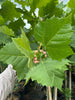
Why Plant a Sycamore Tree?
, by Andrew Norouzian, 6 min reading time
, by Andrew Norouzian, 6 min reading time
Why Plant a Sycamore Tree?
American sycamore (*Platanus occidentalis*) is an excellent tree for large properties that need fast-growing shade, dramatic character, and a strong native presence. Its broad canopy, distinctive peeling bark, and tolerance for difficult soils make it especially valuable in open landscapes, parks, large yards, and low-lying areas.[2][9]
A sycamore is not a small-yard tree. At maturity, it can reach roughly 75 to 100 feet tall with a canopy 50 to 70 feet wide, so it needs space to become the impressive shade tree it is meant to be.[9]
## Fast Shade Growth
One of the biggest reasons to plant a sycamore is its fast growth rate. American sycamore is a fast-growing, long-lived tree that develops a broad crown capable of creating substantial shade over time.[2][9]
That makes it a strong choice for:
- Large backyards
- Open rural properties
- Farm and homestead landscapes
- Parks and recreation areas
- Long driveways
- Large commercial sites
- Areas where a future shade canopy is needed
A properly placed sycamore can turn an open, sunny landscape into a more comfortable outdoor space as it matures.
## Distinctive Bark
Sycamore bark is one of its most recognizable features. As the bark sheds in irregular plates, it reveals patches of white, cream, gray, green, and brown beneath, creating a striking trunk that stands out even when the tree is dormant.[2][10]
This gives the tree year-round ornamental value. In winter, when many deciduous trees lose their leaves, a mature sycamore’s pale trunk and large branching structure can become a focal point in the landscape.
## A Native Florida-Friendly Tree
American sycamore is native to the eastern half of the United States and grows naturally in lowlands, old fields, streambanks, and other moist settings. It is well suited to the Southeast, including appropriate areas of North and Central Florida.[2][9]
Because it is adapted to challenging conditions, sycamore can be useful in landscapes with compacted soil, low oxygen around roots, or variable soil quality. UF/IFAS notes that sycamores tolerate conditions such as compacted soils and higher-pH soils, which makes them useful for some urban sites.[9]
## A Good Tree for Wet Areas
Sycamores naturally occur near waterways and in lower areas where soils hold more moisture. They are a practical choice for larger properties with moist ground, drainage corridors, pond edges, or areas that may experience periodic saturation.[2][6]
This does not mean every low spot should receive a sycamore. The tree still needs adequate room and should not be planted where its large roots or canopy will interfere with buildings, sidewalks, utilities, or septic systems.
Choose sycamore for:
- Moist but not permanently flooded ground
- Large rain-garden-adjacent landscapes
- Pond or streamside plantings
- Low-lying areas on larger properties
- Restoration and naturalized plantings
- Open sites with plenty of root space
## Wildlife Benefits
Sycamores support wildlife by providing cover, nesting opportunities, and seed resources. Several songbirds, including finches, juncos, goldfinches, and Carolina chickadees, feed on sycamore seeds.[4]
The tree also hosts insects that become part of the larger food web. Its large canopy and branching structure can offer shelter and nesting habitat for birds, making it a valuable addition to wildlife-friendly landscapes.[1][4]
## Tough Enough for Big Landscapes
American sycamore has long been planted as a shade and street tree because it can handle a range of difficult site conditions. It is valued for rapid growth, broad shade, distinctive bark, and ability to establish in places where some other large trees struggle.[2][9]
It can work especially well in:
- Large residential properties
- Community parks
- Farm entrances
- School and church campuses
- Roadside and street-tree locations
- Restoration sites
- Large commercial developments
A sycamore can become a defining tree on a property, particularly when given room to develop its naturally massive trunk and canopy.
## Sycamore Size Matters
The same qualities that make sycamore impressive can make it unsuitable for a tight space. Mature trees become exceptionally large, and their roots can be aggressive near hardscape. Arbor Day recommends planting sycamores at least 15 feet from homes and sidewalks, though larger setbacks are often wiser for a tree that can spread 50 to 70 feet wide.[1][9]
Before planting, make sure there is enough room for:
- A 50- to 70-foot mature canopy
- A large root system
- Falling leaves, twigs, and seed balls
- Future pruning access
- Distance from structures, driveways, pools, septic systems, and power lines
For most home landscapes, plant a sycamore only where it can grow without being forced into a space too small for its natural form.
## Consider the Cleanup
Sycamore is a high-value shade tree, but it is not a low-litter tree. It drops large leaves, small twigs, and round seed balls, especially during fall and winter.[1][10]
This is a fair tradeoff for many large properties, but homeowners should avoid planting sycamores over pools, patios, driveways, roofs, or high-maintenance lawn areas. Place them where their leaf drop is manageable and their shade can be fully appreciated.
## Planting Tips
1. Choose an open site with plenty of space above and below ground.
2. Plant in full sun for the strongest canopy development.
3. Select moist, fertile soil when possible, although sycamore can handle a variety of conditions.
4. Keep the tree well away from homes, sidewalks, underground utilities, and power lines.
5. Dig a hole wider than the root ball, but no deeper than the root ball.
6. Plant with the root flare at or slightly above surrounding grade.
7. Water deeply and regularly during the first growing season.
8. Mulch the root zone, keeping mulch several inches away from the trunk.
## Is a Sycamore Right for You?
Plant a sycamore if you have a large property and want a fast-growing native shade tree with dramatic bark, wildlife value, and a broad canopy. It is especially well suited to open landscapes, parks, farm properties, and moist low-lying sites.[2][6][9]
Choose a different tree if your property is small, your planting area is close to structures, or you want a cleaner, lower-maintenance canopy. A sycamore is a big commitment—but in the right location, it can become one of the most memorable trees in the landscape.
Sources
[1] Arbor Day Blog - Tree Care & Planting https://arbordayblog.org/treeoftheweek/what-you-should-know-before-planting-a-sycamore/
[2] Sycamore | Silvics of North America https://research.fs.usda.gov/silvics/sycamore
[3] Acer pseudoplatanus - Wikipedia https://en.wikipedia.org/wiki/Acer_pseudoplatanus
[4] Platanus occidentalis (American Plane Tree, American Sycamore ... https://plants.ces.ncsu.edu/plants/platanus-occidentalis/
[5] Sycamore (SY) - Forest Research https://www.forestresearch.gov.uk/tools-and-resources/tree-species-database/131555-sycamore-sy-2/
[6] AMERICAN SYCAMORE - USDA https://plants.sc.egov.usda.gov/DocumentLibrary/plantguide/pdf/cs_ploc.pdf
[7] Something About a Sycamore - Michigan Blue Magazine https://www.mibluemag.com/state-of-mine/something-about-a-sycamore/
[8] Sycamore care and growing guide: tips for these large trees https://www.gardeningetc.com/advice/sycamore-care-and-growing-guide
[9] ENH1337/EP601: Key Plant, Key Pests: Sycamore (Platanus ... https://ask.ifas.ufl.edu/publication/EP601
[10] Sycamore - Missouri Department of Conservation https://mdc.mo.gov/discover-nature/field-guide/sycamore

$130.00

$125.00

$130.00

$30.00

$40.00

$135.00

$30.00

$130.00

$30.00

$30.00

$10.00

$10.00

$30.00

$30.00

$25.00

$155.00

$190.00

$160.00

$10.00

$130.00

$190.00

$135.00

$25.00

$12.00

$130.00

$10.00

$10.00

$125.00

$130.00

$190.00


