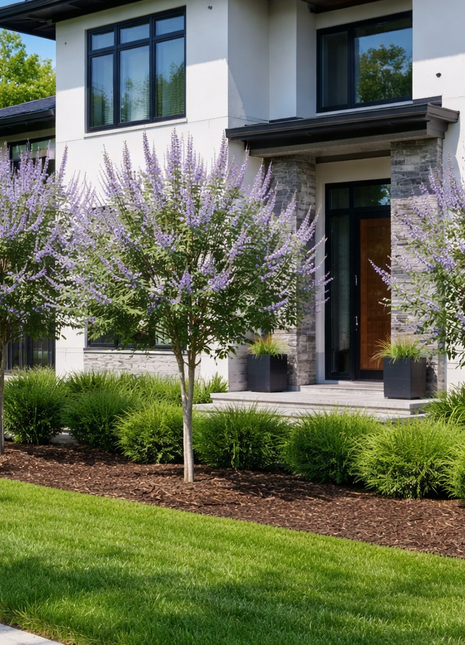
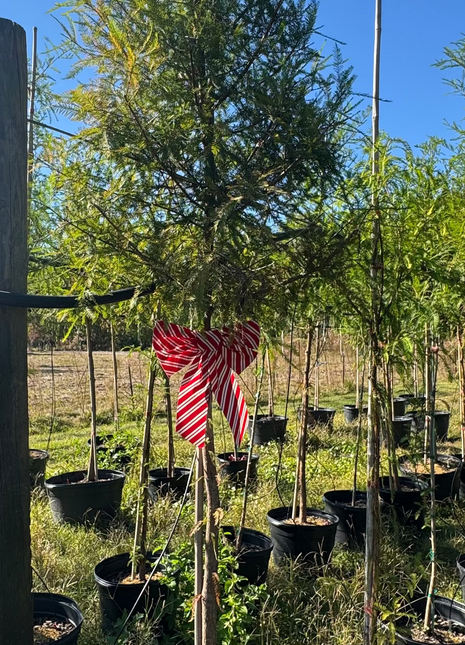
American Fringe Tree (Chionanthus virginicus) — Locally Grown in Pierson, Florida at Flowing Well Tree FarmNative Flowering Ornamental Tree • Pollinator-Friendly Blooming Species • Wildlife Habitat Hardwood • Florida-Grown Landscape, Restoration & Understory Canopy Tree
American Fringe Tree (Chionanthus virginicus) is one of the most elegant native flowering trees in the southeastern United States, known for its showy, fringe-like white blossoms that drape the canopy in spring like soft clouds. Valued for both its ornamental beauty and ecological importance, Fringe Tree is a highly desirable native species for residential landscapes, pollinator gardens, and natural restoration plantings.
At Flowing Well Tree Farm in Pierson, Florida, we grow American Fringe Tree as premium native stock selected for strong branching structure, healthy root development, and long-term performance in Florida’s heat, humidity, sandy soils, and seasonal rainfall conditions. Each tree is field-grown under real Florida conditions to ensure resilience, adaptability, and lasting landscape success.
When you buy American Fringe Tree here, you are not receiving fragile ornamental nursery stock—you are getting Florida-adapted native trees conditioned for strong establishment and long-term flowering performance.
That local adaptation matters. Chionanthus virginicus develops stronger root systems, improved drought tolerance, and more reliable flowering when grown under Florida conditions from the beginning.
Why Locally Grown Matters for Fringe Tree
Starting with Florida-grown stock provides key advantages:
Stronger establishment in sandy Florida soils
Improved heat and humidity tolerance
Better drought resistance once established
More reliable flowering year after year
Higher survival rates in landscape and restoration plantings
Stronger long-term structural development
This creates a dependable native flowering tree capable of thriving for decades.
Flowering & Ornamental Value
Fringe Tree is one of Florida’s most striking native bloomers:
Fragrant, fringe-like white flowers cascade in spring
Blooms cover branches in a soft, cloud-like display
Light floral fragrance enhances garden spaces
Excellent ornamental focal point in native landscapes
Creates strong seasonal interest during peak bloom period
Female trees may produce dark blue fruit in late summer
It is widely considered one of the most beautiful native flowering trees.
Wildlife & Ecological Importance
American Fringe Tree supports a wide range of native wildlife:
Flowers provide nectar for bees and pollinators
Fruit is consumed by birds and small wildlife
Supports native insect biodiversity
Provides nesting and shelter opportunities
Enhances ecological value in restoration plantings
Contributes to healthy native understory and edge habitats
It is both an ornamental and ecologically beneficial species.
Growth Habit & Structural Function
Fringe Tree is a small to medium native hardwood:
12–25 ft mature height depending on site conditions
Rounded, airy canopy with elegant branching
Slow to moderate growth rate
Can be grown as a multi-stem shrub or single-trunk tree
Long-lived native ornamental species
Ideal for residential landscapes and naturalized gardens
Its graceful structure makes it a standout specimen tree.
Climate & Site Adaptability
American Fringe Tree is well adapted to Florida conditions:
Native to the southeastern United States, including Florida
Thrives in heat and humidity
Performs well in sandy, loamy, and well-drained soils
Moderate drought tolerance once established
Adaptable to woodland edges and understory conditions
Strong performance in naturalized and residential landscapes
It integrates well into both formal and natural garden settings.
USDA Growing Zones
Best suited for Zones 5–9, with strong performance throughout Florida and the southeastern United States.
Light Requirements
For best flowering performance:
Full sun to partial shade
Full sun encourages heavier bloom production
Partial shade is well tolerated in woodland environments
Ideal for mixed canopy and understory plantings
Soil & Site Requirements
Adaptable native flowering tree:
Prefers well-drained soils
Performs well in sandy Florida soils
Tolerates a range of soil types
Benefits from organic matter during establishment
Avoid prolonged standing water in poorly drained sites
Mulch helps maintain soil moisture and root health
Planting Guidance (Grower Recommended)
For best long-term performance:
Plant in full sun to partial shade
Dig hole 2–3× wider than root ball
Set at original soil depth
Water deeply after planting
Apply mulch to stabilize moisture and soil temperature
Space 10–20 ft apart depending on landscape design
Allow room for natural canopy spread
We can assist with native flowering tree design, pollinator garden planning, understory layering, and restoration landscaping.
Watering & Establishment
Water regularly during the first 1–2 growing seasons. Once established, Fringe Tree becomes moderately drought tolerant and performs well under Florida’s seasonal rainfall patterns.
Fertilizer
Low input requirements:
Minimal fertilization needed once established
Organic compost supports flowering and root development
Avoid excessive nitrogen to maintain natural growth habit
Performs best in balanced native soil systems
Pruning & Maintenance
Very low maintenance:
Naturally develops elegant branching structure
Minimal pruning required
Can be shaped lightly for landscape form if needed
Remove dead or crossing branches as necessary
Long-lived and highly reliable in native landscapes
Why This Is a Smarter Long-Term Investment
✔ Locally grown in Florida for maximum adaptation
✔ One of the most elegant native flowering trees
✔ Spectacular spring bloom display
✔ Excellent pollinator and wildlife value
✔ Adaptable to a wide range of landscape conditions
✔ Low-maintenance long-term ornamental tree
✔ Strong performance in heat and humidity
✔ Grower-direct quality for Florida conditions
The Real Value
This isn’t just a flowering tree—it’s a living ornamental feature that brings seasonal beauty, ecological function, and long-term landscape value together in one native species.
When you plant American Fringe Tree, you’re investing in a graceful Florida-native that delivers breathtaking spring blooms, supports pollinators and wildlife, and enhances natural landscapes for generations to come.
Eagleston Holly (Ilex × attenuata ‘Eagleston’) — Locally Grown in Pierson, Florida at Flowing Well Tree FarmEvergreen Privacy Tree • Dense Screening Holly • Bright Red Berry Producer • Florida-Grown Landscape, Hedge & Specimen Tree
Eagleston Holly (Ilex × attenuata ‘Eagleston’) is one of the most popular evergreen landscape trees in the Southeast, valued for its dense canopy, attractive pyramidal form, glossy foliage, and abundant bright red berries. Combining the beauty of traditional hollies with a faster growth rate and more refined appearance, Eagleston Holly is an outstanding choice for privacy screens, property borders, specimen plantings, and year-round landscape structure.
At Flowing Well Tree Farm in Pierson, Florida, we grow Eagleston Holly as premium field-grown stock selected for strong central leaders, dense branching, uniform growth, and long-term performance in Florida's heat, humidity, sandy soils, and seasonal weather conditions. Every tree is grown under real Florida conditions to ensure superior establishment and long-term success.
When you buy Eagleston Holly here, you are not receiving soft nursery stock—you are getting Florida-adapted trees conditioned for strong growth, dense screening, and exceptional landscape performance.
That local adaptation matters. Trees grown in Florida develop stronger root systems, improved drought tolerance, and better resilience against the environmental stresses common throughout the Southeast.
Why Locally Grown Matters for Eagleston Holly
Starting with Florida-grown stock provides key advantages:
Faster establishment after plantingImproved heat and humidity toleranceStronger root development in sandy soilsBetter drought resistance once establishedGreater resilience during storm seasonsDenser foliage and stronger branch structureHigher long-term survival rates
This creates a dependable evergreen tree built for Florida landscapes.
Evergreen Structure & Landscape Value
Eagleston Holly is one of the best evergreen screening trees available:
20–30 ft mature height depending on site conditions10–15 ft mature width with dense branchingNaturally pyramidal growth habitGlossy dark green evergreen foliage year-roundExcellent privacy screen and property boundary treeStrong specimen tree for residential and commercial landscapes
It delivers beauty, privacy, and structure in every season.
Berry Production & Seasonal Interest
Eagleston Holly provides exceptional seasonal color:
Abundant bright red berries on female treesBerries persist through fall and winterCreates striking contrast against evergreen foliageProvides ornamental value during cooler monthsOne of the most colorful evergreen landscape trees availableExcellent for holiday and winter landscape appeal
Its berry display makes it a standout feature in the landscape.
Privacy Screening & Property Borders
Eagleston Holly is highly valued as a screening tree:
Dense evergreen canopy blocks unwanted viewsExcellent natural privacy barrierWorks well along fences and property linesProvides year-round visual separationCreates windbreaks and noise buffersMaintains screening value throughout every season
Few evergreen trees provide such effective privacy with such attractive appearance.
Wildlife Benefits
Eagleston Holly provides valuable habitat support:
Flowers attract pollinators and beneficial insectsBerries provide food for birds during cooler monthsDense branching offers nesting and shelter opportunitiesEnhances biodiversity in residential landscapesSupports wildlife while maintaining ornamental appeal
It combines landscape beauty with ecological benefits.
Growth Habit & Structural Function
Eagleston Holly is a dependable long-term landscape tree:
20–30+ ft mature height depending on site conditionsStrong central leader developmentDense branching from top to bottomModerate growth rate with excellent structureLong-lived evergreen canopyAdaptable to formal and naturalized landscapes
It functions as both a privacy screen and an architectural landscape element.
Climate & Site Adaptability
Eagleston Holly thrives throughout Florida and the Southeast:
Excellent heat and humidity tolerancePerforms exceptionally well in Florida climatesAdaptable to sandy, loamy, and moderately clay soilsModerate drought tolerance once establishedGood storm resilience when properly establishedSuitable for residential, commercial, and municipal landscapes
It is one of the most reliable evergreen screening trees available.
USDA Growing Zones
Best suited for Zones 6–9, with outstanding performance throughout Florida and the southeastern United States.
Light Requirements
For best growth and berry production:
Full sun to partial shadeFull sun promotes densest growth and best berry displayPartial shade tolerated with excellent performanceIdeal for open landscapes and screening applications
Soil & Site Requirements
Adaptable and easy to grow:
Performs well in sandy Florida soilsPrefers well-drained locationsTolerates a wide range of soil conditionsBenefits from mulch during establishmentAvoid prolonged standing water in poorly drained sites
Planting Guidance (Grower Recommended)
For best long-term performance:
Plant in full sun to partial shadeDig hole 2–3× wider than root ballSet at original soil depthWater deeply after plantingApply mulch to conserve moisture and suppress weedsSpace 8–15 ft apart for privacy screensAllow adequate room for mature canopy development
We can assist with hedge planning, privacy screen design, property border layouts, and large-scale landscape installations.
Watering & Establishment
Water regularly during the first growing season. Once established, Eagleston Holly becomes highly resilient and capable of handling Florida's seasonal drought and rainfall fluctuations.
Fertilizer
Low to moderate input requirements:
Light fertilization encourages early growthOrganic compost supports root establishmentAvoid excessive nitrogen applicationsPerforms best in balanced soil systems
Pruning & Maintenance
Very low maintenance:
Naturally maintains an attractive pyramidal shapeResponds well to shaping and screening applicationsMinimal structural pruning requiredExcellent long-term landscape reliabilityFew pest or disease concerns
Why This Is a Smarter Long-Term Investment
✔ Locally grown in Florida for maximum adaptation✔ Outstanding evergreen privacy and screening tree✔ Dense foliage from top to bottom✔ Beautiful bright red berries for seasonal color✔ Strong heat, humidity, and drought tolerance✔ Excellent specimen or property border tree✔ Low-maintenance long-term landscape solution✔ Grower-direct quality for Florida conditions
The Real Value
This isn’t just a privacy tree—it’s a permanent evergreen landscape structure that provides screening, seasonal beauty, and year-round curb appeal while thriving in Florida’s demanding climate.
When you plant Eagleston Holly, you’re investing in one of the most dependable and attractive evergreen trees available—a tree that delivers privacy, brilliant winter berries, and lasting landscape value while maintaining its beauty for decades to come.
Loquat (Eriobotrya japonica) — Locally Grown in Pierson, Florida at Flowing Well Tree FarmEvergreen Fruiting Tree • Edible Subtropical Crop • Early Spring Fruit Producer • Florida-Grown Landscape & Food Forest Species
Loquat (Eriobotrya japonica) is one of the most dependable evergreen fruiting trees for Florida landscapes, valued for its glossy tropical foliage, fragrant fall and winter flowers, and sweet golden-orange fruit that ripens in early spring when few other fruits are available. It is widely used in edible landscapes, food forests, and mixed-use residential plantings across the southeastern United States.
At Flowing Well Tree Farm in Pierson, Florida, we grow Loquat as premium edible landscape stock selected for strong branching structure, reliable fruiting potential, and long-term performance in Florida’s heat, humidity, sandy soils, and seasonal weather cycles. Each tree is conditioned from an early stage in real Florida field environments, not protected greenhouse conditions.
When you buy Loquat here, you’re not getting weak ornamental nursery filler—you’re getting locally grown, Florida-adapted trees built for real-world productivity including drought cycles, heavy rainfall, coastal wind exposure, and nutrient-variable soils.
That local adaptation matters. Loquat performs best when grown in Florida conditions from the start, developing stronger root systems, better fruiting consistency, and improved long-term canopy resilience.
Why Locally Grown Matters for Loquat
Starting with Florida-grown stock provides key advantages:
Faster establishment in sandy, well-drained soils
Improved heat and humidity tolerance
Stronger long-term fruit production consistency
Better drought resilience once established
Reduced transplant shock in Florida landscapes
More reliable evergreen canopy development
This creates a stronger, more productive edible landscape tree.
Fruit, Edible & Seasonal Value
Loquat is highly valued as an early-season fruit producer:
Sweet, tangy golden-orange fruit ripening in late winter to early spring
One of the earliest fruiting trees in Florida landscapes
Fresh eating fruit with juice, jam, and culinary uses
Highly productive in warm subtropical climates
Excellent for home orchards and food forests
Reliable seasonal harvest when other fruits are not in season
It fills an important early food gap in edible systems.
Flowering & Ornamental Value
Loquat is also a beautiful evergreen ornamental:
Fragrant white flower clusters in fall and early winter
Strong honey-like scent attracting pollinators
Dense glossy evergreen foliage year-round
Attractive tropical-subtropical landscape appearance
Excellent accent tree in edible and ornamental designs
It combines productivity with strong visual appeal.
Wildlife & Ecological Importance
Loquat supports multiple ecosystem functions:
Flowers attract bees and native pollinators
Fruit consumed by birds and small mammals
Dense canopy provides nesting and shelter habitat
Enhances biodiversity in urban and suburban landscapes
Supports seasonal wildlife food availability
It functions as both a food crop and habitat tree.
Growth Habit & Landscape Function
Loquat is a versatile evergreen fruit tree:
15–25 ft small to medium evergreen tree
Rounded canopy with dense branching structure
Can be trained as single trunk or multi-stem form
Responds well to pruning and shaping
Excellent for edible hedgerows or specimen planting
Long-lived with consistent productivity
It fits well into both formal and naturalized landscapes.
Climate & Site Adaptability
Loquat performs strongly in Florida conditions:
Thrives in full sun to partial shade
Highly heat and humidity tolerant
Performs well in sandy and loamy soils
Moderate drought tolerance once established
Handles coastal and inland environments
Adaptable to residential and orchard systems
It is one of the most reliable subtropical fruit trees for Florida.
USDA Growing Zones
Best suited for Zones 8–11, with excellent performance throughout Florida and the Gulf Coast region.
Light Requirements
For best fruit production:
Full sun produces strongest flowering and fruiting
Partial shade acceptable but reduces yield
Sun exposure improves canopy density and productivity
Ideal for open orchard or landscape planting
Soil & Site Requirements
Adapted to Florida soils:
Prefers well-drained sandy or loamy soils
Tolerates low to moderate fertility conditions
Performs best with organic matter and mulch
Avoid waterlogged or poorly drained sites
Benefits from consistent moisture during fruiting season
Planting Guidance (Grower Recommended)
For best long-term performance:
Plant in full sun for maximum fruit production
Dig hole 2–3× wider than root ball
Set at original soil depth
Water deeply after planting
Apply mulch to conserve moisture and stabilize soil
Space 12–20 ft apart for orchard or specimen use
Light pruning improves structure and fruit access
We can assist with food forest design, edible landscape planning, and orchard layout systems.
Watering & Establishment
Water regularly during the first 1–2 growing seasons. Once established, Loquat becomes moderately drought tolerant and performs well in Florida’s natural rainfall cycles.
Fertilizer
Moderate feeding requirements:
Light balanced fertilizer supports flowering and fruiting
Compost improves soil health and yield consistency
Avoid excessive nitrogen (can reduce fruit production)
Performs best in steady, low-input systems
Pruning & Maintenance
Low to moderate maintenance:
Responds well to pruning and shaping
Can be maintained as compact or open canopy tree
Pruning improves fruit access and airflow
Minimal upkeep once established
Long-lived with consistent production cycles
Why This Is a Smarter Long-Term Investment
✔ Locally grown in Florida for superior adaptation✔ Reliable early-season edible fruit tree✔ Excellent evergreen ornamental landscape value✔ Strong pollinator-supporting flowering species✔ Highly adaptable to Florida soils and climate✔ Low maintenance and long-lived productivity✔ Ideal for food forests and edible hedgerows✔ Grower-direct quality for real Florida conditions
The Real Value
This isn’t just a fruit tree—it’s a dual-purpose evergreen system that provides food, habitat, and year-round landscape structure.
When you plant Loquat, you’re investing in an early-harvest edible tree that strengthens food security while enhancing the beauty and ecological function of Florida landscapes.
Live Oak (Quercus virginiana) — Locally Grown in Pierson, Florida at Flowing Well Tree FarmIconic Evergreen Canopy Tree • Long-Lived Structural Hardwood • Wildlife Habitat Keystone Species • Florida-Grown Shade, Restoration & Legacy Landscape Tree
Live Oak (Quercus virginiana) is one of the most iconic and ecologically important native trees in the southeastern United States. Known for its massive spreading canopy, strong horizontal limbs, and extraordinary lifespan, the Live Oak defines Florida’s natural landscapes—from coastal hammocks and historic sites to upland forests and open pasture edges.
At Flowing Well Tree Farm in Pierson, Florida, we grow Live Oak as premium native canopy stock selected for strong central leaders in early growth, resilient branching structure, and long-term performance in Florida’s heat, humidity, sandy soils, wind exposure, and storm cycles. Each tree is field-grown under real Florida conditions to ensure superior establishment and long-term structural integrity.
When you buy Live Oak here, you are not receiving soft ornamental nursery stock—you are getting Florida-adapted legacy trees conditioned for decades of growth, wind resistance, and ecological performance.
That local adaptation matters. Quercus virginiana develops deeper anchoring root systems, stronger structural wood, and superior wind resilience when grown from the beginning in Florida conditions.
Why Locally Grown Matters for Live Oak
Starting with Florida-grown stock provides key advantages:
Stronger establishment in sandy and coastal soils
Improved heat and humidity tolerance
Deeper, more stable root systems
Greater wind and hurricane resilience over time
Higher survival rates in restoration and landscape projects
Better long-term canopy architecture and structural strength
Increased adaptability to drought and seasonal flooding cycles
This creates a permanent landscape anchor tree capable of living for centuries.
Canopy Structure & Landscape Value
Live Oak is one of the most powerful structural shade trees in North America:
40–80+ ft mature height depending on site conditions
Massive canopy spread often exceeding 80–120 ft at maturity
Broad, sculptural horizontal branching architecture
Dense evergreen-to-semi-evergreen foliage in Florida climates
Creates deep, cooling shade beneath its canopy
Iconic silhouette defining Southern landscapes
It is a true architectural landscape centerpiece tree.
Ecological & Wildlife Importance
Live Oak is a foundational keystone species in Florida ecosystems:
Supports hundreds of native insect species
Provides critical habitat for birds, mammals, and pollinators
Acorns serve as a major food source for deer, turkey, squirrels, and wildlife
Dense canopy offers nesting and shelter opportunities
Stabilizes coastal and inland soils with extensive root systems
Essential component of hammocks, coastal forests, and upland ecosystems
It is one of the most ecologically important trees in the Southeast.
Growth Habit & Structural Function
Live Oak is a long-lived structural hardwood:
40–80+ ft mature height depending on site conditions
Massive lateral canopy spread with age
Extremely strong, flexible wood structure
Slow to moderate growth with exceptional longevity
Can live several hundred years in natural conditions
Excellent wind resistance when mature
It functions as a permanent, generational landscape anchor.
Climate & Site Adaptability
Live Oak thrives across a wide range of Florida environments:
Native throughout Florida and the coastal Southeast
Excellent tolerance to heat, humidity, and salt exposure
Performs well in sandy, loamy, and coastal soils
Highly wind and storm resilient when established
Moderate drought tolerance once mature
Adaptable to urban, rural, and natural landscapes
It is one of the most reliable long-term shade trees for Florida.
USDA Growing Zones
Best suited for Zones 7–10, with exceptional performance throughout Florida and coastal regions of the southeastern United States.
Light Requirements
For best canopy development:
Full sun preferred for strongest structure
Tolerates partial shade in early growth stages
Sun exposure promotes dense canopy formation
Ideal for large open landscapes, pastures, and restoration sites
Soil & Site Requirements
Highly adaptable native hardwood:
Thrives in sandy Florida soils
Tolerates coastal and inland conditions
Prefers well-drained sites but adapts widely
Excellent in low-fertility native soils
Benefits from mulch during establishment
Avoid prolonged standing water in poorly drained areas
Planting Guidance (Grower Recommended)
For best long-term performance:
Plant in full sun
Dig hole 2–3× wider than root ball
Set at original soil depth
Water deeply after planting
Apply mulch to stabilize moisture and soil temperature
Space 40–80 ft apart for full canopy development
Allow ample room for long-term growth and limb spread
We can assist with legacy landscape planning, shade canopy design, restoration forestry, and large-scale native tree installations.
Watering & Establishment
Water regularly during the first 2–3 growing seasons. Once established, Live Oak becomes extremely drought tolerant and highly resilient to Florida’s seasonal rainfall cycles and storm conditions.
Fertilizer
Low input requirements:
Minimal fertilization needed once established
Organic compost supports early root development
Avoid excessive nitrogen applications
Performs best in natural soil systems
Pruning & Maintenance
Very low maintenance:
Prune early to establish strong branch structure
Remove weak or crossing limbs during youth
Minimal pruning required once canopy develops
Naturally forms strong, balanced architecture
Long-lived with extremely stable structure over time
Why This Is a Smarter Long-Term Investment
✔ Locally grown in Florida for maximum adaptation
✔ One of the most iconic native shade trees in America
✔ Exceptional wind and storm resilience when mature
✔ Massive long-term canopy and shade production
✔ Keystone wildlife habitat species
✔ Extremely long-lived, multi-century potential
✔ Strong ecological and restoration value
✔ Grower-direct quality for Florida conditions
The Real Value
This isn’t just a shade tree—it’s a generational landscape foundation that defines place, history, and ecosystem structure.
When you plant Live Oak, you’re investing in a living legacy tree that will outlast structures, support wildlife for centuries, and provide unmatched shade, strength, and ecological value across Florida’s landscapes for generations to come.
American Sycamore (Platanus occidentalis) — Locally Grown in Pierson, Florida at Flowing Well Tree Farm
Native Shade Tree • Fast-Growing Hardwood • Massive Canopy Tree • Florida-Grown Restoration Stock
American Sycamore (Platanus occidentalis) is one of the largest native hardwood trees in North America. Known for its distinctive white mottled bark, rapid growth rate, towering stature, and exceptional shade value, Sycamore has long been used in parks, restoration projects, large estates, riparian corridors, and conservation landscapes throughout Florida and the eastern United States.
When you buy American Sycamore here, you're not getting nursery stock grown under artificial conditions—you’re getting locally grown, field-conditioned trees produced in Pierson and adapted to Florida’s heat, humidity, rainfall patterns, and diverse soil conditions.
That matters for successful establishment. Locally grown Sycamores develop stronger root systems, acclimate more quickly after planting, and are better prepared for the environmental conditions they will encounter in Florida landscapes and restoration sites.
This is direct-from-grower native tree stock. Visit the farm, see how our trees are grown, and receive practical guidance on spacing, canopy planning, restoration projects, and long-term landscape development.
American Sycamore is especially valued for its ability to rapidly create shade, stabilize waterways, and develop into a truly magnificent native canopy tree.
Why Locally Grown Matters for Sycamore Trees
Starting with Florida-grown stock provides significant advantages:
Better adaptation to Florida heat and humidity
Stronger root system development
Improved transplant success
Faster establishment in field conditions
Greater resilience during weather extremes
Better long-term performance in native landscapes
It creates a stronger foundation for successful canopy development.
Exceptional Shade & Canopy Value
American Sycamore is one of the fastest ways to establish substantial shade:
Rapid growth rate compared to many hardwoods
Develops an expansive shade canopy
Excellent for parks, farms, and large properties
Reduces heat and improves landscape comfort
Creates lasting canopy structure for future generations
Few native trees can match its combination of size, speed, and longevity.
Distinctive Ornamental Appeal
Sycamore is instantly recognizable:
Beautiful white, cream, and gray exfoliating bark
Massive trunk development with age
Large, attractive leaves
Impressive winter silhouette
Dramatic landscape presence year-round
Its unique bark alone makes it one of the most striking native trees in North America.
Wildlife & Ecological Importance
American Sycamore supports a wide range of wildlife:
Provides nesting sites for birds
Supports native insects and pollinators
Creates habitat for wildlife within mature canopies
Stabilizes riparian ecosystems
Contributes to biodiversity in native forests
Enhances ecological value of restoration projects
Large Sycamores become important habitat trees as they mature.
Climate & Site Adaptability
American Sycamore performs exceptionally well in a variety of conditions:
Native to floodplains and stream corridors
Tolerates periodic flooding
Adapts to sandy, loamy, and clay soils
Thrives in moist environments
Handles Florida heat well once established
Performs in both restoration and landscape settings
It is especially valuable where large-scale canopy development is desired.
USDA Growing Zones
Best suited for Zones 4–9, performing strongly throughout Florida and much of the eastern United States.
Mature Size & Growth Habit
A truly massive native hardwood:
75–100 ft mature height
50–80 ft mature spread
Broad, rounded canopy
Strong central trunk
Long-lived and durable landscape presence
Given adequate space, Sycamore becomes one of the most impressive trees in the landscape.
Light Requirements
For optimal growth:
Full sun preferred
Minimum 6 hours of direct sunlight daily
Best canopy development occurs in open locations
Soil & Site Requirements
Adaptable to a wide range of soils:
Prefers moist, fertile soils
Tolerates sandy soils
Performs well in clay and loam
Adapts to seasonal flooding
Handles a variety of drainage conditions
Excellent choice for streambanks, large landscapes, and restoration projects.
Planting Guidance (Grower Recommended)
For best long-term success:
Plant where ample mature space is available
Select full sun locations
Dig planting hole 2–3× wider than root ball
Plant at original soil depth
Water deeply after planting
Apply mulch around root zone
Keep mulch away from direct trunk contact
Maintain consistent watering during establishment
We can assist with canopy spacing, restoration layouts, and long-term site planning.
Watering & Establishment
Water regularly during the first 1–2 growing seasons. Once established, American Sycamore becomes highly adaptable and can tolerate both seasonal flooding and moderate dry periods.
Fertilizer
Minimal fertilization required:
Light balanced fertilizer during establishment if needed
Avoid excessive feeding
Often performs well with existing soil fertility
Strong growth typically occurs naturally
Pruning & Maintenance
Low maintenance after establishment:
Prune for structure during early years
Remove damaged branches as necessary
Naturally develops a strong framework
Minimal long-term maintenance required
A dependable native tree for large-scale landscapes.
Why This Is a Smarter Long-Term Investment
✔ Locally grown in Florida for superior adaptation
✔ One of North America's largest native hardwoods
✔ Fast-growing shade and canopy tree
✔ Unique exfoliating bark and ornamental appeal
✔ Valuable wildlife and habitat tree
✔ Excellent for restoration and conservation projects
✔ Tolerates diverse soil conditions
✔ Grower-direct expertise and planting support
The Real Value
This isn’t just a shade tree—it’s a future landmark.
You’re not simply planting a tree. You’re establishing a massive native canopy, creating wildlife habitat, enhancing ecological function, and investing in a living piece of the landscape that can provide beauty, shade, and environmental benefits for generations to come.
Vitex Tree (Vitex agnus-castus) Topiary — Locally Grown in Pierson, Florida at Flowing Well Tree FarmFlowering Ornamental Tree • Pollinator Magnet • Heat & Drought Tolerant Specimen • Florida-Grown Topiary & Landscape Accent
Vitex Tree (Vitex agnus-castus), commonly known as Chaste Tree, is one of the most reliable and high-impact flowering landscape trees for Florida’s heat, humidity, and sandy soils. When trained as a topiary, it becomes a structured ornamental specimen that combines Mediterranean elegance with extreme Florida durability.
Known for its long summer flower spikes in shades of lavender, violet, and blue, Vitex is a powerhouse pollinator plant that attracts bees, butterflies, and beneficial insects in massive numbers during peak bloom. At Flowing Well Tree Farm in Pierson, Florida, we grow select Vitex specimens trained as topiary forms for landscape focal points, entrance features, and structured native-adapted designs.
When you buy Vitex Topiary here, you’re not getting weak, overgrown nursery material—you’re getting locally grown, Florida-hardened trees conditioned for real landscape performance including heat waves, drought cycles, sandy soils, and intense summer sun.
That local adaptation matters. Vitex grown in Florida develops stronger branching structure, better bloom cycles, and far superior long-term resilience compared to greenhouse-raised imports.
Why Locally Grown Matters for Vitex Topiary
Starting with Florida-grown stock provides key advantages:
Stronger branching structure for topiary training
Faster establishment in sandy, low-fertility soils
Improved heat and drought tolerance from early development
More consistent flowering under Florida conditions
Better structural response to pruning and shaping
Higher long-term survival in unmanaged landscapes
This creates a more durable and performance-driven ornamental specimen.
Flowering & Ornamental Value
Vitex is one of Florida’s most dramatic summer bloomers:
Long spikes of lavender to violet-blue flowers
Extended summer flowering period (often weeks to months)
Strong visual contrast against green foliage
High-impact ornamental color in landscape designs
Excellent focal point for entryways and garden spaces
Repeat bloom potential with pruning management
It delivers a bold flowering presence during the hottest part of the year.
Pollinator & Wildlife Importance
Vitex is a recognized pollinator powerhouse:
Attracts bees in extremely high numbers
Supports butterflies and beneficial insects
Provides critical nectar during summer dearth periods
Enhances pollinator corridors in urban and rural landscapes
Valuable for ecological planting systems despite ornamental origin
It is one of the most visited flowering trees in bloom.
Growth Habit & Topiary Structure
When trained, Vitex becomes a refined architectural specimen:
10–20 ft small tree (variable depending on pruning)
Naturally multi-stem but easily trained to single leader
Responds exceptionally well to shaping and pruning
Can be formed into lollipop, standard, or layered topiary styles
Fast regrowth after structural cuts
Maintains clean canopy with regular maintenance
It is one of the best flowering trees for controlled design work.
Climate & Site Adaptability
Vitex performs exceptionally well in Florida environments:
Thrives in full sun and high heat
Extremely drought tolerant once established
Handles sandy, well-drained soils with ease
Adapts to urban, rural, and coastal-inland landscapes
Tolerates humidity and seasonal rainfall variation
Performs reliably in USDA Southern climates
It is built for hot, open landscapes.
USDA Growing Zones
Best suited for Zones 6–9, with peak performance across Florida and the southeastern United States.
Light Requirements
For best flowering and structure:
Full sun required for maximum bloom
Reduced flowering in shaded environments
High light levels produce stronger form and color
Ideal for open landscape installations
Soil & Site Requirements
Adapted to Florida’s common soils:
Prefers well-drained sandy soils
Tolerates poor fertility and dry conditions
Performs best with minimal soil amendment
Avoid heavy, waterlogged soils
Benefits from mulch during establishment
Planting Guidance (Grower Recommended)
For best topiary performance:
Plant in full sun for strongest structure and bloom
Dig hole 2–3× wider than root ball
Set plant at original soil depth
Water deeply after planting
Apply mulch while keeping trunk base clear
Stake if needed during early topiary training
Prune early to establish desired shape
We can assist with landscape design, specimen placement, and formal garden integration.
Watering & Establishment
Water regularly during the first growing season. Once established, Vitex becomes highly drought tolerant and thrives in low-maintenance Florida landscapes with minimal irrigation.
Fertilizer
Low-maintenance flowering tree:
Minimal fertilizer required
Light compost improves bloom production
Avoid excessive nitrogen (reduces flowering intensity)
Performs best in lean soil conditions
Pruning & Maintenance
Highly responsive ornamental species:
Pruning encourages stronger flowering cycles
Essential for maintaining topiary form
Can be cut back heavily in late winter if needed
Rapid regrowth after shaping cuts
Low to moderate maintenance depending on design style
Why This Is a Smarter Long-Term Investment
✔ Locally grown in Florida for superior adaptation✔ High-impact flowering summer ornamental tree✔ Excellent pollinator-supporting species✔ Ideal for topiary and structured landscape design✔ Extreme heat and drought tolerance✔ Fast regrowth and easy shaping response✔ Long blooming season with high visual payoff✔ Grower-direct quality for Florida landscapes
The Real Value
This isn’t just a flowering tree—it’s a sculpted landscape feature that delivers color, structure, and ecological function at the same time.
When you plant a Vitex Topiary, you’re adding a controlled architectural focal point that thrives in Florida heat while supporting pollinators and delivering one of the most reliable summer bloom displays in the region.
Eastern Redbud (Cercis canadensis) — Locally Grown in Pierson, Florida at Flowing Well Tree FarmNative Flowering Understory Tree • Early Spring Blooming Accent Species • Wildlife-Friendly Small Canopy Tree • Florida-Grown Ornamental & Ecological Landscape Tree
Eastern Redbud (Cercis canadensis) is one of the most beloved native flowering trees in eastern North America, known for its brilliant early spring magenta-pink blooms that emerge directly on bare branches before the leaves appear. This unique flowering habit makes it one of the most visually striking small native trees in the landscape, especially in naturalized gardens, woodland edges, and understory plantings.
At Flowing Well Tree Farm in Pierson, Florida, we grow Eastern Redbud as premium native understory and accent stock selected for strong branching structure, reliable flowering performance, and adaptation to Florida’s heat, humidity, and variable soil conditions. Each tree is field-conditioned to ensure resilience in sandy soils, seasonal moisture swings, and warm climate stress.
When you buy Eastern Redbud here, you are not receiving delicate northern-grown ornamental stock—you are getting Florida-adapted native flowering trees developed for real-world performance in southern landscapes.
That local adaptation matters. Cercis canadensis performs best when grown in-region, where it develops improved heat tolerance, stronger root systems, and more consistent flowering performance under Florida’s climate conditions.
Why Locally Grown Matters for Eastern Redbud
Starting with Florida-grown stock provides key advantages:
Stronger establishment in sandy and well-drained soilsImproved heat and humidity tolerance from early developmentBetter drought resilience once established in Florida conditionsHigher survival rates in residential and naturalized landscapesMore consistent flowering performance in southern climatesStronger branching structure for long-term ornamental form
This creates a reliable native flowering tree that thrives beyond typical nursery expectations in Florida environments.
Flowering & Seasonal Interest
Eastern Redbud is a premier native flowering accent species:
Early spring magenta to pink blooms appear before leaf-outFlowers emerge directly on branches and trunk (cauliflorous flowering)Provides one of the earliest nectar sources for pollinatorsHeart-shaped green leaves follow bloom cycle for summer canopyGolden-yellow fall color in late season conditionsHigh visual impact in naturalized and designed landscapes
It is one of the most recognizable and celebrated native flowering trees in the Southeast.
Canopy Structure & Landscape Value
Eastern Redbud is a small ornamental canopy tree:
20–30 ft mature height depending on site conditionsBroad, vase-shaped to rounded canopy structureMulti-trunk or single-trunk form depending on trainingLight to medium shade ideal for understory ecosystemsCompact size suitable for residential and small landscape useStrong seasonal visual interest across all four seasons
It functions as a signature accent tree in native and ornamental plantings.
Ecological & Habitat Importance
Eastern Redbud plays an important ecological role:
Early spring nectar source for bees, butterflies, and pollinatorsProvides cover and nesting habitat for small birdsSupports understory biodiversity in mixed hardwood forestsThrives along woodland edges and transition zonesContributes to native pollinator corridor systemsEnhances diversity in restoration and rewilding projects
It is a valuable species for pollinator-focused landscapes.
Growth Habit & Structural Function
Eastern Redbud is a small structural understory tree:
20–30+ ft mature height depending on site conditionsRounded, spreading canopy with graceful branching structureOften multi-stemmed with naturally artistic formModerate growth rate with strong early establishmentMedium lifespan with consistent ornamental performanceWell-suited for understory and edge planting systems
It provides structure without overwhelming surrounding plantings.
Climate & Site Adaptability
Eastern Redbud adapts well to Florida conditions when properly established:
Native to eastern and central United States woodlandsTolerates heat and humidity in partial shade or filtered sunPerforms best in well-drained soils with organic matterModerate drought tolerance once establishedPrefers protection from extreme, prolonged floodingExcellent in mixed woodland and residential landscapes
It is a flexible native flowering tree for diverse planting conditions.
USDA Growing Zones
Best suited for Zones 4–9, with strong performance throughout Florida when properly sited and established.
Light Requirements
For best flowering and structure:
Partial shade to full sun in northern Florida conditionsMorning sun with afternoon shade ideal in hotter sitesFull sun possible with adequate moisture and soil healthFiltered light improves longevity and canopy balance
Soil & Site Requirements
Adaptable native understory species:
Prefers well-drained sandy or loamy soilsBenefits from organic matter and mulchTolerates a range of soil pH conditionsDoes not prefer prolonged flooding or saturated soilsPerforms well in woodland edges and mixed plantings
Planting Guidance (Grower Recommended)
For best long-term performance:
Plant in partial shade or filtered sun for best longevityDig hole 2–3× wider than root ballSet at original soil depthWater deeply after planting to establish root contactApply mulch 2–4 inches deep, keeping away from trunkSpace 15–25 ft apart for natural form developmentProtect young trees from extreme afternoon heat exposure
We can assist with understory design, flowering native gardens, and pollinator habitat layouts.
Watering & Establishment
Water regularly during the first 1–2 growing seasons. Once established, Eastern Redbud becomes moderately drought tolerant and performs reliably in Florida’s seasonal rainfall patterns.
Fertilizer
Low to moderate input requirements:
Light fertilization supports early growth and floweringOrganic compost improves soil biology and root developmentAvoid excessive nitrogen to maintain strong bloom productionPerforms best in balanced, natural soil systems
Pruning & Maintenance
Low maintenance ornamental tree:
Prune lightly after flowering to shape structureRemove dead or crossing branches as neededNaturally develops attractive branching formMinimal long-term pruning requiredBest left in natural aesthetic form for flowering display
Why This Is a Smarter Long-Term Investment
✔ Locally grown in Florida for climate adaptation✔ One of the earliest and most beautiful native bloomers✔ High pollinator and wildlife value✔ Excellent small-scale shade and ornamental structure✔ Adaptable understory and edge planting species✔ Strong seasonal interest (spring flowers + fall color)✔ Ideal for residential and restoration landscapes✔ Grower-direct native flowering stock
The Real Value
This is not just a flowering tree—it is a seasonal signature species that brings color, life, and ecological function to Florida landscapes at the most visually impactful time of year.
When you plant Eastern Redbud, you are investing in a native flowering understory tree that supports pollinators, enhances biodiversity, and delivers one of the most striking seasonal displays in southeastern native ecosystems.
Florida Red Maple (Acer rubrum) — Locally Grown in Pierson, Florida at Flowing Well Tree Farm
Native Fast-Growing Shade Tree • Brilliant Red Fall Color • Wetland & Upland Adaptable • Florida-Grown Canopy & Wildlife Tree
Florida Red Maple (Acer rubrum) is a beautiful, fast-growing native deciduous tree valued for its attractive form, dependable shade, and brilliant red seasonal color. Native throughout much of the eastern United States, Red Maple is especially well suited to Florida landscapes where adaptable native canopy trees are needed for residential landscapes, parks, conservation projects, wildlife habitat, and restoration plantings.
At Flowing Well Tree Farm in Pierson, Florida, we grow Florida Red Maple as premium native canopy stock selected for strong trunk development, balanced branching, and reliable establishment in Florida conditions. Our trees are grown under real Florida heat, humidity, rainfall, and seasonal moisture cycles—not shipped in from a distant growing climate.
When you buy Florida Red Maple from Flowing Well Tree Farm, you're getting Florida-grown native stock conditioned for the soils and growing conditions found throughout the Southeast.
That local production provides an important advantage: trees have already developed under Florida's intense sunlight, heat, humidity, rainfall patterns, and variable soil moisture.
Why Locally Grown Matters for Florida Red Maple
Florida-grown Red Maple provides several advantages for landscape and restoration projects:
Faster establishment in Florida's sandy and moisture-variable soils
Root systems developed under local growing conditions
Improved tolerance of Florida heat and humidity
Better adaptation to seasonal wet and dry periods
Stronger transition from nursery production to landscape conditions
Reliable performance in residential, commercial, and restoration landscapes
Growing conditions matter. A tree raised in Florida is already accustomed to the environmental pressures it will encounter after planting.
Canopy Structure & Landscape Value
Florida Red Maple is an excellent native shade and canopy tree:
40–60 ft mature height, depending on site conditions
Broad, rounded to oval canopy with age
Fast to moderately fast growth rate
Attractive branching structure
Provides meaningful shade as the canopy develops
Brilliant red, orange, and scarlet foliage during cooler months
Excellent focal and canopy tree for large residential landscapes
Well suited to parks, streetscapes, campuses, and naturalized areas
Its combination of rapid establishment, attractive structure, and seasonal color makes Red Maple one of the most versatile native deciduous trees for the Southeast.
Brilliant Seasonal Color
One of the defining characteristics of Acer rubrum is its seasonal foliage.
As temperatures cool, the normally green leaves can transition into shades of:
Bright red
Scarlet
Orange-red
Orange
Deep crimson
Fall color can vary depending on genetics, weather, site conditions, and the length and temperature of the fall season. In Florida and other warm climates, seasonal color is generally more variable than in northern regions, but Florida Red Maple can still provide beautiful late-season color when conditions are favorable.
Ecological & Wildlife Importance
Florida Red Maple contributes significant ecological value to native landscapes.
It can:
Provide cover and nesting habitat for birds
Offer shelter for wildlife within developing canopy
Contribute organic matter through seasonal leaf drop
Support native forest ecosystems
Help diversify native hardwood plantings
Provide valuable canopy structure around wetland and upland transition areas
Red Maple is an important component of many eastern North American hardwood ecosystems and works especially well as part of diverse native planting designs.
Growth Habit & Structural Function
Florida Red Maple develops into a substantial native canopy tree with a broad crown.
Typical characteristics include:
40–60+ ft mature height under favorable conditions
Rounded to oval crown
Relatively rapid early growth
Strong central leader when properly trained
Attractive branching architecture
Excellent shade-producing potential
Useful as a transition tree between open landscapes and native woodland plantings
For larger properties, it can serve as a long-term canopy anchor while smaller native shrubs, grasses, and understory trees establish beneath it.
Climate & Site Adaptability
Florida Red Maple is highly adaptable and naturally occurs across a wide range of environments.
It can perform well in:
Moist woodlands
Wetland margins
Floodplain forests
Stream and pond edges
Flatwoods
Upland transition areas
Residential landscapes
Naturalized planting areas
It tolerates periodically wet soils and can also adapt to better-drained landscape sites when properly established.
Once established, trees can tolerate periods of reduced rainfall, although consistent moisture is preferred for the fastest growth and best overall performance.
USDA Growing Zones
USDA Hardiness Zones: 3–9
Florida Red Maple is particularly well suited to Zones 8–9 throughout much of Florida and the Southeast.
Light Requirements
For best growth and canopy development:
Full sun is preferred
Tolerates partial shade
Greater sunlight generally promotes stronger growth and better canopy development
Full sun provides the best opportunity for seasonal foliage color
For large landscape installations, provide adequate space for the mature canopy to develop naturally.
Soil & Site Requirements
Florida Red Maple is adaptable to a wide range of soil conditions.
It prefers:
Moist, well-drained soil
Consistent soil moisture during establishment
Sandy, loamy, or organically enriched soils
Moisture-retentive locations
Slightly acidic to neutral soil conditions
It can tolerate periodically saturated conditions and is especially useful near wet areas, drainage corridors, ponds, and rain gardens.
In extremely dry, compacted, or poorly prepared landscape soils, supplemental irrigation during establishment is recommended.
Planting Guidance — Grower Recommended
For the best long-term performance:
Plant in full sun to partial shade.
Dig the planting hole approximately 2–3 times wider than the root ball.
Set the tree at the same depth at which it was growing.
Backfill with the native soil removed from the planting hole.
Water deeply immediately after planting.
Apply 2–4 inches of mulch around the root zone.
Keep mulch several inches away from the trunk.
Provide adequate spacing for the mature canopy.
Maintain consistent moisture during the establishment period.
For large properties, Red Maple works especially well when incorporated into layered native landscape designs with understory trees, shrubs, grasses, and wildlife plants.
Watering & Establishment
Water consistently during the first 1–2 growing seasons.
Young trees benefit from deep, thorough watering rather than frequent shallow watering. As the root system expands, Florida Red Maple becomes increasingly capable of handling normal seasonal fluctuations in rainfall.
Trees planted in naturally moist locations may require less supplemental irrigation once established.
Fertilizer
Florida Red Maple generally has moderate nutrient requirements.
For best results:
Begin with healthy, properly amended planting soil
Use a balanced fertilizer when needed
Avoid excessive nitrogen
Maintain adequate organic matter
Consider soil testing before applying significant fertilizer
Healthy root development and appropriate watering are more important than heavy fertilization.
Pruning & Maintenance
Florida Red Maple is relatively straightforward to maintain when properly established.
Recommended practices include:
Establish a strong central leader while young
Remove competing leaders when necessary
Remove damaged, dead, or crossing branches
Maintain adequate clearance from structures and pathways
Perform structural pruning while the tree is young
Avoid excessive canopy removal
Early structural training can significantly improve the long-term form and strength of a mature canopy.
Ideal Landscape Uses
Florida Red Maple is an excellent choice for:
Residential shade trees
Large yards
Parks and recreation areas
Commercial landscapes
Streetscapes with adequate growing space
Pond and lake edges
Rain gardens and drainage areas
Wetland restoration
Native habitat plantings
Wildlife gardens
Naturalized landscapes
Reforestation and conservation projects
Native canopy restoration
Why This Is a Smarter Long-Term Investment
✔ Locally grown in Florida✔ Native fast-growing shade tree✔ Brilliant seasonal red foliage✔ Adaptable to wet and upland conditions✔ Excellent long-term canopy potential✔ Valuable wildlife and ecological function✔ Performs well in Florida's heat and humidity✔ Suitable for residential, commercial, and restoration projects✔ Grower-direct quality from Florida field production
The Real Value
Florida Red Maple is more than a beautiful shade tree. It is a native canopy species that combines fast establishment, seasonal color, wildlife value, and long-term landscape structure.
When you plant Florida Red Maple, you're adding a tree capable of becoming a major part of the landscape for years to come—providing shade, habitat, seasonal interest, and the natural character of a Florida-grown native hardwood.
Locally grown at Flowing Well Tree Farm in Pierson, Florida.
Pignut Hickory (Carya glabra) — Locally Grown in Pierson, Florida at Flowing Well Tree Farm
Hardy Native Hardwood • Wildlife Value Tree • Long-Lived Canopy Species • Florida-Grown Restoration Stock
Pignut Hickory (Carya glabra) is one of the most resilient and ecologically important native hardwood trees in the eastern United States. Known for its strong central trunk, long lifespan, and outstanding wildlife value, it is widely used in restoration projects, conservation lands, mixed hardwood forests, and large-scale native landscape plantings throughout Florida and the Southeast.
When you buy Pignut Hickory here, you’re not getting weak, over-irrigated nursery shade stock—you’re getting locally grown, field-conditioned trees produced in Pierson, already adapted to Florida heat, humidity, sandy soils, and the real stress conditions found in restoration and upland sites.
That matters for hardwood establishment. Locally grown hickories develop stronger root systems, better drought tolerance, and improved long-term survival because they’ve been raised in the same environmental conditions they will be planted into.
This is direct-from-grower restoration-grade material. You can visit the farm, see how native hardwoods are grown, and get practical guidance on spacing, canopy planning, and long-term forest development.
Pignut Hickory is especially valuable because it contributes long-term canopy structure, deep ecological value, and critical wildlife food sources in native ecosystems.
Why Locally Grown Matters for Hickory Trees
Starting with Florida-grown stock makes a noticeable difference:
Stronger taproot and lateral root developmentBetter drought tolerance after transplantImproved survival in sandy, nutrient-poor soilsFaster adaptation to field conditionsMore stable long-term canopy establishment
It’s a stronger foundation for reforestation and restoration success.
Long-Term Canopy & Forest Development Value
Pignut Hickory is not a fast ornamental—it is a long-term investment tree:
Forms tall, straight hardwood canopy over timeProvides structure for mixed native forestsSupports long-term ecological successionIntegrates well into restoration ecosystemsAdds durability and resilience to native stands
It is commonly used in reforestation and conservation planning where longevity matters.
Wildlife & Ecological Importance
This species is a powerhouse for native wildlife systems:
Produces high-value nuts for wildlife consumptionSupports squirrels, deer, turkey, and birdsEnhances biodiversity in mixed hardwood forestsContributes to healthy native ecosystem food chainsImportant mast-producing tree for long-term habitat
It turns a planting site into a functioning wildlife system.
Climate & Site Adaptability
Pignut Hickory performs best in naturalized and upland environments:
Native to well-drained upland forestsTolerates sandy and loamy soilsModerately drought tolerant once establishedPrefers full sun to partial shadeNot suited for long-term flooding or saturated soils
It excels in restoration and upland reforestation projects.
USDA Growing Zones
Best suited for Zones 5–9, performing strongly throughout Florida’s northern and central regions and similar southeastern climates.
Mature Size & Growth Habit
A long-lived native canopy tree:
60–100 ft mature heightStrong central trunk with upright formDevelops broad canopy over timeVery long lifespan under natural conditions
Light Requirements
Performs best with adequate sunlight:
Full sun for strongest growthTolerates partial shade in forested settings
Soil & Site Requirements
Adapted to native upland conditions:
Prefers well-drained sandy or loamy soilsTolerates low fertility environmentsPerforms best in natural forest soilsAvoids poorly drained or flooded sites
Planting Guidance (Grower Recommended)
For best long-term establishment:
Plant in full sun or open woodland settingsEnsure deep, well-drained soil conditionsDig planting hole 2–3× wider than root ballPlant at original soil depthWater deeply after installationApply mulch while keeping away from trunkMaintain consistent watering during first establishment period
We can assist with restoration spacing and forest layout planning for long-term canopy development.
Watering & Establishment
Water regularly during the first 1–2 growing seasons to establish a deep root system. Once established, Pignut Hickory becomes increasingly drought tolerant and self-sustaining in naturalized conditions.
Fertilizer
Minimal fertilization required:
Light balanced fertilizer only if needed in early establishmentAvoid heavy fertilization to encourage natural hardinessBest performance in low-input restoration systems
Pruning & Maintenance
Very low maintenance:
Minimal pruning required after establishmentNaturally develops strong structural formBest left to grow into natural canopy shapeLong-term management mainly for site clearance in early years
Why This Is a Smarter Long-Term Investment
✔ Locally grown in Florida conditions for stronger field performance✔ Long-lived native hardwood for permanent canopy systems✔ High wildlife and ecological value species✔ Strong restoration and reforestation performance✔ Deep root system development for drought resilience✔ Ideal for conservation and naturalized landscapes✔ Grower-direct knowledge for forest planning and establishment
The Real Value
This isn’t a fast ornamental—it’s a long-term native hardwood investment.
You’re not just planting a tree. You’re building future forest structure, wildlife habitat, and ecological stability that will continue to develop for generations.
Cedar Elm (Ulmus crassifolia) — Locally Grown in Pierson, Florida at Flowing Well Tree Farm
Native Shade Tree • Tough Urban Hardwood • Drought-Resilient Elm • Florida-Grown Restoration Stock
Cedar Elm (Ulmus crassifolia) is one of the toughest native hardwood trees in the southern United States, valued for its durability, adaptability, and dependable shade production. Naturally found in upland woods, limestone soils, and mixed hardwood forests across the Southeast and Texas region, Cedar Elm is widely used in restoration projects, urban landscapes, windbreak plantings, and large-scale native canopy systems.
When you buy Cedar Elm here, you're not getting weak, over-irrigated nursery stock—you’re getting locally grown, field-conditioned trees produced in Pierson and adapted to Florida’s heat, humidity, sandy soils, and seasonal weather stress.
That matters for long-term success. Locally grown Cedar Elm develops stronger root systems, adjusts faster after planting, and is better equipped to handle Florida’s variable rainfall, drought periods, and high-heat conditions.
This is direct-from-grower native hardwood stock. Visit the farm, see how our shade trees are grown, and receive practical guidance on canopy planning, spacing, and long-term landscape development.
Cedar Elm is especially valuable because it combines toughness, shade production, and adaptability in a way few native hardwoods can match.
Why Locally Grown Matters for Cedar Elm
Starting with Florida-grown stock provides important advantages:
Better adaptation to Florida heat and humidity
Stronger root system development before planting
Improved drought and stress tolerance
Faster establishment in field conditions
Greater resilience in urban and rural landscapes
Better long-term survival in restoration sites
It creates a stronger foundation for durable canopy establishment.
Shade & Canopy Value
Cedar Elm is a reliable native shade tree:
Moderate to fast growth rate
Develops a broad, rounded canopy over time
Excellent for residential shade and large properties
Reduces heat in open landscapes
Provides long-term canopy structure
It is widely used where dependable shade and toughness are both required.
Wildlife & Ecological Importance
Cedar Elm supports native ecosystems in multiple ways:
Produces small seeds consumed by birds
Supports native insects and pollinators
Provides nesting and shelter habitat
Contributes to biodiversity in mixed hardwood forests
Strengthens ecological function in restoration plantings
It is a steady, functional component of native woodland systems.
Climate & Site Adaptability
One of Cedar Elm’s strongest traits is its adaptability:
Native to upland woods and limestone soils
Tolerates drought once established
Performs well in sandy and loamy soils
Handles heat and humidity effectively
Adapts to urban and disturbed sites
More tolerant of stress than many elm species
It is a dependable choice for challenging planting environments.
USDA Growing Zones
Best suited for Zones 6–9, performing well throughout Florida and much of the southeastern United States.
Mature Size & Growth Habit
A strong native shade tree:
40–70 ft mature height
30–50 ft mature spread
Rounded, spreading canopy
Strong central trunk with age
Long-lived under proper conditions
Provides reliable mid-to-large scale shade.
Light Requirements
For best growth:
Full sun preferred
Minimum 6 hours of direct sunlight daily
Best canopy development in open areas
Soil & Site Requirements
Highly adaptable native hardwood:
Prefers well-drained soils
Tolerates sandy, loamy, and rocky soils
Performs well in low fertility conditions
Handles occasional drought stress
Avoid consistently flooded soils
Planting Guidance (Grower Recommended)
For best establishment:
Plant in full sun locations
Dig hole 2–3× wider than root ball
Plant at original soil depth
Water thoroughly after planting
Apply mulch around root zone
Keep mulch away from trunk base
Maintain regular watering during establishment
We can assist with shade planning, spacing, and long-term canopy design.
Watering & Establishment
Water regularly during the first 1–2 growing seasons. Once established, Cedar Elm becomes highly resilient and moderately drought tolerant.
Fertilizer
Low to moderate requirements:
Light balanced fertilizer during establishment if needed
Avoid excessive nitrogen applications
Performs well in natural soils
Minimal fertilization once established
Pruning & Maintenance
Low maintenance once established:
Prune early to develop structure
Remove crossing or damaged branches as needed
Naturally develops a strong canopy form
Long-term maintenance is minimal
Why This Is a Smarter Long-Term Investment
✔ Locally grown in Florida for stronger field performance
✔ Extremely tough native hardwood tree
✔ Reliable shade and canopy development
✔ Highly adaptable to stress conditions
✔ Excellent urban and rural landscape tree
✔ Strong drought tolerance once established
✔ Valuable wildlife and ecosystem support species
✔ Grower-direct planting guidance and support
The Real Value
This isn’t just a shade tree—it’s a long-term structural backbone for the landscape.
You’re not simply planting an elm. You’re building durable canopy cover, supporting wildlife habitat, improving landscape resilience, and investing in a native hardwood that will continue to strengthen and mature for generations.
Bald Cypress (Taxodium distichum) — Locally Grown in Pierson, Florida at Flowing Well Tree FarmNative Wetland Conifer • Flood-Tolerant Shade Tree • Long-Lived Structural Canopy Species • Florida-Grown Restoration & Landscape Anchor Tree
Bald Cypress (Taxodium distichum) is one of the most iconic and ecologically important native trees in the southeastern United States. Known for its strong pyramidal form, soft feathery foliage, and exceptional tolerance to flooding and wet soils, this species is a cornerstone of Florida wetlands, river systems, and lowland landscapes.
At Flowing Well Tree Farm in Pierson, Florida, we grow Bald Cypress as premium native canopy stock selected for strong central leaders, upright structural form, and long-term performance in Florida’s wet, sandy, and seasonally variable environments. Each tree is established in real field conditions to ensure resilience under heat, humidity, flooding, drought cycles, and storm exposure.
When you buy Bald Cypress here, you’re not receiving weak ornamental nursery stock—you’re getting locally grown, Florida-adapted trees conditioned for real-world ecological performance in both wetland and upland systems.
That local adaptation is critical. Bald Cypress performs best when grown in Florida conditions from the start, developing stronger root systems, improved flood tolerance, and more stable long-term canopy structure.
Why Locally Grown Matters for Bald Cypress
Starting with Florida-grown stock provides key advantages:
Faster establishment in wet or sandy soils
Stronger root systems for flood and drought cycles
Improved heat and humidity tolerance
Better wind and storm resilience in mature trees
Higher survival rates in restoration plantings
More consistent long-term canopy development
This creates a durable, permanent native shade tree.
Canopy Structure & Landscape Value
Bald Cypress is one of Florida’s most valuable large canopy trees:
50–80 ft tall mature deciduous conifer
Strong pyramidal form when young, broadening with age
Soft, fine-textured “feather-like” foliage
Deciduous in winter with warm copper fall color
Excellent long-term shade and cooling tree
Strong architectural presence in large landscapes
It is a defining species of Southern wetland ecosystems.
Ecological & Wetland Importance
Bald Cypress is a foundational Florida ecosystem species:
Dominant tree in swamps, riverbanks, and floodplains
Provides critical habitat for birds, amphibians, and wildlife
Supports aquatic and semi-aquatic ecosystems
Stabilizes soil in wet and erosion-prone areas
Creates microhabitats through “cypress knee” development in wet conditions
Enhances water filtration and watershed health
It is one of the most important ecological trees in the Southeast.
Growth Habit & Structural Function
Bald Cypress is a long-lived structural canopy tree:
50–80+ ft mature height depending on site conditions
Straight central trunk with strong vertical development
Broad canopy with age, providing deep shade
Adaptable to both wetland and upland planting
Extremely long-lived (often centuries in natural settings)
Strong wind resistance when mature
It functions as a permanent landscape anchor tree.
Climate & Site Adaptability
Bald Cypress thrives in Florida’s full range of conditions:
Native to southeastern U.S. wetlands and river systems
Tolerates standing water and seasonal flooding
Performs well in sandy upland soils as well
Highly heat and humidity tolerant
Strong drought tolerance once established
Excellent storm and wind resilience
It is one of the most adaptable large native trees available.
USDA Growing Zones
Best suited for Zones 4–10, with exceptional performance throughout Florida and the entire southeastern United States.
Light Requirements
For best growth and structure:
Full sun preferred for strongest canopy development
Tolerates partial shade in early stages
Sun exposure improves form and long-term vigor
Ideal for open landscapes, wetlands, and large properties
Soil & Site Requirements
Highly adaptable native species:
Thrives in wet, flooded, or seasonally saturated soils
Performs well in sandy uplands and loamy soils
Tolerates poor fertility conditions
Adapts to both managed and natural environments
Benefits from mulch during establishment
Planting Guidance (Grower Recommended)
For best long-term performance:
Plant in full sun for optimal growth
Dig hole 2–3× wider than root ball
Set at original soil depth
Water deeply after planting
Apply mulch to stabilize moisture and temperature
Space 20–40 ft apart for full canopy development
Allow room for mature spread in large landscapes
We can assist with wetland planting design, shade tree placement, and large-scale restoration planning.
Watering & Establishment
Water regularly during the first 1–2 growing seasons. Once established, Bald Cypress becomes extremely resilient and can thrive in both wet and dry cycles common in Florida.
Fertilizer
Low to moderate input needs:
Minimal fertilization required
Compost supports early establishment
Avoid excessive nitrogen inputs
Performs best in natural soil systems
Pruning & Maintenance
Very low maintenance:
Minimal pruning required
Naturally strong central leader development
Can be limbed up for shade tree form
Long-lived with stable structure
Low maintenance once established
Why This Is a Smarter Long-Term Investment
✔ Locally grown in Florida for maximum adaptation✔ Iconic native wetland and shade tree✔ Extremely flood and drought tolerant species✔ Long-lived structural landscape anchor✔ Excellent wildlife habitat and ecosystem value✔ Strong wind and storm resilience when mature✔ Adaptable to wet and upland sites✔ Grower-direct quality for Florida conditions
The Real Value
This isn’t just a shade tree—it’s a legacy canopy species that defines wetlands, strengthens landscapes, and provides ecological structure for generations.
When you plant Bald Cypress, you’re investing in a permanent native anchor tree that thrives through flood, drought, and storm while building long-term habitat and landscape stability in Florida’s environment.
Swamp Tupelo (Nyssa biflora) — Locally Grown in Pierson, Florida at Flowing Well Tree Farm
Native Wetland Tree • Flood-Tolerant Hardwood • Wildlife Value Species • Florida-Grown Restoration Stock
Swamp Tupelo (Nyssa biflora) is one of the most important native wetland trees in the southeastern United States. Known for its exceptional flood tolerance, strong wildlife value, beautiful fall color, and ability to thrive where many trees cannot, Swamp Tupelo is widely used in wetland restoration projects, stormwater systems, pond edges, conservation lands, and naturalized Florida landscapes.
When you buy Swamp Tupelo here, you're not getting nursery-grown stock raised under protected conditions—you’re getting locally grown, field-conditioned trees produced in Pierson and adapted to Florida’s heat, humidity, seasonal flooding, and challenging soil conditions.
That matters for successful establishment. Locally grown Swamp Tupelo develops stronger root systems, adapts more quickly to field conditions, and is better prepared to handle the environmental stresses common throughout Florida’s wetland and lowland habitats.
This is direct-from-grower restoration-grade material. Visit the farm, see how our native trees are grown, and receive practical guidance on wetland restoration, pond-edge plantings, stormwater projects, and long-term canopy development.
Swamp Tupelo is especially valuable because it provides exceptional ecological benefits while thriving in areas where many landscape trees struggle to survive.
Why Locally Grown Matters for Swamp Tupelo
Starting with Florida-grown stock offers important advantages:
Better adaptation to Florida heat and humidity
Stronger root development before planting
Improved establishment in wetland environments
Faster acclimation to local growing conditions
Greater resilience during seasonal flooding
Better long-term survival in restoration projects
It creates a stronger foundation for long-term success.
Wetland & Restoration Value
Swamp Tupelo is one of the most dependable trees for wetland restoration:
Thrives in flood-prone environments
Excellent for pond and lake edges
Commonly used in stormwater management systems
Stabilizes soils in wet conditions
Supports long-term wetland ecosystem development
Ideal for conservation and mitigation projects
Its ability to tolerate standing water makes it an essential species for many Florida restoration efforts.
Wildlife & Ecological Importance
This species plays a critical role in native ecosystems:
Produces fruit consumed by birds and wildlife
Supports migratory and resident bird populations
Provides shelter and nesting habitat
Enhances biodiversity in wetland environments
Contributes to healthy aquatic and terrestrial food chains
Important component of native floodplain forests
It transforms planting sites into functioning wildlife habitat.
Outstanding Seasonal Interest
Swamp Tupelo delivers year-round beauty:
Glossy green foliage throughout the growing season
Spectacular red, orange, and yellow fall color
Attractive bark and branching structure
Wildlife-attracting fruit production
Strong natural form and landscape presence
Few native wetland trees offer this combination of ecological and ornamental value.
Climate & Site Adaptability
Swamp Tupelo is highly adaptable to Florida conditions:
Native to swamps, floodplains, and wet forests
Tolerates prolonged flooding
Thrives in moist and saturated soils
Performs well in acidic conditions
Handles Florida heat exceptionally well
Adaptable to both natural and constructed wetlands
It excels in locations where water is regularly present.
USDA Growing Zones
Best suited for Zones 5–9, performing exceptionally well throughout Florida and much of the southeastern United States.
Mature Size & Growth Habit
A long-lived native canopy tree:
40–80 ft mature height
25–40 ft mature spread
Upright pyramidal form when young
Broad, rounded canopy with age
Strong central trunk and durable structure
Provides substantial shade and long-term canopy benefits.
Light Requirements
For best growth and canopy development:
Full sun preferred
Tolerates partial shade
Maximum growth occurs in open locations
Soil & Site Requirements
Adapted to wetland environments:
Prefers moist to wet soils
Tolerates prolonged seasonal flooding
Performs well in acidic soils
Suitable for pond margins and low-lying areas
Thrives in locations with poor drainage
One of the best native trees available for wet sites.
Planting Guidance (Grower Recommended)
For successful establishment:
Plant in full sun to partial shade
Select moist or wet planting locations
Dig planting hole 2–3× wider than root ball
Plant at original soil depth
Water thoroughly after planting
Apply mulch around root zone
Keep mulch away from direct trunk contact
Maintain adequate moisture during establishment
We can assist with restoration planning, pond-edge layouts, wetland projects, and native canopy design.
Watering & Establishment
Water regularly during the first growing season. Once established, Swamp Tupelo thrives in moist conditions and readily tolerates periodic flooding and saturated soils.
Fertilizer
Minimal fertilizer requirements:
Typically performs well without supplemental feeding
Light balanced fertilizer only if necessary
Avoid excessive fertilization
Best growth often occurs under natural soil conditions
Pruning & Maintenance
Very low maintenance:
Minimal pruning required after establishment
Remove damaged branches as needed
Naturally develops strong structural form
Long-term maintenance requirements are low
An excellent choice for naturalized landscapes and restoration projects.
Why This Is a Smarter Long-Term Investment
✔ Locally grown in Florida for superior field performance
✔ One of the best native trees for wetland environments
✔ Exceptional flood tolerance
✔ Valuable wildlife food and habitat source
✔ Outstanding fall color and ornamental appeal
✔ Ideal for ponds, lakes, stormwater systems, and restoration sites
✔ Long-lived native canopy tree
✔ Grower-direct expertise and planting support
The Real Value
This isn’t just a wetland tree—it’s a cornerstone species for healthy Florida ecosystems.
You’re not simply planting a tree. You’re creating wildlife habitat, stabilizing wetland environments, improving ecological function, and establishing a long-lived native canopy that will continue benefiting the landscape for generations.
Highland Tupelo Tree (Nyssa sylvatica) — Locally Grown in Pierson, Florida at Flowing Well Tree FarmNative Wetland & Upland Hardwood • Brilliant Fall Color Tree • Wildlife Habitat Keystone Species • Florida-Grown Restoration, Rain Garden & Natural Landscape Tree
Highland Tupelo Tree (Nyssa sylvatica), also known as Black Tupelo or Sour Gum, is one of the most ecologically valuable native hardwood trees in North America. It is prized for its striking fall color, strong structural wood, and exceptional wildlife value. In Florida landscapes and restoration systems, it serves as a long-lived anchor species that supports biodiversity, stabilizes soils, and brings seasonal color to both wet and upland sites.
At Flowing Well Tree Farm in Pierson, Florida, we grow Highland Tupelo as premium native stock selected for strong central leader development, deep root formation, and adaptability to Florida’s alternating wet/dry soil conditions. Each tree is field-grown under real Florida climate stress—heat, humidity, heavy rainfall cycles, and sandy soils—ensuring superior transplant success and long-term landscape performance.
When you buy Highland Tupelo Tree here, you are not receiving a weak container-grown ornamental—you are getting Florida-hardened native hardwood stock built for survival, long-term growth, and ecological function in real restoration and landscape conditions.
That local adaptation is critical. Nyssa sylvatica performs best when grown in-region where it can naturally develop strong taproot systems, climate resilience, and the structural integrity required for long-lived canopy development.
Why Locally Grown Matters for Highland Tupelo
Starting with Florida-grown native stock provides key advantages:
Faster establishment in sandy and transitional soils
Stronger deep-root development for wind resistance
Improved tolerance to flooding and drought cycles
Higher survival rates in restoration plantings
Better adaptation to Florida heat and humidity stress
Reduced transplant shock in native landscape installations
Long-term structural stability in storm-prone environments
This creates a resilient native hardwood system capable of thriving for decades.
Fall Color & Seasonal Value
Highland Tupelo is one of the most visually striking native trees in North America:
Brilliant red, orange, and deep burgundy fall color
One of the most reliable native hardwoods for seasonal display
Late-season color extension when many trees have faded
High ornamental value in natural and designed landscapes
Creates dramatic visual contrast in mixed native plantings
It is a cornerstone species for native fall-color landscapes in Florida and the Southeast.
Wildlife & Ecological Value
Nyssa sylvatica is a keystone native species:
Produces high-value nectar for pollinators in spring
Fruits feed birds, including migratory species
Supports bees and native insect populations
Provides dense canopy cover for nesting and shelter
Critical food source in natural forest ecosystems
Enhances biodiversity in wetland and upland transitions
It functions as a full ecological support system, not just a landscape tree.
Growth Habit & Structural Function
Highland Tupelo is a long-lived structural hardwood:
Mature height typically 30–60+ ft depending on site conditions
Strong central trunk with upright branching habit
Deep taproot system for anchoring and stability
Moderate to slow growth with long lifespan
Develops broad canopy with age
Excellent for reforestation and permanent canopy structure
It is designed for permanence, not short-term ornamental use.
Ecological & Landscape Benefits
Highland Tupelo contributes significantly to ecosystem restoration:
Stabilizes wet soils, swales, and transitional zones
Improves soil structure through deep root penetration
Supports long-term carbon sequestration
Enhances water infiltration and retention
Provides cooling canopy in hot Florida landscapes
Strengthens native forest regeneration systems
It is a foundational species in resilient landscape design.
Climate & Site Adaptability
Highland Tupelo thrives across a wide range of Florida conditions:
Excellent adaptability to wetland edges and upland soils
Tolerates periodic flooding and seasonal saturation
Performs well in acidic, sandy Florida soils
Strong heat and humidity tolerance once established
Wind-resistant when properly rooted
Ideal for naturalized and restoration environments
It bridges the gap between wetland and upland ecosystems.
USDA Growing Zones
Best suited for Zones 4–9, with strong performance throughout North and Central Florida and adaptable use in South Florida in properly managed moisture conditions.
Light Requirements
For best growth and fall color development:
Full sun produces strongest structure and best color
Tolerates partial shade in forest understory settings
More sun exposure enhances branching and canopy density
Performs well in mixed native woodland plantings
Soil & Site Requirements
Highly adaptable native hardwood:
Prefers acidic, well-drained soils but tolerates moisture variation
Thrives in sandy Florida soils with organic matter
Performs well in low-lying wetland margins
Benefits from mulch and forest floor conditions
Avoids extreme alkalinity for best long-term vigor
Planting Guidance (Grower Recommended)
For best long-term establishment:
Plant in full sun to partial shade depending on design goals
Dig wide planting area to encourage lateral root expansion
Set at original soil grade—do not bury trunk flare
Water deeply during establishment period
Apply heavy mulch layer to mimic forest floor conditions
Space appropriately for mature canopy spread
We can assist with native habitat restoration, wetland edge planting, and mixed hardwood forest design.
Watering & Establishment
Requires consistent watering during early establishment. Once established, Highland Tupelo becomes highly self-sufficient, relying primarily on natural rainfall except during extreme drought periods.
Fertilizer
Low to moderate nutrient needs:
Responds well to organic compost amendments
Avoid excessive fertilization to preserve native growth form
Slow-release nutrients support steady, natural development
Best performance comes from soil-building practices rather than heavy feeding
Pruning & Maintenance
Low maintenance once established:
Minimal pruning required beyond structural training when young
Remove competing leaders early for strong trunk formation
Naturally self-shapes into strong canopy structure
Deadwood removal optional for safety or clearance
It is a true low-intervention native hardwood.
Why This Is a Smarter Long-Term Investment
✔ Locally grown in Florida for maximum ecological adaptation✔ Long-lived native hardwood canopy tree✔ Exceptional wildlife and pollinator value✔ Brilliant seasonal fall color display✔ Strong performance in wet and upland soils✔ Ideal for restoration, reforestation, and habitat work✔ Storm-resilient once established✔ Grower-direct native stock from Florida conditions
The Real Value
This isn’t just a shade tree—it’s a long-term native ecosystem anchor that builds forest structure, supports wildlife, stabilizes land, and delivers seasonal beauty for generations.
When you plant Highland Tupelo Tree, you’re investing in a Florida-adapted native hardwood system that strengthens ecological resilience, restores habitat function, and develops into one of the most visually and ecologically valuable trees in the southeastern landscape.
Why Locally Grown Matters for Swamp Chestnut Oak
Starting with Florida-grown stock provides key advantages:
Stronger establishment in wet, heavy, or sandy soilsDeep taproot development for long-term stabilityImproved flood and seasonal saturation toleranceHigher wind and storm resistance in mature treesBetter adaptation to Florida heat and humidity cyclesGreater survival rates in restoration and reforestation projects
This creates a long-lived native oak capable of dominating floodplain and lowland systems.
Canopy Structure & Landscape Value
Swamp Chestnut Oak is a true legacy shade tree:
60–100 ft mature height in optimal conditionsMassive, broad, rounded canopy with ageThick, strong central trunk with high structural integrityLarge, glossy green leaves with chestnut-like appearanceGolden to brown fall color depending on season conditionsDeep, cooling shade ideal for large properties and open landscapes
It is one of the most impressive native oaks in the southeastern United States.
Ecological & Habitat Importance
Swamp Chestnut Oak is a foundational wetland hardwood species:
Dominant in bottomland hardwood forests and floodplainsProduces large acorns that support deer, turkey, and wildlifeProvides nesting and shelter habitat for birds and mammalsStabilizes soils in erosion-prone wetland systemsSupports long-term forest biodiversity and regeneration cyclesCritical component of Southeastern river and swamp ecosystems
It is a keystone species in Florida’s natural hardwood systems.
Growth Habit & Structural Function
Swamp Chestnut Oak is a long-lived structural canopy tree:
60–100+ ft mature height depending on site conditionsStraight, dominant central trunk with strong vertical growthWide-spreading canopy with age for deep shade coverageExtremely long lifespan—often centuries in natural settingsHigh wood density and structural strengthExcellent wind resistance when fully established
It functions as a permanent ecological anchor tree in large landscapes.
Climate & Site Adaptability
Swamp Chestnut Oak is highly adaptable to Florida conditions:
Native to southeastern U.S. floodplain and bottomland forestsThrives in periodically flooded soils and wet environmentsPerforms well in sandy loam and rich organic soilsTolerates Florida heat, humidity, and storm exposureModerate drought tolerance once establishedExcellent long-term stability in variable site conditions
It is one of the most reliable large native oaks for restoration planting.
USDA Growing Zones
Best suited for Zones 6–9, with strong performance throughout Florida and the southeastern United States.
Light Requirements
For best structure and canopy development:
Full sun for optimal growth and crown expansionTolerates partial shade in early establishment stagesSun exposure improves trunk strength and long-term vigorBest suited for open landscapes, floodplains, and large properties
Soil & Site Requirements
Highly adaptable bottomland hardwood species:
Thrives in wet, poorly drained, or seasonally flooded soilsPerforms well in sandy, loamy, and organic-rich soilsTolerates heavy clay and floodplain conditionsHandles low fertility environments once establishedBenefits from mulch and moisture stabilization during early growth
Planting Guidance (Grower Recommended)
For best long-term performance:
Plant in full sun to open canopy areasDig hole 2–3× wider than root ballSet tree at original soil depthWater deeply after planting to remove air pocketsApply mulch to conserve moisture and regulate temperatureSpace 30–50 ft apart for full canopy developmentAllow room for mature crown expansion and root spread
We can assist with large-scale oak planting design, wetland restoration layouts, and long-term canopy planning.
Watering & Establishment
Water consistently during the first 2–3 growing seasons. Once established, Swamp Chestnut Oak becomes highly self-sufficient and thrives in both wet and moderately dry cycles common in Florida landscapes.
Fertilizer
Low input requirements:
Minimal fertilization needed once establishedCompost improves early soil developmentAvoid excessive nitrogen to prevent weak structural growthBest performance in natural soil systems
Pruning & Maintenance
Very low maintenance once established:
Prune early for strong central leader formationRemove competing branches during young growth stagesNaturally develops strong structural frameworkMinimal long-term maintenance requiredExtremely durable once mature
Why This Is a Smarter Long-Term Investment
✔ Locally grown in Florida for maximum adaptation✔ Massive native oak with long lifespan✔ Exceptional wetland and floodplain tolerance✔ High wildlife and ecological value✔ Strong structural wood and storm resilience✔ Excellent shade and canopy development✔ Ideal restoration and legacy planting species✔ Grower-direct Florida field-grown quality
The Real Value
This is not just a shade tree—it is a generational hardwood anchor that defines wetlands, stabilizes ecosystems, and builds permanent canopy structure.
When you plant Swamp Chestnut Oak, you are investing in a legacy native tree that will outlive landscapes, support wildlife for centuries, and anchor Florida’s natural systems with strength, scale, and ecological permanence.
Spruce Pine (Pinus glabra) — Locally Grown in Pierson, Florida at Flowing Well Tree Farm
Shade-Tolerant Native Pine • Evergreen Structure • Restoration Tree • Florida-Grown for Field Performance
When you buy Spruce Pine here, you’re not getting field-dug, stressed forestry stock—you’re getting locally grown native trees produced in Pierson, already adapted to Florida’s heat, humidity, rainfall cycles, and sandy soils from the start.
That matters with a slower-growing native conifer like Pinus glabra. Locally grown stock develops stronger root systems in-region, transitions more smoothly after planting, and performs more predictably in natural landscapes and restoration settings.
This is direct-from-grower material. You can visit the farm, see how native pines are produced and selected, and get real guidance from people who work with these species in Florida ecosystems—not generic forestry assumptions.
Spruce Pine is especially valuable because it brings something most pines don’t: real shade tolerance and graceful structure in mixed forests and naturalized landscapes.
Why Locally Grown Matters for Native Pines
Even hardy native conifers benefit from regional production:
Stronger adaptation to Florida soils and climate stress
Improved root establishment in sandy and mixed soils
Reduced transplant shock in restoration settings
More consistent long-term survival in natural landscapes
Better early structural development in the field
It’s a stronger foundation for a long-lived evergreen tree.
A Unique Shade-Tolerant Native Pine
Unlike most southern pines, Spruce Pine can tolerate:
Partial shade conditions
Mixed hardwood forests
Understory and edge plantings
Filtered light environments
This makes it one of the most versatile native pines for naturalized and restoration plantings.
Graceful Evergreen Structure
Spruce Pine is known for its refined appearance:
Straight, upright trunk
Soft, dark green needles
Clean, open canopy over time
Elegant forest form rather than dense or rugged structure
It adds quiet structure to natural landscapes without overpowering them.
Wildlife & Ecological Value
This native pine supports long-term ecosystem health:
Provides shelter for birds and small wildlife
Contributes to native forest structure
Supports biodiversity in mixed ecosystems
Valuable for reforestation and conservation plantings
It plays a steady, foundational role in natural habitats.
USDA Growing Zones
Best suited for Zones 7–10, thriving across the Southeast in both coastal and inland environments.
Mature Size & Growth Habit
A long-lived native evergreen:
40–70 ft tall
20–35 ft wide
Develops a tall, open canopy suited for forested and semi-open landscapes.
Light Requirements
Adaptable:
Full sun for strongest growth
Partial shade tolerated better than most pines
Excellent for understory or edge conditions
Soil & Site Adaptability
Naturally flexible native species:
Prefers moist, well-drained soils
Performs in sandy, loamy, or light clay soils
Tolerates occasional moisture fluctuations
Avoids standing water or poorly drained sites
Performs best in slightly acidic soils
Planting Guidance (Grower Recommended)
We focus on long-term establishment success:
Choose a site with room for mature canopy development
Dig a hole twice as wide as the root ball
Plant at original soil level (do not bury trunk flare)
Backfill with native soil and water deeply
Apply light mulch, keeping it away from the trunk
Maintain consistent watering during establishment
If you visit the farm, we can help determine where Spruce Pine performs best in mixed native plantings or restoration layouts.
Watering & Establishment
Water regularly during the first growing season to establish a strong root system. Once established, Spruce Pine becomes moderately drought tolerant and thrives with only occasional deep watering.
Fertilizer
Minimal feeding required:
Apply balanced slow-release fertilizer in early spring if needed
Avoid heavy fertilization, as this species is adapted to low-nutrient soils
Pruning & Maintenance
Very low-maintenance:
Remove dead or damaged branches as needed
Light pruning only in late winter or early spring if necessary
Maintain natural form for best long-term structure
Why This Is a Smarter Long-Term Investment
✔ Locally grown in Florida conditions from the start✔ Stronger establishment in restoration and landscape settings✔ Direct grower expertise for site selection and success✔ Shade-tolerant native pine (rare and highly useful)✔ Excellent for natural forests and conservation plantings✔ Long-lived evergreen structure for ecological stability✔ Opportunity to visit, learn, and select in person
The Real Value
This isn’t just a pine tree—it’s a structural foundation species for natural landscapes.
You’re not just planting a tree. You’re building long-term forest diversity, habitat, and resilience with a native evergreen designed to last for generations.
Longleaf Pine (Pinus palustris) — Locally Grown in Pierson, Florida at Flowing Well Tree Farm
Iconic Southern Native • Restoration Keystone • Wildlife Habitat Tree • Florida-Grown for Field Success
When you buy Longleaf Pine here, you’re not getting bare-root forestry stock or stressed, out-of-region seedlings—you’re getting trees grown directly in Pierson, raised in real Florida sand, heat, humidity, and wind conditions from the beginning.
That matters because Longleaf Pine is a long-term investment species. Locally grown stock develops stronger root systems, establishes more reliably, and transitions more successfully into restoration sites, natural landscapes, and large properties.
This is direct-from-grower material. You can visit the farm, see how native pines are produced, and get guidance from people who understand how these trees perform over decades—not just the first season.
Longleaf Pine is not just a tree—it’s a foundation species for entire ecosystems.
Why Locally Grown Matters for Longleaf Pine
Even native pines benefit significantly from regional production:
Stronger adaptation to Florida’s sandy soils and climate
Improved root development for long-term stability
Reduced transplant shock in open-field conditions
Better survival in restoration and reforestation sites
More predictable early establishment in challenging landscapes
It’s a stronger start for a tree meant to last generations.
A True Legacy Southern Pine
Longleaf Pine is one of the most important native trees in the Southeast, known for:
Exceptionally long needles (up to 18 inches)
Tall, straight trunk development over time
Open canopy structure that defines Southern landscapes
Lifespan measured in generations, not decades
It creates the classic “high, open pine forest” ecosystem that once dominated the region.
Ecological Powerhouse & Wildlife Value
This is a keystone species in Southern ecology:
Supports native grasses and understory diversity
Provides habitat for birds and wildlife
Essential to longleaf pine ecosystem restoration
Encourages fire-adapted native plant communities
Supports pollinators and specialized species
It is one of the most ecologically valuable trees you can plant in the Southeast.
USDA Growing Zones
Best suited for Zones 7–10, thriving in warm, coastal, and inland Southeastern climates.
Mature Size & Growth Habit
A large, long-lived native conifer:
60–100+ ft tall (at maturity)
20–40 ft spread
Develops a tall, straight trunk with a high canopy over time.
Light Requirements
Requires full sun. Shade reduces vigor and long-term structural development.
Soil & Site Requirements
Naturally adapted to harsh, nutrient-poor soils:
Prefers well-drained sandy soils
Tolerates low fertility conditions
Does not perform well in heavy clay or standing water
Thrives in open, natural landscapes
It is one of the best trees for difficult, sandy sites.
Planting Guidance (Grower Recommended)
We focus on long-term establishment success:
Choose a full sun site with wide open space
Dig a hole twice as wide as the root ball
Plant at ground level (do not bury the trunk flare)
Backfill with native soil and water deeply
Apply light mulch, keeping it away from the trunk
Avoid compacted soils and competition early on
If you visit the farm, we can help identify ideal restoration or landscape placements.
Watering & Establishment
Water regularly during the first growing season to establish a strong root system. Once established, Longleaf Pine becomes highly drought tolerant and thrives with minimal supplemental irrigation.
Fertilizer
Minimal fertilization required. This species is adapted to natural, low-nutrient environments. Over-fertilization can reduce long-term resilience.
Pruning & Maintenance
Extremely low-maintenance:
Remove only dead or damaged branches if necessary
Avoid shaping or heavy pruning
Allow natural structure to develop
It is designed to grow with minimal human intervention.
Ideal Uses
Habitat restoration projects
Reforestation and conservation land
Large naturalized landscapes
Wildlife corridors
Long-term land stewardship plantings
Why This Is a Smarter Long-Term Investment
✔ Grown locally in Florida sandhill conditions from the start✔ Stronger survival in restoration and field planting✔ Direct grower expertise for site selection and success✔ Keystone species for ecosystem restoration✔ Exceptional drought tolerance once established✔ Supports long-term wildlife and biodiversity✔ Opportunity to visit, learn, and select in person
The Real Value
This isn’t just a pine tree purchase—it’s ecosystem restoration at scale, backed by local production and real field experience.
You’re not just planting a tree. You’re helping rebuild a landscape that can last for generations.
Nuttall Oak (Quercus texana) — Locally Grown in Pierson, Florida at Flowing Well Tree FarmNative Bottomland Hardwood • Fast-Growing Flood-Tolerant Shade Oak • Wetland & Floodplain Adapted Canopy Species • Florida-Grown Restoration, Wildlife & Legacy Shade Tree
Nuttall Oak (Quercus texana) is one of the fastest-growing and most resilient native red oaks in the southeastern United States, especially valued for its exceptional flood tolerance, strong upright structure, and reliable acorn production for wildlife. Naturally found in river bottoms, floodplains, and seasonally saturated hardwood forests, this species is a cornerstone tree for wetland restoration and large-scale native canopy development.
At Flowing Well Tree Farm in Pierson, Florida, we grow Nuttall Oak as premium native canopy stock selected for vigorous growth, straight central leader formation, and long-term performance in Florida’s wet soils, sandy transitions, and high-moisture environments. Each tree is field-grown under real Florida conditions to ensure resilience against heat, humidity, flooding cycles, and seasonal drought stress.
When you buy Nuttall Oak here, you are not receiving weak ornamental nursery stock—you are getting Florida-adapted, field-hardened native hardwoods designed for rapid establishment, structural strength, and ecological restoration success.
That local adaptation is critical. Quercus texana performs best when grown in-region, where it develops deeper anchoring roots, improved flood endurance, and a strong, upright canopy capable of thriving in variable wetland conditions.
Why Locally Grown Matters for Nuttall Oak
Starting with Florida-grown stock provides key advantages:
Rapid establishment in wet, heavy, or sandy soilsStronger root systems for floodplain stabilityImproved tolerance to seasonal inundation and standing waterFaster early canopy development compared to many native oaksHigher survival rates in restoration and wetland planting projectsBetter adaptation to Florida heat, humidity, and storm cycles
This creates one of the most reliable fast-growing native oaks for wet Florida landscapes.
Canopy Structure & Landscape Value
Nuttall Oak is a high-performance shade and restoration canopy tree:
60–80 ft mature height depending on site conditionsStrong upright central leader with straight trunk developmentPyramidal to rounded canopy that expands with ageFast growth rate compared to most native oak speciesDeep green summer foliage with golden to brown fall colorExcellent large-scale shade tree for wet or transitional soils
It is one of the most dependable oaks for rapid canopy establishment in Florida.
Ecological & Habitat Importance
Nuttall Oak is a critical wetland and floodplain species:
Produces abundant acorns that support deer, turkey, waterfowl, and wildlifeProvides nesting and shelter habitat for birds and forest speciesThrives in river bottoms, swamps, and seasonally flooded forestsSupports long-term wetland regeneration and biodiversityHelps stabilize erosion-prone soils in floodplain systemsKey species in Southeastern bottomland hardwood ecosystems
It is one of the most wildlife-productive native oaks available.
Growth Habit & Structural Function
Nuttall Oak is a fast-growing structural canopy species:
60–80+ ft mature height depending on site conditionsStraight central trunk with strong vertical growth habitRapid juvenile growth compared to most native hardwoodsBroad canopy development with age for deep shade productionModerate to long lifespan in floodplain ecosystemsExcellent structural strength in wet soil environments
It functions as a fast-establishing canopy anchor in restoration landscapes.
Climate & Site Adaptability
Nuttall Oak thrives in Florida’s most variable environments:
Native to southeastern U.S. floodplains and river systemsExceptional tolerance to flooding and saturated soilsPerforms well in clay, loam, and sandy wet soilsStrong heat and humidity tolerance in Florida climatesModerate drought tolerance once fully establishedHighly adaptable to restoration and unmanaged systems
It is one of the most versatile wetland oaks for Florida planting.
USDA Growing Zones
Best suited for Zones 6–9, with strong performance throughout Florida and the southeastern United States.
Light Requirements
For best growth and canopy development:
Full sun for optimal growth rate and structureTolerates partial shade in early establishment stagesSun exposure improves trunk strength and long-term vigorBest suited for open wetlands, floodplains, and large properties
Soil & Site Requirements
Highly adaptable wetland oak species:
Thrives in seasonally flooded and saturated soilsPerforms well in heavy clay, loam, and sandy bottomlandsTolerates low oxygen and poorly drained conditionsAdapts to transitional wet-to-dry landscape zonesBenefits from mulch and moisture stabilization during establishment
Planting Guidance (Grower Recommended)
For best long-term performance:
Plant in full sun or open floodplain areasDig hole 2–3× wider than root ballSet at original soil depthWater deeply after planting to eliminate air pocketsApply mulch 2–4 inches deep, avoiding trunk contactSpace 30–45 ft apart for mature canopy developmentAllow space for long-term crown expansion and root spread
We assist with wetland restoration planning, flood-tolerant oak systems, and large-scale native canopy design.
Watering & Establishment
Water regularly during the first 2–3 growing seasons. Once established, Nuttall Oak becomes highly resilient and thrives in both seasonal flooding and dry cycles common in Florida ecosystems.
Fertilizer
Low input requirements:
Minimal fertilization needed once establishedOrganic compost improves early soil developmentAvoid excessive nitrogen to maintain strong structurePerforms best in natural wetland soil systems
Pruning & Maintenance
Low maintenance once established:
Prune early to establish strong central leader formRemove competing branches during juvenile growthNaturally develops strong upright structureMinimal long-term pruning requiredHighly durable in wetland and unmanaged environments
Why This Is a Smarter Long-Term Investment
✔ Locally grown in Florida for true wetland adaptation✔ One of the fastest-growing native red oaks✔ Excellent flood and wet soil tolerance✔ High wildlife and ecological value✔ Strong structural canopy development✔ Ideal for restoration and floodplain planting✔ Reliable performance in heat, humidity, and storms✔ Grower-direct field-grown native hardwood stock
The Real Value
This is not just a shade tree—it is a rapid-establishing floodplain canopy species that rebuilds wetlands, strengthens ecosystems, and delivers long-term structural shade at scale.
When you plant Nuttall Oak, you are investing in a fast-growing native hardwood that anchors wet landscapes, supports wildlife abundance, and creates lasting ecological and canopy structure for generations.
Locally Grown in Pierson, Florida – Flowing Well Tree Farm
Built for Florida conditions and grown right here in Pierson, Florida, our Sand Live Oak (Quercus geminata) is one of the toughest, smartest long-term investments you can make for your property. When you buy directly from the grower, you get stronger, healthier, locally adapted trees—not stressed, mass-produced material shipped across the country.
At Flowing Well Tree Farm, our Sand Live Oaks are grown in real Florida heat, sandy soils, wind, and rain, making them better prepared to establish quickly and thrive for decades in Southern landscapes. Whether you're creating shade, restoring native habitat, or investing in a long-term legacy tree, Sand Live Oak delivers unmatched durability and beauty.
Unlike big-box stores, you can tour the farm, hand-select your tree, and receive direct advice from the owners. We help customers choose the right tree for the right place, offer planting guidance, and go above and beyond to ensure long-term success.
🌱 Why Customers Buy Sand Live Oak From the Grower
Florida-native & locally adapted for stronger performance
Landscape-ready material grown for long-term success
Exceptional wind, drought, and salt tolerance
Evergreen shade year-round
Perfect for coastal, sandy, and low-maintenance properties
Tour the farm and shop directly from the grower
Get planting advice and expert guidance from knowledgeable owners
A smarter long-term investment than box-store trees
Our locally grown trees are selected and grown for real Southern landscapes, giving you better establishment, healthier growth, and stronger performance over time.
🌎 USDA Zone
USDA Hardiness Zones: 7b–10bBest performance in Florida: Zones 8a–10a
🌳 About the Tree
The Sand Live Oak is a rugged Florida-native evergreen oak prized for its dense canopy, sculptural branching, and incredible resilience. Closely related to the Southern Live Oak, it naturally develops a more compact, wind-shaped form and thrives where many trees struggle—especially in dry, sandy, and coastal conditions.
This oak is an excellent choice for:
Native Florida landscapes
Coastal and wind-exposed sites
Wildlife habitat restoration
Large properties, farms, and estates
Long-term shade and anchor trees
Once established, Sand Live Oak becomes a powerful, long-lived feature that adds beauty, shade, and property value for generations.
☀️ Sun Requirements
Full sun preferred (6–8+ hours daily)
Tolerates partial shade, especially when young
Full sun promotes denser branching and stronger canopy structure
🌱 Soil Requirements
Naturally adapted to well-drained sandy soils
Thrives in poor, dry, nutrient-light soils
Excellent for coastal, upland, and scrub landscapes
Avoid consistently wet or poorly drained locations
💧 Watering
Water regularly during establishment (first 1–2 years)
Once established: extremely drought tolerant
Deep, infrequent watering encourages stronger roots
Avoid overwatering—this tree prefers drier conditions
📍 Landscape Placement
Sand Live Oak works beautifully as:
A large shade tree for acreage and estates
A windbreak or coastal buffer tree
A native wildlife support tree
A statement anchor tree in naturalistic landscapes
⚠️ Allow room to grow—mature trees develop broad, spreading canopies and become impressive legacy specimens.
🌳 Growth & Characteristics
Mature Height: 30–50+ feet
Mature Spread: Often equal to or wider than height
Evergreen foliage year-round
Thick, leathery leaves with strong wind resistance
Extremely salt, drought, and storm tolerant
Long-lived with beautiful, sculptural branching over time
Excellent wildlife value (supports birds and mammals)
✂️ Pruning
Minimal maintenance once established.
Best pruned in late winter to:
Remove dead or crossing branches
Raise canopy clearance if needed
Encourage strong structure when young
🌿 Fertilizer
Light feeding during early establishment if desired
Use a balanced, slow-release fertilizer sparingly
Mature trees typically require little to no fertilization
Mulch helps retain moisture and improve soil health
🌟 Why Buy From Flowing Well Tree Farm?
Skip stressed, generic nursery stock and buy directly from the grower. Our Sand Live Oaks are locally grown, region-specific, landscape-ready, and selected for long-term success in Florida and the Southeast.
Walk the farm, see exactly what you're buying, get honest recommendations, and receive direct support from people who grow these trees every day.
Higher quality. More personal service. Better long-term results.
📦 Shipping Available | 🌳 Landscape-Ready Trees | 🚜 Tour the Farm & Shop Direct | 🌿 Expert Planting Advice
Drake Elm (Ulmus parvifolia ‘Drake’) — Locally Grown in Pierson, Florida at Flowing Well Tree FarmFast-Growing Shade Tree • Heat & Urban Tolerant Canopy Tree • Semi-Evergreen Landscape Specimen • Florida-Grown Structural Street & Yard Tree
Drake Elm (Ulmus parvifolia ‘Drake’), commonly known as Chinese Elm ‘Drake’, is one of the most reliable and adaptable shade trees for Florida landscapes. Known for its fast growth rate, refined branching structure, small glossy leaves, and exceptional tolerance to heat and urban stress, this tree has become a top-performing structural canopy species across the southeastern United States.
At Flowing Well Tree Farm in Pierson, Florida, we grow Drake Elm as premium shade tree stock selected for strong central leaders, balanced canopy formation, and long-term performance in Florida’s demanding climate. Each tree is conditioned from an early stage in real field conditions including sandy soils, high humidity, summer heat, seasonal drought cycles, and heavy rainfall periods.
When you buy Drake Elm here, you’re not receiving weak, greenhouse-softened ornamental stock—you’re getting locally grown, Florida-hardened trees built for real-world landscape performance.
That local adaptation is critical. Drake Elm performs at its highest level when grown in Florida conditions from the start, developing stronger trunk structure, denser canopy formation, and improved long-term drought and wind resilience.
Why Locally Grown Matters for Drake Elm
Starting with Florida-grown stock provides key advantages:
Faster establishment in sandy, well-drained soils
Stronger trunk and branch structure development
Improved heat and humidity tolerance
Better drought resilience once established
Higher wind tolerance in mature landscapes
Reduced transplant shock in Florida conditions
This creates a more durable, long-lasting shade tree.
Canopy Structure & Landscape Value
Drake Elm is valued for its fast-developing shade canopy:
40–60 ft mature shade tree depending on conditions
Broad, rounded canopy with refined branching
Small, glossy green leaves that create filtered shade
Semi-evergreen in mild Florida winters
Excellent for residential and commercial shade use
Strong structural form for long-term landscape planning
It is one of the most dependable fast-growing shade trees available.
Growth Rate & Performance
Drake Elm is known for rapid establishment:
Fast growth rate in warm climates
Quick canopy formation for shade coverage
Strong recovery after pruning and shaping
Adaptable to a wide range of site conditions
Performs well in both urban and rural environments
Reliable long-term structural tree
It is ideal for projects needing fast shade development.
Wildlife & Ecological Importance
Drake Elm provides functional ecosystem benefits:
Seeds support birds and small wildlife
Dense canopy provides nesting and shelter habitat
Offers shade and cooling microclimates
Supports urban biodiversity in developed landscapes
Enhances ecological structure in mixed plantings
It functions as both a shade tree and habitat-supporting species.
Climate & Site Adaptability
Drake Elm performs exceptionally well in Florida conditions:
Thrives in full sun environments
Highly heat and humidity tolerant
Excellent urban stress tolerance
Performs well in sandy, clay, and loamy soils
Moderate drought tolerance once established
Handles coastal and inland conditions well
It is one of the most adaptable shade trees for Southern climates.
USDA Growing Zones
Best suited for Zones 7–10, with strong performance across Florida and the southeastern United States.
Light Requirements
For best canopy development:
Full sun produces strongest structure and shade density
Tolerates partial shade but grows more open
Sun exposure improves growth rate and canopy form
Ideal for open landscape plantings
Soil & Site Requirements
Highly adaptable to Florida soils:
Performs in sandy, loamy, or clay soils
Tolerates low fertility conditions
Adapts well to urban compacted soils
Prefers well-drained sites
Benefits from mulch during establishment phase
Planting Guidance (Grower Recommended)
For best long-term performance:
Plant in full sun for maximum canopy development
Dig hole 2–3× wider than root ball
Set at original soil depth
Water deeply after planting
Apply mulch to retain moisture and reduce stress
Space 25–40 ft apart for full canopy development
Stake young trees if needed for early structure
We can assist with shade planning, street tree design, and property canopy layout.
Watering & Establishment
Water regularly during the first 1–2 growing seasons. Once established, Drake Elm becomes highly drought tolerant and performs reliably in Florida rainfall cycles.
Fertilizer
Low to moderate feeding requirements:
Light balanced fertilizer supports canopy growth
Compost improves soil health and vigor
Avoid excessive nitrogen (can create weak growth)
Performs best in balanced, low-input systems
Pruning & Maintenance
Moderate maintenance tree:
Responds very well to structural pruning
Can be trained for single trunk or formal canopy form
Pruning improves branch strength and shape
Minimal maintenance once established
Strong natural form reduces long-term upkeep
Why This Is a Smarter Long-Term Investment
✔ Locally grown in Florida for superior adaptation✔ Fast-growing, high-performance shade tree✔ Excellent urban and suburban landscape tree✔ Strong heat, drought, and wind tolerance✔ Rapid canopy formation for immediate shade value✔ Long-lived structural landscape species✔ Highly adaptable to diverse soil conditions✔ Grower-direct quality for Florida environments
The Real Value
This isn’t just a shade tree—it’s a fast-establishing canopy system that delivers structure, cooling shade, and long-term landscape stability.
When you plant Drake Elm, you’re investing in a durable, high-performance tree that quickly transforms open ground into functional, shaded, livable space in Florida’s challenging climate.
Catalpa (Catalpa bignonioides) — Locally Grown in Pierson, Florida at Flowing Well Tree FarmNative Flowering Shade Tree • Pollinator-Friendly Canopy Species • Fast-Growing Wildlife Tree • Florida-Grown Landscape, Homestead & Restoration Tree
Catalpa (Catalpa bignonioides), commonly known as Southern Catalpa, is one of the most distinctive native flowering trees in the southeastern United States. Known for its enormous heart-shaped leaves, spectacular white orchid-like flowers, and unique bean-like seed pods, Catalpa delivers bold seasonal interest while providing shade, wildlife benefits, and rapid canopy development.
At Flowing Well Tree Farm in Pierson, Florida, we grow Catalpa as premium native canopy stock selected for strong central leader development, vigorous growth, and long-term performance in Florida’s heat, humidity, sandy soils, and seasonal weather extremes. Each tree is field-grown under real Florida conditions to ensure durability, adaptability, and landscape success.
When you buy Catalpa here, you are not receiving weak ornamental nursery stock—you are getting Florida-adapted native trees conditioned to thrive in the demanding environments of the Southeast.
That local adaptation matters. Catalpa develops stronger root systems, improved drought tolerance, and greater storm resilience when grown under Florida conditions from the start.
Why Locally Grown Matters for Catalpa
Starting with Florida-grown stock provides key advantages:
Faster establishment in sandy Florida soilsImproved heat and humidity toleranceStronger root development for long-term stabilityBetter drought resistance once establishedHigher survival rates in landscape and restoration projectsEnhanced resilience during Florida storm seasons
This creates a dependable native shade tree capable of thriving for generations.
Flowering & Seasonal Interest
Catalpa produces one of the most dramatic floral displays of any native tree:
Large clusters of white flowers appear in late spring and early summerOrchid-like blooms feature purple and yellow markingsFlowers attract bees, butterflies, and beneficial pollinatorsLong decorative seed pods follow floweringMassive heart-shaped leaves provide bold tropical textureDistinctive winter seed pods add seasonal interest
Few native trees create such a memorable visual impact.
Canopy Structure & Landscape Value
Catalpa is a fast-growing shade tree with impressive character:
40–60 ft mature height depending on site conditionsBroad rounded canopy provides generous shade coverageLarge leaves create a lush landscape appearanceFast growth rate compared to many native hardwoodsExcellent specimen tree for large properties and parksStrong ornamental value throughout the year
It quickly develops into a commanding landscape feature.
Pollinator & Wildlife Importance
Catalpa is highly beneficial to wildlife:
Flowers provide nectar for bees and pollinatorsSupports native insect populations and biodiversityOffers shelter and nesting opportunities for birdsSeeds provide seasonal wildlife benefitsHost plant for the famous Catalpa Sphinx Moth ("Catalpa Worm")Enhances ecological diversity in naturalized landscapes
It serves as both a pollinator tree and wildlife habitat species.
Growth Habit & Structural Function
Catalpa functions as a fast-establishing canopy tree:
40–60+ ft mature height depending on growing conditionsWide-spreading canopy with strong shade productionModerate to fast growth rateStrong branching structure with ageLong-lived and adaptable in favorable sitesExcellent for large residential, agricultural, and restoration settings
It provides both beauty and practical shade value.
Climate & Site Adaptability
Catalpa performs exceptionally well across the Southeast:
Native to the southeastern United StatesThrives in Florida heat and humidityAdaptable to sandy, loamy, and clay soilsModerate drought tolerance once establishedHandles seasonal rainfall fluctuations wellSuitable for both rural and urban landscapes
It is remarkably adaptable to a wide range of growing conditions.
USDA Growing Zones
Best suited for Zones 5–9, with excellent performance throughout Florida and much of the southeastern United States.
Light Requirements
For best flowering and growth:
Full sun preferred for maximum floweringTolerates light partial shadeSun exposure improves canopy development and vigorIdeal for open landscapes and large planting areas
Soil & Site Requirements
Adaptable native canopy species:
Prefers well-drained soils but tolerates a wide range of conditionsPerforms well in sandy Florida soilsAdapts to clay and loam soilsBenefits from mulch during establishmentAvoid prolonged standing water in poorly drained sites
Planting Guidance (Grower Recommended)
For best long-term performance:
Plant in full sun whenever possibleDig hole 2–3× wider than root ballSet at original soil depthWater deeply after plantingApply mulch to stabilize moisture and suppress weedsSpace 25–40 ft apart for mature canopy developmentAllow adequate room for future spread and shade coverage
We can assist with shade tree planning, restoration projects, pollinator landscapes, and large-scale native tree installations.
Watering & Establishment
Water regularly during the first 1–2 growing seasons. Once established, Catalpa becomes highly adaptable and capable of handling Florida's seasonal drought and rainfall cycles.
Fertilizer
Low to moderate input requirements:
Light fertilization can encourage early growthOrganic compost supports root establishmentAvoid excessive nitrogen applicationsPerforms best in balanced native soil systems
Pruning & Maintenance
Low maintenance once established:
Prune young trees to encourage strong structureRemove damaged or crossing branches as neededDevelops a naturally attractive canopy with ageMinimal long-term maintenance requiredLong-lived and dependable in suitable sites
Why This Is a Smarter Long-Term Investment
✔ Locally grown in Florida for maximum adaptation✔ Beautiful orchid-like flowers with strong pollinator value✔ Fast-growing native shade tree✔ Unique foliage and decorative seed pods✔ Strong wildlife and ecological benefits✔ Excellent heat and humidity tolerance✔ Adaptable to a wide range of Florida soils✔ Grower-direct quality for Florida conditions
The Real Value
This isn’t just a shade tree—it’s a statement tree that combines rapid growth, spectacular blooms, wildlife value, and long-term canopy development.
When you plant Catalpa, you’re investing in a native flowering tree that provides cooling shade, supports pollinators, attracts wildlife, and creates a distinctive landscape presence that becomes more impressive with every passing year.
Winged Elm (Ulmus alata) — Locally Grown in Pierson, Florida at Flowing Well Tree FarmNative Shade Tree • Drought-Tolerant Hardwood • Wildlife-Friendly Canopy Species • Florida-Grown Landscape, Restoration & Homestead Tree
Winged Elm (Ulmus alata) is one of the Southeast’s most resilient and adaptable native hardwood trees, prized for its distinctive corky “wings” along young branches, attractive canopy structure, and exceptional tolerance to drought, heat, and poor soils. Naturally occurring throughout Florida uplands, hammocks, and woodland edges, Winged Elm is a dependable long-lived shade tree that combines ornamental character with ecological value.
At Flowing Well Tree Farm in Pierson, Florida, we grow Winged Elm as premium native canopy stock selected for strong central leaders, vigorous root development, and long-term performance in Florida’s heat, humidity, sandy soils, and seasonal weather extremes. Each tree is field-grown under real Florida conditions to ensure superior adaptability and landscape success.
When you buy Winged Elm here, you are not receiving generic nursery stock—you are getting Florida-adapted native trees conditioned to thrive in the same environments where they will spend decades growing.
That local adaptation matters. Ulmus alata develops stronger root systems, improved drought tolerance, and better structural stability when grown under Florida conditions from the beginning.
Why Locally Grown Matters for Winged Elm
Starting with Florida-grown stock provides key advantages:
Faster establishment after planting
Improved tolerance to Florida heat and humidity
Stronger root development in sandy soils
Better drought resistance once established
Greater resilience during storms and wind events
Higher survival rates in restoration and landscape projects
Long-term canopy stability and health
This creates a dependable native hardwood capable of thriving for generations.
Canopy Structure & Landscape Value
Winged Elm is an excellent medium-to-large native shade tree:
40–60 ft mature height depending on site conditions
30–40 ft mature canopy spread
Strong upright growth with rounded crown
Distinctive corky “wings” on young branches
Fine-textured foliage creates filtered shade
Excellent specimen, street, park, and homestead tree
Its graceful form provides both shade and ornamental appeal.
Wildlife & Ecological Importance
Winged Elm plays an important role in native ecosystems:
Provides nesting habitat for birds
Seeds are consumed by songbirds and small wildlife
Supports numerous native insects and pollinators
Enhances biodiversity in upland habitats
Contributes to woodland restoration efforts
Creates long-term canopy cover for native ecosystems
It serves as a valuable habitat tree throughout the Southeast.
Growth Habit & Structural Function
Winged Elm is valued for its durability and adaptability:
40–60+ ft mature height depending on conditions
Moderate growth rate with excellent structural strength
Strong branching architecture
Long-lived native hardwood species
Excellent wind resistance when mature
Functions as both a shade tree and ecological anchor
It provides dependable long-term canopy development in challenging environments.
Climate & Site Adaptability
Winged Elm is exceptionally adaptable to Florida landscapes:
Native throughout much of the southeastern United States
Excellent heat and humidity tolerance
Strong drought tolerance once established
Adaptable to sandy, rocky, and clay soils
Performs well in urban and rural settings
Handles seasonal weather extremes with ease
Few native hardwoods are as versatile across diverse sites.
USDA Growing Zones
Best suited for Zones 6–9, with exceptional performance throughout Florida and the southeastern United States.
Light Requirements
For best growth and canopy development:
Full sun preferred
Tolerates partial shade
Sun exposure promotes strongest structure and canopy density
Ideal for open landscapes and restoration projects
Soil & Site Requirements
Highly adaptable native species:
Thrives in sandy Florida soils
Tolerates low-fertility sites
Performs well in loam and clay soils
Requires reasonable drainage
Benefits from mulch during establishment
Adaptable to both managed and natural environments
Planting Guidance (Grower Recommended)
For best long-term performance:
Plant in full sun whenever possible
Dig hole 2–3× wider than root ball
Set at original soil depth
Water deeply after planting
Apply mulch to conserve moisture and regulate soil temperature
Space 25–40 ft apart for canopy development
Allow room for mature growth and root expansion
We can assist with shade tree planning, restoration projects, homestead plantings, and large-scale native landscape design.
Watering & Establishment
Water regularly during the first growing season. Once established, Winged Elm becomes highly drought tolerant and capable of thriving through Florida’s seasonal dry periods and summer rainfall cycles.
Fertilizer
Low input requirements:
Minimal fertilization needed once established
Organic compost supports healthy root development
Avoid excessive nitrogen applications
Performs best in balanced native soil systems
Pruning & Maintenance
Very low maintenance:
Develops strong natural structure
Prune young trees to encourage central leader development
Remove damaged or crossing branches as needed
Excellent long-term stability with minimal intervention
Long-lived and dependable in landscape settings
Why This Is a Smarter Long-Term Investment
✔ Locally grown in Florida for maximum adaptation
✔ Native shade tree with distinctive ornamental character
✔ Excellent drought and heat tolerance
✔ Strong wildlife and ecological value
✔ Adaptable to a wide range of soil conditions
✔ Durable, long-lived hardwood species
✔ Excellent storm resilience when mature
✔ Grower-direct quality for Florida conditions
The Real Value
This isn’t just a shade tree—it’s a durable native canopy species that strengthens landscapes, supports wildlife, and provides decades of dependable performance.
When you plant Winged Elm, you’re investing in a resilient Florida-adapted hardwood that delivers cooling shade, ecological benefits, and long-term structural beauty while thriving through drought, heat, and seasonal weather extremes for generations to come.
Native Slash Pine (Pinus elliottii) — Locally Grown in Pierson, Florida at Flowing Well Tree Farm
Native Evergreen Conifer • Fast-Growing Timber Pine • Restoration & Reforestation Tree • Florida-Grown Forest Stock
Native Slash Pine (Pinus elliottii) is one of the most important foundation species in Florida’s natural ecosystems. Known for its fast growth, straight trunk development, and adaptability to a wide range of soil and moisture conditions, Slash Pine is widely used in reforestation projects, wildlife habitat restoration, timber plantings, windbreak systems, and large-scale native forest establishment throughout the Southeast.
When you buy Native Slash Pine here, you're not getting weak, container-stressed nursery stock—you’re getting locally grown, field-conditioned trees produced in Pierson and adapted to Florida’s heat, humidity, sandy soils, seasonal flooding cycles, and drought stress periods.
That matters for long-term success. Locally grown Slash Pine develops stronger root systems, establishes more quickly after planting, and is significantly more resilient in real-world restoration environments compared to non-local stock.
This is direct-from-grower forest-grade native material. Visit the farm, see how our pine seedlings are grown, and receive practical guidance on spacing, reforestation design, and long-term canopy development.
Slash Pine is especially valuable because it builds entire ecosystems—creating structure, habitat, and long-term forest resilience.
Why Locally Grown Matters for Slash Pine
Starting with Florida-grown stock provides key advantages:
Better adaptation to Florida heat and humidity
Stronger taproot and root system development
Improved survival in sandy, nutrient-poor soils
Faster establishment in field conditions
Greater resilience to drought and flooding cycles
Better long-term performance in restoration sites
It creates a stronger foundation for forest establishment success.
Forest & Timber Value
Slash Pine is a cornerstone southeastern timber species:
Fast-growing native pine species
Produces tall, straight trunks ideal for timber use
Forms dense pine stands over time
Supports sustainable forestry systems
Widely used in reforestation and land management projects
It is one of the most economically and ecologically important pines in Florida.
Wildlife & Ecological Importance
Slash Pine supports diverse native ecosystems:
Provides habitat for birds, deer, and small mammals
Supports endangered species such as red-cockaded woodpeckers
Produces pine seeds consumed by wildlife
Creates nesting and shelter structure in pine forests
Enhances biodiversity in upland ecosystems
It is a key species for long-term habitat restoration.
Climate & Site Adaptability
Slash Pine is highly adaptable across Florida landscapes:
Native to coastal plains, flatwoods, and upland sites
Tolerates sandy, acidic soils
Performs well in both wet and dry seasonal conditions
Handles heat and humidity exceptionally well
Adapted to periodic fire cycles in natural systems
It is one of Florida’s most resilient native conifers.
USDA Growing Zones
Best suited for Zones 7–10, performing strongly throughout Florida and the southeastern United States.
Mature Size & Growth Habit
A tall native evergreen tree:
60–100 ft mature height
25–40 ft spread
Straight central trunk with high canopy lift
Fast early growth under proper conditions
Long-lived in natural forest systems
It forms the backbone of native pine ecosystems.
Light Requirements
For best growth:
Full sun required
Minimum 6–8 hours of direct sunlight daily
Poor performance in shaded conditions
Soil & Site Requirements
Highly adapted to Florida conditions:
Prefers sandy, acidic, well-drained soils
Tolerates seasonally wet and dry cycles
Performs well in low fertility soils
Avoid permanently flooded or highly alkaline soils
Benefits from natural fire-managed ecosystems where applicable
Planting Guidance (Grower Recommended)
For best establishment:
Plant in full sun open areas
Space appropriately for forest or plantation design
Dig hole 2–3× wider than root system
Plant at original soil depth
Water thoroughly after planting
Apply mulch while keeping base clear
Maintain consistent watering during establishment
We can assist with reforestation spacing, forestry design, and habitat restoration planning.
Watering & Establishment
Water regularly during the first 1–2 growing seasons. Once established, Slash Pine becomes highly resilient and thrives under natural rainfall conditions.
Fertilizer
Low fertilizer requirements:
Light fertilization only during establishment if needed
Avoid excessive nutrient inputs
Performs best in natural soil conditions
Minimal management once established
Pruning & Maintenance
Very low maintenance:
Minimal pruning required
Naturally self-prunes lower branches over time
Forms strong central leader structure
Ideal for low-input forestry systems
Why This Is a Smarter Long-Term Investment
✔ Locally grown in Florida for superior field adaptation
✔ Essential native reforestation and forestry species
✔ Fast-growing canopy and timber tree
✔ High wildlife and habitat value
✔ Strong performance in sandy and wet flatwoods
✔ Supports large-scale ecosystem restoration
✔ Long-term forest structure builder
✔ Grower-direct forestry guidance and support
The Real Value
This isn’t just a pine tree—it’s the beginning of a forest.
You’re not simply planting Slash Pine. You’re restoring native pine ecosystems, building wildlife habitat, improving land resilience, and establishing a long-term forest structure that will grow, mature, and support Florida’s landscapes for generations.
Red Cedar (Juniperus virginiana var. silicicola) — Locally Grown in Pierson, Florida at Flowing Well Tree FarmNative Evergreen Conifer • Windbreak & Shelter Tree • Drought-Tolerant Coastal Species • Florida-Grown Restoration & Screening Stock
Native Red Cedar (Juniperus virginiana var. silicicola), commonly referred to as Coastal Eastern Red Cedar, is one of the most resilient evergreen conifers in the southeastern United States. Known for its dense, aromatic foliage, strong upright form, and exceptional tolerance to wind, drought, and poor soils, this species is a cornerstone for Florida windbreaks, privacy screens, and ecological restoration systems.
Naturally found along coastal hammocks, upland ridges, and disturbed sandy soils, Red Cedar is built for Florida’s extremes. At Flowing Well Tree Farm in Pierson, Florida, we grow this species as premium native conifer stock for habitat restoration, living screens, and long-term structural landscape plantings.
When you buy Native Red Cedar here, you’re not receiving weak landscape liner stock—you’re getting locally grown, Florida-adapted trees conditioned for real-world exposure including salt-laden winds, heat, humidity, drought cycles, and nutrient-poor soils.
That local adaptation is critical. Red Cedar performs best when it is established from Florida-grown stock, developing stronger root systems, tighter branching structure, and superior long-term resilience in coastal and inland environments.
Why Locally Grown Matters for Red Cedar
Starting with Florida-grown stock provides key advantages:
Stronger wind and storm resilience from early development
Faster establishment in sandy, low-nutrient soils
Improved drought and heat tolerance
Better salt and coastal wind adaptability
Denser branching for screening and habitat value
Higher long-term survival in unmanaged landscapes
This creates a structurally reliable evergreen backbone for Florida landscapes.
Evergreen Structure & Landscape Value
Red Cedar is one of Florida’s most important native conifers:
Dense, scale-like evergreen foliage year-round
Naturally upright pyramidal to irregular form
Excellent for privacy screens and windbreaks
Strong visual structure in all seasons
Aromatic foliage with natural cedar fragrance
Long-lived, durable native tree
It provides year-round structure in native and managed landscapes.
Wildlife & Ecological Importance
This species is a major ecological support tree:
Blue berry-like cones consumed by birds and wildlife
Provides critical winter food source for songbirds
Dense foliage offers nesting and shelter habitat
Excellent roosting and cover tree for wildlife
Supports biodiversity in coastal and upland systems
It is a foundational species in Florida’s native ecosystems.
Growth Habit & Structural Function
Red Cedar is valued for its strong architectural form:
20–50 ft mature height depending on site conditions
Narrow to broad pyramidal evergreen shape
Dense branching ideal for screening
Can be left natural or lightly shaped for structure
Excellent for property lines and wind protection
Long-lived with minimal intervention
It functions as a living structural barrier.
Climate & Site Adaptability
One of Florida’s toughest native evergreens:
Native to southeastern coastal and upland regions
Thrives in full sun conditions
Highly drought and heat tolerant once established
Tolerates sandy, rocky, and poor soils
Excellent coastal wind and salt exposure tolerance
Performs well in harsh, exposed environments
It is built for survival where many trees fail.
USDA Growing Zones
Best suited for Zones 7–10, with strong performance throughout Florida and coastal southeastern regions.
Light Requirements
For best structure and density:
Full sun preferred for strongest growth
Tolerates light shade but becomes more open
Sun exposure improves form and foliage density
Ideal for open landscapes and windbreak rows
Soil & Site Requirements
Adapted to Florida’s most challenging soils:
Thrives in sandy, well-drained soils
Tolerates extremely low fertility conditions
Performs well in coastal and inland uplands
Requires minimal soil amendment
Avoid permanently saturated soils
It excels in dry, difficult planting areas.
Planting Guidance (Grower Recommended)
For best establishment:
Plant in full sun for strongest structure
Dig hole 2–3× wider than root ball
Set at original soil depth
Water deeply after planting
Apply mulch to stabilize moisture
Space 8–15 ft apart for screening or windbreaks
Allow natural form for restoration plantings
We can assist with windbreak design, coastal screening layouts, and native property structuring.
Watering & Establishment
Water regularly during the first 1–2 growing seasons. Once established, Red Cedar becomes highly drought tolerant and requires minimal supplemental irrigation.
Fertilizer
Very low-input native conifer:
Minimal fertilization required
Compost optional during establishment
Avoid high nitrogen fertilizers
Performs best in natural soil systems
Pruning & Maintenance
Low-maintenance evergreen:
Minimal pruning required
Can be shaped into hedge or screen form
Responds slowly to heavy cuts (best pruned lightly)
Naturally maintains strong structural form
Extremely durable once established
Why This Is a Smarter Long-Term Investment
✔ Locally grown in Florida for maximum adaptation✔ Excellent native evergreen windbreak and privacy tree✔ High wildlife food and shelter value✔ Extremely drought, wind, and salt tolerant✔ Long-lived structural landscape species✔ Low maintenance and highly resilient✔ Ideal for restoration and property screening✔ Grower-direct expertise for Florida conditions
The Real Value
This isn’t just an evergreen tree—it’s a long-term structural backbone for Florida landscapes that provides shelter, protection, and ecological stability.
When you plant Native Red Cedar, you’re building a living windbreak and wildlife system that strengthens your property for decades while thriving in the harshest Florida conditions.
Myrtle Oak (Quercus myrtifolia) — Locally Grown in Pierson, Florida at Flowing Well Tree Farm
Native Florida Oak • Evergreen Oak • Wildlife-Supporting • Drought Tolerant • Small Leathery Leaves • Acorn-Producing • Coastal-Friendly • Native Shade Tree • Florida Native
Myrtle Oak (Quercus myrtifolia) is a beautiful Florida-native evergreen oak known for its small, glossy, leathery leaves, attractive branching structure, and ability to thrive in Florida's sandy soils, heat, and dry conditions.
Unlike many deciduous oaks that lose their leaves during winter, Myrtle Oak can maintain its foliage throughout the year, providing evergreen screening, texture, and landscape structure.
At Flowing Well Tree Farm in Pierson, Florida, we grow Myrtle Oak under real Florida conditions, allowing our plants to become acclimated to Florida's heat, humidity, sandy soils, seasonal rainfall, and long growing season.
Myrtle Oak is an excellent choice for gardeners looking for a Florida-native evergreen oak that provides year-round foliage, wildlife value, drought tolerance, and natural Florida character.
Why Plant Myrtle Oak?
Myrtle Oak is an excellent native tree for homeowners who want the benefits of an oak while maintaining a somewhat smaller and more refined appearance than some of Florida's larger oak species.
Its evergreen foliage, attractive branching, and acorn production make it valuable for both residential landscapes and naturalized properties.
Key Benefits
Native to Florida
Evergreen foliage
Small, glossy leaves
Attractive leathery foliage
Produces acorns
Provides wildlife value
Supports native wildlife
Excellent native landscape tree
Drought tolerant once established
Adapted to sandy soils
Tolerates Florida heat
Well suited to dry landscapes
Excellent for naturalized landscapes
Useful for privacy and screening
Provides year-round structure
Can be maintained as a smaller tree or large shrub
Excellent specimen plant
Low-maintenance once established
Long-lived native oak
Authentic Florida native character
Myrtle Oak's combination of evergreen foliage, wildlife value, adaptability, and manageable size makes it a particularly useful native oak for Florida landscapes.
Evergreen Foliage
One of the most attractive characteristics of Myrtle Oak is its evergreen foliage.
The leaves are relatively small compared with those of many other oak species and have a glossy, leathery appearance.
The foliage provides:
Year-round greenery
Dense visual texture
Glossy green leaves
Evergreen screening
Natural habitat
Attractive contrast with larger-leaved plants
Because Myrtle Oak maintains its foliage, it can provide landscape structure during every season.
The combination creates an attractive display of:
Glossy Green Leaves → Dense Evergreen Canopy → Attractive Native Oak Form
This makes Myrtle Oak especially valuable for homeowners who want the character of an oak without a completely bare winter canopy.
Attractive Native Oak Form
Myrtle Oak can develop into a small to medium-sized evergreen tree or large shrub, depending on growing conditions and how it is maintained.
Its branching structure gives it a naturally rugged appearance that works beautifully in Florida landscapes.
Myrtle Oak can be used as:
A specimen tree
A small shade tree
A screening tree
A privacy planting
A native hedge
A wildlife planting
A naturalized tree
A woodland-edge planting
A coastal landscape tree
A native garden feature
Its natural form can be allowed to develop with minimal pruning or selectively shaped when a more formal appearance is desired.
Acorns & Wildlife Benefits
Like other native oaks, Myrtle Oak produces acorns that contribute valuable food resources for wildlife.
Oak trees are important components of native ecosystems because their acorns can be utilized by a wide variety of wildlife.
Myrtle Oak can contribute to landscapes designed to support:
Birds
Squirrels
Small mammals
Native wildlife
Woodland species
Wildlife habitat
The tree also provides shelter and structural habitat within the landscape.
Planting Myrtle Oak alongside other native trees, shrubs, grasses, and flowering plants can help create a more diverse and ecologically functional landscape.
For homeowners interested in creating a wildlife-friendly property, adding native oak species can be an excellent long-term investment in habitat.
A Florida Native Oak
Myrtle Oak is a distinctly Florida-native tree, making it an excellent choice for landscapes designed around the natural character of the state.
It is naturally associated with sandy, well-drained environments and can be particularly useful in landscapes where other trees may struggle with poor or dry soil conditions.
Instead of trying to create an artificial environment for a tree, Myrtle Oak allows homeowners to select a species that is naturally suited to many of Florida's conditions.
This makes it an excellent choice for:
Native Florida landscapes
Xeric gardens
Sandy landscapes
Coastal landscapes
Naturalized properties
Wildlife gardens
Native plant collections
Residential landscapes
Drought & Heat Tolerance
One of Myrtle Oak's greatest advantages is its ability to handle Florida's heat and periodic dry conditions once established.
The species is naturally associated with sandy habitats where moisture availability can fluctuate.
Established Myrtle Oak can perform well in:
Florida heat
Dry periods
Sandy soils
Well-drained soils
Seasonal rainfall
Full sun
Native Florida landscapes
Although drought tolerant once established, newly planted trees still require consistent watering while their root systems develop.
During prolonged periods of extreme heat or drought, supplemental irrigation can help maintain healthy growth.
Coastal & Sandy Soil Adaptability
Myrtle Oak is particularly valuable for Florida landscapes because of its natural relationship with sandy soils and coastal environments.
It can be incorporated into landscapes where soils are:
Sandy
Well drained
Low in organic matter
Dry for portions of the year
Typical of Florida's native upland environments
Its adaptability makes it an excellent option for homeowners who have challenging sandy soil and want to use native plants rather than constantly amending the landscape.
Growth Habit & Landscape Value
Myrtle Oak is a small to medium-sized evergreen oak with a naturally branching growth habit.
It can be useful in landscape designs where a traditional large oak would be too large.
Its smaller leaves and evergreen canopy make it especially effective for:
Residential landscapes
Native gardens
Privacy screens
Wildlife gardens
Naturalized properties
Coastal landscapes
Xeric landscapes
Woodland-edge plantings
Specimen plantings
Native hedges
Habitat restoration
Large native garden beds
For the best visual effect, allow Myrtle Oak enough room to develop its natural branching structure.
A Great Evergreen Screening Tree
Because Myrtle Oak can maintain its foliage throughout the year, it can be an excellent choice for natural privacy and screening.
When planted in groups, multiple Myrtle Oaks can create a dense native screen while maintaining a more natural appearance than many conventional hedge plants.
It can be incorporated into:
Property boundaries
Privacy screens
Windbreak plantings
Native hedges
Wildlife corridors
Backyard screening
Naturalized borders
Instead of relying entirely on non-native hedge plants, Myrtle Oak can provide a native evergreen alternative with additional wildlife value.
Native Wildlife Habitat
Myrtle Oak can play an important role in a wildlife-friendly landscape.
Its acorns provide a seasonal food resource, while its branching structure and evergreen foliage contribute habitat and cover.
Combining Myrtle Oak with other Florida-native species can create a layered habitat consisting of:
Canopy Trees → Small Trees → Shrubs → Grasses → Groundcovers
This type of planting can provide significantly more ecological value than a landscape consisting primarily of turfgrass and isolated ornamental plants.
Myrtle Oak is particularly valuable for homeowners who want to create a landscape that looks natural while also supporting native wildlife.
Climate & Site Adaptability
Myrtle Oak is well suited to Florida's warm growing conditions.
It can perform well in:
Florida heat
High humidity
Sandy soils
Well-drained soils
Dry conditions once established
Seasonal rainfall
Full sun
Native upland conditions
Coastal environments
Good site selection is still important.
Myrtle Oak generally performs best in locations with good drainage rather than soils that remain continually saturated.
USDA Growing Zones
USDA Zones 8–10
Myrtle Oak is well suited to Florida and other warm regions of the southeastern United States.
Light Requirements
Full Sun to Part Shade
Myrtle Oak performs best with plenty of sunlight.
For the strongest growth and best canopy development:
Full sun is preferred
Part shade can be tolerated
Open landscapes encourage stronger growth
More sunlight generally produces a fuller canopy
When planted in groups, adequate spacing and sunlight help each tree develop a healthier natural form.
Soil & Site Requirements
Myrtle Oak is well adapted to many of the sandy soils commonly found throughout Florida.
It can perform well in:
Sandy soils
Well-drained soils
Native Florida soils
Dry soils
Low-fertility soils
Slightly acidic soils
Upland landscape conditions
Good drainage is generally preferred.
Avoid planting Myrtle Oak in locations where water remains continuously saturated unless the specific site conditions are known to be appropriate.
One of the major advantages of this species is its ability to perform without requiring heavily enriched soil.
Planting Guidance
For best long-term performance:
Select a location with full sun to part shade.
Choose an area with good drainage.
Allow adequate room for the mature canopy.
Prepare the planting area by removing competing weeds and grass.
Plant at approximately the same depth as the plant was growing in its container.
Backfill with native soil.
Water thoroughly after planting.
Apply a light layer of organic mulch around the root zone if desired.
Keep mulch away from the trunk.
Maintain consistent moisture during establishment.
Avoid unnecessary soil disturbance once established.
Myrtle Oak can be especially effective when incorporated into a larger native landscape rather than treated as a heavily manicured ornamental.
Watering & Establishment
Water consistently during the establishment period.
Newly planted Myrtle Oak should receive regular irrigation while its root system develops.
Once established, Myrtle Oak can tolerate periods of dry weather and is well suited to many of Florida's naturally sandy and drought-prone conditions.
During prolonged drought or extreme heat, supplemental irrigation can help maintain healthy growth.
Avoid excessive irrigation and continually saturated soil.
A properly established Myrtle Oak should require considerably less supplemental irrigation than many conventional landscape trees.
Fertilizer
Myrtle Oak generally has low fertilizer requirements when planted in appropriate native soil.
Recommended practices include:
Improve severely poor soil only when necessary
Apply fertilizer sparingly
Avoid excessive nitrogen
Use a slow-release fertilizer only when needed
Avoid unnecessary fertilization
Allow the tree to establish naturally
Native oaks are generally best served by proper site selection, adequate establishment watering, and minimal disturbance rather than aggressive fertilization.
Excessive fertilizer can encourage overly vigorous growth that may not be appropriate for the landscape.
Pruning & Maintenance
Myrtle Oak is a relatively low-maintenance native tree once established.
Routine pruning is generally unnecessary unless a particular form or clearance is desired.
Maintenance can include:
Removing dead branches
Removing damaged limbs
Correcting crossing branches
Maintaining clearance from structures
Removing low branches when necessary
Removing unwanted growth
Maintaining a natural canopy
Young trees can be selectively trained to develop strong branch structure.
For the most natural appearance, allow Myrtle Oak to develop its characteristic native growth habit.
Avoid excessive pruning that removes too much of the natural canopy.
Acorn Production & Naturalization
As Myrtle Oak matures, it produces acorns that contribute to the natural food web.
Allowing the tree to produce and retain its natural reproductive structures can increase its value within a wildlife-oriented landscape.
Myrtle Oak is particularly useful for gardeners interested in creating:
Native wildlife gardens
Naturalized landscapes
Habitat plantings
Native woodland gardens
Coastal habitat
Restoration-style landscapes
Wildlife corridors
Rather than treating every fallen leaf or acorn as something that must immediately be removed, allowing some natural material to remain can contribute to a more ecologically functional landscape.
A Great Alternative to Conventional Privacy Plants
If you're looking for an evergreen screening plant that also provides native wildlife value, Myrtle Oak offers a distinctly Florida-native alternative.
Instead of relying exclusively on conventional hedge plants, you get:
Evergreen Foliage
Small Glossy Leaves
Native Oak Character
Acorn Production
Wildlife Value
Drought Tolerance
Florida Adaptability
This makes Myrtle Oak especially appealing to homeowners who want privacy and greenery without sacrificing ecological value.
Why Locally Grown Matters
At Flowing Well Tree Farm in Pierson, Florida, we grow Myrtle Oak under actual Florida conditions.
Our plants experience:
Florida heat
Florida humidity
Sandy soils
Seasonal rainfall
Long growing seasons
That local growing environment helps produce plants accustomed to the conditions found throughout Florida.
You're not getting a generic ornamental plant shipped in from a completely different climate. You're getting a Florida-grown native tree from a Florida grower.
Perfect for Florida-Friendly Landscaping
Myrtle Oak is an excellent choice for:
Florida native gardens
Native landscapes
Wildlife gardens
Xeric landscapes
Sandy soil landscapes
Coastal landscapes
Privacy screens
Native hedges
Naturalized properties
Residential landscapes
Habitat restoration
Native plant collections
Woodland-edge landscapes
Low-maintenance landscapes
Its evergreen foliage, wildlife value, drought tolerance, and native character make it an excellent addition to a diverse Florida landscape.
Why Choose Myrtle Oak From Flowing Well Tree Farm?
Native Florida species
Locally grown in Pierson, Florida
Evergreen foliage
Small glossy leaves
Produces acorns
Supports native wildlife
Drought tolerant once established
Adapted to sandy soils
Excellent for native landscapes
Excellent for privacy and screening
Excellent for naturalized landscapes
Low-maintenance once established
Grower-direct quality from Flowing Well Tree Farm
The Real Value
Myrtle Oak is one of those native trees that offers far more than just a place to plant another tree.
Its evergreen foliage provides year-round structure, its small glossy leaves create a refined texture, and its acorns contribute valuable wildlife resources.
Add in its ability to tolerate Florida heat, sandy soils, and periods of dry weather, and Myrtle Oak becomes an excellent choice for gardeners who want a tree that is both beautiful and genuinely adapted to Florida.
Whether you're creating a native landscape, wildlife garden, privacy screen, coastal landscape, xeric garden, naturalized property, or Florida-friendly residential landscape, Myrtle Oak brings evergreen beauty, habitat value, and authentic Florida character to the planting.
For gardeners who want an evergreen native oak that can handle Florida's challenging growing conditions while providing year-round landscape interest, Myrtle Oak (Quercus myrtifolia) is an outstanding Florida-native choice.
Locally grown in Pierson, Florida at Flowing Well Tree Farm — Premium Native & Fruiting Grower.
Locally Grown in Pierson, Florida — Direct from the Grower at Flowing Well Tree Farm
Native Evergreen • Wetland Adapted • Landscape-Ready • Regionally Grown for Long-Term Success
When you buy Pond Pine (Pinus serotina) here, you’re not buying a shipped-in commodity plant—you’re getting trees grown directly at our farm in Pierson, hardened in Florida conditions from day one. That matters. These are locally adapted, field-tested trees grown for real-world landscapes in the Southeast, not greenhouse environments that struggle after planting.
At Flowing Well Tree Farm, everything is grown with long-term landscape success in mind. We work with these trees every day, in our own soils and climate, so we know exactly how they perform once they leave the field. When you plant one, you’re getting more than a tree—you’re getting direct guidance from people who actually grew it.
We encourage customers to visit the farm, walk the rows, and choose their trees in person. You can see how they’re grown, how they’re spaced, and what they look like in real Florida conditions. And when questions come up, you’re talking directly with the growers—not a middle layer.
Pond Pine is a strong, native evergreen that thrives in wet or challenging soils where many landscape trees fail. It’s commonly used in restoration work, pond edges, naturalized landscapes, and larger properties where durability and ecological function matter as much as appearance.
Why This Tree Performs So Well Here
Pond Pine is naturally adapted to Florida’s wet flatwoods, wetlands, and low-lying soils. Because it’s grown locally, it transitions into the landscape with less shock and stronger establishment compared to non-local stock.
It develops into a rugged, upright evergreen with dense needles and distinctive cones that can remain closed for years until triggered by environmental conditions. Over time, it becomes a strong structural tree that supports wildlife while stabilizing difficult sites.
USDA Growing Zones
Best suited for Zones 7–9, especially well-adapted to warm, humid Southeastern climates.
Mature Growth
Typically 30–70 ft tall with a 20–40 ft spread depending on site conditions, spacing, and moisture availability.
Light Requirements
Full sun (6–8+ hours daily) for best structure, density, and long-term health.
Soil & Site Flexibility
One of its strongest advantages is adaptability.Performs best in:
Moist to wet acidic soils
Sandy, loamy, or organic-rich sites
Poorly drained areas, rain gardens, retention zones, and pond edges
Once established, it also adapts well to average landscape conditions.
Planting Guidance (Grower Recommended)
We provide real planting advice based on how these trees perform in our own fields:
Dig a hole twice as wide as the root ball
Keep planting depth at container level (never deeper)
Backfill with native soil and water in thoroughly
Add 2–3 inches of mulch, keeping it away from the trunk
Give it space—this is a long-term canopy tree
If you visit the farm, we often walk customers through planting choices directly on-site based on their property conditions.
Watering & Establishment
Water regularly during the first establishment period. Once rooted in, Pond Pine becomes significantly more self-sufficient and drought tolerant, while still handling periodic wet conditions better than most pines.
Fertilizer
Low-maintenance by nature. A light application of balanced slow-release fertilizer in early spring during the first few years is usually sufficient.
Pruning & Structure
Minimal intervention needed. The tree naturally forms a strong central structure. Prune only to remove damage or crossing limbs.
Wildlife & Landscape Value
Pond Pine plays an important ecological role:
Provides year-round cover for birds and wildlife
Supports native habitat restoration
Stabilizes wet or low-lying soils
Adds evergreen structure to naturalized landscapes
Why This Is a Smarter Long-Term Choice
✔ Grown locally in Florida conditions from the start✔ Less transplant shock, faster establishment✔ Direct grower support and real planting guidance✔ Region-specific stock—not generic nursery material✔ Field-tested performance in wet and challenging sites✔ Opportunity to visit, select, and learn on-site✔ Built for longevity, not short-term appearance
The Difference Is Simple
This isn’t just a plant purchase—it’s a direct connection to the grower. You’re getting landscape-ready material, grown with intention, backed by real experience, and supported long after it leaves the farm.
That’s what makes it a better investment—not just for today, but for the next decades of your landscape.
Shumard Oak (Quercus shumardii) — Locally Grown in Pierson, Florida at Flowing Well Tree FarmNative Upland Hardwood • Fast-Growing Shade & Street Tree Oak • Deep-Rooted Structural Canopy Species • Florida-Grown Landscape, Restoration & Legacy Oak Tree
Shumard Oak (Quercus shumardii) is one of the most valuable and widely adaptable native red oaks in the southeastern United States. Known for its fast growth, strong upright form, and brilliant red fall color, this species is a premier choice for large shade trees, restoration plantings, and long-term landscape structure across Florida.
At Flowing Well Tree Farm in Pierson, Florida, we grow Shumard Oak as premium native canopy stock selected for straight central leader development, strong branch structure, and proven performance in Florida’s heat, humidity, sandy soils, and seasonal moisture fluctuations. Each tree is field-grown under real conditions to ensure resilience in wind, drought cycles, and heavy rain events.
When you buy Shumard Oak here, you are not getting weak ornamental nursery stock—you are getting Florida-acclimated native hardwoods built for fast establishment, deep rooting, and long-term structural dominance in the landscape.
That local adaptation is critical. Quercus shumardii performs best when grown in-region, where it develops stronger drought tolerance, improved anchoring root systems, and a stable canopy capable of handling Florida storm conditions.
Why Locally Grown Matters for Shumard Oak
Starting with Florida-grown stock provides key advantages:
Faster establishment in sandy, well-drained Florida soilsStronger deep taproot development for long-term stabilityImproved drought tolerance under Florida heat cyclesBetter wind and storm resistance in mature canopy structureHigher survival rates in urban, rural, and restoration plantingsMore consistent long-term growth and canopy form
This creates one of the most dependable large native shade oaks for Florida landscapes.
Canopy Structure & Landscape Value
Shumard Oak is a high-performance shade and legacy canopy tree:
60–90 ft mature height depending on site conditionsBroad, rounded canopy with strong symmetrical developmentFast growth rate for a native oak speciesDeep green summer foliage with brilliant red fall colorStrong branching structure ideal for long-term shade productionExcellent street tree and large-property shade tree
It is one of the most visually striking native oaks in Florida landscapes.
Ecological & Habitat Importance
Shumard Oak plays a key role in upland and transitional ecosystems:
Produces acorns that support deer, turkey, squirrels, and wildlifeProvides nesting habitat for birds and canopy-dependent speciesSupports forest regeneration and upland hardwood systemsStabilizes soils in sandy and well-drained environmentsContributes to mixed hardwood forest diversity across the SoutheastImportant species in transitional wet-to-dry forest zones
It is a foundational upland oak in many Florida ecosystems.
Growth Habit & Structural Function
Shumard Oak is a long-lived structural canopy species:
60–90+ ft mature height depending on site conditionsStrong central leader with upright juvenile growth formExpands into broad, rounded canopy with ageModerately fast growth compared to other native oaksLong lifespan with durable wood structureExcellent shade production in open landscapes
It functions as a permanent canopy anchor in residential and naturalized systems.
Climate & Site Adaptability
Shumard Oak is highly adaptable across Florida conditions:
Native to central and southeastern United StatesThrives in well-drained sandy soils common in FloridaModerate tolerance to periodic moisture fluctuationsStrong heat and humidity tolerance once establishedGood drought resistance after root establishmentPerforms well in both urban and rural environments
It is one of the most versatile native oaks for upland planting.
USDA Growing Zones
Best suited for Zones 5–9, with excellent performance throughout Florida and the southeastern United States.
Light Requirements
For best structure and fall color:
Full sun for optimal canopy development and growth rateTolerates partial shade in early establishment stagesSun exposure enhances fall color intensity and trunk strengthIdeal for open lawns, parks, and restoration plantings
Soil & Site Requirements
Highly adaptable upland hardwood species:
Prefers well-drained sandy or loamy soilsTolerates moderately dry conditions once establishedHandles occasional moisture but not prolonged floodingPerforms well in nutrient-poor Florida soilsBenefits from mulch and early soil conditioning
Planting Guidance (Grower Recommended)
For best long-term performance:
Plant in full sun for strongest growthDig hole 2–3× wider than root ballSet at original soil depthWater deeply after planting to establish root contactApply mulch to conserve moisture and regulate temperatureSpace 30–50 ft apart for mature canopy spreadAllow room for long-term crown development
We can assist with shade canopy planning, oak grove layouts, and mixed hardwood restoration design.
Watering & Establishment
Water regularly during the first 1–2 growing seasons. Once established, Shumard Oak becomes highly drought tolerant and performs reliably under Florida’s seasonal rainfall patterns.
Fertilizer
Low to moderate input requirements:
Light fertilization supports early growthCompost improves soil structure and microbial activityAvoid excessive nitrogen to prevent weak branchingPerforms best in balanced, natural soil systems
Pruning & Maintenance
Low maintenance once established:
Prune early to establish strong central leader formRemove crossing or weak branches in juvenile stageDevelops naturally strong canopy structure with ageMinimal long-term pruning requiredHighly durable in unmanaged landscapes
Why This Is a Smarter Long-Term Investment
✔ Locally grown in Florida for maximum adaptation✔ Fast-growing native red oak with strong structure✔ Brilliant red fall color in southern landscapes✔ Highly adaptable to sandy upland soils✔ Strong wind and drought resilience when established✔ Excellent shade and long-term canopy value✔ Ideal for restoration, street, and estate planting✔ Grower-direct field-grown native hardwood stock
The Real Value
This is not just a shade tree—it is a fast-establishing native canopy oak that delivers structure, seasonal color, and long-term ecological strength across Florida landscapes.
When you plant Shumard Oak, you are investing in a durable native hardwood that grows quickly into a commanding shade tree while strengthening upland ecosystems and providing lasting landscape value for generations.
White Oak (Quercus alba) — Locally Grown in Pierson, Florida at Flowing Well Tree Farm
Native Florida Tree • Majestic Canopy Tree • Long-Lived Shade Tree • Wildlife-Supporting • Acorn-Producing • Pollinator-Friendly • Excellent Shade Tree • Deciduous • Native Landscape Tree
White Oak (Quercus alba) is one of the most iconic native hardwood trees of the eastern United States, admired for its massive spreading canopy, beautiful branching structure, distinctive rounded leaves, and exceptional longevity.
This magnificent native oak can become a true centerpiece of the landscape, providing deep shade, wildlife habitat, acorns, nesting opportunities, and long-term beauty as it matures.
At Flowing Well Tree Farm in Pierson, Florida, we grow White Oak under real Florida conditions, allowing our trees to become acclimated to Florida's heat, humidity, sandy soils, seasonal rainfall, and long growing season.
White Oak is an excellent choice for gardeners and property owners looking for a long-lived native shade tree that can become a defining feature of the landscape for generations.
Why Plant White Oak?
White Oak is one of the most valuable native trees for homeowners who have enough space to allow a large shade tree to mature.
Its broad canopy and strong branching structure create a dramatic landscape presence while providing valuable habitat and food resources for wildlife.
Key Benefits
Native North American tree
Native southeastern hardwood
Majestic shade tree
Large spreading canopy
Beautiful branching structure
Long-lived
Produces acorns
Excellent wildlife tree
Supports birds and mammals
Provides nesting habitat
Provides cover and shade
Excellent specimen tree
Excellent shade tree
Valuable native landscape tree
Attractive deciduous foliage
Beautiful fall coloration
Adaptable once established
Excellent for large properties
Adds long-term landscape value
Authentic native character
Its combination of size, longevity, shade, wildlife value, and architectural beauty makes White Oak one of the most important native hardwood trees available for large landscapes.
Beautiful Oak Foliage
White Oak is recognized by its distinctive rounded, lobed leaves.
The foliage has a classic oak appearance that gives the tree a strong identity throughout the growing season.
The leaves provide:
Rounded lobes
Rich green summer color
Attractive canopy texture
Natural shade
Seasonal interest
Beautiful fall coloration
In autumn, the foliage can develop attractive shades of red, purple, brown, bronze, and wine-colored tones, depending on local conditions.
The seasonal transition gives White Oak interest beyond its summer shade.
A Majestic Shade Tree
One of White Oak's greatest landscape benefits is its ability to develop a large, spreading canopy.
As the tree matures, its branches can extend outward and create a broad area of shade.
This makes White Oak especially valuable for:
Large residential properties
Farms
Estates
Parks
Large lawns
Open landscapes
Rural properties
Wildlife habitat
Native tree collections
A mature White Oak can become one of the most visually important trees on a property.
Its broad canopy creates a sense of permanence and gives the landscape the appearance of having been established for generations.
Long-Lived Native Tree
White Oak is famous for its longevity.
Under favorable conditions, White Oaks can live for many generations.
Planting a White Oak is therefore more than simply adding another tree to the yard.
You are planting a tree that can become:
A Shade Tree → A Wildlife Habitat → A Landmark → A Legacy Tree
This long-term value is one of the reasons White Oak has been so highly regarded throughout its native range.
A properly positioned White Oak can become a permanent part of the landscape and potentially outlive the people who originally planted it.
Acorns & Wildlife Benefits
White Oak produces acorns, which are an important food resource for many forms of wildlife.
Acorns can provide food for:
Deer
Wild turkeys
Squirrels
Jays
Woodpeckers
Other birds
Small mammals
Numerous native wildlife species
The tree itself also provides:
Nesting sites
Shelter
Cover
Shade
Perching locations
Foraging habitat
A mature White Oak can therefore function as an important component of a wildlife-friendly landscape.
A Wildlife Powerhouse
Oaks are among the most ecologically valuable trees in the landscape.
White Oak supports a broad community of organisms throughout its life cycle.
Its:
Leaves → Flowers → Branches → Bark → Acorns → Canopy
all contribute to the surrounding ecosystem.
For homeowners interested in creating a property that supports native wildlife, planting a native oak can be one of the most impactful decisions they make.
White Oak provides value not just as a beautiful shade tree, but as an entire living habitat system.
Excellent Specimen Tree
White Oak makes an exceptional specimen tree.
Its large size and distinctive form allow it to stand alone as a major focal point in the landscape.
A specimen White Oak can be planted in:
Large lawns
Estate properties
Farms
Parks
Open fields
Large residential yards
Community landscapes
Native gardens
Give it enough room to develop naturally and its mature form can become spectacular.
Growth Habit & Landscape Value
White Oak is a large deciduous hardwood tree capable of developing a broad, rounded to spreading crown.
Its strong branching structure and massive mature form make it particularly valuable as a long-term landscape tree.
It can be used as:
A specimen tree
A shade tree
A wildlife tree
A property landmark
A legacy tree
A large lawn tree
A native restoration tree
A habitat tree
A park tree
An estate tree
A farm tree
A native tree collection
White Oak should be planted with its mature size in mind.
This is a tree intended for large spaces, not small planting beds.
A Native Hardwood Tree
White Oak is one of the great native hardwood trees of the eastern United States.
It naturally occurs across a broad portion of the eastern and central United States and is an important component of many native forest communities.
Its presence in the landscape provides authentic native character and connects residential landscapes to the larger native ecosystem.
For property owners who want to establish a long-term native tree canopy, White Oak is an outstanding choice.
Shade & Cooling Benefits
A mature White Oak can provide significant shade.
Its broad canopy can help create cooler outdoor spaces beneath the tree while reducing the amount of direct sunlight reaching the ground.
This can be especially valuable around:
Homes
Patios
Outdoor seating areas
Walkways
Lawns
Gardens
Recreational areas
When strategically planted, large shade trees can become an important part of a more comfortable outdoor environment.
Because White Oak can eventually become very large, planting location should be carefully considered in relation to buildings, utilities, driveways, septic systems, and other permanent structures.
Climate & Site Adaptability
White Oak is adapted to the climate of the eastern United States and can perform well in appropriate southeastern landscapes.
It can tolerate:
Warm summers
Seasonal rainfall
A range of soil types
Well-drained soils
Established periods of moderate dryness
Full sun
White Oak generally performs best when planted in a location where its roots have room to develop and the soil provides adequate drainage.
USDA Growing Zones
USDA Zones 5–9
White Oak is well adapted to much of the eastern and southeastern United States.
In Florida, site selection is particularly important because White Oak naturally favors conditions somewhat different from many of Florida's native scrub and flatwoods species.
Light Requirements
Full Sun to Part Shade
For the strongest growth and best canopy development:
Full sun is preferred
Part shade can be tolerated
Open locations encourage a broader crown
Adequate sunlight supports healthy growth
Young trees can tolerate some shade, but mature White Oaks generally benefit from ample sunlight.
Soil & Site Requirements
White Oak is adaptable to a range of soils but generally performs best in deep, well-drained soils with adequate moisture availability.
It can grow in:
Sandy soils
Loamy soils
Clay soils
Well-drained soils
Moderately fertile soils
Moist soils
When planted in Florida's sandy soils, establishing a strong root system and maintaining adequate moisture during the early years is particularly important.
Avoid locations where the soil remains continuously saturated unless site conditions are known to be appropriate.
Planting Guidance
Because White Oak becomes a large tree, careful site selection is essential.
For best long-term performance:
Select a location with full sun to part shade.
Provide plenty of room for the mature canopy.
Keep the tree away from overhead utility lines.
Avoid planting immediately beside structures.
Choose a location with good drainage.
Remove competing grass and weeds from the planting area.
Plant at approximately the same depth as the tree was growing in its container.
Backfill with native soil.
Water thoroughly after planting.
Apply a light layer of mulch around the root zone if desired.
Keep mulch away from the trunk.
Maintain consistent moisture during establishment.
The most important factor is giving the tree adequate room to become the large, majestic tree it is capable of becoming.
Watering & Establishment
Water consistently during the establishment period.
Newly planted White Oaks require regular irrigation while their root systems develop.
During the first several growing seasons:
Water deeply
Monitor soil moisture
Increase watering during extreme heat
Provide additional irrigation during drought
Avoid shallow daily watering
Avoid constantly saturated soil
Once established, White Oak can become substantially more self-sufficient.
A deep and well-developed root system is essential for long-term performance, particularly in Florida's sandy soils.
Fertilizer
White Oak generally does not require heavy fertilization when planted in suitable soil.
Recommended practices include:
Test soil when nutrient deficiencies are suspected
Use compost or organic matter when appropriate
Apply fertilizer only when needed
Use a slow-release fertilizer if necessary
Avoid excessive nitrogen
Follow soil-test recommendations
Young trees should be allowed to establish strong root systems rather than being pushed into excessive top growth through heavy fertilization.
Pruning & Maintenance
White Oak generally requires relatively little maintenance after establishment.
Early structural pruning can be useful for developing a strong central structure and removing problematic branches.
Maintenance can include:
Removing dead branches
Removing damaged limbs
Correcting crossing branches
Removing poorly attached branches
Maintaining clearance from structures
Developing strong branch structure while young
Avoid unnecessary heavy pruning.
Large mature oaks should be pruned carefully, and significant structural work is best performed by a qualified arborist.
A Legacy Tree for Future Generations
Planting a White Oak is an investment in the future.
Unlike short-lived ornamental trees, White Oak has the potential to remain part of a property for generations.
A young tree may begin as a small landscape feature, but over decades it can become:
A Shade Tree → A Wildlife Habitat → A Gathering Place → A Landmark
Its eventual size and longevity make it an especially meaningful choice for homeowners who want to plant something that will outlast them.
A Great Alternative to Fast-Growing Shade Trees
Many homeowners choose trees primarily because they grow quickly.
White Oak offers something different.
Rather than simply looking for the fastest possible canopy, planting White Oak is about creating long-term value.
You get:
Longevity
Massive Canopy
Wildlife Habitat
Acorn Production
Beautiful Branching
Seasonal Foliage
Deep Shade
Native Character
The tree may take time to develop its ultimate form, but the result can be far more impressive and enduring.
Native Wildlife Habitat
A mature White Oak can become an important part of a wildlife-friendly property.
Its canopy provides shelter and nesting opportunities, while its acorns provide a valuable food resource.
When combined with native shrubs, wildflowers, grasses, and groundcovers, White Oak can become the upper layer of a complete native habitat system.
A layered planting can provide:
White Oak Canopy → Native Shrubs → Native Wildflowers → Ground-Level Habitat
This creates a landscape that is both beautiful and ecologically meaningful.
Why Locally Grown Matters
At Flowing Well Tree Farm in Pierson, Florida, we grow White Oak under actual Florida conditions.
Our trees experience:
Florida heat
Florida humidity
Sandy soils
Seasonal rainfall
Long growing seasons
That local growing environment helps produce trees accustomed to Florida's growing conditions.
You're not getting a generic landscape tree shipped in from a completely different climate. You're getting a Florida-grown tree from a Florida grower.
Perfect for Florida-Friendly Landscaping
White Oak is an excellent choice for:
Large residential properties
Farms
Estates
Parks
Wildlife gardens
Native tree collections
Large lawns
Open landscapes
Habitat restoration
Legacy tree plantings
Large shade-tree plantings
Rural properties
Its size makes it best suited to properties where it can be given adequate room to mature.
Why Choose White Oak From Flowing Well Tree Farm?
Native eastern hardwood
Locally grown in Pierson, Florida
Majestic shade tree
Large spreading canopy
Long-lived
Produces acorns
Excellent wildlife value
Supports birds and mammals
Provides nesting and shelter habitat
Beautiful branching structure
Attractive seasonal foliage
Excellent specimen tree
Excellent legacy tree
Adaptable once established
Adds long-term property value
Grower-direct quality from Flowing Well Tree Farm
The Real Value
White Oak is more than just another shade tree.
It is a legacy tree—a tree chosen not simply for what it looks like today, but for what it can become over decades.
Its massive canopy can provide shade and beauty, while its acorns, branches, bark, and foliage support an extraordinary range of wildlife.
The tree's distinctive branching structure and seasonal foliage give it year-round landscape interest, while its exceptional longevity gives it a permanence that few ornamental trees can match.
Whether you're planting on a large residential property, farm, estate, wildlife habitat, park, or native landscape, White Oak can become one of the most important trees on the property.
For gardeners and property owners who have the space to accommodate a large, long-lived native shade tree, White Oak (Quercus alba) is an outstanding choice for creating beauty, shade, wildlife habitat, and a legacy for future generations.
Locally grown in Pierson, Florida at Flowing Well Tree Farm — Premium Native & Fruiting Grower.
Locally Grown in Pierson, Florida – Buy Directly From the Grower at Flowing Well Tree Farm | Shipping Available
Skip stressed, overhandled big-box trees and invest in a higher-quality, locally adapted shade tree built for long-term success. At Flowing Well Tree Farm, our American Elm (Ulmus americana) trees are grown right here in Pierson, Florida, acclimated to real Southern heat, humidity, rainfall, and soil conditions for stronger establishment and better landscape performance.
The American Elm is one of America’s most iconic shade trees, admired for its graceful vase-shaped canopy, fast growth, and massive cooling shade. With its elegant arching limbs and cathedral-like form, this timeless tree makes a dramatic statement in large landscapes while adding beauty, value, and comfort for generations.
When properly planted and cared for, the American Elm becomes a true legacy tree—providing decades of shade, structure, and curb appeal.
🌱 Why Customers Love American Elm
✔ Fast-growing shade tree✔ Stunning vase-shaped, arching canopy✔ Massive cooling shade for homes and properties✔ Beautiful ornamental structure year-round✔ Excellent for large landscapes and estate plantings✔ Strong wildlife value for birds and pollinators✔ Long-lived investment tree for future generations
🌎 USDA Hardiness Zone
USDA Zones: 3–9Best Florida Performance: Zones 7b–9a
Performs best in Florida with good airflow, proper spacing, and well-drained soils.
🌳 About the Tree
The American Elm is famous for its elegant branching habit that forms a broad, umbrella-like canopy. Historically planted along streets, estates, and parks throughout America, it remains one of the most beloved and recognizable shade trees ever grown.
Its graceful form creates an unmatched landscape presence and works beautifully in:
• Large residential landscapes• Farms and country properties• Estate entrances and long driveways• Parks and open spaces• Property borders with room to grow• Naturalized and legacy landscape designs
⚠️ This is a large canopy tree and should be planted where it has room to mature.
☀️ Sun Requirements
Full sun preferred (6–8+ hours daily)
• Best canopy development in full sun• Tolerates light partial shade when young• Sun exposure encourages stronger branching and fuller growth
🌱 Soil Requirements
Highly adaptable to many Southern soil conditions.
• Prefers well-drained sandy or loamy soils• Handles a wide range of soil types• Performs best with consistent moisture during establishment• Avoid prolonged saturated soils
💧 Watering Needs
Water regularly during the first 1–2 years while establishing roots.
Once established, American Elm becomes moderately drought tolerant, though deep watering during dry periods supports stronger growth and canopy development.
📏 Mature Size
Height: 60–90+ feetSpread: 60–120 feet in ideal conditions
Fast-growing with a broad, elegant canopy that creates substantial shade and a dramatic landscape centerpiece.
✂️ Pruning & Long-Term Care
Proper structural pruning early in life helps develop a strong, healthy framework for decades of success.
Best pruned in late winter while dormant:
• Develop strong central structure• Remove weak or crossing branches• Improve long-term canopy strength• Maintain clearance near structures and driveways
🌿 Fertilizer
Minimal feeding required once established.
• Light spring fertilization during establishment if desired• Balanced slow-release fertilizer works best• Mulch improves soil moisture retention and root health
🌟 Why Buy From Flowing Well Tree Farm?
When you buy directly from the grower, you are investing in stronger, healthier, landscape-ready trees grown specifically for Southern conditions.
At Flowing Well Tree Farm, our American Elms are locally grown in Pierson, Florida, meaning they are acclimated to Florida heat, humidity, and rainfall before ever reaching your property. That translates into better establishment, stronger roots, and greater long-term success compared to trees shipped through multiple distribution centers.
You are not just purchasing a tree—you are gaining direct access to knowledgeable growers who care about your long-term success.
✔ Tour the farm in person and hand-select your tree✔ Work directly with the owners for honest guidance✔ Personalized recommendations for your landscape goals✔ Expert planting and care advice for long-term success✔ Region-specific, locally adapted material✔ Higher-quality trees grown for Southern performance✔ A more personal experience that consistently goes above and beyond
Whether you visit us in person or have trees shipped directly to your door, our goal is simple: help you plant smarter and grow something that lasts for generations.
📦 Shipping Available on Select Sizes🌳 Landscape-Ready, Farm-Grown Trees🚜 Buy Directly From the Grower📍 Pierson, Florida – Flowing Well Tree Farm
Willow Oak (Quercus phellos) — Locally Grown in Pierson, Florida at Flowing Well Tree Farm
Native Shade Tree • Fast-Growing Oak Species • Wetland-Adapted Hardwood • Florida-Grown Restoration Stock
Willow Oak (Quercus phellos) is one of the most widely planted native oak species in the southeastern United States, valued for its fast growth, strong central leader, and ability to thrive in both upland and seasonally moist soils. Recognized by its narrow, willow-like leaves and clean canopy structure, Willow Oak is commonly used in large shade plantings, urban forestry, restoration projects, and long-term landscape canopy systems throughout Florida.
When you buy Willow Oak here, you're not getting weak, container-stressed nursery stock—you’re getting locally grown, Florida-adapted trees produced in Pierson and conditioned for real Florida growing conditions including heat, humidity, sandy soils, seasonal flooding, and drought cycles.
That matters for long-term success. Locally grown Willow Oak develops stronger root systems, establishes faster after planting, and performs more reliably in Florida’s variable soil and moisture conditions compared to non-local stock.
This is direct-from-grower native hardwood stock. Visit the farm, see how our canopy trees are grown, and receive practical guidance on spacing, long-term shade planning, and restoration design.
Willow Oak is especially valuable because it delivers fast shade development while maintaining the strength and longevity expected of a native oak species.
Why Locally Grown Matters for Willow Oak
Starting with Florida-grown stock provides key advantages:
Better adaptation to Florida heat and humidity
Stronger root system development in sandy soils
Improved tolerance to seasonal flooding and drought stress
Faster establishment in field conditions
Greater long-term survival in restoration sites
Better canopy development under real landscape stress
It creates a stronger foundation for long-lived shade canopy systems.
Shade & Canopy Value
Willow Oak is a premier native shade tree:
Fast-growing oak species for canopy development
Strong central trunk with upright structure
Dense shade production in mature form
Ideal for parks, large landscapes, and open properties
Excellent long-term cooling and shade benefits
It is widely used in large-scale planting and urban forestry systems.
Wildlife & Ecological Importance
Willow Oak supports diverse native ecosystems:
Acorns provide food for deer, squirrels, and birds
Supports native insect populations and pollinators
Provides nesting and shelter habitat
Enhances biodiversity in hardwood systems
Important long-term mast-producing oak species
It is a foundational tree in southeastern forest ecosystems.
Climate & Site Adaptability
Willow Oak is highly adaptable across Florida landscapes:
Native to bottomlands and upland forests
Tolerates sandy, loamy, and clay soils
Performs well in seasonally wet conditions
Handles periodic flooding and drought cycles
Highly heat and humidity tolerant
Adapts well to urban and rural environments
It is one of the most versatile native oaks for Florida conditions.
USDA Growing Zones
Best suited for Zones 5–9, performing strongly throughout Florida and the southeastern United States.
Mature Size & Growth Habit
A large native shade tree:
60–80 ft mature height
40–60 ft spread
Upright oval to rounded canopy form
Strong central trunk development
Long-lived hardwood canopy species
It becomes a dominant landscape shade tree over time.
Light Requirements
For best canopy development:
Full sun required
Minimum 6–8 hours of direct sunlight daily
Reduced vigor in shaded environments
Soil & Site Requirements
Highly adaptable native oak:
Prefers moist, well-drained soils
Tolerates sandy, loamy, and clay soils
Performs well in seasonal wet areas
Handles drought once established
Avoid extremely compacted or permanently flooded sites
Planting Guidance (Grower Recommended)
For best establishment:
Plant in full sun open landscape areas
Space appropriately for mature canopy spread
Dig hole 2–3× wider than root ball
Plant at original soil depth
Water thoroughly after planting
Apply mulch while keeping away from trunk base
Maintain consistent watering during establishment period
We can assist with canopy spacing, shade planning, and long-term landscape design.
Watering & Establishment
Water regularly during the first 1–2 growing seasons. Once established, Willow Oak becomes highly resilient and thrives on natural rainfall in most Florida conditions.
Fertilizer
Low to moderate requirements:
Light balanced fertilizer during establishment if needed
Organic compost improves early growth
Avoid excessive nitrogen applications
Performs best in natural soil systems
Pruning & Maintenance
Low maintenance once established:
Prune early for structure and clearance
Remove weak or crossing branches as needed
Naturally forms strong central canopy
Minimal long-term maintenance required
Why This Is a Smarter Long-Term Investment
✔ Locally grown in Florida for superior field adaptation
✔ Fast-growing native oak shade tree
✔ Excellent long-term canopy development
✔ High wildlife and ecological value species
✔ Strong performance in wet and dry soil cycles
✔ Ideal for restoration and large landscape planting
✔ Long-lived hardwood investment tree
✔ Grower-direct guidance for canopy planning
The Real Value
This isn’t just a shade tree—it’s long-term landscape infrastructure.
You’re not simply planting Willow Oak. You’re building a future canopy, supporting wildlife habitat, improving land resilience, and investing in a native oak that will define the structure, shade, and ecological strength of the landscape for generations.
Overcup Oak (Quercus lyrata) — Locally Grown in Pierson, Florida at Flowing Well Tree FarmNative Floodplain Oak • Extreme Wetland Tolerant Shade Tree • Bottomland & Swamp Adapted Hardwood Species • Florida-Grown Restoration & Water-Resilient Canopy Tree
Overcup Oak (Quercus lyrata) is one of the most flood-adapted and ecologically important native oaks in the southeastern United States. Naturally found in swamps, floodplains, and seasonally inundated lowlands, this species is uniquely engineered by nature to survive where many other hardwoods fail. Known for its broad canopy, stout trunk development, and extreme tolerance to standing water, it is a cornerstone species in wet Florida landscapes.
At Flowing Well Tree Farm in Pierson, Florida, we grow Overcup Oak as premium native canopy stock selected for strong central leader structure, vigorous root development, and long-term performance in Florida’s wetland, flood-prone, and seasonally saturated environments. Each tree is field-grown under real Florida conditions, ensuring true adaptation to heat, humidity, heavy rainfall cycles, and storm exposure.
When you buy Overcup Oak here, you are not receiving fragile ornamental nursery stock—you are getting Florida-hardened native hardwoods built for survival, structure, and ecological restoration in the toughest wet soil conditions.
That local adaptation is essential. Quercus lyrata develops its best form and long-term resilience when grown in-region, building deeper anchoring roots, stronger flood survival mechanisms, and a stable canopy structure capable of handling prolonged wet conditions.
Why Locally Grown Matters for Overcup Oak
Starting with Florida-grown stock provides key advantages:
Superior establishment in flooded or poorly drained soilsStronger deep-root anchoring for soft, saturated ground conditionsImproved long-term flood tolerance and oxygen-starvation resistanceHigher survival rates in wetland restoration plantingsBetter adaptation to Florida heat, humidity, and storm cyclesMore stable canopy structure under wind exposure
This creates one of the most reliable native oaks for wetland and floodplain restoration.
Canopy Structure & Landscape Value
Overcup Oak is a powerful long-term shade and structure tree:
50–80 ft mature height depending on site conditionsBroad, rounded canopy with dense shade potentialStrong central trunk with thick, durable branching structureDistinctive lobed leaves with a unique “overcup” acorn structureGolden-brown fall color in cooler seasonsExcellent large-scale shade tree for wet properties
It is one of the most dependable native oaks for wet landscape systems.
Ecological & Wetland Importance
Overcup Oak is a foundational floodplain species:
Dominant in swamp forests, river bottoms, and wet lowlandsProduces acorns that support deer, turkey, waterfowl, and wildlifeProvides nesting and shelter habitat for birds and mammalsStabilizes saturated soils and reduces erosion in flood-prone zonesSupports long-term wetland forest regeneration cyclesCritical species in Southeastern aquatic forest ecosystems
It is one of the most water-resilient oak species in North America.
Growth Habit & Structural Function
Overcup Oak is a long-lived structural canopy tree:
50–80+ ft mature height depending on site conditionsStraight trunk development with strong structural integrityWide-spreading canopy that increases shade with ageExtremely long lifespan under natural floodplain conditionsHigh tolerance for low oxygen soils and prolonged saturationExcellent long-term stability in wet environments
It functions as a permanent anchoring species in floodplain forests.
Climate & Site Adaptability
Overcup Oak thrives in Florida’s most challenging sites:
Native to southeastern U.S. floodplain and swamp ecosystemsExceptional tolerance to standing water and seasonal floodingPerforms well in clay, loam, and organic wet soilsAdapts to sandy soils when properly establishedStrong heat and humidity tolerance in Florida climatesModerate drought tolerance once root systems are established
It is one of the most water-tolerant native oaks available.
USDA Growing Zones
Best suited for Zones 6–9, with excellent performance throughout Florida and the southeastern United States.
Light Requirements
For best growth and canopy development:
Full sun for strongest structure and canopy expansionTolerates partial shade in early establishment stagesSun exposure improves long-term vigor and trunk strengthIdeal for open wetlands, floodplains, and large landscapes
Soil & Site Requirements
Highly specialized wetland oak species:
Thrives in flooded, saturated, and poorly drained soilsTolerates heavy clay and standing water conditionsPerforms in sandy soils with proper establishment careAdapts to nutrient-poor wetland environmentsBenefits from mulch during early establishment phase
Planting Guidance (Grower Recommended)
For best long-term performance:
Plant in full sun or open wetland edge areasDig hole 2–3× wider than root ballSet at original soil level or slightly elevated in flood zonesWater deeply after planting to eliminate air pocketsApply mulch 2–4 inches deep, avoiding trunk contactSpace 30–45 ft apart for mature canopy developmentPlan for long-term floodplain expansion and root spread
We provide guidance for wetland restoration planting, flood-tolerant design layouts, and large-scale native oak systems.
Watering & Establishment
Water consistently during the first 2–3 growing seasons. Once established, Overcup Oak becomes extremely self-sufficient and thrives in both seasonal flooding and dry periods typical of Florida ecosystems.
Fertilizer
Low input requirements:
Minimal fertilization needed once establishedOrganic compost supports early root developmentAvoid excessive nitrogen applicationsBest performance in natural wetland soil systems
Pruning & Maintenance
Very low maintenance tree:
Prune early to establish strong central leader formRemove weak or competing branches during juvenile growthNaturally develops strong structural frameworkMinimal long-term maintenance once establishedExtremely durable in unmanaged wetland environments
Why This Is a Smarter Long-Term Investment
✔ Locally grown in Florida for true wetland adaptation✔ One of the most flood-tolerant native oak species✔ Excellent wildlife and ecological habitat value✔ Strong long-term structural canopy development✔ High survival rates in restoration and swamp planting✔ Exceptional storm and water resilience✔ Ideal for floodplain and wetland ecosystem restoration✔ Grower-direct field hardened native stock
The Real Value
This is not just a shade tree—it is a floodplain survivor species that defines wetland forests and stabilizes some of the most challenging landscapes in Florida.
When you plant Overcup Oak, you are investing in a permanent native canopy system that thrives in standing water, supports wildlife for generations, and builds ecological resilience in environments where most trees cannot survive.
Create lasting beauty, cooling shade, and a healthier landscape with the Shade Tree Collection at Flowing Well Tree Farm. From towering native hardwoods to fast-growing landscape favorites, our carefully grown trees are selected to thrive in Southern landscapes while providing long-term beauty, wildlife habitat, and natural cooling for generations to come.
Whether you’re planting for privacy, reducing heat around your home, restoring habitat, or creating a legacy tree, our shade tree collection offers strong, Florida-grown selections adapted to local conditions. Explore native favorites like Live Oak, Bald Cypress, Swamp Tupelo, Florida Maple, Pignut Hickory, Eastern Redbud, Sweetgum, Southern Magnolia, and American Sycamore—all chosen for resilience, beauty, and ecological value.
Shade trees do more than beautify your property—they help cool outdoor spaces, improve soil health, support birds and pollinators, and increase property value over time.
✔ Florida-Grown & Ready to Thrive ✔ Native & Hardy Selections Available ✔ Provides Cooling Shade & Wildlife Habitat ✔ Perfect for Large Landscapes, Restoration & Home Gardens ✔ Long-Lived Trees for Generations of Beauty
Plant today and enjoy the lasting benefits of strong roots, beautiful canopies, and timeless shade from Flowing Well Tree Farm.
Our Trusted Partners
We grow premium Florida native and fruiting trees for homeowners, landscapers and large-scale projects.
"Welcome to Flowing Well Tree Farm, the leading Florida native nursery serving Florida and the surrounding areas. We specialize in high-quality native plants, wildflowers, and pollinator gardens that thrive in our local climate. Looking for specific species? We stock customer favorites including Native Milkweed (for Monarchs), Coontie, Firebush, and Beautyberry. Our expert team helps you build beautiful, drought-tolerant landscapes that save water and support local wildlife. Whether you need shade trees, privacy hedges, or Florida-friendly groundcovers, we have the right plants for your yard. Visit Flowing Well Tree Farm today to explore our inventory of sustainable, locally grown plants. We also grow suitable fruiting plants like peaches."