
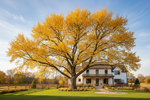
Why Native Trees Survive Hurricanes Better
, by Andrew Norouzian, 5 min reading time
, by Andrew Norouzian, 5 min reading time
Why Native Trees Can Survive Hurricanes Better in Florida
Florida homeowners know that hurricane season can put enormous stress on the landscape. High winds, saturated soil, heavy rain, and flying debris can damage or completely uproot trees.
When choosing trees for a Florida property, one question often comes up: Do native trees survive hurricanes better?
The answer isn’t simply yes or no. Native status alone does not make a tree hurricane-resistant. However, many Florida native trees can be well adapted to the environmental conditions they experience in Florida, and choosing an appropriate species and maintaining it properly can improve the chances of a tree remaining healthy through severe weather.
1. Native Trees Are Adapted to Florida’s Climate
Florida’s native trees have evolved or naturally established in an environment characterized by heat, intense sunlight, heavy rainfall, periodic drought, and tropical weather.
Over generations, trees that naturally occur in Florida have adapted to the state’s environmental conditions.
This doesn’t mean every native tree will withstand a hurricane. A large, poorly structured native tree can still fail during a major storm.
However, selecting species appropriate for your specific Florida site can be an important part of creating a resilient landscape.
2. Strong Root Systems Matter
One of the biggest problems during hurricanes is tree failure caused by uprooting.
Extremely strong winds can place enormous pressure on a tree’s canopy. That force is transferred through the trunk and into the root system.
A healthy, well-established root system can help anchor a tree.
Site conditions matter enormously. Compacted soil, poor drainage, construction damage, restricted rooting space, and recently planted trees can all affect how securely a tree becomes established.
This is one reason proper planting and establishment are just as important as choosing the species.
3. Florida Native Oaks Can Become Strong Landscape Trees
Several native oak species can become substantial shade trees in Florida.
Examples include:
Live Oak in particular is widely associated with the Southern landscape and can develop a massive, spreading canopy.
But size alone doesn’t determine storm performance. Structural development, pruning history, root conditions, tree health, and exposure to wind all influence how an individual tree performs during a hurricane.
4. Tree Structure Is Extremely Important
Two trees of the same species can respond very differently to a hurricane.
A tree with:
may perform very differently from a neglected or structurally compromised tree.
This is why simply purchasing a “hurricane-resistant” tree isn’t enough.
The way a tree is grown and maintained matters.
5. Proper Pruning Can Reduce Problems
Regular structural pruning can help develop a stronger tree.
Young trees are particularly important to train because structural problems become more difficult and expensive to correct as the tree gets larger.
Pruning should focus on developing good branch structure rather than simply removing large portions of the canopy.
Avoid excessive topping or indiscriminate cutting. Improper pruning can create additional structural problems and unnecessary stress.
For large or mature trees, especially those near homes and utilities, professional arboricultural advice may be appropriate.
6. Location Makes a Difference
A tree growing in an open field experiences wind differently from a tree growing among buildings and other mature trees.
A newly exposed tree may also experience greater wind pressure if surrounding vegetation is removed during construction or development.
When selecting a tree, think about its eventual size and the conditions around it.
Ask:
Where will the wind come from?
How much space will the roots have?
Will surrounding trees provide protection?
Could the mature canopy interfere with structures or utilities?
Good landscape planning can reduce future problems.
7. Healthy Trees Are Better Prepared for Storm Stress
A tree doesn’t need to be native to be healthy, and a native tree isn’t automatically healthy.
Water management, appropriate fertilization, pest management, soil conditions, planting depth, mulch, and proper pruning all contribute to tree health.
A healthy tree generally has a better foundation for dealing with environmental stress than a tree already suffering from root problems, disease, decay, or poor structure.
8. Newly Planted Trees Need Time
One common mistake is expecting a newly planted tree to immediately have the stability of an established tree.
Newly planted trees have a limited root system compared with mature specimens.
Proper watering during establishment is critical, particularly during Florida’s dry periods.
Give the tree time to establish before expecting it to provide significant shade or withstand the same environmental stresses as a mature, well-rooted tree.
9. Native Does Not Mean Hurricane-Proof
This is perhaps the most important point.
There is no tree that can be guaranteed to survive a major hurricane.
A Category 1 storm and a major hurricane produce very different conditions. Wind direction, duration, rainfall, soil saturation, previous storm damage, and debris can all affect the outcome.
Even large, healthy native trees can lose branches or fall during extreme weather.
Instead of looking for a “hurricane-proof tree,” Florida homeowners should focus on tree selection, proper planting, structural development, and ongoing maintenance.
10. Choosing the Right Tree for Your Florida Landscape
A resilient landscape starts with choosing trees that fit the site.
Before planting, consider:
For Central Florida homeowners, native species such as Live Oak, Sweetbay Magnolia, Dahoon Holly, Winged Elm, and other Florida natives can provide attractive options for creating a landscape with strong ecological value and long-term potential.
Building a More Resilient Florida Landscape
Hurricanes are an unavoidable part of gardening and landscaping in Florida. While no tree can guarantee protection from extreme storms, thoughtful tree selection and proper management can help create a healthier and more resilient landscape.
At Flowing Well Tree Farm, we grow Florida native trees and other plants for homeowners, landscapers, garden centers, and landscape professionals.
Whether you’re looking for a large native shade tree, an evergreen native, a flowering tree, or an unusual Florida species, selecting the right plant for the right location is one of the most important decisions you can make.
Plant for Florida. Plant for the future.

$130.00

$125.00

$130.00

$30.00

$40.00

$135.00

$30.00

$130.00

$30.00

$30.00

$10.00

$10.00

$30.00

$30.00

$25.00

$155.00

$190.00

$160.00

$10.00

$130.00

$190.00

$135.00

$25.00

$12.00

$130.00

$10.00

$10.00

$125.00

$130.00

$190.00


