
Native Alternatives to Ligustrum
, by Andrew Norouzian, 6 min reading time
, by Andrew Norouzian, 6 min reading time
# Native Alternatives to Ligustrum
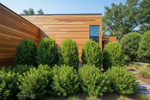
Ligustrum, commonly called privet, has long been used for dense hedges and privacy screens. However, several Ligustrum species can spread aggressively, escape cultivation, and displace native plants. Florida-friendly native shrubs and small trees can provide the same evergreen screening, fast growth, and polished landscape appeal—while offering food and shelter for local wildlife.[2][3]
## Why Replace Ligustrum?
Privet is popular because it grows quickly, tolerates pruning, and creates a thick hedge. The downside is that many species produce abundant fruit that birds spread into natural areas, where the plants can compete with native vegetation.
Replacing Ligustrum with native plants helps create a healthier, more resilient landscape. Native alternatives are adapted to regional conditions and can bring flowers, berries, fragrance, and habitat value to your property. Wax myrtle, native hollies, Florida anise, Carolina cherry laurel, and viburnums are all recommended native replacements for privet hedges.[3][10][2]
## Best Native Replacements
### Wax Myrtle
**Wax myrtle** (*Morella cerifera*) is one of the best all-around native alternatives to Ligustrum for Central Florida. It is evergreen, fast-growing, adaptable, and easy to shape into a privacy hedge or leave natural as a screening plant.
- Mature size: Approximately 15–25 feet tall and wide, sometimes larger
- Light: Full sun to partial shade
- Best for: Privacy screens, hedges, property borders, and moist or sandy soils
- Wildlife value: Fruit supports birds; aromatic foliage adds year-round interest
Wax myrtle is widely regarded as a go-to native hedge plant in place of privet.[3]
### Yaupon Holly
**Yaupon holly** (*Ilex vomitoria*) is a tough evergreen native with small leaves, dense branching, and excellent pruning tolerance. It works as a formal hedge, informal screen, or small multi-trunk tree.
- Mature size: Usually 15–25 feet tall, depending on cultivar and pruning
- Light: Full sun to partial shade
- Best for: Formal hedges, foundation plantings, coastal landscapes, and low-maintenance screens
- Wildlife value: Female plants produce red berries that attract birds
For berries, include both male and female plants in the landscape. Yaupon holly is specifically noted as an evergreen native alternative with bird-attracting fruit.[8][10]
### Dahoon Holly
**Dahoon holly** (*Ilex cassine*) is an excellent option for larger Florida landscapes, especially where soil remains damp or occasionally wet. Its evergreen foliage and upright growth make it useful as a tall privacy screen.
- Mature size: Often 20–40 feet tall
- Light: Full sun to partial shade
- Best for: Wet areas, privacy planting, and naturalized screens
- Wildlife value: Red berries on female plants provide food for birds
Dahoon holly is a strong choice when Ligustrum was planted along a pond edge, drainage area, or other moist location.
### Carolina Cherry Laurel
**Carolina cherry laurel** (*Prunus caroliniana*) delivers the dense, evergreen look many homeowners want from Ligustrum. It can be clipped into a formal hedge or allowed to grow into a handsome small tree.
- Mature size: About 20–40 feet tall if unpruned
- Light: Full sun to partial shade
- Best for: Tall hedges, noise buffers, and privacy screens
- Wildlife value: Flowers support pollinators, while fruit may be eaten by birds
Carolina cherry laurel is a native evergreen replacement commonly recommended for privet.[4][10][2]
### Florida Anise
**Florida anise** (*Illicium floridanum*) is an attractive evergreen shrub with deep red, star-shaped flowers and aromatic leaves. It is best in part shade and evenly moist soil.
- Mature size: Commonly 6–12 feet tall and wide
- Light: Partial shade to shade
- Best for: Woodland gardens, shaded property lines, and moist foundation beds
- Wildlife value: Native flowers add seasonal interest and support a more diverse landscape
Florida anise is ideal where Ligustrum is growing in filtered light beneath mature trees. It is included among recommended native alternatives to common and Japanese privet.[5][2]
### American Beautyberry
**American beautyberry** (*Callicarpa americana*) is a looser, more natural-looking alternative for informal hedges. In late summer and fall, its vivid purple berries create a dramatic display that birds appreciate.
- Mature size: Usually 3–8 feet tall and wide
- Light: Full sun to partial shade
- Best for: Wildlife gardens, woodland edges, and informal screening
- Wildlife value: Berries offer an important seasonal food source for birds
Beautyberry will not create the clipped, formal look of Ligustrum, but it is an excellent choice for homeowners who want a softer, more natural landscape.
### Walter’s Viburnum
**Walter’s viburnum** (*Viburnum obovatum*) is a versatile Florida native with fragrant white spring flowers, dense branching, and berries that attract wildlife. It can be kept compact with pruning or allowed to develop as an informal hedge.
- Mature size: Often 6–15 feet tall, depending on form and growing conditions
- Light: Full sun to partial shade
- Best for: Foundation plantings, informal hedges, and pollinator-friendly landscapes
- Wildlife value: Flowers support pollinators; berries benefit birds
Native viburnums, including arrowwood and blackhaw species in regions where they are appropriate, are broadly recommended replacements for privet.[9][2][5]
## Pick the Right Substitute
| Landscape goal | Best native choices |
|---|---|
| Dense evergreen privacy hedge | Wax myrtle, yaupon holly, Carolina cherry laurel |
| Formal clipped hedge | Yaupon holly, Walter’s viburnum, Carolina cherry laurel |
| Fast natural screen | Wax myrtle or Carolina cherry laurel |
| Shade or woodland edge | Florida anise, American beautyberry |
| Moist or wet soil | Dahoon holly, wax myrtle, Florida anise |
| Berries for birds | Yaupon holly, dahoon holly, beautyberry, Walter’s viburnum |
| Fragrant spring flowers | Walter’s viburnum or Carolina cherry laurel |
## Planting a Native Screen
For an effective privacy screen, choose a plant based on its **mature width**, not just its size at purchase. Space plants so their mature canopies can meet without severe crowding; overly tight spacing often creates thin, stressed hedges over time.
Use a 2–3 inch layer of mulch to conserve moisture and suppress weeds, while keeping mulch away from trunks and stems. Water consistently during establishment, then use selective pruning to maintain shape without removing all flowers and fruit every year.
## Grow a Better Hedge
The best native Ligustrum replacement depends on whether your priority is formal structure, fast privacy, shade tolerance, or wildlife value. For many Orlando-area properties, wax myrtle, yaupon holly, Carolina cherry laurel, Walter’s viburnum, and Florida anise offer practical, beautiful alternatives that belong in the Florida landscape.[10][2][3]
At Flowing Well Tree Farm, we can help you choose native plants for a privacy hedge that fits your site, design goals, and long-term maintenance preferences.
Sources
[1] Alternatives to Chinese privet for visual hedge/screen https://www.reddit.com/r/NativePlantGardening/comments/176b142/alternatives_to_chinese_privet_for_visual/
[2] Native Plant Alternatives to Ligustrum vulgare (Common Privet) https://www.gardenia.net/guide/native-plant-alternatives-to-ligustrum-vulgare
[3] Plant This, Not That: Top 10 Privet, Ligustrum Ssp., Alternatives https://lee.ces.ncsu.edu/news/plant-this-not-that-top-10-privet-ligustrum-ssp-alternatives/
[4] Ligustrum lucidum - Glossy Privet https://www.npsot.org/posts/invasive-plant/ligustrum-lucidum/
[5] Native Plant Alternatives to Ligustrum japonicum (Japanese ... https://www.gardenia.net/guide/native-plant-alternatives-to-ligustrum-japonicum
[6] Another ligustrum Q: good alternatives? https://www.houzz.com/discussions/2220024/another-ligustrum-q-good-alternatives
[7] Noninvasive Alternatives to Privet Hedge https://www.finegardening.com/article/noninvasive-alternatives-to-privet-hedge
[8] Ask Mr. Smarty Plants https://www.wildflower.org/expert/show.php?id=2080
[9] [PDF] HANDOUT-Overused-Foundation-Plants-and-Native-Alternatives.pdf https://mgnv.org/wp-content/uploads/2020/07/HANDOUT-Overused-Foundation-Plants-and-Native-Alternatives.pdf
[10] Suggested AlterNATIVEs to Common Landscape Plants https://gnps.org/wp-content/uploads/2021/09/AlterNATIVES_GNPS.pdf

$130.00

$125.00

$130.00

$30.00

$40.00

$135.00

$30.00

$130.00

$30.00

$30.00

$10.00

$10.00

$30.00

$30.00

$25.00

$155.00

$190.00

$160.00

$10.00

$130.00

$190.00

$135.00

$25.00

$12.00

$130.00

$10.00

$10.00

$125.00

$130.00

$190.00


