
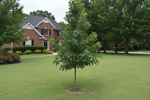
How to Plant a Large Oak Tree in Florida | Flowing Well Tree Farm
, by Andrew Norouzian, 7 min reading time
, by Andrew Norouzian, 7 min reading time
How to Plant a Large Oak Tree Successfully
A large oak can transform a property, giving you instant shade and presence instead of a decade of waiting. But bigger trees are less forgiving of planting mistakes. A tree planted too deep, watered poorly, or set in the wrong spot may struggle for years or fail outright.
The good news is that success comes down to a handful of practices. Here is how to plant a large oak the right way.
Before You Plant: Get the Site Right
Choose the right oak for the spot. Match the species to your soil and space. Live oak and Shumard oak suit well-drained sites, while swamp chestnut oak prefers moisture. See our guide to the best oak trees for Florida landscapes.
Plan for mature size. A large oak can reach 50 to 80 feet tall with a canopy just as wide. Keep it well away from homes, pools, power lines, septic systems, and pavement.
Call 811 before you dig. Free utility locating helps you avoid buried lines. Do this a few days ahead, since marking takes time.
Check the drainage. Dig a test hole, fill it with water, and see how quickly it drains. If water sits for a long time, choose a moisture-tolerant species or a different location.
Check local rules. Some cities and counties regulate tree planting near easements, rights-of-way, and utilities.
Consider Professional Installation for Very Large Trees
Large trees are heavy. A big root ball can weigh hundreds or even thousands of pounds and typically needs equipment to move safely. For trees beyond what two people can comfortably handle, hiring a qualified installer is usually money well spent. Ask your nursery for recommendations, and make sure the installer follows the planting practices below, especially on depth.
When to Plant
In Florida, fall through early spring is generally the best window. Cooler weather and seasonal rain give roots time to establish before summer heat. Container-grown trees can be planted year-round with extra watering, but you'll work harder to keep them alive in hot months.
Step-by-Step: How to Plant a Large Oak
1. Inspect the tree
Before planting, check for a healthy trunk, sound branch structure, and a root ball that's intact and moist. Find the root flare, the spot where the trunk widens as it meets the roots. This is your key reference point for planting depth.
2. Dig a wide, shallow hole
Dig the hole two to three times as wide as the root ball but no deeper than the root ball's height. Wide holes give roots loose soil to spread into, while a deep hole invites settling and burial of the trunk. Rough up the sides of the hole so they aren't slick or glazed, especially in heavier soils.
3. Set the tree at the right depth
This is the most important step. The root flare should sit at or slightly above the surrounding soil grade. Planting too deep is one of the most common causes of tree decline. If you're unsure, err on the higher side, since soil will settle.
4. Position and straighten
Lift the tree by the root ball, never the trunk. Turn it so the best side faces the most visible direction, and check that it's straight from more than one angle before you backfill.
5. Remove packaging as appropriate
Remove containers, ropes, and any nylon or plastic wrap. For wire baskets and burlap, follow your nursery's instructions. Commonly, the top portion is cut away and folded down or removed once the tree is in position, and synthetic burlap should always be removed. Leaving material around the trunk or roots can girdle or restrict them over time.
6. Backfill with native soil
Use the soil you dug out. Adding rich amendments to the hole can discourage roots from growing out into the surrounding ground. Fill in gradually, firming lightly as you go to remove air pockets, and avoid heavy compaction.
7. Water thoroughly
Water slowly and deeply right after planting to settle the soil. Build a low berm or ring of soil around the outer edge of the root ball if it helps hold water in.
8. Mulch correctly
Spread 2 to 3 inches of mulch in a wide circle, keeping it a few inches away from the trunk. Piling mulch against the trunk (a "mulch volcano") traps moisture and invites rot and pests.
9. Stake only if needed
Most trees don't need staking. If a large tree is in a windy spot or the root ball is unstable, stake it loosely to allow some trunk movement, and remove the stakes after the first year. Trunk movement helps build strength.
Watering: The Key to Establishment
Watering is the single biggest factor in whether a large oak establishes. A commonly used guideline is:
Adjust for rain, soil type, and weather. Sandy soils drain faster and may need more frequent watering, while heavy soils need less. Check the soil a few inches down before watering, and aim for moist, not soggy.
Larger trees take longer to establish than small ones, often a year or more, so keep up consistent watering through that first stretch, especially during dry spells.
Pruning and Fertilizing at Planting
Prune lightly. Remove only dead, damaged, or crossing branches. Leaves feed the tree, so avoid heavy pruning at planting.
Skip the fertilizer at first. Newly planted trees don't need a heavy dose. If you're concerned about soil quality, get a soil test before adding anything.
Common Mistakes to Avoid
After Planting: What to Expect
A newly planted large tree may look quiet for a while. It's normal for growth to focus on roots at first, with modest top growth in the early years. For more on timing, see how fast live oaks grow. Some leaf drop or thinning right after planting can also be normal transplant stress. If you see sudden severe wilting or dieback, check your watering and planting depth first.
Frequently Asked Questions
How deep should I plant an oak tree? Plant it so the root flare sits at or slightly above the surrounding soil. The hole should be as deep as the root ball but two to three times as wide.
What is the best time to plant a large oak in Florida? Fall through early spring is generally best.
How often should I water a newly planted oak? A common guideline is daily for the first two weeks, every other day through about the first three months, then weekly until established. Adjust for weather and soil.
Should I fertilize a newly planted oak? Usually not at planting. Focus on proper planting, watering, and mulching, and get a soil test if you're unsure.
Do I need to stake a large oak? Often not. Stake only if wind or an unstable root ball requires it, and remove stakes after about a year.
Can I plant a large oak myself? Smaller trees, yes. For very large root balls, professional installation with proper equipment is usually safer for you and the tree.
Start With a Healthy Oak
A well-grown tree and a good planting give you the best shot at decades of shade. Contact Flowing Well Tree Farm to ask about available oaks, sizes, and planting recommendations for your property.

$130.00

$125.00

$130.00

$30.00

$40.00

$135.00

$30.00

$130.00

$30.00

$30.00

$10.00

$10.00

$30.00

$30.00

$25.00

$155.00

$190.00

$160.00

$10.00

$130.00

$190.00

$135.00

$25.00

$12.00

$130.00

$10.00

$10.00

$125.00

$130.00

$190.00


