
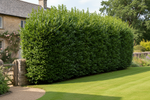
Cherry Laurel Privacy Screen: Complete Florida Guide
, by Andrew Norouzian, 8 min reading time
, by Andrew Norouzian, 8 min reading time
Cherry Laurel Privacy Screens: Complete Guide for Florida
If you want a privacy screen that grows quickly, stays evergreen, and is native to the Southeast, Carolina cherry laurel deserves a look. It fills in fast and offers plenty of wildlife value. It also has quirks that surprise homeowners who don't know about them ahead of time.
This guide covers what cherry laurel is, how to plant and care for it, and when another plant may be a better choice.
What Is Cherry Laurel?
The cherry laurel most Florida landscapers mean is Carolina laurel cherry (Prunus caroliniana), a native evergreen tree found across the southeastern coastal plain, including parts of Florida. It has glossy, dark green leaves, a dense upright form, and small fragrant white flowers in late winter to spring. Female trees produce small black fruits that birds eat.
A quick note on names: English cherry laurel (Prunus laurocerasus) is a different, non-native plant. It's common in cooler regions, but it isn't the same tree, and it's not what most Florida sources mean. Confirm which one you are buying.
Mature Carolina laurel cherry commonly reaches about 20 to 30 feet tall (sometimes more) with a spread of roughly 15 to 20 feet, though size varies with conditions and cultivar. Compact selections such as 'Bright 'n Tight' stay smaller and are popular for hedges.
Why People Choose Cherry Laurel for Privacy
Fast growth. In good conditions it can grow 2 feet or more per year, which is quicker than many other evergreen screens.
Dense evergreen foliage. The dark, glossy leaves make a full green wall.
Native to the Southeast. It fits Florida-friendly landscaping goals better than most non-native hedge plants.
Wildlife value. Flowers feed pollinators, the fruit feeds birds, and the dense branching provides cover.
Flexible size. You can grow it as a large screen tree or, with compact cultivars, as a smaller hedge.
Drawbacks to Know Before You Plant
Cherry laurel isn't for every site, and it's worth being upfront about the trade-offs.
Cherry Laurel vs. Other Privacy Screens
|
Feature |
Cherry laurel |
Eagleston holly |
Podocarpus |
|
Native ties |
Native to the Southeast |
Hybrid of Southeastern natives |
Non-native (Asia) |
|
Growth rate |
Fast |
Moderate |
Slow to moderate |
|
Mature height |
20-30+ ft |
20-30 ft |
8-15 ft as hedge; taller if unpruned |
|
Lifespan |
Shorter |
Longer |
Moderate |
|
Maintenance |
Moderate |
Low |
Moderate |
|
Common problems |
Leaf spot, scale, borers, seedlings |
Occasional scale |
Root rot, nutrient deficiencies |
|
Toxicity concerns |
Leaves and seeds toxic if eaten |
Berries mildly toxic |
Fruit and seeds not for eating |
Comparisons are general and vary by site and care. See our guides to Eagleston holly and Eagleston holly vs. podocarpus.
Where Cherry Laurel Works Best
Where to Think Twice
How Far Apart to Plant Cherry Laurel
For a solid screen, space plants roughly 6 to 10 feet apart for standard forms. Compact cultivars used as hedges can go closer, often around 4 to 6 feet, depending on the variety. Closer spacing fills faster but leads to more competition over time. Staying at least 4 to 5 feet from fences and walls keeps airflow and access. For the same spacing logic, see how far apart to plant Eagleston holly.
How to Plant a Cherry Laurel Screen
Care Tips for a Healthy Screen
Cherry Laurel vs. Eagleston Holly: Which Should You Choose?
Choose cherry laurel if you want the fastest screen, prefer a plant that is native, and are comfortable with a shorter lifespan and a bit more upkeep.
Choose Eagleston holly if you want a longer-lived, lower-maintenance evergreen screen with less seedling and pest hassle, and you don't need it to fill in as quickly.
Mix both for a layered screen that fills in quickly with laurel while longer-lived hollies mature, then let the laurel be replaced over time if it declines.
Frequently Asked Questions
Is cherry laurel a good privacy screen in Florida? It can be, particularly in northern and central Florida, where it grows quickly. Its shorter lifespan and pest issues mean it's not the best long-term choice for every site.
How fast does cherry laurel grow? Often 2 feet or more per year in good conditions, though this varies with soil, water, and care.
Is Carolina cherry laurel native to Florida? Yes, it's native to parts of the Southeast, including Florida.
Is cherry laurel poisonous? The leaves, seeds, and pits can be toxic if eaten, especially when wilted, and are a particular concern for livestock. Use caution around pets, children, and animals.
Can I shear cherry laurel into a hedge? You can, but shearing tears the large leaves and leaves brown edges. Hand pruning gives a better look, and compact cultivars are easier to keep tidy.
How far apart should I plant cherry laurel for privacy? Roughly 6 to 10 feet for standard forms, and closer for compact cultivars.
How long does cherry laurel live? Generally less than hollies and oaks. Expect a screen that may need replacing in a few decades.
What is the difference between Carolina cherry laurel and English cherry laurel? Carolina cherry laurel (Prunus caroliniana) is native to the Southeast. English cherry laurel (Prunus laurocerasus) is a non-native species that's more common in cooler climates.
Plan the Right Screen for Your Property
The best privacy screen matches your timeline, soil, and maintenance goals. Contact Flowing Well Tree Farm to ask about available screening trees and get recommendations for your property

$130.00

$125.00

$130.00

$30.00

$40.00

$135.00

$30.00

$130.00

$30.00

$30.00

$10.00

$10.00

$30.00

$30.00

$25.00

$155.00

$190.00

$160.00

$10.00

$130.00

$190.00

$135.00

$25.00

$12.00

$130.00

$10.00

$10.00

$125.00

$130.00

$190.00


