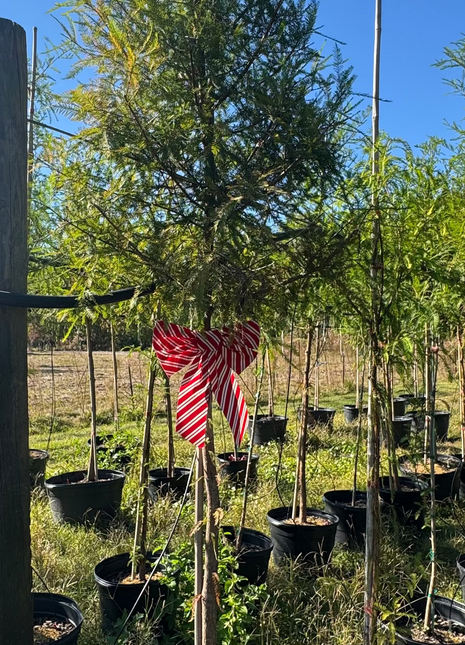
Longleaf Pine (Pinus palustris) — Locally Grown in Pierson, Florida at Flowing Well Tree Farm
Iconic Southern Native • Restoration Keystone • Wildlife Habitat Tree • Florida-Grown for Field Success
When you buy Longleaf Pine here, you’re not getting bare-root forestry stock or stressed, out-of-region seedlings—you’re getting trees grown directly in Pierson, raised in real Florida sand, heat, humidity, and wind conditions from the beginning.
That matters because Longleaf Pine is a long-term investment species. Locally grown stock develops stronger root systems, establishes more reliably, and transitions more successfully into restoration sites, natural landscapes, and large properties.
This is direct-from-grower material. You can visit the farm, see how native pines are produced, and get guidance from people who understand how these trees perform over decades—not just the first season.
Longleaf Pine is not just a tree—it’s a foundation species for entire ecosystems.
Why Locally Grown Matters for Longleaf Pine
Even native pines benefit significantly from regional production:
Stronger adaptation to Florida’s sandy soils and climate
Improved root development for long-term stability
Reduced transplant shock in open-field conditions
Better survival in restoration and reforestation sites
More predictable early establishment in challenging landscapes
It’s a stronger start for a tree meant to last generations.
A True Legacy Southern Pine
Longleaf Pine is one of the most important native trees in the Southeast, known for:
Exceptionally long needles (up to 18 inches)
Tall, straight trunk development over time
Open canopy structure that defines Southern landscapes
Lifespan measured in generations, not decades
It creates the classic “high, open pine forest” ecosystem that once dominated the region.
Ecological Powerhouse & Wildlife Value
This is a keystone species in Southern ecology:
Supports native grasses and understory diversity
Provides habitat for birds and wildlife
Essential to longleaf pine ecosystem restoration
Encourages fire-adapted native plant communities
Supports pollinators and specialized species
It is one of the most ecologically valuable trees you can plant in the Southeast.
USDA Growing Zones
Best suited for Zones 7–10, thriving in warm, coastal, and inland Southeastern climates.
Mature Size & Growth Habit
A large, long-lived native conifer:
60–100+ ft tall (at maturity)
20–40 ft spread
Develops a tall, straight trunk with a high canopy over time.
Light Requirements
Requires full sun. Shade reduces vigor and long-term structural development.
Soil & Site Requirements
Naturally adapted to harsh, nutrient-poor soils:
Prefers well-drained sandy soils
Tolerates low fertility conditions
Does not perform well in heavy clay or standing water
Thrives in open, natural landscapes
It is one of the best trees for difficult, sandy sites.
Planting Guidance (Grower Recommended)
We focus on long-term establishment success:
Choose a full sun site with wide open space
Dig a hole twice as wide as the root ball
Plant at ground level (do not bury the trunk flare)
Backfill with native soil and water deeply
Apply light mulch, keeping it away from the trunk
Avoid compacted soils and competition early on
If you visit the farm, we can help identify ideal restoration or landscape placements.
Watering & Establishment
Water regularly during the first growing season to establish a strong root system. Once established, Longleaf Pine becomes highly drought tolerant and thrives with minimal supplemental irrigation.
Fertilizer
Minimal fertilization required. This species is adapted to natural, low-nutrient environments. Over-fertilization can reduce long-term resilience.
Pruning & Maintenance
Extremely low-maintenance:
Remove only dead or damaged branches if necessary
Avoid shaping or heavy pruning
Allow natural structure to develop
It is designed to grow with minimal human intervention.
Ideal Uses
Habitat restoration projects
Reforestation and conservation land
Large naturalized landscapes
Wildlife corridors
Long-term land stewardship plantings
Why This Is a Smarter Long-Term Investment
✔ Grown locally in Florida sandhill conditions from the start✔ Stronger survival in restoration and field planting✔ Direct grower expertise for site selection and success✔ Keystone species for ecosystem restoration✔ Exceptional drought tolerance once established✔ Supports long-term wildlife and biodiversity✔ Opportunity to visit, learn, and select in person
The Real Value
This isn’t just a pine tree purchase—it’s ecosystem restoration at scale, backed by local production and real field experience.
You’re not just planting a tree. You’re helping rebuild a landscape that can last for generations.
Native Sweetgum (Liquidambar styraciflua) — Locally Grown in Pierson, Florida at Flowing Well Tree Farm
Native Shade Tree • Fast-Growing Hardwood • Brilliant Fall Color Species • Florida-Grown Restoration Stock
Native Sweetgum (Liquidambar styraciflua) is a classic southeastern native hardwood known for its rapid growth, strong canopy development, and outstanding seasonal color display. Found naturally in bottomlands, mixed hardwood forests, and moist upland sites across the eastern United States, Sweetgum is widely used in restoration plantings, reforestation projects, large-scale shade plantings, and native landscape systems throughout Florida.
When you buy Native Sweetgum here, you're not getting weak, over-irrigated nursery stock—you’re getting locally grown, field-conditioned trees produced in Pierson and adapted to Florida’s heat, humidity, sandy soils, and seasonal rainfall variability.
That matters for long-term success. Locally grown Sweetgum develops stronger root systems, adapts more quickly after planting, and is better prepared for the real environmental conditions found in Florida landscapes and restoration sites.
This is direct-from-grower native hardwood stock. Visit the farm, see how our shade trees are grown, and receive practical guidance on canopy planning, spacing, and long-term landscape development.
Native Sweetgum is especially valued for its fast growth, dense shade production, and striking fall color that brings seasonal interest to large landscapes.
Why Locally Grown Matters for Sweetgum Trees
Starting with Florida-grown stock provides important advantages:
Better adaptation to Florida heat and humidity
Stronger root system development before planting
Improved transplant success
Faster establishment in field conditions
Greater resilience to seasonal stress
Better long-term performance in native landscapes
It creates a stronger foundation for durable canopy establishment.
Shade & Canopy Value
Sweetgum is a dependable native shade tree:
Fast growth rate for a hardwood species
Develops a dense, rounded canopy
Excellent for large properties and open landscapes
Provides long-term cooling shade
Strong structural canopy development over time
It is widely used for reforestation and large-scale shade planting projects.
Seasonal Interest & Ornamental Value
Native Sweetgum is highly valued for its seasonal display:
Brilliant fall colors in red, orange, purple, and yellow
Star-shaped leaves with unique texture
Distinct spiky seed balls adding winter interest
Strong visual presence in large landscapes
One of the most colorful native hardwoods in the Southeast
Its fall display makes it a standout seasonal tree.
Wildlife & Ecological Importance
Sweetgum plays a strong role in native ecosystems:
Seeds provide food for birds and small mammals
Supports native insect populations
Provides nesting and shelter habitat
Contributes to biodiversity in hardwood forests
Enhances ecological structure in restoration plantings
It is a valuable long-term habitat species.
Climate & Site Adaptability
Native Sweetgum is well adapted to Florida conditions:
Native to bottomlands and moist upland forests
Performs well in sandy, loamy, and clay soils
Tolerates seasonal flooding and wet periods
Handles heat and humidity effectively
Adaptable to both wet and moderately dry sites once established
It is a strong performer in diverse landscape conditions.
USDA Growing Zones
Best suited for Zones 5–9, performing strongly throughout Florida and much of the eastern United States.
Mature Size & Growth Habit
A large native hardwood:
60–100 ft mature height
40–60 ft spread
Dense, rounded canopy form
Strong central trunk development
Long-lived under natural conditions
It becomes a dominant canopy tree in mature landscapes.
Light Requirements
For best growth:
Full sun preferred
Minimum 6 hours of direct sunlight daily
Best canopy density in open conditions
Soil & Site Requirements
Highly adaptable native tree:
Prefers moist, fertile soils but adapts widely
Tolerates sandy, loamy, and clay soils
Performs well in areas with seasonal moisture variation
Handles occasional flooding
Avoid extremely dry, shallow soils for best growth
Planting Guidance (Grower Recommended)
For best establishment:
Plant in full sun open areas
Dig planting hole 2–3× wider than root ball
Plant at original soil depth
Water thoroughly after planting
Apply mulch around root zone
Keep mulch away from trunk base
Maintain regular watering during establishment period
We can assist with canopy spacing, restoration layouts, and long-term forest planning.
Watering & Establishment
Water regularly during the first 1–2 growing seasons. Once established, Native Sweetgum becomes moderately adaptable to both wet and dry seasonal conditions.
Fertilizer
Low to moderate requirements:
Light balanced fertilizer during establishment if needed
Avoid excessive nitrogen applications
Performs well in natural soil fertility
Minimal fertilization once established
Pruning & Maintenance
Low maintenance once established:
Prune early for structural form
Remove damaged or crossing branches as needed
Naturally develops a strong canopy structure
Long-term maintenance is minimal
Why This Is a Smarter Long-Term Investment
✔ Locally grown in Florida for stronger field performance
✔ Fast-growing native hardwood shade tree
✔ Exceptional fall color and seasonal interest
✔ Valuable wildlife habitat species
✔ Strong restoration and reforestation tree
✔ Adaptable to diverse soil and moisture conditions
✔ Long-lived canopy investment tree
✔ Grower-direct planting expertise and support
The Real Value
This isn’t just a shade tree—it’s a long-term landscape foundation.
You’re not simply planting a sweetgum. You’re building canopy structure, restoring native forest systems, supporting wildlife habitat, and investing in a living hardwood that will define and enrich the landscape for generations.
Cedar Elm (Ulmus crassifolia) — Locally Grown in Pierson, Florida at Flowing Well Tree Farm
Native Shade Tree • Tough Urban Hardwood • Drought-Resilient Elm • Florida-Grown Restoration Stock
Cedar Elm (Ulmus crassifolia) is one of the toughest native hardwood trees in the southern United States, valued for its durability, adaptability, and dependable shade production. Naturally found in upland woods, limestone soils, and mixed hardwood forests across the Southeast and Texas region, Cedar Elm is widely used in restoration projects, urban landscapes, windbreak plantings, and large-scale native canopy systems.
When you buy Cedar Elm here, you're not getting weak, over-irrigated nursery stock—you’re getting locally grown, field-conditioned trees produced in Pierson and adapted to Florida’s heat, humidity, sandy soils, and seasonal weather stress.
That matters for long-term success. Locally grown Cedar Elm develops stronger root systems, adjusts faster after planting, and is better equipped to handle Florida’s variable rainfall, drought periods, and high-heat conditions.
This is direct-from-grower native hardwood stock. Visit the farm, see how our shade trees are grown, and receive practical guidance on canopy planning, spacing, and long-term landscape development.
Cedar Elm is especially valuable because it combines toughness, shade production, and adaptability in a way few native hardwoods can match.
Why Locally Grown Matters for Cedar Elm
Starting with Florida-grown stock provides important advantages:
Better adaptation to Florida heat and humidity
Stronger root system development before planting
Improved drought and stress tolerance
Faster establishment in field conditions
Greater resilience in urban and rural landscapes
Better long-term survival in restoration sites
It creates a stronger foundation for durable canopy establishment.
Shade & Canopy Value
Cedar Elm is a reliable native shade tree:
Moderate to fast growth rate
Develops a broad, rounded canopy over time
Excellent for residential shade and large properties
Reduces heat in open landscapes
Provides long-term canopy structure
It is widely used where dependable shade and toughness are both required.
Wildlife & Ecological Importance
Cedar Elm supports native ecosystems in multiple ways:
Produces small seeds consumed by birds
Supports native insects and pollinators
Provides nesting and shelter habitat
Contributes to biodiversity in mixed hardwood forests
Strengthens ecological function in restoration plantings
It is a steady, functional component of native woodland systems.
Climate & Site Adaptability
One of Cedar Elm’s strongest traits is its adaptability:
Native to upland woods and limestone soils
Tolerates drought once established
Performs well in sandy and loamy soils
Handles heat and humidity effectively
Adapts to urban and disturbed sites
More tolerant of stress than many elm species
It is a dependable choice for challenging planting environments.
USDA Growing Zones
Best suited for Zones 6–9, performing well throughout Florida and much of the southeastern United States.
Mature Size & Growth Habit
A strong native shade tree:
40–70 ft mature height
30–50 ft mature spread
Rounded, spreading canopy
Strong central trunk with age
Long-lived under proper conditions
Provides reliable mid-to-large scale shade.
Light Requirements
For best growth:
Full sun preferred
Minimum 6 hours of direct sunlight daily
Best canopy development in open areas
Soil & Site Requirements
Highly adaptable native hardwood:
Prefers well-drained soils
Tolerates sandy, loamy, and rocky soils
Performs well in low fertility conditions
Handles occasional drought stress
Avoid consistently flooded soils
Planting Guidance (Grower Recommended)
For best establishment:
Plant in full sun locations
Dig hole 2–3× wider than root ball
Plant at original soil depth
Water thoroughly after planting
Apply mulch around root zone
Keep mulch away from trunk base
Maintain regular watering during establishment
We can assist with shade planning, spacing, and long-term canopy design.
Watering & Establishment
Water regularly during the first 1–2 growing seasons. Once established, Cedar Elm becomes highly resilient and moderately drought tolerant.
Fertilizer
Low to moderate requirements:
Light balanced fertilizer during establishment if needed
Avoid excessive nitrogen applications
Performs well in natural soils
Minimal fertilization once established
Pruning & Maintenance
Low maintenance once established:
Prune early to develop structure
Remove crossing or damaged branches as needed
Naturally develops a strong canopy form
Long-term maintenance is minimal
Why This Is a Smarter Long-Term Investment
✔ Locally grown in Florida for stronger field performance
✔ Extremely tough native hardwood tree
✔ Reliable shade and canopy development
✔ Highly adaptable to stress conditions
✔ Excellent urban and rural landscape tree
✔ Strong drought tolerance once established
✔ Valuable wildlife and ecosystem support species
✔ Grower-direct planting guidance and support
The Real Value
This isn’t just a shade tree—it’s a long-term structural backbone for the landscape.
You’re not simply planting an elm. You’re building durable canopy cover, supporting wildlife habitat, improving landscape resilience, and investing in a native hardwood that will continue to strengthen and mature for generations.
Catalpa (Catalpa bignonioides) — Locally Grown in Pierson, Florida at Flowing Well Tree FarmNative Flowering Shade Tree • Pollinator-Friendly Canopy Species • Fast-Growing Wildlife Tree • Florida-Grown Landscape, Homestead & Restoration Tree
Catalpa (Catalpa bignonioides), commonly known as Southern Catalpa, is one of the most distinctive native flowering trees in the southeastern United States. Known for its enormous heart-shaped leaves, spectacular white orchid-like flowers, and unique bean-like seed pods, Catalpa delivers bold seasonal interest while providing shade, wildlife benefits, and rapid canopy development.
At Flowing Well Tree Farm in Pierson, Florida, we grow Catalpa as premium native canopy stock selected for strong central leader development, vigorous growth, and long-term performance in Florida’s heat, humidity, sandy soils, and seasonal weather extremes. Each tree is field-grown under real Florida conditions to ensure durability, adaptability, and landscape success.
When you buy Catalpa here, you are not receiving weak ornamental nursery stock—you are getting Florida-adapted native trees conditioned to thrive in the demanding environments of the Southeast.
That local adaptation matters. Catalpa develops stronger root systems, improved drought tolerance, and greater storm resilience when grown under Florida conditions from the start.
Why Locally Grown Matters for Catalpa
Starting with Florida-grown stock provides key advantages:
Faster establishment in sandy Florida soilsImproved heat and humidity toleranceStronger root development for long-term stabilityBetter drought resistance once establishedHigher survival rates in landscape and restoration projectsEnhanced resilience during Florida storm seasons
This creates a dependable native shade tree capable of thriving for generations.
Flowering & Seasonal Interest
Catalpa produces one of the most dramatic floral displays of any native tree:
Large clusters of white flowers appear in late spring and early summerOrchid-like blooms feature purple and yellow markingsFlowers attract bees, butterflies, and beneficial pollinatorsLong decorative seed pods follow floweringMassive heart-shaped leaves provide bold tropical textureDistinctive winter seed pods add seasonal interest
Few native trees create such a memorable visual impact.
Canopy Structure & Landscape Value
Catalpa is a fast-growing shade tree with impressive character:
40–60 ft mature height depending on site conditionsBroad rounded canopy provides generous shade coverageLarge leaves create a lush landscape appearanceFast growth rate compared to many native hardwoodsExcellent specimen tree for large properties and parksStrong ornamental value throughout the year
It quickly develops into a commanding landscape feature.
Pollinator & Wildlife Importance
Catalpa is highly beneficial to wildlife:
Flowers provide nectar for bees and pollinatorsSupports native insect populations and biodiversityOffers shelter and nesting opportunities for birdsSeeds provide seasonal wildlife benefitsHost plant for the famous Catalpa Sphinx Moth ("Catalpa Worm")Enhances ecological diversity in naturalized landscapes
It serves as both a pollinator tree and wildlife habitat species.
Growth Habit & Structural Function
Catalpa functions as a fast-establishing canopy tree:
40–60+ ft mature height depending on growing conditionsWide-spreading canopy with strong shade productionModerate to fast growth rateStrong branching structure with ageLong-lived and adaptable in favorable sitesExcellent for large residential, agricultural, and restoration settings
It provides both beauty and practical shade value.
Climate & Site Adaptability
Catalpa performs exceptionally well across the Southeast:
Native to the southeastern United StatesThrives in Florida heat and humidityAdaptable to sandy, loamy, and clay soilsModerate drought tolerance once establishedHandles seasonal rainfall fluctuations wellSuitable for both rural and urban landscapes
It is remarkably adaptable to a wide range of growing conditions.
USDA Growing Zones
Best suited for Zones 5–9, with excellent performance throughout Florida and much of the southeastern United States.
Light Requirements
For best flowering and growth:
Full sun preferred for maximum floweringTolerates light partial shadeSun exposure improves canopy development and vigorIdeal for open landscapes and large planting areas
Soil & Site Requirements
Adaptable native canopy species:
Prefers well-drained soils but tolerates a wide range of conditionsPerforms well in sandy Florida soilsAdapts to clay and loam soilsBenefits from mulch during establishmentAvoid prolonged standing water in poorly drained sites
Planting Guidance (Grower Recommended)
For best long-term performance:
Plant in full sun whenever possibleDig hole 2–3× wider than root ballSet at original soil depthWater deeply after plantingApply mulch to stabilize moisture and suppress weedsSpace 25–40 ft apart for mature canopy developmentAllow adequate room for future spread and shade coverage
We can assist with shade tree planning, restoration projects, pollinator landscapes, and large-scale native tree installations.
Watering & Establishment
Water regularly during the first 1–2 growing seasons. Once established, Catalpa becomes highly adaptable and capable of handling Florida's seasonal drought and rainfall cycles.
Fertilizer
Low to moderate input requirements:
Light fertilization can encourage early growthOrganic compost supports root establishmentAvoid excessive nitrogen applicationsPerforms best in balanced native soil systems
Pruning & Maintenance
Low maintenance once established:
Prune young trees to encourage strong structureRemove damaged or crossing branches as neededDevelops a naturally attractive canopy with ageMinimal long-term maintenance requiredLong-lived and dependable in suitable sites
Why This Is a Smarter Long-Term Investment
✔ Locally grown in Florida for maximum adaptation✔ Beautiful orchid-like flowers with strong pollinator value✔ Fast-growing native shade tree✔ Unique foliage and decorative seed pods✔ Strong wildlife and ecological benefits✔ Excellent heat and humidity tolerance✔ Adaptable to a wide range of Florida soils✔ Grower-direct quality for Florida conditions
The Real Value
This isn’t just a shade tree—it’s a statement tree that combines rapid growth, spectacular blooms, wildlife value, and long-term canopy development.
When you plant Catalpa, you’re investing in a native flowering tree that provides cooling shade, supports pollinators, attracts wildlife, and creates a distinctive landscape presence that becomes more impressive with every passing year.
Swamp Tupelo (Nyssa biflora) — Locally Grown in Pierson, Florida at Flowing Well Tree Farm
Native Wetland Tree • Flood-Tolerant Hardwood • Wildlife Value Species • Florida-Grown Restoration Stock
Swamp Tupelo (Nyssa biflora) is one of the most important native wetland trees in the southeastern United States. Known for its exceptional flood tolerance, strong wildlife value, beautiful fall color, and ability to thrive where many trees cannot, Swamp Tupelo is widely used in wetland restoration projects, stormwater systems, pond edges, conservation lands, and naturalized Florida landscapes.
When you buy Swamp Tupelo here, you're not getting nursery-grown stock raised under protected conditions—you’re getting locally grown, field-conditioned trees produced in Pierson and adapted to Florida’s heat, humidity, seasonal flooding, and challenging soil conditions.
That matters for successful establishment. Locally grown Swamp Tupelo develops stronger root systems, adapts more quickly to field conditions, and is better prepared to handle the environmental stresses common throughout Florida’s wetland and lowland habitats.
This is direct-from-grower restoration-grade material. Visit the farm, see how our native trees are grown, and receive practical guidance on wetland restoration, pond-edge plantings, stormwater projects, and long-term canopy development.
Swamp Tupelo is especially valuable because it provides exceptional ecological benefits while thriving in areas where many landscape trees struggle to survive.
Why Locally Grown Matters for Swamp Tupelo
Starting with Florida-grown stock offers important advantages:
Better adaptation to Florida heat and humidity
Stronger root development before planting
Improved establishment in wetland environments
Faster acclimation to local growing conditions
Greater resilience during seasonal flooding
Better long-term survival in restoration projects
It creates a stronger foundation for long-term success.
Wetland & Restoration Value
Swamp Tupelo is one of the most dependable trees for wetland restoration:
Thrives in flood-prone environments
Excellent for pond and lake edges
Commonly used in stormwater management systems
Stabilizes soils in wet conditions
Supports long-term wetland ecosystem development
Ideal for conservation and mitigation projects
Its ability to tolerate standing water makes it an essential species for many Florida restoration efforts.
Wildlife & Ecological Importance
This species plays a critical role in native ecosystems:
Produces fruit consumed by birds and wildlife
Supports migratory and resident bird populations
Provides shelter and nesting habitat
Enhances biodiversity in wetland environments
Contributes to healthy aquatic and terrestrial food chains
Important component of native floodplain forests
It transforms planting sites into functioning wildlife habitat.
Outstanding Seasonal Interest
Swamp Tupelo delivers year-round beauty:
Glossy green foliage throughout the growing season
Spectacular red, orange, and yellow fall color
Attractive bark and branching structure
Wildlife-attracting fruit production
Strong natural form and landscape presence
Few native wetland trees offer this combination of ecological and ornamental value.
Climate & Site Adaptability
Swamp Tupelo is highly adaptable to Florida conditions:
Native to swamps, floodplains, and wet forests
Tolerates prolonged flooding
Thrives in moist and saturated soils
Performs well in acidic conditions
Handles Florida heat exceptionally well
Adaptable to both natural and constructed wetlands
It excels in locations where water is regularly present.
USDA Growing Zones
Best suited for Zones 5–9, performing exceptionally well throughout Florida and much of the southeastern United States.
Mature Size & Growth Habit
A long-lived native canopy tree:
40–80 ft mature height
25–40 ft mature spread
Upright pyramidal form when young
Broad, rounded canopy with age
Strong central trunk and durable structure
Provides substantial shade and long-term canopy benefits.
Light Requirements
For best growth and canopy development:
Full sun preferred
Tolerates partial shade
Maximum growth occurs in open locations
Soil & Site Requirements
Adapted to wetland environments:
Prefers moist to wet soils
Tolerates prolonged seasonal flooding
Performs well in acidic soils
Suitable for pond margins and low-lying areas
Thrives in locations with poor drainage
One of the best native trees available for wet sites.
Planting Guidance (Grower Recommended)
For successful establishment:
Plant in full sun to partial shade
Select moist or wet planting locations
Dig planting hole 2–3× wider than root ball
Plant at original soil depth
Water thoroughly after planting
Apply mulch around root zone
Keep mulch away from direct trunk contact
Maintain adequate moisture during establishment
We can assist with restoration planning, pond-edge layouts, wetland projects, and native canopy design.
Watering & Establishment
Water regularly during the first growing season. Once established, Swamp Tupelo thrives in moist conditions and readily tolerates periodic flooding and saturated soils.
Fertilizer
Minimal fertilizer requirements:
Typically performs well without supplemental feeding
Light balanced fertilizer only if necessary
Avoid excessive fertilization
Best growth often occurs under natural soil conditions
Pruning & Maintenance
Very low maintenance:
Minimal pruning required after establishment
Remove damaged branches as needed
Naturally develops strong structural form
Long-term maintenance requirements are low
An excellent choice for naturalized landscapes and restoration projects.
Why This Is a Smarter Long-Term Investment
✔ Locally grown in Florida for superior field performance
✔ One of the best native trees for wetland environments
✔ Exceptional flood tolerance
✔ Valuable wildlife food and habitat source
✔ Outstanding fall color and ornamental appeal
✔ Ideal for ponds, lakes, stormwater systems, and restoration sites
✔ Long-lived native canopy tree
✔ Grower-direct expertise and planting support
The Real Value
This isn’t just a wetland tree—it’s a cornerstone species for healthy Florida ecosystems.
You’re not simply planting a tree. You’re creating wildlife habitat, stabilizing wetland environments, improving ecological function, and establishing a long-lived native canopy that will continue benefiting the landscape for generations.
Mayhaw (Crataegus aestivalis) — Locally Grown in Pierson, Florida at Flowing Well Tree Farm
Native Fruit Tree • Wetland Adapted Hawthorn • Jelly-Producing Heritage Species • Florida-Grown Restoration Stock
Mayhaw (Crataegus aestivalis) is a highly valued native southeastern fruit tree known for its small apple-like fruit used traditionally in jellies, preserves, and specialty foods. Naturally found in swampy lowlands, floodplains, and wet woodland edges, Mayhaw is one of the most important heritage fruiting species of the southern United States and is widely used in restoration plantings, wetland-edge landscapes, and native edible systems.
When you buy Mayhaw here, you're not getting weak, overprotected nursery stock—you’re getting locally grown, Florida-adapted trees produced in Pierson and conditioned for real Florida growing conditions including heat, humidity, seasonal flooding, sandy soils, and drought cycles.
That matters for long-term success. Locally grown Mayhaw establishes faster, develops stronger root systems, and performs more reliably in Florida’s variable wet-to-dry landscape conditions compared to non-local stock.
This is direct-from-grower edible native tree stock. Visit the farm, see how our wetland-adapted fruit trees are grown, and receive practical guidance on spacing, orchard design, and long-term lowland food forest development.
Mayhaw is especially valuable because it combines native ecological function with historic fruit production in wetland and transition zone landscapes.
Why Locally Grown Matters for Mayhaw
Starting with Florida-grown stock provides key advantages:
Better adaptation to Florida heat and humidity
Stronger root system development in sandy and wet soils
Improved tolerance to seasonal flooding and drought cycles
Faster establishment in field conditions
Reduced transplant shock
Better long-term survival in restoration sites
It creates a stronger foundation for wetland-edge orchard success.
Fruit Quality & Traditional Value
Mayhaw is a classic southern heritage fruit:
Produces small, apple-like red fruit
Traditionally used for jellies and preserves
High pectin content ideal for cooking
Tart, flavorful fruit prized in southern cuisine
Strong cultural and historical food value
Excellent for specialty edible landscapes
It is one of the most iconic native fruit trees of the Southeast.
Wildlife & Ecological Importance
Mayhaw provides important ecosystem benefits:
Fruits consumed by birds and wildlife
Supports pollinators during spring bloom
Provides nesting and cover in wetland edges
Enhances biodiversity in lowland ecosystems
Important food source in native habitat systems
It is both a food-producing and habitat-supporting species.
Wetland Adaptation & Site Value
Mayhaw is uniquely adapted to challenging moisture conditions:
Native to swampy bottomlands and floodplains
Tolerates seasonal flooding
Performs well in wet soils and drainage edges
Adapted to fluctuating water tables
Can also grow in upland garden soils with proper drainage
It is one of the best native fruit trees for wet landscape zones.
USDA Growing Zones
Best suited for Zones 6–9, performing strongly throughout Florida and the southeastern United States in both wetland and managed orchard conditions.
Mature Size & Growth Habit
A small to medium native fruit tree:
15–30 ft mature height
15–25 ft spread
Rounded canopy with thorny hawthorn structure
Long-lived under natural conditions
Can be trained for orchard production
Ideal for small orchards and habitat food plantings.
Light Requirements
For best fruit production:
Full sun preferred
Tolerates partial shade
More sun improves flowering and fruit yield
Best performance in open wetland-edge sites
Soil & Site Requirements
Adapted to Florida lowland conditions:
Tolerates wet, poorly drained soils
Performs well in floodplains and drainage areas
Also adapts to sandy loam with moisture retention
Prefers slightly acidic soils
Benefits from organic mulch and natural soil structure
Planting Guidance (Grower Recommended)
For best establishment and production:
Plant in full sun wetland-edge or orchard sites
Dig hole 2–3× wider than root ball
Plant at original soil depth
Water thoroughly after planting
Apply mulch while keeping away from trunk base
Space appropriately for mature canopy development
Protect young plants from competition in early stages
We can assist with wetland orchard layout, spacing, and restoration design.
Watering & Establishment
Water regularly during the first 1–2 growing seasons. Once established, Mayhaw becomes highly adaptable to both wet and seasonally dry conditions.
Fertilizer
Low to moderate requirements:
Light balanced fertilizer during establishment if needed
Organic compost improves long-term soil health
Avoid excessive nitrogen applications
Performs best in natural soil conditions
Pruning & Maintenance
Low maintenance once established:
Prune early for structure and access
Remove crossing or weak branches as needed
Can be trained for easier fruit harvest
Naturally forms a dense canopy
Why This Is a Smarter Long-Term Investment
✔ Locally grown in Florida for superior field adaptation
✔ Native wetland-adapted fruit tree
✔ Traditional jelly and preserve fruit species
✔ Excellent wildlife and pollinator value
✔ Strong performance in floodplain and drainage areas
✔ Ideal for restoration and edible wetland systems
✔ Long-lived native fruiting tree
✔ Grower-direct planting and orchard guidance
The Real Value
This isn’t just a fruit tree—it’s a piece of southern food heritage and wetland ecology.
You’re not simply planting Mayhaw. You’re restoring native lowland systems, producing traditional edible fruit, supporting wildlife habitat, and investing in a resilient native tree that connects Florida landscapes to generations of ecological and cultural history.
Native Slash Pine (Pinus elliottii) — Locally Grown in Pierson, Florida at Flowing Well Tree Farm
Native Evergreen Conifer • Fast-Growing Timber Pine • Restoration & Reforestation Tree • Florida-Grown Forest Stock
Native Slash Pine (Pinus elliottii) is one of the most important foundation species in Florida’s natural ecosystems. Known for its fast growth, straight trunk development, and adaptability to a wide range of soil and moisture conditions, Slash Pine is widely used in reforestation projects, wildlife habitat restoration, timber plantings, windbreak systems, and large-scale native forest establishment throughout the Southeast.
When you buy Native Slash Pine here, you're not getting weak, container-stressed nursery stock—you’re getting locally grown, field-conditioned trees produced in Pierson and adapted to Florida’s heat, humidity, sandy soils, seasonal flooding cycles, and drought stress periods.
That matters for long-term success. Locally grown Slash Pine develops stronger root systems, establishes more quickly after planting, and is significantly more resilient in real-world restoration environments compared to non-local stock.
This is direct-from-grower forest-grade native material. Visit the farm, see how our pine seedlings are grown, and receive practical guidance on spacing, reforestation design, and long-term canopy development.
Slash Pine is especially valuable because it builds entire ecosystems—creating structure, habitat, and long-term forest resilience.
Why Locally Grown Matters for Slash Pine
Starting with Florida-grown stock provides key advantages:
Better adaptation to Florida heat and humidity
Stronger taproot and root system development
Improved survival in sandy, nutrient-poor soils
Faster establishment in field conditions
Greater resilience to drought and flooding cycles
Better long-term performance in restoration sites
It creates a stronger foundation for forest establishment success.
Forest & Timber Value
Slash Pine is a cornerstone southeastern timber species:
Fast-growing native pine species
Produces tall, straight trunks ideal for timber use
Forms dense pine stands over time
Supports sustainable forestry systems
Widely used in reforestation and land management projects
It is one of the most economically and ecologically important pines in Florida.
Wildlife & Ecological Importance
Slash Pine supports diverse native ecosystems:
Provides habitat for birds, deer, and small mammals
Supports endangered species such as red-cockaded woodpeckers
Produces pine seeds consumed by wildlife
Creates nesting and shelter structure in pine forests
Enhances biodiversity in upland ecosystems
It is a key species for long-term habitat restoration.
Climate & Site Adaptability
Slash Pine is highly adaptable across Florida landscapes:
Native to coastal plains, flatwoods, and upland sites
Tolerates sandy, acidic soils
Performs well in both wet and dry seasonal conditions
Handles heat and humidity exceptionally well
Adapted to periodic fire cycles in natural systems
It is one of Florida’s most resilient native conifers.
USDA Growing Zones
Best suited for Zones 7–10, performing strongly throughout Florida and the southeastern United States.
Mature Size & Growth Habit
A tall native evergreen tree:
60–100 ft mature height
25–40 ft spread
Straight central trunk with high canopy lift
Fast early growth under proper conditions
Long-lived in natural forest systems
It forms the backbone of native pine ecosystems.
Light Requirements
For best growth:
Full sun required
Minimum 6–8 hours of direct sunlight daily
Poor performance in shaded conditions
Soil & Site Requirements
Highly adapted to Florida conditions:
Prefers sandy, acidic, well-drained soils
Tolerates seasonally wet and dry cycles
Performs well in low fertility soils
Avoid permanently flooded or highly alkaline soils
Benefits from natural fire-managed ecosystems where applicable
Planting Guidance (Grower Recommended)
For best establishment:
Plant in full sun open areas
Space appropriately for forest or plantation design
Dig hole 2–3× wider than root system
Plant at original soil depth
Water thoroughly after planting
Apply mulch while keeping base clear
Maintain consistent watering during establishment
We can assist with reforestation spacing, forestry design, and habitat restoration planning.
Watering & Establishment
Water regularly during the first 1–2 growing seasons. Once established, Slash Pine becomes highly resilient and thrives under natural rainfall conditions.
Fertilizer
Low fertilizer requirements:
Light fertilization only during establishment if needed
Avoid excessive nutrient inputs
Performs best in natural soil conditions
Minimal management once established
Pruning & Maintenance
Very low maintenance:
Minimal pruning required
Naturally self-prunes lower branches over time
Forms strong central leader structure
Ideal for low-input forestry systems
Why This Is a Smarter Long-Term Investment
✔ Locally grown in Florida for superior field adaptation
✔ Essential native reforestation and forestry species
✔ Fast-growing canopy and timber tree
✔ High wildlife and habitat value
✔ Strong performance in sandy and wet flatwoods
✔ Supports large-scale ecosystem restoration
✔ Long-term forest structure builder
✔ Grower-direct forestry guidance and support
The Real Value
This isn’t just a pine tree—it’s the beginning of a forest.
You’re not simply planting Slash Pine. You’re restoring native pine ecosystems, building wildlife habitat, improving land resilience, and establishing a long-term forest structure that will grow, mature, and support Florida’s landscapes for generations.
Live Oak (Quercus virginiana) — Locally Grown in Pierson, Florida at Flowing Well Tree FarmIconic Evergreen Canopy Tree • Long-Lived Structural Hardwood • Wildlife Habitat Keystone Species • Florida-Grown Shade, Restoration & Legacy Landscape Tree
Live Oak (Quercus virginiana) is one of the most iconic and ecologically important native trees in the southeastern United States. Known for its massive spreading canopy, strong horizontal limbs, and extraordinary lifespan, the Live Oak defines Florida’s natural landscapes—from coastal hammocks and historic sites to upland forests and open pasture edges.
At Flowing Well Tree Farm in Pierson, Florida, we grow Live Oak as premium native canopy stock selected for strong central leaders in early growth, resilient branching structure, and long-term performance in Florida’s heat, humidity, sandy soils, wind exposure, and storm cycles. Each tree is field-grown under real Florida conditions to ensure superior establishment and long-term structural integrity.
When you buy Live Oak here, you are not receiving soft ornamental nursery stock—you are getting Florida-adapted legacy trees conditioned for decades of growth, wind resistance, and ecological performance.
That local adaptation matters. Quercus virginiana develops deeper anchoring root systems, stronger structural wood, and superior wind resilience when grown from the beginning in Florida conditions.
Why Locally Grown Matters for Live Oak
Starting with Florida-grown stock provides key advantages:
Stronger establishment in sandy and coastal soils
Improved heat and humidity tolerance
Deeper, more stable root systems
Greater wind and hurricane resilience over time
Higher survival rates in restoration and landscape projects
Better long-term canopy architecture and structural strength
Increased adaptability to drought and seasonal flooding cycles
This creates a permanent landscape anchor tree capable of living for centuries.
Canopy Structure & Landscape Value
Live Oak is one of the most powerful structural shade trees in North America:
40–80+ ft mature height depending on site conditions
Massive canopy spread often exceeding 80–120 ft at maturity
Broad, sculptural horizontal branching architecture
Dense evergreen-to-semi-evergreen foliage in Florida climates
Creates deep, cooling shade beneath its canopy
Iconic silhouette defining Southern landscapes
It is a true architectural landscape centerpiece tree.
Ecological & Wildlife Importance
Live Oak is a foundational keystone species in Florida ecosystems:
Supports hundreds of native insect species
Provides critical habitat for birds, mammals, and pollinators
Acorns serve as a major food source for deer, turkey, squirrels, and wildlife
Dense canopy offers nesting and shelter opportunities
Stabilizes coastal and inland soils with extensive root systems
Essential component of hammocks, coastal forests, and upland ecosystems
It is one of the most ecologically important trees in the Southeast.
Growth Habit & Structural Function
Live Oak is a long-lived structural hardwood:
40–80+ ft mature height depending on site conditions
Massive lateral canopy spread with age
Extremely strong, flexible wood structure
Slow to moderate growth with exceptional longevity
Can live several hundred years in natural conditions
Excellent wind resistance when mature
It functions as a permanent, generational landscape anchor.
Climate & Site Adaptability
Live Oak thrives across a wide range of Florida environments:
Native throughout Florida and the coastal Southeast
Excellent tolerance to heat, humidity, and salt exposure
Performs well in sandy, loamy, and coastal soils
Highly wind and storm resilient when established
Moderate drought tolerance once mature
Adaptable to urban, rural, and natural landscapes
It is one of the most reliable long-term shade trees for Florida.
USDA Growing Zones
Best suited for Zones 7–10, with exceptional performance throughout Florida and coastal regions of the southeastern United States.
Light Requirements
For best canopy development:
Full sun preferred for strongest structure
Tolerates partial shade in early growth stages
Sun exposure promotes dense canopy formation
Ideal for large open landscapes, pastures, and restoration sites
Soil & Site Requirements
Highly adaptable native hardwood:
Thrives in sandy Florida soils
Tolerates coastal and inland conditions
Prefers well-drained sites but adapts widely
Excellent in low-fertility native soils
Benefits from mulch during establishment
Avoid prolonged standing water in poorly drained areas
Planting Guidance (Grower Recommended)
For best long-term performance:
Plant in full sun
Dig hole 2–3× wider than root ball
Set at original soil depth
Water deeply after planting
Apply mulch to stabilize moisture and soil temperature
Space 40–80 ft apart for full canopy development
Allow ample room for long-term growth and limb spread
We can assist with legacy landscape planning, shade canopy design, restoration forestry, and large-scale native tree installations.
Watering & Establishment
Water regularly during the first 2–3 growing seasons. Once established, Live Oak becomes extremely drought tolerant and highly resilient to Florida’s seasonal rainfall cycles and storm conditions.
Fertilizer
Low input requirements:
Minimal fertilization needed once established
Organic compost supports early root development
Avoid excessive nitrogen applications
Performs best in natural soil systems
Pruning & Maintenance
Very low maintenance:
Prune early to establish strong branch structure
Remove weak or crossing limbs during youth
Minimal pruning required once canopy develops
Naturally forms strong, balanced architecture
Long-lived with extremely stable structure over time
Why This Is a Smarter Long-Term Investment
✔ Locally grown in Florida for maximum adaptation
✔ One of the most iconic native shade trees in America
✔ Exceptional wind and storm resilience when mature
✔ Massive long-term canopy and shade production
✔ Keystone wildlife habitat species
✔ Extremely long-lived, multi-century potential
✔ Strong ecological and restoration value
✔ Grower-direct quality for Florida conditions
The Real Value
This isn’t just a shade tree—it’s a generational landscape foundation that defines place, history, and ecosystem structure.
When you plant Live Oak, you’re investing in a living legacy tree that will outlast structures, support wildlife for centuries, and provide unmatched shade, strength, and ecological value across Florida’s landscapes for generations to come.
Flatwoods Plum (Prunus umbellata) — Locally Grown in Pierson, Florida at Flowing Well Tree FarmNative Flowering Wildlife Tree • Edible Fruit-Producing Shrub Tree • Pollinator & Bird Habitat Species • Florida-Grown Restoration, Homestead & Natural Landscape Plant
Flatwoods Plum (Prunus umbellata) is one of Florida’s most valuable native flowering and fruiting trees, prized for its spectacular early spring blooms, edible summer fruit, and exceptional wildlife value. Naturally occurring throughout Florida’s uplands, flatwoods, and woodland edges, this adaptable native species brings seasonal beauty, ecological benefits, and edible harvests to both naturalized and managed landscapes.
At Flowing Well Tree Farm in Pierson, Florida, we grow Flatwoods Plum as premium native stock selected for strong branching structure, vigorous root development, reliable flowering, and fruit production. Each plant is field-grown under real Florida conditions to ensure long-term performance in heat, humidity, sandy soils, and seasonal rainfall cycles.
When you buy Flatwoods Plum here, you are not receiving generic nursery stock—you are getting Florida-adapted native fruiting trees built for wildlife support, landscape resilience, and long-term success in Florida environments.
That local adaptation matters. Prunus umbellata develops stronger root systems, improved drought tolerance, and better flowering performance when grown under the same conditions where it will ultimately thrive.
Why Locally Grown Matters for Flatwoods Plum
Starting with Florida-grown stock provides key advantages:
Stronger establishment in Florida’s sandy soilsImproved heat and humidity toleranceBetter drought resistance once establishedMore reliable flowering and fruit productionHigher survival rates in restoration and habitat plantingsEnhanced adaptation to Florida’s seasonal weather patterns
This creates a dependable native fruiting tree capable of thriving for decades.
Flowering & Seasonal Interest
Flatwoods Plum delivers one of the earliest floral displays in the landscape:
Masses of brilliant white flowers emerge in late winter to early springBlooms often appear before foliage developsCreates a striking ornamental display during dormant monthsProvides critical early-season nectar for pollinatorsFresh green foliage follows flowering for seasonal textureProduces attractive fruit through late spring and summer
It is often among the first native trees to signal the arrival of spring.
Fruit Production & Edible Value
Flatwoods Plum offers both wildlife and human benefits:
Small edible plums mature from green to red, purple, or dark maroonFruit can be eaten fresh when ripeExcellent for jams, jellies, preserves, and homemade syrupsHeavy fruit production in favorable growing conditionsValuable food source for birds and wildlifeProduces annual harvests once mature
Its fruit has been utilized for generations throughout the Southeast.
Wildlife & Ecological Importance
Flatwoods Plum is a true habitat-building native species:
Provides early nectar for native bees and pollinatorsSupports numerous butterfly and beneficial insect speciesFruit attracts songbirds, deer, turkey, raccoons, and wildlifeDense branching offers nesting and shelter opportunitiesContributes to native woodland edge ecosystemsExcellent choice for restoration and wildlife corridors
It is one of the most wildlife-friendly fruiting trees native to Florida.
Growth Habit & Structural Function
Flatwoods Plum functions as both a shrub and small tree:
12–25 ft mature height depending on site conditionsRounded canopy with attractive branching structureModerate growth rate with strong long-term stabilityCan naturally form thickets through suckering growthExcellent for naturalized plantings and habitat buffersWorks well as a specimen tree or grouped planting
Its versatility makes it valuable in both residential and restoration landscapes.
Climate & Site Adaptability
Flatwoods Plum is highly adapted to Florida conditions:
Native throughout much of Florida and the southeastern United StatesThrives in heat and humidityExcellent tolerance to sandy soilsModerate drought tolerance once establishedPerforms well in open landscapes and woodland edgesAdaptable to a variety of soil conditions with proper drainage
It is naturally suited to Florida's climate and growing conditions.
USDA Growing Zones
Best suited for Zones 6–9, with exceptional performance throughout Florida and the southeastern United States.
Light Requirements
For best flowering and fruit production:
Full sun produces maximum blooms and fruit yieldsTolerates partial shade in natural woodland settingsSun exposure improves canopy density and overall vigorIdeal for wildlife plantings and edible landscapes
Soil & Site Requirements
Adaptable native fruiting species:
Thrives in sandy, well-drained soilsTolerates low-fertility native Florida soilsPerforms well in uplands and woodland transition areasBenefits from mulch during establishmentAvoid prolonged standing water and poorly drained locations
Planting Guidance (Grower Recommended)
For best long-term performance:
Plant in full sun to partial shadeDig hole 2–3× wider than root ballSet at original soil depthWater deeply after plantingApply mulch to conserve moisture and suppress weedsSpace 10–20 ft apart depending on intended useAllow room for natural canopy development and wildlife activity
We can assist with edible landscape planning, native food forest design, wildlife habitat development, and restoration projects.
Watering & Establishment
Water regularly during the first growing season. Once established, Flatwoods Plum becomes highly resilient and capable of handling Florida’s seasonal drought and rainfall cycles.
Fertilizer
Low to moderate input requirements:
Light fertilization can improve early growthOrganic compost supports flowering and fruit productionAvoid excessive nitrogen applicationsPerforms best in balanced native soil systems
Pruning & Maintenance
Low maintenance native fruiting tree:
Prune lightly to shape and improve airflow if desiredCan be maintained as a small tree or natural thicketRemove damaged or crossing branches as neededNaturally attractive growth habit requires minimal interventionLong-lived and dependable once established
Why This Is a Smarter Long-Term Investment
✔ Locally grown in Florida for maximum adaptation✔ Beautiful early spring flowering display✔ Produces edible native fruit for people and wildlife✔ Excellent pollinator and habitat plant✔ Strong drought and heat tolerance once established✔ Ideal for restoration, homesteads, and food forests✔ Supports birds, butterflies, and native ecosystems✔ Grower-direct quality for Florida conditions
The Real Value
This isn’t just a flowering tree—it’s a native food-producing habitat plant that supports wildlife, feeds pollinators, and delivers seasonal beauty year after year.
When you plant Flatwoods Plum, you’re investing in a resilient Florida native that provides edible fruit, strengthens local ecosystems, and creates lasting value in natural landscapes, food forests, wildlife habitats, and restoration projects for generations to come.
Bald Cypress (Taxodium distichum) — Locally Grown in Pierson, Florida at Flowing Well Tree FarmNative Wetland Conifer • Flood-Tolerant Shade Tree • Long-Lived Structural Canopy Species • Florida-Grown Restoration & Landscape Anchor Tree
Bald Cypress (Taxodium distichum) is one of the most iconic and ecologically important native trees in the southeastern United States. Known for its strong pyramidal form, soft feathery foliage, and exceptional tolerance to flooding and wet soils, this species is a cornerstone of Florida wetlands, river systems, and lowland landscapes.
At Flowing Well Tree Farm in Pierson, Florida, we grow Bald Cypress as premium native canopy stock selected for strong central leaders, upright structural form, and long-term performance in Florida’s wet, sandy, and seasonally variable environments. Each tree is established in real field conditions to ensure resilience under heat, humidity, flooding, drought cycles, and storm exposure.
When you buy Bald Cypress here, you’re not receiving weak ornamental nursery stock—you’re getting locally grown, Florida-adapted trees conditioned for real-world ecological performance in both wetland and upland systems.
That local adaptation is critical. Bald Cypress performs best when grown in Florida conditions from the start, developing stronger root systems, improved flood tolerance, and more stable long-term canopy structure.
Why Locally Grown Matters for Bald Cypress
Starting with Florida-grown stock provides key advantages:
Faster establishment in wet or sandy soils
Stronger root systems for flood and drought cycles
Improved heat and humidity tolerance
Better wind and storm resilience in mature trees
Higher survival rates in restoration plantings
More consistent long-term canopy development
This creates a durable, permanent native shade tree.
Canopy Structure & Landscape Value
Bald Cypress is one of Florida’s most valuable large canopy trees:
50–80 ft tall mature deciduous conifer
Strong pyramidal form when young, broadening with age
Soft, fine-textured “feather-like” foliage
Deciduous in winter with warm copper fall color
Excellent long-term shade and cooling tree
Strong architectural presence in large landscapes
It is a defining species of Southern wetland ecosystems.
Ecological & Wetland Importance
Bald Cypress is a foundational Florida ecosystem species:
Dominant tree in swamps, riverbanks, and floodplains
Provides critical habitat for birds, amphibians, and wildlife
Supports aquatic and semi-aquatic ecosystems
Stabilizes soil in wet and erosion-prone areas
Creates microhabitats through “cypress knee” development in wet conditions
Enhances water filtration and watershed health
It is one of the most important ecological trees in the Southeast.
Growth Habit & Structural Function
Bald Cypress is a long-lived structural canopy tree:
50–80+ ft mature height depending on site conditions
Straight central trunk with strong vertical development
Broad canopy with age, providing deep shade
Adaptable to both wetland and upland planting
Extremely long-lived (often centuries in natural settings)
Strong wind resistance when mature
It functions as a permanent landscape anchor tree.
Climate & Site Adaptability
Bald Cypress thrives in Florida’s full range of conditions:
Native to southeastern U.S. wetlands and river systems
Tolerates standing water and seasonal flooding
Performs well in sandy upland soils as well
Highly heat and humidity tolerant
Strong drought tolerance once established
Excellent storm and wind resilience
It is one of the most adaptable large native trees available.
USDA Growing Zones
Best suited for Zones 4–10, with exceptional performance throughout Florida and the entire southeastern United States.
Light Requirements
For best growth and structure:
Full sun preferred for strongest canopy development
Tolerates partial shade in early stages
Sun exposure improves form and long-term vigor
Ideal for open landscapes, wetlands, and large properties
Soil & Site Requirements
Highly adaptable native species:
Thrives in wet, flooded, or seasonally saturated soils
Performs well in sandy uplands and loamy soils
Tolerates poor fertility conditions
Adapts to both managed and natural environments
Benefits from mulch during establishment
Planting Guidance (Grower Recommended)
For best long-term performance:
Plant in full sun for optimal growth
Dig hole 2–3× wider than root ball
Set at original soil depth
Water deeply after planting
Apply mulch to stabilize moisture and temperature
Space 20–40 ft apart for full canopy development
Allow room for mature spread in large landscapes
We can assist with wetland planting design, shade tree placement, and large-scale restoration planning.
Watering & Establishment
Water regularly during the first 1–2 growing seasons. Once established, Bald Cypress becomes extremely resilient and can thrive in both wet and dry cycles common in Florida.
Fertilizer
Low to moderate input needs:
Minimal fertilization required
Compost supports early establishment
Avoid excessive nitrogen inputs
Performs best in natural soil systems
Pruning & Maintenance
Very low maintenance:
Minimal pruning required
Naturally strong central leader development
Can be limbed up for shade tree form
Long-lived with stable structure
Low maintenance once established
Why This Is a Smarter Long-Term Investment
✔ Locally grown in Florida for maximum adaptation✔ Iconic native wetland and shade tree✔ Extremely flood and drought tolerant species✔ Long-lived structural landscape anchor✔ Excellent wildlife habitat and ecosystem value✔ Strong wind and storm resilience when mature✔ Adaptable to wet and upland sites✔ Grower-direct quality for Florida conditions
The Real Value
This isn’t just a shade tree—it’s a legacy canopy species that defines wetlands, strengthens landscapes, and provides ecological structure for generations.
When you plant Bald Cypress, you’re investing in a permanent native anchor tree that thrives through flood, drought, and storm while building long-term habitat and landscape stability in Florida’s environment.
Nuttall Oak (Quercus texana) — Locally Grown in Pierson, Florida at Flowing Well Tree FarmNative Bottomland Hardwood • Fast-Growing Flood-Tolerant Shade Oak • Wetland & Floodplain Adapted Canopy Species • Florida-Grown Restoration, Wildlife & Legacy Shade Tree
Nuttall Oak (Quercus texana) is one of the fastest-growing and most resilient native red oaks in the southeastern United States, especially valued for its exceptional flood tolerance, strong upright structure, and reliable acorn production for wildlife. Naturally found in river bottoms, floodplains, and seasonally saturated hardwood forests, this species is a cornerstone tree for wetland restoration and large-scale native canopy development.
At Flowing Well Tree Farm in Pierson, Florida, we grow Nuttall Oak as premium native canopy stock selected for vigorous growth, straight central leader formation, and long-term performance in Florida’s wet soils, sandy transitions, and high-moisture environments. Each tree is field-grown under real Florida conditions to ensure resilience against heat, humidity, flooding cycles, and seasonal drought stress.
When you buy Nuttall Oak here, you are not receiving weak ornamental nursery stock—you are getting Florida-adapted, field-hardened native hardwoods designed for rapid establishment, structural strength, and ecological restoration success.
That local adaptation is critical. Quercus texana performs best when grown in-region, where it develops deeper anchoring roots, improved flood endurance, and a strong, upright canopy capable of thriving in variable wetland conditions.
Why Locally Grown Matters for Nuttall Oak
Starting with Florida-grown stock provides key advantages:
Rapid establishment in wet, heavy, or sandy soilsStronger root systems for floodplain stabilityImproved tolerance to seasonal inundation and standing waterFaster early canopy development compared to many native oaksHigher survival rates in restoration and wetland planting projectsBetter adaptation to Florida heat, humidity, and storm cycles
This creates one of the most reliable fast-growing native oaks for wet Florida landscapes.
Canopy Structure & Landscape Value
Nuttall Oak is a high-performance shade and restoration canopy tree:
60–80 ft mature height depending on site conditionsStrong upright central leader with straight trunk developmentPyramidal to rounded canopy that expands with ageFast growth rate compared to most native oak speciesDeep green summer foliage with golden to brown fall colorExcellent large-scale shade tree for wet or transitional soils
It is one of the most dependable oaks for rapid canopy establishment in Florida.
Ecological & Habitat Importance
Nuttall Oak is a critical wetland and floodplain species:
Produces abundant acorns that support deer, turkey, waterfowl, and wildlifeProvides nesting and shelter habitat for birds and forest speciesThrives in river bottoms, swamps, and seasonally flooded forestsSupports long-term wetland regeneration and biodiversityHelps stabilize erosion-prone soils in floodplain systemsKey species in Southeastern bottomland hardwood ecosystems
It is one of the most wildlife-productive native oaks available.
Growth Habit & Structural Function
Nuttall Oak is a fast-growing structural canopy species:
60–80+ ft mature height depending on site conditionsStraight central trunk with strong vertical growth habitRapid juvenile growth compared to most native hardwoodsBroad canopy development with age for deep shade productionModerate to long lifespan in floodplain ecosystemsExcellent structural strength in wet soil environments
It functions as a fast-establishing canopy anchor in restoration landscapes.
Climate & Site Adaptability
Nuttall Oak thrives in Florida’s most variable environments:
Native to southeastern U.S. floodplains and river systemsExceptional tolerance to flooding and saturated soilsPerforms well in clay, loam, and sandy wet soilsStrong heat and humidity tolerance in Florida climatesModerate drought tolerance once fully establishedHighly adaptable to restoration and unmanaged systems
It is one of the most versatile wetland oaks for Florida planting.
USDA Growing Zones
Best suited for Zones 6–9, with strong performance throughout Florida and the southeastern United States.
Light Requirements
For best growth and canopy development:
Full sun for optimal growth rate and structureTolerates partial shade in early establishment stagesSun exposure improves trunk strength and long-term vigorBest suited for open wetlands, floodplains, and large properties
Soil & Site Requirements
Highly adaptable wetland oak species:
Thrives in seasonally flooded and saturated soilsPerforms well in heavy clay, loam, and sandy bottomlandsTolerates low oxygen and poorly drained conditionsAdapts to transitional wet-to-dry landscape zonesBenefits from mulch and moisture stabilization during establishment
Planting Guidance (Grower Recommended)
For best long-term performance:
Plant in full sun or open floodplain areasDig hole 2–3× wider than root ballSet at original soil depthWater deeply after planting to eliminate air pocketsApply mulch 2–4 inches deep, avoiding trunk contactSpace 30–45 ft apart for mature canopy developmentAllow space for long-term crown expansion and root spread
We assist with wetland restoration planning, flood-tolerant oak systems, and large-scale native canopy design.
Watering & Establishment
Water regularly during the first 2–3 growing seasons. Once established, Nuttall Oak becomes highly resilient and thrives in both seasonal flooding and dry cycles common in Florida ecosystems.
Fertilizer
Low input requirements:
Minimal fertilization needed once establishedOrganic compost improves early soil developmentAvoid excessive nitrogen to maintain strong structurePerforms best in natural wetland soil systems
Pruning & Maintenance
Low maintenance once established:
Prune early to establish strong central leader formRemove competing branches during juvenile growthNaturally develops strong upright structureMinimal long-term pruning requiredHighly durable in wetland and unmanaged environments
Why This Is a Smarter Long-Term Investment
✔ Locally grown in Florida for true wetland adaptation✔ One of the fastest-growing native red oaks✔ Excellent flood and wet soil tolerance✔ High wildlife and ecological value✔ Strong structural canopy development✔ Ideal for restoration and floodplain planting✔ Reliable performance in heat, humidity, and storms✔ Grower-direct field-grown native hardwood stock
The Real Value
This is not just a shade tree—it is a rapid-establishing floodplain canopy species that rebuilds wetlands, strengthens ecosystems, and delivers long-term structural shade at scale.
When you plant Nuttall Oak, you are investing in a fast-growing native hardwood that anchors wet landscapes, supports wildlife abundance, and creates lasting ecological and canopy structure for generations.
American Sycamore (Platanus occidentalis) — Locally Grown in Pierson, Florida at Flowing Well Tree Farm
Native Shade Tree • Fast-Growing Hardwood • Massive Canopy Tree • Florida-Grown Restoration Stock
American Sycamore (Platanus occidentalis) is one of the largest native hardwood trees in North America. Known for its distinctive white mottled bark, rapid growth rate, towering stature, and exceptional shade value, Sycamore has long been used in parks, restoration projects, large estates, riparian corridors, and conservation landscapes throughout Florida and the eastern United States.
When you buy American Sycamore here, you're not getting nursery stock grown under artificial conditions—you’re getting locally grown, field-conditioned trees produced in Pierson and adapted to Florida’s heat, humidity, rainfall patterns, and diverse soil conditions.
That matters for successful establishment. Locally grown Sycamores develop stronger root systems, acclimate more quickly after planting, and are better prepared for the environmental conditions they will encounter in Florida landscapes and restoration sites.
This is direct-from-grower native tree stock. Visit the farm, see how our trees are grown, and receive practical guidance on spacing, canopy planning, restoration projects, and long-term landscape development.
American Sycamore is especially valued for its ability to rapidly create shade, stabilize waterways, and develop into a truly magnificent native canopy tree.
Why Locally Grown Matters for Sycamore Trees
Starting with Florida-grown stock provides significant advantages:
Better adaptation to Florida heat and humidity
Stronger root system development
Improved transplant success
Faster establishment in field conditions
Greater resilience during weather extremes
Better long-term performance in native landscapes
It creates a stronger foundation for successful canopy development.
Exceptional Shade & Canopy Value
American Sycamore is one of the fastest ways to establish substantial shade:
Rapid growth rate compared to many hardwoods
Develops an expansive shade canopy
Excellent for parks, farms, and large properties
Reduces heat and improves landscape comfort
Creates lasting canopy structure for future generations
Few native trees can match its combination of size, speed, and longevity.
Distinctive Ornamental Appeal
Sycamore is instantly recognizable:
Beautiful white, cream, and gray exfoliating bark
Massive trunk development with age
Large, attractive leaves
Impressive winter silhouette
Dramatic landscape presence year-round
Its unique bark alone makes it one of the most striking native trees in North America.
Wildlife & Ecological Importance
American Sycamore supports a wide range of wildlife:
Provides nesting sites for birds
Supports native insects and pollinators
Creates habitat for wildlife within mature canopies
Stabilizes riparian ecosystems
Contributes to biodiversity in native forests
Enhances ecological value of restoration projects
Large Sycamores become important habitat trees as they mature.
Climate & Site Adaptability
American Sycamore performs exceptionally well in a variety of conditions:
Native to floodplains and stream corridors
Tolerates periodic flooding
Adapts to sandy, loamy, and clay soils
Thrives in moist environments
Handles Florida heat well once established
Performs in both restoration and landscape settings
It is especially valuable where large-scale canopy development is desired.
USDA Growing Zones
Best suited for Zones 4–9, performing strongly throughout Florida and much of the eastern United States.
Mature Size & Growth Habit
A truly massive native hardwood:
75–100 ft mature height
50–80 ft mature spread
Broad, rounded canopy
Strong central trunk
Long-lived and durable landscape presence
Given adequate space, Sycamore becomes one of the most impressive trees in the landscape.
Light Requirements
For optimal growth:
Full sun preferred
Minimum 6 hours of direct sunlight daily
Best canopy development occurs in open locations
Soil & Site Requirements
Adaptable to a wide range of soils:
Prefers moist, fertile soils
Tolerates sandy soils
Performs well in clay and loam
Adapts to seasonal flooding
Handles a variety of drainage conditions
Excellent choice for streambanks, large landscapes, and restoration projects.
Planting Guidance (Grower Recommended)
For best long-term success:
Plant where ample mature space is available
Select full sun locations
Dig planting hole 2–3× wider than root ball
Plant at original soil depth
Water deeply after planting
Apply mulch around root zone
Keep mulch away from direct trunk contact
Maintain consistent watering during establishment
We can assist with canopy spacing, restoration layouts, and long-term site planning.
Watering & Establishment
Water regularly during the first 1–2 growing seasons. Once established, American Sycamore becomes highly adaptable and can tolerate both seasonal flooding and moderate dry periods.
Fertilizer
Minimal fertilization required:
Light balanced fertilizer during establishment if needed
Avoid excessive feeding
Often performs well with existing soil fertility
Strong growth typically occurs naturally
Pruning & Maintenance
Low maintenance after establishment:
Prune for structure during early years
Remove damaged branches as necessary
Naturally develops a strong framework
Minimal long-term maintenance required
A dependable native tree for large-scale landscapes.
Why This Is a Smarter Long-Term Investment
✔ Locally grown in Florida for superior adaptation
✔ One of North America's largest native hardwoods
✔ Fast-growing shade and canopy tree
✔ Unique exfoliating bark and ornamental appeal
✔ Valuable wildlife and habitat tree
✔ Excellent for restoration and conservation projects
✔ Tolerates diverse soil conditions
✔ Grower-direct expertise and planting support
The Real Value
This isn’t just a shade tree—it’s a future landmark.
You’re not simply planting a tree. You’re establishing a massive native canopy, creating wildlife habitat, enhancing ecological function, and investing in a living piece of the landscape that can provide beauty, shade, and environmental benefits for generations to come.
Shumard Oak (Quercus shumardii) — Locally Grown in Pierson, Florida at Flowing Well Tree FarmNative Upland Hardwood • Fast-Growing Shade & Street Tree Oak • Deep-Rooted Structural Canopy Species • Florida-Grown Landscape, Restoration & Legacy Oak Tree
Shumard Oak (Quercus shumardii) is one of the most valuable and widely adaptable native red oaks in the southeastern United States. Known for its fast growth, strong upright form, and brilliant red fall color, this species is a premier choice for large shade trees, restoration plantings, and long-term landscape structure across Florida.
At Flowing Well Tree Farm in Pierson, Florida, we grow Shumard Oak as premium native canopy stock selected for straight central leader development, strong branch structure, and proven performance in Florida’s heat, humidity, sandy soils, and seasonal moisture fluctuations. Each tree is field-grown under real conditions to ensure resilience in wind, drought cycles, and heavy rain events.
When you buy Shumard Oak here, you are not getting weak ornamental nursery stock—you are getting Florida-acclimated native hardwoods built for fast establishment, deep rooting, and long-term structural dominance in the landscape.
That local adaptation is critical. Quercus shumardii performs best when grown in-region, where it develops stronger drought tolerance, improved anchoring root systems, and a stable canopy capable of handling Florida storm conditions.
Why Locally Grown Matters for Shumard Oak
Starting with Florida-grown stock provides key advantages:
Faster establishment in sandy, well-drained Florida soilsStronger deep taproot development for long-term stabilityImproved drought tolerance under Florida heat cyclesBetter wind and storm resistance in mature canopy structureHigher survival rates in urban, rural, and restoration plantingsMore consistent long-term growth and canopy form
This creates one of the most dependable large native shade oaks for Florida landscapes.
Canopy Structure & Landscape Value
Shumard Oak is a high-performance shade and legacy canopy tree:
60–90 ft mature height depending on site conditionsBroad, rounded canopy with strong symmetrical developmentFast growth rate for a native oak speciesDeep green summer foliage with brilliant red fall colorStrong branching structure ideal for long-term shade productionExcellent street tree and large-property shade tree
It is one of the most visually striking native oaks in Florida landscapes.
Ecological & Habitat Importance
Shumard Oak plays a key role in upland and transitional ecosystems:
Produces acorns that support deer, turkey, squirrels, and wildlifeProvides nesting habitat for birds and canopy-dependent speciesSupports forest regeneration and upland hardwood systemsStabilizes soils in sandy and well-drained environmentsContributes to mixed hardwood forest diversity across the SoutheastImportant species in transitional wet-to-dry forest zones
It is a foundational upland oak in many Florida ecosystems.
Growth Habit & Structural Function
Shumard Oak is a long-lived structural canopy species:
60–90+ ft mature height depending on site conditionsStrong central leader with upright juvenile growth formExpands into broad, rounded canopy with ageModerately fast growth compared to other native oaksLong lifespan with durable wood structureExcellent shade production in open landscapes
It functions as a permanent canopy anchor in residential and naturalized systems.
Climate & Site Adaptability
Shumard Oak is highly adaptable across Florida conditions:
Native to central and southeastern United StatesThrives in well-drained sandy soils common in FloridaModerate tolerance to periodic moisture fluctuationsStrong heat and humidity tolerance once establishedGood drought resistance after root establishmentPerforms well in both urban and rural environments
It is one of the most versatile native oaks for upland planting.
USDA Growing Zones
Best suited for Zones 5–9, with excellent performance throughout Florida and the southeastern United States.
Light Requirements
For best structure and fall color:
Full sun for optimal canopy development and growth rateTolerates partial shade in early establishment stagesSun exposure enhances fall color intensity and trunk strengthIdeal for open lawns, parks, and restoration plantings
Soil & Site Requirements
Highly adaptable upland hardwood species:
Prefers well-drained sandy or loamy soilsTolerates moderately dry conditions once establishedHandles occasional moisture but not prolonged floodingPerforms well in nutrient-poor Florida soilsBenefits from mulch and early soil conditioning
Planting Guidance (Grower Recommended)
For best long-term performance:
Plant in full sun for strongest growthDig hole 2–3× wider than root ballSet at original soil depthWater deeply after planting to establish root contactApply mulch to conserve moisture and regulate temperatureSpace 30–50 ft apart for mature canopy spreadAllow room for long-term crown development
We can assist with shade canopy planning, oak grove layouts, and mixed hardwood restoration design.
Watering & Establishment
Water regularly during the first 1–2 growing seasons. Once established, Shumard Oak becomes highly drought tolerant and performs reliably under Florida’s seasonal rainfall patterns.
Fertilizer
Low to moderate input requirements:
Light fertilization supports early growthCompost improves soil structure and microbial activityAvoid excessive nitrogen to prevent weak branchingPerforms best in balanced, natural soil systems
Pruning & Maintenance
Low maintenance once established:
Prune early to establish strong central leader formRemove crossing or weak branches in juvenile stageDevelops naturally strong canopy structure with ageMinimal long-term pruning requiredHighly durable in unmanaged landscapes
Why This Is a Smarter Long-Term Investment
✔ Locally grown in Florida for maximum adaptation✔ Fast-growing native red oak with strong structure✔ Brilliant red fall color in southern landscapes✔ Highly adaptable to sandy upland soils✔ Strong wind and drought resilience when established✔ Excellent shade and long-term canopy value✔ Ideal for restoration, street, and estate planting✔ Grower-direct field-grown native hardwood stock
The Real Value
This is not just a shade tree—it is a fast-establishing native canopy oak that delivers structure, seasonal color, and long-term ecological strength across Florida landscapes.
When you plant Shumard Oak, you are investing in a durable native hardwood that grows quickly into a commanding shade tree while strengthening upland ecosystems and providing lasting landscape value for generations.
Florida Privet (Forestiera segregata) — Locally Grown in Pierson, Florida at Flowing Well Tree Farm
Native Evergreen Hedge • Coastal Windbreak Shrub • Wildlife Screen Plant • Florida-Grown Restoration Stock
Florida Privet (Forestiera segregata), also known as Florida swamp privet or stretchberry, is one of the most versatile native shrubs in the state. Naturally found in coastal hammocks, pine rocklands, and upland thickets, it is widely used in native hedges, privacy screens, wildlife corridors, and restoration plantings throughout Florida.
When you buy Florida Privet here, you're not getting weak, over-irrigated ornamental hedge stock—you’re getting locally grown, Florida-adapted plants produced in Pierson and conditioned for real Florida growing conditions including heat, humidity, sandy soils, coastal wind exposure, and seasonal drought cycles.
That matters for long-term success. Locally grown Florida Privet establishes faster, develops stronger root systems, and performs more reliably in harsh Florida landscapes compared to non-local nursery material.
This is direct-from-grower native hedge stock. Visit the farm, see how our screening shrubs are grown, and receive practical guidance on hedge spacing, windbreak design, and long-term native landscape structure.
Florida Privet is especially valuable because it delivers dense evergreen screening while supporting native wildlife in a tough, low-maintenance system.
Why Locally Grown Matters for Florida Privet
Starting with Florida-grown stock provides key advantages:
Better adaptation to Florida heat and humidity
Stronger root system development before planting
Improved drought and wind tolerance after establishment
Faster hedge formation in real landscape conditions
Greater resilience in coastal and inland sites
Better long-term survival in restoration plantings
It creates a stronger foundation for durable native screening systems.
Hedge & Screening Value
Florida Privet is one of the best native hedge plants in the state:
Dense, fine-textured evergreen foliage
Naturally compact and multi-branched growth habit
Excellent for privacy screens and property borders
Easily shaped into formal or natural hedges
Strong windbreak performance in exposed sites
It is widely used as a native alternative to non-native hedge species.
Wildlife & Ecological Importance
This species plays a strong role in native ecosystems:
Produces berries consumed by birds
Provides nesting and cover habitat
Supports pollinators with seasonal flowering
Enhances biodiversity in coastal and upland systems
Forms protective structure in wildlife corridors
It is both a functional hedge and a wildlife-supporting plant.
Climate & Site Adaptability
Florida Privet is extremely well adapted to local conditions:
Native to coastal hammocks and upland thickets
Highly heat and humidity tolerant
Performs well in sandy and limestone soils
Tolerates coastal wind and salt exposure
Moderately drought tolerant once established
Performs well in full sun to partial shade
It is one of Florida’s most reliable native screening shrubs.
USDA Growing Zones
Best suited for Zones 8–11, performing strongly throughout Florida and coastal southeastern regions.
Mature Size & Growth Habit
A dense native shrub or small hedge tree:
6–12 ft mature height
4–8 ft spread
Multi-stem, highly branched structure
Naturally compact growth habit
Long-lived evergreen form in warm climates
Ideal for long-term hedge systems.
Light Requirements
For best density and structure:
Full sun preferred
Tolerates partial shade
Denser growth in higher light conditions
Soil & Site Requirements
Highly adaptable native shrub:
Prefers well-drained sandy soils
Tolerates limestone and coastal soils
Performs well in low fertility conditions
Handles drought once established
Avoid prolonged flooding or waterlogged sites
Planting Guidance (Grower Recommended)
For best hedge establishment:
Plant in full sun or partial shade hedge rows
Space plants 3–6 ft apart depending on hedge density goal
Dig hole 2–3× wider than root ball
Plant at original soil depth
Water thoroughly after planting
Apply mulch while keeping away from stems
Maintain consistent watering during establishment period
We can assist with hedge layout design, spacing strategies, and windbreak planning.
Watering & Establishment
Water regularly during the first growing season. Once established, Florida Privet becomes highly drought tolerant and thrives on minimal irrigation.
Fertilizer
Low fertilizer requirements:
Light balanced fertilizer during establishment if needed
Organic compost supports long-term hedge health
Avoid excessive fertilization
Performs best in natural soil conditions
Pruning & Maintenance
Low to moderate maintenance:
Responds very well to pruning and shaping
Can be maintained as formal hedge or natural screen
Prune 1–2 times per year for density control
Naturally fills in over time
Why This Is a Smarter Long-Term Investment
✔ Locally grown in Florida for superior adaptation
✔ Native evergreen hedge and screening plant
✔ Excellent coastal wind and salt tolerance
✔ Strong wildlife and pollinator support species
✔ Dense, fast-forming privacy screen
✔ Low-maintenance long-term landscape solution
✔ Ideal native alternative to non-native hedges
✔ Grower-direct guidance for hedge establishment
The Real Value
This isn’t just a hedge plant—it’s living landscape infrastructure.
You’re not simply planting Florida Privet. You’re building privacy, stabilizing property edges, supporting wildlife habitat, and creating a resilient native screening system that performs year after year in Florida’s toughest conditions.
Carolina Buckthorn (Rhamnus caroliniana) — Locally Grown in Pierson, Florida at Flowing Well Tree Farm
Native Wildlife Tree • Shade-Tolerant Understory Species • Berry-Producing Habitat Plant • Florida-Grown Restoration Stock
Carolina Buckthorn (Rhamnus caroliniana) is a valuable native understory tree known for its adaptability, wildlife-supporting berries, and ability to thrive in both forest edges and shaded landscapes. Found naturally in woodlands, limestone forests, and mixed hardwood systems across the southeastern United States, it is an important species for restoration plantings, native habitat development, and low-maintenance ecological landscapes.
When you buy Carolina Buckthorn here, you're not getting weak, overprotected nursery material—you’re getting locally grown, Florida-adapted trees produced in Pierson and conditioned for real-world Florida conditions including heat, humidity, sandy soils, and seasonal rainfall variability.
That matters for long-term success. Locally grown buckthorn develops stronger root systems, transitions faster after planting, and is better prepared for the stress conditions found in naturalized landscapes and restoration environments.
This is direct-from-grower native restoration stock. Visit the farm, see how our native understory trees are grown, and receive practical guidance on shade planting, habitat restoration, and mixed-species forest design.
Carolina Buckthorn is especially valuable because it performs well in shaded conditions where many other native trees struggle, while also providing important wildlife food resources.
Why Locally Grown Matters for Carolina Buckthorn
Starting with Florida-grown stock provides key advantages:
Better adaptation to Florida heat and humidity
Stronger root system development before planting
Improved establishment in woodland soils
Faster acclimation to shaded environments
Increased drought tolerance after establishment
Better long-term survival in restoration sites
It creates a stronger foundation for successful understory tree establishment.
Wildlife & Ecological Importance
Carolina Buckthorn is an important native food and habitat species:
Produces small berries consumed by birds
Supports songbirds and native wildlife populations
Provides cover and nesting habitat in woodland systems
Contributes to seasonal food availability in forests
Enhances biodiversity in restoration plantings
Supports healthy native ecosystem structure
Its fruiting habit makes it especially valuable for wildlife corridors and conservation plantings.
Shade Tolerance & Understory Performance
Unlike many native trees, Carolina Buckthorn thrives in lower light conditions:
Excellent shade tolerance for understory planting
Performs well under pine and hardwood canopies
Adapts to forest edge environments
Suitable for naturalized shaded landscapes
Can also grow in partial sun conditions
It is one of the more reliable native small trees for woodland systems.
Seasonal Interest
Carolina Buckthorn provides subtle but valuable seasonal features:
Small white-green flowers in spring
Attractive dark berries in summer to fall
Glossy green foliage throughout the growing season
Naturally refined woodland appearance
Soft integration into native plant communities
Its understated beauty supports naturalistic landscape design.
Climate & Site Adaptability
This species is highly adaptable to Florida conditions:
Native to woodlands and mixed forest systems
Tolerates sandy and loamy soils
Performs well in partial shade to full shade
Moderately drought tolerant once established
Handles Florida heat and humidity effectively
Adapted to upland and forest edge environments
It excels in naturalized and restoration-focused plantings.
USDA Growing Zones
Best suited for Zones 5–9, performing well throughout Florida and the southeastern United States in appropriate shaded conditions.
Mature Size & Growth Habit
A small to medium native understory tree:
12–25 ft mature height
10–20 ft spread
Multi-stem or single-trunk form
Rounded, open woodland canopy
Soft branching structure
Ideal for understory layering and natural forest structure.
Light Requirements
For best performance:
Partial shade preferred
Tolerates full shade in woodland settings
Can handle filtered sunlight
Avoid prolonged harsh full sun in exposed sites
Soil & Site Requirements
Adapted to native woodland soils:
Prefers well-drained sandy or loamy soils
Performs well in organic-rich forest soils
Tolerates low fertility conditions
Benefits from natural mulch and leaf litter
Avoid consistently flooded sites
Planting Guidance (Grower Recommended)
For best establishment:
Plant in shaded or partially shaded locations
Dig planting hole 2–3× wider than root ball
Plant at original soil depth
Water thoroughly after planting
Apply mulch to mimic forest floor conditions
Keep mulch away from trunk base
Maintain consistent moisture during establishment
We can assist with woodland planting design, understory layering, and restoration planning.
Watering & Establishment
Water regularly during the first growing season. Once established, Carolina Buckthorn becomes moderately drought tolerant and performs well in natural woodland moisture conditions.
Fertilizer
Minimal fertilization required:
Light feeding only if needed during establishment
Organic amendments preferred
Avoid excessive fertilization
Performs best in natural forest soils
Pruning & Maintenance
Low maintenance species:
Minimal pruning required
Remove dead or damaged branches as needed
Naturally develops a woodland form
No intensive maintenance required
Why This Is a Smarter Long-Term Investment
✔ Locally grown in Florida for superior adaptation
✔ Excellent native understory tree for shade conditions
✔ Important wildlife berry-producing species
✔ Strong restoration and habitat value
✔ Thrives in woodland and forest edge environments
✔ Low-maintenance and long-lived native plant
✔ Supports biodiversity in native ecosystems
✔ Grower-direct expertise for planting success
The Real Value
This isn’t just a small native tree—it’s a functional piece of forest ecology.
You’re not simply planting a buckthorn. You’re restoring understory structure, feeding wildlife, strengthening woodland ecosystems, and building long-term habitat complexity that supports Florida’s native forests for generations to come.
Carolina Willow (Salix caroliniana) — Locally Grown in Pierson, Florida at Flowing Well Tree Farm
Native Wetland Shrub-Tree • Fast Establishment Species • Erosion Control Plant • Florida-Grown Restoration Stock
Carolina Willow (Salix caroliniana) is one of Florida’s most important native wetland species, known for its extremely fast growth, outstanding ability to stabilize soils, and essential role in riparian and aquatic ecosystems. Naturally found along rivers, lakes, marshes, swales, and wet lowlands throughout the Southeast, Carolina Willow is widely used in restoration projects, shoreline stabilization, stormwater systems, and wildlife habitat plantings.
When you buy Carolina Willow here, you're not getting weak, overhandled nursery material—you’re getting locally grown, field-conditioned plants produced in Pierson and adapted to Florida’s heat, humidity, seasonal flooding, and constantly changing water conditions.
That matters for establishment success. Locally grown willow develops stronger root systems, adapts faster after planting, and is better equipped to handle the wet-dry cycles common in Florida landscapes and restoration environments.
This is direct-from-grower restoration-grade native stock. Visit the farm, see how our wetland species are grown, and receive practical guidance on shoreline stabilization, erosion control planning, and habitat restoration design.
Carolina Willow is especially valuable because it establishes quickly, holds soil in place, and immediately begins contributing to ecosystem recovery.
Why Locally Grown Matters for Carolina Willow
Starting with Florida-grown stock provides major advantages:
Rapid root establishment in wet soils
Better adaptation to Florida heat and humidity
Improved survival in flooded and saturated conditions
Faster recovery after transplanting
Stronger early-stage growth in restoration sites
Better long-term resilience in variable water conditions
It creates a stronger foundation for shoreline and wetland stabilization success.
Erosion Control & Restoration Value
Carolina Willow is one of the most effective native plants for stabilization:
Excellent for shoreline reinforcement
Stabilizes lake, pond, and river edges
Reduces soil erosion in wetland systems
Rapid colonization of disturbed areas
Commonly used in stormwater and mitigation projects
Helps rebuild degraded wetland habitats
Its aggressive root system makes it a cornerstone species for ecological restoration.
Wildlife & Ecological Importance
This species plays a vital role in Florida ecosystems:
Provides nesting and cover for birds
Supports pollinators and native insects
Offers habitat structure in wetland zones
Contributes to aquatic food webs
Enhances biodiversity in riparian corridors
Important early successional habitat species
Carolina Willow quickly transforms open wet areas into functioning habitat.
Fast Growth & Natural Screening
Few native plants grow as quickly:
Extremely fast-growing native species
Can quickly form dense thickets
Provides natural screening and buffering
Useful for wind and water protection zones
Quickly restores vegetative cover in disturbed areas
It is often one of the first species to respond in restoration plantings.
Climate & Site Adaptability
Carolina Willow thrives in Florida’s most challenging conditions:
Native to wetlands, swamps, and floodplains
Tolerates standing water and periodic flooding
Performs well in saturated soils
Thrives in full sun environments
Adapts to disturbed and restored sites
Handles Florida heat exceptionally well
It excels in areas where most landscape plants cannot survive.
USDA Growing Zones
Best suited for Zones 7–10, performing exceptionally well throughout Florida and the southeastern United States.
Mature Size & Growth Habit
A fast-growing native shrub/tree:
10–30 ft mature height
10–20 ft spread
Multi-stem or clumping growth habit
Dense branching structure
Rapid canopy formation in wet areas
Can be maintained as a shrub or allowed to develop into a small tree form.
Light Requirements
For best performance:
Full sun preferred
Tolerates partial shade
Maximum growth in open wetland conditions
Soil & Site Requirements
Highly adapted to wet environments:
Prefers saturated or moist soils
Thrives in standing water
Excellent for pond and lake edges
Performs well in flood-prone areas
Tolerates poor drainage and heavy soils
One of the best choices for wet restoration zones.
Planting Guidance (Grower Recommended)
For best establishment:
Plant in full sun for strongest growth
Select moist to wet planting locations
Dig hole 2–3× wider than root ball
Plant at original soil depth
Water thoroughly after planting
Apply mulch while keeping away from base
Maintain consistent moisture during establishment
We can assist with shoreline stabilization layouts, wetland restoration planning, and erosion control design.
Watering & Establishment
Water regularly during initial establishment. Once rooted, Carolina Willow thrives in wet conditions and often requires no supplemental irrigation in suitable sites.
Fertilizer
Minimal fertilizer requirements:
Generally not required
Light feeding only if needed during establishment
Avoid excessive fertilization
Performs best in natural wetland soils
Pruning & Maintenance
Low maintenance but vigorous:
Can be pruned to control size and shape
Responds well to cutting and regrowth
May require management in confined spaces
Naturally vigorous growth habit
Excellent for managed natural areas
Why This Is a Smarter Long-Term Investment
✔ Locally grown in Florida for superior adaptation
✔ One of the best native erosion control plants
✔ Extremely fast establishment in wet soils
✔ Critical wetland and shoreline restoration species
✔ Excellent wildlife habitat plant
✔ Thrives in flooded and saturated conditions
✔ Rapid natural screening and coverage
✔ Grower-direct expertise and restoration support
The Real Value
This isn’t just a fast-growing wetland plant—it’s a living infrastructure species for water and soil stability.
You’re not simply planting vegetation. You’re stabilizing shorelines, restoring wetland function, creating wildlife habitat, and rebuilding ecological systems that protect land and water for generations.
Eastern Redbud (Cercis canadensis) — Locally Grown in Pierson, Florida at Flowing Well Tree FarmNative Flowering Understory Tree • Early Spring Blooming Accent Species • Wildlife-Friendly Small Canopy Tree • Florida-Grown Ornamental & Ecological Landscape Tree
Eastern Redbud (Cercis canadensis) is one of the most beloved native flowering trees in eastern North America, known for its brilliant early spring magenta-pink blooms that emerge directly on bare branches before the leaves appear. This unique flowering habit makes it one of the most visually striking small native trees in the landscape, especially in naturalized gardens, woodland edges, and understory plantings.
At Flowing Well Tree Farm in Pierson, Florida, we grow Eastern Redbud as premium native understory and accent stock selected for strong branching structure, reliable flowering performance, and adaptation to Florida’s heat, humidity, and variable soil conditions. Each tree is field-conditioned to ensure resilience in sandy soils, seasonal moisture swings, and warm climate stress.
When you buy Eastern Redbud here, you are not receiving delicate northern-grown ornamental stock—you are getting Florida-adapted native flowering trees developed for real-world performance in southern landscapes.
That local adaptation matters. Cercis canadensis performs best when grown in-region, where it develops improved heat tolerance, stronger root systems, and more consistent flowering performance under Florida’s climate conditions.
Why Locally Grown Matters for Eastern Redbud
Starting with Florida-grown stock provides key advantages:
Stronger establishment in sandy and well-drained soilsImproved heat and humidity tolerance from early developmentBetter drought resilience once established in Florida conditionsHigher survival rates in residential and naturalized landscapesMore consistent flowering performance in southern climatesStronger branching structure for long-term ornamental form
This creates a reliable native flowering tree that thrives beyond typical nursery expectations in Florida environments.
Flowering & Seasonal Interest
Eastern Redbud is a premier native flowering accent species:
Early spring magenta to pink blooms appear before leaf-outFlowers emerge directly on branches and trunk (cauliflorous flowering)Provides one of the earliest nectar sources for pollinatorsHeart-shaped green leaves follow bloom cycle for summer canopyGolden-yellow fall color in late season conditionsHigh visual impact in naturalized and designed landscapes
It is one of the most recognizable and celebrated native flowering trees in the Southeast.
Canopy Structure & Landscape Value
Eastern Redbud is a small ornamental canopy tree:
20–30 ft mature height depending on site conditionsBroad, vase-shaped to rounded canopy structureMulti-trunk or single-trunk form depending on trainingLight to medium shade ideal for understory ecosystemsCompact size suitable for residential and small landscape useStrong seasonal visual interest across all four seasons
It functions as a signature accent tree in native and ornamental plantings.
Ecological & Habitat Importance
Eastern Redbud plays an important ecological role:
Early spring nectar source for bees, butterflies, and pollinatorsProvides cover and nesting habitat for small birdsSupports understory biodiversity in mixed hardwood forestsThrives along woodland edges and transition zonesContributes to native pollinator corridor systemsEnhances diversity in restoration and rewilding projects
It is a valuable species for pollinator-focused landscapes.
Growth Habit & Structural Function
Eastern Redbud is a small structural understory tree:
20–30+ ft mature height depending on site conditionsRounded, spreading canopy with graceful branching structureOften multi-stemmed with naturally artistic formModerate growth rate with strong early establishmentMedium lifespan with consistent ornamental performanceWell-suited for understory and edge planting systems
It provides structure without overwhelming surrounding plantings.
Climate & Site Adaptability
Eastern Redbud adapts well to Florida conditions when properly established:
Native to eastern and central United States woodlandsTolerates heat and humidity in partial shade or filtered sunPerforms best in well-drained soils with organic matterModerate drought tolerance once establishedPrefers protection from extreme, prolonged floodingExcellent in mixed woodland and residential landscapes
It is a flexible native flowering tree for diverse planting conditions.
USDA Growing Zones
Best suited for Zones 4–9, with strong performance throughout Florida when properly sited and established.
Light Requirements
For best flowering and structure:
Partial shade to full sun in northern Florida conditionsMorning sun with afternoon shade ideal in hotter sitesFull sun possible with adequate moisture and soil healthFiltered light improves longevity and canopy balance
Soil & Site Requirements
Adaptable native understory species:
Prefers well-drained sandy or loamy soilsBenefits from organic matter and mulchTolerates a range of soil pH conditionsDoes not prefer prolonged flooding or saturated soilsPerforms well in woodland edges and mixed plantings
Planting Guidance (Grower Recommended)
For best long-term performance:
Plant in partial shade or filtered sun for best longevityDig hole 2–3× wider than root ballSet at original soil depthWater deeply after planting to establish root contactApply mulch 2–4 inches deep, keeping away from trunkSpace 15–25 ft apart for natural form developmentProtect young trees from extreme afternoon heat exposure
We can assist with understory design, flowering native gardens, and pollinator habitat layouts.
Watering & Establishment
Water regularly during the first 1–2 growing seasons. Once established, Eastern Redbud becomes moderately drought tolerant and performs reliably in Florida’s seasonal rainfall patterns.
Fertilizer
Low to moderate input requirements:
Light fertilization supports early growth and floweringOrganic compost improves soil biology and root developmentAvoid excessive nitrogen to maintain strong bloom productionPerforms best in balanced, natural soil systems
Pruning & Maintenance
Low maintenance ornamental tree:
Prune lightly after flowering to shape structureRemove dead or crossing branches as neededNaturally develops attractive branching formMinimal long-term pruning requiredBest left in natural aesthetic form for flowering display
Why This Is a Smarter Long-Term Investment
✔ Locally grown in Florida for climate adaptation✔ One of the earliest and most beautiful native bloomers✔ High pollinator and wildlife value✔ Excellent small-scale shade and ornamental structure✔ Adaptable understory and edge planting species✔ Strong seasonal interest (spring flowers + fall color)✔ Ideal for residential and restoration landscapes✔ Grower-direct native flowering stock
The Real Value
This is not just a flowering tree—it is a seasonal signature species that brings color, life, and ecological function to Florida landscapes at the most visually impactful time of year.
When you plant Eastern Redbud, you are investing in a native flowering understory tree that supports pollinators, enhances biodiversity, and delivers one of the most striking seasonal displays in southeastern native ecosystems.
American Holly (Ilex opaca) — Locally Grown in Pierson, Florida at Flowing Well Tree FarmNative Evergreen Canopy Tree • Wildlife Berry Producer • Dense Privacy & Screening Species • Florida-Grown Landscape, Restoration & Woodland Understory Tree
American Holly (Ilex opaca) is one of the most iconic native evergreen trees in the eastern United States, prized for its glossy deep green foliage, bright red winter berries, and strong structural form. Naturally found in upland forests, hammocks, and mixed woodlands, American Holly is a long-lived species that provides year-round beauty, wildlife value, and dependable evergreen structure in Florida landscapes.
At Flowing Well Tree Farm in Pierson, Florida, we grow American Holly as premium native evergreen stock selected for strong central leaders, dense branching, and long-term performance in Florida’s heat, humidity, sandy soils, and seasonal weather cycles. Each tree is field-grown under real Florida conditions to ensure resilience, adaptability, and lasting landscape success.
When you buy American Holly here, you are not receiving weak ornamental nursery stock—you are getting Florida-adapted native evergreens conditioned for strong establishment, reliable berry production, and long-term structural performance.
That local adaptation matters. Ilex opaca develops stronger root systems, improved drought tolerance, and better long-term canopy density when grown in Florida conditions from the beginning.
Why Locally Grown Matters for American Holly
Starting with Florida-grown stock provides key advantages:
Stronger establishment in sandy Florida soils
Improved heat and humidity tolerance
Better drought resistance once established
Higher survival rates in landscape and restoration plantings
Stronger branch structure and canopy density
More reliable long-term berry production
This creates a dependable evergreen canopy tree built for Florida environments.
Evergreen Structure & Landscape Value
American Holly is a classic native evergreen species:
20–50 ft mature height depending on site conditions
Dense pyramidal to rounded canopy form
Glossy evergreen foliage year-round
Excellent for privacy screens and property borders
Strong specimen tree for residential and natural landscapes
Provides long-term structural greenery in all seasons
It is one of the most recognizable evergreen trees in the Southeast.
Berry Production & Seasonal Interest
American Holly provides strong seasonal landscape value:
Bright red berries produced on female trees
Berries persist through fall and winter
Creates striking contrast against dark evergreen foliage
Important winter food source for wildlife
Excellent ornamental value during holiday season
Enhances visual interest in cold months
It is a signature winter-berry native species.
Wildlife & Ecological Importance
American Holly is a valuable wildlife-supporting tree:
Berries provide food for birds during winter months
Dense canopy offers nesting and shelter habitat
Flowers attract pollinators in spring
Supports native insect biodiversity
Contributes to healthy woodland ecosystems
Enhances habitat structure in restoration plantings
It is an important evergreen component of native Florida ecosystems.
Growth Habit & Structural Function
American Holly is a long-lived evergreen hardwood:
20–50+ ft mature height depending on site conditions
Slow to moderate growth rate
Strong central leader development when young
Dense branching structure improves with age
Long-lived native canopy species
Excellent for permanent landscape structure
It functions as both a shade tree and evergreen anchor.
Climate & Site Adaptability
American Holly performs well across Florida environments:
Native throughout the southeastern United States
Excellent heat and humidity tolerance
Performs best in upland and well-drained sites
Moderate drought tolerance once established
Adaptable to sandy, loamy, and mixed soils
Strong performance in natural and managed landscapes
It is highly reliable in Florida’s climate when properly established.
USDA Growing Zones
Best suited for Zones 7–9, with strong performance throughout Florida and the southeastern United States.
Light Requirements
For best growth and berry production:
Full sun to partial shade
Full sun promotes denser growth and better berry set
Tolerates woodland understory conditions
Ideal for hedges, screens, and specimen plantings
Soil & Site Requirements
Adaptable native evergreen:
Thrives in well-drained sandy soils
Performs well in forest-edge environments
Prefers slightly acidic soils
Benefits from organic matter during establishment
Avoid prolonged standing water in poorly drained areas
Mulch helps support root development and moisture retention
Planting Guidance (Grower Recommended)
For best long-term performance:
Plant in full sun to partial shade
Dig hole 2–3× wider than root ball
Set at original soil depth
Water deeply after planting
Apply mulch to conserve moisture and regulate soil temperature
Space 10–20 ft apart for screens or specimen planting
Allow room for mature canopy development
We can assist with evergreen screening design, native landscape planning, restoration forestry, and property border installations.
Watering & Establishment
Water regularly during the first 1–2 growing seasons. Once established, American Holly becomes moderately drought tolerant and highly resilient in Florida’s seasonal climate patterns.
Fertilizer
Low input requirements:
Minimal fertilization needed once established
Organic compost supports early growth and berry production
Balanced nutrients improve canopy density
Avoid excessive nitrogen to maintain natural form
Pruning & Maintenance
Low maintenance native evergreen:
Prune young trees to establish strong structure
Responds well to shaping for hedges or screens
Remove dead or crossing branches as needed
Naturally develops dense, attractive canopy
Long-lived with minimal maintenance requirements
Why This Is a Smarter Long-Term Investment
✔ Locally grown in Florida for maximum adaptation
✔ Classic native evergreen canopy tree
✔ Bright red winter berries for seasonal value
✔ Excellent wildlife habitat and food source
✔ Strong privacy and screening performance
✔ Long-lived structural landscape species
✔ Adaptable to a wide range of Florida conditions
✔ Grower-direct quality for Florida landscapes
The Real Value
This isn’t just an evergreen tree—it’s a living landscape foundation that provides structure, privacy, wildlife food, and year-round beauty.
When you plant American Holly, you’re investing in a Florida-adapted native evergreen that delivers lasting canopy strength, seasonal berry display, and ecological value while enhancing landscapes for generations to come.
Overcup Oak (Quercus lyrata) — Locally Grown in Pierson, Florida at Flowing Well Tree FarmNative Floodplain Oak • Extreme Wetland Tolerant Shade Tree • Bottomland & Swamp Adapted Hardwood Species • Florida-Grown Restoration & Water-Resilient Canopy Tree
Overcup Oak (Quercus lyrata) is one of the most flood-adapted and ecologically important native oaks in the southeastern United States. Naturally found in swamps, floodplains, and seasonally inundated lowlands, this species is uniquely engineered by nature to survive where many other hardwoods fail. Known for its broad canopy, stout trunk development, and extreme tolerance to standing water, it is a cornerstone species in wet Florida landscapes.
At Flowing Well Tree Farm in Pierson, Florida, we grow Overcup Oak as premium native canopy stock selected for strong central leader structure, vigorous root development, and long-term performance in Florida’s wetland, flood-prone, and seasonally saturated environments. Each tree is field-grown under real Florida conditions, ensuring true adaptation to heat, humidity, heavy rainfall cycles, and storm exposure.
When you buy Overcup Oak here, you are not receiving fragile ornamental nursery stock—you are getting Florida-hardened native hardwoods built for survival, structure, and ecological restoration in the toughest wet soil conditions.
That local adaptation is essential. Quercus lyrata develops its best form and long-term resilience when grown in-region, building deeper anchoring roots, stronger flood survival mechanisms, and a stable canopy structure capable of handling prolonged wet conditions.
Why Locally Grown Matters for Overcup Oak
Starting with Florida-grown stock provides key advantages:
Superior establishment in flooded or poorly drained soilsStronger deep-root anchoring for soft, saturated ground conditionsImproved long-term flood tolerance and oxygen-starvation resistanceHigher survival rates in wetland restoration plantingsBetter adaptation to Florida heat, humidity, and storm cyclesMore stable canopy structure under wind exposure
This creates one of the most reliable native oaks for wetland and floodplain restoration.
Canopy Structure & Landscape Value
Overcup Oak is a powerful long-term shade and structure tree:
50–80 ft mature height depending on site conditionsBroad, rounded canopy with dense shade potentialStrong central trunk with thick, durable branching structureDistinctive lobed leaves with a unique “overcup” acorn structureGolden-brown fall color in cooler seasonsExcellent large-scale shade tree for wet properties
It is one of the most dependable native oaks for wet landscape systems.
Ecological & Wetland Importance
Overcup Oak is a foundational floodplain species:
Dominant in swamp forests, river bottoms, and wet lowlandsProduces acorns that support deer, turkey, waterfowl, and wildlifeProvides nesting and shelter habitat for birds and mammalsStabilizes saturated soils and reduces erosion in flood-prone zonesSupports long-term wetland forest regeneration cyclesCritical species in Southeastern aquatic forest ecosystems
It is one of the most water-resilient oak species in North America.
Growth Habit & Structural Function
Overcup Oak is a long-lived structural canopy tree:
50–80+ ft mature height depending on site conditionsStraight trunk development with strong structural integrityWide-spreading canopy that increases shade with ageExtremely long lifespan under natural floodplain conditionsHigh tolerance for low oxygen soils and prolonged saturationExcellent long-term stability in wet environments
It functions as a permanent anchoring species in floodplain forests.
Climate & Site Adaptability
Overcup Oak thrives in Florida’s most challenging sites:
Native to southeastern U.S. floodplain and swamp ecosystemsExceptional tolerance to standing water and seasonal floodingPerforms well in clay, loam, and organic wet soilsAdapts to sandy soils when properly establishedStrong heat and humidity tolerance in Florida climatesModerate drought tolerance once root systems are established
It is one of the most water-tolerant native oaks available.
USDA Growing Zones
Best suited for Zones 6–9, with excellent performance throughout Florida and the southeastern United States.
Light Requirements
For best growth and canopy development:
Full sun for strongest structure and canopy expansionTolerates partial shade in early establishment stagesSun exposure improves long-term vigor and trunk strengthIdeal for open wetlands, floodplains, and large landscapes
Soil & Site Requirements
Highly specialized wetland oak species:
Thrives in flooded, saturated, and poorly drained soilsTolerates heavy clay and standing water conditionsPerforms in sandy soils with proper establishment careAdapts to nutrient-poor wetland environmentsBenefits from mulch during early establishment phase
Planting Guidance (Grower Recommended)
For best long-term performance:
Plant in full sun or open wetland edge areasDig hole 2–3× wider than root ballSet at original soil level or slightly elevated in flood zonesWater deeply after planting to eliminate air pocketsApply mulch 2–4 inches deep, avoiding trunk contactSpace 30–45 ft apart for mature canopy developmentPlan for long-term floodplain expansion and root spread
We provide guidance for wetland restoration planting, flood-tolerant design layouts, and large-scale native oak systems.
Watering & Establishment
Water consistently during the first 2–3 growing seasons. Once established, Overcup Oak becomes extremely self-sufficient and thrives in both seasonal flooding and dry periods typical of Florida ecosystems.
Fertilizer
Low input requirements:
Minimal fertilization needed once establishedOrganic compost supports early root developmentAvoid excessive nitrogen applicationsBest performance in natural wetland soil systems
Pruning & Maintenance
Very low maintenance tree:
Prune early to establish strong central leader formRemove weak or competing branches during juvenile growthNaturally develops strong structural frameworkMinimal long-term maintenance once establishedExtremely durable in unmanaged wetland environments
Why This Is a Smarter Long-Term Investment
✔ Locally grown in Florida for true wetland adaptation✔ One of the most flood-tolerant native oak species✔ Excellent wildlife and ecological habitat value✔ Strong long-term structural canopy development✔ High survival rates in restoration and swamp planting✔ Exceptional storm and water resilience✔ Ideal for floodplain and wetland ecosystem restoration✔ Grower-direct field hardened native stock
The Real Value
This is not just a shade tree—it is a floodplain survivor species that defines wetland forests and stabilizes some of the most challenging landscapes in Florida.
When you plant Overcup Oak, you are investing in a permanent native canopy system that thrives in standing water, supports wildlife for generations, and builds ecological resilience in environments where most trees cannot survive.
Dahoon Holly (Ilex cassine) — Locally Grown in Pierson, Florida at Flowing Well Tree FarmNative Evergreen Privacy Tree • Wildlife-Friendly Berry Producer • Wetland & Pond Edge Landscape Species • Florida-Grown Screening, Restoration & Habitat Tree
Dahoon Holly (Ilex cassine) is one of Florida’s most elegant native evergreen trees, prized for its glossy foliage, bright red berries, and exceptional adaptability to wet soils. Naturally found along wetlands, marsh edges, swamps, and river systems throughout Florida, Dahoon Holly provides year-round beauty while supporting birds, pollinators, and native wildlife.
At Flowing Well Tree Farm in Pierson, Florida, we grow Dahoon Holly as premium native evergreen stock selected for strong branching structure, dense foliage, and long-term performance in Florida’s heat, humidity, sandy soils, and seasonally wet environments. Each tree is field-grown under real Florida conditions to ensure resilience, durability, and superior landscape performance.
When you buy Dahoon Holly here, you are not receiving generic nursery stock—you are getting Florida-adapted native trees developed to thrive in the same challenging conditions found throughout Florida landscapes.
That local adaptation matters. Ilex cassine develops stronger root systems, improved drought and flood tolerance, and denser evergreen canopies when grown under Florida conditions from the beginning.
Why Locally Grown Matters for Dahoon Holly
Starting with Florida-grown stock provides key advantages:
Stronger establishment in Florida's sandy soilsImproved tolerance to heat and humidityBetter adaptation to seasonal flooding and wet soilsEnhanced drought tolerance once establishedHigher survival rates in restoration and landscape projectsDenser foliage and stronger branching structure
This creates a dependable evergreen tree that performs exceptionally well throughout Florida.
Evergreen Structure & Landscape Value
Dahoon Holly is a highly versatile native evergreen tree:
20–40 ft mature height depending on site conditionsNarrow to rounded canopy ideal for screening and privacyGlossy dark green foliage remains attractive year-roundNaturally elegant growth habit with refined appearanceExcellent specimen, hedge, or property boundary treeSuitable for residential, commercial, and restoration landscapes
It provides year-round structure and beauty with minimal maintenance.
Berry Production & Seasonal Interest
Dahoon Holly provides outstanding seasonal color:
Female trees produce brilliant red berries in fall and winterBerries persist for months, creating dramatic seasonal displaysExcellent contrast against evergreen foliageProvides ornamental interest during cooler monthsOne of Florida’s most attractive native berry-producing treesPopular for wildlife gardens and natural landscapes
Its colorful berries are among the most recognizable features of Florida's native forests and wetlands.
Wildlife & Ecological Importance
Dahoon Holly is a valuable native habitat species:
Provides nectar for native pollinators during floweringBerries serve as an important food source for birds and wildlifeOffers year-round shelter and nesting opportunitiesSupports biodiversity in wetland and upland habitatsExcellent component of restoration and conservation projectsStrengthens native ecosystem health and resilience
It is one of Florida's most important wildlife-supporting evergreen trees.
Growth Habit & Structural Function
Dahoon Holly functions as both a screening tree and habitat species:
20–40+ ft mature height depending on site conditionsDense evergreen canopy provides privacy and wind protectionModerate growth rate with strong long-term stabilityCan be maintained as a multi-trunk specimen or single-trunk treeExcellent for naturalized landscapes and property bordersLong-lived and dependable once established
It serves as both a landscape feature and ecological asset.
Climate & Site Adaptability
Dahoon Holly is exceptionally well adapted to Florida conditions:
Native throughout Florida and the southeastern United StatesThrives in high heat and humidityExcellent tolerance to wet and seasonally flooded soilsPerforms well near ponds, lakes, marshes, and retention areasAdaptable to sandy and organic-rich soilsStrong resilience during Florida storm seasons
Few native evergreen trees are as adaptable to wet environments.
USDA Growing Zones
Best suited for Zones 7–11, with exceptional performance throughout Florida and much of the southeastern United States.
Light Requirements
For best growth and berry production:
Full sun to partial shadeFull sun encourages denser growth and heavier berry productionPartial shade is tolerated in woodland and wetland settingsIdeal for open landscapes, pond edges, and naturalized areas
Soil & Site Requirements
Highly adaptable native species:
Thrives in moist, wet, and seasonally flooded soilsPerforms well in sandy Florida soilsTolerates acidic and organic-rich conditionsSuitable for wetlands, retention ponds, and rain gardensBenefits from mulch during establishment
Planting Guidance (Grower Recommended)
For best long-term performance:
Plant in full sun to partial shadeDig hole 2–3× wider than root ballSet at original soil depthWater deeply after plantingApply mulch to conserve moisture and regulate soil temperatureSpace 15–25 ft apart for screening applicationsAllow room for mature canopy development
We can assist with privacy screening layouts, wetland restoration planning, wildlife habitat design, and native landscape installations.
Watering & Establishment
Water regularly during the first growing season. Once established, Dahoon Holly becomes highly resilient and capable of thriving through both seasonal flooding and drought conditions common throughout Florida.
Fertilizer
Low input requirements:
Minimal fertilization required once establishedOrganic compost supports healthy root developmentAvoid excessive nitrogen applicationsPerforms best in balanced native soil systems
Pruning & Maintenance
Very low maintenance:
Can be lightly pruned to shape or maintain screening formNaturally attractive growth habit requires minimal interventionExcellent response to selective structural pruningFew pest or disease concernsLong-lived and dependable in Florida landscapes
Why This Is a Smarter Long-Term Investment
✔ Locally grown in Florida for maximum adaptation✔ Beautiful native evergreen privacy and screening tree✔ Brilliant red berries for seasonal interest✔ Excellent wildlife habitat and food source✔ Exceptional tolerance to wet soils and flooding✔ Strong heat, humidity, and storm resilience✔ Ideal for restoration, ponds, and natural landscapes✔ Grower-direct quality for Florida conditions
The Real Value
This isn’t just an evergreen tree—it’s a year-round habitat builder that provides privacy, wildlife support, and landscape structure while thriving in some of Florida’s most challenging environments.
When you plant Dahoon Holly, you’re investing in a resilient Florida native that delivers evergreen beauty, vibrant winter berries, and long-term ecological value while supporting birds, pollinators, and native ecosystems for generations to come.
Native Pawpaw (Asimina parviflora) — Locally Grown in Pierson, Florida at Flowing Well Tree FarmNative Understory Fruit Shrub • Edible Custard-Fruit Species • Wildlife Habitat Plant • Florida-Grown Food Forest, Shade Garden & Restoration Understory Layer
Native Pawpaw (Asimina parviflora), also known as Smallflower Pawpaw, is a rare and valuable native understory fruiting shrub found in sandy woodlands, upland forests, and natural scrub habitats throughout the southeastern United States. Closely related to the larger pawpaw species, this Florida-native form produces uniquely tropical-flavored fruit and thrives in shaded, naturalistic environments where many other fruiting plants struggle.
At Flowing Well Tree Farm in Pierson, Florida, we grow Native Pawpaw from seed sourced and selected for strong germination, vigorous early development, and adaptation to Florida’s heat, humidity, and sandy soils. Growing from seed ensures genetic diversity, improved resilience, and long-term adaptability in restoration and food forest systems.
When you buy Native Pawpaw from seed here, you are not receiving cloned or greenhouse-softened material—you are getting Florida-adapted native genetics built for real-world survival, natural understory growth, and long-term ecological performance.
That local adaptation matters. Asimina parviflora develops stronger root systems, improved drought tolerance, and better long-term establishment when grown from seed in Florida conditions from the beginning.
Why Locally Grown Seed Matters for Native Pawpaw
Starting with Florida-grown seed provides key advantages:
Stronger taproot development for long-term stability
Improved adaptation to Florida heat and humidity
Better drought resistance once established
Higher genetic diversity for resilient plant populations
Improved survival rates in restoration and natural plantings
More natural understory development in forest systems
This creates a truly adapted native fruiting understory species capable of long-term persistence in natural landscapes.
Fruit Production & Edible Value
Native Pawpaw produces one of Florida’s most unique native fruits:
Small banana-like fruits with creamy custard texture
Flavor notes often described as tropical, mango, or banana-custard
Edible fruit when fully ripe in late summer to fall
Consumed fresh or used in desserts and wild food preparations
Valuable traditional native food source
Limited but highly prized fruit production in mature plants
While smaller than northern pawpaw species, it remains an important native edible plant.
Wildlife & Ecological Importance
Native Pawpaw is a strong habitat-supporting species:
Larval host plant for Zebra Swallowtail butterfly
Provides nectar for native pollinators
Fruit is consumed by wildlife including small mammals
Supports understory biodiversity in forest ecosystems
Contributes to healthy native plant communities
Enhances food web complexity in shaded habitats
It is both a fruiting species and a key ecological host plant.
Growth Habit & Structural Function
Native Pawpaw is a slow to moderate-growing understory shrub:
6–12 ft mature height depending on site conditions
Multi-stemmed clumping growth habit
Spreads naturally through root suckering over time
Thrives beneath canopy shade or filtered light
Ideal for understory planting in food forests
Long-lived native perennial shrub
It functions as a foundational understory layer in natural systems.
Climate & Site Adaptability
Native Pawpaw is well adapted to Florida environments:
Native to the southeastern United States, including Florida
Thrives in sandy, well-drained soils
Prefers shaded woodland and forest edge environments
Moderate drought tolerance once established
Excellent adaptation to humid subtropical climates
Best performance in protected understory conditions
It naturally integrates into Florida’s native forest systems.
USDA Growing Zones
Best suited for Zones 7–10, with strong performance throughout Florida and the southeastern United States in shaded, protected environments.
Light Requirements
For best establishment and long-term health:
Partial shade to full shade preferred
Filtered sunlight under canopy trees is ideal
Avoid prolonged full sun exposure in young plants
Naturally adapted to understory forest conditions
Soil & Site Requirements
Adaptable native understory species:
Prefers sandy, well-drained soils
Thrives in woodland humus and organic matter
Tolerates low-fertility native soils
Benefits from leaf litter and mulch layers
Avoid waterlogged or poorly drained soils
Best performance in forest-edge ecosystems
Planting Guidance (Grower Recommended)
For best long-term performance:
Plant in partial to full shade
Dig hole 2–3× wider than root ball or seedling plug
Set at original soil depth
Water deeply after planting
Apply mulch or leaf litter to mimic forest floor conditions
Space 6–10 ft apart for natural colony development
Protect young plants from full sun exposure and competition
We can assist with food forest layering, native understory design, and ecological restoration planning.
Watering & Establishment
Water regularly during establishment, especially in dry periods. Once established, Native Pawpaw becomes moderately drought tolerant but performs best in consistently moist, shaded environments.
Fertilizer
Low input requirements:
Minimal fertilization needed
Organic compost and leaf litter strongly beneficial
Avoid high nitrogen inputs
Performs best in natural forest soil conditions
Pruning & Maintenance
Very low maintenance:
Minimal pruning required
Allow natural understory growth habit
Remove dead or damaged stems as needed
Spreads naturally through root suckering over time
Thrives with minimal human intervention
Why This Is a Smarter Long-Term Investment
✔ Locally grown from seed in Florida for maximum adaptation
✔ Rare native edible understory fruit species
✔ Critical host plant for Zebra Swallowtail butterfly
✔ Excellent for food forests and native restoration
✔ Shade-tolerant understory layer species
✔ Supports wildlife and pollinator ecosystems
✔ Strong genetic diversity from seed-grown stock
✔ Grower-direct native plant genetics for Florida conditions
The Real Value
This isn’t just an understory shrub—it’s a living ecosystem layer that connects canopy, soil, pollinators, and wildlife into a functioning native food web.
When you plant Native Pawpaw (Asimina parviflora), you’re investing in a Florida-adapted understory fruiting species that supports butterflies, produces rare native fruit, and strengthens long-term forest regeneration and food forest systems for generations to come.
American Fringe Tree (Chionanthus virginicus) — Locally Grown in Pierson, Florida at Flowing Well Tree FarmNative Flowering Ornamental Tree • Pollinator-Friendly Blooming Species • Wildlife Habitat Hardwood • Florida-Grown Landscape, Restoration & Understory Canopy Tree
American Fringe Tree (Chionanthus virginicus) is one of the most elegant native flowering trees in the southeastern United States, known for its showy, fringe-like white blossoms that drape the canopy in spring like soft clouds. Valued for both its ornamental beauty and ecological importance, Fringe Tree is a highly desirable native species for residential landscapes, pollinator gardens, and natural restoration plantings.
At Flowing Well Tree Farm in Pierson, Florida, we grow American Fringe Tree as premium native stock selected for strong branching structure, healthy root development, and long-term performance in Florida’s heat, humidity, sandy soils, and seasonal rainfall conditions. Each tree is field-grown under real Florida conditions to ensure resilience, adaptability, and lasting landscape success.
When you buy American Fringe Tree here, you are not receiving fragile ornamental nursery stock—you are getting Florida-adapted native trees conditioned for strong establishment and long-term flowering performance.
That local adaptation matters. Chionanthus virginicus develops stronger root systems, improved drought tolerance, and more reliable flowering when grown under Florida conditions from the beginning.
Why Locally Grown Matters for Fringe Tree
Starting with Florida-grown stock provides key advantages:
Stronger establishment in sandy Florida soils
Improved heat and humidity tolerance
Better drought resistance once established
More reliable flowering year after year
Higher survival rates in landscape and restoration plantings
Stronger long-term structural development
This creates a dependable native flowering tree capable of thriving for decades.
Flowering & Ornamental Value
Fringe Tree is one of Florida’s most striking native bloomers:
Fragrant, fringe-like white flowers cascade in spring
Blooms cover branches in a soft, cloud-like display
Light floral fragrance enhances garden spaces
Excellent ornamental focal point in native landscapes
Creates strong seasonal interest during peak bloom period
Female trees may produce dark blue fruit in late summer
It is widely considered one of the most beautiful native flowering trees.
Wildlife & Ecological Importance
American Fringe Tree supports a wide range of native wildlife:
Flowers provide nectar for bees and pollinators
Fruit is consumed by birds and small wildlife
Supports native insect biodiversity
Provides nesting and shelter opportunities
Enhances ecological value in restoration plantings
Contributes to healthy native understory and edge habitats
It is both an ornamental and ecologically beneficial species.
Growth Habit & Structural Function
Fringe Tree is a small to medium native hardwood:
12–25 ft mature height depending on site conditions
Rounded, airy canopy with elegant branching
Slow to moderate growth rate
Can be grown as a multi-stem shrub or single-trunk tree
Long-lived native ornamental species
Ideal for residential landscapes and naturalized gardens
Its graceful structure makes it a standout specimen tree.
Climate & Site Adaptability
American Fringe Tree is well adapted to Florida conditions:
Native to the southeastern United States, including Florida
Thrives in heat and humidity
Performs well in sandy, loamy, and well-drained soils
Moderate drought tolerance once established
Adaptable to woodland edges and understory conditions
Strong performance in naturalized and residential landscapes
It integrates well into both formal and natural garden settings.
USDA Growing Zones
Best suited for Zones 5–9, with strong performance throughout Florida and the southeastern United States.
Light Requirements
For best flowering performance:
Full sun to partial shade
Full sun encourages heavier bloom production
Partial shade is well tolerated in woodland environments
Ideal for mixed canopy and understory plantings
Soil & Site Requirements
Adaptable native flowering tree:
Prefers well-drained soils
Performs well in sandy Florida soils
Tolerates a range of soil types
Benefits from organic matter during establishment
Avoid prolonged standing water in poorly drained sites
Mulch helps maintain soil moisture and root health
Planting Guidance (Grower Recommended)
For best long-term performance:
Plant in full sun to partial shade
Dig hole 2–3× wider than root ball
Set at original soil depth
Water deeply after planting
Apply mulch to stabilize moisture and soil temperature
Space 10–20 ft apart depending on landscape design
Allow room for natural canopy spread
We can assist with native flowering tree design, pollinator garden planning, understory layering, and restoration landscaping.
Watering & Establishment
Water regularly during the first 1–2 growing seasons. Once established, Fringe Tree becomes moderately drought tolerant and performs well under Florida’s seasonal rainfall patterns.
Fertilizer
Low input requirements:
Minimal fertilization needed once established
Organic compost supports flowering and root development
Avoid excessive nitrogen to maintain natural growth habit
Performs best in balanced native soil systems
Pruning & Maintenance
Very low maintenance:
Naturally develops elegant branching structure
Minimal pruning required
Can be shaped lightly for landscape form if needed
Remove dead or crossing branches as necessary
Long-lived and highly reliable in native landscapes
Why This Is a Smarter Long-Term Investment
✔ Locally grown in Florida for maximum adaptation
✔ One of the most elegant native flowering trees
✔ Spectacular spring bloom display
✔ Excellent pollinator and wildlife value
✔ Adaptable to a wide range of landscape conditions
✔ Low-maintenance long-term ornamental tree
✔ Strong performance in heat and humidity
✔ Grower-direct quality for Florida conditions
The Real Value
This isn’t just a flowering tree—it’s a living ornamental feature that brings seasonal beauty, ecological function, and long-term landscape value together in one native species.
When you plant American Fringe Tree, you’re investing in a graceful Florida-native that delivers breathtaking spring blooms, supports pollinators and wildlife, and enhances natural landscapes for generations to come.
Barbados Cherry (Malpighia emarginata) — Locally Grown in Pierson, Florida at Flowing Well Tree Farm
Tropical Fruit Shrub • High-Vitamin C Superfruit • Evergreen Edible Hedge • Florida-Grown Fruit Stock
Barbados Cherry (Malpighia emarginata), also known as Acerola, is a fast-growing tropical fruit shrub prized for its exceptionally high vitamin C content, bright red cherry-like fruit, and extended fruiting potential in warm climates. Widely used in edible landscapes, backyard orchards, and tropical food systems, it is one of the most nutritionally valuable fruiting shrubs for Florida gardens.
When you buy Barbados Cherry here, you're not getting weak, greenhouse-grown ornamental stock—you’re getting locally grown, Florida-adapted plants produced in Pierson and conditioned for real Florida growing conditions including heat, humidity, sandy soils, heavy rainfall periods, and seasonal drought stress.
That matters for long-term productivity. Locally grown plants establish faster, develop stronger root systems, and transition more reliably into consistent fruiting under Florida’s subtropical climate.
This is direct-from-grower edible fruit stock. Visit the farm, see how our fruiting shrubs are grown, and receive practical guidance on spacing, hedging systems, and long-term edible landscape design.
Barbados Cherry is especially valued because it combines ornamental evergreen structure with nutrient-dense fruit production and strong pollinator value.
Why Locally Grown Matters for Barbados Cherry
Starting with Florida-grown stock provides key advantages:
Faster root establishment in sandy soils
Better adaptation to Florida heat and humidity
Improved drought tolerance after establishment
Reduced transplant shock
Stronger early branching and canopy development
More reliable fruit production cycles
It creates a stronger foundation for long-term edible landscape success.
Fruit Quality & Nutritional Value
Barbados Cherry is one of the most nutrient-dense fruiting shrubs available:
Extremely high vitamin C content
Bright red, cherry-like fruit
Sweet-tart tropical flavor profile
Multiple fruiting cycles in warm climates
Excellent for fresh eating, juices, and preserves
High-value “superfruit” for home production
It is widely recognized as a functional food plant with exceptional health value.
Ornamental & Landscape Value
Beyond fruit production, it is also a beautiful evergreen shrub:
Dense, glossy evergreen foliage
Small pink to lavender flowers throughout warm seasons
Attractive multi-stem growth habit
Excellent for hedges, screens, or specimen planting
Strong visual presence in edible landscapes
It blends ornamental structure with productive fruiting.
Pollinator & Wildlife Value
Barbados Cherry also supports beneficial wildlife:
Attracts bees and native pollinators
Continuous flowering supports pollinator activity
Fruits eaten by birds and wildlife
Enhances biodiversity in edible garden systems
It is both a food crop and a habitat-supporting plant.
Climate & Site Adaptability
This species performs well in Florida’s subtropical conditions:
Thrives in hot, humid climates
Performs best in full sun to partial shade
Tolerates sandy, well-drained soils
Moderate drought tolerance once established
Sensitive to frost but recovers in warm zones
Performs well in protected landscape sites
It is one of the most reliable tropical fruit shrubs for Florida gardens.
USDA Growing Zones
Best suited for Zones 9–11, performing strongly throughout South and Central Florida in protected or warm microclimates.
Mature Size & Growth Habit
A productive evergreen fruiting shrub:
6–12 ft mature height (can be maintained smaller with pruning)
6–10 ft spread
Multi-stem, bushy growth habit
Fast-growing under warm conditions
Easily maintained as hedge or small tree form
Ideal for edible hedges and compact orchards.
Light Requirements
For best fruit production:
Full sun preferred
Minimum 6 hours of direct sunlight daily
Partial shade tolerated but reduces fruiting
More sun = higher fruit yield
Soil & Site Requirements
Adapted to Florida edible landscapes:
Prefers well-drained sandy or loamy soils
Benefits from organic matter enrichment
Performs best in slightly acidic soils
Avoid waterlogged or poorly drained sites
Mulch improves moisture stability and soil health
Planting Guidance (Grower Recommended)
For best establishment and production:
Plant in full sun edible landscape areas
Dig planting hole 2–3× wider than root ball
Plant at original soil depth
Water thoroughly after planting
Apply mulch while keeping away from trunk base
Space appropriately for mature shrub size
Prune lightly to encourage branching and airflow
We can assist with edible hedge design, orchard spacing, and tropical fruit planning.
Watering & Establishment
Water regularly during the first growing season. Once established, Barbados Cherry becomes moderately drought tolerant but produces best with consistent moisture.
Fertilizer
Moderate feeding recommended:
Balanced fertilizer during active growth
Organic compost improves fruiting and soil health
Avoid excessive nitrogen (can reduce flowering)
Regular feeding supports continuous fruit production
Pruning & Maintenance
Low to moderate maintenance:
Prune to shape and control size
Responds well to hedging and trimming
Remove weak or overcrowded growth
Encourages new fruiting branches
Why This Is a Smarter Long-Term Investment
✔ Locally grown in Florida for superior adaptation
✔ High-vitamin C edible superfruit plant
✔ Evergreen ornamental and productive shrub
✔ Excellent for hedges and edible landscapes
✔ Continuous flowering and fruiting potential
✔ Strong pollinator and wildlife support plant
✔ Fast-growing and easy to maintain
✔ Grower-direct guidance for tropical fruit success
The Real Value
This isn’t just a fruit shrub—it’s a living nutritional system.
You’re not simply planting Barbados Cherry. You’re growing fresh superfruit at home, supporting pollinators, building an edible evergreen hedge, and investing in a long-term landscape that delivers health, productivity, and beauty year after year.
Weeping Yaupon Holly (Ilex vomitoria ‘Pendula’) — Locally Grown in Pierson, Florida at Flowing Well Tree Farm
Native Evergreen Accent Tree • Weeping Ornamental Form • Wildlife Berry Producer • Florida-Grown Landscape Stock
Weeping Yaupon Holly (Ilex vomitoria ‘Pendula’) is a striking native evergreen selection known for its graceful cascading branches, fine-textured foliage, and strong adaptability to Florida’s challenging landscape conditions. As a weeping form of native Yaupon Holly, it is widely used as an accent specimen, focal point planting, and wildlife-supporting ornamental tree in native landscapes and designed gardens throughout the Southeast.
When you buy Weeping Yaupon Holly here, you're not getting weak, overgrown nursery material—you’re getting locally grown, Florida-adapted plants produced in Pierson and conditioned for real-world conditions including heat, humidity, sandy soils, drought stress, and seasonal rainfall variability.
That matters for long-term success. Locally grown plants establish faster, develop stronger root systems, and adapt more reliably once planted into Florida landscapes compared to non-local ornamental stock.
This is direct-from-grower native ornamental material. Visit the farm, see how our native accent trees are grown, and receive practical guidance on spacing, specimen placement, and long-term landscape design.
Weeping Yaupon Holly is especially valued because it combines elegant architectural form with exceptional toughness and year-round ecological value.
Why Locally Grown Matters for Yaupon Holly
Starting with Florida-grown stock provides key advantages:
Faster root establishment in sandy soils
Better adaptation to heat and humidity
Improved drought tolerance once established
Reduced transplant shock
Stronger structural branching development
Better long-term survival in native landscapes
It creates a stronger foundation for durable ornamental plantings.
Ornamental & Landscape Value
Weeping Yaupon Holly is prized for its distinctive form:
Elegant cascading, weeping branch structure
Fine-textured evergreen foliage year-round
Strong architectural focal point in landscapes
Excellent specimen or accent tree use
Works well in modern and naturalistic designs
It is one of the most graceful native evergreen accent trees available.
Wildlife & Ecological Importance
This native holly supports important ecosystem functions:
Produces bright red berries consumed by birds
Provides year-round shelter and nesting cover
Supports native pollinators during bloom
Enhances biodiversity in landscape systems
Important winter food source for wildlife
It is both ornamental and ecologically functional.
Climate & Site Adaptability
Weeping Yaupon Holly is highly adaptable to Florida conditions:
Native to coastal plains and upland forests
Excellent heat and humidity tolerance
Performs well in sandy, well-drained soils
Highly drought tolerant once established
Tolerates coastal exposure and wind
Performs well in full sun to partial shade
It is one of Florida’s most reliable native evergreen ornamentals.
USDA Growing Zones
Best suited for Zones 7–10, performing strongly throughout Florida and the southeastern United States.
Mature Size & Growth Habit
A small to medium weeping ornamental tree:
10–15 ft mature height (can vary with training)
6–12 ft spread depending on structure
Cascading, pendulous branching habit
Slow to moderate growth rate
Long-lived evergreen form
Ideal for focal points and accent planting.
Light Requirements
For best form and density:
Full sun to partial shade
Strongest branching structure in full sun
Highly adaptable to varied light conditions
Soil & Site Requirements
Adapted to Florida landscapes:
Prefers well-drained sandy soils
Tolerates poor fertility conditions
Performs well in coastal environments
Highly drought tolerant once established
Avoid consistently waterlogged sites
Planting Guidance (Grower Recommended)
For best establishment:
Plant as a focal or specimen tree
Dig hole 2–3× wider than root ball
Plant at original soil depth
Water thoroughly after planting
Apply mulch while keeping away from trunk base
Stake if needed for early structure control
Maintain regular watering during establishment
We can assist with specimen placement, landscape design, and native accent planning.
Watering & Establishment
Water regularly during the first growing season. Once established, Weeping Yaupon Holly becomes highly drought tolerant and thrives with minimal supplemental irrigation.
Fertilizer
Low to moderate requirements:
Light balanced fertilizer during establishment if needed
Organic compost supports foliage density
Avoid excessive fertilization
Performs best in natural soil conditions
Pruning & Maintenance
Low maintenance ornamental:
Minimal pruning required to maintain form
Can be shaped lightly for structure emphasis
Naturally maintains cascading habit
Very durable long-term landscape plant
Why This Is a Smarter Long-Term Investment
✔ Locally grown in Florida for superior adaptation
✔ Native evergreen ornamental accent tree
✔ Elegant weeping architectural form
✔ Excellent wildlife berry production
✔ High drought and heat tolerance
✔ Low-maintenance long-term performance
✔ Strong native alternative to exotic ornamentals
✔ Grower-direct guidance for landscape placement
The Real Value
This isn’t just an ornamental tree—it’s living landscape art.
You’re not simply planting Weeping Yaupon Holly. You’re adding structure, elegance, wildlife value, and native resilience to the landscape, creating a long-term focal point that performs in Florida conditions while improving ecological function year after year.
Tropic Beauty Peach (Prunus persica) — Florida Guard Rootstock — Locally Grown in Pierson, Florida at Flowing Well Tree Farm
Low-Chill Fruit Tree • Early Season Peach Variety • High-Yield Orchard Stone Fruit • Florida-Grown Specialty Rootstock
Tropic Beauty Peach (Prunus persica) on Florida Guard rootstock is one of the most reliable low-chill peach systems for warm southern climates. Selected for early ripening, strong fruit quality, and dependable production in mild winters, Tropic Beauty is widely used in home orchards, commercial plantings, and edible landscapes across Florida and the Gulf Coast.
When you buy Tropic Beauty Peach here, you're not getting weak, out-of-region nursery stock—you’re getting locally grown, Florida-adapted trees produced in Pierson and established on Florida Guard rootstock designed specifically for heat, humidity, sandy soils, and variable winter chill conditions.
That matters for long-term success. Rootstock selection is everything in peaches. Florida Guard rootstock improves adaptation, strengthens root systems, and increases long-term survivability in Florida’s challenging growing environment compared to generic nursery stock.
This is direct-from-grower edible orchard stock. Visit the farm, see how our stone fruit trees are grown, and receive practical guidance on pruning systems, spray schedules, spacing, and long-term orchard production planning.
Tropic Beauty is especially valued because it provides one of the earliest and most reliable peach harvests in warm climates.
Why Florida Guard Rootstock Matters
Starting with Florida-adapted rootstock provides key advantages:
Better adaptation to Florida heat and humidity
Improved performance in sandy soils
Stronger root system development
Increased drought and stress tolerance
More reliable long-term tree survival
Better anchoring and nutrient uptake efficiency
It creates a stronger foundation for orchard success in low-chill regions.
Fruit Quality & Production Value
Tropic Beauty is a proven early-season peach variety:
Medium to large red-blushed peaches
Sweet, juicy yellow flesh
Excellent fresh-eating quality
Early ripening for Florida climates
Reliable annual production with proper care
Strong flavor balance for fresh use and preserves
It is one of the most widely planted low-chill peaches in the Southeast.
Orchard Performance & Growth Habit
A productive deciduous fruit tree:
10–15 ft mature height (can be maintained smaller with pruning)
10–15 ft spread
Upright, open canopy structure
Fast growth under proper conditions
High fruiting potential on proper pruning cycles
It is ideal for structured backyard orchards and small farm systems.
Climate & Site Adaptability
Tropic Beauty performs best in warm, mild-winter regions:
Requires low winter chill hours
Performs well in Florida and Gulf Coast climates
Prefers full sun conditions
Sensitive to prolonged waterlogging
Performs best in well-drained soils
Benefits from airflow to reduce disease pressure
It is specifically selected for southern orchard systems.
USDA Growing Zones
Best suited for Zones 8–9, performing strongly throughout Florida and similar warm southern climates with low chill accumulation.
Light Requirements
For best fruit production:
Full sun required
Minimum 6–8 hours of direct sunlight daily
Reduced fruiting in shaded locations
Soil & Site Requirements
Adapted to orchard production soils:
Prefers well-drained sandy or loamy soils
Performs best in slightly acidic conditions
Avoid heavy or poorly drained soils
Benefits from organic matter and mulch
Raised beds or berms recommended in wet sites
Planting Guidance (Grower Recommended)
For best establishment and production:
Plant in full sun orchard rows
Dig hole 2–3× wider than root ball
Plant at original soil depth
Water thoroughly after planting
Apply mulch while keeping away from trunk base
Space appropriately for pruning and airflow (10–15 ft typical)
Establish pruning structure early for fruit production
We can assist with orchard layout, spray timing, and pruning system design.
Watering & Establishment
Water regularly during the first 1–2 growing seasons. Once established, Tropic Beauty requires consistent moisture during fruit development but benefits from well-drained conditions.
Fertilizer
Moderate feeding recommended:
Balanced fertilizer during active growth
Split applications during growing season
Avoid excessive nitrogen (can reduce fruit quality)
Organic compost improves soil structure and productivity
Pruning & Maintenance
High-priority management for production:
Annual dormant pruning required
Open-center pruning system recommended
Remove dead, crossing, or inward growth
Maintain airflow for disease prevention
Pruning directly impacts fruit size and yield
Disease & Orchard Management Notes
Peaches in Florida require active management:
Monitor for fungal pressure in humid conditions
Ensure good spacing and airflow
Maintain clean orchard floor with mulch control
Proper pruning reduces disease risk significantly
Why This Is a Smarter Long-Term Investment
✔ Locally grown in Florida for superior adaptation
✔ Low-chill peach variety for southern climates
✔ Grafted on Florida Guard rootstock for stronger performance
✔ Early-season, high-quality fruit production
✔ Proven orchard variety for Florida growers
✔ Strong edible landscape and small farm value
✔ Grower-direct orchard guidance and support
✔ Optimized for sandy soils and heat stress conditions
The Real Value
This isn’t just a peach tree—it’s a managed fruit production system built for Florida.
You’re not simply planting Tropic Beauty. You’re building a structured orchard, producing early-season stone fruit, and investing in a rootstock-driven system designed to survive heat, humidity, and low-chill winters while still delivering reliable harvests year after year.
Little Gem Magnolia (Magnolia grandiflora ‘Little Gem’) — Locally Grown in Pierson, Florida at Flowing Well Tree FarmCompact Evergreen Magnolia • Year-Round Privacy & Screening Tree • Fragrant Native Flowering Canopy Species • Florida-Grown Landscape, Hedge & Ornamental Structure Tree
Little Gem Magnolia (Magnolia grandiflora ‘Little Gem’) is one of the most refined and versatile compact forms of the classic Southern Magnolia. Known for its dense evergreen foliage, fragrant white blooms, and naturally upright growth habit, this selection delivers the beauty of a full-size magnolia in a more manageable, space-efficient form ideal for residential landscapes, privacy screens, and structured garden design.
At Flowing Well Tree Farm in Pierson, Florida, we grow Little Gem Magnolia as premium native evergreen stock selected for tight branching structure, strong central leader development, and consistent flowering performance in Florida’s heat, humidity, and sandy soil conditions. Each tree is field-grown to ensure durability, wind resistance, and long-term landscape performance in real Florida environments.
When you buy Little Gem Magnolia here, you are not getting greenhouse-soft ornamental stock—you are getting Florida-acclimated evergreen magnolias built for resilience, structure, and year-round landscape impact.
That local adaptation is critical. Magnolia grandiflora ‘Little Gem’ performs best when grown in-region, where it develops stronger root systems, improved drought tolerance, and a more compact, dense canopy suited for Florida’s climate conditions.
Why Locally Grown Matters for Little Gem Magnolia
Starting with Florida-grown stock provides key advantages:
Stronger establishment in sandy and well-drained soilsImproved heat and humidity tolerance from early developmentBetter wind resistance in compact evergreen formHigher survival rates in coastal and inland landscapesMore consistent flowering and foliage densityFaster adaptation to Florida’s rainfall and drought cycles
This creates a reliable evergreen magnolia ideal for long-term Florida landscapes.
Evergreen Structure & Landscape Value
Little Gem Magnolia is a premium compact evergreen canopy tree:
20–30 ft mature height with narrow, upright formDense, symmetrical branching ideal for screening and hedgingGlossy dark green leaves with copper-brown undersidesYear-round foliage provides continuous privacy and structureLarge, fragrant white blooms throughout warm monthsStrong architectural presence in residential landscapes
It is one of the best compact magnolia selections for structured planting.
Flowering & Seasonal Interest
Little Gem Magnolia provides long-season floral display:
Fragrant creamy-white flowers bloom from late spring through summerBlooms are smaller but more abundant than traditional magnolia formsStrong lemon-citrus fragrance attracts pollinators and beneficial insectsEvergreen foliage provides year-round visual structureCoppery leaf undersides add subtle seasonal contrast
It delivers continuous ornamental value across all seasons.
Ecological & Habitat Importance
Little Gem Magnolia contributes to native ecosystem support:
Provides nectar for bees and pollinators during bloom periodsOffers dense evergreen cover for birds and small wildlifeSupports urban biodiversity in residential and park systemsCreates sheltered microhabitats in landscaped environmentsEnhances native evergreen canopy diversity in Florida landscapesFunctions well in pollinator and wildlife-friendly gardens
It is a valuable evergreen structure species in developed landscapes.
Growth Habit & Structural Function
Little Gem Magnolia is a compact structural evergreen tree:
20–30+ ft mature height depending on site conditionsNarrow, upright growth habit ideal for tight spacesDense branching structure suitable for hedging or screeningModerate growth rate with strong early establishmentLong-lived evergreen canopy with stable structureHighly adaptable to formal or naturalized landscape design
It functions as both a specimen tree and living privacy wall.
Climate & Site Adaptability
Little Gem Magnolia performs reliably in Florida conditions:
Native magnolia species adapted to southeastern U.S. climatesTolerates heat, humidity, and coastal air exposurePerforms best in well-drained sandy or loamy soilsModerate drought tolerance once establishedHandles occasional wet conditions but prefers drainageExcellent wind resilience in compact form
It is one of the most dependable evergreen magnolias for Florida landscapes.
USDA Growing Zones
Best suited for Zones 7–10, with excellent performance throughout Florida and the southeastern United States.
Light Requirements
For best growth and flowering:
Full sun for strongest structure and bloom productionTolerates partial shade, especially in hotter Florida regionsSun exposure improves density and long-term flowering performanceIdeal for hedges, screens, and specimen planting
Soil & Site Requirements
Adaptable evergreen magnolia species:
Prefers well-drained sandy or loamy soilsTolerates slightly acidic to neutral soil conditionsBenefits from organic matter and mulch during establishmentDoes not tolerate prolonged standing waterPerforms well in urban and residential environments
Planting Guidance (Grower Recommended)
For best long-term performance:
Plant in full sun to partial shadeDig hole 2–3× wider than root ballSet at original soil depthWater deeply after planting to establish rootsApply mulch 2–4 inches deep, avoiding trunk contactSpace 10–20 ft apart for hedges or screeningAllow room for natural upright canopy development
We can assist with privacy screen design, evergreen hedge planning, and formal landscape layouts.
Watering & Establishment
Water regularly during the first 1–2 growing seasons. Once established, Little Gem Magnolia becomes moderately drought tolerant and highly resilient in Florida’s seasonal climate cycles.
Fertilizer
Low to moderate input requirements:
Light fertilization supports foliage density and bloom productionOrganic compost improves soil health and root developmentAvoid excessive nitrogen to maintain compact structurePerforms best in balanced, well-drained soil systems
Pruning & Maintenance
Low maintenance evergreen tree:
Light pruning can enhance shape and densityResponds well to shaping for hedges and formal screensNaturally compact growth reduces long-term maintenanceMinimal structural pruning required once establishedExcellent for managed landscape design systems
Why This Is a Smarter Long-Term Investment
✔ Locally grown in Florida for climate adaptation✔ Compact evergreen magnolia ideal for small spaces✔ Year-round privacy and screening value✔ Fragrant native flowers with long bloom season✔ Strong wind and heat resilience when established✔ Excellent ornamental and structural landscape tree✔ Low-maintenance evergreen with long lifespan✔ Grower-direct field-grown quality stock
The Real Value
This is not just an ornamental tree—it is a year-round structural evergreen system that provides privacy, fragrance, and landscape stability in a compact, highly functional form.
When you plant Little Gem Magnolia, you are investing in a refined native evergreen that delivers continuous beauty, ecological support, and long-term landscape structure in Florida’s demanding climate.
DD Blanchard Magnolia (Magnolia grandiflora ‘DD Blanchard’) — Locally Grown in Pierson, Florida at Flowing Well Tree Farm
Evergreen Magnolia Specimen Tree • Large Landscape Shade Tree • Fragrant Flowering Icon • Florida-Grown Structural Canopy Tree
DD Blanchard Magnolia (Magnolia grandiflora ‘DD Blanchard’) is one of the most widely respected Southern Magnolia cultivars for large-scale landscape use in Florida and the southeastern United States. Known for its strong upright form, deep glossy green foliage with rich copper-bronze undersides, and large fragrant white blooms, this tree delivers unmatched presence, shade value, and year-round evergreen structure.
At Flowing Well Tree Farm in Pierson, Florida, we grow DD Blanchard Magnolia as premium landscape-grade specimen trees selected for strong central leaders, balanced branching structure, and long-term performance in Florida’s heat, humidity, sandy soils, and seasonal storm cycles. Each tree is conditioned from an early stage to thrive in real Florida field conditions—not greenhouse environments.
When you buy DD Blanchard Magnolia here, you’re not receiving soft, container-stressed ornamental stock—you’re getting locally grown, Florida-hardened trees built for real-world landscapes including full sun exposure, drought cycles, heavy rainfall periods, and wind events.
That local adaptation matters. DD Blanchard Magnolia performs best when grown in Florida conditions from the start, developing stronger trunk structure, deeper root systems, and more consistent flowering performance over time.
Why Locally Grown Matters for DD Blanchard Magnolia
Starting with Florida-grown stock provides key advantages:
Stronger trunk and branch development for long-term structure
Faster establishment in sandy, well-drained soils
Improved heat and humidity tolerance
Better drought resilience once established
Greater wind resistance in mature landscape settings
Reduced transplant shock in Florida conditions
This creates a more durable and permanent shade tree investment.
Evergreen Structure & Landscape Value
DD Blanchard is valued for its bold, architectural presence:
Tall, upright evergreen canopy with strong central leader
Dense glossy green leaves with copper-bronze undersides
Year-round shade and visual screening value
Classic Southern Magnolia form with improved structure
Excellent specimen tree for large properties
Strong landscape anchor tree for long-term design
It is one of the most dependable large evergreen shade trees in Florida.
Flowering & Ornamental Value
DD Blanchard delivers iconic Magnolia blooms:
Large creamy white fragrant flowers in late spring through summer
Strong citrus-like floral fragrance
Repeated blooming cycles in warm climates
High ornamental impact against dark evergreen foliage
Excellent focal point tree during bloom season
It remains one of the most recognizable flowering trees in the Southeast.
Wildlife & Ecological Importance
This Magnolia cultivar supports multiple ecological functions:
Flowers attract bees and native pollinators
Seeds provide seasonal food for birds and small wildlife
Dense canopy offers nesting and shelter habitat
Provides year-round shade and microclimate cooling
Supports biodiversity in residential and natural landscapes
It functions as both an ornamental and habitat-supporting canopy tree.
Growth Habit & Landscape Function
DD Blanchard is a large, long-lived structural tree:
40–70 ft mature height depending on site conditions
Broad upright pyramidal canopy form
Strong central trunk with heavy branching structure
Ideal for shade, screening, and property anchoring
Long-lived permanent landscape tree
Can be limbed up for formal shade tree use
It is designed for long-term landscape infrastructure.
Climate & Site Adaptability
DD Blanchard performs exceptionally well in Florida:
Thrives in full sun to partial shade
Highly heat and humidity tolerant
Performs well in sandy and loamy soils
Moderate drought tolerance once established
Handles coastal and inland environments
Strong resilience in urban and rural landscapes
It is a proven performer in demanding Southern climates.
USDA Growing Zones
Best suited for Zones 7–9, with excellent performance throughout Florida and the southeastern United States.
Light Requirements
For best structure and flowering:
Full sun produces strongest canopy density and bloom production
Partial shade acceptable in hotter inland sites
Sun exposure improves growth rate and structural strength
Balanced light supports optimal long-term form
Soil & Site Requirements
Adapted to Florida’s landscape soils:
Prefers well-drained sandy or loamy soils
Performs best with moderate organic matter
Tolerates seasonal moisture variation
Avoid permanently waterlogged conditions
Benefits from mulch during establishment
Planting Guidance (Grower Recommended)
For best long-term performance:
Plant in full sun for maximum growth and structure
Dig hole 2–3× wider than root ball
Set at original soil depth
Water deeply after planting
Apply mulch to conserve moisture and reduce stress
Space 20–30 ft apart for mature canopy development
Stake young trees if needed for early stability
We can assist with shade tree planning, estate landscape design, and long-term canopy placement.
Watering & Establishment
Water regularly during the first 1–2 growing seasons. Once established, DD Blanchard Magnolia becomes moderately drought tolerant and highly resilient in Florida’s rainfall cycles.
Fertilizer
Moderate feeding requirements:
Light balanced fertilizer supports canopy and bloom production
Compost improves soil health and long-term vigor
Avoid excessive nitrogen (can reduce flowering quality)
Performs best in steady, low-input systems
Pruning & Maintenance
Low to moderate maintenance:
Minimal pruning required for natural form
Can be limbed up for shade tree structure
Responds well to structural shaping if needed
Naturally strong form reduces maintenance needs
Long-lived with stable canopy development
Why This Is a Smarter Long-Term Investment
✔ Locally grown in Florida for superior adaptation✔ Large evergreen shade tree with long lifespan✔ High-impact fragrant flowering canopy✔ Excellent for estates, driveways, and anchors✔ Strong wind and heat tolerance once established✔ Valuable wildlife and habitat support tree✔ Proven Southern landscape performance✔ Grower-direct quality for Florida conditions
The Real Value
This isn’t just a shade tree—it’s a long-term landscape anchor that defines space, provides cooling canopy structure, and delivers iconic Southern Magnolia beauty.
When you plant DD Blanchard Magnolia, you’re investing in a permanent evergreen canopy system that strengthens property value, supports wildlife, and thrives for generations in Florida’s climate.
Green Ash (Fraxinus pennsylvanica) — Locally Grown in Pierson, Florida at Flowing Well Tree Farm
Native Shade Tree • Fast-Growing Hardwood • Wildlife Value Species • Florida-Grown Restoration Stock
Green Ash (Fraxinus pennsylvanica) is a versatile and highly adaptable native hardwood tree valued for its rapid growth, strong shade canopy, and ability to thrive across a wide range of soil conditions. Naturally found along rivers, floodplains, wetlands, and upland sites throughout the eastern United States, Green Ash remains an important species for restoration projects, conservation plantings, wildlife habitat, and large-scale landscape development.
When you buy Green Ash here, you're not getting soft nursery stock raised under idealized conditions—you’re getting locally grown, field-conditioned trees produced in Pierson and adapted to Florida’s heat, humidity, seasonal rainfall, and diverse soil types.
That matters for successful establishment. Locally grown Green Ash develops stronger root systems, adapts more quickly after transplanting, and is better prepared for the environmental conditions found throughout Florida landscapes and restoration sites.
This is direct-from-grower native tree stock. Visit the farm, inspect our growing practices, and receive practical guidance on site selection, spacing, shade canopy planning, and restoration design.
Green Ash is especially valued for its combination of fast growth, adaptability, wildlife benefits, and long-term shade production.
Why Locally Grown Matters for Green Ash
Starting with Florida-grown stock provides important advantages:
Better adaptation to Florida heat and humidity
Stronger root development prior to planting
Improved transplant success
Faster establishment in field conditions
Greater resilience to environmental stress
Better long-term performance in native landscapes
It creates a stronger foundation for successful tree establishment.
Fast Growth & Shade Value
Green Ash is widely planted for its ability to quickly develop a useful shade canopy:
Rapid growth compared to many native hardwoods
Produces broad, attractive shade
Excellent for parks, large properties, and restoration sites
Helps reduce heat buildup in developed landscapes
Creates long-term canopy structure
It provides meaningful shade benefits much sooner than many slower-growing hardwood species.
Wildlife & Ecological Importance
Green Ash contributes significantly to native ecosystems:
Seeds provide food for birds and wildlife
Supports numerous native insects and pollinators
Adds diversity to restoration plantings
Contributes to riparian and floodplain ecosystems
Provides nesting and shelter opportunities for wildlife
It helps strengthen habitat value while supporting overall ecosystem health.
Climate & Site Adaptability
One of Green Ash’s greatest strengths is its flexibility:
Tolerates both wet and moderately dry conditions
Adaptable to sandy, loamy, and clay soils
Handles periodic flooding
Performs well in restoration and developed landscapes
Tolerates urban growing conditions better than many native hardwoods
Its adaptability makes it useful across a wide range of planting environments.
USDA Growing Zones
Best suited for Zones 3–9, performing exceptionally well throughout Florida and much of the eastern United States.
Mature Size & Growth Habit
A substantial native shade tree:
50–80 ft mature height
35–60 ft mature spread
Upright growth when young
Broad, rounded canopy at maturity
Strong central trunk and branching structure
Provides significant shade and long-term landscape presence.
Light Requirements
For best growth and canopy development:
Full sun preferred
Minimum 6 hours of direct sunlight daily
Best growth occurs in open planting locations
Soil & Site Requirements
Highly adaptable to varying soil conditions:
Performs well in sandy soils
Tolerates loam and clay soils
Adaptable to moist environments
Handles occasional flooding
Prefers reasonably well-drained sites for optimal growth
One of the most flexible native hardwoods available for restoration and landscape use.
Planting Guidance (Grower Recommended)
For successful establishment:
Plant in full sun
Dig planting hole 2–3× wider than root ball
Plant at original soil depth
Water thoroughly after planting
Apply mulch around the root zone
Keep mulch away from direct trunk contact
Maintain consistent watering during establishment
We can assist with spacing recommendations, canopy planning, and restoration layouts.
Watering & Establishment
Water regularly during the first 1–2 growing seasons while roots establish. Once established, Green Ash becomes relatively adaptable to both seasonal drought and periodic wet conditions.
Fertilizer
Minimal fertilizer requirements:
Light balanced fertilizer during establishment if needed
Avoid excessive fertilization
Often performs well with natural soil fertility alone
Pruning & Maintenance
Low-maintenance once established:
Prune for structure during early years
Remove damaged or crossing branches as needed
Develops a strong natural form with minimal intervention
Long-term maintenance requirements are relatively low
Why This Is a Smarter Long-Term Investment
✔ Locally grown in Florida for superior adaptation
✔ Fast-growing native shade tree
✔ Excellent restoration and conservation species
✔ Adaptable to diverse soil conditions
✔ Valuable wildlife habitat tree
✔ Strong long-term canopy development
✔ Suitable for both wet and upland sites
✔ Grower-direct expertise and planting support
The Real Value
This isn’t just a fast-growing shade tree—it’s a long-term investment in canopy, habitat, and landscape resilience.
You’re not simply planting a tree. You’re creating shade, supporting wildlife, improving ecosystem function, and establishing a durable native hardwood that can provide benefits for generations.
Standard Bottlebrush (Callistemon viminalis) — Locally Grown in Pierson, Florida at Flowing Well Tree FarmFlowering Evergreen Tree • Pollinator Nectar Powerhouse • Heat & Coastal Tolerant Specimen • Florida-Grown Landscape Standard & Accent Tree
Standard Bottlebrush (Callistemon viminalis), commonly known as Weeping Bottlebrush, is one of the most reliable and visually striking flowering evergreen trees used in warm-climate landscapes. Recognized for its bright red, brush-like flower spikes and naturally arching canopy, this species delivers strong ornamental impact while thriving in Florida’s heat, humidity, and sandy soils.
At Flowing Well Tree Farm in Pierson, Florida, we grow Standard Bottlebrush trees trained into single-trunk forms for use as specimen accents, driveway markers, pollinator trees, and structured landscape focal points. Each tree is selected and trained for strong central leaders, balanced canopy structure, and long-term performance in Florida conditions.
When you buy Standard Bottlebrush here, you’re not receiving weak greenhouse-grown ornamentals—you’re getting locally grown, Florida-acclimated trees hardened for real-world exposure including full sun intensity, seasonal drought cycles, heavy summer rainfall, and coastal wind conditions.
That local adaptation is essential. Bottlebrush performs at its highest level when grown in Florida conditions from the start, developing stronger flowering cycles, better canopy density, and improved long-term resilience.
Why Locally Grown Matters for Bottlebrush
Starting with Florida-grown stock provides key advantages:
Faster establishment in sandy, well-drained soils
Improved heat and humidity tolerance
Stronger flowering response under Florida sun
Better drought resilience once established
More consistent canopy structure in open landscapes
Reduced transplant shock in warm-climate environments
This produces a more reliable and long-lived flowering landscape tree.
Flowering & Ornamental Value
Bottlebrush is known for its dramatic and continuous floral display:
Bright red cylindrical “bottlebrush” flower spikes
Heavy blooming in warm seasons, often recurring cycles
Strong visual contrast against evergreen foliage
High-impact ornamental accent in residential landscapes
Excellent focal point for entryways, patios, and streetscapes
Long flowering period in warm climates like Florida
It is one of the most recognizable flowering trees in subtropical landscapes.
Pollinator & Wildlife Importance
Bottlebrush is a powerful nectar source:
Attracts bees in high numbers during bloom cycles
Supports butterflies and beneficial insects
Provides reliable nectar in hot summer periods
Enhances pollinator activity in urban landscapes
Valuable for biodiversity in managed environments
It functions as a consistent pollinator-supporting ornamental tree.
Growth Habit & Standard Tree Form
When trained as a standard, Bottlebrush becomes a structured ornamental:
15–25 ft small evergreen tree depending on pruning
Single trunk with rounded or slightly weeping canopy
Dense branching that responds well to shaping
Can be maintained as formal standard or relaxed specimen
Excellent for repeating landscape rhythm plantings
Strong structural presence with high visual clarity
It is ideal for designed landscapes requiring flowering structure.
Climate & Site Adaptability
Bottlebrush performs extremely well in Florida environments:
Thrives in full sun and high heat
Highly tolerant of humidity and summer rainfall
Performs well in sandy, well-drained soils
Moderate drought tolerance once established
Adapts to coastal and inland landscapes
Handles urban stress and reflected heat conditions
It is a proven performer in Florida’s toughest landscape zones.
USDA Growing Zones
Best suited for Zones 8–11, with strongest performance across Central and South Florida and coastal regions.
Light Requirements
For best flowering and structure:
Full sun required for maximum bloom production
Reduced flowering in shaded conditions
High light exposure improves canopy density
Ideal for open landscape installations
Soil & Site Requirements
Adapted to Florida’s common landscape soils:
Prefers well-drained sandy soils
Tolerates low fertility conditions
Performs best with minimal soil amendment
Avoid poorly drained or waterlogged sites
Benefits from mulch during establishment phase
Planting Guidance (Grower Recommended)
For best long-term performance:
Plant in full sun for strongest flowering
Dig hole 2–3× wider than root ball
Set at original soil depth
Water deeply after planting
Apply mulch to conserve moisture and reduce stress
Stake if needed during early standard training
Space 10–15 ft apart for specimen rhythm plantings
We can assist with landscape design, specimen placement, and formal flowering tree layouts.
Watering & Establishment
Water regularly during the first growing season. Once established, Standard Bottlebrush becomes moderately drought tolerant and performs reliably with natural rainfall patterns.
Fertilizer
Low to moderate feeding needs:
Light balanced fertilizer supports bloom production
Compost improves canopy health and flowering cycles
Avoid excessive nitrogen (reduces flowering intensity)
Performs best in balanced, low-input systems
Pruning & Maintenance
Moderate maintenance ornamental:
Responds very well to pruning and shaping
Can be maintained as formal standard or natural form
Pruning encourages denser flowering cycles
Deadheading may enhance bloom repetition
Low to moderate upkeep depending on design intent
Why This Is a Smarter Long-Term Investment
✔ Locally grown in Florida for superior adaptation✔ High-impact red flowering ornamental tree✔ Excellent pollinator nectar source✔ Ideal for structured landscape design and accents✔ Strong heat and drought tolerance once established✔ Responds well to pruning and shaping✔ Long blooming cycles in warm climates✔ Grower-direct quality for Florida landscapes
The Real Value
This isn’t just a flowering ornamental—it’s a structured landscape feature that delivers color, pollinator value, and architectural form in one tree.
When you plant Standard Bottlebrush, you’re adding a high-performance flowering accent that thrives in Florida heat while strengthening both the beauty and ecological function of the landscape year after year.
Loquat (Eriobotrya japonica) — Locally Grown in Pierson, Florida at Flowing Well Tree FarmEvergreen Fruiting Tree • Edible Subtropical Crop • Early Spring Fruit Producer • Florida-Grown Landscape & Food Forest Species
Loquat (Eriobotrya japonica) is one of the most dependable evergreen fruiting trees for Florida landscapes, valued for its glossy tropical foliage, fragrant fall and winter flowers, and sweet golden-orange fruit that ripens in early spring when few other fruits are available. It is widely used in edible landscapes, food forests, and mixed-use residential plantings across the southeastern United States.
At Flowing Well Tree Farm in Pierson, Florida, we grow Loquat as premium edible landscape stock selected for strong branching structure, reliable fruiting potential, and long-term performance in Florida’s heat, humidity, sandy soils, and seasonal weather cycles. Each tree is conditioned from an early stage in real Florida field environments, not protected greenhouse conditions.
When you buy Loquat here, you’re not getting weak ornamental nursery filler—you’re getting locally grown, Florida-adapted trees built for real-world productivity including drought cycles, heavy rainfall, coastal wind exposure, and nutrient-variable soils.
That local adaptation matters. Loquat performs best when grown in Florida conditions from the start, developing stronger root systems, better fruiting consistency, and improved long-term canopy resilience.
Why Locally Grown Matters for Loquat
Starting with Florida-grown stock provides key advantages:
Faster establishment in sandy, well-drained soils
Improved heat and humidity tolerance
Stronger long-term fruit production consistency
Better drought resilience once established
Reduced transplant shock in Florida landscapes
More reliable evergreen canopy development
This creates a stronger, more productive edible landscape tree.
Fruit, Edible & Seasonal Value
Loquat is highly valued as an early-season fruit producer:
Sweet, tangy golden-orange fruit ripening in late winter to early spring
One of the earliest fruiting trees in Florida landscapes
Fresh eating fruit with juice, jam, and culinary uses
Highly productive in warm subtropical climates
Excellent for home orchards and food forests
Reliable seasonal harvest when other fruits are not in season
It fills an important early food gap in edible systems.
Flowering & Ornamental Value
Loquat is also a beautiful evergreen ornamental:
Fragrant white flower clusters in fall and early winter
Strong honey-like scent attracting pollinators
Dense glossy evergreen foliage year-round
Attractive tropical-subtropical landscape appearance
Excellent accent tree in edible and ornamental designs
It combines productivity with strong visual appeal.
Wildlife & Ecological Importance
Loquat supports multiple ecosystem functions:
Flowers attract bees and native pollinators
Fruit consumed by birds and small mammals
Dense canopy provides nesting and shelter habitat
Enhances biodiversity in urban and suburban landscapes
Supports seasonal wildlife food availability
It functions as both a food crop and habitat tree.
Growth Habit & Landscape Function
Loquat is a versatile evergreen fruit tree:
15–25 ft small to medium evergreen tree
Rounded canopy with dense branching structure
Can be trained as single trunk or multi-stem form
Responds well to pruning and shaping
Excellent for edible hedgerows or specimen planting
Long-lived with consistent productivity
It fits well into both formal and naturalized landscapes.
Climate & Site Adaptability
Loquat performs strongly in Florida conditions:
Thrives in full sun to partial shade
Highly heat and humidity tolerant
Performs well in sandy and loamy soils
Moderate drought tolerance once established
Handles coastal and inland environments
Adaptable to residential and orchard systems
It is one of the most reliable subtropical fruit trees for Florida.
USDA Growing Zones
Best suited for Zones 8–11, with excellent performance throughout Florida and the Gulf Coast region.
Light Requirements
For best fruit production:
Full sun produces strongest flowering and fruiting
Partial shade acceptable but reduces yield
Sun exposure improves canopy density and productivity
Ideal for open orchard or landscape planting
Soil & Site Requirements
Adapted to Florida soils:
Prefers well-drained sandy or loamy soils
Tolerates low to moderate fertility conditions
Performs best with organic matter and mulch
Avoid waterlogged or poorly drained sites
Benefits from consistent moisture during fruiting season
Planting Guidance (Grower Recommended)
For best long-term performance:
Plant in full sun for maximum fruit production
Dig hole 2–3× wider than root ball
Set at original soil depth
Water deeply after planting
Apply mulch to conserve moisture and stabilize soil
Space 12–20 ft apart for orchard or specimen use
Light pruning improves structure and fruit access
We can assist with food forest design, edible landscape planning, and orchard layout systems.
Watering & Establishment
Water regularly during the first 1–2 growing seasons. Once established, Loquat becomes moderately drought tolerant and performs well in Florida’s natural rainfall cycles.
Fertilizer
Moderate feeding requirements:
Light balanced fertilizer supports flowering and fruiting
Compost improves soil health and yield consistency
Avoid excessive nitrogen (can reduce fruit production)
Performs best in steady, low-input systems
Pruning & Maintenance
Low to moderate maintenance:
Responds well to pruning and shaping
Can be maintained as compact or open canopy tree
Pruning improves fruit access and airflow
Minimal upkeep once established
Long-lived with consistent production cycles
Why This Is a Smarter Long-Term Investment
✔ Locally grown in Florida for superior adaptation✔ Reliable early-season edible fruit tree✔ Excellent evergreen ornamental landscape value✔ Strong pollinator-supporting flowering species✔ Highly adaptable to Florida soils and climate✔ Low maintenance and long-lived productivity✔ Ideal for food forests and edible hedgerows✔ Grower-direct quality for real Florida conditions
The Real Value
This isn’t just a fruit tree—it’s a dual-purpose evergreen system that provides food, habitat, and year-round landscape structure.
When you plant Loquat, you’re investing in an early-harvest edible tree that strengthens food security while enhancing the beauty and ecological function of Florida landscapes.
Highland Tupelo Tree (Nyssa sylvatica) — Locally Grown in Pierson, Florida at Flowing Well Tree FarmNative Wetland & Upland Hardwood • Brilliant Fall Color Tree • Wildlife Habitat Keystone Species • Florida-Grown Restoration, Rain Garden & Natural Landscape Tree
Highland Tupelo Tree (Nyssa sylvatica), also known as Black Tupelo or Sour Gum, is one of the most ecologically valuable native hardwood trees in North America. It is prized for its striking fall color, strong structural wood, and exceptional wildlife value. In Florida landscapes and restoration systems, it serves as a long-lived anchor species that supports biodiversity, stabilizes soils, and brings seasonal color to both wet and upland sites.
At Flowing Well Tree Farm in Pierson, Florida, we grow Highland Tupelo as premium native stock selected for strong central leader development, deep root formation, and adaptability to Florida’s alternating wet/dry soil conditions. Each tree is field-grown under real Florida climate stress—heat, humidity, heavy rainfall cycles, and sandy soils—ensuring superior transplant success and long-term landscape performance.
When you buy Highland Tupelo Tree here, you are not receiving a weak container-grown ornamental—you are getting Florida-hardened native hardwood stock built for survival, long-term growth, and ecological function in real restoration and landscape conditions.
That local adaptation is critical. Nyssa sylvatica performs best when grown in-region where it can naturally develop strong taproot systems, climate resilience, and the structural integrity required for long-lived canopy development.
Why Locally Grown Matters for Highland Tupelo
Starting with Florida-grown native stock provides key advantages:
Faster establishment in sandy and transitional soils
Stronger deep-root development for wind resistance
Improved tolerance to flooding and drought cycles
Higher survival rates in restoration plantings
Better adaptation to Florida heat and humidity stress
Reduced transplant shock in native landscape installations
Long-term structural stability in storm-prone environments
This creates a resilient native hardwood system capable of thriving for decades.
Fall Color & Seasonal Value
Highland Tupelo is one of the most visually striking native trees in North America:
Brilliant red, orange, and deep burgundy fall color
One of the most reliable native hardwoods for seasonal display
Late-season color extension when many trees have faded
High ornamental value in natural and designed landscapes
Creates dramatic visual contrast in mixed native plantings
It is a cornerstone species for native fall-color landscapes in Florida and the Southeast.
Wildlife & Ecological Value
Nyssa sylvatica is a keystone native species:
Produces high-value nectar for pollinators in spring
Fruits feed birds, including migratory species
Supports bees and native insect populations
Provides dense canopy cover for nesting and shelter
Critical food source in natural forest ecosystems
Enhances biodiversity in wetland and upland transitions
It functions as a full ecological support system, not just a landscape tree.
Growth Habit & Structural Function
Highland Tupelo is a long-lived structural hardwood:
Mature height typically 30–60+ ft depending on site conditions
Strong central trunk with upright branching habit
Deep taproot system for anchoring and stability
Moderate to slow growth with long lifespan
Develops broad canopy with age
Excellent for reforestation and permanent canopy structure
It is designed for permanence, not short-term ornamental use.
Ecological & Landscape Benefits
Highland Tupelo contributes significantly to ecosystem restoration:
Stabilizes wet soils, swales, and transitional zones
Improves soil structure through deep root penetration
Supports long-term carbon sequestration
Enhances water infiltration and retention
Provides cooling canopy in hot Florida landscapes
Strengthens native forest regeneration systems
It is a foundational species in resilient landscape design.
Climate & Site Adaptability
Highland Tupelo thrives across a wide range of Florida conditions:
Excellent adaptability to wetland edges and upland soils
Tolerates periodic flooding and seasonal saturation
Performs well in acidic, sandy Florida soils
Strong heat and humidity tolerance once established
Wind-resistant when properly rooted
Ideal for naturalized and restoration environments
It bridges the gap between wetland and upland ecosystems.
USDA Growing Zones
Best suited for Zones 4–9, with strong performance throughout North and Central Florida and adaptable use in South Florida in properly managed moisture conditions.
Light Requirements
For best growth and fall color development:
Full sun produces strongest structure and best color
Tolerates partial shade in forest understory settings
More sun exposure enhances branching and canopy density
Performs well in mixed native woodland plantings
Soil & Site Requirements
Highly adaptable native hardwood:
Prefers acidic, well-drained soils but tolerates moisture variation
Thrives in sandy Florida soils with organic matter
Performs well in low-lying wetland margins
Benefits from mulch and forest floor conditions
Avoids extreme alkalinity for best long-term vigor
Planting Guidance (Grower Recommended)
For best long-term establishment:
Plant in full sun to partial shade depending on design goals
Dig wide planting area to encourage lateral root expansion
Set at original soil grade—do not bury trunk flare
Water deeply during establishment period
Apply heavy mulch layer to mimic forest floor conditions
Space appropriately for mature canopy spread
We can assist with native habitat restoration, wetland edge planting, and mixed hardwood forest design.
Watering & Establishment
Requires consistent watering during early establishment. Once established, Highland Tupelo becomes highly self-sufficient, relying primarily on natural rainfall except during extreme drought periods.
Fertilizer
Low to moderate nutrient needs:
Responds well to organic compost amendments
Avoid excessive fertilization to preserve native growth form
Slow-release nutrients support steady, natural development
Best performance comes from soil-building practices rather than heavy feeding
Pruning & Maintenance
Low maintenance once established:
Minimal pruning required beyond structural training when young
Remove competing leaders early for strong trunk formation
Naturally self-shapes into strong canopy structure
Deadwood removal optional for safety or clearance
It is a true low-intervention native hardwood.
Why This Is a Smarter Long-Term Investment
✔ Locally grown in Florida for maximum ecological adaptation✔ Long-lived native hardwood canopy tree✔ Exceptional wildlife and pollinator value✔ Brilliant seasonal fall color display✔ Strong performance in wet and upland soils✔ Ideal for restoration, reforestation, and habitat work✔ Storm-resilient once established✔ Grower-direct native stock from Florida conditions
The Real Value
This isn’t just a shade tree—it’s a long-term native ecosystem anchor that builds forest structure, supports wildlife, stabilizes land, and delivers seasonal beauty for generations.
When you plant Highland Tupelo Tree, you’re investing in a Florida-adapted native hardwood system that strengthens ecological resilience, restores habitat function, and develops into one of the most visually and ecologically valuable trees in the southeastern landscape.
Yerba Mate Holly (Ilex paraguariensis) — Locally Grown in Pierson, Florida at Flowing Well Tree FarmCaffeinated Evergreen Tea Plant • Shade-Grown Subtropical Holly • Edible Leaf Crop Species • Florida-Grown Food Forest, Homestead & Specialty Botanical Plant
Yerba Mate Holly (Ilex paraguariensis) is a unique evergreen holly species known worldwide for its naturally caffeinated leaves used to produce traditional yerba mate tea. Native to South America’s subtropical forests, this species is valued for its energizing properties, dense evergreen foliage, and long-term productivity as a specialty edible leaf crop in warm climates.
At Flowing Well Tree Farm in Pierson, Florida, we grow Yerba Mate Holly as premium subtropical stock selected for vigorous establishment, strong branching structure, and adaptability to Florida’s heat, humidity, and sandy soils. Each plant is grown under real Florida conditions to ensure resilience, steady growth, and long-term performance in both shaded and partially shaded environments.
When you buy Yerba Mate Holly here, you are not receiving weak indoor or greenhouse-softened plants—you are getting Florida-acclimated holly plants prepared for real outdoor growing conditions and long-term food forest integration.
That local adaptation matters. Ilex paraguariensis develops stronger root systems, improved heat tolerance, and better long-term leaf production when established in stable subtropical conditions from the beginning.
Why Locally Grown Matters for Yerba Mate
Starting with Florida-grown stock provides key advantages:
Improved adaptation to Florida heat and humidity
Stronger root establishment in sandy soils
Better tolerance to seasonal rainfall fluctuations
Higher survival rates in food forest systems
More consistent long-term leaf production
Stronger overall plant vigor in subtropical environments
This creates a reliable evergreen leaf crop suited for long-term cultivation.
Edible Leaf Production & Use
Yerba Mate is grown for its nutrient-rich, caffeinated leaves:
Leaves are harvested and dried for traditional tea preparation
Naturally contains caffeine and theobromine
Used to make energizing beverages consumed worldwide
Leaves can be dried, smoked, or steeped depending on tradition
Provides long-term perennial harvest potential
Valuable specialty crop for homesteads and food forests
It is one of the most culturally significant edible holly species globally.
Evergreen Structure & Landscape Value
Yerba Mate Holly provides year-round foliage and structure:
10–20 ft mature height depending on pruning and conditions
Dense evergreen canopy with glossy green leaves
Can be trained as shrub or small understory tree
Excellent for shaded food forest layers
Ornamental evergreen value in subtropical landscapes
Long-lived perennial leaf crop
It functions as both a productive crop and a landscape plant.
Ecological & Pollinator Benefits
Yerba Mate supports subtropical ecosystem health:
Small flowers attract native pollinators
Provides evergreen cover for beneficial insects
Contributes to understory biodiversity in food forests
Enhances layered planting systems in shaded environments
Supports mixed-species agroforestry systems
It integrates well into sustainable landscape design.
Growth Habit & Structural Function
Yerba Mate is a slow to moderate-growing evergreen:
10–20+ ft mature height depending on conditions
Naturally multi-stemmed shrub or small tree form
Responds well to pruning and harvesting cycles
Performs best in protected understory environments
Long-lived perennial crop when properly managed
Ideal for continuous leaf harvest systems
It is well suited for managed agroforestry production.
Climate & Site Adaptability
Yerba Mate performs best in subtropical conditions:
Native to South American subtropical forests
Prefers warm, humid environments
Thrives in shaded or partially shaded conditions
Requires protection from extreme cold in marginal climates
Performs well in Florida’s central and southern regions
Best suited for food forest microclimates
It adapts well to Florida when properly established in shade systems.
USDA Growing Zones
Best suited for Zones 9–11, with best performance in South and Central Florida and protected microclimates in warmer temperate regions.
Light Requirements
For best leaf production:
Partial shade to filtered sunlight preferred
Avoid prolonged harsh afternoon sun in young plants
Shaded understory conditions improve leaf quality
Ideal under canopy trees or shade structures
Soil & Site Requirements
Adaptable evergreen crop species:
Prefers well-drained, slightly acidic soils
Performs well in sandy Florida soils with organic matter
Benefits from mulch and leaf litter accumulation
Avoid waterlogged or poorly drained conditions
Thrives in rich, forest-like soil environments
Planting Guidance (Grower Recommended)
For best long-term performance:
Plant in partial shade or filtered sunlight
Dig hole 2–3× wider than root ball
Set at original soil depth
Water deeply after planting
Apply mulch or organic leaf litter to mimic forest floor
Space 5–10 ft apart for hedge or grove systems
Protect from intense afternoon sun during establishment
We can assist with food forest design, shade crop systems, and specialty botanical crop planning.
Watering & Establishment
Water regularly during establishment. Once established, Yerba Mate prefers consistent moisture but should not be waterlogged. Shade and humidity support optimal growth.
Fertilizer
Low to moderate input requirements:
Organic compost improves leaf production and plant vigor
Light fertilization supports growth in sandy soils
Avoid excessive nitrogen to maintain balanced leaf quality
Performs best in organic-rich, forest-style systems
Pruning & Maintenance
Moderate maintenance depending on harvest goals:
Prune to shape and encourage bushier growth
Regular leaf harvesting encourages branching
Can be maintained as shrub or small tree
Responds well to repeated harvesting cycles
Long-lived with proper care and management
Why This Is a Smarter Long-Term Investment
✔ Locally grown in Florida for maximum adaptation
✔ Rare edible caffeinated leaf crop for food forests
✔ Evergreen perennial harvest plant
✔ Shade-tolerant understory agroforestry species
✔ Long-term specialty botanical crop potential
✔ Excellent for homesteads and permaculture systems
✔ Adaptable to Florida’s subtropical climate
✔ Grower-direct quality for specialty cultivation
The Real Value
This isn’t just an evergreen shrub—it’s a long-term edible leaf crop that transforms shaded areas into productive botanical systems.
When you plant Yerba Mate Holly, you’re investing in a specialty subtropical species that provides renewable tea leaves, supports food forest diversity, and creates a unique perennial harvest system for homesteads and agroforestry landscapes for years to come.
Cherry Laurel (Prunus laurocerasus) — Locally Grown in Pierson, Florida at Flowing Well Tree Farm
Evergreen Privacy Shrub • Dense Screening Hedge • Fast-Growing Landscape Barrier • Florida-Adapted Nursery Stock
Cherry Laurel (Prunus laurocerasus) is a vigorous evergreen shrub widely used for privacy hedges, windbreaks, and dense screening in residential and commercial landscapes. Known for its fast growth, large glossy foliage, and ability to form thick living walls, it is one of the most effective structural hedge plants used in designed landscapes.
When you buy Cherry Laurel here, you're not getting weak, over-irrigated ornamental hedge material—you’re getting locally grown, Florida-conditioned plants produced in Pierson and acclimated to heat, humidity, sandy soils, and seasonal stress conditions typical of Florida landscapes.
That matters for long-term performance. Locally grown stock establishes faster, develops stronger root systems, and transitions more reliably into dense hedge structure under real Florida growing conditions.
This is direct-from-grower screening plant material. Visit the farm, see how our privacy hedges are grown, and receive practical guidance on spacing, hedge shaping, and long-term landscape screening systems.
Cherry Laurel is especially valued because it builds fast, dense evergreen coverage where privacy and structure are the priority.
Why Locally Grown Matters for Cherry Laurel
Starting with Florida-conditioned stock provides key advantages:
Faster root establishment after planting
Better adaptation to Florida heat and humidity
Improved drought tolerance once established
Reduced transplant shock
Stronger early canopy and branching development
Better long-term hedge survival in real landscapes
It creates a stronger foundation for dense evergreen screening systems.
Hedge & Privacy Value
Cherry Laurel is widely used as a structural hedge plant:
Fast-growing evergreen foliage
Dense leaf coverage for privacy screening
Excellent for property borders and windbreaks
Can be shaped into formal hedges or natural screens
Provides year-round visual barrier
It is often selected where rapid privacy is the primary goal.
Ornamental Value
In addition to its screening function, it offers strong ornamental qualities:
Large, glossy dark green leaves
Dense, lush evergreen appearance
Strong architectural presence in the landscape
Excellent background plant for garden design
Works well in modern and traditional landscapes
It adds both structure and visual weight to plantings.
Wildlife & Ecological Notes
Cherry Laurel can provide limited habitat value:
Dense foliage offers shelter for birds
Occasional flowering supports pollinators
Provides protective cover in hedgerows
Enhances structural diversity in managed landscapes
It is primarily valued as a functional landscape hedge plant.
Climate & Site Adaptability
Cherry Laurel performs best in moderate climates:
Prefers temperate to subtropical conditions
Performs well in Florida with proper site selection
Tolerates heat and humidity with irrigation support
Requires well-drained soils
Benefits from partial shade in extreme heat zones
Performs best in protected landscape settings
It is widely used in managed ornamental and privacy plantings.
USDA Growing Zones
Best suited for Zones 6–9, performing in Florida in protected or irrigated landscape environments.
Mature Size & Growth Habit
A dense evergreen hedge shrub:
10–20 ft mature height (can be maintained smaller with pruning)
6–12 ft spread depending on pruning
Upright, dense branching structure
Fast vegetative growth under good conditions
Long-lived hedge form with maintenance
Ideal for tall privacy screens and boundary plantings.
Light Requirements
For best performance:
Full sun to partial shade
Strongest density in full sun with irrigation
Shade tolerance in warmer climates
Soil & Site Requirements
Adaptable landscape shrub:
Prefers well-drained soils
Performs well in amended sandy soils
Benefits from organic matter and mulch
Avoid poorly drained or constantly saturated soils
Performs best with consistent moisture during establishment
Planting Guidance (Grower Recommended)
For best hedge establishment:
Plant in full sun or partial shade rows
Space 3–6 ft apart depending on hedge density goals
Dig hole 2–3× wider than root ball
Plant at original soil depth
Water thoroughly after planting
Apply mulch while keeping away from stems
Maintain consistent watering during establishment
We can assist with hedge layout design, spacing strategy, and privacy screening plans.
Watering & Establishment
Water regularly during the first 1–2 growing seasons. Once established, Cherry Laurel becomes moderately drought tolerant but performs best with occasional irrigation in dry periods.
Fertilizer
Moderate feeding recommended:
Balanced fertilizer during active growth
Organic compost improves foliage density
Avoid excessive nitrogen to prevent overly soft growth
Consistent nutrition supports hedge thickness
Pruning & Maintenance
Moderate maintenance hedge:
Responds very well to pruning and shaping
Can be maintained as formal hedge or natural screen
Prune 1–2 times per year for density control
Benefits from regular shaping for tight structure
Why This Is a Smarter Long-Term Investment
✔ Locally grown in Florida for improved field adaptation
✔ Fast-growing evergreen privacy hedge plant
✔ Dense screening and windbreak performance
✔ Strong ornamental foliage value
✔ Ideal for structured landscape design
✔ Long-term hedge durability with maintenance
✔ Grower-direct guidance for hedge establishment
✔ Reliable living privacy system for properties
The Real Value
This isn’t just a shrub—it’s living infrastructure for privacy and structure.
You’re not simply planting Cherry Laurel. You’re building a fast, dense evergreen barrier, improving property function, creating long-term screening, and investing in a managed landscape system that delivers privacy and structure year after year.
White Ash (Fraxinus americana) — Locally Grown in Pierson, Florida at Flowing Well Tree Farm
Native Hardwood Shade Tree • Brilliant Fall Color • Wildlife Support Species • Florida-Grown Restoration, Reforestation & Landscape Tree
White Ash (Fraxinus americana) is one of North America's most prized native hardwood trees, valued for its strong wood, graceful canopy, vibrant fall color, and exceptional adaptability. Naturally found throughout eastern forests, White Ash serves as an important ecological species while providing outstanding shade and landscape beauty. Its upright form, rapid establishment, and long lifespan make it a favorite for restoration projects, large properties, parks, and native landscapes.
At Flowing Well Tree Farm in Pierson, Florida, we grow White Ash as premium Florida-adapted native stock selected for strong root development, healthy structure, and superior transplant success. Our trees are grown under real Florida conditions—heat, humidity, seasonal drought, heavy rainfall, and sandy soils—creating hardy trees capable of thriving long after planting.
When you purchase White Ash from Flowing Well Tree Farm, you are receiving Florida-grown native hardwood stock designed for long-term performance, ecological value, and landscape durability.
That local adaptation matters. Trees grown in Florida develop stronger resilience to regional climate conditions, establish more quickly, and experience significantly less transplant stress than trees grown outside the Southeast.
Why Locally Grown Matters for White Ash
Starting with Florida-grown White Ash offers important advantages:
✔ Faster establishment in Florida landscapes✔ Improved adaptation to heat and humidity✔ Stronger root systems for drought resilience✔ Reduced transplant shock✔ Better performance in sandy and loamy soils✔ Enhanced storm resistance through proper root development✔ Greater long-term survival and canopy stability
This creates a stronger, healthier tree capable of providing beauty and ecological value for generations.
Shade & Seasonal Beauty
White Ash is widely admired for its ornamental characteristics:
✔ Dense, attractive shade canopy✔ Upright, symmetrical growth habit✔ Outstanding fall color ranging from yellow and orange to deep burgundy and purple✔ Attractive bark texture as trees mature✔ Elegant branching structure suitable for large landscapes✔ Excellent specimen tree for parks, estates, and naturalized settings
Few native hardwoods offer the combination of shade, beauty, and seasonal color found in White Ash.
Wildlife & Ecological Value
Fraxinus americana supports a wide variety of wildlife:
✔ Seeds provide food for birds and small mammals✔ Supports numerous native insect species✔ Provides nesting habitat and shelter for wildlife✔ Contributes to healthy forest biodiversity✔ Enhances ecological connectivity in restoration projects✔ Helps support native pollinator populations through associated ecosystem relationships
As a native hardwood, White Ash plays an important role in maintaining healthy ecosystems.
Growth Habit & Structural Characteristics
White Ash develops into a large, long-lived canopy tree:
✔ Mature height typically 50–80 ft✔ Mature spread 40–60 ft✔ Upright oval canopy when young, broadening with age✔ Moderate to fast growth rate✔ Strong central leader and sturdy branch structure✔ Deep-rooted and highly durable once established
Its combination of strength and elegance makes it an excellent long-term investment for larger properties.
Ecological & Landscape Benefits
White Ash provides numerous environmental advantages:
✔ Creates substantial cooling shade✔ Helps reduce heat island effects✔ Stabilizes soil through extensive root systems✔ Supports long-term carbon sequestration✔ Improves wildlife habitat diversity✔ Enhances native forest restoration efforts✔ Adds structure to mixed hardwood plantings
It serves as both a functional landscape tree and a valuable ecological asset.
Climate & Site Adaptability
White Ash performs well across a broad range of conditions:
✔ Adaptable to Florida's changing weather patterns✔ Tolerates seasonal drought once established✔ Handles periodic wet conditions✔ Performs well in sandy, loamy, and moderately fertile soils✔ Good wind resistance when properly rooted✔ Suitable for naturalized and managed landscapes
Its versatility makes it useful in both restoration and ornamental settings.
USDA Growing Zones
Best suited for Zones 3–9.
Performs particularly well throughout North and Central Florida where winter chilling supports optimal growth and seasonal color development.
Light Requirements
For best performance:
✔ Full sun preferred✔ Minimum of six hours of direct sunlight daily✔ Partial shade tolerated when young✔ Greater sun exposure promotes stronger branching and better fall color
Soil & Site Requirements
White Ash is adaptable to many soil conditions:
✔ Prefers well-drained soils✔ Tolerates sandy Florida soils with organic matter additions✔ Performs well in loam and clay-loam soils✔ Benefits from moderate soil moisture during establishment✔ Prefers slightly acidic to neutral pH conditions
Planting Guidance (Grower Recommended)
For best establishment:
✔ Plant in full sun whenever possible✔ Dig a wide planting hole to encourage root expansion✔ Position at original soil grade✔ Water deeply during establishment period✔ Apply mulch around the root zone while keeping mulch away from the trunk✔ Allow adequate space for mature canopy development
We can assist with native restoration plantings, reforestation projects, large-scale landscapes, and mixed hardwood forest design.
Watering & Establishment
Requires consistent watering during the first growing season.
Once established, White Ash becomes relatively drought tolerant and generally requires supplemental irrigation only during extended dry periods.
Fertilizer
Low to moderate nutrient requirements:
✔ Benefits from compost and organic matter incorporation✔ Slow-release fertilizers may be applied during active growth periods✔ Avoid excessive nitrogen applications✔ Healthy soil development typically provides excellent long-term growth
Pruning & Maintenance
Low maintenance once established:
✔ Structural pruning recommended during early years✔ Remove damaged or crossing branches as needed✔ Develop a strong central leader when young✔ Minimal maintenance required at maturity
White Ash naturally develops a strong, attractive canopy with limited intervention.
Why This Is a Smarter Long-Term Investment
✔ Locally grown in Florida for regional adaptation✔ Large native shade tree with excellent longevity✔ Spectacular fall color display✔ Valuable wildlife and habitat species✔ Strong structural hardwood canopy tree✔ Suitable for restoration and reforestation projects✔ Excellent drought and storm resilience once established✔ Grower-direct native stock from Florida conditions
The Real Value
This isn’t simply a shade tree—it’s a long-term native canopy investment that provides wildlife habitat, environmental benefits, seasonal beauty, and landscape value for decades.
When you plant a White Ash, you’re establishing a resilient native hardwood that supports biodiversity, strengthens ecological health, and develops into a magnificent shade tree capable of serving future generations.
Winged Elm (Ulmus alata) — Locally Grown in Pierson, Florida at Flowing Well Tree FarmNative Shade Tree • Drought-Tolerant Hardwood • Wildlife-Friendly Canopy Species • Florida-Grown Landscape, Restoration & Homestead Tree
Winged Elm (Ulmus alata) is one of the Southeast’s most resilient and adaptable native hardwood trees, prized for its distinctive corky “wings” along young branches, attractive canopy structure, and exceptional tolerance to drought, heat, and poor soils. Naturally occurring throughout Florida uplands, hammocks, and woodland edges, Winged Elm is a dependable long-lived shade tree that combines ornamental character with ecological value.
At Flowing Well Tree Farm in Pierson, Florida, we grow Winged Elm as premium native canopy stock selected for strong central leaders, vigorous root development, and long-term performance in Florida’s heat, humidity, sandy soils, and seasonal weather extremes. Each tree is field-grown under real Florida conditions to ensure superior adaptability and landscape success.
When you buy Winged Elm here, you are not receiving generic nursery stock—you are getting Florida-adapted native trees conditioned to thrive in the same environments where they will spend decades growing.
That local adaptation matters. Ulmus alata develops stronger root systems, improved drought tolerance, and better structural stability when grown under Florida conditions from the beginning.
Why Locally Grown Matters for Winged Elm
Starting with Florida-grown stock provides key advantages:
Faster establishment after planting
Improved tolerance to Florida heat and humidity
Stronger root development in sandy soils
Better drought resistance once established
Greater resilience during storms and wind events
Higher survival rates in restoration and landscape projects
Long-term canopy stability and health
This creates a dependable native hardwood capable of thriving for generations.
Canopy Structure & Landscape Value
Winged Elm is an excellent medium-to-large native shade tree:
40–60 ft mature height depending on site conditions
30–40 ft mature canopy spread
Strong upright growth with rounded crown
Distinctive corky “wings” on young branches
Fine-textured foliage creates filtered shade
Excellent specimen, street, park, and homestead tree
Its graceful form provides both shade and ornamental appeal.
Wildlife & Ecological Importance
Winged Elm plays an important role in native ecosystems:
Provides nesting habitat for birds
Seeds are consumed by songbirds and small wildlife
Supports numerous native insects and pollinators
Enhances biodiversity in upland habitats
Contributes to woodland restoration efforts
Creates long-term canopy cover for native ecosystems
It serves as a valuable habitat tree throughout the Southeast.
Growth Habit & Structural Function
Winged Elm is valued for its durability and adaptability:
40–60+ ft mature height depending on conditions
Moderate growth rate with excellent structural strength
Strong branching architecture
Long-lived native hardwood species
Excellent wind resistance when mature
Functions as both a shade tree and ecological anchor
It provides dependable long-term canopy development in challenging environments.
Climate & Site Adaptability
Winged Elm is exceptionally adaptable to Florida landscapes:
Native throughout much of the southeastern United States
Excellent heat and humidity tolerance
Strong drought tolerance once established
Adaptable to sandy, rocky, and clay soils
Performs well in urban and rural settings
Handles seasonal weather extremes with ease
Few native hardwoods are as versatile across diverse sites.
USDA Growing Zones
Best suited for Zones 6–9, with exceptional performance throughout Florida and the southeastern United States.
Light Requirements
For best growth and canopy development:
Full sun preferred
Tolerates partial shade
Sun exposure promotes strongest structure and canopy density
Ideal for open landscapes and restoration projects
Soil & Site Requirements
Highly adaptable native species:
Thrives in sandy Florida soils
Tolerates low-fertility sites
Performs well in loam and clay soils
Requires reasonable drainage
Benefits from mulch during establishment
Adaptable to both managed and natural environments
Planting Guidance (Grower Recommended)
For best long-term performance:
Plant in full sun whenever possible
Dig hole 2–3× wider than root ball
Set at original soil depth
Water deeply after planting
Apply mulch to conserve moisture and regulate soil temperature
Space 25–40 ft apart for canopy development
Allow room for mature growth and root expansion
We can assist with shade tree planning, restoration projects, homestead plantings, and large-scale native landscape design.
Watering & Establishment
Water regularly during the first growing season. Once established, Winged Elm becomes highly drought tolerant and capable of thriving through Florida’s seasonal dry periods and summer rainfall cycles.
Fertilizer
Low input requirements:
Minimal fertilization needed once established
Organic compost supports healthy root development
Avoid excessive nitrogen applications
Performs best in balanced native soil systems
Pruning & Maintenance
Very low maintenance:
Develops strong natural structure
Prune young trees to encourage central leader development
Remove damaged or crossing branches as needed
Excellent long-term stability with minimal intervention
Long-lived and dependable in landscape settings
Why This Is a Smarter Long-Term Investment
✔ Locally grown in Florida for maximum adaptation
✔ Native shade tree with distinctive ornamental character
✔ Excellent drought and heat tolerance
✔ Strong wildlife and ecological value
✔ Adaptable to a wide range of soil conditions
✔ Durable, long-lived hardwood species
✔ Excellent storm resilience when mature
✔ Grower-direct quality for Florida conditions
The Real Value
This isn’t just a shade tree—it’s a durable native canopy species that strengthens landscapes, supports wildlife, and provides decades of dependable performance.
When you plant Winged Elm, you’re investing in a resilient Florida-adapted hardwood that delivers cooling shade, ecological benefits, and long-term structural beauty while thriving through drought, heat, and seasonal weather extremes for generations to come.
Native Red Buckeye (Aesculus pavia) — Locally Grown in Pierson, Florida at Flowing Well Tree FarmNative Flowering Tree/Shrub • Pollinator Magnet • Spring Nectar Super-Producer • Florida-Grown Restoration & Habitat Species
Native Red Buckeye (Aesculus pavia) is one of the most striking and ecologically important native flowering understory trees in the southeastern United States. Known for its brilliant red tubular flower clusters that emerge in early spring, this species is a critical nectar source for hummingbirds, bees, and early-season pollinators when few other native plants are in bloom.
Naturally found in rich hardwood forests, river bottoms, and shaded upland slopes, Red Buckeye thrives in Florida’s woodland ecosystems and transitional habitats. At Flowing Well Tree Farm in Pierson, Florida, we grow this species as premium native restoration stock for pollinator corridors, understory reforestation, and naturalized residential landscapes that prioritize ecological function and seasonal impact.
When you buy Native Red Buckeye here, you’re not getting weak, greenhouse-raised ornamental stock—you’re getting locally grown, Florida-adapted plants conditioned for real-world conditions including heat, humidity, sandy soils, seasonal flooding, and shaded understory competition.
That local adaptation is critical. Red Buckeye establishes more reliably, develops stronger root systems, and transitions faster into flowering maturity when grown in Florida conditions from the start.
Why Locally Grown Matters for Red Buckeye
Starting with Florida-grown stock provides key advantages:
Faster establishment in warm, humid climates
Improved adaptation to sandy and organic soils
Stronger root development in woodland environments
Better flowering performance and pollinator impact
Increased drought and seasonal moisture resilience once established
Higher survival rates in restoration and native plant systems
This creates a stronger foundation for long-term ecological performance.
Flowering Value & Seasonal Impact
Red Buckeye is one of Florida’s earliest and most important spring nectar plants:
Brilliant red tubular flower clusters in early spring
Critical nectar source for hummingbirds returning north
Highly attractive to native bees and butterflies
One of the first major bloom events in native landscapes
Strong seasonal color impact in woodland gardens
Excellent focal point species in native plantings
It delivers early-season energy into the ecosystem when resources are limited.
Wildlife & Pollinator Importance
Native Red Buckeye is a powerhouse pollinator species:
Attracts hummingbirds in large numbers during bloom
Supports native bees emerging in early spring
Provides nectar during critical seasonal gaps
Enhances pollinator corridor connectivity
Supports biodiversity in forest understories and edges
It is one of the most valuable native trees for spring pollinator support in Florida.
Growth Habit & Landscape Value
Red Buckeye is adaptable, elegant, and naturally structured:
10–20 ft small tree or large multi-stem shrub form
Rounded canopy with open, woodland structure
Moderate growth rate with strong seasonal development
Excellent understory or specimen planting species
Works well in naturalized clusters or mixed native systems
Can be trained as a small ornamental tree or left natural
It blends structure with ecological function.
Climate & Site Adaptability
Red Buckeye is well-suited for Florida conditions:
Native to southeastern U.S. hardwood forests
Performs best in partial shade environments
Tolerates moist, well-drained soils
Adapted to heat and humidity when established
Handles seasonal rainfall variation
Performs well in protected woodland settings
It is a true native understory flowering tree.
USDA Growing Zones
Best suited for Zones 6–9, with strong performance across Florida and the southeastern United States in protected landscape settings.
Light Requirements
For best flowering and structure:
Partial shade preferred (natural woodland condition)
Tolerates full sun in cooler or moisture-rich sites
Shade improves foliage quality and long-term health
Filtered light produces best balance of growth and bloom
Soil & Site Requirements
Adapted to rich native soils:
Prefers moist, well-drained soils
Performs well in sandy or loamy soils with organic matter
Benefits from woodland mulch and leaf litter
Avoid extended drought without irrigation during establishment
Avoid poorly drained, stagnant wet sites
Planting Guidance (Grower Recommended)
For best establishment:
Plant in partial shade or woodland edge conditions
Dig hole 2–3× wider than root ball
Set plant at original soil depth
Water deeply after planting
Apply mulch to mimic forest floor conditions
Space 10–15 ft apart for small tree form development
Protect young plants from extreme afternoon sun
We can assist with pollinator corridor design, native understory planning, and restoration planting layouts.
Watering & Establishment
Water regularly during the first 1–2 growing seasons. Once established, Red Buckeye becomes moderately drought tolerant but performs best with consistent seasonal moisture similar to natural woodland conditions.
Fertilizer
Low-maintenance native flowering tree:
Minimal fertilizer requirements
Organic compost improves bloom performance
Avoid high nitrogen inputs (reduces flowering potential)
Performs best in natural soil systems
Pruning & Maintenance
Low to moderate maintenance:
Minimal pruning required to maintain natural form
Can be shaped into small tree form if desired
Remove dead or damaged branches as needed
Best flowering occurs in minimally disturbed plants
Naturally self-structuring in woodland environments
Why This Is a Smarter Long-Term Investment
✔ Locally grown in Florida for superior adaptation✔ High-value early spring pollinator nectar source✔ Critical hummingbird-supporting native species✔ Excellent understory or specimen tree✔ Strong performance in shaded woodland systems✔ Low-maintenance and ecologically essential✔ Ideal for restoration and native landscapes✔ Grower-direct expertise for Florida conditions
The Real Value
This isn’t just a flowering tree—it’s an early-season ecological engine that fuels pollinators, supports biodiversity, and anchors native woodland systems.
When you plant Native Red Buckeye, you’re not just adding a flowering accent. You’re building habitat, supporting hummingbirds at a critical time of year, and restoring one of the most important native understory species in the southeastern United States.
American Hawthorn (Crataegus spp.) — Locally Grown in Pierson, Florida at Flowing Well Tree FarmNative Fruiting Tree/Shrub • Wildlife Food & Cover Species • Spring Flowering Pollinator Plant • Florida-Grown Restoration Stock
American Hawthorn (Crataegus spp.) is one of the most valuable yet underused native fruiting trees in North America. Known for its dense branching structure, springtime white flower clusters, and persistent red berry-like fruits (haws), this species provides exceptional wildlife value, seasonal beauty, and long-term structural integrity in native Florida landscapes.
Naturally found along woodland edges, upland forests, and disturbed soils, Hawthorn is a highly adaptable native that thrives in a wide range of Florida conditions when properly established. At Flowing Well Tree Farm in Pierson, Florida, we grow select native Crataegus forms as restoration-grade material for hedgerows, wildlife corridors, and edible-native landscape systems.
When you buy American Hawthorn here, you’re not getting weak ornamental nursery filler—you’re getting locally grown, Florida-adapted native stock conditioned for real-world conditions including sandy soils, heat, humidity, seasonal drought, and high wildlife pressure.
That local adaptation is essential. Hawthorn is naturally hardy, but Florida-grown stock establishes faster, develops stronger branching structure, and transitions more reliably into flowering and fruiting maturity under southeastern conditions.
Why Locally Grown Matters for Hawthorn
Starting with Florida-grown stock provides key advantages:
Faster establishment in sandy and variable soils
Stronger branching structure for wildlife cover and hedging
Improved tolerance to heat, humidity, and drought cycles
Better flowering and fruiting consistency over time
Increased resilience in unmanaged or restoration systems
Higher survival rates in field conditions
This produces a stronger, more functional native tree from the start.
Flowering, Fruit & Seasonal Value
American Hawthorn delivers multi-season ecological and ornamental value:
Dense clusters of white spring flowers
Important early nectar source for native pollinators
Red berry-like fruits (haws) in late summer and fall
Seasonal wildlife food for birds and small mammals
Extended fruit persistence into winter in some conditions
Strong ornamental structure across all seasons
It is one of the most complete native wildlife trees in Florida ecosystems.
Wildlife & Ecological Importance
Hawthorn is a cornerstone species for habitat systems:
Fruits consumed by songbirds, game birds, and mammals
Dense thorny branching provides protective nesting cover
Excellent wildlife shelter and escape habitat
Supports pollinators during spring bloom period
Critical structural species in hedgerows and corridors
Enhances biodiversity in fragmented landscapes
It functions as both food source and protective structure.
Growth Habit & Landscape Value
American Hawthorn is naturally dense and highly functional:
10–25 ft small tree or large multi-stem shrub
Dense, often thorny branching habit
Can be trained as specimen tree or left natural
Excellent for living fences and hedgerows
Strong structural presence in native landscapes
Responds well to pruning and shaping if needed
It provides both security and ecological value in one plant.
Climate & Site Adaptability
Hawthorn is highly adaptable across Florida environments:
Native to eastern U.S. woodlands and edge habitats
Performs well in full sun to partial shade
Tolerates sandy, loamy, and clay soils
Handles seasonal drought once established
Adapted to heat and humidity
Performs best in moderately drained soils
It is a reliable, long-lived native structural species.
USDA Growing Zones
Best suited for Zones 5–9, with strong performance throughout Florida and the southeastern United States in diverse landscape systems.
Light Requirements
For best flowering and fruiting:
Full sun preferred for maximum production
Tolerates partial shade in woodland settings
More sun increases bloom and fruit density
Shade increases natural woodland form
Soil & Site Requirements
Adapted to a wide range of conditions:
Performs in sandy, loamy, or mixed soils
Prefers well-drained sites
Tolerates periodic moisture variation
Benefits from organic matter and mulch
Avoid permanently waterlogged soils
Planting Guidance (Grower Recommended)
For best establishment:
Plant in full sun or partial shade
Dig hole 2–3× wider than root ball
Set plant at original soil depth
Water deeply after planting
Apply mulch to stabilize moisture and soil temperature
Space 10–15 ft apart for tree form development
Space closer for hedgerow or screening systems
We can assist with hedgerow design, wildlife corridor planning, and native property structuring.
Watering & Establishment
Water regularly during the first 1–2 growing seasons. Once established, American Hawthorn becomes highly resilient and can tolerate both drought and seasonal wet cycles typical of Florida climates.
Fertilizer
Low-input native tree:
Minimal fertilizer required
Compost improves growth and fruiting performance
Avoid high nitrogen (reduces flowering and fruiting balance)
Performs best in natural soil systems
Pruning & Maintenance
Moderate to low maintenance:
Responds well to pruning and shaping
Can be trained into tree or hedge form
Benefits from occasional structural pruning
Naturally dense even without intervention
Thorny structure provides natural protection
Why This Is a Smarter Long-Term Investment
✔ Locally grown in Florida for superior adaptation✔ High-value wildlife food and cover tree✔ Excellent hedgerow and living fence species✔ Strong spring pollinator support✔ Dense protective structure for habitat systems✔ Long-lived, resilient native tree✔ Performs well in restoration and natural landscapes✔ Grower-direct expertise for Florida conditions
The Real Value
This isn’t just a native tree—it’s a multifunctional habitat engine that provides food, shelter, structure, and seasonal beauty in one species.
When you plant American Hawthorn, you’re building a living hedge of protection and productivity that supports wildlife year-round and strengthens native Florida ecosystems for decades.
Teddy Bear Magnolia (Magnolia grandiflora ‘Southern Charm’) — Locally Grown in Pierson, Florida at Flowing Well Tree FarmCompact Evergreen Magnolia • Dense Screening & Accent Tree • Fragrant Summer Bloomer • Florida-Grown Landscape Specimen
Teddy Bear Magnolia (Magnolia grandiflora ‘Southern Charm’), commonly referred to as “Teddy Bear,” is a compact, highly refined selection of Southern Magnolia known for its exceptionally dense branching, smaller stature, and thick, glossy evergreen foliage with rich brown undersides. It delivers the classic Magnolia elegance in a more manageable, landscape-friendly form designed for modern Florida properties.
At Flowing Well Tree Farm in Pierson, Florida, we grow Teddy Bear Magnolia as premium specimen trees selected for strong central structure, tight canopy density, and long-term adaptability to Florida’s heat, humidity, sandy soils, and seasonal rainfall cycles. Each tree is trained to develop a balanced, compact form ideal for screening, accent planting, and architectural landscape design.
When you buy Teddy Bear Magnolia here, you’re not receiving weak, greenhouse-softened ornamentals—you’re getting locally grown, Florida-acclimated trees conditioned for real-world landscape conditions including full sun exposure, summer heat stress, coastal wind, and variable soil moisture.
That local adaptation is critical. Teddy Bear Magnolia performs best when grown in Florida conditions from the start, developing stronger canopy density, improved drought resilience, and more consistent flowering over time.
Why Locally Grown Matters for Teddy Bear Magnolia
Starting with Florida-grown stock provides key advantages:
Faster establishment in sandy, well-drained soils
Stronger branching structure for dense screening
Improved heat and humidity tolerance
Better drought resilience once established
Reduced transplant shock in Florida landscapes
More consistent evergreen canopy development
This creates a more reliable, high-performance landscape specimen.
Evergreen Structure & Landscape Value
Teddy Bear Magnolia is prized for its compact architectural form:
Dense, upright evergreen canopy
Smaller mature size than traditional Southern Magnolia
Thick, leathery glossy green leaves with brown undersides
Excellent for privacy screens and property borders
Strong structural presence in residential landscapes
Year-round visual density and form
It delivers Magnolia elegance without overwhelming space.
Flowering & Seasonal Interest
Despite its compact size, it retains classic Magnolia beauty:
Large, creamy white, fragrant summer flowers
Long flowering period in warm climates
Strong citrus-like fragrance attracting pollinators
High ornamental value during bloom season
Attractive contrast against dense evergreen foliage
It is one of the most iconic flowering evergreens in the Southeast.
Wildlife & Ecological Importance
Teddy Bear Magnolia supports multiple ecological functions:
Flowers attract bees and native pollinators
Seeds provide seasonal food for birds
Dense canopy offers nesting and shelter habitat
Provides year-round shade and cover
Enhances biodiversity in urban and suburban landscapes
It functions as both ornamental and habitat-supporting tree.
Growth Habit & Landscape Function
This selection is designed for controlled landscape use:
10–20 ft compact evergreen tree (smaller than standard magnolias)
Dense, upright to rounded canopy form
Naturally tight branching structure
Excellent for hedging, screening, or specimen use
Responds well to light shaping if needed
Ideal for smaller residential properties
It provides Magnolia presence in a space-efficient form.
Climate & Site Adaptability
Teddy Bear Magnolia performs strongly in Florida conditions:
Thrives in full sun to partial shade
Highly heat and humidity tolerant
Performs well in sandy and loamy soils
Moderate drought tolerance once established
Adapts to coastal and inland landscapes
Handles urban heat and reflected light conditions
It is one of the most reliable evergreen magnolias for Florida landscapes.
USDA Growing Zones
Best suited for Zones 7–9, with excellent performance throughout Florida and the southeastern United States.
Light Requirements
For best structure and flowering:
Full sun produces strongest canopy density
Partial shade acceptable in hotter inland sites
Sun exposure improves bloom production
Balanced light produces best overall form
Soil & Site Requirements
Adapted to common Florida soils:
Prefers well-drained sandy or loamy soils
Performs best with moderate organic matter
Tolerates seasonal moisture variation
Avoid permanently saturated conditions
Benefits from mulch during establishment phase
Planting Guidance (Grower Recommended)
For best long-term performance:
Plant in full sun or partial shade
Dig hole 2–3× wider than root ball
Set at original soil depth
Water deeply after planting
Apply mulch to retain moisture and reduce stress
Space 10–15 ft apart for screening or specimen planting
Stake if needed during early establishment
We can assist with formal landscape design, privacy screening layouts, and specimen tree placement.
Watering & Establishment
Water regularly during the first 1–2 growing seasons. Once established, Teddy Bear Magnolia becomes moderately drought tolerant and performs well under Florida rainfall patterns.
Fertilizer
Moderate feeding needs:
Light balanced fertilizer supports growth and bloom production
Compost improves soil structure and vigor
Avoid excessive nitrogen (reduces flowering quality)
Performs best in steady, low-input systems
Pruning & Maintenance
Low to moderate maintenance:
Minimal pruning required to maintain natural form
Can be shaped into formal or informal structure
Responds well to light pruning for density
Naturally compact growth habit reduces maintenance needs
Long-lived with stable structure
Why This Is a Smarter Long-Term Investment
✔ Locally grown in Florida for superior adaptation✔ Compact Southern Magnolia ideal for modern landscapes✔ High-impact evergreen screening and structure✔ Fragrant, iconic summer flowering tree✔ Excellent heat and humidity tolerance✔ Strong year-round visual density✔ Low-maintenance landscape performance✔ Grower-direct quality for Florida conditions
The Real Value
This isn’t just a Magnolia—it’s a compact evergreen statement tree that brings classic Southern beauty into a space-efficient form.
When you plant Teddy Bear Magnolia, you’re investing in a long-lived structural evergreen that delivers fragrance, privacy, and year-round elegance while thriving in Florida’s demanding climate.
Simpson Stopper (Myrcianthes fragrans) — Locally Grown in Pierson, Florida at Flowing Well Tree FarmNative Evergreen Privacy Shrub • Wildlife-Friendly Hedge Plant • Drought-Tolerant Florida Landscape Favorite • Florida-Grown Screening, Foundation & Habitat Species
Simpson Stopper (Myrcianthes fragrans) is one of Florida’s most versatile and attractive native evergreen shrubs and small trees. Known for its dense foliage, fragrant white flowers, colorful edible berries, and beautiful exfoliating bark, this species provides year-round beauty while supporting pollinators and wildlife throughout the landscape.
At Flowing Well Tree Farm in Pierson, Florida, we grow Simpson Stopper as premium native evergreen stock selected for dense branching, strong root development, and reliable performance in Florida’s heat, humidity, sandy soils, and coastal environments. Each plant is field-grown under real Florida conditions to ensure long-term durability, resilience, and landscape success.
When you buy Simpson Stopper here, you are not receiving generic nursery stock—you are getting Florida-adapted native plants developed to thrive in the same conditions where they will ultimately be planted.
That local adaptation matters. Myrcianthes fragrans develops stronger root systems, improved drought tolerance, and denser foliage when grown under Florida conditions from the beginning.
Why Locally Grown Matters for Simpson Stopper
Starting with Florida-grown stock provides key advantages:
Stronger establishment in Florida’s sandy soilsImproved heat and humidity toleranceBetter drought resistance once establishedEnhanced survival rates in coastal and inland landscapesDenser foliage for screening and privacy applicationsMore reliable flowering and fruit production
This creates a durable evergreen shrub capable of thriving with minimal maintenance.
Evergreen Structure & Landscape Value
Simpson Stopper is one of Florida’s most adaptable native landscape plants:
10–20 ft mature height depending on pruning and site conditionsDense evergreen foliage for year-round screeningNaturally attractive branching structureBeautiful smooth bark that peels to reveal orange, tan, and gray tonesExcellent hedge, privacy screen, or specimen plantWorks equally well in formal and naturalized landscapes
It provides four-season beauty and landscape structure.
Flowering & Seasonal Interest
Simpson Stopper offers multiple seasons of ornamental appeal:
Fragrant white flowers appear throughout spring and summerFlowers attract bees, butterflies, and beneficial pollinatorsBright orange-red berries follow flowering periodsEdible fruit is enjoyed by birds and wildlifeGlossy green foliage remains attractive year-roundDecorative exfoliating bark provides winter interest
Few native shrubs offer this much year-round landscape value.
Wildlife & Ecological Importance
Simpson Stopper is a valuable native habitat plant:
Provides nectar for native pollinatorsSupports butterflies, bees, and beneficial insectsProduces berries highly favored by songbirds and wildlifeOffers nesting cover and shelter through dense branchingEnhances biodiversity in residential and restoration landscapesFunctions as an important native food source throughout the year
It is one of Florida’s best native shrubs for wildlife gardens.
Growth Habit & Structural Function
Simpson Stopper is a highly versatile evergreen species:
10–20+ ft mature height depending on pruning practicesNaturally dense and compact growth habitCan be maintained as a hedge or grown as a small treeModerate growth rate with strong long-term stabilityResponds exceptionally well to pruning and shapingExcellent for privacy screening and property borders
It functions as both an ornamental specimen and a practical landscape solution.
Climate & Site Adaptability
Simpson Stopper thrives in Florida’s challenging environments:
Native to Florida, the Caribbean, and coastal regions of the SoutheastExcellent heat and humidity toleranceHighly drought tolerant once establishedPerforms well in coastal environments and salt exposureAdaptable to sandy, rocky, and well-drained soilsStrong resilience during Florida storm seasons
It is one of the most adaptable native evergreen shrubs available.
USDA Growing Zones
Best suited for Zones 8–11, with exceptional performance throughout Florida and coastal regions of the southeastern United States.
Light Requirements
For best growth and density:
Full sun to partial shadeFull sun encourages maximum flowering and berry productionPartial shade is tolerated with excellent foliage developmentIdeal for hedges, foundations, and natural screening applications
Soil & Site Requirements
Highly adaptable native species:
Thrives in sandy, well-drained Florida soilsTolerates alkaline and limestone-based soilsPerforms well in coastal environmentsModerate tolerance to occasional wet periodsBenefits from mulch during establishment
Planting Guidance (Grower Recommended)
For best long-term performance:
Plant in full sun to partial shadeDig hole 2–3× wider than root ballSet at original soil depthWater deeply after plantingApply mulch to conserve moisture and suppress weedsSpace 4–8 ft apart for hedges and screensAllow room for mature growth when used as a specimen plant
We can assist with native hedge design, privacy screening layouts, and wildlife-focused landscape planning.
Watering & Establishment
Water regularly during the first growing season. Once established, Simpson Stopper becomes highly drought tolerant and performs exceptionally well under Florida’s seasonal rainfall patterns.
Fertilizer
Low input requirements:
Minimal fertilization needed once establishedOrganic compost supports healthy root developmentAvoid excessive fertilization to maintain natural growth habitPerforms best in balanced native soil conditions
Pruning & Maintenance
Very low maintenance:
Excellent response to pruning and shapingCan be maintained as a formal hedge or natural screenMinimal pest and disease concernsNaturally dense growth reduces maintenance needsLong-lived and dependable in Florida landscapes
Why This Is a Smarter Long-Term Investment
✔ Locally grown in Florida for maximum adaptation✔ Excellent native privacy hedge and screening plant✔ Year-round evergreen beauty and structure✔ Fragrant flowers and colorful wildlife-friendly berries✔ Highly drought tolerant once established✔ Performs well in coastal and inland landscapes✔ Supports pollinators, birds, and beneficial wildlife✔ Grower-direct quality for Florida conditions
The Real Value
This isn’t just a hedge plant—it’s a complete native landscape solution that provides privacy, wildlife habitat, seasonal beauty, and long-term resilience.
When you plant Simpson Stopper, you’re investing in one of Florida’s most versatile native evergreens—a plant that creates structure, supports biodiversity, and delivers year-round performance while thriving in the demanding conditions of the Florida landscape.
Native Juniper ‘Brodie’ (Juniperus virginiana ‘Brodie’) — Locally Grown in Pierson, Florida at Flowing Well Tree Farm
Native Evergreen Conifer • Columnar Privacy Tree • Windbreak & Screen Species • Florida-Grown Landscape Stock
Native Juniper ‘Brodie’ (Juniperus virginiana ‘Brodie’) is a selected form of Eastern Red Cedar known for its strong columnar habit, dense evergreen foliage, and exceptional performance as a privacy screen, windbreak, or vertical accent in the landscape. This durable native conifer is widely used in residential plantings, farm windbreaks, wildlife habitat systems, and large-scale native landscape designs throughout the Southeast.
When you buy Native Juniper ‘Brodie’ here, you're not getting weak, over-irrigated ornamental stock—you’re getting locally grown, Florida-adapted plants produced in Pierson and conditioned to handle Florida’s heat, humidity, sandy soils, wind exposure, and seasonal drought conditions.
That matters for long-term success. Locally grown junipers establish stronger root systems, adapt more quickly after planting, and are significantly more resilient in real-world landscape environments compared to out-of-region nursery stock.
This is direct-from-grower native evergreen material. Visit the farm, see how our conifers are grown, and receive practical guidance on spacing, screening design, windbreak planning, and long-term landscape structure.
Juniper ‘Brodie’ is especially valued because it delivers year-round privacy, strong vertical structure, and outstanding toughness in difficult growing conditions.
Why Locally Grown Matters for Juniper Trees
Starting with Florida-grown stock provides important advantages:
Better adaptation to Florida heat and humidity
Stronger root establishment before planting
Improved drought and wind tolerance after planting
Faster acclimation to sandy soils
Greater resilience in exposed sites
Better long-term survival in native landscapes
It creates a stronger foundation for permanent evergreen structure.
Privacy & Screening Value
Juniper ‘Brodie’ is one of the most reliable native screening evergreens:
Dense, upright columnar growth habit
Excellent year-round privacy coverage
Ideal for property borders and fence lines
Strong vertical accent in landscape design
Effective wind and visual barrier
It is widely used where fast, dependable evergreen screening is needed.
Wildlife & Ecological Importance
This native conifer supports ecosystem function:
Produces berries consumed by birds
Provides nesting and cover habitat
Supports native wildlife corridors
Enhances structural diversity in landscapes
Contributes to long-term ecological stability
It is a key shelter species in native habitat systems.
Climate & Site Adaptability
Juniper ‘Brodie’ is extremely hardy in Florida conditions:
Native to a wide range of upland environments
Highly drought tolerant once established
Performs well in sandy and rocky soils
Tolerates heat, humidity, and wind exposure
Excellent for low-maintenance landscapes
Performs well in coastal-influenced conditions
It is one of the most dependable evergreen conifers for tough sites.
USDA Growing Zones
Best suited for Zones 3–9, performing strongly throughout Florida and much of the eastern and central United States.
Mature Size & Growth Habit
A tall, narrow evergreen:
15–30 ft mature height
3–6 ft spread
Upright, columnar form
Dense, vertical branching structure
Long-lived evergreen presence
Ideal for tight spaces requiring vertical screening.
Light Requirements
For best performance:
Full sun preferred
Minimum 6 hours of direct sunlight daily
Reduced density in heavy shade
Soil & Site Requirements
Highly adaptable native conifer:
Prefers well-drained soils
Tolerates sandy, loamy, and rocky conditions
Performs well in low fertility sites
Avoid consistently wet or poorly drained soils
Excellent drought tolerance once established
Planting Guidance (Grower Recommended)
For best establishment:
Plant in full sun for strongest density
Space appropriately for screening or privacy rows
Dig hole 2–3× wider than root ball
Plant at original soil depth
Water thoroughly after planting
Apply mulch while keeping away from trunk base
Maintain regular watering during establishment period
We can assist with privacy screen design, windbreak planning, and row spacing layouts.
Watering & Establishment
Water regularly during the first growing season. Once established, Juniper ‘Brodie’ becomes highly drought tolerant and requires minimal supplemental irrigation.
Fertilizer
Low fertilizer requirements:
Light balanced fertilizer during establishment if needed
Avoid excessive fertilization
Performs well in natural soils
Minimal feeding once established
Pruning & Maintenance
Very low maintenance:
Minimal pruning required
Can be lightly shaped if needed
Naturally maintains columnar form
Excellent long-term structure with little intervention
Why This Is a Smarter Long-Term Investment
✔ Locally grown in Florida for superior adaptation
✔ Excellent native evergreen privacy screen
✔ Highly drought and wind tolerant
✔ Strong vertical structure for landscape design
✔ Wildlife-supporting native conifer
✔ Low-maintenance long-term performance
✔ Ideal for windbreaks and property borders
✔ Grower-direct expertise for installation success
The Real Value
This isn’t just an evergreen—it’s permanent structure for the landscape.
You’re not simply planting junipers. You’re building living privacy walls, strengthening wind protection, supporting wildlife habitat, and establishing a durable native framework that defines and protects the landscape for decades.
Willow Oak (Quercus phellos) — Locally Grown in Pierson, Florida at Flowing Well Tree Farm
Native Shade Tree • Fast-Growing Oak Species • Wetland-Adapted Hardwood • Florida-Grown Restoration Stock
Willow Oak (Quercus phellos) is one of the most widely planted native oak species in the southeastern United States, valued for its fast growth, strong central leader, and ability to thrive in both upland and seasonally moist soils. Recognized by its narrow, willow-like leaves and clean canopy structure, Willow Oak is commonly used in large shade plantings, urban forestry, restoration projects, and long-term landscape canopy systems throughout Florida.
When you buy Willow Oak here, you're not getting weak, container-stressed nursery stock—you’re getting locally grown, Florida-adapted trees produced in Pierson and conditioned for real Florida growing conditions including heat, humidity, sandy soils, seasonal flooding, and drought cycles.
That matters for long-term success. Locally grown Willow Oak develops stronger root systems, establishes faster after planting, and performs more reliably in Florida’s variable soil and moisture conditions compared to non-local stock.
This is direct-from-grower native hardwood stock. Visit the farm, see how our canopy trees are grown, and receive practical guidance on spacing, long-term shade planning, and restoration design.
Willow Oak is especially valuable because it delivers fast shade development while maintaining the strength and longevity expected of a native oak species.
Why Locally Grown Matters for Willow Oak
Starting with Florida-grown stock provides key advantages:
Better adaptation to Florida heat and humidity
Stronger root system development in sandy soils
Improved tolerance to seasonal flooding and drought stress
Faster establishment in field conditions
Greater long-term survival in restoration sites
Better canopy development under real landscape stress
It creates a stronger foundation for long-lived shade canopy systems.
Shade & Canopy Value
Willow Oak is a premier native shade tree:
Fast-growing oak species for canopy development
Strong central trunk with upright structure
Dense shade production in mature form
Ideal for parks, large landscapes, and open properties
Excellent long-term cooling and shade benefits
It is widely used in large-scale planting and urban forestry systems.
Wildlife & Ecological Importance
Willow Oak supports diverse native ecosystems:
Acorns provide food for deer, squirrels, and birds
Supports native insect populations and pollinators
Provides nesting and shelter habitat
Enhances biodiversity in hardwood systems
Important long-term mast-producing oak species
It is a foundational tree in southeastern forest ecosystems.
Climate & Site Adaptability
Willow Oak is highly adaptable across Florida landscapes:
Native to bottomlands and upland forests
Tolerates sandy, loamy, and clay soils
Performs well in seasonally wet conditions
Handles periodic flooding and drought cycles
Highly heat and humidity tolerant
Adapts well to urban and rural environments
It is one of the most versatile native oaks for Florida conditions.
USDA Growing Zones
Best suited for Zones 5–9, performing strongly throughout Florida and the southeastern United States.
Mature Size & Growth Habit
A large native shade tree:
60–80 ft mature height
40–60 ft spread
Upright oval to rounded canopy form
Strong central trunk development
Long-lived hardwood canopy species
It becomes a dominant landscape shade tree over time.
Light Requirements
For best canopy development:
Full sun required
Minimum 6–8 hours of direct sunlight daily
Reduced vigor in shaded environments
Soil & Site Requirements
Highly adaptable native oak:
Prefers moist, well-drained soils
Tolerates sandy, loamy, and clay soils
Performs well in seasonal wet areas
Handles drought once established
Avoid extremely compacted or permanently flooded sites
Planting Guidance (Grower Recommended)
For best establishment:
Plant in full sun open landscape areas
Space appropriately for mature canopy spread
Dig hole 2–3× wider than root ball
Plant at original soil depth
Water thoroughly after planting
Apply mulch while keeping away from trunk base
Maintain consistent watering during establishment period
We can assist with canopy spacing, shade planning, and long-term landscape design.
Watering & Establishment
Water regularly during the first 1–2 growing seasons. Once established, Willow Oak becomes highly resilient and thrives on natural rainfall in most Florida conditions.
Fertilizer
Low to moderate requirements:
Light balanced fertilizer during establishment if needed
Organic compost improves early growth
Avoid excessive nitrogen applications
Performs best in natural soil systems
Pruning & Maintenance
Low maintenance once established:
Prune early for structure and clearance
Remove weak or crossing branches as needed
Naturally forms strong central canopy
Minimal long-term maintenance required
Why This Is a Smarter Long-Term Investment
✔ Locally grown in Florida for superior field adaptation
✔ Fast-growing native oak shade tree
✔ Excellent long-term canopy development
✔ High wildlife and ecological value species
✔ Strong performance in wet and dry soil cycles
✔ Ideal for restoration and large landscape planting
✔ Long-lived hardwood investment tree
✔ Grower-direct guidance for canopy planning
The Real Value
This isn’t just a shade tree—it’s long-term landscape infrastructure.
You’re not simply planting Willow Oak. You’re building a future canopy, supporting wildlife habitat, improving land resilience, and investing in a native oak that will define the structure, shade, and ecological strength of the landscape for generations.
Drake Elm (Ulmus parvifolia ‘Drake’) — Locally Grown in Pierson, Florida at Flowing Well Tree FarmFast-Growing Shade Tree • Heat & Urban Tolerant Canopy Tree • Semi-Evergreen Landscape Specimen • Florida-Grown Structural Street & Yard Tree
Drake Elm (Ulmus parvifolia ‘Drake’), commonly known as Chinese Elm ‘Drake’, is one of the most reliable and adaptable shade trees for Florida landscapes. Known for its fast growth rate, refined branching structure, small glossy leaves, and exceptional tolerance to heat and urban stress, this tree has become a top-performing structural canopy species across the southeastern United States.
At Flowing Well Tree Farm in Pierson, Florida, we grow Drake Elm as premium shade tree stock selected for strong central leaders, balanced canopy formation, and long-term performance in Florida’s demanding climate. Each tree is conditioned from an early stage in real field conditions including sandy soils, high humidity, summer heat, seasonal drought cycles, and heavy rainfall periods.
When you buy Drake Elm here, you’re not receiving weak, greenhouse-softened ornamental stock—you’re getting locally grown, Florida-hardened trees built for real-world landscape performance.
That local adaptation is critical. Drake Elm performs at its highest level when grown in Florida conditions from the start, developing stronger trunk structure, denser canopy formation, and improved long-term drought and wind resilience.
Why Locally Grown Matters for Drake Elm
Starting with Florida-grown stock provides key advantages:
Faster establishment in sandy, well-drained soils
Stronger trunk and branch structure development
Improved heat and humidity tolerance
Better drought resilience once established
Higher wind tolerance in mature landscapes
Reduced transplant shock in Florida conditions
This creates a more durable, long-lasting shade tree.
Canopy Structure & Landscape Value
Drake Elm is valued for its fast-developing shade canopy:
40–60 ft mature shade tree depending on conditions
Broad, rounded canopy with refined branching
Small, glossy green leaves that create filtered shade
Semi-evergreen in mild Florida winters
Excellent for residential and commercial shade use
Strong structural form for long-term landscape planning
It is one of the most dependable fast-growing shade trees available.
Growth Rate & Performance
Drake Elm is known for rapid establishment:
Fast growth rate in warm climates
Quick canopy formation for shade coverage
Strong recovery after pruning and shaping
Adaptable to a wide range of site conditions
Performs well in both urban and rural environments
Reliable long-term structural tree
It is ideal for projects needing fast shade development.
Wildlife & Ecological Importance
Drake Elm provides functional ecosystem benefits:
Seeds support birds and small wildlife
Dense canopy provides nesting and shelter habitat
Offers shade and cooling microclimates
Supports urban biodiversity in developed landscapes
Enhances ecological structure in mixed plantings
It functions as both a shade tree and habitat-supporting species.
Climate & Site Adaptability
Drake Elm performs exceptionally well in Florida conditions:
Thrives in full sun environments
Highly heat and humidity tolerant
Excellent urban stress tolerance
Performs well in sandy, clay, and loamy soils
Moderate drought tolerance once established
Handles coastal and inland conditions well
It is one of the most adaptable shade trees for Southern climates.
USDA Growing Zones
Best suited for Zones 7–10, with strong performance across Florida and the southeastern United States.
Light Requirements
For best canopy development:
Full sun produces strongest structure and shade density
Tolerates partial shade but grows more open
Sun exposure improves growth rate and canopy form
Ideal for open landscape plantings
Soil & Site Requirements
Highly adaptable to Florida soils:
Performs in sandy, loamy, or clay soils
Tolerates low fertility conditions
Adapts well to urban compacted soils
Prefers well-drained sites
Benefits from mulch during establishment phase
Planting Guidance (Grower Recommended)
For best long-term performance:
Plant in full sun for maximum canopy development
Dig hole 2–3× wider than root ball
Set at original soil depth
Water deeply after planting
Apply mulch to retain moisture and reduce stress
Space 25–40 ft apart for full canopy development
Stake young trees if needed for early structure
We can assist with shade planning, street tree design, and property canopy layout.
Watering & Establishment
Water regularly during the first 1–2 growing seasons. Once established, Drake Elm becomes highly drought tolerant and performs reliably in Florida rainfall cycles.
Fertilizer
Low to moderate feeding requirements:
Light balanced fertilizer supports canopy growth
Compost improves soil health and vigor
Avoid excessive nitrogen (can create weak growth)
Performs best in balanced, low-input systems
Pruning & Maintenance
Moderate maintenance tree:
Responds very well to structural pruning
Can be trained for single trunk or formal canopy form
Pruning improves branch strength and shape
Minimal maintenance once established
Strong natural form reduces long-term upkeep
Why This Is a Smarter Long-Term Investment
✔ Locally grown in Florida for superior adaptation✔ Fast-growing, high-performance shade tree✔ Excellent urban and suburban landscape tree✔ Strong heat, drought, and wind tolerance✔ Rapid canopy formation for immediate shade value✔ Long-lived structural landscape species✔ Highly adaptable to diverse soil conditions✔ Grower-direct quality for Florida environments
The Real Value
This isn’t just a shade tree—it’s a fast-establishing canopy system that delivers structure, cooling shade, and long-term landscape stability.
When you plant Drake Elm, you’re investing in a durable, high-performance tree that quickly transforms open ground into functional, shaded, livable space in Florida’s challenging climate.
Why Locally Grown Matters for Swamp Chestnut Oak
Starting with Florida-grown stock provides key advantages:
Stronger establishment in wet, heavy, or sandy soilsDeep taproot development for long-term stabilityImproved flood and seasonal saturation toleranceHigher wind and storm resistance in mature treesBetter adaptation to Florida heat and humidity cyclesGreater survival rates in restoration and reforestation projects
This creates a long-lived native oak capable of dominating floodplain and lowland systems.
Canopy Structure & Landscape Value
Swamp Chestnut Oak is a true legacy shade tree:
60–100 ft mature height in optimal conditionsMassive, broad, rounded canopy with ageThick, strong central trunk with high structural integrityLarge, glossy green leaves with chestnut-like appearanceGolden to brown fall color depending on season conditionsDeep, cooling shade ideal for large properties and open landscapes
It is one of the most impressive native oaks in the southeastern United States.
Ecological & Habitat Importance
Swamp Chestnut Oak is a foundational wetland hardwood species:
Dominant in bottomland hardwood forests and floodplainsProduces large acorns that support deer, turkey, and wildlifeProvides nesting and shelter habitat for birds and mammalsStabilizes soils in erosion-prone wetland systemsSupports long-term forest biodiversity and regeneration cyclesCritical component of Southeastern river and swamp ecosystems
It is a keystone species in Florida’s natural hardwood systems.
Growth Habit & Structural Function
Swamp Chestnut Oak is a long-lived structural canopy tree:
60–100+ ft mature height depending on site conditionsStraight, dominant central trunk with strong vertical growthWide-spreading canopy with age for deep shade coverageExtremely long lifespan—often centuries in natural settingsHigh wood density and structural strengthExcellent wind resistance when fully established
It functions as a permanent ecological anchor tree in large landscapes.
Climate & Site Adaptability
Swamp Chestnut Oak is highly adaptable to Florida conditions:
Native to southeastern U.S. floodplain and bottomland forestsThrives in periodically flooded soils and wet environmentsPerforms well in sandy loam and rich organic soilsTolerates Florida heat, humidity, and storm exposureModerate drought tolerance once establishedExcellent long-term stability in variable site conditions
It is one of the most reliable large native oaks for restoration planting.
USDA Growing Zones
Best suited for Zones 6–9, with strong performance throughout Florida and the southeastern United States.
Light Requirements
For best structure and canopy development:
Full sun for optimal growth and crown expansionTolerates partial shade in early establishment stagesSun exposure improves trunk strength and long-term vigorBest suited for open landscapes, floodplains, and large properties
Soil & Site Requirements
Highly adaptable bottomland hardwood species:
Thrives in wet, poorly drained, or seasonally flooded soilsPerforms well in sandy, loamy, and organic-rich soilsTolerates heavy clay and floodplain conditionsHandles low fertility environments once establishedBenefits from mulch and moisture stabilization during early growth
Planting Guidance (Grower Recommended)
For best long-term performance:
Plant in full sun to open canopy areasDig hole 2–3× wider than root ballSet tree at original soil depthWater deeply after planting to remove air pocketsApply mulch to conserve moisture and regulate temperatureSpace 30–50 ft apart for full canopy developmentAllow room for mature crown expansion and root spread
We can assist with large-scale oak planting design, wetland restoration layouts, and long-term canopy planning.
Watering & Establishment
Water consistently during the first 2–3 growing seasons. Once established, Swamp Chestnut Oak becomes highly self-sufficient and thrives in both wet and moderately dry cycles common in Florida landscapes.
Fertilizer
Low input requirements:
Minimal fertilization needed once establishedCompost improves early soil developmentAvoid excessive nitrogen to prevent weak structural growthBest performance in natural soil systems
Pruning & Maintenance
Very low maintenance once established:
Prune early for strong central leader formationRemove competing branches during young growth stagesNaturally develops strong structural frameworkMinimal long-term maintenance requiredExtremely durable once mature
Why This Is a Smarter Long-Term Investment
✔ Locally grown in Florida for maximum adaptation✔ Massive native oak with long lifespan✔ Exceptional wetland and floodplain tolerance✔ High wildlife and ecological value✔ Strong structural wood and storm resilience✔ Excellent shade and canopy development✔ Ideal restoration and legacy planting species✔ Grower-direct Florida field-grown quality
The Real Value
This is not just a shade tree—it is a generational hardwood anchor that defines wetlands, stabilizes ecosystems, and builds permanent canopy structure.
When you plant Swamp Chestnut Oak, you are investing in a legacy native tree that will outlive landscapes, support wildlife for centuries, and anchor Florida’s natural systems with strength, scale, and ecological permanence.
Buttonbush (Cephalanthus occidentalis) — Locally Grown in Pierson, Florida at Flowing Well Tree FarmNative Wetland Flowering Shrub • Pollinator Powerhouse • Flood-Tolerant Wildlife Plant • Florida-Grown Restoration, Rain Garden & Pond Edge Species
Buttonbush (Cephalanthus occidentalis) is one of the most valuable native flowering shrubs for pollinators, wetlands, and wildlife habitat in the southeastern United States. Known for its unique spherical white blooms, exceptional ecological benefits, and ability to thrive in standing water, this species is a cornerstone plant for restoration projects, rain gardens, pond edges, and naturalized Florida landscapes.
At Flowing Well Tree Farm in Pierson, Florida, we grow Buttonbush as premium native wetland stock selected for vigorous growth, heavy flowering, and long-term performance in Florida’s heat, humidity, flooding cycles, and sandy soils. Each plant is field-grown under real-world conditions to ensure resilience in both managed landscapes and natural restoration environments.
When you buy Buttonbush here, you are not receiving delicate nursery-grown ornamentals—you are getting Florida-adapted native shrubs built for ecological performance, pollinator support, and long-term landscape success.
That local adaptation matters. Cephalanthus occidentalis performs best when grown in Florida conditions from the start, developing stronger root systems, improved flood tolerance, and more reliable flowering performance throughout the growing season.
Why Locally Grown Matters for Buttonbush
Starting with Florida-grown stock provides key advantages:
Stronger establishment in wetland and moisture-rich soilsImproved tolerance to Florida heat and humidityBetter survival in standing water and flood-prone sitesMore vigorous flowering and pollinator attractionHigher success rates in restoration and mitigation projectsStronger root systems for long-term stability
This creates a dependable native shrub capable of thriving in some of Florida’s most challenging environments.
Flowering & Landscape Value
Buttonbush is one of Florida’s most unique native flowering shrubs:
6–12 ft mature height depending on site conditionsDistinctive globe-shaped white flower clustersBlooms throughout late spring and summerSweetly fragrant flowers attract pollinators from long distancesGlossy green foliage provides attractive seasonal textureExcellent specimen plant for ponds, lakes, and rain gardens
Its blooms are unlike almost any other native shrub in the landscape.
Pollinator & Wildlife Importance
Buttonbush is considered one of the premier native pollinator plants:
Attracts butterflies, bees, moths, and beneficial insectsProvides nectar during critical summer flowering periodsSupports native pollinator populations and biodiversitySeeds provide food for ducks and other waterfowlDense branching offers cover for birds and wildlifeImportant habitat species in wetland ecosystems
It is often considered one of the best wildlife shrubs available for Florida landscapes.
Growth Habit & Structural Function
Buttonbush is a versatile native wetland shrub:
6–12+ ft mature height depending on moisture and site conditionsRounded to naturally spreading growth habitModerate to fast growth rate when planted in moist soilsMulti-stemmed structure ideal for natural screeningExcellent for mass plantings and habitat corridorsAdaptable to both managed and naturalized landscapes
It functions as both a flowering ornamental and an ecological workhorse.
Climate & Site Adaptability
Buttonbush thrives throughout Florida’s diverse environments:
Native to wetlands, marshes, ponds, and floodplains across North AmericaExceptional tolerance to standing water and saturated soilsHandles seasonal flooding with easePerforms well in sandy soils when moisture is availableHighly heat and humidity tolerantAdaptable to rain gardens, retention ponds, and restoration sites
Few native flowering shrubs are as adaptable to wet conditions.
USDA Growing Zones
Best suited for Zones 5–10, with exceptional performance throughout Florida and the southeastern United States.
Light Requirements
For best flowering performance:
Full sun produces the heaviest bloom displayTolerates partial shade in wetland environmentsIncreased sunlight improves flowering density and growth rateIdeal for open pond edges and restoration sites
Soil & Site Requirements
Highly adaptable native wetland species:
Thrives in wet, saturated, and poorly drained soilsPerforms exceptionally well along pond and lake marginsTolerates seasonal flooding and standing waterAdapts to sandy, loamy, and organic-rich soilsBenefits from mulch during establishment in drier sites
Planting Guidance (Grower Recommended)
For best long-term performance:
Plant in full sun whenever possibleDig hole 2–3× wider than root ballSet at original soil depthWater deeply after plantingApply mulch to conserve moisture and regulate temperatureSpace 6–10 ft apart for mass plantings or screeningIdeal for rain gardens, wetlands, retention areas, and pond edges
We can assist with wetland restoration planning, native pollinator gardens, mitigation projects, and wildlife habitat design.
Watering & Establishment
Water regularly during the first growing season. Once established, Buttonbush thrives in naturally moist environments and easily tolerates flooding, seasonal rainfall fluctuations, and standing water.
Fertilizer
Low input requirements:
Minimal fertilization requiredOrganic compost can support establishmentAvoid excessive nitrogen applicationsPerforms best in natural soil ecosystems
Pruning & Maintenance
Very low maintenance:
Responds well to rejuvenation pruning if desiredCan be maintained as a large shrub or natural thicketMinimal shaping required for healthy growthNaturally resistant to most landscape stressesLong-lived and dependable once established
Why This Is a Smarter Long-Term Investment
✔ Locally grown in Florida for maximum adaptation✔ One of the best native pollinator shrubs available✔ Exceptional tolerance to flooding and wet soils✔ Unique spherical flowers with long bloom season✔ Outstanding wildlife habitat value✔ Ideal for ponds, rain gardens, and restoration projects✔ Low-maintenance native landscape solution✔ Grower-direct quality for Florida conditions
The Real Value
This isn’t just a flowering shrub—it’s a habitat-building native powerhouse that supports pollinators, strengthens wetland ecosystems, and adds unique beauty to the landscape.
When you plant Buttonbush, you’re investing in one of Florida’s most ecologically valuable native species—a shrub that thrives in water, attracts wildlife throughout the growing season, and creates lasting environmental benefits for generations.
Arbequina Olive Tree (Olea europaea ‘Arbequina’) — Locally Grown in Pierson, Florida at Flowing Well Tree Farm
Fast-Growing Edible Olive • Mediterranean Landscape Tree • Ornamental & Fruiting Value • Florida-Grown Premium Stock
When you buy Arbequina Olive Trees here, you’re not getting fragile, greenhouse-raised ornamental stock—you’re getting locally grown, field-conditioned trees produced in Pierson, already adapted to Florida heat, humidity, sandy soils, seasonal rainfall, and real-world landscape conditions.
That matters for edible landscape systems and commercial plantings. Locally grown Arbequina establishes faster, builds stronger root systems, and transitions more smoothly into Florida landscapes because it’s already been raised under the same environmental stress it will face after planting.
This is direct-from-grower material. You can visit the farm, see how our olive trees are grown, and get real guidance on spacing, orchard layout, and landscape design from people producing them at scale for both ornamental and edible applications.
Arbequina Olive is especially valuable because it delivers edible production, ornamental structure, and drought-tolerant performance in one of the most versatile Mediterranean trees available for warm climates.
Why Locally Grown Matters for Olive Trees
Starting with Florida-grown stock makes a noticeable difference:
Faster establishment in sandy soilsStronger root development under heat and humidityImproved long-term drought toleranceMore reliable transition from container to landscapeBetter survival rates with lower maintenance inputs
It’s a stronger foundation for edible landscapes and long-term plantings.
Edible + Ornamental Value in One Tree
Arbequina Olive is widely used because it does more than one job:
Produces high-quality olives for oil and culinary useProvides a refined Mediterranean landscape lookWorks as a specimen or orchard-style plantingFits both residential and commercial design systemsPerforms well in modern low-water landscapes
It’s both a production tree and a design feature.
Mediterranean Look, Florida Performance
One of its biggest advantages is its aesthetic:
Silvery-green evergreen foliageClean, compact branching structureNaturally elegant, sculptural formFits resort, courtyard, and high-end landscape designMaintains year-round visual appeal
It brings a Mediterranean character without high maintenance requirements.
Edible Production Value
Arbequina is one of the most widely planted olive varieties for a reason:
Reliable fruit production in warm climatesHigh-quality olives for oil productionEarly bearing compared to many olive varietiesSuitable for small orchards or mixed landscapesStrong long-term productivity potential
It is commonly used in both boutique agriculture and landscape food systems.
Climate & Site Adaptability
This is a tough, adaptable tree once established:
Performs well in Florida heat and humidityTolerates sandy, well-drained soilsHandles seasonal drought once establishedBest in full sun conditionsNot suited for heavy, waterlogged soils
It thrives in open, sunny landscapes where many ornamentals struggle.
USDA Growing Zones
Best suited for Zones 8–10, performing strongly across Florida and similar warm climates.
Mature Size & Growth Habit
Compact, manageable structure:
15–20 ft typical mature heightBroad, rounded Mediterranean canopyCan be maintained smaller with pruningSuitable for orchards, courtyards, and specimen planting
Light Requirements
Full sun is essential for best growth and fruiting:
Full sun for best production and formReduced performance in heavy shade
Soil & Site Requirements
Highly adaptable within proper drainage:
Prefers well-drained sandy or loamy soilsTolerates low fertility conditionsRequires good drainage for long-term healthPerforms well in landscape and orchard settings
Planting Guidance (Grower Recommended)
We focus on establishment success and long-term production:
Plant in full sun locationsEnsure well-drained soil conditionsDig hole 2–3× wider than root ballPlant at original container depthWater deeply after plantingMulch to conserve moisture (keep away from trunk)Maintain consistent watering during establishment
We can assist with orchard spacing, hedging layouts, or specimen placement depending on project goals.
Watering & Establishment
Water regularly during the first growing season to establish strong roots. Once established, Arbequina Olive becomes highly drought tolerant and requires only occasional irrigation during extended dry periods.
Fertilizer
Light, balanced fertilization in spring if neededAvoid excessive fertilization to maintain natural hardinessPerforms well in low-input landscape systems
Pruning & Maintenance
Low-maintenance and easy to manage:
Prune to maintain shape or orchard structureResponds well to training and canopy shapingCan be maintained as specimen or production treeMinimal long-term maintenance once established
Why This Is a Smarter Long-Term Investment
✔ Locally grown in Florida conditions for faster establishment✔ Dual-purpose: edible production + ornamental landscape value✔ Strong performance in heat, humidity, and sandy soils✔ Ideal for both residential and commercial projects✔ Long-lived Mediterranean tree for permanent landscapes✔ Low maintenance once established✔ Grower-direct expertise for orchard and landscape planning
The Real Value
This isn’t just a landscape tree—it’s a productive, design-forward edible system built for Florida conditions.
You’re not just planting an ornamental. You’re establishing a long-term, drought-tolerant Mediterranean tree that delivers both landscape beauty and food production potential for years to come.
Vitex Tree (Vitex agnus-castus) Topiary — Locally Grown in Pierson, Florida at Flowing Well Tree FarmFlowering Ornamental Tree • Pollinator Magnet • Heat & Drought Tolerant Specimen • Florida-Grown Topiary & Landscape Accent
Vitex Tree (Vitex agnus-castus), commonly known as Chaste Tree, is one of the most reliable and high-impact flowering landscape trees for Florida’s heat, humidity, and sandy soils. When trained as a topiary, it becomes a structured ornamental specimen that combines Mediterranean elegance with extreme Florida durability.
Known for its long summer flower spikes in shades of lavender, violet, and blue, Vitex is a powerhouse pollinator plant that attracts bees, butterflies, and beneficial insects in massive numbers during peak bloom. At Flowing Well Tree Farm in Pierson, Florida, we grow select Vitex specimens trained as topiary forms for landscape focal points, entrance features, and structured native-adapted designs.
When you buy Vitex Topiary here, you’re not getting weak, overgrown nursery material—you’re getting locally grown, Florida-hardened trees conditioned for real landscape performance including heat waves, drought cycles, sandy soils, and intense summer sun.
That local adaptation matters. Vitex grown in Florida develops stronger branching structure, better bloom cycles, and far superior long-term resilience compared to greenhouse-raised imports.
Why Locally Grown Matters for Vitex Topiary
Starting with Florida-grown stock provides key advantages:
Stronger branching structure for topiary training
Faster establishment in sandy, low-fertility soils
Improved heat and drought tolerance from early development
More consistent flowering under Florida conditions
Better structural response to pruning and shaping
Higher long-term survival in unmanaged landscapes
This creates a more durable and performance-driven ornamental specimen.
Flowering & Ornamental Value
Vitex is one of Florida’s most dramatic summer bloomers:
Long spikes of lavender to violet-blue flowers
Extended summer flowering period (often weeks to months)
Strong visual contrast against green foliage
High-impact ornamental color in landscape designs
Excellent focal point for entryways and garden spaces
Repeat bloom potential with pruning management
It delivers a bold flowering presence during the hottest part of the year.
Pollinator & Wildlife Importance
Vitex is a recognized pollinator powerhouse:
Attracts bees in extremely high numbers
Supports butterflies and beneficial insects
Provides critical nectar during summer dearth periods
Enhances pollinator corridors in urban and rural landscapes
Valuable for ecological planting systems despite ornamental origin
It is one of the most visited flowering trees in bloom.
Growth Habit & Topiary Structure
When trained, Vitex becomes a refined architectural specimen:
10–20 ft small tree (variable depending on pruning)
Naturally multi-stem but easily trained to single leader
Responds exceptionally well to shaping and pruning
Can be formed into lollipop, standard, or layered topiary styles
Fast regrowth after structural cuts
Maintains clean canopy with regular maintenance
It is one of the best flowering trees for controlled design work.
Climate & Site Adaptability
Vitex performs exceptionally well in Florida environments:
Thrives in full sun and high heat
Extremely drought tolerant once established
Handles sandy, well-drained soils with ease
Adapts to urban, rural, and coastal-inland landscapes
Tolerates humidity and seasonal rainfall variation
Performs reliably in USDA Southern climates
It is built for hot, open landscapes.
USDA Growing Zones
Best suited for Zones 6–9, with peak performance across Florida and the southeastern United States.
Light Requirements
For best flowering and structure:
Full sun required for maximum bloom
Reduced flowering in shaded environments
High light levels produce stronger form and color
Ideal for open landscape installations
Soil & Site Requirements
Adapted to Florida’s common soils:
Prefers well-drained sandy soils
Tolerates poor fertility and dry conditions
Performs best with minimal soil amendment
Avoid heavy, waterlogged soils
Benefits from mulch during establishment
Planting Guidance (Grower Recommended)
For best topiary performance:
Plant in full sun for strongest structure and bloom
Dig hole 2–3× wider than root ball
Set plant at original soil depth
Water deeply after planting
Apply mulch while keeping trunk base clear
Stake if needed during early topiary training
Prune early to establish desired shape
We can assist with landscape design, specimen placement, and formal garden integration.
Watering & Establishment
Water regularly during the first growing season. Once established, Vitex becomes highly drought tolerant and thrives in low-maintenance Florida landscapes with minimal irrigation.
Fertilizer
Low-maintenance flowering tree:
Minimal fertilizer required
Light compost improves bloom production
Avoid excessive nitrogen (reduces flowering intensity)
Performs best in lean soil conditions
Pruning & Maintenance
Highly responsive ornamental species:
Pruning encourages stronger flowering cycles
Essential for maintaining topiary form
Can be cut back heavily in late winter if needed
Rapid regrowth after shaping cuts
Low to moderate maintenance depending on design style
Why This Is a Smarter Long-Term Investment
✔ Locally grown in Florida for superior adaptation✔ High-impact flowering summer ornamental tree✔ Excellent pollinator-supporting species✔ Ideal for topiary and structured landscape design✔ Extreme heat and drought tolerance✔ Fast regrowth and easy shaping response✔ Long blooming season with high visual payoff✔ Grower-direct quality for Florida landscapes
The Real Value
This isn’t just a flowering tree—it’s a sculpted landscape feature that delivers color, structure, and ecological function at the same time.
When you plant a Vitex Topiary, you’re adding a controlled architectural focal point that thrives in Florida heat while supporting pollinators and delivering one of the most reliable summer bloom displays in the region.
Eagleston Holly (Ilex × attenuata ‘Eagleston’) — Locally Grown in Pierson, Florida at Flowing Well Tree FarmEvergreen Privacy Tree • Dense Screening Holly • Bright Red Berry Producer • Florida-Grown Landscape, Hedge & Specimen Tree
Eagleston Holly (Ilex × attenuata ‘Eagleston’) is one of the most popular evergreen landscape trees in the Southeast, valued for its dense canopy, attractive pyramidal form, glossy foliage, and abundant bright red berries. Combining the beauty of traditional hollies with a faster growth rate and more refined appearance, Eagleston Holly is an outstanding choice for privacy screens, property borders, specimen plantings, and year-round landscape structure.
At Flowing Well Tree Farm in Pierson, Florida, we grow Eagleston Holly as premium field-grown stock selected for strong central leaders, dense branching, uniform growth, and long-term performance in Florida's heat, humidity, sandy soils, and seasonal weather conditions. Every tree is grown under real Florida conditions to ensure superior establishment and long-term success.
When you buy Eagleston Holly here, you are not receiving soft nursery stock—you are getting Florida-adapted trees conditioned for strong growth, dense screening, and exceptional landscape performance.
That local adaptation matters. Trees grown in Florida develop stronger root systems, improved drought tolerance, and better resilience against the environmental stresses common throughout the Southeast.
Why Locally Grown Matters for Eagleston Holly
Starting with Florida-grown stock provides key advantages:
Faster establishment after plantingImproved heat and humidity toleranceStronger root development in sandy soilsBetter drought resistance once establishedGreater resilience during storm seasonsDenser foliage and stronger branch structureHigher long-term survival rates
This creates a dependable evergreen tree built for Florida landscapes.
Evergreen Structure & Landscape Value
Eagleston Holly is one of the best evergreen screening trees available:
20–30 ft mature height depending on site conditions10–15 ft mature width with dense branchingNaturally pyramidal growth habitGlossy dark green evergreen foliage year-roundExcellent privacy screen and property boundary treeStrong specimen tree for residential and commercial landscapes
It delivers beauty, privacy, and structure in every season.
Berry Production & Seasonal Interest
Eagleston Holly provides exceptional seasonal color:
Abundant bright red berries on female treesBerries persist through fall and winterCreates striking contrast against evergreen foliageProvides ornamental value during cooler monthsOne of the most colorful evergreen landscape trees availableExcellent for holiday and winter landscape appeal
Its berry display makes it a standout feature in the landscape.
Privacy Screening & Property Borders
Eagleston Holly is highly valued as a screening tree:
Dense evergreen canopy blocks unwanted viewsExcellent natural privacy barrierWorks well along fences and property linesProvides year-round visual separationCreates windbreaks and noise buffersMaintains screening value throughout every season
Few evergreen trees provide such effective privacy with such attractive appearance.
Wildlife Benefits
Eagleston Holly provides valuable habitat support:
Flowers attract pollinators and beneficial insectsBerries provide food for birds during cooler monthsDense branching offers nesting and shelter opportunitiesEnhances biodiversity in residential landscapesSupports wildlife while maintaining ornamental appeal
It combines landscape beauty with ecological benefits.
Growth Habit & Structural Function
Eagleston Holly is a dependable long-term landscape tree:
20–30+ ft mature height depending on site conditionsStrong central leader developmentDense branching from top to bottomModerate growth rate with excellent structureLong-lived evergreen canopyAdaptable to formal and naturalized landscapes
It functions as both a privacy screen and an architectural landscape element.
Climate & Site Adaptability
Eagleston Holly thrives throughout Florida and the Southeast:
Excellent heat and humidity tolerancePerforms exceptionally well in Florida climatesAdaptable to sandy, loamy, and moderately clay soilsModerate drought tolerance once establishedGood storm resilience when properly establishedSuitable for residential, commercial, and municipal landscapes
It is one of the most reliable evergreen screening trees available.
USDA Growing Zones
Best suited for Zones 6–9, with outstanding performance throughout Florida and the southeastern United States.
Light Requirements
For best growth and berry production:
Full sun to partial shadeFull sun promotes densest growth and best berry displayPartial shade tolerated with excellent performanceIdeal for open landscapes and screening applications
Soil & Site Requirements
Adaptable and easy to grow:
Performs well in sandy Florida soilsPrefers well-drained locationsTolerates a wide range of soil conditionsBenefits from mulch during establishmentAvoid prolonged standing water in poorly drained sites
Planting Guidance (Grower Recommended)
For best long-term performance:
Plant in full sun to partial shadeDig hole 2–3× wider than root ballSet at original soil depthWater deeply after plantingApply mulch to conserve moisture and suppress weedsSpace 8–15 ft apart for privacy screensAllow adequate room for mature canopy development
We can assist with hedge planning, privacy screen design, property border layouts, and large-scale landscape installations.
Watering & Establishment
Water regularly during the first growing season. Once established, Eagleston Holly becomes highly resilient and capable of handling Florida's seasonal drought and rainfall fluctuations.
Fertilizer
Low to moderate input requirements:
Light fertilization encourages early growthOrganic compost supports root establishmentAvoid excessive nitrogen applicationsPerforms best in balanced soil systems
Pruning & Maintenance
Very low maintenance:
Naturally maintains an attractive pyramidal shapeResponds well to shaping and screening applicationsMinimal structural pruning requiredExcellent long-term landscape reliabilityFew pest or disease concerns
Why This Is a Smarter Long-Term Investment
✔ Locally grown in Florida for maximum adaptation✔ Outstanding evergreen privacy and screening tree✔ Dense foliage from top to bottom✔ Beautiful bright red berries for seasonal color✔ Strong heat, humidity, and drought tolerance✔ Excellent specimen or property border tree✔ Low-maintenance long-term landscape solution✔ Grower-direct quality for Florida conditions
The Real Value
This isn’t just a privacy tree—it’s a permanent evergreen landscape structure that provides screening, seasonal beauty, and year-round curb appeal while thriving in Florida’s demanding climate.
When you plant Eagleston Holly, you’re investing in one of the most dependable and attractive evergreen trees available—a tree that delivers privacy, brilliant winter berries, and lasting landscape value while maintaining its beauty for decades to come.
Red Cedar (Juniperus virginiana var. silicicola) — Locally Grown in Pierson, Florida at Flowing Well Tree FarmNative Evergreen Conifer • Windbreak & Shelter Tree • Drought-Tolerant Coastal Species • Florida-Grown Restoration & Screening Stock
Native Red Cedar (Juniperus virginiana var. silicicola), commonly referred to as Coastal Eastern Red Cedar, is one of the most resilient evergreen conifers in the southeastern United States. Known for its dense, aromatic foliage, strong upright form, and exceptional tolerance to wind, drought, and poor soils, this species is a cornerstone for Florida windbreaks, privacy screens, and ecological restoration systems.
Naturally found along coastal hammocks, upland ridges, and disturbed sandy soils, Red Cedar is built for Florida’s extremes. At Flowing Well Tree Farm in Pierson, Florida, we grow this species as premium native conifer stock for habitat restoration, living screens, and long-term structural landscape plantings.
When you buy Native Red Cedar here, you’re not receiving weak landscape liner stock—you’re getting locally grown, Florida-adapted trees conditioned for real-world exposure including salt-laden winds, heat, humidity, drought cycles, and nutrient-poor soils.
That local adaptation is critical. Red Cedar performs best when it is established from Florida-grown stock, developing stronger root systems, tighter branching structure, and superior long-term resilience in coastal and inland environments.
Why Locally Grown Matters for Red Cedar
Starting with Florida-grown stock provides key advantages:
Stronger wind and storm resilience from early development
Faster establishment in sandy, low-nutrient soils
Improved drought and heat tolerance
Better salt and coastal wind adaptability
Denser branching for screening and habitat value
Higher long-term survival in unmanaged landscapes
This creates a structurally reliable evergreen backbone for Florida landscapes.
Evergreen Structure & Landscape Value
Red Cedar is one of Florida’s most important native conifers:
Dense, scale-like evergreen foliage year-round
Naturally upright pyramidal to irregular form
Excellent for privacy screens and windbreaks
Strong visual structure in all seasons
Aromatic foliage with natural cedar fragrance
Long-lived, durable native tree
It provides year-round structure in native and managed landscapes.
Wildlife & Ecological Importance
This species is a major ecological support tree:
Blue berry-like cones consumed by birds and wildlife
Provides critical winter food source for songbirds
Dense foliage offers nesting and shelter habitat
Excellent roosting and cover tree for wildlife
Supports biodiversity in coastal and upland systems
It is a foundational species in Florida’s native ecosystems.
Growth Habit & Structural Function
Red Cedar is valued for its strong architectural form:
20–50 ft mature height depending on site conditions
Narrow to broad pyramidal evergreen shape
Dense branching ideal for screening
Can be left natural or lightly shaped for structure
Excellent for property lines and wind protection
Long-lived with minimal intervention
It functions as a living structural barrier.
Climate & Site Adaptability
One of Florida’s toughest native evergreens:
Native to southeastern coastal and upland regions
Thrives in full sun conditions
Highly drought and heat tolerant once established
Tolerates sandy, rocky, and poor soils
Excellent coastal wind and salt exposure tolerance
Performs well in harsh, exposed environments
It is built for survival where many trees fail.
USDA Growing Zones
Best suited for Zones 7–10, with strong performance throughout Florida and coastal southeastern regions.
Light Requirements
For best structure and density:
Full sun preferred for strongest growth
Tolerates light shade but becomes more open
Sun exposure improves form and foliage density
Ideal for open landscapes and windbreak rows
Soil & Site Requirements
Adapted to Florida’s most challenging soils:
Thrives in sandy, well-drained soils
Tolerates extremely low fertility conditions
Performs well in coastal and inland uplands
Requires minimal soil amendment
Avoid permanently saturated soils
It excels in dry, difficult planting areas.
Planting Guidance (Grower Recommended)
For best establishment:
Plant in full sun for strongest structure
Dig hole 2–3× wider than root ball
Set at original soil depth
Water deeply after planting
Apply mulch to stabilize moisture
Space 8–15 ft apart for screening or windbreaks
Allow natural form for restoration plantings
We can assist with windbreak design, coastal screening layouts, and native property structuring.
Watering & Establishment
Water regularly during the first 1–2 growing seasons. Once established, Red Cedar becomes highly drought tolerant and requires minimal supplemental irrigation.
Fertilizer
Very low-input native conifer:
Minimal fertilization required
Compost optional during establishment
Avoid high nitrogen fertilizers
Performs best in natural soil systems
Pruning & Maintenance
Low-maintenance evergreen:
Minimal pruning required
Can be shaped into hedge or screen form
Responds slowly to heavy cuts (best pruned lightly)
Naturally maintains strong structural form
Extremely durable once established
Why This Is a Smarter Long-Term Investment
✔ Locally grown in Florida for maximum adaptation✔ Excellent native evergreen windbreak and privacy tree✔ High wildlife food and shelter value✔ Extremely drought, wind, and salt tolerant✔ Long-lived structural landscape species✔ Low maintenance and highly resilient✔ Ideal for restoration and property screening✔ Grower-direct expertise for Florida conditions
The Real Value
This isn’t just an evergreen tree—it’s a long-term structural backbone for Florida landscapes that provides shelter, protection, and ecological stability.
When you plant Native Red Cedar, you’re building a living windbreak and wildlife system that strengthens your property for decades while thriving in the harshest Florida conditions.
Shop premium trees grown in Pierson, Florida, including shade, privacy, native, flowering, and fruiting varieties perfect for landscapes, tree replacement, and long-term beauty.
Our Trusted Partners
We grow premium Florida native and fruiting trees for homeowners, landscapers and large-scale projects.
"Welcome to Flowing Well Tree Farm, the leading Florida native nursery serving Florida and the surrounding areas. We specialize in high-quality native plants, wildflowers, and pollinator gardens that thrive in our local climate. Looking for specific species? We stock customer favorites including Native Milkweed (for Monarchs), Coontie, Firebush, and Beautyberry. Our expert team helps you build beautiful, drought-tolerant landscapes that save water and support local wildlife. Whether you need shade trees, privacy hedges, or Florida-friendly groundcovers, we have the right plants for your yard. Visit Flowing Well Tree Farm today to explore our inventory of sustainable, locally grown plants. We also grow suitable fruiting plants like peaches."