
Shipping Available
-


Tomuri (Male) & Vincent (Female) Kiwi (Actinidia deliciosa Tomuri & Actinidia deliciosa Vincent)
Tomuri Male & Vincent Female Kiwi (Actinidia deliciosa ‘Tomuri’ & ‘Vincent’) — Locally Grown in Pierson, Florida at Flowing Well Tree Farm Fuzzy Kiwi • Male Pollinator & Female Fruit Producer • Tropical Fruiting Vine • Food Forest • Trellis & Homestead Fruit IMPORTANT POLLINATION NOTE You need BOTH a male and female kiwi vine to produce fruit. Tomuri is the male pollinator and does not produce fruit. Vincent is the female fruit-producing vine, but it requires pollen from a compatible male such as Tomuri to produce fruit. Tomuri and Vincent are SOLD SEPARATELY. If your goal is to grow and harvest kiwifruit, you must purchase at least one Tomuri male and one Vincent female. Tomuri and Vincent Kiwi are available for separate purchase, allowing you to select the individual vines you need for your edible landscape, food forest, orchard, or trellis system. For customers who want to produce fuzzy kiwifruit, one male Tomuri vine and one or more female Vincent vines are recommended for pollination and fruit production. Tomuri is a vigorous male pollinator, while Vincent is a productive female variety capable of producing delicious fuzzy kiwifruit when properly pollinated. At Flowing Well Tree Farm in Pierson, Florida, we grow both Tomuri and Vincent Kiwi under real Florida growing conditions. Our vines are grown for strong root development, vigorous climbing growth, and successful establishment in Florida's heat, humidity, sandy soils, and seasonal rainfall. These are individual plants, not a bundle or pre-paired product. Purchase the male and female plants separately based on your planting needs. Tomuri Kiwi — Male Pollinator Tomuri (Actinidia deliciosa ‘Tomuri’) Tomuri is a vigorous male fuzzy kiwi selected primarily for its ability to provide pollen for female fuzzy kiwi varieties. Tomuri Features Male flowering vine Does not produce fruit Produces pollen for female kiwi plants Excellent pollinator for compatible female fuzzy kiwi varieties Vigorous climbing growth Ideal for trellises, arbors, pergolas, and food forests Fragrant spring flowers attract bees and other pollinators Long-lived perennial vine Important: A Tomuri plant by itself will not produce kiwifruit because it is a male plant. Vincent Kiwi — Female Fruit Producer Vincent (Actinidia deliciosa ‘Vincent’) Vincent is a female fuzzy kiwi variety grown for its delicious fruit. When pollinated by a compatible male such as Tomuri, Vincent can produce attractive fuzzy brown kiwifruit with sweet green flesh. Vincent Fruit Features Female fruit-producing vine Produces fuzzy brown-skinned kiwifruit Sweet, juicy green flesh Pleasant balance of sweetness and acidity Excellent for fresh eating Great for smoothies, fruit salads, desserts, and preserves Good source of Vitamin C, potassium, antioxidants, and dietary fiber Heavy harvest potential on mature, established vines Important: Vincent requires a compatible male kiwi for successful pollination and fruit production. A Vincent plant by itself will not reliably produce fruit. Why Do You Need Both Male & Female Kiwi Plants? Kiwi plants are generally dioecious, meaning male and female flowers occur on separate plants. For fruit production: Tomuri = Male → Provides pollen Vincent = Female → Produces fruit The male and female vines need to be planted close enough for pollination to occur. Bees and other pollinators transfer pollen from the male flowers to the female flowers. For a New Kiwi Planting We recommend: 1 Tomuri Male + 1 Vincent Female For larger plantings, one healthy male Tomuri can potentially pollinate multiple compatible female vines when properly positioned. If you purchase only one plant, you should not expect fruit production unless a compatible flowering male or female is already growing nearby. Why Buy Tomuri and Vincent Separately? Selling these vines individually gives growers more flexibility. You can: Purchase one Tomuri male to pollinate multiple female vines Add additional Vincent female vines for increased fruit production Replace an existing male or female plant Expand an established kiwi planting Purchase only the plant you currently need Build your own custom food forest or backyard orchard For a new kiwi planting, purchase at least one Tomuri male and one Vincent female if fruit production is your goal. Fruit Production & Edible Value Once properly established and pollinated, Vincent can produce premium fuzzy kiwifruit featuring: Sweet green flesh Classic fuzzy brown skin Juicy texture Excellent fresh-eating quality Vitamin C and dietary fiber Versatility for smoothies, desserts, salads, jams, and preserves Mature vines can become highly productive when provided with proper support, sunlight, water, nutrition, and pruning. Why Locally Grown Matters At Flowing Well Tree Farm, our kiwi vines are grown in Pierson, Florida, rather than being shipped into Florida from a completely different growing environment. Florida-grown plants can offer advantages including: Improved establishment in Florida soils Strong root development Adaptation to Florida heat and humidity Better acclimation to local growing conditions Vigorous new growth after planting Grower-direct quality Our plants experience Florida's environmental conditions while being grown here at the farm. Growth Habit & Landscape Value Kiwi vines are vigorous climbing plants that require substantial support. They are excellent for: Pergolas Arbors Heavy-duty trellises Garden structures Food forests Backyard orchards Edible privacy screens Homesteads Mature vines can reach approximately 20–30 feet or more when properly supported and maintained. The dense foliage creates an attractive living canopy, while fragrant spring flowers add ornamental value and attract pollinating insects. Pollinator & Ecological Benefits Kiwi flowers provide valuable resources for pollinating insects. The vines can: Attract honeybees Support native pollinators Increase biodiversity Provide spring nectar and pollen resources Complement food forests and edible landscapes Encourage beneficial insect activity Strong pollinator activity is particularly important for successful fruit production on female vines. Climate & Site Adaptability Tomuri and Vincent Kiwi perform best when planted in locations that provide suitable winter chilling along with protection from extreme conditions. They prefer: Warm temperate growing conditions Well-drained soil Consistent moisture Full sun Good airflow Protection from prolonged standing water Adequate winter chilling Proper site selection is especially important in Florida. USDA Growing Zones Best suited for Zones 7–9, with performance depending on local winter temperatures, chilling hours, summer conditions, and site selection. Light Requirements For strong growth and fruit production: Full sun is preferred Provide approximately 6–8 hours of direct sunlight daily Some afternoon protection may be beneficial in areas experiencing extreme summer heat Good sunlight improves flowering and fruit development Use a strong trellis system that allows the canopy to receive adequate light Soil & Site Requirements Kiwi vines perform best in: Well-drained sandy or loamy soils Soil enriched with organic matter Slightly acidic soil Consistently moist but not waterlogged conditions Areas with good drainage and airflow Avoid planting in locations where water regularly stands around the roots. A layer of mulch can help maintain more consistent soil moisture and moderate root-zone temperatures. Planting Guidance For best long-term performance: Select a permanent location with adequate sunlight and drainage. Install a strong trellis, pergola, or arbor before planting. Dig the planting hole approximately 2–3 times wider than the root ball. Plant at approximately the same depth as the plant was growing in its container. Water thoroughly after planting. Apply mulch around the root zone while keeping mulch away from the main stem. Train the vine onto its permanent support as it grows. For Fruit Production Plant Tomuri within approximately 15–30 feet of Vincent for effective pollination. If planting multiple female vines, one healthy male Tomuri can potentially provide pollen for several compatible female vines when properly positioned. Watering & Establishment Provide consistent moisture during establishment and active growth. Kiwi vines perform best when they receive regular irrigation without remaining saturated. During periods of extreme Florida heat or drought, additional irrigation may be necessary to maintain healthy growth and fruit development. Fertilizer Kiwi vines have moderate nutritional requirements. Recommended practices include: Incorporating quality organic matter into the planting area Using a balanced fertilizer appropriate for fruiting vines Feeding during active growth Avoiding excessive nitrogen Monitoring plant growth and leaf color Excessive nitrogen can encourage vigorous foliage at the expense of flowering and fruit production. Pruning & Maintenance Kiwi vines benefit from regular training and pruning. Maintain: A strong central framework Productive fruiting wood Good airflow Adequate sunlight penetration Controlled vine growth Removal of damaged or overcrowded branches Proper pruning is essential for maintaining manageable vines and encouraging long-term fruit production. Grow Your Kiwi Your Way Whether you're starting a new food forest or expanding an existing orchard, purchasing Tomuri and Vincent separately gives you the flexibility to design your planting around your available space. Buy Tomuri if you need a male pollinator. Buy Vincent if you need a female fruit-producing vine. Buy both when establishing a new fuzzy kiwi planting. Remember: You need both a male and female plant to produce fruit. Why Choose Kiwi From Flowing Well Tree Farm? Locally grown in Pierson, Florida Florida-acclimated growing conditions Strong, vigorous plants Excellent choice for food forests and edible landscapes Grower-direct plants Tomuri male and Vincent female available separately Ideal for trellises, pergolas, arbors, and backyard orchards The Real Value Kiwi vines are more than simply fruit-producing plants. With the right support system, they can become long-lived components of a productive edible landscape. Purchase Tomuri separately as your male pollinator or Vincent separately as your female fruit-producing vine, and build your kiwi planting according to your own space, goals, and orchard design. Planning to harvest kiwi? Don't forget your pollinator: purchase at least one Tomuri male and one Vincent female. With the right combination of male and female vines, proper pollination, and appropriate growing conditions, you can establish a productive kiwi planting capable of providing homegrown kiwifruit for years to come.
$9.00
-
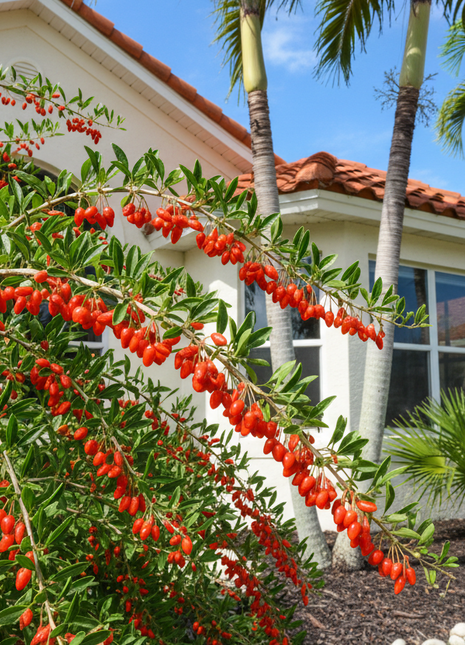
Goji Berry (Lycium barbarum)
Red Berry Fruiting Shrub — Locally Grown at Flowing Well Tree Farm Hardy Fruit Shrub • High-Yield Edible Landscape Plant • Drought-Tolerant Once Established • Florida-Grown Stock When you buy this fruiting shrub here, you’re not getting generic, out-of-region nursery material—you’re getting locally grown plants produced in Pierson, already acclimated to Florida heat, humidity, sandy soils, and seasonal rainfall patterns. That matters with fast-growing edible shrubs. Locally grown stock establishes faster, handles transplant stress better, and transitions more smoothly into real-world landscape conditions—especially in edible gardens and orchard systems where performance matters. This is direct-from-grower material. You can visit the farm, see how edible shrubs are grown and selected, and get real guidance from people who work with these fruiting plants in Florida conditions year-round—not generic care sheets. This type of productive berry shrub is especially valued for its adaptability, early fruiting potential, and long-term reliability in both home gardens and small orchards. Why Locally Grown Matters Starting with Florida-grown stock improves long-term performance: Faster establishment in heat and sandy soils Reduced transplant shock in home landscapes and containers Better adaptation to humidity and rainfall variability More consistent flowering and fruiting cycles Stronger long-term root development It’s a more reliable foundation for a productive edible shrub system. Bright Red, Nutrient-Rich Fruit This shrub is valued for its edible production: Bright red, nutrient-rich berries Suitable for fresh eating and culinary use Attractive seasonal fruit display Strong edible landscape appeal It performs well in both ornamental and food-focused plantings. USDA Growing Zones Best suited for Zones 5–9, with strong adaptability across both warm and temperate climates once established. Mature Growth & Habit A fast-growing, productive shrub: Medium shrub form depending on pruning Dense, fruiting cane structure Excellent for hedges, borders, and edible gardens Can be managed for size and yield with regular pruning. Light Requirements Performs best in full sun (6–8+ hours daily) for: Maximum fruit production Strong cane development Improved overall plant vigor Soil & Site Requirements Highly adaptable but prefers: Well-draining sandy or loamy soils Slightly acidic to neutral pH (6.5–7.0) Organic matter added at planting for best establishment Avoidance of heavy clay or waterlogged conditions Planting Guidance (Grower Recommended) We focus on real-world success in edible landscapes: Dig a hole twice as wide as the root ball Plant at the same depth as the container Backfill with native soil and compost if needed Water deeply after planting Apply light mulch, keeping it away from the base Maintain consistent moisture during establishment If you visit the farm, we can help match this shrub to orchard rows, edible hedges, or container systems. Watering & Establishment Water regularly during the first growing season to build a strong root system. Once mature, the plant becomes moderately drought tolerant and performs well in low-water conditions. Fertilizer Apply balanced slow-release fertilizer in early spring Avoid high nitrogen, which promotes foliage over fruit Light feeding supports better fruiting performance Fruiting Timeline This is a fast producer: Fruit may begin in years 1–2 Full production typically by year 3 Extended fruiting season from late spring into fall Pruning & Maintenance Low to moderate maintenance: Prune in late winter Remove weak, old, or unproductive canes Encourage new shoots for higher future yields Maintain airflow for better fruiting performance Why This Is a Smarter Long-Term Investment ✔ Locally grown in Florida for stronger establishment✔ Direct grower expertise for edible shrub success✔ Fast fruiting timeline compared to many shrubs✔ Highly adaptable across multiple climate zones✔ Dual-purpose edible + landscape plant✔ Better performance than out-of-region nursery stock✔ Opportunity to visit, learn, and select in person The Real Value This isn’t just a berry shrub—it’s a fast-producing edible system designed for resilience and yield. You’re not just planting a plant. You’re building a reliable, long-term source of homegrown fruit with a shrub engineered for adaptability and productivity.
$9.00 - $55.00
-

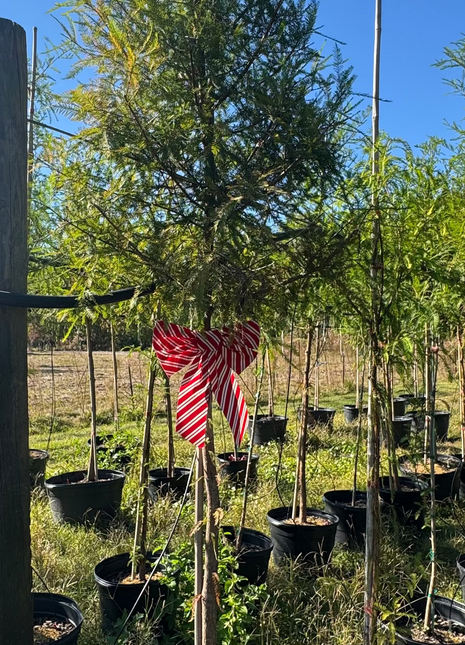
Bald Cypress (Taxodium Distichum)
Bald Cypress (Taxodium distichum) — Locally Grown in Pierson, Florida at Flowing Well Tree FarmNative Wetland Conifer • Flood-Tolerant Shade Tree • Long-Lived Structural Canopy Species • Florida-Grown Restoration & Landscape Anchor Tree Bald Cypress (Taxodium distichum) is one of the most iconic and ecologically important native trees in the southeastern United States. Known for its strong pyramidal form, soft feathery foliage, and exceptional tolerance to flooding and wet soils, this species is a cornerstone of Florida wetlands, river systems, and lowland landscapes. At Flowing Well Tree Farm in Pierson, Florida, we grow Bald Cypress as premium native canopy stock selected for strong central leaders, upright structural form, and long-term performance in Florida’s wet, sandy, and seasonally variable environments. Each tree is established in real field conditions to ensure resilience under heat, humidity, flooding, drought cycles, and storm exposure. When you buy Bald Cypress here, you’re not receiving weak ornamental nursery stock—you’re getting locally grown, Florida-adapted trees conditioned for real-world ecological performance in both wetland and upland systems. That local adaptation is critical. Bald Cypress performs best when grown in Florida conditions from the start, developing stronger root systems, improved flood tolerance, and more stable long-term canopy structure. Why Locally Grown Matters for Bald Cypress Starting with Florida-grown stock provides key advantages: Faster establishment in wet or sandy soils Stronger root systems for flood and drought cycles Improved heat and humidity tolerance Better wind and storm resilience in mature trees Higher survival rates in restoration plantings More consistent long-term canopy development This creates a durable, permanent native shade tree. Canopy Structure & Landscape Value Bald Cypress is one of Florida’s most valuable large canopy trees: 50–80 ft tall mature deciduous conifer Strong pyramidal form when young, broadening with age Soft, fine-textured “feather-like” foliage Deciduous in winter with warm copper fall color Excellent long-term shade and cooling tree Strong architectural presence in large landscapes It is a defining species of Southern wetland ecosystems. Ecological & Wetland Importance Bald Cypress is a foundational Florida ecosystem species: Dominant tree in swamps, riverbanks, and floodplains Provides critical habitat for birds, amphibians, and wildlife Supports aquatic and semi-aquatic ecosystems Stabilizes soil in wet and erosion-prone areas Creates microhabitats through “cypress knee” development in wet conditions Enhances water filtration and watershed health It is one of the most important ecological trees in the Southeast. Growth Habit & Structural Function Bald Cypress is a long-lived structural canopy tree: 50–80+ ft mature height depending on site conditions Straight central trunk with strong vertical development Broad canopy with age, providing deep shade Adaptable to both wetland and upland planting Extremely long-lived (often centuries in natural settings) Strong wind resistance when mature It functions as a permanent landscape anchor tree. Climate & Site Adaptability Bald Cypress thrives in Florida’s full range of conditions: Native to southeastern U.S. wetlands and river systems Tolerates standing water and seasonal flooding Performs well in sandy upland soils as well Highly heat and humidity tolerant Strong drought tolerance once established Excellent storm and wind resilience It is one of the most adaptable large native trees available. USDA Growing Zones Best suited for Zones 4–10, with exceptional performance throughout Florida and the entire southeastern United States. Light Requirements For best growth and structure: Full sun preferred for strongest canopy development Tolerates partial shade in early stages Sun exposure improves form and long-term vigor Ideal for open landscapes, wetlands, and large properties Soil & Site Requirements Highly adaptable native species: Thrives in wet, flooded, or seasonally saturated soils Performs well in sandy uplands and loamy soils Tolerates poor fertility conditions Adapts to both managed and natural environments Benefits from mulch during establishment Planting Guidance (Grower Recommended) For best long-term performance: Plant in full sun for optimal growth Dig hole 2–3× wider than root ball Set at original soil depth Water deeply after planting Apply mulch to stabilize moisture and temperature Space 20–40 ft apart for full canopy development Allow room for mature spread in large landscapes We can assist with wetland planting design, shade tree placement, and large-scale restoration planning. Watering & Establishment Water regularly during the first 1–2 growing seasons. Once established, Bald Cypress becomes extremely resilient and can thrive in both wet and dry cycles common in Florida. Fertilizer Low to moderate input needs: Minimal fertilization required Compost supports early establishment Avoid excessive nitrogen inputs Performs best in natural soil systems Pruning & Maintenance Very low maintenance: Minimal pruning required Naturally strong central leader development Can be limbed up for shade tree form Long-lived with stable structure Low maintenance once established Why This Is a Smarter Long-Term Investment ✔ Locally grown in Florida for maximum adaptation✔ Iconic native wetland and shade tree✔ Extremely flood and drought tolerant species✔ Long-lived structural landscape anchor✔ Excellent wildlife habitat and ecosystem value✔ Strong wind and storm resilience when mature✔ Adaptable to wet and upland sites✔ Grower-direct quality for Florida conditions The Real Value This isn’t just a shade tree—it’s a legacy canopy species that defines wetlands, strengthens landscapes, and provides ecological structure for generations. When you plant Bald Cypress, you’re investing in a permanent native anchor tree that thrives through flood, drought, and storm while building long-term habitat and landscape stability in Florida’s environment.
$12.00 - $190.00
-


Silver Saw Palmettos (Serenoa repens 'Silver')
Silver Saw Palmetto (Serenoa repens ‘Silver’) — Locally Grown in Pierson, Florida at Flowing Well Tree Farm Native Palm Shrub • Drought-Tolerant Florida Groundcover • Coastal Landscape Plant • Florida-Grown Native Stock Silver Saw Palmetto (Serenoa repens ‘Silver’) is a striking native palm selection known for its silvery-blue fronds, extreme toughness, and ability to thrive in some of Florida’s harshest growing conditions. A natural variation of the classic Saw Palmetto, this silver form is especially valued for its ornamental color, wildlife value, and unmatched performance in sandy, dry, and coastal environments. When you buy Silver Saw Palmetto here, you're not getting mass-produced, over-irrigated landscape material—you’re getting locally grown, Florida-adapted plants produced in Pierson and conditioned for real-world Florida stress conditions including heat, drought, wind, salt exposure, and nutrient-poor soils. That matters for long-term establishment. Locally grown palmettos develop stronger rhizome systems, adapt faster after planting, and outperform imported or heavily container-grown stock when placed into true Florida landscapes. This is direct-from-grower native material. Visit the farm, see how our native palms are grown, and receive practical guidance on spacing, mass plantings, coastal landscaping, and long-term habitat design. Silver Saw Palmetto is especially valuable because it delivers both rugged ecological function and high-end ornamental color in the landscape. Why Locally Grown Matters for Saw Palmetto Starting with Florida-grown stock provides key advantages: Better adaptation to Florida heat and humidity Stronger root and rhizome development Improved drought and salt tolerance after planting Faster establishment in sandy soils Greater resilience in exposed coastal sites Better long-term survival in native landscapes It creates a stronger foundation for long-term landscape stability. Ornamental Value & Silver Foliage Silver Saw Palmetto is prized for its unique appearance: Distinct silvery-blue fan fronds Strong architectural landscape texture Year-round evergreen presence Excellent contrast plant in modern landscapes Adds color variation to native plantings Works well in both naturalized and designed gardens Its silver coloration makes it one of the most visually striking native palmettos available. Wildlife & Ecological Importance This species plays a major role in Florida ecosystems: Produces fruit consumed by birds and mammals Provides shelter for wildlife and ground-nesting species Supports pollinators and native insects Creates protective cover in understory systems Enhances biodiversity in coastal and upland habitats Important habitat plant for native species It is both a structural and food resource in native landscapes. Climate & Site Adaptability Silver Saw Palmetto is one of Florida’s toughest native plants: Native to sandy coastal plains and uplands Extremely drought tolerant once established Handles salt spray and coastal exposure Thrives in full sun conditions Performs well in poor, well-drained soils Highly wind and storm resistant It excels in low-maintenance, high-stress environments. USDA Growing Zones Best suited for Zones 8–11, performing exceptionally well throughout Florida and coastal regions of the southeastern United States. Mature Size & Growth Habit A low-growing native palm shrub: 3–8 ft mature height (fronds may extend wider) Spreading clumping habit via underground stems Dense, ground-level structure Extremely long-lived once established Slowly expanding colonies over time Ideal for mass plantings and natural groundcover systems. Light Requirements For best performance: Full sun preferred Tolerates partial shade Strongest color and density in open sites Soil & Site Requirements Highly adapted to Florida soils: Prefers sandy, well-drained soils Tolerates extremely poor fertility Performs well in coastal environments Handles dry, xeric conditions Avoid prolonged standing water Planting Guidance (Grower Recommended) For best establishment: Plant in full sun for best growth and color Space appropriately for mature spread Dig hole 2–3× wider than root mass Plant at original soil depth Water thoroughly after planting Apply light mulch, keeping crown exposed Avoid overwatering after establishment begins We can assist with large-scale mass planting layouts, coastal buffering, and native groundcover design. Watering & Establishment Water regularly during the first growing season. Once established, Silver Saw Palmetto becomes extremely drought tolerant and often thrives with little to no supplemental irrigation. Fertilizer Minimal fertilizer requirements: Generally not required Light feeding only during establishment if needed Performs best in natural soils Avoid excessive fertilization Pruning & Maintenance Very low maintenance: No regular pruning required Remove only dead or damaged fronds if desired Naturally maintains its structure Extremely long-lived and self-sustaining Why This Is a Smarter Long-Term Investment ✔ Locally grown in Florida for superior field performance ✔ Extremely drought and salt tolerant native plant ✔ Unique silver-blue ornamental foliage ✔ Excellent coastal and xeriscape species ✔ Critical wildlife food and habitat plant ✔ Long-lived, self-expanding native groundcover ✔ Ideal for restoration and low-maintenance landscapes ✔ Grower-direct expertise for native plant success The Real Value This isn’t just a landscape palm—it’s a living groundcover system built for Florida conditions. You’re not simply planting palmettos. You’re stabilizing soil, supporting wildlife, building drought-proof landscapes, and investing in a native plant that defines the structure and resilience of Florida’s natural ecosystems for generations.
$16.00
-


Native Milkweed Pink (Asclepias Incarnata) Coming Soon
Swamp Milkweed (Asclepias incarnata) — Locally Grown in Pierson, Florida at Flowing Well Tree Farm Native Pollinator Perennial • Monarch Essential • Wetland Adapted • Florida-Grown for Strong Establishment When you buy Swamp Milkweed here, you’re not getting mass-produced plugs or stressed greenhouse stock—you’re getting native perennials grown directly in Pierson, raised in real Florida heat, humidity, and seasonal rainfall conditions from the start. That matters for native restoration and pollinator success. Locally grown milkweed establishes faster, handles Florida climate stress better, and becomes a more reliable long-term nectar and host plant in real landscapes. This is direct-from-grower material. You can visit the farm, see how native pollinator plants are produced, and get guidance from people who work with these species in real habitat and garden settings—not just catalog descriptions. Swamp Milkweed is one of the most ecologically important native perennials you can plant, especially for supporting monarch butterflies and overall pollinator health. Why Locally Grown Native Milkweed Matters Even native plants perform better when they’re grown in-region: Stronger adaptation to Florida’s humidity and rainfall cycles Faster establishment in garden and restoration sites Improved survival in wet or fluctuating soils Better long-term flowering and nectar production More reliable support for pollinator populations It’s a native plant already conditioned for your environment. Monarch Essential Pollinator Plant Swamp Milkweed is a critical species in monarch butterfly life cycles: Host plant for monarch caterpillars Nectar source for adult butterflies Supports continuous pollinator activity throughout bloom season Encourages biodiversity in native and restored landscapes If you’re building a pollinator garden, this is not optional—it’s foundational. Fragrant Summer Blooms with Real Ecological Value In summer, Swamp Milkweed produces clusters of soft pink, fragrant flowers that attract: Monarch butterflies Native bees Hummingbirds A wide range of beneficial insects It brings movement, color, and life into the landscape during peak growing season. USDA Growing Zones Best suited for Zones 3–9, making it widely adaptable across most of the United States. Mature Size & Growth Habit A well-behaved native perennial: 3–5 ft tall 2–3 ft wide Forms upright clumps that work well in mass plantings or mixed native beds. Light Requirements Performs best in full sun, where it produces the highest bloom density and strongest pollinator activity. Tolerates partial shade but blooms less heavily. Soil & Site Adaptability Naturally adapted to moisture-rich environments: Prefers moist, well-drained soils Excellent for rain gardens and low areas Thrives near ponds, drainage swales, and wet edges Tolerates occasional flooding Adapts once established to average garden conditions It is especially valuable in sites where many perennials struggle with moisture. Planting Guidance (Grower Recommended) We focus on successful establishment in real landscapes: Space plants 18–24 inches apart for natural drift Choose a sunny to lightly shaded site Dig a hole twice as wide as the root ball Plant at original soil level Water deeply after planting Apply mulch to retain moisture, keeping it off the crown If you visit the farm, we can help plan placement for pollinator corridors or rain garden design. Watering & Establishment Keep soil consistently moist during establishment. Once mature, Swamp Milkweed becomes moderately drought tolerant but performs best with regular moisture in hot climates. Fertilizer Minimal feeding required. In fact, over-fertilizing can reduce flowering. A light, balanced organic approach is preferred for best bloom and pollinator activity. Maintenance & Care Low-maintenance native perennial: Cut back dead stems in late winter Avoid disturbing root systems once established Allow natural spreading in suitable habitats Deadheading optional depending on landscape goals Why This Is a Smarter Long-Term Investment ✔ Grown locally in Florida conditions from the start✔ Faster establishment in pollinator and rain garden settings✔ Direct grower guidance for native plant success✔ Critical support plant for monarch butterflies✔ High ecological and biodiversity value✔ Adapted to wet, fluctuating soil conditions✔ Opportunity to visit, learn, and select in person The Real Impact This isn’t just a perennial purchase—it’s an ecological contribution to your landscape. You’re not just planting flowers. You’re building habitat, supporting monarch populations, and adding a native system that sustains life season after season.
$12.00
-


Camellia Tea Plant (Camellia Sinensis)
Camellia Tea Plant (Camellia sinensis) — Locally Grown in Pierson, Florida at Flowing Well Tree Farm Edible Tea Plant • Evergreen Shrub • Specialty Crop Species • Florida-Grown Botanical Stock Camellia Tea Plant (Camellia sinensis) is the globally important species used to produce green tea, black tea, white tea, and oolong. Beyond its cultural and agricultural significance, it is also a beautiful evergreen shrub with glossy foliage, small fragrant white flowers, and strong potential as a specialty edible landscape plant in warm climates like Florida. When you buy Camellia Tea Plant here, you're not getting stressed, greenhouse-softened ornamental stock—you’re getting locally grown, Florida-adapted plants produced in Pierson and conditioned for real Florida growing conditions including heat, humidity, sandy soils, and seasonal rainfall variation. That matters for long-term success. Locally grown tea plants establish stronger root systems, adapt more quickly after planting, and perform more reliably in Florida’s subtropical climate than imported or non-acclimated nursery stock. This is direct-from-grower edible botanical stock. Visit the farm, see how our specialty edible and medicinal plants are grown, and receive practical guidance on spacing, pruning, and long-term tea garden development. Camellia sinensis is especially valuable because it combines ornamental evergreen structure with a true harvestable crop potential in the landscape. Why Locally Grown Matters for Tea Plants Starting with Florida-grown stock provides key advantages: Better adaptation to Florida heat and humidity Stronger root development before planting Improved survival in sandy soils Faster establishment in landscape conditions Reduced transplant stress Better long-term productivity in warm climates It creates a stronger foundation for specialty crop success. Tea Production & Harvest Value Camellia sinensis is the source of all traditional teas: Young leaves and buds harvested for tea production Can be processed into green, black, white, or oolong tea High antioxidant and aromatic compound content Continuous harvest potential with proper pruning Suitable for small-scale home tea production Excellent for culinary and wellness-focused gardens It is one of the most valuable edible shrubs in the world. Ornamental & Landscape Value Beyond its use as a crop plant, it is also highly ornamental: Glossy evergreen foliage year-round Small white fragrant flowers in fall/winter Dense, refined shrub structure Excellent for hedges or specimen planting Works well in edible ornamental gardens It blends productivity with aesthetic landscape design. Climate & Site Adaptability Tea plants perform well in Florida when properly sited: Prefers warm, humid subtropical climates Performs best in partial shade to filtered sun Sensitive to harsh afternoon sun in exposed sites Requires consistent moisture but well-drained soils Adapts well to protected garden environments Performs best in mulched, organic-rich beds It is ideal for understory edible gardens and shaded production systems. USDA Growing Zones Best suited for Zones 7–10, performing well throughout Florida in protected and partially shaded landscapes. Mature Size & Growth Habit A compact evergreen shrub: 4–10 ft mature height (can be maintained smaller with pruning) 3–6 ft spread Dense, upright branching habit Long-lived perennial shrub form Easily shaped for hedges or garden rows Ideal for small-scale edible planting systems. Light Requirements For best growth and leaf quality: Partial shade preferred Morning sun with afternoon shade ideal Avoid prolonged harsh full sun exposure Filtered light improves leaf tenderness Soil & Site Requirements Adapted to cultivated garden soils: Prefers acidic, well-drained soils Performs best in organic-rich soil conditions Benefits from consistent moisture Requires good drainage to prevent root stress Strong response to mulch and soil improvement Planting Guidance (Grower Recommended) For best establishment: Plant in partial shade or filtered light Dig planting hole 2–3× wider than root ball Plant at original soil depth Water thoroughly after planting Apply organic mulch to conserve moisture Maintain consistent watering during establishment Protect from harsh afternoon sun if exposed We can assist with tea garden layout, spacing, and edible understory design. Watering & Establishment Water regularly during the first 1–2 growing seasons. Once established, Camellia sinensis prefers consistent moisture and benefits from irrigation during dry periods for optimal leaf production. Fertilizer Moderate feeding recommended: Light acid-loving plant fertilizer during growth Organic compost improves leaf quality and soil health Avoid excessive nitrogen for balanced growth Consistent nutrition supports steady harvest cycles Pruning & Maintenance Low to moderate maintenance: Regular light pruning encourages tender new growth Can be shaped as hedge or small shrub Harvesting itself acts as pruning Remove dead or weak growth as needed Why This Is a Smarter Long-Term Investment ✔ Locally grown in Florida for better adaptation ✔ True edible tea-producing plant ✔ Evergreen ornamental and productive shrub ✔ Suitable for specialty crop and home tea production ✔ Performs well in shaded edible landscapes ✔ Long-lived, harvestable perennial system ✔ Low-maintenance once established ✔ Grower-direct guidance for specialty crop success The Real Value This isn’t just a landscape shrub—it’s a living harvest system. You’re not simply planting tea. You’re growing your own beverage source, building a productive edible landscape, and investing in a long-term evergreen plant that provides both beauty and functional harvests for years to come.
$9.00
-

Yerba Mate Holly (Ilex paraguariensis)
Yerba Mate Holly (Ilex paraguariensis) — Locally Grown in Pierson, Florida at Flowing Well Tree FarmCaffeinated Evergreen Tea Plant • Shade-Grown Subtropical Holly • Edible Leaf Crop Species • Florida-Grown Food Forest, Homestead & Specialty Botanical Plant Yerba Mate Holly (Ilex paraguariensis) is a unique evergreen holly species known worldwide for its naturally caffeinated leaves used to produce traditional yerba mate tea. Native to South America’s subtropical forests, this species is valued for its energizing properties, dense evergreen foliage, and long-term productivity as a specialty edible leaf crop in warm climates. At Flowing Well Tree Farm in Pierson, Florida, we grow Yerba Mate Holly as premium subtropical stock selected for vigorous establishment, strong branching structure, and adaptability to Florida’s heat, humidity, and sandy soils. Each plant is grown under real Florida conditions to ensure resilience, steady growth, and long-term performance in both shaded and partially shaded environments. When you buy Yerba Mate Holly here, you are not receiving weak indoor or greenhouse-softened plants—you are getting Florida-acclimated holly plants prepared for real outdoor growing conditions and long-term food forest integration. That local adaptation matters. Ilex paraguariensis develops stronger root systems, improved heat tolerance, and better long-term leaf production when established in stable subtropical conditions from the beginning. Why Locally Grown Matters for Yerba Mate Starting with Florida-grown stock provides key advantages: Improved adaptation to Florida heat and humidity Stronger root establishment in sandy soils Better tolerance to seasonal rainfall fluctuations Higher survival rates in food forest systems More consistent long-term leaf production Stronger overall plant vigor in subtropical environments This creates a reliable evergreen leaf crop suited for long-term cultivation. Edible Leaf Production & Use Yerba Mate is grown for its nutrient-rich, caffeinated leaves: Leaves are harvested and dried for traditional tea preparation Naturally contains caffeine and theobromine Used to make energizing beverages consumed worldwide Leaves can be dried, smoked, or steeped depending on tradition Provides long-term perennial harvest potential Valuable specialty crop for homesteads and food forests It is one of the most culturally significant edible holly species globally. Evergreen Structure & Landscape Value Yerba Mate Holly provides year-round foliage and structure: 10–20 ft mature height depending on pruning and conditions Dense evergreen canopy with glossy green leaves Can be trained as shrub or small understory tree Excellent for shaded food forest layers Ornamental evergreen value in subtropical landscapes Long-lived perennial leaf crop It functions as both a productive crop and a landscape plant. Ecological & Pollinator Benefits Yerba Mate supports subtropical ecosystem health: Small flowers attract native pollinators Provides evergreen cover for beneficial insects Contributes to understory biodiversity in food forests Enhances layered planting systems in shaded environments Supports mixed-species agroforestry systems It integrates well into sustainable landscape design. Growth Habit & Structural Function Yerba Mate is a slow to moderate-growing evergreen: 10–20+ ft mature height depending on conditions Naturally multi-stemmed shrub or small tree form Responds well to pruning and harvesting cycles Performs best in protected understory environments Long-lived perennial crop when properly managed Ideal for continuous leaf harvest systems It is well suited for managed agroforestry production. Climate & Site Adaptability Yerba Mate performs best in subtropical conditions: Native to South American subtropical forests Prefers warm, humid environments Thrives in shaded or partially shaded conditions Requires protection from extreme cold in marginal climates Performs well in Florida’s central and southern regions Best suited for food forest microclimates It adapts well to Florida when properly established in shade systems. USDA Growing Zones Best suited for Zones 9–11, with best performance in South and Central Florida and protected microclimates in warmer temperate regions. Light Requirements For best leaf production: Partial shade to filtered sunlight preferred Avoid prolonged harsh afternoon sun in young plants Shaded understory conditions improve leaf quality Ideal under canopy trees or shade structures Soil & Site Requirements Adaptable evergreen crop species: Prefers well-drained, slightly acidic soils Performs well in sandy Florida soils with organic matter Benefits from mulch and leaf litter accumulation Avoid waterlogged or poorly drained conditions Thrives in rich, forest-like soil environments Planting Guidance (Grower Recommended) For best long-term performance: Plant in partial shade or filtered sunlight Dig hole 2–3× wider than root ball Set at original soil depth Water deeply after planting Apply mulch or organic leaf litter to mimic forest floor Space 5–10 ft apart for hedge or grove systems Protect from intense afternoon sun during establishment We can assist with food forest design, shade crop systems, and specialty botanical crop planning. Watering & Establishment Water regularly during establishment. Once established, Yerba Mate prefers consistent moisture but should not be waterlogged. Shade and humidity support optimal growth. Fertilizer Low to moderate input requirements: Organic compost improves leaf production and plant vigor Light fertilization supports growth in sandy soils Avoid excessive nitrogen to maintain balanced leaf quality Performs best in organic-rich, forest-style systems Pruning & Maintenance Moderate maintenance depending on harvest goals: Prune to shape and encourage bushier growth Regular leaf harvesting encourages branching Can be maintained as shrub or small tree Responds well to repeated harvesting cycles Long-lived with proper care and management Why This Is a Smarter Long-Term Investment ✔ Locally grown in Florida for maximum adaptation ✔ Rare edible caffeinated leaf crop for food forests ✔ Evergreen perennial harvest plant ✔ Shade-tolerant understory agroforestry species ✔ Long-term specialty botanical crop potential ✔ Excellent for homesteads and permaculture systems ✔ Adaptable to Florida’s subtropical climate ✔ Grower-direct quality for specialty cultivation The Real Value This isn’t just an evergreen shrub—it’s a long-term edible leaf crop that transforms shaded areas into productive botanical systems. When you plant Yerba Mate Holly, you’re investing in a specialty subtropical species that provides renewable tea leaves, supports food forest diversity, and creates a unique perennial harvest system for homesteads and agroforestry landscapes for years to come.
$15.00 - $130.00
-

Shiny Blueberry (Vaccinium myrsinites)
Florida Native Shiny Blueberry — Locally Grown in Pierson, Florida at Flowing Well Tree Farm Edible Native Shrub • Evergreen Beauty • Wildlife Favorite • Florida-Adapted from Day One When you buy Shiny Blueberry here, you’re not getting a generic landscape shrub pulled from outside the region—you’re getting Florida native plants grown directly in Pierson, raised in the same sandy soils, heat, humidity, and rainfall patterns they’re meant to live in long-term. That matters. Locally grown native stock establishes faster, survives better, and performs more predictably because it hasn’t spent its life in controlled greenhouse conditions or a different climate zone. These plants are already conditioned for Florida landscapes before they ever leave the farm. This is direct-from-grower material. You can visit, see how native edibles are grown in real field conditions, and get guidance from the people who actually work with them every day. That means practical advice rooted in experience, not just label instructions. Why Locally Grown Native Plants Matter Shiny Blueberry is already adapted to Florida—but local production enhances that advantage even more: Stronger root systems developed in native soils Faster establishment in home landscapes Better tolerance of heat, drought cycles, and rainfall swings Improved long-term survival in sandy or acidic sites More reliable fruiting performance over time It’s a native plant with a head start. Edible Native Fruit with Real Landscape Value Shiny Blueberry produces small, sweet berries that are both ornamental and edible. The fruit is excellent for: Fresh eating Jams and preserves Smoothies Baking and desserts It’s a true edible native—useful in the kitchen and valuable in the landscape. Evergreen Beauty Year-Round This compact native shrub offers glossy green evergreen foliage that holds color throughout the year, often shifting to subtle bronze or reddish tones during cooler weather. It works beautifully in: Native landscape designs Edible gardens Borders and foundation plantings Naturalized woodland settings Pollinator and wildlife habitats Wildlife & Pollinator Value Shiny Blueberry is a key native food source: Spring flowers attract bees and pollinators Berries feed birds and wildlife Dense foliage provides shelter and cover It supports a healthy, functional ecosystem in the landscape. USDA Growing Zones Best suited for Zones 7–10, especially well-adapted to Florida and the Southeast. Mature Size & Growth Habit A naturally compact native shrub: 1–3 ft tall 2–4 ft wide Moderate growth rate Ideal for smaller spaces, layered native plantings, or edible understory design. Light Requirements Performs best in full sun to partial shade. Full sun improves flowering and berry production. Planting Guidance (Grower Recommended) We focus on real-world planting success, not just instructions: Choose a sunny to lightly shaded site Dig a hole twice as wide as the root ball Plant at original container depth Water deeply after planting Use mulch to retain moisture, keeping it away from the stem Space properly to allow natural shrub development If you visit the farm, we can help you place it within a native or edible system based on real site conditions. Soil & Site Adaptability Prefers: Well-drained acidic soils Sandy or sandy-loam conditions Organic-matter enriched native beds Avoid alkaline soils or areas with poor drainage for best long-term performance. Watering & Establishment Water regularly during establishment to build a strong root system. Once mature, it becomes relatively low-maintenance but benefits from occasional deep watering during dry periods. Fertilizer Light feeding only. Use a fertilizer formulated for acid-loving plants or blueberries in early spring. Avoid over-fertilizing, which can reduce natural resilience. Pruning & Maintenance Low-maintenance by design: Minimal pruning required Light shaping after fruiting encourages fullness Remove any weak or crossing growth as needed It naturally maintains a compact, landscape-friendly form. Why This Is a Smarter Long-Term Investment ✔ Grown locally in Florida native conditions✔ Faster establishment and stronger root systems✔ Direct grower guidance based on real field performance✔ Supports pollinators and wildlife ecosystems✔ Provides edible fruit and ornamental value✔ Better adapted than out-of-region nursery stock✔ Opportunity to visit, learn, and select in person The Real Value This isn’t just a native shrub purchase—it’s a long-term edible and ecological planting decision backed by local production and real Florida experience. You’re not just planting a blueberry. You’re planting a resilient native system that feeds wildlife, supports pollinators, and produces food for years to come.
$10.00
-


American Holly (Ilex Opaca)
American Holly (Ilex opaca) — Locally Grown in Pierson, Florida at Flowing Well Tree FarmNative Evergreen Canopy Tree • Wildlife Berry Producer • Dense Privacy & Screening Species • Florida-Grown Landscape, Restoration & Woodland Understory Tree American Holly (Ilex opaca) is one of the most iconic native evergreen trees in the eastern United States, prized for its glossy deep green foliage, bright red winter berries, and strong structural form. Naturally found in upland forests, hammocks, and mixed woodlands, American Holly is a long-lived species that provides year-round beauty, wildlife value, and dependable evergreen structure in Florida landscapes. At Flowing Well Tree Farm in Pierson, Florida, we grow American Holly as premium native evergreen stock selected for strong central leaders, dense branching, and long-term performance in Florida’s heat, humidity, sandy soils, and seasonal weather cycles. Each tree is field-grown under real Florida conditions to ensure resilience, adaptability, and lasting landscape success. When you buy American Holly here, you are not receiving weak ornamental nursery stock—you are getting Florida-adapted native evergreens conditioned for strong establishment, reliable berry production, and long-term structural performance. That local adaptation matters. Ilex opaca develops stronger root systems, improved drought tolerance, and better long-term canopy density when grown in Florida conditions from the beginning. Why Locally Grown Matters for American Holly Starting with Florida-grown stock provides key advantages: Stronger establishment in sandy Florida soils Improved heat and humidity tolerance Better drought resistance once established Higher survival rates in landscape and restoration plantings Stronger branch structure and canopy density More reliable long-term berry production This creates a dependable evergreen canopy tree built for Florida environments. Evergreen Structure & Landscape Value American Holly is a classic native evergreen species: 20–50 ft mature height depending on site conditions Dense pyramidal to rounded canopy form Glossy evergreen foliage year-round Excellent for privacy screens and property borders Strong specimen tree for residential and natural landscapes Provides long-term structural greenery in all seasons It is one of the most recognizable evergreen trees in the Southeast. Berry Production & Seasonal Interest American Holly provides strong seasonal landscape value: Bright red berries produced on female trees Berries persist through fall and winter Creates striking contrast against dark evergreen foliage Important winter food source for wildlife Excellent ornamental value during holiday season Enhances visual interest in cold months It is a signature winter-berry native species. Wildlife & Ecological Importance American Holly is a valuable wildlife-supporting tree: Berries provide food for birds during winter months Dense canopy offers nesting and shelter habitat Flowers attract pollinators in spring Supports native insect biodiversity Contributes to healthy woodland ecosystems Enhances habitat structure in restoration plantings It is an important evergreen component of native Florida ecosystems. Growth Habit & Structural Function American Holly is a long-lived evergreen hardwood: 20–50+ ft mature height depending on site conditions Slow to moderate growth rate Strong central leader development when young Dense branching structure improves with age Long-lived native canopy species Excellent for permanent landscape structure It functions as both a shade tree and evergreen anchor. Climate & Site Adaptability American Holly performs well across Florida environments: Native throughout the southeastern United States Excellent heat and humidity tolerance Performs best in upland and well-drained sites Moderate drought tolerance once established Adaptable to sandy, loamy, and mixed soils Strong performance in natural and managed landscapes It is highly reliable in Florida’s climate when properly established. USDA Growing Zones Best suited for Zones 7–9, with strong performance throughout Florida and the southeastern United States. Light Requirements For best growth and berry production: Full sun to partial shade Full sun promotes denser growth and better berry set Tolerates woodland understory conditions Ideal for hedges, screens, and specimen plantings Soil & Site Requirements Adaptable native evergreen: Thrives in well-drained sandy soils Performs well in forest-edge environments Prefers slightly acidic soils Benefits from organic matter during establishment Avoid prolonged standing water in poorly drained areas Mulch helps support root development and moisture retention Planting Guidance (Grower Recommended) For best long-term performance: Plant in full sun to partial shade Dig hole 2–3× wider than root ball Set at original soil depth Water deeply after planting Apply mulch to conserve moisture and regulate soil temperature Space 10–20 ft apart for screens or specimen planting Allow room for mature canopy development We can assist with evergreen screening design, native landscape planning, restoration forestry, and property border installations. Watering & Establishment Water regularly during the first 1–2 growing seasons. Once established, American Holly becomes moderately drought tolerant and highly resilient in Florida’s seasonal climate patterns. Fertilizer Low input requirements: Minimal fertilization needed once established Organic compost supports early growth and berry production Balanced nutrients improve canopy density Avoid excessive nitrogen to maintain natural form Pruning & Maintenance Low maintenance native evergreen: Prune young trees to establish strong structure Responds well to shaping for hedges or screens Remove dead or crossing branches as needed Naturally develops dense, attractive canopy Long-lived with minimal maintenance requirements Why This Is a Smarter Long-Term Investment ✔ Locally grown in Florida for maximum adaptation ✔ Classic native evergreen canopy tree ✔ Bright red winter berries for seasonal value ✔ Excellent wildlife habitat and food source ✔ Strong privacy and screening performance ✔ Long-lived structural landscape species ✔ Adaptable to a wide range of Florida conditions ✔ Grower-direct quality for Florida landscapes The Real Value This isn’t just an evergreen tree—it’s a living landscape foundation that provides structure, privacy, wildlife food, and year-round beauty. When you plant American Holly, you’re investing in a Florida-adapted native evergreen that delivers lasting canopy strength, seasonal berry display, and ecological value while enhancing landscapes for generations to come.
$21.00 - $140.00
-


Swamp Tupelo (Nyssa biflora)
Swamp Tupelo (Nyssa biflora) — Locally Grown in Pierson, Florida at Flowing Well Tree Farm Native Wetland Tree • Flood-Tolerant Hardwood • Wildlife Value Species • Florida-Grown Restoration Stock Swamp Tupelo (Nyssa biflora) is one of the most important native wetland trees in the southeastern United States. Known for its exceptional flood tolerance, strong wildlife value, beautiful fall color, and ability to thrive where many trees cannot, Swamp Tupelo is widely used in wetland restoration projects, stormwater systems, pond edges, conservation lands, and naturalized Florida landscapes. When you buy Swamp Tupelo here, you're not getting nursery-grown stock raised under protected conditions—you’re getting locally grown, field-conditioned trees produced in Pierson and adapted to Florida’s heat, humidity, seasonal flooding, and challenging soil conditions. That matters for successful establishment. Locally grown Swamp Tupelo develops stronger root systems, adapts more quickly to field conditions, and is better prepared to handle the environmental stresses common throughout Florida’s wetland and lowland habitats. This is direct-from-grower restoration-grade material. Visit the farm, see how our native trees are grown, and receive practical guidance on wetland restoration, pond-edge plantings, stormwater projects, and long-term canopy development. Swamp Tupelo is especially valuable because it provides exceptional ecological benefits while thriving in areas where many landscape trees struggle to survive. Why Locally Grown Matters for Swamp Tupelo Starting with Florida-grown stock offers important advantages: Better adaptation to Florida heat and humidity Stronger root development before planting Improved establishment in wetland environments Faster acclimation to local growing conditions Greater resilience during seasonal flooding Better long-term survival in restoration projects It creates a stronger foundation for long-term success. Wetland & Restoration Value Swamp Tupelo is one of the most dependable trees for wetland restoration: Thrives in flood-prone environments Excellent for pond and lake edges Commonly used in stormwater management systems Stabilizes soils in wet conditions Supports long-term wetland ecosystem development Ideal for conservation and mitigation projects Its ability to tolerate standing water makes it an essential species for many Florida restoration efforts. Wildlife & Ecological Importance This species plays a critical role in native ecosystems: Produces fruit consumed by birds and wildlife Supports migratory and resident bird populations Provides shelter and nesting habitat Enhances biodiversity in wetland environments Contributes to healthy aquatic and terrestrial food chains Important component of native floodplain forests It transforms planting sites into functioning wildlife habitat. Outstanding Seasonal Interest Swamp Tupelo delivers year-round beauty: Glossy green foliage throughout the growing season Spectacular red, orange, and yellow fall color Attractive bark and branching structure Wildlife-attracting fruit production Strong natural form and landscape presence Few native wetland trees offer this combination of ecological and ornamental value. Climate & Site Adaptability Swamp Tupelo is highly adaptable to Florida conditions: Native to swamps, floodplains, and wet forests Tolerates prolonged flooding Thrives in moist and saturated soils Performs well in acidic conditions Handles Florida heat exceptionally well Adaptable to both natural and constructed wetlands It excels in locations where water is regularly present. USDA Growing Zones Best suited for Zones 5–9, performing exceptionally well throughout Florida and much of the southeastern United States. Mature Size & Growth Habit A long-lived native canopy tree: 40–80 ft mature height 25–40 ft mature spread Upright pyramidal form when young Broad, rounded canopy with age Strong central trunk and durable structure Provides substantial shade and long-term canopy benefits. Light Requirements For best growth and canopy development: Full sun preferred Tolerates partial shade Maximum growth occurs in open locations Soil & Site Requirements Adapted to wetland environments: Prefers moist to wet soils Tolerates prolonged seasonal flooding Performs well in acidic soils Suitable for pond margins and low-lying areas Thrives in locations with poor drainage One of the best native trees available for wet sites. Planting Guidance (Grower Recommended) For successful establishment: Plant in full sun to partial shade Select moist or wet planting locations Dig planting hole 2–3× wider than root ball Plant at original soil depth Water thoroughly after planting Apply mulch around root zone Keep mulch away from direct trunk contact Maintain adequate moisture during establishment We can assist with restoration planning, pond-edge layouts, wetland projects, and native canopy design. Watering & Establishment Water regularly during the first growing season. Once established, Swamp Tupelo thrives in moist conditions and readily tolerates periodic flooding and saturated soils. Fertilizer Minimal fertilizer requirements: Typically performs well without supplemental feeding Light balanced fertilizer only if necessary Avoid excessive fertilization Best growth often occurs under natural soil conditions Pruning & Maintenance Very low maintenance: Minimal pruning required after establishment Remove damaged branches as needed Naturally develops strong structural form Long-term maintenance requirements are low An excellent choice for naturalized landscapes and restoration projects. Why This Is a Smarter Long-Term Investment ✔ Locally grown in Florida for superior field performance ✔ One of the best native trees for wetland environments ✔ Exceptional flood tolerance ✔ Valuable wildlife food and habitat source ✔ Outstanding fall color and ornamental appeal ✔ Ideal for ponds, lakes, stormwater systems, and restoration sites ✔ Long-lived native canopy tree ✔ Grower-direct expertise and planting support The Real Value This isn’t just a wetland tree—it’s a cornerstone species for healthy Florida ecosystems. You’re not simply planting a tree. You’re creating wildlife habitat, stabilizing wetland environments, improving ecological function, and establishing a long-lived native canopy that will continue benefiting the landscape for generations.
$9.00 - $30.00
-

Native Muscadine Grape "Delicious" (Vitis rotundifolia ‘Delicious’ )
Locally Grown in Pierson, Florida — Direct from the Grower at Flowing Well Tree Farm Sweet Southern Flavor • Heavy Producer • Florida-Adapted Edible Vine • Built for Long-Term Harvest Success When you buy Muscadine Grape ‘Delicious’ (Vitis rotundifolia ‘Delicious’) here, you’re not getting anonymous nursery stock shipped in from another region—you’re getting vines grown directly in Pierson, raised in real Florida heat, humidity, and soil conditions from the beginning. That matters when it comes to survival, establishment, and long-term fruit production. This is true direct-from-grower material. You can visit the farm, walk the rows, see the vines in production, and get real guidance from the people who actually grow them. When questions come up about planting, spacing, or training, you’re not guessing—you’re getting answers based on how these vines perform in real landscapes, not just in theory. ‘Delicious’ is selected for one thing growers and homeowners both care about: reliable, sweet fruit that actually performs year after year in Southern conditions. Why Locally Grown Makes the Difference Muscadines are naturally tough, but locally grown stock takes performance a step further. These vines are already conditioned to Florida’s climate before they ever leave the farm. That means: Easier establishment in home landscapes Less transplant stress Stronger early growth More consistent fruiting behavior Better long-term vine resilience It’s a smarter starting point for a plant you expect to produce for years. Sweet Southern Fruit with Real Garden Value ‘Delicious’ lives up to its name with large, sweet bronze-to-bronze-purple grapes that are especially prized for fresh eating right off the vine. Perfect for: Fresh eating and snacking Juices and smoothies Jams and jellies Desserts and baking Homemade wine This is a true edible landscape vine—productive, flavorful, and dependable. USDA Growing Zones Best suited for Zones 7–10, thriving across Florida and much of the Southeastern United States. Growth Habit & Landscape Use A vigorous deciduous climbing vine that can easily reach 15–25+ feet with proper support. Ideal for: Trellises Pergolas Fences Arbors Edible garden structures When properly trained, it becomes both a food-producing vine and a functional landscape feature. Sun Requirements Full sun (6–8+ hours daily) is essential for maximum fruit production, sugar development, and strong vine structure. Planting Guidance (Grower Recommended) We don’t just sell vines—we help you set them up for long-term success: Choose a sunny site with strong structural support Dig a hole twice as wide as the root ball Plant at original container depth Water deeply after planting Apply mulch carefully, keeping it away from the trunk Install trellis or arbor at planting time for proper training If you visit the farm, we can help match the vine to your specific growing conditions and layout. Soil & Site Adaptability Performs best in: Well-drained sandy or loamy soils Slightly acidic pH Moderate organic content Once established, it handles Florida heat, humidity, and summer rainfall patterns with ease. Watering & Establishment Regular watering is important during the first growing season. After establishment, muscadines become drought tolerant but produce best with deep watering during flowering and fruit development. Fertilizer Apply a balanced slow-release fertilizer in early spring and again midseason if needed. Avoid excess nitrogen, which encourages leafy growth at the expense of fruit production. Pruning & Productivity (Critical Step) Good pruning is what separates average vines from heavy producers: Prune in late winter while dormant Remove excess growth to focus energy on fruiting wood Maintain open airflow and structure Encourage strong, productive vine framework We guide pruning based on real field performance so your vine stays productive, not overgrown. Why This Is a Smarter Long-Term Investment ✔ Grown locally in Florida conditions from day one✔ Faster establishment and reduced transplant shock✔ Direct access to experienced growers✔ Proven performance in heat and humidity✔ Reliable, repeatable fruit production✔ Better adaptation than out-of-region nursery stock✔ Opportunity to visit, learn, and select in person The Bottom Line This isn’t just a grape vine purchase—it’s an edible landscape investment built on local experience, regional adaptation, and long-term performance. You’re not just planting a vine. You’re planting years of sweet harvests with a plant that already understands where it’s growing.
$9.00
-


Sweet Bay Magnolia (Magnolia virginiana)
Sweetbay Magnolia (Magnolia virginiana) — Locally Grown in Pierson, Florida at Flowing Well Tree Farm Fragrant Native Tree • Pollinator Favorite • Moisture-Tolerant Magnolia • Florida-Grown Landscape Stock When you buy Sweetbay Magnolia here, you’re not getting generic retail nursery material—you’re getting locally grown trees produced in Pierson, already acclimated to Florida heat, humidity, rainfall patterns, and sandy-to-organic soil transitions from the start. That matters with magnolias. Locally grown stock develops stronger root systems in-region, establishes faster after planting, and adapts more reliably to wet sites, rain gardens, and Florida landscapes where moisture and heat fluctuate seasonally. This is direct-from-grower material. You can visit the farm, see how native magnolias are grown and selected, and get real planting guidance from people who work with these trees in Florida conditions every season—not generic landscape advice. Sweetbay Magnolia stands out because it combines fragrance, adaptability to wet soils, and refined native beauty in one highly useful landscape tree. Why Locally Grown Matters Starting with Florida-grown stock improves long-term success: Faster establishment in Florida soils and climate Reduced transplant shock in heat and humidity Stronger adaptation to wet/dry seasonal cycles More reliable flowering and growth performance Better long-term resilience in landscape settings It’s a stronger foundation for a long-lived native flowering tree. Fragrant Blooms & Seasonal Beauty Sweetbay Magnolia is prized for its elegant floral display: Creamy white, lemon-scented flowers Blooming from late spring through summer Strong pollinator attraction (bees, butterflies) Light, refreshing fragrance in the landscape It adds sensory value—especially near patios, walkways, and garden edges. Elegant Native Foliage This tree offers year-round visual appeal: Glossy green leaves Silvery-white undersides that shimmer in wind Semi-evergreen to evergreen habit in warmer climates Refined structure suited for both natural and formal landscapes It is one of the more graceful native magnolias. Perfect for Moist Landscapes Sweetbay Magnolia excels where many ornamentals struggle: Rain gardens and stormwater areas Pond edges and low-lying sites Consistently moist soils Naturalized and restoration plantings It is especially valuable in Florida’s wetter landscape zones. Pollinator & Wildlife Value A strong ecological contributor: Supports bees and butterflies Provides seasonal nectar resources Adds habitat structure in native plantings Enhances biodiversity in managed landscapes USDA Growing Zones Best suited for Zones 5–10, performing strongly across the Southeast and adapting well into a wide range of climates. Mature Size & Growth Habit A versatile native tree: 10–35 ft tall 10–20 ft wide Can be used as a small specimen tree or multi-trunk naturalized form. Light Requirements Performs best in: Full sun for best flowering and density Partial shade in hotter climates or young plantings Soil & Site Requirements Highly adaptable when moisture is consistent: Prefers moist, acidic soils Performs in sandy, loamy, or clay soils Thrives in organic-rich wet areas Tolerates seasonal saturation better than most ornamentals Avoid prolonged dry, compacted conditions. Planting Guidance (Grower Recommended) We focus on real-world establishment success: Select a site with consistent moisture or irrigation access Dig a hole twice as wide as the root ball Plant at original soil level (do not bury trunk flare) Backfill with native soil and water deeply Apply mulch, keeping it away from the trunk Maintain steady moisture during establishment If you visit the farm, we can help match Sweetbay Magnolia to rain gardens, pond edges, or landscape focal points. Watering & Establishment Water regularly during the first growing season to establish strong roots. Once established, it becomes more adaptable but performs best with consistent moisture, especially during dry periods. Fertilizer Apply light slow-release fertilizer for acid-loving plants in early spring Avoid over-fertilizing, which can reduce flowering and natural vigor Pruning & Maintenance Low-maintenance native tree: Minimal pruning required Light shaping after flowering if needed Remove dead or damaged branches in late winter or early spring Avoid heavy structural pruning Why This Is a Smarter Long-Term Investment ✔ Locally grown in Florida conditions for better establishment✔ Direct grower expertise for wet-site and landscape success✔ Strong pollinator and wildlife value✔ Fragrant, ornamental native flowering tree✔ Excellent for rain gardens and moisture-rich landscapes✔ Adaptable across a wide range of climates✔ Opportunity to visit, learn, and select in person The Real Value This isn’t just a flowering tree—it’s a landscape anchor for wet, biodiverse, and pollinator-rich environments. You’re not just planting a tree. You’re adding fragrance, ecological function, and long-term native beauty to your landscape with a species built for Florida conditions.
$30.00


Shipping Collection – Fast Nationwide Bare-Root Shipping from Flowing Well Tree Farm
Florida-Grown Trees & Shrubs • Bare-Root Shipping • Carefully Packed • Fast Delivery Nationwide
Welcome to our Shipping Collection, featuring a curated selection of premium Florida-grown trees, shrubs, fruiting plants, pollinator favorites, and native species available for fast bare-root shipping across the United States.
At Flowing Well Tree Farm in Pierson, Florida, we specialize in producing healthy, vigorous plants grown under real Florida conditions. Every plant in this collection has been selected for its ability to ship successfully while maintaining the quality and performance our customers expect.
To provide the healthiest plants and the most economical shipping rates possible, all plants in this collection are shipped bare root. This proven method protects plant health while reducing shipping costs and transit stress.
Whether you're building a food forest, creating wildlife habitat, planting a privacy screen, or enhancing your landscape, our Shipping Collection makes it easy to receive premium farm-direct plants delivered right to your door.
Why Bare-Root Shipping?
Bare-root shipping offers several advantages:
✔ Healthier root inspection before shipment
✔ Reduced shipping weight and lower transportation costs
✔ Less transplant shock when properly planted
✔ Faster establishment in the landscape
✔ Reduced risk of root circling found in long-term container plants
✔ Environmentally friendly with less packaging waste
✔ Safe and proven shipping method used by professional nurseries nationwide
Many native trees, fruit trees, shrubs, and perennials establish faster when planted from quality bare-root stock.
Why Order from Flowing Well Tree Farm?
✔ Locally grown in Florida by experienced growers
✔ Premium quality trees and shrubs selected for shipping success
✔ Professionally prepared and packed bare-root plants
✔ Fast order processing and nationwide delivery
✔ Healthy, actively growing plants ready for establishment
✔ Native, edible, flowering, and evergreen varieties available
✔ Grower-direct pricing with no middleman markup
Florida-Grown Quality
Unlike mass-produced plants that may spend weeks moving through distribution centers, our trees and shrubs are shipped directly from our farm. This means fresher plants, healthier root systems, and better establishment once planted.
Our growing methods focus on strong root development, healthy branching, and long-term landscape performance.
Perfect for Homeowners, Gardeners & Landscapers
Our Shipping Collection is ideal for:
✔ Backyard orchards
✔ Pollinator gardens
✔ Native plant landscapes
✔ Privacy screens and hedges
✔ Wildlife habitat projects
✔ Homesteads and food forests
✔ Commercial and residential landscapes
Carefully Packed for Safe Arrival
Each plant is carefully removed, inspected, and prepared before shipment. Roots are protected to retain moisture during transit, allowing your plants to arrive healthy and ready for planting.
Every order is packed with care to minimize stress and maximize transplant success.
Shop with Confidence
We proudly serve customers nationwide with premium Florida-grown plants and exceptional customer service. Browse our Shipping Collection and discover why gardeners, landscapers, restoration professionals, and plant enthusiasts trust Flowing Well Tree Farm for quality trees and shrubs delivered directly from the grower.


