
Fall Colors
-


Eastern Redbud (Cercis Canadensis)
Eastern Redbud (Cercis canadensis) — Locally Grown in Pierson, Florida at Flowing Well Tree FarmNative Flowering Understory Tree • Early Spring Blooming Accent Species • Wildlife-Friendly Small Canopy Tree • Florida-Grown Ornamental & Ecological Landscape Tree Eastern Redbud (Cercis canadensis) is one of the most beloved native flowering trees in eastern North America, known for its brilliant early spring magenta-pink blooms that emerge directly on bare branches before the leaves appear. This unique flowering habit makes it one of the most visually striking small native trees in the landscape, especially in naturalized gardens, woodland edges, and understory plantings. At Flowing Well Tree Farm in Pierson, Florida, we grow Eastern Redbud as premium native understory and accent stock selected for strong branching structure, reliable flowering performance, and adaptation to Florida’s heat, humidity, and variable soil conditions. Each tree is field-conditioned to ensure resilience in sandy soils, seasonal moisture swings, and warm climate stress. When you buy Eastern Redbud here, you are not receiving delicate northern-grown ornamental stock—you are getting Florida-adapted native flowering trees developed for real-world performance in southern landscapes. That local adaptation matters. Cercis canadensis performs best when grown in-region, where it develops improved heat tolerance, stronger root systems, and more consistent flowering performance under Florida’s climate conditions. Why Locally Grown Matters for Eastern Redbud Starting with Florida-grown stock provides key advantages: Stronger establishment in sandy and well-drained soilsImproved heat and humidity tolerance from early developmentBetter drought resilience once established in Florida conditionsHigher survival rates in residential and naturalized landscapesMore consistent flowering performance in southern climatesStronger branching structure for long-term ornamental form This creates a reliable native flowering tree that thrives beyond typical nursery expectations in Florida environments. Flowering & Seasonal Interest Eastern Redbud is a premier native flowering accent species: Early spring magenta to pink blooms appear before leaf-outFlowers emerge directly on branches and trunk (cauliflorous flowering)Provides one of the earliest nectar sources for pollinatorsHeart-shaped green leaves follow bloom cycle for summer canopyGolden-yellow fall color in late season conditionsHigh visual impact in naturalized and designed landscapes It is one of the most recognizable and celebrated native flowering trees in the Southeast. Canopy Structure & Landscape Value Eastern Redbud is a small ornamental canopy tree: 20–30 ft mature height depending on site conditionsBroad, vase-shaped to rounded canopy structureMulti-trunk or single-trunk form depending on trainingLight to medium shade ideal for understory ecosystemsCompact size suitable for residential and small landscape useStrong seasonal visual interest across all four seasons It functions as a signature accent tree in native and ornamental plantings. Ecological & Habitat Importance Eastern Redbud plays an important ecological role: Early spring nectar source for bees, butterflies, and pollinatorsProvides cover and nesting habitat for small birdsSupports understory biodiversity in mixed hardwood forestsThrives along woodland edges and transition zonesContributes to native pollinator corridor systemsEnhances diversity in restoration and rewilding projects It is a valuable species for pollinator-focused landscapes. Growth Habit & Structural Function Eastern Redbud is a small structural understory tree: 20–30+ ft mature height depending on site conditionsRounded, spreading canopy with graceful branching structureOften multi-stemmed with naturally artistic formModerate growth rate with strong early establishmentMedium lifespan with consistent ornamental performanceWell-suited for understory and edge planting systems It provides structure without overwhelming surrounding plantings. Climate & Site Adaptability Eastern Redbud adapts well to Florida conditions when properly established: Native to eastern and central United States woodlandsTolerates heat and humidity in partial shade or filtered sunPerforms best in well-drained soils with organic matterModerate drought tolerance once establishedPrefers protection from extreme, prolonged floodingExcellent in mixed woodland and residential landscapes It is a flexible native flowering tree for diverse planting conditions. USDA Growing Zones Best suited for Zones 4–9, with strong performance throughout Florida when properly sited and established. Light Requirements For best flowering and structure: Partial shade to full sun in northern Florida conditionsMorning sun with afternoon shade ideal in hotter sitesFull sun possible with adequate moisture and soil healthFiltered light improves longevity and canopy balance Soil & Site Requirements Adaptable native understory species: Prefers well-drained sandy or loamy soilsBenefits from organic matter and mulchTolerates a range of soil pH conditionsDoes not prefer prolonged flooding or saturated soilsPerforms well in woodland edges and mixed plantings Planting Guidance (Grower Recommended) For best long-term performance: Plant in partial shade or filtered sun for best longevityDig hole 2–3× wider than root ballSet at original soil depthWater deeply after planting to establish root contactApply mulch 2–4 inches deep, keeping away from trunkSpace 15–25 ft apart for natural form developmentProtect young trees from extreme afternoon heat exposure We can assist with understory design, flowering native gardens, and pollinator habitat layouts. Watering & Establishment Water regularly during the first 1–2 growing seasons. Once established, Eastern Redbud becomes moderately drought tolerant and performs reliably in Florida’s seasonal rainfall patterns. Fertilizer Low to moderate input requirements: Light fertilization supports early growth and floweringOrganic compost improves soil biology and root developmentAvoid excessive nitrogen to maintain strong bloom productionPerforms best in balanced, natural soil systems Pruning & Maintenance Low maintenance ornamental tree: Prune lightly after flowering to shape structureRemove dead or crossing branches as neededNaturally develops attractive branching formMinimal long-term pruning requiredBest left in natural aesthetic form for flowering display Why This Is a Smarter Long-Term Investment ✔ Locally grown in Florida for climate adaptation✔ One of the earliest and most beautiful native bloomers✔ High pollinator and wildlife value✔ Excellent small-scale shade and ornamental structure✔ Adaptable understory and edge planting species✔ Strong seasonal interest (spring flowers + fall color)✔ Ideal for residential and restoration landscapes✔ Grower-direct native flowering stock The Real Value This is not just a flowering tree—it is a seasonal signature species that brings color, life, and ecological function to Florida landscapes at the most visually impactful time of year. When you plant Eastern Redbud, you are investing in a native flowering understory tree that supports pollinators, enhances biodiversity, and delivers one of the most striking seasonal displays in southeastern native ecosystems.
$30.00 - $120.00
-


Florida Red Maple (Acer Rubrum)
Florida Red Maple (Acer rubrum) — Locally Grown in Pierson, Florida at Flowing Well Tree Farm Native Fast-Growing Shade Tree • Brilliant Red Fall Color • Wetland & Upland Adaptable • Florida-Grown Canopy & Wildlife Tree Florida Red Maple (Acer rubrum) is a beautiful, fast-growing native deciduous tree valued for its attractive form, dependable shade, and brilliant red seasonal color. Native throughout much of the eastern United States, Red Maple is especially well suited to Florida landscapes where adaptable native canopy trees are needed for residential landscapes, parks, conservation projects, wildlife habitat, and restoration plantings. At Flowing Well Tree Farm in Pierson, Florida, we grow Florida Red Maple as premium native canopy stock selected for strong trunk development, balanced branching, and reliable establishment in Florida conditions. Our trees are grown under real Florida heat, humidity, rainfall, and seasonal moisture cycles—not shipped in from a distant growing climate. When you buy Florida Red Maple from Flowing Well Tree Farm, you're getting Florida-grown native stock conditioned for the soils and growing conditions found throughout the Southeast. That local production provides an important advantage: trees have already developed under Florida's intense sunlight, heat, humidity, rainfall patterns, and variable soil moisture. Why Locally Grown Matters for Florida Red Maple Florida-grown Red Maple provides several advantages for landscape and restoration projects: Faster establishment in Florida's sandy and moisture-variable soils Root systems developed under local growing conditions Improved tolerance of Florida heat and humidity Better adaptation to seasonal wet and dry periods Stronger transition from nursery production to landscape conditions Reliable performance in residential, commercial, and restoration landscapes Growing conditions matter. A tree raised in Florida is already accustomed to the environmental pressures it will encounter after planting. Canopy Structure & Landscape Value Florida Red Maple is an excellent native shade and canopy tree: 40–60 ft mature height, depending on site conditions Broad, rounded to oval canopy with age Fast to moderately fast growth rate Attractive branching structure Provides meaningful shade as the canopy develops Brilliant red, orange, and scarlet foliage during cooler months Excellent focal and canopy tree for large residential landscapes Well suited to parks, streetscapes, campuses, and naturalized areas Its combination of rapid establishment, attractive structure, and seasonal color makes Red Maple one of the most versatile native deciduous trees for the Southeast. Brilliant Seasonal Color One of the defining characteristics of Acer rubrum is its seasonal foliage. As temperatures cool, the normally green leaves can transition into shades of: Bright red Scarlet Orange-red Orange Deep crimson Fall color can vary depending on genetics, weather, site conditions, and the length and temperature of the fall season. In Florida and other warm climates, seasonal color is generally more variable than in northern regions, but Florida Red Maple can still provide beautiful late-season color when conditions are favorable. Ecological & Wildlife Importance Florida Red Maple contributes significant ecological value to native landscapes. It can: Provide cover and nesting habitat for birds Offer shelter for wildlife within developing canopy Contribute organic matter through seasonal leaf drop Support native forest ecosystems Help diversify native hardwood plantings Provide valuable canopy structure around wetland and upland transition areas Red Maple is an important component of many eastern North American hardwood ecosystems and works especially well as part of diverse native planting designs. Growth Habit & Structural Function Florida Red Maple develops into a substantial native canopy tree with a broad crown. Typical characteristics include: 40–60+ ft mature height under favorable conditions Rounded to oval crown Relatively rapid early growth Strong central leader when properly trained Attractive branching architecture Excellent shade-producing potential Useful as a transition tree between open landscapes and native woodland plantings For larger properties, it can serve as a long-term canopy anchor while smaller native shrubs, grasses, and understory trees establish beneath it. Climate & Site Adaptability Florida Red Maple is highly adaptable and naturally occurs across a wide range of environments. It can perform well in: Moist woodlands Wetland margins Floodplain forests Stream and pond edges Flatwoods Upland transition areas Residential landscapes Naturalized planting areas It tolerates periodically wet soils and can also adapt to better-drained landscape sites when properly established. Once established, trees can tolerate periods of reduced rainfall, although consistent moisture is preferred for the fastest growth and best overall performance. USDA Growing Zones USDA Hardiness Zones: 3–9 Florida Red Maple is particularly well suited to Zones 8–9 throughout much of Florida and the Southeast. Light Requirements For best growth and canopy development: Full sun is preferred Tolerates partial shade Greater sunlight generally promotes stronger growth and better canopy development Full sun provides the best opportunity for seasonal foliage color For large landscape installations, provide adequate space for the mature canopy to develop naturally. Soil & Site Requirements Florida Red Maple is adaptable to a wide range of soil conditions. It prefers: Moist, well-drained soil Consistent soil moisture during establishment Sandy, loamy, or organically enriched soils Moisture-retentive locations Slightly acidic to neutral soil conditions It can tolerate periodically saturated conditions and is especially useful near wet areas, drainage corridors, ponds, and rain gardens. In extremely dry, compacted, or poorly prepared landscape soils, supplemental irrigation during establishment is recommended. Planting Guidance — Grower Recommended For the best long-term performance: Plant in full sun to partial shade. Dig the planting hole approximately 2–3 times wider than the root ball. Set the tree at the same depth at which it was growing. Backfill with the native soil removed from the planting hole. Water deeply immediately after planting. Apply 2–4 inches of mulch around the root zone. Keep mulch several inches away from the trunk. Provide adequate spacing for the mature canopy. Maintain consistent moisture during the establishment period. For large properties, Red Maple works especially well when incorporated into layered native landscape designs with understory trees, shrubs, grasses, and wildlife plants. Watering & Establishment Water consistently during the first 1–2 growing seasons. Young trees benefit from deep, thorough watering rather than frequent shallow watering. As the root system expands, Florida Red Maple becomes increasingly capable of handling normal seasonal fluctuations in rainfall. Trees planted in naturally moist locations may require less supplemental irrigation once established. Fertilizer Florida Red Maple generally has moderate nutrient requirements. For best results: Begin with healthy, properly amended planting soil Use a balanced fertilizer when needed Avoid excessive nitrogen Maintain adequate organic matter Consider soil testing before applying significant fertilizer Healthy root development and appropriate watering are more important than heavy fertilization. Pruning & Maintenance Florida Red Maple is relatively straightforward to maintain when properly established. Recommended practices include: Establish a strong central leader while young Remove competing leaders when necessary Remove damaged, dead, or crossing branches Maintain adequate clearance from structures and pathways Perform structural pruning while the tree is young Avoid excessive canopy removal Early structural training can significantly improve the long-term form and strength of a mature canopy. Ideal Landscape Uses Florida Red Maple is an excellent choice for: Residential shade trees Large yards Parks and recreation areas Commercial landscapes Streetscapes with adequate growing space Pond and lake edges Rain gardens and drainage areas Wetland restoration Native habitat plantings Wildlife gardens Naturalized landscapes Reforestation and conservation projects Native canopy restoration Why This Is a Smarter Long-Term Investment ✔ Locally grown in Florida✔ Native fast-growing shade tree✔ Brilliant seasonal red foliage✔ Adaptable to wet and upland conditions✔ Excellent long-term canopy potential✔ Valuable wildlife and ecological function✔ Performs well in Florida's heat and humidity✔ Suitable for residential, commercial, and restoration projects✔ Grower-direct quality from Florida field production The Real Value Florida Red Maple is more than a beautiful shade tree. It is a native canopy species that combines fast establishment, seasonal color, wildlife value, and long-term landscape structure. When you plant Florida Red Maple, you're adding a tree capable of becoming a major part of the landscape for years to come—providing shade, habitat, seasonal interest, and the natural character of a Florida-grown native hardwood. Locally grown at Flowing Well Tree Farm in Pierson, Florida.
$130.00 - $190.00
-

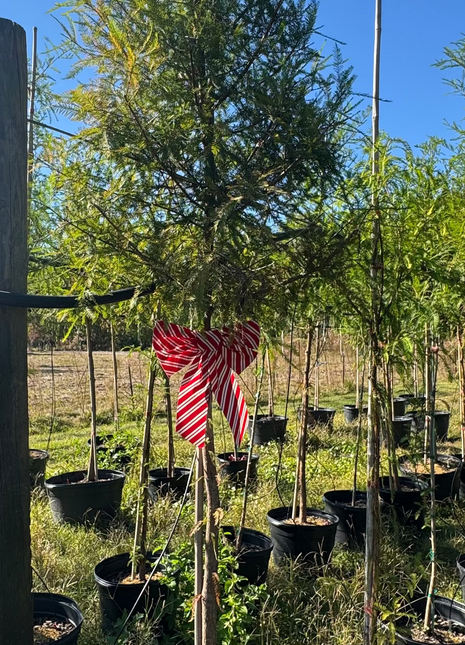
Bald Cypress (Taxodium Distichum)
Bald Cypress (Taxodium distichum) — Locally Grown in Pierson, Florida at Flowing Well Tree FarmNative Wetland Conifer • Flood-Tolerant Shade Tree • Long-Lived Structural Canopy Species • Florida-Grown Restoration & Landscape Anchor Tree Bald Cypress (Taxodium distichum) is one of the most iconic and ecologically important native trees in the southeastern United States. Known for its strong pyramidal form, soft feathery foliage, and exceptional tolerance to flooding and wet soils, this species is a cornerstone of Florida wetlands, river systems, and lowland landscapes. At Flowing Well Tree Farm in Pierson, Florida, we grow Bald Cypress as premium native canopy stock selected for strong central leaders, upright structural form, and long-term performance in Florida’s wet, sandy, and seasonally variable environments. Each tree is established in real field conditions to ensure resilience under heat, humidity, flooding, drought cycles, and storm exposure. When you buy Bald Cypress here, you’re not receiving weak ornamental nursery stock—you’re getting locally grown, Florida-adapted trees conditioned for real-world ecological performance in both wetland and upland systems. That local adaptation is critical. Bald Cypress performs best when grown in Florida conditions from the start, developing stronger root systems, improved flood tolerance, and more stable long-term canopy structure. Why Locally Grown Matters for Bald Cypress Starting with Florida-grown stock provides key advantages: Faster establishment in wet or sandy soils Stronger root systems for flood and drought cycles Improved heat and humidity tolerance Better wind and storm resilience in mature trees Higher survival rates in restoration plantings More consistent long-term canopy development This creates a durable, permanent native shade tree. Canopy Structure & Landscape Value Bald Cypress is one of Florida’s most valuable large canopy trees: 50–80 ft tall mature deciduous conifer Strong pyramidal form when young, broadening with age Soft, fine-textured “feather-like” foliage Deciduous in winter with warm copper fall color Excellent long-term shade and cooling tree Strong architectural presence in large landscapes It is a defining species of Southern wetland ecosystems. Ecological & Wetland Importance Bald Cypress is a foundational Florida ecosystem species: Dominant tree in swamps, riverbanks, and floodplains Provides critical habitat for birds, amphibians, and wildlife Supports aquatic and semi-aquatic ecosystems Stabilizes soil in wet and erosion-prone areas Creates microhabitats through “cypress knee” development in wet conditions Enhances water filtration and watershed health It is one of the most important ecological trees in the Southeast. Growth Habit & Structural Function Bald Cypress is a long-lived structural canopy tree: 50–80+ ft mature height depending on site conditions Straight central trunk with strong vertical development Broad canopy with age, providing deep shade Adaptable to both wetland and upland planting Extremely long-lived (often centuries in natural settings) Strong wind resistance when mature It functions as a permanent landscape anchor tree. Climate & Site Adaptability Bald Cypress thrives in Florida’s full range of conditions: Native to southeastern U.S. wetlands and river systems Tolerates standing water and seasonal flooding Performs well in sandy upland soils as well Highly heat and humidity tolerant Strong drought tolerance once established Excellent storm and wind resilience It is one of the most adaptable large native trees available. USDA Growing Zones Best suited for Zones 4–10, with exceptional performance throughout Florida and the entire southeastern United States. Light Requirements For best growth and structure: Full sun preferred for strongest canopy development Tolerates partial shade in early stages Sun exposure improves form and long-term vigor Ideal for open landscapes, wetlands, and large properties Soil & Site Requirements Highly adaptable native species: Thrives in wet, flooded, or seasonally saturated soils Performs well in sandy uplands and loamy soils Tolerates poor fertility conditions Adapts to both managed and natural environments Benefits from mulch during establishment Planting Guidance (Grower Recommended) For best long-term performance: Plant in full sun for optimal growth Dig hole 2–3× wider than root ball Set at original soil depth Water deeply after planting Apply mulch to stabilize moisture and temperature Space 20–40 ft apart for full canopy development Allow room for mature spread in large landscapes We can assist with wetland planting design, shade tree placement, and large-scale restoration planning. Watering & Establishment Water regularly during the first 1–2 growing seasons. Once established, Bald Cypress becomes extremely resilient and can thrive in both wet and dry cycles common in Florida. Fertilizer Low to moderate input needs: Minimal fertilization required Compost supports early establishment Avoid excessive nitrogen inputs Performs best in natural soil systems Pruning & Maintenance Very low maintenance: Minimal pruning required Naturally strong central leader development Can be limbed up for shade tree form Long-lived with stable structure Low maintenance once established Why This Is a Smarter Long-Term Investment ✔ Locally grown in Florida for maximum adaptation✔ Iconic native wetland and shade tree✔ Extremely flood and drought tolerant species✔ Long-lived structural landscape anchor✔ Excellent wildlife habitat and ecosystem value✔ Strong wind and storm resilience when mature✔ Adaptable to wet and upland sites✔ Grower-direct quality for Florida conditions The Real Value This isn’t just a shade tree—it’s a legacy canopy species that defines wetlands, strengthens landscapes, and provides ecological structure for generations. When you plant Bald Cypress, you’re investing in a permanent native anchor tree that thrives through flood, drought, and storm while building long-term habitat and landscape stability in Florida’s environment.
$10.00 - $135.00
-


Swamp Chestnut Oak (Quercus Michauxii)
Why Locally Grown Matters for Swamp Chestnut Oak Starting with Florida-grown stock provides key advantages: Stronger establishment in wet, heavy, or sandy soilsDeep taproot development for long-term stabilityImproved flood and seasonal saturation toleranceHigher wind and storm resistance in mature treesBetter adaptation to Florida heat and humidity cyclesGreater survival rates in restoration and reforestation projects This creates a long-lived native oak capable of dominating floodplain and lowland systems. Canopy Structure & Landscape Value Swamp Chestnut Oak is a true legacy shade tree: 60–100 ft mature height in optimal conditionsMassive, broad, rounded canopy with ageThick, strong central trunk with high structural integrityLarge, glossy green leaves with chestnut-like appearanceGolden to brown fall color depending on season conditionsDeep, cooling shade ideal for large properties and open landscapes It is one of the most impressive native oaks in the southeastern United States. Ecological & Habitat Importance Swamp Chestnut Oak is a foundational wetland hardwood species: Dominant in bottomland hardwood forests and floodplainsProduces large acorns that support deer, turkey, and wildlifeProvides nesting and shelter habitat for birds and mammalsStabilizes soils in erosion-prone wetland systemsSupports long-term forest biodiversity and regeneration cyclesCritical component of Southeastern river and swamp ecosystems It is a keystone species in Florida’s natural hardwood systems. Growth Habit & Structural Function Swamp Chestnut Oak is a long-lived structural canopy tree: 60–100+ ft mature height depending on site conditionsStraight, dominant central trunk with strong vertical growthWide-spreading canopy with age for deep shade coverageExtremely long lifespan—often centuries in natural settingsHigh wood density and structural strengthExcellent wind resistance when fully established It functions as a permanent ecological anchor tree in large landscapes. Climate & Site Adaptability Swamp Chestnut Oak is highly adaptable to Florida conditions: Native to southeastern U.S. floodplain and bottomland forestsThrives in periodically flooded soils and wet environmentsPerforms well in sandy loam and rich organic soilsTolerates Florida heat, humidity, and storm exposureModerate drought tolerance once establishedExcellent long-term stability in variable site conditions It is one of the most reliable large native oaks for restoration planting. USDA Growing Zones Best suited for Zones 6–9, with strong performance throughout Florida and the southeastern United States. Light Requirements For best structure and canopy development: Full sun for optimal growth and crown expansionTolerates partial shade in early establishment stagesSun exposure improves trunk strength and long-term vigorBest suited for open landscapes, floodplains, and large properties Soil & Site Requirements Highly adaptable bottomland hardwood species: Thrives in wet, poorly drained, or seasonally flooded soilsPerforms well in sandy, loamy, and organic-rich soilsTolerates heavy clay and floodplain conditionsHandles low fertility environments once establishedBenefits from mulch and moisture stabilization during early growth Planting Guidance (Grower Recommended) For best long-term performance: Plant in full sun to open canopy areasDig hole 2–3× wider than root ballSet tree at original soil depthWater deeply after planting to remove air pocketsApply mulch to conserve moisture and regulate temperatureSpace 30–50 ft apart for full canopy developmentAllow room for mature crown expansion and root spread We can assist with large-scale oak planting design, wetland restoration layouts, and long-term canopy planning. Watering & Establishment Water consistently during the first 2–3 growing seasons. Once established, Swamp Chestnut Oak becomes highly self-sufficient and thrives in both wet and moderately dry cycles common in Florida landscapes. Fertilizer Low input requirements: Minimal fertilization needed once establishedCompost improves early soil developmentAvoid excessive nitrogen to prevent weak structural growthBest performance in natural soil systems Pruning & Maintenance Very low maintenance once established: Prune early for strong central leader formationRemove competing branches during young growth stagesNaturally develops strong structural frameworkMinimal long-term maintenance requiredExtremely durable once mature Why This Is a Smarter Long-Term Investment ✔ Locally grown in Florida for maximum adaptation✔ Massive native oak with long lifespan✔ Exceptional wetland and floodplain tolerance✔ High wildlife and ecological value✔ Strong structural wood and storm resilience✔ Excellent shade and canopy development✔ Ideal restoration and legacy planting species✔ Grower-direct Florida field-grown quality The Real Value This is not just a shade tree—it is a generational hardwood anchor that defines wetlands, stabilizes ecosystems, and builds permanent canopy structure. When you plant Swamp Chestnut Oak, you are investing in a legacy native tree that will outlive landscapes, support wildlife for centuries, and anchor Florida’s natural systems with strength, scale, and ecological permanence.
$25.00 - $130.00
-


Highland Tupelo Tree (Nyssa sylvatica)
Highland Tupelo Tree (Nyssa sylvatica) — Locally Grown in Pierson, Florida at Flowing Well Tree FarmNative Wetland & Upland Hardwood • Brilliant Fall Color Tree • Wildlife Habitat Keystone Species • Florida-Grown Restoration, Rain Garden & Natural Landscape Tree Highland Tupelo Tree (Nyssa sylvatica), also known as Black Tupelo or Sour Gum, is one of the most ecologically valuable native hardwood trees in North America. It is prized for its striking fall color, strong structural wood, and exceptional wildlife value. In Florida landscapes and restoration systems, it serves as a long-lived anchor species that supports biodiversity, stabilizes soils, and brings seasonal color to both wet and upland sites. At Flowing Well Tree Farm in Pierson, Florida, we grow Highland Tupelo as premium native stock selected for strong central leader development, deep root formation, and adaptability to Florida’s alternating wet/dry soil conditions. Each tree is field-grown under real Florida climate stress—heat, humidity, heavy rainfall cycles, and sandy soils—ensuring superior transplant success and long-term landscape performance. When you buy Highland Tupelo Tree here, you are not receiving a weak container-grown ornamental—you are getting Florida-hardened native hardwood stock built for survival, long-term growth, and ecological function in real restoration and landscape conditions. That local adaptation is critical. Nyssa sylvatica performs best when grown in-region where it can naturally develop strong taproot systems, climate resilience, and the structural integrity required for long-lived canopy development. Why Locally Grown Matters for Highland Tupelo Starting with Florida-grown native stock provides key advantages: Faster establishment in sandy and transitional soils Stronger deep-root development for wind resistance Improved tolerance to flooding and drought cycles Higher survival rates in restoration plantings Better adaptation to Florida heat and humidity stress Reduced transplant shock in native landscape installations Long-term structural stability in storm-prone environments This creates a resilient native hardwood system capable of thriving for decades. Fall Color & Seasonal Value Highland Tupelo is one of the most visually striking native trees in North America: Brilliant red, orange, and deep burgundy fall color One of the most reliable native hardwoods for seasonal display Late-season color extension when many trees have faded High ornamental value in natural and designed landscapes Creates dramatic visual contrast in mixed native plantings It is a cornerstone species for native fall-color landscapes in Florida and the Southeast. Wildlife & Ecological Value Nyssa sylvatica is a keystone native species: Produces high-value nectar for pollinators in spring Fruits feed birds, including migratory species Supports bees and native insect populations Provides dense canopy cover for nesting and shelter Critical food source in natural forest ecosystems Enhances biodiversity in wetland and upland transitions It functions as a full ecological support system, not just a landscape tree. Growth Habit & Structural Function Highland Tupelo is a long-lived structural hardwood: Mature height typically 30–60+ ft depending on site conditions Strong central trunk with upright branching habit Deep taproot system for anchoring and stability Moderate to slow growth with long lifespan Develops broad canopy with age Excellent for reforestation and permanent canopy structure It is designed for permanence, not short-term ornamental use. Ecological & Landscape Benefits Highland Tupelo contributes significantly to ecosystem restoration: Stabilizes wet soils, swales, and transitional zones Improves soil structure through deep root penetration Supports long-term carbon sequestration Enhances water infiltration and retention Provides cooling canopy in hot Florida landscapes Strengthens native forest regeneration systems It is a foundational species in resilient landscape design. Climate & Site Adaptability Highland Tupelo thrives across a wide range of Florida conditions: Excellent adaptability to wetland edges and upland soils Tolerates periodic flooding and seasonal saturation Performs well in acidic, sandy Florida soils Strong heat and humidity tolerance once established Wind-resistant when properly rooted Ideal for naturalized and restoration environments It bridges the gap between wetland and upland ecosystems. USDA Growing Zones Best suited for Zones 4–9, with strong performance throughout North and Central Florida and adaptable use in South Florida in properly managed moisture conditions. Light Requirements For best growth and fall color development: Full sun produces strongest structure and best color Tolerates partial shade in forest understory settings More sun exposure enhances branching and canopy density Performs well in mixed native woodland plantings Soil & Site Requirements Highly adaptable native hardwood: Prefers acidic, well-drained soils but tolerates moisture variation Thrives in sandy Florida soils with organic matter Performs well in low-lying wetland margins Benefits from mulch and forest floor conditions Avoids extreme alkalinity for best long-term vigor Planting Guidance (Grower Recommended) For best long-term establishment: Plant in full sun to partial shade depending on design goals Dig wide planting area to encourage lateral root expansion Set at original soil grade—do not bury trunk flare Water deeply during establishment period Apply heavy mulch layer to mimic forest floor conditions Space appropriately for mature canopy spread We can assist with native habitat restoration, wetland edge planting, and mixed hardwood forest design. Watering & Establishment Requires consistent watering during early establishment. Once established, Highland Tupelo becomes highly self-sufficient, relying primarily on natural rainfall except during extreme drought periods. Fertilizer Low to moderate nutrient needs: Responds well to organic compost amendments Avoid excessive fertilization to preserve native growth form Slow-release nutrients support steady, natural development Best performance comes from soil-building practices rather than heavy feeding Pruning & Maintenance Low maintenance once established: Minimal pruning required beyond structural training when young Remove competing leaders early for strong trunk formation Naturally self-shapes into strong canopy structure Deadwood removal optional for safety or clearance It is a true low-intervention native hardwood. Why This Is a Smarter Long-Term Investment ✔ Locally grown in Florida for maximum ecological adaptation✔ Long-lived native hardwood canopy tree✔ Exceptional wildlife and pollinator value✔ Brilliant seasonal fall color display✔ Strong performance in wet and upland soils✔ Ideal for restoration, reforestation, and habitat work✔ Storm-resilient once established✔ Grower-direct native stock from Florida conditions The Real Value This isn’t just a shade tree—it’s a long-term native ecosystem anchor that builds forest structure, supports wildlife, stabilizes land, and delivers seasonal beauty for generations. When you plant Highland Tupelo Tree, you’re investing in a Florida-adapted native hardwood system that strengthens ecological resilience, restores habitat function, and develops into one of the most visually and ecologically valuable trees in the southeastern landscape.
$30.00
-


Native Sweetgum (Liquidambar styraciflua)
Native Sweetgum (Liquidambar styraciflua) — Locally Grown in Pierson, Florida at Flowing Well Tree Farm Native Shade Tree • Fast-Growing Hardwood • Brilliant Fall Color Species • Florida-Grown Restoration Stock Native Sweetgum (Liquidambar styraciflua) is a classic southeastern native hardwood known for its rapid growth, strong canopy development, and outstanding seasonal color display. Found naturally in bottomlands, mixed hardwood forests, and moist upland sites across the eastern United States, Sweetgum is widely used in restoration plantings, reforestation projects, large-scale shade plantings, and native landscape systems throughout Florida. When you buy Native Sweetgum here, you're not getting weak, over-irrigated nursery stock—you’re getting locally grown, field-conditioned trees produced in Pierson and adapted to Florida’s heat, humidity, sandy soils, and seasonal rainfall variability. That matters for long-term success. Locally grown Sweetgum develops stronger root systems, adapts more quickly after planting, and is better prepared for the real environmental conditions found in Florida landscapes and restoration sites. This is direct-from-grower native hardwood stock. Visit the farm, see how our shade trees are grown, and receive practical guidance on canopy planning, spacing, and long-term landscape development. Native Sweetgum is especially valued for its fast growth, dense shade production, and striking fall color that brings seasonal interest to large landscapes. Why Locally Grown Matters for Sweetgum Trees Starting with Florida-grown stock provides important advantages: Better adaptation to Florida heat and humidity Stronger root system development before planting Improved transplant success Faster establishment in field conditions Greater resilience to seasonal stress Better long-term performance in native landscapes It creates a stronger foundation for durable canopy establishment. Shade & Canopy Value Sweetgum is a dependable native shade tree: Fast growth rate for a hardwood species Develops a dense, rounded canopy Excellent for large properties and open landscapes Provides long-term cooling shade Strong structural canopy development over time It is widely used for reforestation and large-scale shade planting projects. Seasonal Interest & Ornamental Value Native Sweetgum is highly valued for its seasonal display: Brilliant fall colors in red, orange, purple, and yellow Star-shaped leaves with unique texture Distinct spiky seed balls adding winter interest Strong visual presence in large landscapes One of the most colorful native hardwoods in the Southeast Its fall display makes it a standout seasonal tree. Wildlife & Ecological Importance Sweetgum plays a strong role in native ecosystems: Seeds provide food for birds and small mammals Supports native insect populations Provides nesting and shelter habitat Contributes to biodiversity in hardwood forests Enhances ecological structure in restoration plantings It is a valuable long-term habitat species. Climate & Site Adaptability Native Sweetgum is well adapted to Florida conditions: Native to bottomlands and moist upland forests Performs well in sandy, loamy, and clay soils Tolerates seasonal flooding and wet periods Handles heat and humidity effectively Adaptable to both wet and moderately dry sites once established It is a strong performer in diverse landscape conditions. USDA Growing Zones Best suited for Zones 5–9, performing strongly throughout Florida and much of the eastern United States. Mature Size & Growth Habit A large native hardwood: 60–100 ft mature height 40–60 ft spread Dense, rounded canopy form Strong central trunk development Long-lived under natural conditions It becomes a dominant canopy tree in mature landscapes. Light Requirements For best growth: Full sun preferred Minimum 6 hours of direct sunlight daily Best canopy density in open conditions Soil & Site Requirements Highly adaptable native tree: Prefers moist, fertile soils but adapts widely Tolerates sandy, loamy, and clay soils Performs well in areas with seasonal moisture variation Handles occasional flooding Avoid extremely dry, shallow soils for best growth Planting Guidance (Grower Recommended) For best establishment: Plant in full sun open areas Dig planting hole 2–3× wider than root ball Plant at original soil depth Water thoroughly after planting Apply mulch around root zone Keep mulch away from trunk base Maintain regular watering during establishment period We can assist with canopy spacing, restoration layouts, and long-term forest planning. Watering & Establishment Water regularly during the first 1–2 growing seasons. Once established, Native Sweetgum becomes moderately adaptable to both wet and dry seasonal conditions. Fertilizer Low to moderate requirements: Light balanced fertilizer during establishment if needed Avoid excessive nitrogen applications Performs well in natural soil fertility Minimal fertilization once established Pruning & Maintenance Low maintenance once established: Prune early for structural form Remove damaged or crossing branches as needed Naturally develops a strong canopy structure Long-term maintenance is minimal Why This Is a Smarter Long-Term Investment ✔ Locally grown in Florida for stronger field performance ✔ Fast-growing native hardwood shade tree ✔ Exceptional fall color and seasonal interest ✔ Valuable wildlife habitat species ✔ Strong restoration and reforestation tree ✔ Adaptable to diverse soil and moisture conditions ✔ Long-lived canopy investment tree ✔ Grower-direct planting expertise and support The Real Value This isn’t just a shade tree—it’s a long-term landscape foundation. You’re not simply planting a sweetgum. You’re building canopy structure, restoring native forest systems, supporting wildlife habitat, and investing in a living hardwood that will define and enrich the landscape for generations.
$30.00
-


Nuttall Oak (Quercus Texana)
Nuttall Oak (Quercus texana) — Locally Grown in Pierson, Florida at Flowing Well Tree FarmNative Bottomland Hardwood • Fast-Growing Flood-Tolerant Shade Oak • Wetland & Floodplain Adapted Canopy Species • Florida-Grown Restoration, Wildlife & Legacy Shade Tree Nuttall Oak (Quercus texana) is one of the fastest-growing and most resilient native red oaks in the southeastern United States, especially valued for its exceptional flood tolerance, strong upright structure, and reliable acorn production for wildlife. Naturally found in river bottoms, floodplains, and seasonally saturated hardwood forests, this species is a cornerstone tree for wetland restoration and large-scale native canopy development. At Flowing Well Tree Farm in Pierson, Florida, we grow Nuttall Oak as premium native canopy stock selected for vigorous growth, straight central leader formation, and long-term performance in Florida’s wet soils, sandy transitions, and high-moisture environments. Each tree is field-grown under real Florida conditions to ensure resilience against heat, humidity, flooding cycles, and seasonal drought stress. When you buy Nuttall Oak here, you are not receiving weak ornamental nursery stock—you are getting Florida-adapted, field-hardened native hardwoods designed for rapid establishment, structural strength, and ecological restoration success. That local adaptation is critical. Quercus texana performs best when grown in-region, where it develops deeper anchoring roots, improved flood endurance, and a strong, upright canopy capable of thriving in variable wetland conditions. Why Locally Grown Matters for Nuttall Oak Starting with Florida-grown stock provides key advantages: Rapid establishment in wet, heavy, or sandy soilsStronger root systems for floodplain stabilityImproved tolerance to seasonal inundation and standing waterFaster early canopy development compared to many native oaksHigher survival rates in restoration and wetland planting projectsBetter adaptation to Florida heat, humidity, and storm cycles This creates one of the most reliable fast-growing native oaks for wet Florida landscapes. Canopy Structure & Landscape Value Nuttall Oak is a high-performance shade and restoration canopy tree: 60–80 ft mature height depending on site conditionsStrong upright central leader with straight trunk developmentPyramidal to rounded canopy that expands with ageFast growth rate compared to most native oak speciesDeep green summer foliage with golden to brown fall colorExcellent large-scale shade tree for wet or transitional soils It is one of the most dependable oaks for rapid canopy establishment in Florida. Ecological & Habitat Importance Nuttall Oak is a critical wetland and floodplain species: Produces abundant acorns that support deer, turkey, waterfowl, and wildlifeProvides nesting and shelter habitat for birds and forest speciesThrives in river bottoms, swamps, and seasonally flooded forestsSupports long-term wetland regeneration and biodiversityHelps stabilize erosion-prone soils in floodplain systemsKey species in Southeastern bottomland hardwood ecosystems It is one of the most wildlife-productive native oaks available. Growth Habit & Structural Function Nuttall Oak is a fast-growing structural canopy species: 60–80+ ft mature height depending on site conditionsStraight central trunk with strong vertical growth habitRapid juvenile growth compared to most native hardwoodsBroad canopy development with age for deep shade productionModerate to long lifespan in floodplain ecosystemsExcellent structural strength in wet soil environments It functions as a fast-establishing canopy anchor in restoration landscapes. Climate & Site Adaptability Nuttall Oak thrives in Florida’s most variable environments: Native to southeastern U.S. floodplains and river systemsExceptional tolerance to flooding and saturated soilsPerforms well in clay, loam, and sandy wet soilsStrong heat and humidity tolerance in Florida climatesModerate drought tolerance once fully establishedHighly adaptable to restoration and unmanaged systems It is one of the most versatile wetland oaks for Florida planting. USDA Growing Zones Best suited for Zones 6–9, with strong performance throughout Florida and the southeastern United States. Light Requirements For best growth and canopy development: Full sun for optimal growth rate and structureTolerates partial shade in early establishment stagesSun exposure improves trunk strength and long-term vigorBest suited for open wetlands, floodplains, and large properties Soil & Site Requirements Highly adaptable wetland oak species: Thrives in seasonally flooded and saturated soilsPerforms well in heavy clay, loam, and sandy bottomlandsTolerates low oxygen and poorly drained conditionsAdapts to transitional wet-to-dry landscape zonesBenefits from mulch and moisture stabilization during establishment Planting Guidance (Grower Recommended) For best long-term performance: Plant in full sun or open floodplain areasDig hole 2–3× wider than root ballSet at original soil depthWater deeply after planting to eliminate air pocketsApply mulch 2–4 inches deep, avoiding trunk contactSpace 30–45 ft apart for mature canopy developmentAllow space for long-term crown expansion and root spread We assist with wetland restoration planning, flood-tolerant oak systems, and large-scale native canopy design. Watering & Establishment Water regularly during the first 2–3 growing seasons. Once established, Nuttall Oak becomes highly resilient and thrives in both seasonal flooding and dry cycles common in Florida ecosystems. Fertilizer Low input requirements: Minimal fertilization needed once establishedOrganic compost improves early soil developmentAvoid excessive nitrogen to maintain strong structurePerforms best in natural wetland soil systems Pruning & Maintenance Low maintenance once established: Prune early to establish strong central leader formRemove competing branches during juvenile growthNaturally develops strong upright structureMinimal long-term pruning requiredHighly durable in wetland and unmanaged environments Why This Is a Smarter Long-Term Investment ✔ Locally grown in Florida for true wetland adaptation✔ One of the fastest-growing native red oaks✔ Excellent flood and wet soil tolerance✔ High wildlife and ecological value✔ Strong structural canopy development✔ Ideal for restoration and floodplain planting✔ Reliable performance in heat, humidity, and storms✔ Grower-direct field-grown native hardwood stock The Real Value This is not just a shade tree—it is a rapid-establishing floodplain canopy species that rebuilds wetlands, strengthens ecosystems, and delivers long-term structural shade at scale. When you plant Nuttall Oak, you are investing in a fast-growing native hardwood that anchors wet landscapes, supports wildlife abundance, and creates lasting ecological and canopy structure for generations.
$190.00
-


Carolina Buckthorn (Rhamnus caroliniana)
Carolina Buckthorn (Rhamnus caroliniana) — Locally Grown in Pierson, Florida at Flowing Well Tree Farm Native Wildlife Tree • Shade-Tolerant Understory Species • Berry-Producing Habitat Plant • Florida-Grown Restoration Stock Carolina Buckthorn (Rhamnus caroliniana) is a valuable native understory tree known for its adaptability, wildlife-supporting berries, and ability to thrive in both forest edges and shaded landscapes. Found naturally in woodlands, limestone forests, and mixed hardwood systems across the southeastern United States, it is an important species for restoration plantings, native habitat development, and low-maintenance ecological landscapes. When you buy Carolina Buckthorn here, you're not getting weak, overprotected nursery material—you’re getting locally grown, Florida-adapted trees produced in Pierson and conditioned for real-world Florida conditions including heat, humidity, sandy soils, and seasonal rainfall variability. That matters for long-term success. Locally grown buckthorn develops stronger root systems, transitions faster after planting, and is better prepared for the stress conditions found in naturalized landscapes and restoration environments. This is direct-from-grower native restoration stock. Visit the farm, see how our native understory trees are grown, and receive practical guidance on shade planting, habitat restoration, and mixed-species forest design. Carolina Buckthorn is especially valuable because it performs well in shaded conditions where many other native trees struggle, while also providing important wildlife food resources. Why Locally Grown Matters for Carolina Buckthorn Starting with Florida-grown stock provides key advantages: Better adaptation to Florida heat and humidity Stronger root system development before planting Improved establishment in woodland soils Faster acclimation to shaded environments Increased drought tolerance after establishment Better long-term survival in restoration sites It creates a stronger foundation for successful understory tree establishment. Wildlife & Ecological Importance Carolina Buckthorn is an important native food and habitat species: Produces small berries consumed by birds Supports songbirds and native wildlife populations Provides cover and nesting habitat in woodland systems Contributes to seasonal food availability in forests Enhances biodiversity in restoration plantings Supports healthy native ecosystem structure Its fruiting habit makes it especially valuable for wildlife corridors and conservation plantings. Shade Tolerance & Understory Performance Unlike many native trees, Carolina Buckthorn thrives in lower light conditions: Excellent shade tolerance for understory planting Performs well under pine and hardwood canopies Adapts to forest edge environments Suitable for naturalized shaded landscapes Can also grow in partial sun conditions It is one of the more reliable native small trees for woodland systems. Seasonal Interest Carolina Buckthorn provides subtle but valuable seasonal features: Small white-green flowers in spring Attractive dark berries in summer to fall Glossy green foliage throughout the growing season Naturally refined woodland appearance Soft integration into native plant communities Its understated beauty supports naturalistic landscape design. Climate & Site Adaptability This species is highly adaptable to Florida conditions: Native to woodlands and mixed forest systems Tolerates sandy and loamy soils Performs well in partial shade to full shade Moderately drought tolerant once established Handles Florida heat and humidity effectively Adapted to upland and forest edge environments It excels in naturalized and restoration-focused plantings. USDA Growing Zones Best suited for Zones 5–9, performing well throughout Florida and the southeastern United States in appropriate shaded conditions. Mature Size & Growth Habit A small to medium native understory tree: 12–25 ft mature height 10–20 ft spread Multi-stem or single-trunk form Rounded, open woodland canopy Soft branching structure Ideal for understory layering and natural forest structure. Light Requirements For best performance: Partial shade preferred Tolerates full shade in woodland settings Can handle filtered sunlight Avoid prolonged harsh full sun in exposed sites Soil & Site Requirements Adapted to native woodland soils: Prefers well-drained sandy or loamy soils Performs well in organic-rich forest soils Tolerates low fertility conditions Benefits from natural mulch and leaf litter Avoid consistently flooded sites Planting Guidance (Grower Recommended) For best establishment: Plant in shaded or partially shaded locations Dig planting hole 2–3× wider than root ball Plant at original soil depth Water thoroughly after planting Apply mulch to mimic forest floor conditions Keep mulch away from trunk base Maintain consistent moisture during establishment We can assist with woodland planting design, understory layering, and restoration planning. Watering & Establishment Water regularly during the first growing season. Once established, Carolina Buckthorn becomes moderately drought tolerant and performs well in natural woodland moisture conditions. Fertilizer Minimal fertilization required: Light feeding only if needed during establishment Organic amendments preferred Avoid excessive fertilization Performs best in natural forest soils Pruning & Maintenance Low maintenance species: Minimal pruning required Remove dead or damaged branches as needed Naturally develops a woodland form No intensive maintenance required Why This Is a Smarter Long-Term Investment ✔ Locally grown in Florida for superior adaptation ✔ Excellent native understory tree for shade conditions ✔ Important wildlife berry-producing species ✔ Strong restoration and habitat value ✔ Thrives in woodland and forest edge environments ✔ Low-maintenance and long-lived native plant ✔ Supports biodiversity in native ecosystems ✔ Grower-direct expertise for planting success The Real Value This isn’t just a small native tree—it’s a functional piece of forest ecology. You’re not simply planting a buckthorn. You’re restoring understory structure, feeding wildlife, strengthening woodland ecosystems, and building long-term habitat complexity that supports Florida’s native forests for generations to come.
$130.00
-


American Hornbeam (Carpinus caroliniana)
American Hornbeam (Carpinus caroliniana) — Locally Grown in Pierson, Florida at Flowing Well Tree Farm Native Understory Tree • Shade Tolerant • Highly Adaptable • Florida-Grown for Real Landscape Performance When you buy American Hornbeam here, you’re not getting stressed roadside digs or out-of-region nursery stock—you’re getting trees grown directly in Pierson, raised in Florida’s heat, humidity, rainfall cycles, and native soils from the start. That matters because it produces trees that establish faster, adapt more easily, and perform more reliably in real landscapes. This is direct-from-grower material. You can visit the farm, walk the shaded production areas, and see how these native understory trees are developed for long-term landscape success. When you have questions, you’re speaking directly with the people growing them—not a reseller—so advice is based on field experience, not guesswork. American Hornbeam is one of the most refined native understory trees available, combining durability, beauty, and ecological value in a way few species can match. Why Locally Grown Native Stock Performs Better Even though this is a highly adaptable native tree, local growing conditions improve performance by ensuring: Strong root development in Florida soils Better heat and humidity acclimation Reduced transplant shock Faster establishment in home landscapes Improved long-term resilience in mixed soil conditions It’s a native tree with a real-world advantage. Elegant Native Structure with Real Landscape Function American Hornbeam is known for its naturally sculpted form and slow-to-moderate growth, making it ideal for refined landscape spaces. It works beautifully as: An understory shade tree A woodland garden focal point A naturalized landscape component A specimen tree in smaller spaces A pond edge or rain garden planting Its layered branching structure provides filtered shade without overwhelming surrounding plantings. Distinctive Bark and Seasonal Color One of its most recognizable features is its smooth, fluted trunk—earning it the nickname “Musclewood.” Seasonal interest includes: Vibrant orange, red, and yellow fall foliage Textured bark that adds winter structure Dense green canopy during the growing season It brings year-round visual interest in a subtle, natural way. USDA Growing Zones Adapted to Zones 3–9, making it one of the most versatile native understory trees across the eastern United States. Mature Size & Growth Habit A smaller native canopy tree: 20–35 ft tall 20–30 ft wide Ideal for controlled landscapes where larger shade trees would be too dominant. Light Requirements Performs best in partial shade to full sun. In warm climates like Florida, young trees benefit from morning sun and afternoon shade during establishment. Soil & Site Adaptability Naturally flexible and well-adapted to a wide range of conditions: Moist, well-drained soils preferred Sandy, loamy, or clay soils tolerated Slightly acidic to neutral pH ideal Handles occasional wet or seasonal saturated conditions It performs especially well in woodland edges, shaded gardens, and transitional wet areas. Planting Guidance (Grower Recommended) We focus on long-term success, not just installation: Select a site with consistent moisture and space for mature growth Dig a hole twice as wide as the root ball Plant with root flare at soil level Backfill with native soil and water in deeply Apply 2–3 inches of mulch, keeping it away from the trunk Maintain regular watering during establishment If you visit the farm, we can help match placement based on shade, moisture, and landscape intent. Watering & Establishment Regular watering is essential for the first 1–2 years. Once established, American Hornbeam becomes moderately drought tolerant but performs best with occasional deep watering during extended dry periods. Fertilizer Generally low-maintenance. A light balanced fertilizer in early spring is optional. Avoid over-fertilization to preserve natural growth form and resilience. Pruning & Maintenance Minimal pruning required: Remove dead or crossing branches as needed Light shaping in early years can improve structure Avoid heavy pruning to preserve natural form It naturally develops a balanced, elegant structure without intervention. Wildlife & Ecological Value American Hornbeam supports local ecosystems by: Providing habitat and cover for birds Supporting pollinators Offering seasonal food sources for wildlife Contributing to woodland biodiversity Why This Is a Smarter Long-Term Investment ✔ Grown locally in Florida conditions from the start✔ Faster establishment with reduced transplant stress✔ Direct access to growers for real planting guidance✔ Highly adaptable native understory tree✔ Strong ecological and wildlife value✔ Long lifespan with minimal maintenance✔ Opportunity to visit, learn, and select in person The Real Advantage This isn’t just a native tree purchase—it’s a long-term landscape foundation species grown with care, local expertise, and real Florida conditions in mind. You’re not just planting a tree. You’re adding structure, resilience, and quiet beauty that lasts for generations.
$130.00
-

Strawberry Bush (Euonymus Americanus)
Strawberry Bush (Euonymus americanus) — Locally Grown in Pierson, Florida at Flowing Well Tree FarmNative Woodland Shrub • Unique “Exploding” Red Fruit Capsules • Shade Tolerant Understory Plant • Florida-Grown Habitat Restoration Stock Strawberry Bush (Euonymus americanus), also commonly called American Strawberry Bush or Hearts-a-Bustin’, is one of the most distinctive and underutilized native shrubs in the southeastern United States. Known for its unusual warty green stems, fine-textured foliage, and bright pink-red fruit capsules that split open to reveal orange seeds, this plant delivers unmatched visual interest in shaded Florida landscapes. Naturally found in moist hardwood hammocks, bottomlands, and shaded forest understories, Strawberry Bush is a true native woodland species that thrives in protected, filtered-light environments. At Flowing Well Tree Farm in Pierson, Florida, we grow this plant specifically for native restoration, wildlife habitat systems, and naturalized shade gardens that require authentic southeastern understory structure. When you buy Strawberry Bush here, you’re not getting weak, greenhouse-softened ornamental stock—you’re getting locally grown, Florida-adapted native plants conditioned for real conditions including heat, humidity, sandy soils, organic forest floors, seasonal flooding, and shaded understory competition. That local adaptation is critical. Strawberry Bush can be slow to establish in poor-quality nursery stock, but when grown locally and properly hardened, it develops stronger root systems, improved survival rates, and far better long-term performance in Florida woodland systems. Why Locally Grown Matters for Strawberry Bush Starting with Florida-grown stock provides key advantages: Faster establishment in shaded, moisture-variable soils Improved adaptation to Florida humidity and heat Stronger root development in woodland environments Better survival in restoration and natural understory plantings Increased resilience during drought and seasonal flooding cycles More reliable long-term growth in native hammocks This creates a stronger foundation for long-term ecological stability. Fruit, Ornamental & Ecological Value Strawberry Bush is one of the most visually unique native shrubs: Bright pink-red capsule fruit that splits open to reveal orange seeds Highly ornamental fall display unlike any other native shrub Fine-textured green foliage with airy branching habit Adds seasonal color to shaded landscapes Excellent naturalistic aesthetic for native gardens Provides subtle but important ecological food value It is often used as a “conversation plant” in native plantings due to its unusual fruit structure. Wildlife & Habitat Importance Strawberry Bush plays a valuable but quiet ecological role: Fruit consumed by birds and small wildlife species Dense branching provides cover in understory habitats Supports woodland biodiversity and structural layering Important component of native hammock ecosystems Enhances habitat complexity in shaded restoration zones It strengthens the understory layer that many ecosystems depend on. Growth Habit & Landscape Value This is a naturally elegant, low-density native shrub: 4–6 ft mature height in ideal conditions Upright to loosely arching multi-stem shrub habit Fine branching structure ideal for woodland layering Best used in naturalized or restoration-style plantings Not aggressive; maintains a controlled native presence Excellent companion plant in mixed understory systems It is designed by nature for shaded forest environments. Climate & Site Adaptability Strawberry Bush thrives in Florida’s woodland conditions: Native to southeastern U.S. hardwood forests Prefers shaded, protected understory environments Performs best in moist, organic-rich soils Tolerates seasonal moisture fluctuations Adapted to heat and humidity when shaded Sensitive to full sun exposure in hot climates It is a true forest-edge and interior woodland species. USDA Growing Zones Best suited for Zones 6–9, performing strongly throughout Florida and the southeastern United States in shaded systems. Light Requirements For best performance: Partial shade to full shade preferred Avoid intense afternoon sun in Florida climates Dappled woodland light produces healthiest growth Shade improves leaf quality and long-term vigor Soil & Site Requirements Adapted to forest-floor conditions: Prefers moist, well-drained organic soils Performs best in leaf-litter-rich environments Tolerates sandy soils if amended with organic matter Benefits from mulch and woodland duff layering Avoid dry, exposed, or compacted sites Planting Guidance (Grower Recommended) For best establishment: Plant in shaded or filtered-light locations Dig hole 2–3× wider than root ball Plant at original soil depth Water deeply after planting Apply mulch to mimic forest floor conditions Space 5–7 ft apart in understory groupings Protect from direct afternoon sun during establishment We can assist with woodland garden design, native understory layering, and hammock restoration planning. Watering & Establishment Keep soil consistently moist during the first growing season. Once established, Strawberry Bush performs best in stable, shaded moisture conditions and benefits from natural leaf litter cycles. Fertilizer Low-input native shrub: Minimal fertilization required Organic compost improves woodland soil structure Avoid high nitrogen fertilizers Performs best in natural forest systems Pruning & Maintenance Low maintenance with natural form: Minimal pruning required Can be lightly shaped if needed Best left to develop natural woodland structure Remove dead or damaged stems as needed Maintains best ecological value when minimally disturbed Why This Is a Smarter Long-Term Investment ✔ Locally grown in Florida for superior woodland adaptation✔ Unique ornamental fruiting native shrub✔ Excellent shaded understory restoration plant✔ Supports forest ecosystem biodiversity✔ Low-maintenance and naturally self-structuring✔ Thrives in humid, organic-rich environments✔ Ideal for native hammock and woodland systems✔ Grower-direct expertise for real Florida conditions The Real Value This isn’t just an ornamental shrub—it’s a structural woodland species that adds depth, diversity, and seasonal interest to shaded ecosystems. When you plant Strawberry Bush, you’re restoring understory complexity, supporting wildlife habitat, and introducing one of the most visually unique native shrubs in the southeastern United States into your landscape.
$24.00
-


Shumard Oak (Quercus Shumardii)
Shumard Oak (Quercus shumardii) — Locally Grown in Pierson, Florida at Flowing Well Tree FarmNative Upland Hardwood • Fast-Growing Shade & Street Tree Oak • Deep-Rooted Structural Canopy Species • Florida-Grown Landscape, Restoration & Legacy Oak Tree Shumard Oak (Quercus shumardii) is one of the most valuable and widely adaptable native red oaks in the southeastern United States. Known for its fast growth, strong upright form, and brilliant red fall color, this species is a premier choice for large shade trees, restoration plantings, and long-term landscape structure across Florida. At Flowing Well Tree Farm in Pierson, Florida, we grow Shumard Oak as premium native canopy stock selected for straight central leader development, strong branch structure, and proven performance in Florida’s heat, humidity, sandy soils, and seasonal moisture fluctuations. Each tree is field-grown under real conditions to ensure resilience in wind, drought cycles, and heavy rain events. When you buy Shumard Oak here, you are not getting weak ornamental nursery stock—you are getting Florida-acclimated native hardwoods built for fast establishment, deep rooting, and long-term structural dominance in the landscape. That local adaptation is critical. Quercus shumardii performs best when grown in-region, where it develops stronger drought tolerance, improved anchoring root systems, and a stable canopy capable of handling Florida storm conditions. Why Locally Grown Matters for Shumard Oak Starting with Florida-grown stock provides key advantages: Faster establishment in sandy, well-drained Florida soilsStronger deep taproot development for long-term stabilityImproved drought tolerance under Florida heat cyclesBetter wind and storm resistance in mature canopy structureHigher survival rates in urban, rural, and restoration plantingsMore consistent long-term growth and canopy form This creates one of the most dependable large native shade oaks for Florida landscapes. Canopy Structure & Landscape Value Shumard Oak is a high-performance shade and legacy canopy tree: 60–90 ft mature height depending on site conditionsBroad, rounded canopy with strong symmetrical developmentFast growth rate for a native oak speciesDeep green summer foliage with brilliant red fall colorStrong branching structure ideal for long-term shade productionExcellent street tree and large-property shade tree It is one of the most visually striking native oaks in Florida landscapes. Ecological & Habitat Importance Shumard Oak plays a key role in upland and transitional ecosystems: Produces acorns that support deer, turkey, squirrels, and wildlifeProvides nesting habitat for birds and canopy-dependent speciesSupports forest regeneration and upland hardwood systemsStabilizes soils in sandy and well-drained environmentsContributes to mixed hardwood forest diversity across the SoutheastImportant species in transitional wet-to-dry forest zones It is a foundational upland oak in many Florida ecosystems. Growth Habit & Structural Function Shumard Oak is a long-lived structural canopy species: 60–90+ ft mature height depending on site conditionsStrong central leader with upright juvenile growth formExpands into broad, rounded canopy with ageModerately fast growth compared to other native oaksLong lifespan with durable wood structureExcellent shade production in open landscapes It functions as a permanent canopy anchor in residential and naturalized systems. Climate & Site Adaptability Shumard Oak is highly adaptable across Florida conditions: Native to central and southeastern United StatesThrives in well-drained sandy soils common in FloridaModerate tolerance to periodic moisture fluctuationsStrong heat and humidity tolerance once establishedGood drought resistance after root establishmentPerforms well in both urban and rural environments It is one of the most versatile native oaks for upland planting. USDA Growing Zones Best suited for Zones 5–9, with excellent performance throughout Florida and the southeastern United States. Light Requirements For best structure and fall color: Full sun for optimal canopy development and growth rateTolerates partial shade in early establishment stagesSun exposure enhances fall color intensity and trunk strengthIdeal for open lawns, parks, and restoration plantings Soil & Site Requirements Highly adaptable upland hardwood species: Prefers well-drained sandy or loamy soilsTolerates moderately dry conditions once establishedHandles occasional moisture but not prolonged floodingPerforms well in nutrient-poor Florida soilsBenefits from mulch and early soil conditioning Planting Guidance (Grower Recommended) For best long-term performance: Plant in full sun for strongest growthDig hole 2–3× wider than root ballSet at original soil depthWater deeply after planting to establish root contactApply mulch to conserve moisture and regulate temperatureSpace 30–50 ft apart for mature canopy spreadAllow room for long-term crown development We can assist with shade canopy planning, oak grove layouts, and mixed hardwood restoration design. Watering & Establishment Water regularly during the first 1–2 growing seasons. Once established, Shumard Oak becomes highly drought tolerant and performs reliably under Florida’s seasonal rainfall patterns. Fertilizer Low to moderate input requirements: Light fertilization supports early growthCompost improves soil structure and microbial activityAvoid excessive nitrogen to prevent weak branchingPerforms best in balanced, natural soil systems Pruning & Maintenance Low maintenance once established: Prune early to establish strong central leader formRemove crossing or weak branches in juvenile stageDevelops naturally strong canopy structure with ageMinimal long-term pruning requiredHighly durable in unmanaged landscapes Why This Is a Smarter Long-Term Investment ✔ Locally grown in Florida for maximum adaptation✔ Fast-growing native red oak with strong structure✔ Brilliant red fall color in southern landscapes✔ Highly adaptable to sandy upland soils✔ Strong wind and drought resilience when established✔ Excellent shade and long-term canopy value✔ Ideal for restoration, street, and estate planting✔ Grower-direct field-grown native hardwood stock The Real Value This is not just a shade tree—it is a fast-establishing native canopy oak that delivers structure, seasonal color, and long-term ecological strength across Florida landscapes. When you plant Shumard Oak, you are investing in a durable native hardwood that grows quickly into a commanding shade tree while strengthening upland ecosystems and providing lasting landscape value for generations.
$85.00 - $150.00
-


Pre-Order Scrub Holly (Ilex arenicola)
Scrub Holly (Ilex arenicola) — Locally Grown in Pierson, Florida at Flowing Well Tree Farm Native Florida Holly • Evergreen Shrub • Florida Scrub Species • Wildlife-Supporting • Drought Tolerant • Sandy Soil Adapted • Small Leathery Leaves • Native Privacy Plant • Florida Native Scrub Holly (Ilex arenicola) is a beautiful and distinctive Florida-native evergreen shrub known for its small leathery leaves, dense branching habit, evergreen foliage, and exceptional adaptation to Florida's sandy, dry scrub environments. This uncommon native holly is especially valuable for gardeners who want to incorporate authentic Florida scrub character into the landscape while providing year-round greenery and habitat for native wildlife. At Flowing Well Tree Farm in Pierson, Florida, we grow Scrub Holly under real Florida conditions, allowing our plants to become acclimated to Florida's heat, humidity, sandy soils, seasonal rainfall, and long growing season. Scrub Holly is an excellent choice for gardeners looking for a Florida-native evergreen shrub that is drought tolerant, low-maintenance, wildlife-friendly, and naturally suited to sandy Florida landscapes. Why Plant Scrub Holly? Scrub Holly is an excellent native shrub for gardeners who want an evergreen plant that can handle the challenging conditions often found in Florida's sandy landscapes. Its dense branching and evergreen foliage provide year-round structure, while its small leaves give the plant a refined native appearance. Key Benefits Native to Florida Evergreen foliage Small leathery leaves Dense branching habit Adapted to Florida scrub environments Excellent sandy-soil plant Drought tolerant once established Tolerates Florida heat Low-maintenance once established Provides year-round greenery Supports native wildlife Produces berries on female plants Provides wildlife food resources Excellent native screening plant Useful for naturalized landscapes Excellent for native gardens Good choice for xeric landscapes Excellent for restoration-style plantings Authentic Florida native character Scrub Holly's combination of evergreen foliage, drought tolerance, wildlife value, and sandy-soil adaptabilitymakes it a particularly valuable native shrub for Florida landscapes. Evergreen Foliage One of the greatest advantages of Scrub Holly is its evergreen foliage. The plant retains its leaves throughout the year, providing consistent greenery and landscape structure even during Florida's drier seasons. Its leaves are relatively small and leathery, giving the plant a distinctive appearance compared with larger-leaved ornamental hollies. The foliage provides: Year-round greenery Dense visual texture Small leathery leaves Evergreen screening Native habitat Attractive contrast with larger-leaved plants The combination creates an attractive display of: Small Leathery Leaves → Dense Evergreen Branches → Natural Florida Scrub Form This makes Scrub Holly particularly useful when year-round structure is desired. Native Scrub Character Scrub Holly is closely associated with Florida's unique scrub ecosystem, one of the state's most distinctive native habitats. Florida scrub is characterized by: Deep sandy soils Excellent drainage High sunlight Periodic drought High temperatures Specialized native plants Scrub Holly's ability to grow under these challenging conditions makes it a valuable choice for homeowners who want to create landscapes inspired by Florida's natural plant communities. Rather than trying to recreate a rich, heavily irrigated garden environment, Scrub Holly allows gardeners to select a plant naturally adapted to lean, sandy, well-drained Florida soils. Wildlife & Berry Production Like other native hollies, Scrub Holly can contribute to a wildlife-friendly landscape. Female plants can produce small berries when pollination occurs, providing an additional seasonal food resource for wildlife. The plant can contribute habitat and food resources for: Birds Small mammals Native wildlife Pollinating insects Other beneficial organisms For berry production, female plants require appropriate pollination. Planting Scrub Holly alongside other native species can help create a more diverse and ecologically functional landscape. A Florida Native Holly Scrub Holly is a distinctly Florida-native holly, making it an excellent choice for landscapes designed around native Florida ecosystems. Its specialized adaptation to sandy scrub conditions gives it an advantage in landscapes where many conventional ornamental shrubs may struggle. It can be incorporated into: Florida native gardens Scrub-inspired landscapes Xeric gardens Sandy soil gardens Wildlife gardens Native hedges Naturalized properties Habitat restoration Coastal-influenced landscapes Native plant collections Scrub Holly helps bring the character of Florida's natural scrub communities into residential and commercial landscapes. Drought & Heat Tolerance One of Scrub Holly's greatest advantages is its ability to tolerate Florida heat and dry conditions once established. Its natural habitat exposes it to periods when soil moisture can become limited. Established Scrub Holly can perform well in: Florida heat Sandy soils Well-drained soils Dry conditions Seasonal rainfall Full sun Xeric landscapes Native Florida conditions Newly planted shrubs still require consistent watering while their root systems develop. Once established, Scrub Holly can become a much lower-water landscape plant than many conventional ornamental shrubs. Sandy Soil Adaptability Scrub Holly is especially valuable for Florida homeowners because it is naturally adapted to sandy, well-drained soils. It can perform well in: Deep sandy soils Native Florida sand Well-drained soils Low-fertility soils Dry soils Xeric landscape conditions This makes it an excellent choice for gardeners who want to avoid constantly amending native sandy soil. Rather than fighting the soil conditions, Scrub Holly allows homeowners to select a plant that is naturally suited to them. Growth Habit & Landscape Value Scrub Holly is an evergreen native shrub with a naturally dense and branching growth habit. Its evergreen form makes it useful for: Native hedges Privacy screens Wildlife gardens Xeric landscapes Native shrub borders Naturalized landscapes Scrub gardens Restoration plantings Residential landscapes Native plant collections For the best visual effect, allow Scrub Holly enough room to develop its natural branching structure. It can be incorporated into layered native plantings with taller trees, smaller shrubs, grasses, and groundcovers. A Great Native Screening Plant Because Scrub Holly maintains evergreen foliage, it can provide year-round screening and structure. When planted in groups, multiple Scrub Hollies can create a natural native screen. It can be incorporated into: Property boundaries Privacy plantings Native hedges Wildlife corridors Garden borders Backyard screening Naturalized borders Instead of relying entirely on conventional hedge plants, Scrub Holly offers a Florida-native alternative with wildlife value and drought tolerance. Native Wildlife Habitat Scrub Holly can play an important role in a wildlife-friendly landscape. Its dense evergreen branching provides structure and cover, while berry production on female plants can provide an additional food resource. Combining Scrub Holly with other Florida-native plants can create a layered habitat consisting of: Native Trees → Native Shrubs → Grasses → Groundcovers This type of planting can provide significantly more ecological value than a landscape consisting primarily of turfgrass and isolated ornamental plants. Scrub Holly is particularly valuable for homeowners who want to create a landscape that looks natural while also supporting native wildlife. Climate & Site Adaptability Scrub Holly is especially well suited to Florida's warm and dry growing conditions. It can perform well in: Florida heat High humidity Sandy soils Well-drained soils Dry conditions once established Seasonal rainfall Full sun Native scrub conditions Good site selection is important. Scrub Holly generally performs best where drainage is excellent and the soil does not remain continually saturated. USDA Growing Zones USDA Zones 8–10 Scrub Holly is particularly well suited to Florida and other warm regions where its environmental requirements can be met. Light Requirements Full Sun to Part Shade Scrub Holly performs best with plenty of sunlight. For the strongest growth and densest form: Full sun is preferred Part shade can be tolerated Open locations encourage stronger growth Adequate sunlight helps maintain a dense canopy More sunlight is especially beneficial in xeric and scrub-inspired landscapes. Soil & Site Requirements Scrub Holly is naturally adapted to well-drained sandy soils. It can perform well in: Sandy soils Deep sand Well-drained native soils Low-fertility soils Dry soils Xeric landscape conditions Good drainage is essential. Avoid planting Scrub Holly in locations where water remains continuously saturated. One of the major advantages of this native species is its ability to perform in conditions that are too dry or nutrient-poor for many conventional landscape shrubs. Planting Guidance For best long-term performance: Select a location with full sun to part shade. Choose an area with excellent drainage. Allow adequate room for the mature shrub. Prepare the planting area by removing competing weeds and grass. Plant at approximately the same depth as the plant was growing in its container. Backfill with native soil. Water thoroughly after planting. Apply a light layer of organic mulch around the root zone if desired. Keep mulch away from the base of the plant. Maintain consistent moisture during establishment. Reduce irrigation gradually as the plant becomes established. Scrub Holly can be especially effective when incorporated into a larger native planting rather than treated as a heavily manicured ornamental hedge. Watering & Establishment Water consistently during the establishment period. Newly planted Scrub Holly should receive regular irrigation while its root system develops. Once established, it can tolerate periods of dry weather and perform well under many of Florida's naturally sandy and drought-prone conditions. During prolonged drought or extreme heat, supplemental irrigation can help maintain healthy growth. Avoid excessive irrigation and continually saturated soil. Proper establishment is the key to developing a strong, drought-tolerant root system. Fertilizer Scrub Holly generally has low fertilizer requirements when planted in appropriate native soil. Recommended practices include: Improve severely poor soil only when necessary Apply fertilizer sparingly Avoid excessive nitrogen Use a slow-release fertilizer only when needed Avoid unnecessary fertilization Allow the shrub to grow naturally Native scrub plants are often best served by proper site selection and establishment rather than heavy fertilization. Excessive fertilizer can encourage soft growth that may be less suited to the plant's natural environment. Pruning & Maintenance Scrub Holly is a relatively low-maintenance native evergreen shrub. Routine pruning is generally unnecessary unless a particular size or shape is desired. Maintenance can include: Removing dead branches Removing damaged growth Correcting crossing branches Maintaining pathway clearance Lightly shaping the plant if desired Removing unwanted growth For the most natural appearance, allow Scrub Holly to maintain its natural branching habit. Avoid excessive shearing if the goal is to create an authentic native landscape. Naturalized & Xeric Landscape Value Scrub Holly is particularly effective in naturalized and low-water landscape designs. Its natural adaptation to sandy soils allows it to fit beautifully into xeric landscapes where irrigation is minimized. It can be combined with: Native grasses Saw palmetto Native wildflowers Other Florida-native shrubs Native oaks Groundcovers Pollinator plants This creates a layered landscape that can provide beauty, habitat, and reduced irrigation requirements. A Great Alternative to Conventional Hollies If you're looking for an evergreen holly that is naturally adapted to Florida's sandy conditions, Scrub Holly offers a distinctly Florida-native alternative. Instead of relying on conventional ornamental hollies, you get: Evergreen Foliage Small Leathery Leaves Native Scrub Character Potential Berry Production Wildlife Value Drought Tolerance Sandy Soil Adaptability Florida Native Character This makes Scrub Holly especially appealing to homeowners who want year-round greenery without sacrificing native ecological value. Why Locally Grown Matters At Flowing Well Tree Farm in Pierson, Florida, we grow Scrub Holly under actual Florida conditions. Our plants experience: Florida heat Florida humidity Sandy soils Seasonal rainfall Long growing seasons That local growing environment helps produce plants accustomed to the conditions found throughout Florida. You're not getting a generic ornamental shrub shipped in from a completely different climate. You're getting a Florida-grown native plant from a Florida grower. Perfect for Florida-Friendly Landscaping Scrub Holly is an excellent choice for: Florida native gardens Xeric landscapes Sandy soil gardens Native hedges Privacy screens Wildlife gardens Naturalized properties Scrub-inspired landscapes Low-maintenance landscapes Habitat restoration Native plant collections Residential landscapes Coastal and upland landscapes Its evergreen foliage, drought tolerance, wildlife value, and sandy-soil adaptability make it an excellent addition to a diverse Florida-native landscape. Why Choose Scrub Holly From Flowing Well Tree Farm? Native Florida species Locally grown in Pierson, Florida Evergreen foliage Small leathery leaves Dense native branching Potential berry production on female plants Supports native wildlife Drought tolerant once established Adapted to sandy soils Excellent for xeric landscapes Excellent for native gardens Excellent for privacy and screening Excellent for naturalized landscapes Low-maintenance Grower-direct quality from Flowing Well Tree Farm The Real Value Scrub Holly is one of those native shrubs that offers far more than just year-round greenery. Its small leathery leaves and dense evergreen form provide attractive landscape structure, while its natural adaptation to sandy, dry Florida conditions makes it an excellent low-water choice. Add in its wildlife value, potential berry production on female plants, and connection to Florida's unique scrub ecosystem, and Scrub Holly becomes an excellent choice for gardeners who want a shrub that is both beautiful and genuinely adapted to Florida. Whether you're creating a native landscape, xeric garden, wildlife habitat, privacy screen, scrub-inspired garden, naturalized property, or Florida-friendly residential landscape, Scrub Holly brings evergreen beauty, habitat value, drought tolerance, and authentic Florida character to the planting. For gardeners who want an evergreen native holly that can handle Florida's sandy soils and challenging growing conditions while providing year-round landscape interest, Scrub Holly (Ilex arenicola) is an outstanding Florida-native choice. Locally grown in Pierson, Florida at Flowing Well Tree Farm — Premium Native & Fruiting Grower.
$9.00
-


Willow Oak (Quercus Phellos)
Willow Oak (Quercus phellos) — Locally Grown in Pierson, Florida at Flowing Well Tree Farm Native Shade Tree • Fast-Growing Oak Species • Wetland-Adapted Hardwood • Florida-Grown Restoration Stock Willow Oak (Quercus phellos) is one of the most widely planted native oak species in the southeastern United States, valued for its fast growth, strong central leader, and ability to thrive in both upland and seasonally moist soils. Recognized by its narrow, willow-like leaves and clean canopy structure, Willow Oak is commonly used in large shade plantings, urban forestry, restoration projects, and long-term landscape canopy systems throughout Florida. When you buy Willow Oak here, you're not getting weak, container-stressed nursery stock—you’re getting locally grown, Florida-adapted trees produced in Pierson and conditioned for real Florida growing conditions including heat, humidity, sandy soils, seasonal flooding, and drought cycles. That matters for long-term success. Locally grown Willow Oak develops stronger root systems, establishes faster after planting, and performs more reliably in Florida’s variable soil and moisture conditions compared to non-local stock. This is direct-from-grower native hardwood stock. Visit the farm, see how our canopy trees are grown, and receive practical guidance on spacing, long-term shade planning, and restoration design. Willow Oak is especially valuable because it delivers fast shade development while maintaining the strength and longevity expected of a native oak species. Why Locally Grown Matters for Willow Oak Starting with Florida-grown stock provides key advantages: Better adaptation to Florida heat and humidity Stronger root system development in sandy soils Improved tolerance to seasonal flooding and drought stress Faster establishment in field conditions Greater long-term survival in restoration sites Better canopy development under real landscape stress It creates a stronger foundation for long-lived shade canopy systems. Shade & Canopy Value Willow Oak is a premier native shade tree: Fast-growing oak species for canopy development Strong central trunk with upright structure Dense shade production in mature form Ideal for parks, large landscapes, and open properties Excellent long-term cooling and shade benefits It is widely used in large-scale planting and urban forestry systems. Wildlife & Ecological Importance Willow Oak supports diverse native ecosystems: Acorns provide food for deer, squirrels, and birds Supports native insect populations and pollinators Provides nesting and shelter habitat Enhances biodiversity in hardwood systems Important long-term mast-producing oak species It is a foundational tree in southeastern forest ecosystems. Climate & Site Adaptability Willow Oak is highly adaptable across Florida landscapes: Native to bottomlands and upland forests Tolerates sandy, loamy, and clay soils Performs well in seasonally wet conditions Handles periodic flooding and drought cycles Highly heat and humidity tolerant Adapts well to urban and rural environments It is one of the most versatile native oaks for Florida conditions. USDA Growing Zones Best suited for Zones 5–9, performing strongly throughout Florida and the southeastern United States. Mature Size & Growth Habit A large native shade tree: 60–80 ft mature height 40–60 ft spread Upright oval to rounded canopy form Strong central trunk development Long-lived hardwood canopy species It becomes a dominant landscape shade tree over time. Light Requirements For best canopy development: Full sun required Minimum 6–8 hours of direct sunlight daily Reduced vigor in shaded environments Soil & Site Requirements Highly adaptable native oak: Prefers moist, well-drained soils Tolerates sandy, loamy, and clay soils Performs well in seasonal wet areas Handles drought once established Avoid extremely compacted or permanently flooded sites Planting Guidance (Grower Recommended) For best establishment: Plant in full sun open landscape areas Space appropriately for mature canopy spread Dig hole 2–3× wider than root ball Plant at original soil depth Water thoroughly after planting Apply mulch while keeping away from trunk base Maintain consistent watering during establishment period We can assist with canopy spacing, shade planning, and long-term landscape design. Watering & Establishment Water regularly during the first 1–2 growing seasons. Once established, Willow Oak becomes highly resilient and thrives on natural rainfall in most Florida conditions. Fertilizer Low to moderate requirements: Light balanced fertilizer during establishment if needed Organic compost improves early growth Avoid excessive nitrogen applications Performs best in natural soil systems Pruning & Maintenance Low maintenance once established: Prune early for structure and clearance Remove weak or crossing branches as needed Naturally forms strong central canopy Minimal long-term maintenance required Why This Is a Smarter Long-Term Investment ✔ Locally grown in Florida for superior field adaptation ✔ Fast-growing native oak shade tree ✔ Excellent long-term canopy development ✔ High wildlife and ecological value species ✔ Strong performance in wet and dry soil cycles ✔ Ideal for restoration and large landscape planting ✔ Long-lived hardwood investment tree ✔ Grower-direct guidance for canopy planning The Real Value This isn’t just a shade tree—it’s long-term landscape infrastructure. You’re not simply planting Willow Oak. You’re building a future canopy, supporting wildlife habitat, improving land resilience, and investing in a native oak that will define the structure, shade, and ecological strength of the landscape for generations.
$85.00 - $150.00
-


Overcup Oak (Quercus Lyrata)
Overcup Oak (Quercus lyrata) — Locally Grown in Pierson, Florida at Flowing Well Tree FarmNative Floodplain Oak • Extreme Wetland Tolerant Shade Tree • Bottomland & Swamp Adapted Hardwood Species • Florida-Grown Restoration & Water-Resilient Canopy Tree Overcup Oak (Quercus lyrata) is one of the most flood-adapted and ecologically important native oaks in the southeastern United States. Naturally found in swamps, floodplains, and seasonally inundated lowlands, this species is uniquely engineered by nature to survive where many other hardwoods fail. Known for its broad canopy, stout trunk development, and extreme tolerance to standing water, it is a cornerstone species in wet Florida landscapes. At Flowing Well Tree Farm in Pierson, Florida, we grow Overcup Oak as premium native canopy stock selected for strong central leader structure, vigorous root development, and long-term performance in Florida’s wetland, flood-prone, and seasonally saturated environments. Each tree is field-grown under real Florida conditions, ensuring true adaptation to heat, humidity, heavy rainfall cycles, and storm exposure. When you buy Overcup Oak here, you are not receiving fragile ornamental nursery stock—you are getting Florida-hardened native hardwoods built for survival, structure, and ecological restoration in the toughest wet soil conditions. That local adaptation is essential. Quercus lyrata develops its best form and long-term resilience when grown in-region, building deeper anchoring roots, stronger flood survival mechanisms, and a stable canopy structure capable of handling prolonged wet conditions. Why Locally Grown Matters for Overcup Oak Starting with Florida-grown stock provides key advantages: Superior establishment in flooded or poorly drained soilsStronger deep-root anchoring for soft, saturated ground conditionsImproved long-term flood tolerance and oxygen-starvation resistanceHigher survival rates in wetland restoration plantingsBetter adaptation to Florida heat, humidity, and storm cyclesMore stable canopy structure under wind exposure This creates one of the most reliable native oaks for wetland and floodplain restoration. Canopy Structure & Landscape Value Overcup Oak is a powerful long-term shade and structure tree: 50–80 ft mature height depending on site conditionsBroad, rounded canopy with dense shade potentialStrong central trunk with thick, durable branching structureDistinctive lobed leaves with a unique “overcup” acorn structureGolden-brown fall color in cooler seasonsExcellent large-scale shade tree for wet properties It is one of the most dependable native oaks for wet landscape systems. Ecological & Wetland Importance Overcup Oak is a foundational floodplain species: Dominant in swamp forests, river bottoms, and wet lowlandsProduces acorns that support deer, turkey, waterfowl, and wildlifeProvides nesting and shelter habitat for birds and mammalsStabilizes saturated soils and reduces erosion in flood-prone zonesSupports long-term wetland forest regeneration cyclesCritical species in Southeastern aquatic forest ecosystems It is one of the most water-resilient oak species in North America. Growth Habit & Structural Function Overcup Oak is a long-lived structural canopy tree: 50–80+ ft mature height depending on site conditionsStraight trunk development with strong structural integrityWide-spreading canopy that increases shade with ageExtremely long lifespan under natural floodplain conditionsHigh tolerance for low oxygen soils and prolonged saturationExcellent long-term stability in wet environments It functions as a permanent anchoring species in floodplain forests. Climate & Site Adaptability Overcup Oak thrives in Florida’s most challenging sites: Native to southeastern U.S. floodplain and swamp ecosystemsExceptional tolerance to standing water and seasonal floodingPerforms well in clay, loam, and organic wet soilsAdapts to sandy soils when properly establishedStrong heat and humidity tolerance in Florida climatesModerate drought tolerance once root systems are established It is one of the most water-tolerant native oaks available. USDA Growing Zones Best suited for Zones 6–9, with excellent performance throughout Florida and the southeastern United States. Light Requirements For best growth and canopy development: Full sun for strongest structure and canopy expansionTolerates partial shade in early establishment stagesSun exposure improves long-term vigor and trunk strengthIdeal for open wetlands, floodplains, and large landscapes Soil & Site Requirements Highly specialized wetland oak species: Thrives in flooded, saturated, and poorly drained soilsTolerates heavy clay and standing water conditionsPerforms in sandy soils with proper establishment careAdapts to nutrient-poor wetland environmentsBenefits from mulch during early establishment phase Planting Guidance (Grower Recommended) For best long-term performance: Plant in full sun or open wetland edge areasDig hole 2–3× wider than root ballSet at original soil level or slightly elevated in flood zonesWater deeply after planting to eliminate air pocketsApply mulch 2–4 inches deep, avoiding trunk contactSpace 30–45 ft apart for mature canopy developmentPlan for long-term floodplain expansion and root spread We provide guidance for wetland restoration planting, flood-tolerant design layouts, and large-scale native oak systems. Watering & Establishment Water consistently during the first 2–3 growing seasons. Once established, Overcup Oak becomes extremely self-sufficient and thrives in both seasonal flooding and dry periods typical of Florida ecosystems. Fertilizer Low input requirements: Minimal fertilization needed once establishedOrganic compost supports early root developmentAvoid excessive nitrogen applicationsBest performance in natural wetland soil systems Pruning & Maintenance Very low maintenance tree: Prune early to establish strong central leader formRemove weak or competing branches during juvenile growthNaturally develops strong structural frameworkMinimal long-term maintenance once establishedExtremely durable in unmanaged wetland environments Why This Is a Smarter Long-Term Investment ✔ Locally grown in Florida for true wetland adaptation✔ One of the most flood-tolerant native oak species✔ Excellent wildlife and ecological habitat value✔ Strong long-term structural canopy development✔ High survival rates in restoration and swamp planting✔ Exceptional storm and water resilience✔ Ideal for floodplain and wetland ecosystem restoration✔ Grower-direct field hardened native stock The Real Value This is not just a shade tree—it is a floodplain survivor species that defines wetland forests and stabilizes some of the most challenging landscapes in Florida. When you plant Overcup Oak, you are investing in a permanent native canopy system that thrives in standing water, supports wildlife for generations, and builds ecological resilience in environments where most trees cannot survive.
$190.00
-

White Ash (Fraxinus Americana)
White Ash (Fraxinus americana) — Locally Grown in Pierson, Florida at Flowing Well Tree Farm Native Hardwood Shade Tree • Brilliant Fall Color • Wildlife Support Species • Florida-Grown Restoration, Reforestation & Landscape Tree White Ash (Fraxinus americana) is one of North America's most prized native hardwood trees, valued for its strong wood, graceful canopy, vibrant fall color, and exceptional adaptability. Naturally found throughout eastern forests, White Ash serves as an important ecological species while providing outstanding shade and landscape beauty. Its upright form, rapid establishment, and long lifespan make it a favorite for restoration projects, large properties, parks, and native landscapes. At Flowing Well Tree Farm in Pierson, Florida, we grow White Ash as premium Florida-adapted native stock selected for strong root development, healthy structure, and superior transplant success. Our trees are grown under real Florida conditions—heat, humidity, seasonal drought, heavy rainfall, and sandy soils—creating hardy trees capable of thriving long after planting. When you purchase White Ash from Flowing Well Tree Farm, you are receiving Florida-grown native hardwood stock designed for long-term performance, ecological value, and landscape durability. That local adaptation matters. Trees grown in Florida develop stronger resilience to regional climate conditions, establish more quickly, and experience significantly less transplant stress than trees grown outside the Southeast. Why Locally Grown Matters for White Ash Starting with Florida-grown White Ash offers important advantages: ✔ Faster establishment in Florida landscapes✔ Improved adaptation to heat and humidity✔ Stronger root systems for drought resilience✔ Reduced transplant shock✔ Better performance in sandy and loamy soils✔ Enhanced storm resistance through proper root development✔ Greater long-term survival and canopy stability This creates a stronger, healthier tree capable of providing beauty and ecological value for generations. Shade & Seasonal Beauty White Ash is widely admired for its ornamental characteristics: ✔ Dense, attractive shade canopy✔ Upright, symmetrical growth habit✔ Outstanding fall color ranging from yellow and orange to deep burgundy and purple✔ Attractive bark texture as trees mature✔ Elegant branching structure suitable for large landscapes✔ Excellent specimen tree for parks, estates, and naturalized settings Few native hardwoods offer the combination of shade, beauty, and seasonal color found in White Ash. Wildlife & Ecological Value Fraxinus americana supports a wide variety of wildlife: ✔ Seeds provide food for birds and small mammals✔ Supports numerous native insect species✔ Provides nesting habitat and shelter for wildlife✔ Contributes to healthy forest biodiversity✔ Enhances ecological connectivity in restoration projects✔ Helps support native pollinator populations through associated ecosystem relationships As a native hardwood, White Ash plays an important role in maintaining healthy ecosystems. Growth Habit & Structural Characteristics White Ash develops into a large, long-lived canopy tree: ✔ Mature height typically 50–80 ft✔ Mature spread 40–60 ft✔ Upright oval canopy when young, broadening with age✔ Moderate to fast growth rate✔ Strong central leader and sturdy branch structure✔ Deep-rooted and highly durable once established Its combination of strength and elegance makes it an excellent long-term investment for larger properties. Ecological & Landscape Benefits White Ash provides numerous environmental advantages: ✔ Creates substantial cooling shade✔ Helps reduce heat island effects✔ Stabilizes soil through extensive root systems✔ Supports long-term carbon sequestration✔ Improves wildlife habitat diversity✔ Enhances native forest restoration efforts✔ Adds structure to mixed hardwood plantings It serves as both a functional landscape tree and a valuable ecological asset. Climate & Site Adaptability White Ash performs well across a broad range of conditions: ✔ Adaptable to Florida's changing weather patterns✔ Tolerates seasonal drought once established✔ Handles periodic wet conditions✔ Performs well in sandy, loamy, and moderately fertile soils✔ Good wind resistance when properly rooted✔ Suitable for naturalized and managed landscapes Its versatility makes it useful in both restoration and ornamental settings. USDA Growing Zones Best suited for Zones 3–9. Performs particularly well throughout North and Central Florida where winter chilling supports optimal growth and seasonal color development. Light Requirements For best performance: ✔ Full sun preferred✔ Minimum of six hours of direct sunlight daily✔ Partial shade tolerated when young✔ Greater sun exposure promotes stronger branching and better fall color Soil & Site Requirements White Ash is adaptable to many soil conditions: ✔ Prefers well-drained soils✔ Tolerates sandy Florida soils with organic matter additions✔ Performs well in loam and clay-loam soils✔ Benefits from moderate soil moisture during establishment✔ Prefers slightly acidic to neutral pH conditions Planting Guidance (Grower Recommended) For best establishment: ✔ Plant in full sun whenever possible✔ Dig a wide planting hole to encourage root expansion✔ Position at original soil grade✔ Water deeply during establishment period✔ Apply mulch around the root zone while keeping mulch away from the trunk✔ Allow adequate space for mature canopy development We can assist with native restoration plantings, reforestation projects, large-scale landscapes, and mixed hardwood forest design. Watering & Establishment Requires consistent watering during the first growing season. Once established, White Ash becomes relatively drought tolerant and generally requires supplemental irrigation only during extended dry periods. Fertilizer Low to moderate nutrient requirements: ✔ Benefits from compost and organic matter incorporation✔ Slow-release fertilizers may be applied during active growth periods✔ Avoid excessive nitrogen applications✔ Healthy soil development typically provides excellent long-term growth Pruning & Maintenance Low maintenance once established: ✔ Structural pruning recommended during early years✔ Remove damaged or crossing branches as needed✔ Develop a strong central leader when young✔ Minimal maintenance required at maturity White Ash naturally develops a strong, attractive canopy with limited intervention. Why This Is a Smarter Long-Term Investment ✔ Locally grown in Florida for regional adaptation✔ Large native shade tree with excellent longevity✔ Spectacular fall color display✔ Valuable wildlife and habitat species✔ Strong structural hardwood canopy tree✔ Suitable for restoration and reforestation projects✔ Excellent drought and storm resilience once established✔ Grower-direct native stock from Florida conditions The Real Value This isn’t simply a shade tree—it’s a long-term native canopy investment that provides wildlife habitat, environmental benefits, seasonal beauty, and landscape value for decades. When you plant a White Ash, you’re establishing a resilient native hardwood that supports biodiversity, strengthens ecological health, and develops into a magnificent shade tree capable of serving future generations.
$130.00


