


Gift Ideas
-


Weeping Bottlebrush Tree (Callistemon Viminalis weeping)
Weeping Bottlebrush Tree (Callistemon viminalis) — Locally Grown in Pierson, Florida at Flowing Well Tree FarmFlowering Evergreen Accent Tree • Weeping Ornamental Specimen • Pollinator Nectar Magnet • Florida-Grown Landscape Feature Tree Weeping Bottlebrush Tree (Callistemon viminalis), also known as Weeping Red Bottlebrush, is one of the most dramatic flowering evergreen accent trees used in warm-climate landscapes. Recognized for its cascading, weeping branch structure and intense red bottlebrush flower spikes, this tree delivers strong visual movement, color impact, and year-round evergreen presence in Florida gardens. At Flowing Well Tree Farm in Pierson, Florida, we grow Weeping Bottlebrush as premium specimen trees selected for strong structural form, consistent flowering performance, and long-term adaptability to Florida’s heat, humidity, sandy soils, and seasonal drought cycles. Each tree is developed to emphasize its natural arching habit, creating a flowing canopy form ideal for focal points and ornamental landscape design. When you buy Weeping Bottlebrush here, you’re not getting weak, overgrown container ornamentals—you’re getting locally grown, Florida-acclimated trees hardened for real landscape conditions including full sun exposure, coastal wind, summer heat stress, and irregular rainfall patterns. That local adaptation is critical. Weeping Bottlebrush performs best when grown in Florida conditions from the start, developing stronger flowering cycles, improved canopy density, and more graceful cascading structure over time. Why Locally Grown Matters for Weeping Bottlebrush Starting with Florida-grown stock provides key advantages: Faster establishment in sandy, well-drained soils Stronger weeping branch architecture development Improved heat and humidity tolerance More consistent flowering performance in Florida sun Better drought resilience once established Reduced transplant shock in open landscapes This creates a more reliable and visually refined ornamental specimen. Flowering & Ornamental Impact Weeping Bottlebrush is known for its bold seasonal display: Bright red cylindrical “bottlebrush” flower spikes Heavy blooming cycles during warm seasons High visual contrast against cascading evergreen foliage Extended flowering in Florida’s long growing season Strong focal color impact in landscape design Excellent for framing views and garden focal points It is one of the most visually dynamic flowering trees in subtropical landscapes. Pollinator & Wildlife Value Weeping Bottlebrush is a powerful nectar-producing species: Attracts bees in large numbers during bloom periods Supports butterflies and beneficial insects Provides reliable nectar during hot summer months Enhances pollinator diversity in urban and residential landscapes Valuable for ecological landscaping despite ornamental origin It functions as a consistent pollinator-supporting accent tree. Growth Habit & Weeping Structure This form is defined by its elegant cascading canopy: 15–25 ft small evergreen ornamental tree Strong weeping, arching branch structure Naturally flowing canopy with soft movement Can be trained into refined specimen form Excellent focal tree for entryways and water features Unique architectural silhouette in the landscape It is one of the most graceful flowering trees available for warm climates. Climate & Site Adaptability Weeping Bottlebrush performs well in Florida environments: Thrives in full sun and high heat Highly tolerant of humidity and summer rainfall Performs well in sandy, well-drained soils Moderate drought tolerance once established Adapts to coastal and inland landscapes Handles urban heat and reflective conditions It is a proven performer in Florida’s demanding climate zones. USDA Growing Zones Best suited for Zones 8–11, with strongest performance across Central and South Florida and coastal regions. Light Requirements For best flowering and canopy development: Full sun required for maximum bloom production Reduced flowering in shaded conditions High light levels enhance weeping form and density Ideal for open landscape focal plantings Soil & Site Requirements Adapted to Florida’s common landscape soils: Prefers well-drained sandy soils Tolerates low fertility conditions Performs best with minimal soil amendment Avoid heavy or waterlogged soils Benefits from mulch during establishment phase Planting Guidance (Grower Recommended) For best long-term performance: Plant in full sun for strongest flowering and form Dig hole 2–3× wider than root ball Set at original soil depth Water deeply after planting Apply mulch to retain moisture and reduce stress Stake if needed to support early canopy structure Space 10–15 ft apart for specimen placement We can assist with landscape focal design, water-feature framing, and ornamental tree placement layouts. Watering & Establishment Water regularly during the first growing season. Once established, Weeping Bottlebrush becomes moderately drought tolerant and performs reliably under Florida rainfall cycles. Fertilizer Low to moderate feeding requirements: Light balanced fertilizer enhances bloom production Compost improves canopy health and vigor Avoid high nitrogen (reduces flowering intensity) Performs best in balanced, low-input systems Pruning & Maintenance Moderate maintenance ornamental: Pruning enhances shape and canopy flow Can be trained for stronger weeping architecture Deadheading may encourage repeat blooms Low to moderate upkeep depending on design intent Responds well to light structural shaping Why This Is a Smarter Long-Term Investment ✔ Locally grown in Florida for superior adaptation✔ High-impact weeping flowering specimen tree✔ Excellent pollinator nectar source✔ Strong architectural landscape focal point✔ Heat and drought tolerant once established✔ Long seasonal bloom cycles in warm climates✔ Ideal for water features, entryways, and accents✔ Grower-direct quality for Florida landscapes The Real Value This isn’t just a flowering ornamental—it’s a living architectural feature that combines movement, color, and ecological function in one tree. When you plant Weeping Bottlebrush, you’re adding a sculptural focal point that thrives in Florida heat while delivering consistent pollinator support and year-round landscape elegance.
$30.00 - $300.00
-


Florida Flame Maple (Acer Rubrum)
Florida Flame Maple (Acer rubrum) — Locally Grown in Pierson, Florida at Flowing Well Tree FarmNative Fast-Growing Shade Tree • Brilliant Seasonal Color • Wetland & Upland Adaptable Canopy Species • Florida-Grown Landscape Accent & Restoration Tree Florida Flame Maple (Acer rubrum) is one of the most adaptable and visually striking native deciduous trees in eastern North America. Known for its fast growth, strong central structure, and brilliant red-to-orange seasonal color, this species is a standout choice for Florida landscapes where shade, resilience, and seasonal interest are all equally important. At Flowing Well Tree Farm in Pierson, Florida, we grow Florida Flame Maple as premium native canopy stock selected for strong trunk development, balanced branching structure, and proven performance in Florida’s heat, humidity, and highly variable moisture conditions. Each tree is field-grown and conditioned under real Florida weather cycles to ensure long-term survival and vigor in both wet and upland environments. When you buy Florida Flame Maple here, you’re not getting greenhouse-soft ornamental stock—you’re getting Florida-acclimated trees built to establish quickly, root deeply, and perform in real-world landscape conditions across residential, commercial, and restoration sites. That local adaptation matters. Acer rubrum performs best when grown in-region, where it naturally develops stronger root architecture, improved drought tolerance, and more stable canopy structure under wind and storm pressure. Why Locally Grown Matters for Florida Flame Maple Starting with Florida-grown stock provides key advantages: Faster establishment in sandy and moisture-variable soilsStronger root systems for drought and seasonal flooding cyclesImproved heat and humidity tolerance from early developmentBetter wind resistance in mature canopy structureHigher survival rates in landscape and restoration plantingMore reliable long-term fall color expression in southern climates This creates a dependable native shade tree that performs far beyond standard ornamental maples in Florida conditions. Canopy Structure & Landscape Value Florida Flame Maple is a high-value native canopy and shade tree: 40–60 ft mature height depending on site conditionsOval to rounded canopy with strong branching structureFast growth rate compared to most native hardwoodsMedium-density shade ideal for understory plantingsBrilliant red, orange, and flame-colored fall foliage in cooler monthsStrong visual impact in residential and naturalized landscapes It is one of the most widely adaptable native shade trees in the southeastern United States. Ecological & Habitat Importance Florida Flame Maple plays an important role in native ecosystems: Provides food and shelter for birds and wildlifeSupports pollinators and early-season nectar sourcesStabilizes soils in wetland edges and riparian zonesThrives in floodplain forests and mixed hardwood systemsContributes to long-term forest regeneration and canopy diversity It is a foundational species in many Florida hardwood and wetland transition zones. Growth Habit & Structural Function Florida Flame Maple is a moderately fast-growing structural canopy species: 40–60+ ft mature height depending on site conditionsStrong central leader when properly grown and trainedRounded crown that expands with age into broad shade canopyModerate lifespan with strong early establishment phaseAdaptable branching structure for urban and natural landscapesExcellent transitional tree between open sun and shaded understory It functions as both a shade provider and a visual anchor species in designed landscapes. Climate & Site Adaptability Florida Flame Maple is highly adaptable across Florida environments: Native to eastern U.S. wetlands, swamps, and upland forestsTolerates seasonal flooding and periodically wet soilsPerforms well in sandy, loamy, and mixed organic soilsStrong heat tolerance when properly establishedModerate drought tolerance once root system is developedHandles Florida’s storm and wind conditions with maturity It is one of the most flexible native hardwoods available for mixed-site planting. USDA Growing Zones Best suited for Zones 4–9, with strong performance throughout Florida and the southeastern United States. Light Requirements For best growth and color development: Full sun for strongest branching and fall color intensityTolerates partial shade, especially in early growth stagesMore sun exposure improves structure and seasonal color displayIdeal for residential yards, park systems, and restoration edges Soil & Site Requirements Highly adaptable native maple species: Prefers moist, well-drained soils but tolerates seasonal saturationGrows in sandy Florida soils with proper establishment careAdapts to clay, loam, and organic wetland marginsTolerates moderate flooding and temporary standing waterBenefits from mulch and soil conditioning during establishment Planting Guidance (Grower Recommended) For best long-term performance: Plant in full sun to partial sunDig hole 2–3× wider than root ballSet at original soil depthWater deeply after planting to establish root-soil contactApply mulch 2–4 inches deep, keeping away from trunkSpace 20–30 ft apart for canopy developmentAllow room for mature crown spread We can assist with shade planning, mixed hardwood design, and native canopy restoration layouts. Watering & Establishment Water regularly during the first 1–2 growing seasons. Once established, Florida Flame Maple becomes moderately drought tolerant and performs well in Florida’s seasonal rainfall cycles. Fertilizer Low to moderate input requirements: Light fertilization supports early growthOrganic compost improves soil structure and microbial activityAvoid excessive nitrogen to prevent weak, fast growthPerforms best in balanced, natural soil systems Pruning & Maintenance Moderate maintenance tree: Prune early for strong central leader developmentRemove competing limbs for structural integrityCan be shaped into formal or natural canopy formLow maintenance once established in landscape systemsResponsive to selective pruning for shade control Why This Is a Smarter Long-Term Investment ✔ Locally grown in Florida for true climate adaptation✔ Fast-growing native shade tree✔ Brilliant seasonal fall color in southern landscapes✔ Highly adaptable to wet and upland soils✔ Strong wildlife and ecological value✔ Excellent structural canopy development✔ Reliable performance in heat, humidity, and storms✔ Grower-direct quality from Florida field production The Real Value This isn’t just a shade tree—it’s a fast-establishing native canopy species that brings structure, color, and ecological function to Florida landscapes. When you plant Florida Flame Maple, you’re investing in a resilient native hardwood that delivers shade, seasonal beauty, and long-term landscape value while strengthening the ecological framework of your property for years to come.
$100.00 - $180.00
-

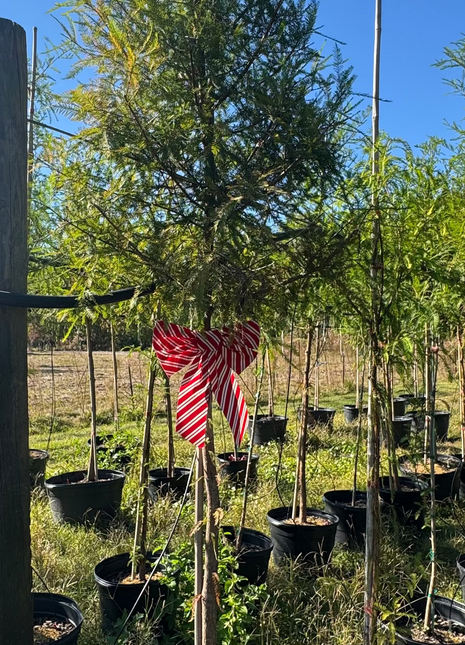
Bald Cypress (Taxodium Distichum)
Bald Cypress (Taxodium distichum) — Locally Grown in Pierson, Florida at Flowing Well Tree FarmNative Wetland Conifer • Flood-Tolerant Shade Tree • Long-Lived Structural Canopy Species • Florida-Grown Restoration & Landscape Anchor Tree Bald Cypress (Taxodium distichum) is one of the most iconic and ecologically important native trees in the southeastern United States. Known for its strong pyramidal form, soft feathery foliage, and exceptional tolerance to flooding and wet soils, this species is a cornerstone of Florida wetlands, river systems, and lowland landscapes. At Flowing Well Tree Farm in Pierson, Florida, we grow Bald Cypress as premium native canopy stock selected for strong central leaders, upright structural form, and long-term performance in Florida’s wet, sandy, and seasonally variable environments. Each tree is established in real field conditions to ensure resilience under heat, humidity, flooding, drought cycles, and storm exposure. When you buy Bald Cypress here, you’re not receiving weak ornamental nursery stock—you’re getting locally grown, Florida-adapted trees conditioned for real-world ecological performance in both wetland and upland systems. That local adaptation is critical. Bald Cypress performs best when grown in Florida conditions from the start, developing stronger root systems, improved flood tolerance, and more stable long-term canopy structure. Why Locally Grown Matters for Bald Cypress Starting with Florida-grown stock provides key advantages: Faster establishment in wet or sandy soils Stronger root systems for flood and drought cycles Improved heat and humidity tolerance Better wind and storm resilience in mature trees Higher survival rates in restoration plantings More consistent long-term canopy development This creates a durable, permanent native shade tree. Canopy Structure & Landscape Value Bald Cypress is one of Florida’s most valuable large canopy trees: 50–80 ft tall mature deciduous conifer Strong pyramidal form when young, broadening with age Soft, fine-textured “feather-like” foliage Deciduous in winter with warm copper fall color Excellent long-term shade and cooling tree Strong architectural presence in large landscapes It is a defining species of Southern wetland ecosystems. Ecological & Wetland Importance Bald Cypress is a foundational Florida ecosystem species: Dominant tree in swamps, riverbanks, and floodplains Provides critical habitat for birds, amphibians, and wildlife Supports aquatic and semi-aquatic ecosystems Stabilizes soil in wet and erosion-prone areas Creates microhabitats through “cypress knee” development in wet conditions Enhances water filtration and watershed health It is one of the most important ecological trees in the Southeast. Growth Habit & Structural Function Bald Cypress is a long-lived structural canopy tree: 50–80+ ft mature height depending on site conditions Straight central trunk with strong vertical development Broad canopy with age, providing deep shade Adaptable to both wetland and upland planting Extremely long-lived (often centuries in natural settings) Strong wind resistance when mature It functions as a permanent landscape anchor tree. Climate & Site Adaptability Bald Cypress thrives in Florida’s full range of conditions: Native to southeastern U.S. wetlands and river systems Tolerates standing water and seasonal flooding Performs well in sandy upland soils as well Highly heat and humidity tolerant Strong drought tolerance once established Excellent storm and wind resilience It is one of the most adaptable large native trees available. USDA Growing Zones Best suited for Zones 4–10, with exceptional performance throughout Florida and the entire southeastern United States. Light Requirements For best growth and structure: Full sun preferred for strongest canopy development Tolerates partial shade in early stages Sun exposure improves form and long-term vigor Ideal for open landscapes, wetlands, and large properties Soil & Site Requirements Highly adaptable native species: Thrives in wet, flooded, or seasonally saturated soils Performs well in sandy uplands and loamy soils Tolerates poor fertility conditions Adapts to both managed and natural environments Benefits from mulch during establishment Planting Guidance (Grower Recommended) For best long-term performance: Plant in full sun for optimal growth Dig hole 2–3× wider than root ball Set at original soil depth Water deeply after planting Apply mulch to stabilize moisture and temperature Space 20–40 ft apart for full canopy development Allow room for mature spread in large landscapes We can assist with wetland planting design, shade tree placement, and large-scale restoration planning. Watering & Establishment Water regularly during the first 1–2 growing seasons. Once established, Bald Cypress becomes extremely resilient and can thrive in both wet and dry cycles common in Florida. Fertilizer Low to moderate input needs: Minimal fertilization required Compost supports early establishment Avoid excessive nitrogen inputs Performs best in natural soil systems Pruning & Maintenance Very low maintenance: Minimal pruning required Naturally strong central leader development Can be limbed up for shade tree form Long-lived with stable structure Low maintenance once established Why This Is a Smarter Long-Term Investment ✔ Locally grown in Florida for maximum adaptation✔ Iconic native wetland and shade tree✔ Extremely flood and drought tolerant species✔ Long-lived structural landscape anchor✔ Excellent wildlife habitat and ecosystem value✔ Strong wind and storm resilience when mature✔ Adaptable to wet and upland sites✔ Grower-direct quality for Florida conditions The Real Value This isn’t just a shade tree—it’s a legacy canopy species that defines wetlands, strengthens landscapes, and provides ecological structure for generations. When you plant Bald Cypress, you’re investing in a permanent native anchor tree that thrives through flood, drought, and storm while building long-term habitat and landscape stability in Florida’s environment.
$110.00 - $170.00
-


Teddy Bear Magnolia (Magnolia Grandiflora 'Southern Charm)
Teddy Bear Magnolia (Magnolia grandiflora ‘Southern Charm’) — Locally Grown in Pierson, Florida at Flowing Well Tree FarmCompact Evergreen Magnolia • Dense Screening & Accent Tree • Fragrant Summer Bloomer • Florida-Grown Landscape Specimen Teddy Bear Magnolia (Magnolia grandiflora ‘Southern Charm’), commonly referred to as “Teddy Bear,” is a compact, highly refined selection of Southern Magnolia known for its exceptionally dense branching, smaller stature, and thick, glossy evergreen foliage with rich brown undersides. It delivers the classic Magnolia elegance in a more manageable, landscape-friendly form designed for modern Florida properties. At Flowing Well Tree Farm in Pierson, Florida, we grow Teddy Bear Magnolia as premium specimen trees selected for strong central structure, tight canopy density, and long-term adaptability to Florida’s heat, humidity, sandy soils, and seasonal rainfall cycles. Each tree is trained to develop a balanced, compact form ideal for screening, accent planting, and architectural landscape design. When you buy Teddy Bear Magnolia here, you’re not receiving weak, greenhouse-softened ornamentals—you’re getting locally grown, Florida-acclimated trees conditioned for real-world landscape conditions including full sun exposure, summer heat stress, coastal wind, and variable soil moisture. That local adaptation is critical. Teddy Bear Magnolia performs best when grown in Florida conditions from the start, developing stronger canopy density, improved drought resilience, and more consistent flowering over time. Why Locally Grown Matters for Teddy Bear Magnolia Starting with Florida-grown stock provides key advantages: Faster establishment in sandy, well-drained soils Stronger branching structure for dense screening Improved heat and humidity tolerance Better drought resilience once established Reduced transplant shock in Florida landscapes More consistent evergreen canopy development This creates a more reliable, high-performance landscape specimen. Evergreen Structure & Landscape Value Teddy Bear Magnolia is prized for its compact architectural form: Dense, upright evergreen canopy Smaller mature size than traditional Southern Magnolia Thick, leathery glossy green leaves with brown undersides Excellent for privacy screens and property borders Strong structural presence in residential landscapes Year-round visual density and form It delivers Magnolia elegance without overwhelming space. Flowering & Seasonal Interest Despite its compact size, it retains classic Magnolia beauty: Large, creamy white, fragrant summer flowers Long flowering period in warm climates Strong citrus-like fragrance attracting pollinators High ornamental value during bloom season Attractive contrast against dense evergreen foliage It is one of the most iconic flowering evergreens in the Southeast. Wildlife & Ecological Importance Teddy Bear Magnolia supports multiple ecological functions: Flowers attract bees and native pollinators Seeds provide seasonal food for birds Dense canopy offers nesting and shelter habitat Provides year-round shade and cover Enhances biodiversity in urban and suburban landscapes It functions as both ornamental and habitat-supporting tree. Growth Habit & Landscape Function This selection is designed for controlled landscape use: 10–20 ft compact evergreen tree (smaller than standard magnolias) Dense, upright to rounded canopy form Naturally tight branching structure Excellent for hedging, screening, or specimen use Responds well to light shaping if needed Ideal for smaller residential properties It provides Magnolia presence in a space-efficient form. Climate & Site Adaptability Teddy Bear Magnolia performs strongly in Florida conditions: Thrives in full sun to partial shade Highly heat and humidity tolerant Performs well in sandy and loamy soils Moderate drought tolerance once established Adapts to coastal and inland landscapes Handles urban heat and reflected light conditions It is one of the most reliable evergreen magnolias for Florida landscapes. USDA Growing Zones Best suited for Zones 7–9, with excellent performance throughout Florida and the southeastern United States. Light Requirements For best structure and flowering: Full sun produces strongest canopy density Partial shade acceptable in hotter inland sites Sun exposure improves bloom production Balanced light produces best overall form Soil & Site Requirements Adapted to common Florida soils: Prefers well-drained sandy or loamy soils Performs best with moderate organic matter Tolerates seasonal moisture variation Avoid permanently saturated conditions Benefits from mulch during establishment phase Planting Guidance (Grower Recommended) For best long-term performance: Plant in full sun or partial shade Dig hole 2–3× wider than root ball Set at original soil depth Water deeply after planting Apply mulch to retain moisture and reduce stress Space 10–15 ft apart for screening or specimen planting Stake if needed during early establishment We can assist with formal landscape design, privacy screening layouts, and specimen tree placement. Watering & Establishment Water regularly during the first 1–2 growing seasons. Once established, Teddy Bear Magnolia becomes moderately drought tolerant and performs well under Florida rainfall patterns. Fertilizer Moderate feeding needs: Light balanced fertilizer supports growth and bloom production Compost improves soil structure and vigor Avoid excessive nitrogen (reduces flowering quality) Performs best in steady, low-input systems Pruning & Maintenance Low to moderate maintenance: Minimal pruning required to maintain natural form Can be shaped into formal or informal structure Responds well to light pruning for density Naturally compact growth habit reduces maintenance needs Long-lived with stable structure Why This Is a Smarter Long-Term Investment ✔ Locally grown in Florida for superior adaptation✔ Compact Southern Magnolia ideal for modern landscapes✔ High-impact evergreen screening and structure✔ Fragrant, iconic summer flowering tree✔ Excellent heat and humidity tolerance✔ Strong year-round visual density✔ Low-maintenance landscape performance✔ Grower-direct quality for Florida conditions The Real Value This isn’t just a Magnolia—it’s a compact evergreen statement tree that brings classic Southern beauty into a space-efficient form. When you plant Teddy Bear Magnolia, you’re investing in a long-lived structural evergreen that delivers fragrance, privacy, and year-round elegance while thriving in Florida’s demanding climate.
$150.00
-


DD Blanchard Magnolia (Magnolia Grandiflora)
DD Blanchard Magnolia (Magnolia grandiflora ‘DD Blanchard’) — Locally Grown in Pierson, Florida at Flowing Well Tree Farm Evergreen Magnolia Specimen Tree • Large Landscape Shade Tree • Fragrant Flowering Icon • Florida-Grown Structural Canopy Tree DD Blanchard Magnolia (Magnolia grandiflora ‘DD Blanchard’) is one of the most widely respected Southern Magnolia cultivars for large-scale landscape use in Florida and the southeastern United States. Known for its strong upright form, deep glossy green foliage with rich copper-bronze undersides, and large fragrant white blooms, this tree delivers unmatched presence, shade value, and year-round evergreen structure. At Flowing Well Tree Farm in Pierson, Florida, we grow DD Blanchard Magnolia as premium landscape-grade specimen trees selected for strong central leaders, balanced branching structure, and long-term performance in Florida’s heat, humidity, sandy soils, and seasonal storm cycles. Each tree is conditioned from an early stage to thrive in real Florida field conditions—not greenhouse environments. When you buy DD Blanchard Magnolia here, you’re not receiving soft, container-stressed ornamental stock—you’re getting locally grown, Florida-hardened trees built for real-world landscapes including full sun exposure, drought cycles, heavy rainfall periods, and wind events. That local adaptation matters. DD Blanchard Magnolia performs best when grown in Florida conditions from the start, developing stronger trunk structure, deeper root systems, and more consistent flowering performance over time. Why Locally Grown Matters for DD Blanchard Magnolia Starting with Florida-grown stock provides key advantages: Stronger trunk and branch development for long-term structure Faster establishment in sandy, well-drained soils Improved heat and humidity tolerance Better drought resilience once established Greater wind resistance in mature landscape settings Reduced transplant shock in Florida conditions This creates a more durable and permanent shade tree investment. Evergreen Structure & Landscape Value DD Blanchard is valued for its bold, architectural presence: Tall, upright evergreen canopy with strong central leader Dense glossy green leaves with copper-bronze undersides Year-round shade and visual screening value Classic Southern Magnolia form with improved structure Excellent specimen tree for large properties Strong landscape anchor tree for long-term design It is one of the most dependable large evergreen shade trees in Florida. Flowering & Ornamental Value DD Blanchard delivers iconic Magnolia blooms: Large creamy white fragrant flowers in late spring through summer Strong citrus-like floral fragrance Repeated blooming cycles in warm climates High ornamental impact against dark evergreen foliage Excellent focal point tree during bloom season It remains one of the most recognizable flowering trees in the Southeast. Wildlife & Ecological Importance This Magnolia cultivar supports multiple ecological functions: Flowers attract bees and native pollinators Seeds provide seasonal food for birds and small wildlife Dense canopy offers nesting and shelter habitat Provides year-round shade and microclimate cooling Supports biodiversity in residential and natural landscapes It functions as both an ornamental and habitat-supporting canopy tree. Growth Habit & Landscape Function DD Blanchard is a large, long-lived structural tree: 40–70 ft mature height depending on site conditions Broad upright pyramidal canopy form Strong central trunk with heavy branching structure Ideal for shade, screening, and property anchoring Long-lived permanent landscape tree Can be limbed up for formal shade tree use It is designed for long-term landscape infrastructure. Climate & Site Adaptability DD Blanchard performs exceptionally well in Florida: Thrives in full sun to partial shade Highly heat and humidity tolerant Performs well in sandy and loamy soils Moderate drought tolerance once established Handles coastal and inland environments Strong resilience in urban and rural landscapes It is a proven performer in demanding Southern climates. USDA Growing Zones Best suited for Zones 7–9, with excellent performance throughout Florida and the southeastern United States. Light Requirements For best structure and flowering: Full sun produces strongest canopy density and bloom production Partial shade acceptable in hotter inland sites Sun exposure improves growth rate and structural strength Balanced light supports optimal long-term form Soil & Site Requirements Adapted to Florida’s landscape soils: Prefers well-drained sandy or loamy soils Performs best with moderate organic matter Tolerates seasonal moisture variation Avoid permanently waterlogged conditions Benefits from mulch during establishment Planting Guidance (Grower Recommended) For best long-term performance: Plant in full sun for maximum growth and structure Dig hole 2–3× wider than root ball Set at original soil depth Water deeply after planting Apply mulch to conserve moisture and reduce stress Space 20–30 ft apart for mature canopy development Stake young trees if needed for early stability We can assist with shade tree planning, estate landscape design, and long-term canopy placement. Watering & Establishment Water regularly during the first 1–2 growing seasons. Once established, DD Blanchard Magnolia becomes moderately drought tolerant and highly resilient in Florida’s rainfall cycles. Fertilizer Moderate feeding requirements: Light balanced fertilizer supports canopy and bloom production Compost improves soil health and long-term vigor Avoid excessive nitrogen (can reduce flowering quality) Performs best in steady, low-input systems Pruning & Maintenance Low to moderate maintenance: Minimal pruning required for natural form Can be limbed up for shade tree structure Responds well to structural shaping if needed Naturally strong form reduces maintenance needs Long-lived with stable canopy development Why This Is a Smarter Long-Term Investment ✔ Locally grown in Florida for superior adaptation✔ Large evergreen shade tree with long lifespan✔ High-impact fragrant flowering canopy✔ Excellent for estates, driveways, and anchors✔ Strong wind and heat tolerance once established✔ Valuable wildlife and habitat support tree✔ Proven Southern landscape performance✔ Grower-direct quality for Florida conditions The Real Value This isn’t just a shade tree—it’s a long-term landscape anchor that defines space, provides cooling canopy structure, and delivers iconic Southern Magnolia beauty. When you plant DD Blanchard Magnolia, you’re investing in a permanent evergreen canopy system that strengthens property value, supports wildlife, and thrives for generations in Florida’s climate.
$210.00
-


Cherry Laurel (Prunus Laurocerasus)
Cherry Laurel (Prunus laurocerasus) — Locally Grown in Pierson, Florida at Flowing Well Tree Farm Evergreen Privacy Shrub • Dense Screening Hedge • Fast-Growing Landscape Barrier • Florida-Adapted Nursery Stock Cherry Laurel (Prunus laurocerasus) is a vigorous evergreen shrub widely used for privacy hedges, windbreaks, and dense screening in residential and commercial landscapes. Known for its fast growth, large glossy foliage, and ability to form thick living walls, it is one of the most effective structural hedge plants used in designed landscapes. When you buy Cherry Laurel here, you're not getting weak, over-irrigated ornamental hedge material—you’re getting locally grown, Florida-conditioned plants produced in Pierson and acclimated to heat, humidity, sandy soils, and seasonal stress conditions typical of Florida landscapes. That matters for long-term performance. Locally grown stock establishes faster, develops stronger root systems, and transitions more reliably into dense hedge structure under real Florida growing conditions. This is direct-from-grower screening plant material. Visit the farm, see how our privacy hedges are grown, and receive practical guidance on spacing, hedge shaping, and long-term landscape screening systems. Cherry Laurel is especially valued because it builds fast, dense evergreen coverage where privacy and structure are the priority. Why Locally Grown Matters for Cherry Laurel Starting with Florida-conditioned stock provides key advantages: Faster root establishment after planting Better adaptation to Florida heat and humidity Improved drought tolerance once established Reduced transplant shock Stronger early canopy and branching development Better long-term hedge survival in real landscapes It creates a stronger foundation for dense evergreen screening systems. Hedge & Privacy Value Cherry Laurel is widely used as a structural hedge plant: Fast-growing evergreen foliage Dense leaf coverage for privacy screening Excellent for property borders and windbreaks Can be shaped into formal hedges or natural screens Provides year-round visual barrier It is often selected where rapid privacy is the primary goal. Ornamental Value In addition to its screening function, it offers strong ornamental qualities: Large, glossy dark green leaves Dense, lush evergreen appearance Strong architectural presence in the landscape Excellent background plant for garden design Works well in modern and traditional landscapes It adds both structure and visual weight to plantings. Wildlife & Ecological Notes Cherry Laurel can provide limited habitat value: Dense foliage offers shelter for birds Occasional flowering supports pollinators Provides protective cover in hedgerows Enhances structural diversity in managed landscapes It is primarily valued as a functional landscape hedge plant. Climate & Site Adaptability Cherry Laurel performs best in moderate climates: Prefers temperate to subtropical conditions Performs well in Florida with proper site selection Tolerates heat and humidity with irrigation support Requires well-drained soils Benefits from partial shade in extreme heat zones Performs best in protected landscape settings It is widely used in managed ornamental and privacy plantings. USDA Growing Zones Best suited for Zones 6–9, performing in Florida in protected or irrigated landscape environments. Mature Size & Growth Habit A dense evergreen hedge shrub: 10–20 ft mature height (can be maintained smaller with pruning) 6–12 ft spread depending on pruning Upright, dense branching structure Fast vegetative growth under good conditions Long-lived hedge form with maintenance Ideal for tall privacy screens and boundary plantings. Light Requirements For best performance: Full sun to partial shade Strongest density in full sun with irrigation Shade tolerance in warmer climates Soil & Site Requirements Adaptable landscape shrub: Prefers well-drained soils Performs well in amended sandy soils Benefits from organic matter and mulch Avoid poorly drained or constantly saturated soils Performs best with consistent moisture during establishment Planting Guidance (Grower Recommended) For best hedge establishment: Plant in full sun or partial shade rows Space 3–6 ft apart depending on hedge density goals Dig hole 2–3× wider than root ball Plant at original soil depth Water thoroughly after planting Apply mulch while keeping away from stems Maintain consistent watering during establishment We can assist with hedge layout design, spacing strategy, and privacy screening plans. Watering & Establishment Water regularly during the first 1–2 growing seasons. Once established, Cherry Laurel becomes moderately drought tolerant but performs best with occasional irrigation in dry periods. Fertilizer Moderate feeding recommended: Balanced fertilizer during active growth Organic compost improves foliage density Avoid excessive nitrogen to prevent overly soft growth Consistent nutrition supports hedge thickness Pruning & Maintenance Moderate maintenance hedge: Responds very well to pruning and shaping Can be maintained as formal hedge or natural screen Prune 1–2 times per year for density control Benefits from regular shaping for tight structure Why This Is a Smarter Long-Term Investment ✔ Locally grown in Florida for improved field adaptation ✔ Fast-growing evergreen privacy hedge plant ✔ Dense screening and windbreak performance ✔ Strong ornamental foliage value ✔ Ideal for structured landscape design ✔ Long-term hedge durability with maintenance ✔ Grower-direct guidance for hedge establishment ✔ Reliable living privacy system for properties The Real Value This isn’t just a shrub—it’s living infrastructure for privacy and structure. You’re not simply planting Cherry Laurel. You’re building a fast, dense evergreen barrier, improving property function, creating long-term screening, and investing in a managed landscape system that delivers privacy and structure year after year.
$200.00
-


Native Slash Pine (Pinus Elliottii)
Native Slash Pine (Pinus elliottii) — Locally Grown in Pierson, Florida at Flowing Well Tree Farm Native Evergreen Conifer • Fast-Growing Timber Pine • Restoration & Reforestation Tree • Florida-Grown Forest Stock Native Slash Pine (Pinus elliottii) is one of the most important foundation species in Florida’s natural ecosystems. Known for its fast growth, straight trunk development, and adaptability to a wide range of soil and moisture conditions, Slash Pine is widely used in reforestation projects, wildlife habitat restoration, timber plantings, windbreak systems, and large-scale native forest establishment throughout the Southeast. When you buy Native Slash Pine here, you're not getting weak, container-stressed nursery stock—you’re getting locally grown, field-conditioned trees produced in Pierson and adapted to Florida’s heat, humidity, sandy soils, seasonal flooding cycles, and drought stress periods. That matters for long-term success. Locally grown Slash Pine develops stronger root systems, establishes more quickly after planting, and is significantly more resilient in real-world restoration environments compared to non-local stock. This is direct-from-grower forest-grade native material. Visit the farm, see how our pine seedlings are grown, and receive practical guidance on spacing, reforestation design, and long-term canopy development. Slash Pine is especially valuable because it builds entire ecosystems—creating structure, habitat, and long-term forest resilience. Why Locally Grown Matters for Slash Pine Starting with Florida-grown stock provides key advantages: Better adaptation to Florida heat and humidity Stronger taproot and root system development Improved survival in sandy, nutrient-poor soils Faster establishment in field conditions Greater resilience to drought and flooding cycles Better long-term performance in restoration sites It creates a stronger foundation for forest establishment success. Forest & Timber Value Slash Pine is a cornerstone southeastern timber species: Fast-growing native pine species Produces tall, straight trunks ideal for timber use Forms dense pine stands over time Supports sustainable forestry systems Widely used in reforestation and land management projects It is one of the most economically and ecologically important pines in Florida. Wildlife & Ecological Importance Slash Pine supports diverse native ecosystems: Provides habitat for birds, deer, and small mammals Supports endangered species such as red-cockaded woodpeckers Produces pine seeds consumed by wildlife Creates nesting and shelter structure in pine forests Enhances biodiversity in upland ecosystems It is a key species for long-term habitat restoration. Climate & Site Adaptability Slash Pine is highly adaptable across Florida landscapes: Native to coastal plains, flatwoods, and upland sites Tolerates sandy, acidic soils Performs well in both wet and dry seasonal conditions Handles heat and humidity exceptionally well Adapted to periodic fire cycles in natural systems It is one of Florida’s most resilient native conifers. USDA Growing Zones Best suited for Zones 7–10, performing strongly throughout Florida and the southeastern United States. Mature Size & Growth Habit A tall native evergreen tree: 60–100 ft mature height 25–40 ft spread Straight central trunk with high canopy lift Fast early growth under proper conditions Long-lived in natural forest systems It forms the backbone of native pine ecosystems. Light Requirements For best growth: Full sun required Minimum 6–8 hours of direct sunlight daily Poor performance in shaded conditions Soil & Site Requirements Highly adapted to Florida conditions: Prefers sandy, acidic, well-drained soils Tolerates seasonally wet and dry cycles Performs well in low fertility soils Avoid permanently flooded or highly alkaline soils Benefits from natural fire-managed ecosystems where applicable Planting Guidance (Grower Recommended) For best establishment: Plant in full sun open areas Space appropriately for forest or plantation design Dig hole 2–3× wider than root system Plant at original soil depth Water thoroughly after planting Apply mulch while keeping base clear Maintain consistent watering during establishment We can assist with reforestation spacing, forestry design, and habitat restoration planning. Watering & Establishment Water regularly during the first 1–2 growing seasons. Once established, Slash Pine becomes highly resilient and thrives under natural rainfall conditions. Fertilizer Low fertilizer requirements: Light fertilization only during establishment if needed Avoid excessive nutrient inputs Performs best in natural soil conditions Minimal management once established Pruning & Maintenance Very low maintenance: Minimal pruning required Naturally self-prunes lower branches over time Forms strong central leader structure Ideal for low-input forestry systems Why This Is a Smarter Long-Term Investment ✔ Locally grown in Florida for superior field adaptation ✔ Essential native reforestation and forestry species ✔ Fast-growing canopy and timber tree ✔ High wildlife and habitat value ✔ Strong performance in sandy and wet flatwoods ✔ Supports large-scale ecosystem restoration ✔ Long-term forest structure builder ✔ Grower-direct forestry guidance and support The Real Value This isn’t just a pine tree—it’s the beginning of a forest. You’re not simply planting Slash Pine. You’re restoring native pine ecosystems, building wildlife habitat, improving land resilience, and establishing a long-term forest structure that will grow, mature, and support Florida’s landscapes for generations.
$115.00
-


Native Viburnum (Viburnum Obovatum)
Native Viburnum (Viburnum obovatum) — Locally Grown in Pierson, Florida at Flowing Well Tree FarmNative Evergreen Shrub/Small Tree • Dense Screening Plant • Pollinator Flowering Species • Florida-Grown Restoration & Hedgerow Stock Native Viburnum (Viburnum obovatum), commonly known as Walter’s Viburnum, is one of the most versatile and structurally important native shrubs in Florida ecosystems. Known for its dense evergreen foliage, fine branching habit, and seasonal clusters of small white flowers followed by dark fruit, this species is widely used in hedgerows, natural privacy screens, wildlife corridors, and habitat restoration plantings. Naturally found in hammocks, floodplains, and forest edges across the southeastern United States, Viburnum obovatum thrives in Florida’s heat, humidity, and variable soil conditions. At Flowing Well Tree Farm in Pierson, Florida, we grow this species as premium native stock specifically selected for strong branching, fast establishment, and long-term landscape performance. When you buy Native Viburnum here, you’re not receiving weak ornamental filler stock—you’re getting locally grown, Florida-adapted plants conditioned for real-world conditions including sandy soils, seasonal flooding, drought cycles, and intense summer heat. That local adaptation is critical. Viburnum obovatum is one of the best native plants for fast hedging and ecological structure, but only performs at its highest level when grown and hardened in similar conditions from the start. Why Locally Grown Matters for Native Viburnum Starting with Florida-grown stock provides major advantages: Faster establishment in sandy and variable soils Stronger branching structure for hedges and screens Improved heat and humidity tolerance Better long-term drought and flood cycle resilience Denser growth habit for privacy and habitat value Higher survival rates in restoration plantings This creates a more reliable and functional native hedge system from year one. Flowering, Fruit & Seasonal Value Native Viburnum provides year-round ecological and seasonal interest: Clusters of small white flowers in spring Nectar source for native bees and pollinators Dark berry-like drupes in late summer to fall Important seasonal food source for birds and wildlife Subtle but consistent ornamental appeal Naturalistic texture in native landscapes It delivers function without losing its refined native aesthetic. Wildlife & Habitat Importance Viburnum obovatum is a foundational wildlife shrub: Berries consumed by songbirds and small mammals Dense evergreen structure provides year-round cover Excellent nesting and shelter habitat in hedgerows Supports pollinators during spring bloom period Enhances corridor connectivity in fragmented landscapes It is one of the most dependable native species for habitat structure. Growth Habit & Landscape Value This is one of Florida’s best native screening plants: 8–15 ft shrub or small tree form (can be kept lower with pruning) Extremely dense, fine-textured branching habit Naturally forms thick hedges and living fences Responds exceptionally well to trimming and shaping Ideal for formal or naturalized native hedgerows Excellent substitute for non-native privacy shrubs It is widely considered one of the best native alternatives for evergreen screening. Climate & Site Adaptability Native Viburnum is highly adaptable across Florida: Native to southeastern U.S. wetlands and uplands Performs well in full sun to partial shade Tolerates seasonal flooding and drought once established Thrives in sandy, loamy, and organic soils Highly heat and humidity tolerant Performs well in both managed and natural systems It is one of the most flexible native shrubs available. USDA Growing Zones Best suited for Zones 7–10, performing strongly throughout Florida and the Gulf and coastal southeastern regions. Light Requirements For best density and flowering: Full sun to partial shade More sun increases density and flowering Partial shade helps in hotter inland sites Highly adaptable across light conditions Soil & Site Requirements Adapted to a wide range of Florida soils: Prefers moist, well-drained soils Tolerates sandy, clay, and organic soils Handles periodic wet conditions Benefits from mulch and organic matter Avoid permanently saturated stagnant sites Planting Guidance (Grower Recommended) For best hedge or specimen performance: Plant in full sun or partial shade Dig hole 2–3× wider than root ball Set at original soil depth Water deeply after planting Apply mulch to retain moisture and suppress weeds Space 4–6 ft apart for hedges or screening rows Prune lightly early to encourage branching density We can assist with hedge design, property screening layouts, and native landscape structuring. Watering & Establishment Water regularly during the first 1–2 growing seasons. Once established, Native Viburnum becomes highly resilient and can tolerate both drought and wet cycles common in Florida climates. Fertilizer Low-input native shrub: Minimal fertilizer required Compost improves density and flowering performance Avoid high nitrogen fertilizers (prevents overly loose growth) Performs best in natural soil systems Pruning & Maintenance Highly manageable and responsive: Responds extremely well to pruning and shaping Can be maintained as formal hedge or natural screen Benefits from periodic trimming for density Rebounds quickly after cutting Low maintenance in naturalized landscapes Why This Is a Smarter Long-Term Investment ✔ Locally grown in Florida for superior adaptation✔ One of the best native evergreen screening shrubs✔ Excellent hedge, buffer, and privacy plant✔ High wildlife and pollinator value✔ Strong tolerance to Florida’s climate extremes✔ Fast-forming dense structure for landscapes✔ Ideal for restoration and native hedgerows✔ Grower-direct expertise for real Florida systems The Real Value This isn’t just a landscape shrub—it’s a living structural system that creates privacy, supports wildlife, and restores native habitat function. When you plant Native Viburnum, you’re building a dense evergreen hedge that replaces non-native ornamentals with a resilient, ecologically valuable native alternative that improves every year it grows.
$22.00 - $115.00
-


Florida Privet (Forestiera Segregata)
Florida Privet (Forestiera segregata) — Locally Grown in Pierson, Florida at Flowing Well Tree Farm Native Evergreen Hedge • Coastal Windbreak Shrub • Wildlife Screen Plant • Florida-Grown Restoration Stock Florida Privet (Forestiera segregata), also known as Florida swamp privet or stretchberry, is one of the most versatile native shrubs in the state. Naturally found in coastal hammocks, pine rocklands, and upland thickets, it is widely used in native hedges, privacy screens, wildlife corridors, and restoration plantings throughout Florida. When you buy Florida Privet here, you're not getting weak, over-irrigated ornamental hedge stock—you’re getting locally grown, Florida-adapted plants produced in Pierson and conditioned for real Florida growing conditions including heat, humidity, sandy soils, coastal wind exposure, and seasonal drought cycles. That matters for long-term success. Locally grown Florida Privet establishes faster, develops stronger root systems, and performs more reliably in harsh Florida landscapes compared to non-local nursery material. This is direct-from-grower native hedge stock. Visit the farm, see how our screening shrubs are grown, and receive practical guidance on hedge spacing, windbreak design, and long-term native landscape structure. Florida Privet is especially valuable because it delivers dense evergreen screening while supporting native wildlife in a tough, low-maintenance system. Why Locally Grown Matters for Florida Privet Starting with Florida-grown stock provides key advantages: Better adaptation to Florida heat and humidity Stronger root system development before planting Improved drought and wind tolerance after establishment Faster hedge formation in real landscape conditions Greater resilience in coastal and inland sites Better long-term survival in restoration plantings It creates a stronger foundation for durable native screening systems. Hedge & Screening Value Florida Privet is one of the best native hedge plants in the state: Dense, fine-textured evergreen foliage Naturally compact and multi-branched growth habit Excellent for privacy screens and property borders Easily shaped into formal or natural hedges Strong windbreak performance in exposed sites It is widely used as a native alternative to non-native hedge species. Wildlife & Ecological Importance This species plays a strong role in native ecosystems: Produces berries consumed by birds Provides nesting and cover habitat Supports pollinators with seasonal flowering Enhances biodiversity in coastal and upland systems Forms protective structure in wildlife corridors It is both a functional hedge and a wildlife-supporting plant. Climate & Site Adaptability Florida Privet is extremely well adapted to local conditions: Native to coastal hammocks and upland thickets Highly heat and humidity tolerant Performs well in sandy and limestone soils Tolerates coastal wind and salt exposure Moderately drought tolerant once established Performs well in full sun to partial shade It is one of Florida’s most reliable native screening shrubs. USDA Growing Zones Best suited for Zones 8–11, performing strongly throughout Florida and coastal southeastern regions. Mature Size & Growth Habit A dense native shrub or small hedge tree: 6–12 ft mature height 4–8 ft spread Multi-stem, highly branched structure Naturally compact growth habit Long-lived evergreen form in warm climates Ideal for long-term hedge systems. Light Requirements For best density and structure: Full sun preferred Tolerates partial shade Denser growth in higher light conditions Soil & Site Requirements Highly adaptable native shrub: Prefers well-drained sandy soils Tolerates limestone and coastal soils Performs well in low fertility conditions Handles drought once established Avoid prolonged flooding or waterlogged sites Planting Guidance (Grower Recommended) For best hedge establishment: Plant in full sun or partial shade hedge rows Space plants 3–6 ft apart depending on hedge density goal Dig hole 2–3× wider than root ball Plant at original soil depth Water thoroughly after planting Apply mulch while keeping away from stems Maintain consistent watering during establishment period We can assist with hedge layout design, spacing strategies, and windbreak planning. Watering & Establishment Water regularly during the first growing season. Once established, Florida Privet becomes highly drought tolerant and thrives on minimal irrigation. Fertilizer Low fertilizer requirements: Light balanced fertilizer during establishment if needed Organic compost supports long-term hedge health Avoid excessive fertilization Performs best in natural soil conditions Pruning & Maintenance Low to moderate maintenance: Responds very well to pruning and shaping Can be maintained as formal hedge or natural screen Prune 1–2 times per year for density control Naturally fills in over time Why This Is a Smarter Long-Term Investment ✔ Locally grown in Florida for superior adaptation ✔ Native evergreen hedge and screening plant ✔ Excellent coastal wind and salt tolerance ✔ Strong wildlife and pollinator support species ✔ Dense, fast-forming privacy screen ✔ Low-maintenance long-term landscape solution ✔ Ideal native alternative to non-native hedges ✔ Grower-direct guidance for hedge establishment The Real Value This isn’t just a hedge plant—it’s living landscape infrastructure. You’re not simply planting Florida Privet. You’re building privacy, stabilizing property edges, supporting wildlife habitat, and creating a resilient native screening system that performs year after year in Florida’s toughest conditions.
$125.00
-


Japanese Blueberry Tree (Elaeocarpus Decipiens)
Japanese Blueberry Tree (Elaeocarpus decipiens) — Locally Grown in Pierson, Florida at Flowing Well Tree FarmEvergreen Ornamental Shade Tree • Dense Screening & Privacy Tree • Urban Landscape Specimen • Florida-Adapted Structural Accent Tree Japanese Blueberry Tree (Elaeocarpus decipiens) is a highly sought-after evergreen ornamental tree known for its dense, glossy foliage, naturally symmetrical form, and exceptional performance as a privacy screen or specimen tree in warm climates. While not a Florida native, it has proven to be one of the most reliable structural evergreen landscape trees for high-end residential and commercial plantings throughout Florida. At Flowing Well Tree Farm in Pierson, Florida, we grow Japanese Blueberry Trees as premium landscape-grade material, selecting and training stock for strong central structure, dense canopy development, and long-term adaptability to Florida’s heat, humidity, and sandy soils. When you buy Japanese Blueberry Tree here, you’re not getting weak, container-bound ornamental stock—you’re getting locally grown, Florida-conditioned trees acclimated to real-world conditions including intense summer sun, seasonal drought stress, high rainfall periods, and variable soil fertility. That local growing process matters. Trees grown and hardened in Florida establish faster, maintain better leaf density, and develop stronger structural integrity compared to non-acclimated nursery imports. Why Locally Grown Matters for Japanese Blueberry Starting with Florida-grown stock provides key advantages: Faster establishment in sandy and variable soils Improved heat and humidity tolerance Stronger canopy density and branching structure Better long-term drought resilience once established Reduced transplant shock in Florida landscapes More consistent evergreen performance year-round This produces a more reliable and structurally sound landscape tree. Evergreen Structure & Landscape Value Japanese Blueberry is prized for its refined architectural presence: Dense, dark green glossy evergreen foliage Naturally symmetrical upright growth habit Excellent screening and privacy tree potential Strong central leader with layered branching Clean, formal appearance in landscape designs Year-round visual consistency It is widely used in upscale landscape architecture for structure and privacy. Ornamental & Seasonal Interest While primarily valued for structure, it offers subtle seasonal appeal: Small white spring flowers with light fragrance Decorative blue-purple berry-like fruit in fall Attractive bark and branching structure in winter Year-round refined evergreen aesthetic Excellent contrast plant in mixed landscapes It provides understated elegance rather than bold seasonal color. Wildlife & Ecological Value Although not a native species, it still provides landscape ecological benefits: Fruit consumed by birds in some environments Dense canopy offers nesting and shelter cover Provides shade and habitat structure in urban areas Supports general urban biodiversity It functions more as a structural habitat tree than a primary wildlife food source. Growth Habit & Landscape Function Japanese Blueberry is a strong structural evergreen: 20–40 ft mature height depending on site conditions Upright pyramidal to oval canopy form Dense branching ideal for hedging and screening Responds well to pruning and shaping Can be trained as a formal hedge or specimen tree Long-lived with proper establishment care It is one of the best non-native evergreens for structured landscapes in Florida. Climate & Site Adaptability This species performs well in Florida when properly established: Adapts to Florida heat and humidity Performs best in full sun to partial shade Tolerates sandy and loamy soils Handles urban landscape stress well Moderate drought tolerance once established Performs best with consistent moisture during establishment It is widely used in coastal and inland Florida landscapes. USDA Growing Zones Best suited for Zones 8–10, with strong performance across Central and South Florida. Light Requirements For best density and form: Full sun produces strongest canopy structure Partial shade acceptable in hotter inland sites Sun exposure improves branching and screening density Shade produces more open growth habit Soil & Site Requirements Adapted to Florida landscape conditions: Prefers well-drained soils Performs well in sandy, amended soils Benefits from organic mulch during establishment Avoid poorly drained or waterlogged sites Moderate fertility needs for best growth Planting Guidance (Grower Recommended) For best long-term performance: Plant in full sun or partial shade Dig hole 2–3× wider than root ball Set at original soil depth Water deeply after planting Mulch to retain soil moisture and reduce stress Space 10–15 ft apart for screening applications Allow structure to develop naturally or with light pruning We can assist with privacy screen design, formal landscape planning, and specimen placement layouts. Watering & Establishment Water regularly during the first 1–2 growing seasons. Once established, Japanese Blueberry becomes moderately drought tolerant and performs well in typical Florida rainfall patterns. Fertilizer Moderate feeding requirements: Light balanced fertilizer improves canopy density Compost supports long-term soil health Avoid excessive nitrogen to maintain structure Performs best with consistent but not heavy feeding Pruning & Maintenance Highly adaptable to shaping: Responds very well to pruning and hedging Can be maintained as formal screen or specimen tree Pruning enhances density and structure Low to moderate maintenance depending on design Holds shape well with periodic trimming Why This Is a Smarter Long-Term Investment ✔ Locally grown in Florida for superior acclimation✔ Excellent evergreen privacy and screening tree✔ Strong structural landscape architecture value✔ Highly adaptable to urban and residential environments✔ Dense canopy provides year-round coverage✔ Responds well to pruning and design shaping✔ Long-lived and reliable in Florida landscapes✔ Grower-direct quality for real site conditions The Real Value This isn’t just a landscape tree—it’s a structural evergreen design element that defines space, creates privacy, and brings year-round form to Florida landscapes. When you plant Japanese Blueberry, you’re investing in a long-term architectural tree that delivers consistency, density, and refined structure in even the most demanding Florida conditions.
$100.00 - $225.00
-


Live Oak (Quercus Virginiana)
Live Oak (Quercus virginiana) — Locally Grown in Pierson, Florida at Flowing Well Tree FarmIconic Evergreen Canopy Tree • Long-Lived Structural Hardwood • Wildlife Habitat Keystone Species • Florida-Grown Shade, Restoration & Legacy Landscape Tree Live Oak (Quercus virginiana) is one of the most iconic and ecologically important native trees in the southeastern United States. Known for its massive spreading canopy, strong horizontal limbs, and extraordinary lifespan, the Live Oak defines Florida’s natural landscapes—from coastal hammocks and historic sites to upland forests and open pasture edges. At Flowing Well Tree Farm in Pierson, Florida, we grow Live Oak as premium native canopy stock selected for strong central leaders in early growth, resilient branching structure, and long-term performance in Florida’s heat, humidity, sandy soils, wind exposure, and storm cycles. Each tree is field-grown under real Florida conditions to ensure superior establishment and long-term structural integrity. When you buy Live Oak here, you are not receiving soft ornamental nursery stock—you are getting Florida-adapted legacy trees conditioned for decades of growth, wind resistance, and ecological performance. That local adaptation matters. Quercus virginiana develops deeper anchoring root systems, stronger structural wood, and superior wind resilience when grown from the beginning in Florida conditions. Why Locally Grown Matters for Live Oak Starting with Florida-grown stock provides key advantages: Stronger establishment in sandy and coastal soils Improved heat and humidity tolerance Deeper, more stable root systems Greater wind and hurricane resilience over time Higher survival rates in restoration and landscape projects Better long-term canopy architecture and structural strength Increased adaptability to drought and seasonal flooding cycles This creates a permanent landscape anchor tree capable of living for centuries. Canopy Structure & Landscape Value Live Oak is one of the most powerful structural shade trees in North America: 40–80+ ft mature height depending on site conditions Massive canopy spread often exceeding 80–120 ft at maturity Broad, sculptural horizontal branching architecture Dense evergreen-to-semi-evergreen foliage in Florida climates Creates deep, cooling shade beneath its canopy Iconic silhouette defining Southern landscapes It is a true architectural landscape centerpiece tree. Ecological & Wildlife Importance Live Oak is a foundational keystone species in Florida ecosystems: Supports hundreds of native insect species Provides critical habitat for birds, mammals, and pollinators Acorns serve as a major food source for deer, turkey, squirrels, and wildlife Dense canopy offers nesting and shelter opportunities Stabilizes coastal and inland soils with extensive root systems Essential component of hammocks, coastal forests, and upland ecosystems It is one of the most ecologically important trees in the Southeast. Growth Habit & Structural Function Live Oak is a long-lived structural hardwood: 40–80+ ft mature height depending on site conditions Massive lateral canopy spread with age Extremely strong, flexible wood structure Slow to moderate growth with exceptional longevity Can live several hundred years in natural conditions Excellent wind resistance when mature It functions as a permanent, generational landscape anchor. Climate & Site Adaptability Live Oak thrives across a wide range of Florida environments: Native throughout Florida and the coastal Southeast Excellent tolerance to heat, humidity, and salt exposure Performs well in sandy, loamy, and coastal soils Highly wind and storm resilient when established Moderate drought tolerance once mature Adaptable to urban, rural, and natural landscapes It is one of the most reliable long-term shade trees for Florida. USDA Growing Zones Best suited for Zones 7–10, with exceptional performance throughout Florida and coastal regions of the southeastern United States. Light Requirements For best canopy development: Full sun preferred for strongest structure Tolerates partial shade in early growth stages Sun exposure promotes dense canopy formation Ideal for large open landscapes, pastures, and restoration sites Soil & Site Requirements Highly adaptable native hardwood: Thrives in sandy Florida soils Tolerates coastal and inland conditions Prefers well-drained sites but adapts widely Excellent in low-fertility native soils Benefits from mulch during establishment Avoid prolonged standing water in poorly drained areas Planting Guidance (Grower Recommended) For best long-term performance: Plant in full sun Dig hole 2–3× wider than root ball Set at original soil depth Water deeply after planting Apply mulch to stabilize moisture and soil temperature Space 40–80 ft apart for full canopy development Allow ample room for long-term growth and limb spread We can assist with legacy landscape planning, shade canopy design, restoration forestry, and large-scale native tree installations. Watering & Establishment Water regularly during the first 2–3 growing seasons. Once established, Live Oak becomes extremely drought tolerant and highly resilient to Florida’s seasonal rainfall cycles and storm conditions. Fertilizer Low input requirements: Minimal fertilization needed once established Organic compost supports early root development Avoid excessive nitrogen applications Performs best in natural soil systems Pruning & Maintenance Very low maintenance: Prune early to establish strong branch structure Remove weak or crossing limbs during youth Minimal pruning required once canopy develops Naturally forms strong, balanced architecture Long-lived with extremely stable structure over time Why This Is a Smarter Long-Term Investment ✔ Locally grown in Florida for maximum adaptation ✔ One of the most iconic native shade trees in America ✔ Exceptional wind and storm resilience when mature ✔ Massive long-term canopy and shade production ✔ Keystone wildlife habitat species ✔ Extremely long-lived, multi-century potential ✔ Strong ecological and restoration value ✔ Grower-direct quality for Florida conditions The Real Value This isn’t just a shade tree—it’s a generational landscape foundation that defines place, history, and ecosystem structure. When you plant Live Oak, you’re investing in a living legacy tree that will outlast structures, support wildlife for centuries, and provide unmatched shade, strength, and ecological value across Florida’s landscapes for generations to come.
$30.00 - $700.00
-


Eagleston Holly (Ilex X Attenuata)
Eagleston Holly (Ilex × attenuata ‘Eagleston’) — Locally Grown in Pierson, Florida at Flowing Well Tree FarmEvergreen Privacy Tree • Dense Screening Holly • Bright Red Berry Producer • Florida-Grown Landscape, Hedge & Specimen Tree Eagleston Holly (Ilex × attenuata ‘Eagleston’) is one of the most popular evergreen landscape trees in the Southeast, valued for its dense canopy, attractive pyramidal form, glossy foliage, and abundant bright red berries. Combining the beauty of traditional hollies with a faster growth rate and more refined appearance, Eagleston Holly is an outstanding choice for privacy screens, property borders, specimen plantings, and year-round landscape structure. At Flowing Well Tree Farm in Pierson, Florida, we grow Eagleston Holly as premium field-grown stock selected for strong central leaders, dense branching, uniform growth, and long-term performance in Florida's heat, humidity, sandy soils, and seasonal weather conditions. Every tree is grown under real Florida conditions to ensure superior establishment and long-term success. When you buy Eagleston Holly here, you are not receiving soft nursery stock—you are getting Florida-adapted trees conditioned for strong growth, dense screening, and exceptional landscape performance. That local adaptation matters. Trees grown in Florida develop stronger root systems, improved drought tolerance, and better resilience against the environmental stresses common throughout the Southeast. Why Locally Grown Matters for Eagleston Holly Starting with Florida-grown stock provides key advantages: Faster establishment after plantingImproved heat and humidity toleranceStronger root development in sandy soilsBetter drought resistance once establishedGreater resilience during storm seasonsDenser foliage and stronger branch structureHigher long-term survival rates This creates a dependable evergreen tree built for Florida landscapes. Evergreen Structure & Landscape Value Eagleston Holly is one of the best evergreen screening trees available: 20–30 ft mature height depending on site conditions10–15 ft mature width with dense branchingNaturally pyramidal growth habitGlossy dark green evergreen foliage year-roundExcellent privacy screen and property boundary treeStrong specimen tree for residential and commercial landscapes It delivers beauty, privacy, and structure in every season. Berry Production & Seasonal Interest Eagleston Holly provides exceptional seasonal color: Abundant bright red berries on female treesBerries persist through fall and winterCreates striking contrast against evergreen foliageProvides ornamental value during cooler monthsOne of the most colorful evergreen landscape trees availableExcellent for holiday and winter landscape appeal Its berry display makes it a standout feature in the landscape. Privacy Screening & Property Borders Eagleston Holly is highly valued as a screening tree: Dense evergreen canopy blocks unwanted viewsExcellent natural privacy barrierWorks well along fences and property linesProvides year-round visual separationCreates windbreaks and noise buffersMaintains screening value throughout every season Few evergreen trees provide such effective privacy with such attractive appearance. Wildlife Benefits Eagleston Holly provides valuable habitat support: Flowers attract pollinators and beneficial insectsBerries provide food for birds during cooler monthsDense branching offers nesting and shelter opportunitiesEnhances biodiversity in residential landscapesSupports wildlife while maintaining ornamental appeal It combines landscape beauty with ecological benefits. Growth Habit & Structural Function Eagleston Holly is a dependable long-term landscape tree: 20–30+ ft mature height depending on site conditionsStrong central leader developmentDense branching from top to bottomModerate growth rate with excellent structureLong-lived evergreen canopyAdaptable to formal and naturalized landscapes It functions as both a privacy screen and an architectural landscape element. Climate & Site Adaptability Eagleston Holly thrives throughout Florida and the Southeast: Excellent heat and humidity tolerancePerforms exceptionally well in Florida climatesAdaptable to sandy, loamy, and moderately clay soilsModerate drought tolerance once establishedGood storm resilience when properly establishedSuitable for residential, commercial, and municipal landscapes It is one of the most reliable evergreen screening trees available. USDA Growing Zones Best suited for Zones 6–9, with outstanding performance throughout Florida and the southeastern United States. Light Requirements For best growth and berry production: Full sun to partial shadeFull sun promotes densest growth and best berry displayPartial shade tolerated with excellent performanceIdeal for open landscapes and screening applications Soil & Site Requirements Adaptable and easy to grow: Performs well in sandy Florida soilsPrefers well-drained locationsTolerates a wide range of soil conditionsBenefits from mulch during establishmentAvoid prolonged standing water in poorly drained sites Planting Guidance (Grower Recommended) For best long-term performance: Plant in full sun to partial shadeDig hole 2–3× wider than root ballSet at original soil depthWater deeply after plantingApply mulch to conserve moisture and suppress weedsSpace 8–15 ft apart for privacy screensAllow adequate room for mature canopy development We can assist with hedge planning, privacy screen design, property border layouts, and large-scale landscape installations. Watering & Establishment Water regularly during the first growing season. Once established, Eagleston Holly becomes highly resilient and capable of handling Florida's seasonal drought and rainfall fluctuations. Fertilizer Low to moderate input requirements: Light fertilization encourages early growthOrganic compost supports root establishmentAvoid excessive nitrogen applicationsPerforms best in balanced soil systems Pruning & Maintenance Very low maintenance: Naturally maintains an attractive pyramidal shapeResponds well to shaping and screening applicationsMinimal structural pruning requiredExcellent long-term landscape reliabilityFew pest or disease concerns Why This Is a Smarter Long-Term Investment ✔ Locally grown in Florida for maximum adaptation✔ Outstanding evergreen privacy and screening tree✔ Dense foliage from top to bottom✔ Beautiful bright red berries for seasonal color✔ Strong heat, humidity, and drought tolerance✔ Excellent specimen or property border tree✔ Low-maintenance long-term landscape solution✔ Grower-direct quality for Florida conditions The Real Value This isn’t just a privacy tree—it’s a permanent evergreen landscape structure that provides screening, seasonal beauty, and year-round curb appeal while thriving in Florida’s demanding climate. When you plant Eagleston Holly, you’re investing in one of the most dependable and attractive evergreen trees available—a tree that delivers privacy, brilliant winter berries, and lasting landscape value while maintaining its beauty for decades to come.
$40.00 - $190.00


