Florida Privet (Forestiera segregata) — Locally Grown in Pierson, Florida at Flowing Well Tree Farm
Native Evergreen Hedge • Coastal Windbreak Shrub • Wildlife Screen Plant • Florida-Grown Restoration Stock
Florida Privet (Forestiera segregata), also known as Florida swamp privet or stretchberry, is one of the most versatile native shrubs in the state. Naturally found in coastal hammocks, pine rocklands, and upland thickets, it is widely used in native hedges, privacy screens, wildlife corridors, and restoration plantings throughout Florida.
When you buy Florida Privet here, you're not getting weak, over-irrigated ornamental hedge stock—you’re getting locally grown, Florida-adapted plants produced in Pierson and conditioned for real Florida growing conditions including heat, humidity, sandy soils, coastal wind exposure, and seasonal drought cycles.
That matters for long-term success. Locally grown Florida Privet establishes faster, develops stronger root systems, and performs more reliably in harsh Florida landscapes compared to non-local nursery material.
This is direct-from-grower native hedge stock. Visit the farm, see how our screening shrubs are grown, and receive practical guidance on hedge spacing, windbreak design, and long-term native landscape structure.
Florida Privet is especially valuable because it delivers dense evergreen screening while supporting native wildlife in a tough, low-maintenance system.
Why Locally Grown Matters for Florida Privet
Starting with Florida-grown stock provides key advantages:
Better adaptation to Florida heat and humidity
Stronger root system development before planting
Improved drought and wind tolerance after establishment
Faster hedge formation in real landscape conditions
Greater resilience in coastal and inland sites
Better long-term survival in restoration plantings
It creates a stronger foundation for durable native screening systems.
Hedge & Screening Value
Florida Privet is one of the best native hedge plants in the state:
Dense, fine-textured evergreen foliage
Naturally compact and multi-branched growth habit
Excellent for privacy screens and property borders
Easily shaped into formal or natural hedges
Strong windbreak performance in exposed sites
It is widely used as a native alternative to non-native hedge species.
Wildlife & Ecological Importance
This species plays a strong role in native ecosystems:
Produces berries consumed by birds
Provides nesting and cover habitat
Supports pollinators with seasonal flowering
Enhances biodiversity in coastal and upland systems
Forms protective structure in wildlife corridors
It is both a functional hedge and a wildlife-supporting plant.
Climate & Site Adaptability
Florida Privet is extremely well adapted to local conditions:
Native to coastal hammocks and upland thickets
Highly heat and humidity tolerant
Performs well in sandy and limestone soils
Tolerates coastal wind and salt exposure
Moderately drought tolerant once established
Performs well in full sun to partial shade
It is one of Florida’s most reliable native screening shrubs.
USDA Growing Zones
Best suited for Zones 8–11, performing strongly throughout Florida and coastal southeastern regions.
Mature Size & Growth Habit
A dense native shrub or small hedge tree:
6–12 ft mature height
4–8 ft spread
Multi-stem, highly branched structure
Naturally compact growth habit
Long-lived evergreen form in warm climates
Ideal for long-term hedge systems.
Light Requirements
For best density and structure:
Full sun preferred
Tolerates partial shade
Denser growth in higher light conditions
Soil & Site Requirements
Highly adaptable native shrub:
Prefers well-drained sandy soils
Tolerates limestone and coastal soils
Performs well in low fertility conditions
Handles drought once established
Avoid prolonged flooding or waterlogged sites
Planting Guidance (Grower Recommended)
For best hedge establishment:
Plant in full sun or partial shade hedge rows
Space plants 3–6 ft apart depending on hedge density goal
Dig hole 2–3× wider than root ball
Plant at original soil depth
Water thoroughly after planting
Apply mulch while keeping away from stems
Maintain consistent watering during establishment period
We can assist with hedge layout design, spacing strategies, and windbreak planning.
Watering & Establishment
Water regularly during the first growing season. Once established, Florida Privet becomes highly drought tolerant and thrives on minimal irrigation.
Fertilizer
Low fertilizer requirements:
Light balanced fertilizer during establishment if needed
Organic compost supports long-term hedge health
Avoid excessive fertilization
Performs best in natural soil conditions
Pruning & Maintenance
Low to moderate maintenance:
Responds very well to pruning and shaping
Can be maintained as formal hedge or natural screen
Prune 1–2 times per year for density control
Naturally fills in over time
Why This Is a Smarter Long-Term Investment
✔ Locally grown in Florida for superior adaptation
✔ Native evergreen hedge and screening plant
✔ Excellent coastal wind and salt tolerance
✔ Strong wildlife and pollinator support species
✔ Dense, fast-forming privacy screen
✔ Low-maintenance long-term landscape solution
✔ Ideal native alternative to non-native hedges
✔ Grower-direct guidance for hedge establishment
The Real Value
This isn’t just a hedge plant—it’s living landscape infrastructure.
You’re not simply planting Florida Privet. You’re building privacy, stabilizing property edges, supporting wildlife habitat, and creating a resilient native screening system that performs year after year in Florida’s toughest conditions.
Florida Red Maple (Acer rubrum) — Locally Grown in Pierson, Florida at Flowing Well Tree Farm
Native Fast-Growing Shade Tree • Brilliant Red Fall Color • Wetland & Upland Adaptable • Florida-Grown Canopy & Wildlife Tree
Florida Red Maple (Acer rubrum) is a beautiful, fast-growing native deciduous tree valued for its attractive form, dependable shade, and brilliant red seasonal color. Native throughout much of the eastern United States, Red Maple is especially well suited to Florida landscapes where adaptable native canopy trees are needed for residential landscapes, parks, conservation projects, wildlife habitat, and restoration plantings.
At Flowing Well Tree Farm in Pierson, Florida, we grow Florida Red Maple as premium native canopy stock selected for strong trunk development, balanced branching, and reliable establishment in Florida conditions. Our trees are grown under real Florida heat, humidity, rainfall, and seasonal moisture cycles—not shipped in from a distant growing climate.
When you buy Florida Red Maple from Flowing Well Tree Farm, you're getting Florida-grown native stock conditioned for the soils and growing conditions found throughout the Southeast.
That local production provides an important advantage: trees have already developed under Florida's intense sunlight, heat, humidity, rainfall patterns, and variable soil moisture.
Why Locally Grown Matters for Florida Red Maple
Florida-grown Red Maple provides several advantages for landscape and restoration projects:
Faster establishment in Florida's sandy and moisture-variable soils
Root systems developed under local growing conditions
Improved tolerance of Florida heat and humidity
Better adaptation to seasonal wet and dry periods
Stronger transition from nursery production to landscape conditions
Reliable performance in residential, commercial, and restoration landscapes
Growing conditions matter. A tree raised in Florida is already accustomed to the environmental pressures it will encounter after planting.
Canopy Structure & Landscape Value
Florida Red Maple is an excellent native shade and canopy tree:
40–60 ft mature height, depending on site conditions
Broad, rounded to oval canopy with age
Fast to moderately fast growth rate
Attractive branching structure
Provides meaningful shade as the canopy develops
Brilliant red, orange, and scarlet foliage during cooler months
Excellent focal and canopy tree for large residential landscapes
Well suited to parks, streetscapes, campuses, and naturalized areas
Its combination of rapid establishment, attractive structure, and seasonal color makes Red Maple one of the most versatile native deciduous trees for the Southeast.
Brilliant Seasonal Color
One of the defining characteristics of Acer rubrum is its seasonal foliage.
As temperatures cool, the normally green leaves can transition into shades of:
Bright red
Scarlet
Orange-red
Orange
Deep crimson
Fall color can vary depending on genetics, weather, site conditions, and the length and temperature of the fall season. In Florida and other warm climates, seasonal color is generally more variable than in northern regions, but Florida Red Maple can still provide beautiful late-season color when conditions are favorable.
Ecological & Wildlife Importance
Florida Red Maple contributes significant ecological value to native landscapes.
It can:
Provide cover and nesting habitat for birds
Offer shelter for wildlife within developing canopy
Contribute organic matter through seasonal leaf drop
Support native forest ecosystems
Help diversify native hardwood plantings
Provide valuable canopy structure around wetland and upland transition areas
Red Maple is an important component of many eastern North American hardwood ecosystems and works especially well as part of diverse native planting designs.
Growth Habit & Structural Function
Florida Red Maple develops into a substantial native canopy tree with a broad crown.
Typical characteristics include:
40–60+ ft mature height under favorable conditions
Rounded to oval crown
Relatively rapid early growth
Strong central leader when properly trained
Attractive branching architecture
Excellent shade-producing potential
Useful as a transition tree between open landscapes and native woodland plantings
For larger properties, it can serve as a long-term canopy anchor while smaller native shrubs, grasses, and understory trees establish beneath it.
Climate & Site Adaptability
Florida Red Maple is highly adaptable and naturally occurs across a wide range of environments.
It can perform well in:
Moist woodlands
Wetland margins
Floodplain forests
Stream and pond edges
Flatwoods
Upland transition areas
Residential landscapes
Naturalized planting areas
It tolerates periodically wet soils and can also adapt to better-drained landscape sites when properly established.
Once established, trees can tolerate periods of reduced rainfall, although consistent moisture is preferred for the fastest growth and best overall performance.
USDA Growing Zones
USDA Hardiness Zones: 3–9
Florida Red Maple is particularly well suited to Zones 8–9 throughout much of Florida and the Southeast.
Light Requirements
For best growth and canopy development:
Full sun is preferred
Tolerates partial shade
Greater sunlight generally promotes stronger growth and better canopy development
Full sun provides the best opportunity for seasonal foliage color
For large landscape installations, provide adequate space for the mature canopy to develop naturally.
Soil & Site Requirements
Florida Red Maple is adaptable to a wide range of soil conditions.
It prefers:
Moist, well-drained soil
Consistent soil moisture during establishment
Sandy, loamy, or organically enriched soils
Moisture-retentive locations
Slightly acidic to neutral soil conditions
It can tolerate periodically saturated conditions and is especially useful near wet areas, drainage corridors, ponds, and rain gardens.
In extremely dry, compacted, or poorly prepared landscape soils, supplemental irrigation during establishment is recommended.
Planting Guidance — Grower Recommended
For the best long-term performance:
Plant in full sun to partial shade.
Dig the planting hole approximately 2–3 times wider than the root ball.
Set the tree at the same depth at which it was growing.
Backfill with the native soil removed from the planting hole.
Water deeply immediately after planting.
Apply 2–4 inches of mulch around the root zone.
Keep mulch several inches away from the trunk.
Provide adequate spacing for the mature canopy.
Maintain consistent moisture during the establishment period.
For large properties, Red Maple works especially well when incorporated into layered native landscape designs with understory trees, shrubs, grasses, and wildlife plants.
Watering & Establishment
Water consistently during the first 1–2 growing seasons.
Young trees benefit from deep, thorough watering rather than frequent shallow watering. As the root system expands, Florida Red Maple becomes increasingly capable of handling normal seasonal fluctuations in rainfall.
Trees planted in naturally moist locations may require less supplemental irrigation once established.
Fertilizer
Florida Red Maple generally has moderate nutrient requirements.
For best results:
Begin with healthy, properly amended planting soil
Use a balanced fertilizer when needed
Avoid excessive nitrogen
Maintain adequate organic matter
Consider soil testing before applying significant fertilizer
Healthy root development and appropriate watering are more important than heavy fertilization.
Pruning & Maintenance
Florida Red Maple is relatively straightforward to maintain when properly established.
Recommended practices include:
Establish a strong central leader while young
Remove competing leaders when necessary
Remove damaged, dead, or crossing branches
Maintain adequate clearance from structures and pathways
Perform structural pruning while the tree is young
Avoid excessive canopy removal
Early structural training can significantly improve the long-term form and strength of a mature canopy.
Ideal Landscape Uses
Florida Red Maple is an excellent choice for:
Residential shade trees
Large yards
Parks and recreation areas
Commercial landscapes
Streetscapes with adequate growing space
Pond and lake edges
Rain gardens and drainage areas
Wetland restoration
Native habitat plantings
Wildlife gardens
Naturalized landscapes
Reforestation and conservation projects
Native canopy restoration
Why This Is a Smarter Long-Term Investment
✔ Locally grown in Florida✔ Native fast-growing shade tree✔ Brilliant seasonal red foliage✔ Adaptable to wet and upland conditions✔ Excellent long-term canopy potential✔ Valuable wildlife and ecological function✔ Performs well in Florida's heat and humidity✔ Suitable for residential, commercial, and restoration projects✔ Grower-direct quality from Florida field production
The Real Value
Florida Red Maple is more than a beautiful shade tree. It is a native canopy species that combines fast establishment, seasonal color, wildlife value, and long-term landscape structure.
When you plant Florida Red Maple, you're adding a tree capable of becoming a major part of the landscape for years to come—providing shade, habitat, seasonal interest, and the natural character of a Florida-grown native hardwood.
Locally grown at Flowing Well Tree Farm in Pierson, Florida.
Give the gift of growing with a Flowing Well Tree Farm Gift Card—the perfect gift for gardeners, homeowners, and plant lovers of all kinds. With access to hundreds of native, fruiting, and ornamental trees and shrubs, your recipient can choose exactly what they want for their landscape or garden. Gift cards are easy to purchase online, can be used anytime, and are a thoughtful way to share something living, lasting, and uniquely personal. A Flowing Well Tree Farm Gift Card lets your loved ones plant memories that grow for years to come. 🌲🎁
Fuyu Persimmon (Diospyros kaki ‘Fuyu’) — Locally Grown in Pierson, Florida at Flowing Well Tree Farm
Non-Astringent Fruit • Heavy Producer • Landscape-Ready Edible Tree • Florida-Grown on Hardy Rootstock
When you buy Fuyu Persimmon here, you’re not getting a generic orchard tree shipped in from a different climate—you’re getting grafted fruit trees grown and finished in Pierson, on Florida-adapted rootstock, and conditioned for real Southern growing conditions from the beginning.
That matters. These trees are already adjusted to Florida heat, humidity, sandy soils, and seasonal rainfall patterns before they ever reach your yard. The result is stronger establishment, fewer setbacks, and a more reliable path to fruit production.
This is direct-from-grower material. You can visit the farm, see how fruit trees are trained and selected, and get real guidance from the people who actually grow them—not a reseller. That means practical advice based on field performance in Florida landscapes and home orchards.
Fuyu is one of the most dependable and rewarding persimmons for edible landscapes because it combines ease of growth with high-quality fruit you can enjoy fresh right off the tree.
Why Locally Grown, Grafted Trees Matter
Because these persimmons are grafted and grown locally, they offer clear advantages:
Faster time to fruit compared to seed-grown trees
Stronger adaptation to Florida soils and climate
Reduced transplant shock
More predictable growth and production habits
Improved long-term orchard performance
It’s a smarter starting point for a tree you’ll rely on for years of harvests.
Sweet, Crisp Fruit You Can Eat Off the Tree
Fuyu is a non-astringent persimmon, meaning the fruit can be eaten while still firm—no waiting for full soft ripeness.
Fruit characteristics:
Bright orange medium to large fruit
Sweet, honey-like flavor with crisp texture
Excellent fresh eating quality
Great for salads, baking, drying, and preserves
Ripens in fall with reliable seasonal production
It’s one of the easiest and most enjoyable fruit trees for home growers.
USDA Growing Zones
Best suited for Zones 7–10, with strong performance in Florida and the Southeast when properly sited.
Mature Size & Growth Habit
A manageable, productive fruit tree:
15–25 ft tall
10–20 ft wide
Well-suited for home orchards, edible landscapes, and backyard food production.
Light Requirements
Performs best in full sun (6–8+ hours daily). More sun improves fruit quality, yield, and overall tree structure.
Soil & Site Adaptability
Adaptable and forgiving when properly planted:
Prefers well-drained soils
Performs well in sandy Florida conditions
Tolerates slightly acidic to neutral pH
Avoids consistently wet or poorly drained sites
Once established, it becomes a strong, low-maintenance fruiting tree.
Planting Guidance (Grower Recommended)
We focus on long-term success, not just installation:
Choose a sunny site with good drainage
Dig a hole 2–3 times wider than the root ball
Plant with root flare slightly above ground level
Backfill with native soil and water in deeply
Apply 2–3 inches of mulch, keeping it away from the trunk
Water consistently during establishment
If you visit the farm, we can help match the tree to the right location based on your soil and space.
Watering & Establishment
Water deeply after planting and regularly during the first 1–2 years. Once established, Fuyu Persimmon becomes moderately drought tolerant but benefits from consistent moisture during fruit development and dry periods.
Fertilizer
Apply a balanced slow-release fruit tree fertilizer in early spring. Light supplemental feeding during the growing season may help young trees. Avoid excessive nitrogen, which can reduce fruiting.
Pruning & Structure
Prune during winter dormancy:
Remove dead, weak, or crossing branches
Encourage a strong central structure while young
Light shaping improves airflow and fruit production
Avoid heavy pruning to preserve fruiting wood
Additional Grower Notes
Grafted trees typically fruit earlier than seed-grown persimmons
Florida rootstock improves adaptability to local conditions
Trees are relatively low maintenance once established
Self-fruitful, though additional trees may improve yields
Young trees may need frost protection during establishment
Why This Is a Smarter Long-Term Investment
✔ Grown and grafted locally in Florida conditions✔ Faster and more reliable fruit production✔ Reduced transplant shock and stronger establishment✔ Direct grower support and planting guidance✔ Proven performance in Southern landscapes✔ Long-lived, productive edible tree✔ Opportunity to visit, learn, and select in person
The Real Value
This isn’t just a fruit tree purchase—it’s a long-term edible landscape investment built on local experience and real Florida-grown stock.
You’re not just planting a persimmon. You’re planting a dependable harvest system that gets better every year.
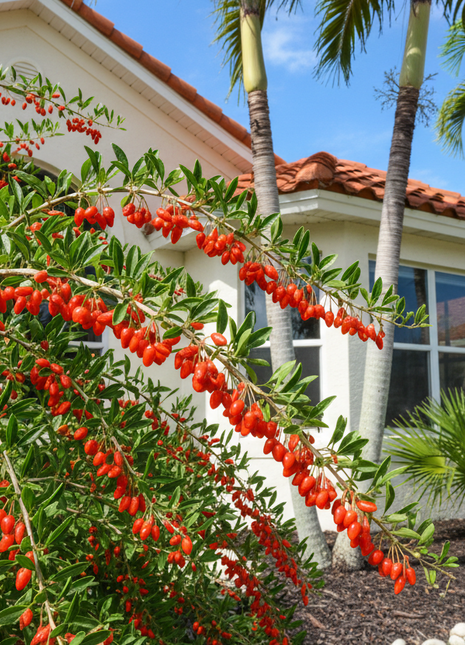
Red Berry Fruiting Shrub — Locally Grown at Flowing Well Tree Farm
Hardy Fruit Shrub • High-Yield Edible Landscape Plant • Drought-Tolerant Once Established • Florida-Grown Stock
When you buy this fruiting shrub here, you’re not getting generic, out-of-region nursery material—you’re getting locally grown plants produced in Pierson, already acclimated to Florida heat, humidity, sandy soils, and seasonal rainfall patterns.
That matters with fast-growing edible shrubs. Locally grown stock establishes faster, handles transplant stress better, and transitions more smoothly into real-world landscape conditions—especially in edible gardens and orchard systems where performance matters.
This is direct-from-grower material. You can visit the farm, see how edible shrubs are grown and selected, and get real guidance from people who work with these fruiting plants in Florida conditions year-round—not generic care sheets.
This type of productive berry shrub is especially valued for its adaptability, early fruiting potential, and long-term reliability in both home gardens and small orchards.
Why Locally Grown Matters
Starting with Florida-grown stock improves long-term performance:
Faster establishment in heat and sandy soils
Reduced transplant shock in home landscapes and containers
Better adaptation to humidity and rainfall variability
More consistent flowering and fruiting cycles
Stronger long-term root development
It’s a more reliable foundation for a productive edible shrub system.
Bright Red, Nutrient-Rich Fruit
This shrub is valued for its edible production:
Bright red, nutrient-rich berries
Suitable for fresh eating and culinary use
Attractive seasonal fruit display
Strong edible landscape appeal
It performs well in both ornamental and food-focused plantings.
USDA Growing Zones
Best suited for Zones 5–9, with strong adaptability across both warm and temperate climates once established.
Mature Growth & Habit
A fast-growing, productive shrub:
Medium shrub form depending on pruning
Dense, fruiting cane structure
Excellent for hedges, borders, and edible gardens
Can be managed for size and yield with regular pruning.
Light Requirements
Performs best in full sun (6–8+ hours daily) for:
Maximum fruit production
Strong cane development
Improved overall plant vigor
Soil & Site Requirements
Highly adaptable but prefers:
Well-draining sandy or loamy soils
Slightly acidic to neutral pH (6.5–7.0)
Organic matter added at planting for best establishment
Avoidance of heavy clay or waterlogged conditions
Planting Guidance (Grower Recommended)
We focus on real-world success in edible landscapes:
Dig a hole twice as wide as the root ball
Plant at the same depth as the container
Backfill with native soil and compost if needed
Water deeply after planting
Apply light mulch, keeping it away from the base
Maintain consistent moisture during establishment
If you visit the farm, we can help match this shrub to orchard rows, edible hedges, or container systems.
Watering & Establishment
Water regularly during the first growing season to build a strong root system. Once mature, the plant becomes moderately drought tolerant and performs well in low-water conditions.
Fertilizer
Apply balanced slow-release fertilizer in early spring
Avoid high nitrogen, which promotes foliage over fruit
Light feeding supports better fruiting performance
Fruiting Timeline
This is a fast producer:
Fruit may begin in years 1–2
Full production typically by year 3
Extended fruiting season from late spring into fall
Pruning & Maintenance
Low to moderate maintenance:
Prune in late winter
Remove weak, old, or unproductive canes
Encourage new shoots for higher future yields
Maintain airflow for better fruiting performance
Why This Is a Smarter Long-Term Investment
✔ Locally grown in Florida for stronger establishment✔ Direct grower expertise for edible shrub success✔ Fast fruiting timeline compared to many shrubs✔ Highly adaptable across multiple climate zones✔ Dual-purpose edible + landscape plant✔ Better performance than out-of-region nursery stock✔ Opportunity to visit, learn, and select in person
The Real Value
This isn’t just a berry shrub—it’s a fast-producing edible system designed for resilience and yield.
You’re not just planting a plant. You’re building a reliable, long-term source of homegrown fruit with a shrub engineered for adaptability and productivity.
Grayleaf Teabush (Melochia tomentosa) — Locally Grown in Pierson, Florida at Flowing Well Tree Farm
Native Pollinator Shrub • Butterfly Plant • Drought-Tolerant Florida Native • Florida-Grown Restoration Stock
Grayleaf Teabush (Melochia tomentosa) is a tough, long-blooming Florida native shrub prized for its ability to attract pollinators, thrive in difficult conditions, and provide reliable color throughout much of the year. Naturally found in dry uplands, coastal habitats, roadsides, and open natural areas throughout Florida, this adaptable native is increasingly used in pollinator gardens, restoration projects, native landscapes, and low-maintenance commercial plantings.
When you buy Grayleaf Teabush here, you're not getting greenhouse-grown material shipped from another region—you’re getting locally grown, Florida-adapted plants produced in Pierson and conditioned to thrive in Florida’s heat, humidity, sandy soils, and seasonal weather patterns.
That matters for long-term success. Locally grown native shrubs establish more quickly, develop stronger root systems, and adapt better to the environmental conditions they will experience after planting.
This is direct-from-grower native plant material. Visit the farm, see how our native shrubs are grown, and receive practical guidance on pollinator habitat creation, restoration projects, and sustainable landscape design.
Grayleaf Teabush is especially valued because it provides nearly continuous nectar resources for pollinators while requiring very little maintenance once established.
Why Locally Grown Matters for Native Shrubs
Starting with Florida-grown stock provides important advantages:
Better adaptation to Florida heat and humidity
Stronger root development before planting
Improved drought tolerance after establishment
Faster landscape acclimation
Increased long-term vigor and survival
Better performance in restoration and native plantings
It creates a stronger foundation for successful native landscape establishment.
Pollinator & Wildlife Value
Grayleaf Teabush is one of Florida’s most dependable pollinator plants:
Produces abundant nectar-rich flowers
Attracts native bees, butterflies, and beneficial insects
Supports pollinators throughout extended bloom periods
Enhances biodiversity in native landscapes
Contributes to healthy pollinator corridors
Valuable component of habitat restoration projects
Its nearly continuous flowering habit makes it a favorite among pollinator-focused gardeners and restoration professionals.
Long Blooming Seasonal Interest
This species delivers color and activity for much of the year:
Small pink to lavender flowers produced in clusters
Extended bloom season in warm climates
Attractive silver-gray foliage
Creates a soft, natural appearance in landscapes
Excellent companion plant for native wildflowers and grasses
The combination of flowers and foliage provides year-round visual interest.
Climate & Site Adaptability
Grayleaf Teabush thrives where many ornamental shrubs struggle:
Native to dry, sandy habitats
Extremely heat tolerant
Highly drought tolerant once established
Performs well in poor soils
Tolerates coastal conditions
Adapted to Florida's challenging climate
Its resilience makes it ideal for low-maintenance and sustainable landscapes.
USDA Growing Zones
Best suited for Zones 8–11, performing exceptionally well throughout Florida and other warm coastal regions of the Southeast.
Mature Size & Growth Habit
A versatile native shrub:
4–8 ft mature height
4–6 ft mature spread
Upright to rounded growth habit
Dense branching structure
Easily maintained through occasional pruning
Works well as an accent, informal hedge, or pollinator shrub.
Light Requirements
For best flowering performance:
Full sun preferred
Tolerates light partial shade
Maximum blooms occur in sunny locations
Soil & Site Requirements
Adapted to Florida’s native growing conditions:
Prefers well-drained sandy soils
Tolerates poor soil fertility
Performs well in coastal environments
Handles dry conditions exceptionally well
Avoid prolonged saturated soils
Excellent choice for difficult sites where many landscape plants fail.
Planting Guidance (Grower Recommended)
For best results:
Plant in full sun whenever possible
Dig planting hole 2–3× wider than root ball
Plant at original soil depth
Water thoroughly after planting
Apply mulch around root zone
Keep mulch away from the base of the plant
Water regularly during initial establishment
We can assist with pollinator garden design, native landscape planning, and restoration project layouts.
Watering & Establishment
Water regularly during the first growing season while roots establish. Once established, Grayleaf Teabush becomes highly drought tolerant and requires little supplemental irrigation except during extended dry periods.
Fertilizer
Minimal fertilizer requirements:
Typically thrives without supplemental feeding
Light balanced fertilizer only if needed
Avoid excessive fertilization
Best performance often occurs in lean native soils
Pruning & Maintenance
Extremely low maintenance:
Prune lightly to shape if desired
Can be rejuvenated with occasional selective thinning
Naturally develops an attractive form
Few pest or disease concerns
Excellent for low-input landscapes
Why This Is a Smarter Long-Term Investment
✔ Locally grown in Florida for superior field performance
✔ Outstanding pollinator and butterfly plant
✔ Long blooming native shrub
✔ Highly drought and heat tolerant
✔ Excellent for restoration and habitat projects
✔ Thrives in poor sandy soils
✔ Low-maintenance landscape performer
✔ Grower-direct expertise and planting support
The Real Value
This isn’t just another flowering shrub—it’s a durable native plant that helps restore ecological function to the landscape.
You’re not simply planting flowers. You’re creating long-term pollinator habitat, supporting native wildlife, and establishing a resilient Florida native that will continue providing beauty and environmental benefits for years to come.
Green Ash (Fraxinus pennsylvanica) — Locally Grown in Pierson, Florida at Flowing Well Tree Farm
Native Shade Tree • Fast-Growing Hardwood • Wildlife Value Species • Florida-Grown Restoration Stock
Green Ash (Fraxinus pennsylvanica) is a versatile and highly adaptable native hardwood tree valued for its rapid growth, strong shade canopy, and ability to thrive across a wide range of soil conditions. Naturally found along rivers, floodplains, wetlands, and upland sites throughout the eastern United States, Green Ash remains an important species for restoration projects, conservation plantings, wildlife habitat, and large-scale landscape development.
When you buy Green Ash here, you're not getting soft nursery stock raised under idealized conditions—you’re getting locally grown, field-conditioned trees produced in Pierson and adapted to Florida’s heat, humidity, seasonal rainfall, and diverse soil types.
That matters for successful establishment. Locally grown Green Ash develops stronger root systems, adapts more quickly after transplanting, and is better prepared for the environmental conditions found throughout Florida landscapes and restoration sites.
This is direct-from-grower native tree stock. Visit the farm, inspect our growing practices, and receive practical guidance on site selection, spacing, shade canopy planning, and restoration design.
Green Ash is especially valued for its combination of fast growth, adaptability, wildlife benefits, and long-term shade production.
Why Locally Grown Matters for Green Ash
Starting with Florida-grown stock provides important advantages:
Better adaptation to Florida heat and humidity
Stronger root development prior to planting
Improved transplant success
Faster establishment in field conditions
Greater resilience to environmental stress
Better long-term performance in native landscapes
It creates a stronger foundation for successful tree establishment.
Fast Growth & Shade Value
Green Ash is widely planted for its ability to quickly develop a useful shade canopy:
Rapid growth compared to many native hardwoods
Produces broad, attractive shade
Excellent for parks, large properties, and restoration sites
Helps reduce heat buildup in developed landscapes
Creates long-term canopy structure
It provides meaningful shade benefits much sooner than many slower-growing hardwood species.
Wildlife & Ecological Importance
Green Ash contributes significantly to native ecosystems:
Seeds provide food for birds and wildlife
Supports numerous native insects and pollinators
Adds diversity to restoration plantings
Contributes to riparian and floodplain ecosystems
Provides nesting and shelter opportunities for wildlife
It helps strengthen habitat value while supporting overall ecosystem health.
Climate & Site Adaptability
One of Green Ash’s greatest strengths is its flexibility:
Tolerates both wet and moderately dry conditions
Adaptable to sandy, loamy, and clay soils
Handles periodic flooding
Performs well in restoration and developed landscapes
Tolerates urban growing conditions better than many native hardwoods
Its adaptability makes it useful across a wide range of planting environments.
USDA Growing Zones
Best suited for Zones 3–9, performing exceptionally well throughout Florida and much of the eastern United States.
Mature Size & Growth Habit
A substantial native shade tree:
50–80 ft mature height
35–60 ft mature spread
Upright growth when young
Broad, rounded canopy at maturity
Strong central trunk and branching structure
Provides significant shade and long-term landscape presence.
Light Requirements
For best growth and canopy development:
Full sun preferred
Minimum 6 hours of direct sunlight daily
Best growth occurs in open planting locations
Soil & Site Requirements
Highly adaptable to varying soil conditions:
Performs well in sandy soils
Tolerates loam and clay soils
Adaptable to moist environments
Handles occasional flooding
Prefers reasonably well-drained sites for optimal growth
One of the most flexible native hardwoods available for restoration and landscape use.
Planting Guidance (Grower Recommended)
For successful establishment:
Plant in full sun
Dig planting hole 2–3× wider than root ball
Plant at original soil depth
Water thoroughly after planting
Apply mulch around the root zone
Keep mulch away from direct trunk contact
Maintain consistent watering during establishment
We can assist with spacing recommendations, canopy planning, and restoration layouts.
Watering & Establishment
Water regularly during the first 1–2 growing seasons while roots establish. Once established, Green Ash becomes relatively adaptable to both seasonal drought and periodic wet conditions.
Fertilizer
Minimal fertilizer requirements:
Light balanced fertilizer during establishment if needed
Avoid excessive fertilization
Often performs well with natural soil fertility alone
Pruning & Maintenance
Low-maintenance once established:
Prune for structure during early years
Remove damaged or crossing branches as needed
Develops a strong natural form with minimal intervention
Long-term maintenance requirements are relatively low
Why This Is a Smarter Long-Term Investment
✔ Locally grown in Florida for superior adaptation
✔ Fast-growing native shade tree
✔ Excellent restoration and conservation species
✔ Adaptable to diverse soil conditions
✔ Valuable wildlife habitat tree
✔ Strong long-term canopy development
✔ Suitable for both wet and upland sites
✔ Grower-direct expertise and planting support
The Real Value
This isn’t just a fast-growing shade tree—it’s a long-term investment in canopy, habitat, and landscape resilience.
You’re not simply planting a tree. You’re creating shade, supporting wildlife, improving ecosystem function, and establishing a durable native hardwood that can provide benefits for generations.
Locally Grown in Pierson, Florida – Buy Directly From the Grower at Flowing Well Tree Farm | Shipping Available
Skip weak, overhandled box-store plants and invest in healthier, locally adapted plants grown for long-term success. At Flowing Well Tree Farm, our Green Saw Palmetto (Sabal minor) is grown right here in Pierson, Florida, acclimated to real Southern heat, humidity, rainfall, and soil conditions—resulting in stronger root systems, better establishment, and healthier landscapes that thrive for years to come.
The Green Saw Palmetto is one of Florida’s toughest and most versatile native plants, loved for its lush tropical appearance, rich green fan-shaped foliage, and incredible durability. Unlike larger palms, this compact native stays naturally low-growing, making it perfect for adding year-round greenery, texture, and structure without overwhelming your landscape.
Whether you are creating a butterfly garden, native landscape, food forest, privacy border, rain garden, or modern tropical design, Green Saw Palmetto delivers beauty with remarkably little maintenance.
🌱 Why Customers Choose Green Saw Palmetto
✔ Florida native and exceptionally hardy✔ Beautiful tropical appearance without constant upkeep✔ Cold hardy, drought tolerant, and adaptable to wet areas✔ Excellent for butterfly and pollinator gardens✔ Perfect for native, modern, and low-maintenance landscapes✔ Outstanding for erosion control and naturalized spaces✔ Evergreen year-round beauty
🌎 USDA Hardiness Zone
USDA Zones: 7a–11Best Florida Performance: Zones 8a–10b
Extremely adaptable across Florida and much of the Southeast.
🌿 About the Plant
Green Saw Palmetto is a compact, trunkless native palm-like plant that forms dense clumps of beautiful deep-green fan-shaped foliage directly from the ground. Its clean, architectural look makes it an outstanding choice for adding texture and structure while staying manageable in size.
Ideal for:
• Native Florida landscapes• Butterfly & pollinator gardens• Food forest understories• Foundation plantings• Poolside tropical gardens• Rain gardens and wetland edges• Modern landscape design
☀️ Sun Requirements
Full sun to partial shadeThrives beneath larger trees in filtered light and develops fuller growth in sunnier conditions.
🌱 Soil Requirements
Highly adaptable to Florida soils.
• Sandy or loamy soils preferred• Tolerates clay and poor soils• Handles wet areas and seasonal flooding once established
💧 Watering Needs
Water regularly during establishment (first year). Once rooted, Green Saw Palmetto becomes extremely drought tolerant, while still handling occasional wet conditions with ease.
📏 Mature Size
Height: 2–4 feetSpread: 3–5+ feet
Evergreen, long-lived, and naturally compact—perfect for adding tropical character without blocking views.
✂️ Low Maintenance
Minimal pruning required.
• Remove only dead or damaged fronds• Avoid cutting healthy green leaves• Light spring feeding if desired• Mulch helps retain moisture and suppress weeds
🌟 Why Buy From Flowing Well Tree Farm?
When you buy directly from the grower, you are making a smarter long-term investment.
At Flowing Well Tree Farm, our plants are locally grown, region-specific, and landscape ready—not trucked across the country and stressed before reaching your yard. We grow plants in real Florida conditions for stronger roots, healthier growth, and better long-term performance.
You are not just buying a plant—you are getting direct access to knowledgeable growers who genuinely care about your success.
✔ Tour the farm in person and hand-pick your plants✔ Get planting advice directly from the owners✔ Personalized help choosing the right plant for your property✔ Expert guidance on placement, watering, and long-term care✔ Healthy, higher-quality material grown for Southern landscapes✔ A more personal experience that goes above and beyond
Whether you visit us in person or have plants shipped directly to your door, our goal is simple: help your landscape thrive for years to come.
📦 Shipping Available Nationwide on Select Sizes🌿 Healthy, Farm-Grown Plants🚜 Buy Directly From the Grower📍 Pierson, Florida – Flowing Well Tree Farm
Highbush Blueberry (Vaccinium corymbosum) — Locally Grown in Pierson, Florida at Flowing Well Tree Farm
Edible Landscape Favorite • Seasonal Color • Pollinator Friendly • Florida-Grown for Strong Establishment
When you buy Highbush Blueberry here, you’re not getting generic nursery shrubs shipped in from other regions—you’re getting plants grown directly in Pierson, acclimated to real growing conditions including Florida heat, humidity, and soil variability from the start.
That matters because blueberries are sensitive to soil chemistry and establishment stress. Locally grown stock transitions more smoothly into your landscape, develops stronger root systems, and begins performing sooner as a fruiting shrub.
This is direct-from-grower material. You can visit the farm, see how edible landscape plants are produced, and get real guidance from the people who grow them—not a reseller. That means practical advice based on real Florida performance, not just general growing charts.
Highbush Blueberry is one of the most valuable edible landscape plants because it combines reliable fruit production with strong ornamental appeal in every season.
Why Locally Grown Matters
Even well-known fruiting shrubs perform better when grown in-region from the start:
Stronger adaptation to Florida heat and rainfall cycles
Improved root development in local soil conditions
Reduced transplant shock
Faster establishment and earlier fruiting potential
Better long-term productivity in home landscapes
It’s a more reliable foundation for a long-lived edible planting.
Delicious Fruit with Real Landscape Value
Highbush Blueberry produces large, sweet, antioxidant-rich berries that are excellent for:
Fresh eating
Baking and desserts
Jams and preserves
Smoothies and juices
With proper care and multiple varieties for cross-pollination, yields can be substantial and consistent.
Four-Season Ornamental Appeal
This is not just a fruit plant—it’s a landscape shrub with year-round interest:
Spring: soft white bell-shaped flowers that attract pollinators
Summer: abundant blueberry harvest
Fall: brilliant red and orange foliage color
Structure: dense upright form that works in edible borders
It performs as both a food source and a visual focal point.
USDA Growing Zones
Best suited for Zones 4–8, with proper site preparation required in warmer climates like Florida for best performance.
Mature Size & Growth Habit
A productive upright shrub:
6–12 ft tall
4–8 ft wide
Forms a dense, structured plant ideal for edible hedges, orchard rows, or landscape accents.
Light Requirements
Performs best in full sun (6–8+ hours daily). Full sun improves fruiting, sugar content, and plant vigor.
Soil Requirements (Critical for Success)
Blueberries require specific soil conditions:
Acidic soil (pH 4.5–5.5)
Well-drained but moisture-retentive structure
High organic matter content
Amended beds with pine bark, peat, or similar materials
Mulching with pine straw or pine bark helps maintain ideal conditions long-term.
Planting Guidance (Grower Recommended)
We focus on setting plants up for long-term productivity:
Prepare acidic, well-drained planting area
Dig a hole twice as wide as the root ball
Plant at original container depth
Backfill with amended acidic soil
Water deeply after planting
Apply mulch generously, keeping it away from the crown
If you visit the farm, we can help guide soil preparation and placement for better fruit production.
Watering & Establishment
Maintain consistent moisture, especially during flowering and fruiting periods. Do not allow soil to dry out completely. Once established, plants still benefit from steady irrigation during hot weather and fruit development.
Fertilizer
Use fertilizer formulated for acid-loving plants (such as azalea or camellia blends):
Apply in early spring
Optional second application after harvest
Avoid over-fertilization to protect root health and fruit quality
Pruning & Maintenance
Prune in late winter during dormancy:
Remove dead or weak wood
Thin older canes to promote new growth
Maintain airflow through the shrub
Encourage strong fruiting structure
Proper pruning directly improves long-term yields.
Fruit & Pollination Notes
Harvest in early to mid-summer
Rich in antioxidants, vitamins, and fiber
Best results with multiple varieties for cross-pollination
Improved yields with proper soil acidity and sunlight
Why This Is a Smarter Long-Term Investment
✔ Grown locally in Florida conditions from the start✔ Stronger establishment and reduced transplant shock✔ Direct grower guidance for soil and planting success✔ Reliable edible production with ornamental value✔ Better adaptation than out-of-region nursery stock✔ Multi-season landscape interest (flower, fruit, fall color)✔ Opportunity to visit, learn, and select in person
The Real Advantage
This isn’t just a blueberry purchase—it’s a long-term edible landscape system built on correct soil, local growing experience, and plants already adapted to real Florida conditions.
You’re not just planting a shrub. You’re planting a seasonal harvest that improves year after year.
Highland Tupelo Tree (Nyssa sylvatica) — Locally Grown in Pierson, Florida at Flowing Well Tree FarmNative Wetland & Upland Hardwood • Brilliant Fall Color Tree • Wildlife Habitat Keystone Species • Florida-Grown Restoration, Rain Garden & Natural Landscape Tree
Highland Tupelo Tree (Nyssa sylvatica), also known as Black Tupelo or Sour Gum, is one of the most ecologically valuable native hardwood trees in North America. It is prized for its striking fall color, strong structural wood, and exceptional wildlife value. In Florida landscapes and restoration systems, it serves as a long-lived anchor species that supports biodiversity, stabilizes soils, and brings seasonal color to both wet and upland sites.
At Flowing Well Tree Farm in Pierson, Florida, we grow Highland Tupelo as premium native stock selected for strong central leader development, deep root formation, and adaptability to Florida’s alternating wet/dry soil conditions. Each tree is field-grown under real Florida climate stress—heat, humidity, heavy rainfall cycles, and sandy soils—ensuring superior transplant success and long-term landscape performance.
When you buy Highland Tupelo Tree here, you are not receiving a weak container-grown ornamental—you are getting Florida-hardened native hardwood stock built for survival, long-term growth, and ecological function in real restoration and landscape conditions.
That local adaptation is critical. Nyssa sylvatica performs best when grown in-region where it can naturally develop strong taproot systems, climate resilience, and the structural integrity required for long-lived canopy development.
Why Locally Grown Matters for Highland Tupelo
Starting with Florida-grown native stock provides key advantages:
Faster establishment in sandy and transitional soils
Stronger deep-root development for wind resistance
Improved tolerance to flooding and drought cycles
Higher survival rates in restoration plantings
Better adaptation to Florida heat and humidity stress
Reduced transplant shock in native landscape installations
Long-term structural stability in storm-prone environments
This creates a resilient native hardwood system capable of thriving for decades.
Fall Color & Seasonal Value
Highland Tupelo is one of the most visually striking native trees in North America:
Brilliant red, orange, and deep burgundy fall color
One of the most reliable native hardwoods for seasonal display
Late-season color extension when many trees have faded
High ornamental value in natural and designed landscapes
Creates dramatic visual contrast in mixed native plantings
It is a cornerstone species for native fall-color landscapes in Florida and the Southeast.
Wildlife & Ecological Value
Nyssa sylvatica is a keystone native species:
Produces high-value nectar for pollinators in spring
Fruits feed birds, including migratory species
Supports bees and native insect populations
Provides dense canopy cover for nesting and shelter
Critical food source in natural forest ecosystems
Enhances biodiversity in wetland and upland transitions
It functions as a full ecological support system, not just a landscape tree.
Growth Habit & Structural Function
Highland Tupelo is a long-lived structural hardwood:
Mature height typically 30–60+ ft depending on site conditions
Strong central trunk with upright branching habit
Deep taproot system for anchoring and stability
Moderate to slow growth with long lifespan
Develops broad canopy with age
Excellent for reforestation and permanent canopy structure
It is designed for permanence, not short-term ornamental use.
Ecological & Landscape Benefits
Highland Tupelo contributes significantly to ecosystem restoration:
Stabilizes wet soils, swales, and transitional zones
Improves soil structure through deep root penetration
Supports long-term carbon sequestration
Enhances water infiltration and retention
Provides cooling canopy in hot Florida landscapes
Strengthens native forest regeneration systems
It is a foundational species in resilient landscape design.
Climate & Site Adaptability
Highland Tupelo thrives across a wide range of Florida conditions:
Excellent adaptability to wetland edges and upland soils
Tolerates periodic flooding and seasonal saturation
Performs well in acidic, sandy Florida soils
Strong heat and humidity tolerance once established
Wind-resistant when properly rooted
Ideal for naturalized and restoration environments
It bridges the gap between wetland and upland ecosystems.
USDA Growing Zones
Best suited for Zones 4–9, with strong performance throughout North and Central Florida and adaptable use in South Florida in properly managed moisture conditions.
Light Requirements
For best growth and fall color development:
Full sun produces strongest structure and best color
Tolerates partial shade in forest understory settings
More sun exposure enhances branching and canopy density
Performs well in mixed native woodland plantings
Soil & Site Requirements
Highly adaptable native hardwood:
Prefers acidic, well-drained soils but tolerates moisture variation
Thrives in sandy Florida soils with organic matter
Performs well in low-lying wetland margins
Benefits from mulch and forest floor conditions
Avoids extreme alkalinity for best long-term vigor
Planting Guidance (Grower Recommended)
For best long-term establishment:
Plant in full sun to partial shade depending on design goals
Dig wide planting area to encourage lateral root expansion
Set at original soil grade—do not bury trunk flare
Water deeply during establishment period
Apply heavy mulch layer to mimic forest floor conditions
Space appropriately for mature canopy spread
We can assist with native habitat restoration, wetland edge planting, and mixed hardwood forest design.
Watering & Establishment
Requires consistent watering during early establishment. Once established, Highland Tupelo becomes highly self-sufficient, relying primarily on natural rainfall except during extreme drought periods.
Fertilizer
Low to moderate nutrient needs:
Responds well to organic compost amendments
Avoid excessive fertilization to preserve native growth form
Slow-release nutrients support steady, natural development
Best performance comes from soil-building practices rather than heavy feeding
Pruning & Maintenance
Low maintenance once established:
Minimal pruning required beyond structural training when young
Remove competing leaders early for strong trunk formation
Naturally self-shapes into strong canopy structure
Deadwood removal optional for safety or clearance
It is a true low-intervention native hardwood.
Why This Is a Smarter Long-Term Investment
✔ Locally grown in Florida for maximum ecological adaptation✔ Long-lived native hardwood canopy tree✔ Exceptional wildlife and pollinator value✔ Brilliant seasonal fall color display✔ Strong performance in wet and upland soils✔ Ideal for restoration, reforestation, and habitat work✔ Storm-resilient once established✔ Grower-direct native stock from Florida conditions
The Real Value
This isn’t just a shade tree—it’s a long-term native ecosystem anchor that builds forest structure, supports wildlife, stabilizes land, and delivers seasonal beauty for generations.
When you plant Highland Tupelo Tree, you’re investing in a Florida-adapted native hardwood system that strengthens ecological resilience, restores habitat function, and develops into one of the most visually and ecologically valuable trees in the southeastern landscape.
Japanese Blueberry Tree (Elaeocarpus decipiens) — Locally Grown in Pierson, Florida at Flowing Well Tree FarmEvergreen Ornamental Shade Tree • Dense Screening & Privacy Tree • Urban Landscape Specimen • Florida-Adapted Structural Accent Tree
Japanese Blueberry Tree (Elaeocarpus decipiens) is a highly sought-after evergreen ornamental tree known for its dense, glossy foliage, naturally symmetrical form, and exceptional performance as a privacy screen or specimen tree in warm climates. While not a Florida native, it has proven to be one of the most reliable structural evergreen landscape trees for high-end residential and commercial plantings throughout Florida.
At Flowing Well Tree Farm in Pierson, Florida, we grow Japanese Blueberry Trees as premium landscape-grade material, selecting and training stock for strong central structure, dense canopy development, and long-term adaptability to Florida’s heat, humidity, and sandy soils.
When you buy Japanese Blueberry Tree here, you’re not getting weak, container-bound ornamental stock—you’re getting locally grown, Florida-conditioned trees acclimated to real-world conditions including intense summer sun, seasonal drought stress, high rainfall periods, and variable soil fertility.
That local growing process matters. Trees grown and hardened in Florida establish faster, maintain better leaf density, and develop stronger structural integrity compared to non-acclimated nursery imports.
Why Locally Grown Matters for Japanese Blueberry
Starting with Florida-grown stock provides key advantages:
Faster establishment in sandy and variable soils
Improved heat and humidity tolerance
Stronger canopy density and branching structure
Better long-term drought resilience once established
Reduced transplant shock in Florida landscapes
More consistent evergreen performance year-round
This produces a more reliable and structurally sound landscape tree.
Evergreen Structure & Landscape Value
Japanese Blueberry is prized for its refined architectural presence:
Dense, dark green glossy evergreen foliage
Naturally symmetrical upright growth habit
Excellent screening and privacy tree potential
Strong central leader with layered branching
Clean, formal appearance in landscape designs
Year-round visual consistency
It is widely used in upscale landscape architecture for structure and privacy.
Ornamental & Seasonal Interest
While primarily valued for structure, it offers subtle seasonal appeal:
Small white spring flowers with light fragrance
Decorative blue-purple berry-like fruit in fall
Attractive bark and branching structure in winter
Year-round refined evergreen aesthetic
Excellent contrast plant in mixed landscapes
It provides understated elegance rather than bold seasonal color.
Wildlife & Ecological Value
Although not a native species, it still provides landscape ecological benefits:
Fruit consumed by birds in some environments
Dense canopy offers nesting and shelter cover
Provides shade and habitat structure in urban areas
Supports general urban biodiversity
It functions more as a structural habitat tree than a primary wildlife food source.
Growth Habit & Landscape Function
Japanese Blueberry is a strong structural evergreen:
20–40 ft mature height depending on site conditions
Upright pyramidal to oval canopy form
Dense branching ideal for hedging and screening
Responds well to pruning and shaping
Can be trained as a formal hedge or specimen tree
Long-lived with proper establishment care
It is one of the best non-native evergreens for structured landscapes in Florida.
Climate & Site Adaptability
This species performs well in Florida when properly established:
Adapts to Florida heat and humidity
Performs best in full sun to partial shade
Tolerates sandy and loamy soils
Handles urban landscape stress well
Moderate drought tolerance once established
Performs best with consistent moisture during establishment
It is widely used in coastal and inland Florida landscapes.
USDA Growing Zones
Best suited for Zones 8–10, with strong performance across Central and South Florida.
Light Requirements
For best density and form:
Full sun produces strongest canopy structure
Partial shade acceptable in hotter inland sites
Sun exposure improves branching and screening density
Shade produces more open growth habit
Soil & Site Requirements
Adapted to Florida landscape conditions:
Prefers well-drained soils
Performs well in sandy, amended soils
Benefits from organic mulch during establishment
Avoid poorly drained or waterlogged sites
Moderate fertility needs for best growth
Planting Guidance (Grower Recommended)
For best long-term performance:
Plant in full sun or partial shade
Dig hole 2–3× wider than root ball
Set at original soil depth
Water deeply after planting
Mulch to retain soil moisture and reduce stress
Space 10–15 ft apart for screening applications
Allow structure to develop naturally or with light pruning
We can assist with privacy screen design, formal landscape planning, and specimen placement layouts.
Watering & Establishment
Water regularly during the first 1–2 growing seasons. Once established, Japanese Blueberry becomes moderately drought tolerant and performs well in typical Florida rainfall patterns.
Fertilizer
Moderate feeding requirements:
Light balanced fertilizer improves canopy density
Compost supports long-term soil health
Avoid excessive nitrogen to maintain structure
Performs best with consistent but not heavy feeding
Pruning & Maintenance
Highly adaptable to shaping:
Responds very well to pruning and hedging
Can be maintained as formal screen or specimen tree
Pruning enhances density and structure
Low to moderate maintenance depending on design
Holds shape well with periodic trimming
Why This Is a Smarter Long-Term Investment
✔ Locally grown in Florida for superior acclimation✔ Excellent evergreen privacy and screening tree✔ Strong structural landscape architecture value✔ Highly adaptable to urban and residential environments✔ Dense canopy provides year-round coverage✔ Responds well to pruning and design shaping✔ Long-lived and reliable in Florida landscapes✔ Grower-direct quality for real site conditions
The Real Value
This isn’t just a landscape tree—it’s a structural evergreen design element that defines space, creates privacy, and brings year-round form to Florida landscapes.
When you plant Japanese Blueberry, you’re investing in a long-term architectural tree that delivers consistency, density, and refined structure in even the most demanding Florida conditions.
Jiro Persimmon (Diospyros kaki ‘Jiro’) — Locally Grown in Pierson, Florida at Flowing Well Tree Farm
Non-Astringent Fruit • Reliable Producer • Landscape-Ready Edible Tree • Florida-Grown on Hardy Rootstock
When you buy Jiro Persimmon here, you’re not getting a generic orchard tree shipped in from a different climate—you’re getting grafted fruit trees grown and finished in Pierson, Florida, on Florida-adapted rootstock and conditioned for real Southern growing conditions from the beginning.
That matters. These trees are already adjusted to Florida heat, humidity, sandy soils, and seasonal rainfall patterns before they ever reach your yard. The result is stronger establishment, fewer setbacks, and a more reliable path toward fruit production.
This is direct-from-grower material. You can visit Flowing Well Tree Farm, see how our fruit trees are grown and trained, and get practical guidance from the people who actually grow them—not a reseller.
Jiro is an excellent choice for Florida edible landscapes because it combines attractive growth, manageable size, and sweet, non-astringent fruit that can be enjoyed while firm.
Why Locally Grown, Grafted Trees Matter
Because these persimmons are grafted and grown locally, they offer clear advantages:
Faster time to fruit compared to seed-grown trees
Stronger adaptation to Florida soils and climate
Reduced transplant shock
More predictable growth and production habits
Improved long-term orchard performance
Professional grower selection and training
It’s a smarter starting point for a fruit tree you’ll enjoy for many years.
Sweet, Non-Astringent Fruit
Jiro is a non-astringent Japanese persimmon, meaning the fruit can be eaten while firm without the mouth-puckering sensation associated with astringent persimmons.
Fruit characteristics include:
Attractive orange fruit
Sweet, mild flavor
Firm, crisp-to-tender texture depending on ripeness
Excellent fresh-eating quality
Can be used in salads, desserts, baking, drying, and preserves
Fall-ripening fruit
Attractive fruit that also adds ornamental interest to the landscape
Allow the fruit to develop its full color for the best flavor. Fruit can be harvested firm and allowed to soften further depending on your preferred texture.
USDA Growing Zones
Best suited for approximately Zones 7–10, with excellent potential throughout Central and North Florida when planted in a sunny, well-drained location.
Jiro is particularly well suited to Florida's growing conditions when provided with good drainage, adequate irrigation during establishment, and proper nutrition.
Mature Size & Growth Habit
A productive, manageable edible landscape tree:
Approximately 15–25 ft tall
Approximately 10–20 ft wide
Actual size depends on rootstock, growing conditions, pruning, soil, and available space.
Its manageable growth habit makes it suitable for:
Home orchards
Backyard food forests
Edible landscapes
Garden specimen planting
Mixed fruit-tree plantings
Residential landscapes
Light Requirements
Plant in full sun, providing at least 6–8 hours of direct sunlight per day.
More sunlight generally means:
Better fruit production
Improved fruit quality
Stronger branching
Better overall tree structure
Reduced humidity within the canopy
Avoid planting Jiro where large structures or mature trees will eventually shade the canopy.
Soil & Site Adaptability
Jiro performs well when planted in well-drained Florida soils, including sandy soils common throughout Central Florida.
Ideal conditions include:
Well-drained sandy or sandy-loam soil
Slightly acidic to neutral soil
Good organic matter maintained around the root zone
Consistent moisture without standing water
Full sun
For Florida's very sandy soils, mulch is particularly valuable because it helps slow moisture loss and gradually improves the soil environment around the roots.
Avoid planting persimmons in locations that remain saturated for extended periods.
Planting Guidance (Grower Recommended)
We focus on long-term establishment, not simply getting the tree into the ground:
Select a sunny location with good drainage
Dig the planting hole approximately 2–3 times wider than the root ball
Do not plant deeper than the original soil level
Keep the root flare at or slightly above surrounding grade
Backfill primarily with native soil
Water thoroughly after planting
Apply 2–3 inches of mulch over the root zone
Keep mulch several inches away from the trunk
Maintain a weed- and grass-free area around the young tree
In sandy Florida soil, avoid creating a small pocket of heavily amended soil around the roots. Encouraging the roots to move outward into the surrounding native soil produces a stronger, better-adapted root system.
If you visit Flowing Well Tree Farm, we can help you select the appropriate tree size and discuss placement based on your available space and growing conditions.
Watering & Establishment
Consistent moisture is particularly important during the first year or two after planting.
Newly planted trees:
Water deeply immediately after planting
Monitor the root zone frequently during hot weather
Water approximately 2–4 times per week during dry periods, adjusting for rainfall and soil conditions
Reduce frequency as the root system becomes established
Established trees:
Water deeply during prolonged dry periods
Provide additional moisture during fruit development when rainfall is limited
Avoid constantly saturated soil
Do not rely on shallow daily watering
Florida's sandy soil can dry rapidly, so checking the soil around the root zone is more useful than following a rigid calendar.
Fertilizer
Jiro benefits from a balanced, slow-release fruit-tree fertilizer containing micronutrients.
A good Florida approach is:
Apply fertilizer primarily during active growth
Split applications rather than applying one large amount
Follow the fertilizer manufacturer's recommended rate
Consider a soil test before adding large amounts of supplemental nutrients
Avoid excessive nitrogen
Too much nitrogen can encourage excessive vegetative growth at the expense of fruit production and may increase certain disease and pest problems.
For young trees, moderate nutrition combined with proper irrigation generally produces better long-term results than aggressive fertilization.
Pruning & Structure
Train young Jiro Persimmon trees to develop a strong, open framework.
Prune during the dormant season when practical:
Remove dead or damaged branches
Remove crossing or rubbing branches
Remove weak interior growth
Remove competing leaders
Maintain several well-spaced scaffold branches
Encourage strong branch angles
Keep the canopy open enough for sunlight and airflow
Avoid excessive pruning. Persimmons produce fruit on younger branches, so aggressive pruning can remove productive wood and reduce the following season's crop.
Young trees benefit most from structural training, while mature trees generally need only maintenance pruning.
Fruit Production & Thinning
Jiro can produce an attractive crop once established.
If a young tree sets an exceptionally heavy crop, selective thinning can help prevent excessive strain on the tree.
Thinning can:
Improve remaining fruit size
Reduce branch stress
Improve overall fruit quality
Help maintain a balanced tree
Allow the tree to establish a strong root system before expecting heavy production from a young tree.
Pollination
Jiro is considered a non-astringent Japanese persimmon and can produce fruit without necessarily requiring another persimmon cultivar nearby.
However, fruit set and production can vary with cultivar, weather, pollination conditions, and the individual tree.
Planting additional compatible persimmon cultivars nearby can provide additional pollination opportunities and may improve overall fruit production in some landscapes.
Disease & Fungus Prevention
The best fungicide program begins with good cultural practices.
For Jiro:
Plant in full sun
Provide adequate spacing
Maintain good airflow
Avoid excessive irrigation
Avoid excessive nitrogen
Remove dead and diseased branches
Clean up fallen diseased leaves and fruit
Prune during dry weather when possible
Sanitize pruning tools between cuts when working with diseased material
Potential problems in Florida persimmons can include leaf spots, fruit rots, anthracnose, and canker diseases.
Do not routinely spray a healthy tree simply because it is a fruit tree. If disease develops, identify the problem first and use only a fungicide specifically labeled for the crop and disease being treated.
Weed & Herbicide Management
Young persimmon trees compete poorly with aggressive turfgrass and weeds.
For best establishment:
Maintain a weed-free zone around the tree
Use 2–3 inches of mulch
Keep grass away from the trunk and root zone
Replenish mulch as it decomposes
If herbicide is used, select a product specifically labeled for use around the applicable fruit crop and follow the current label exactly.
Never allow herbicide spray or drift to contact green bark, leaves, flowers, or fruit.
For most homeowners, mulch and careful mechanical weed control are the safest starting points.
Additional Grower Notes
Grafted trees generally fruit earlier than seed-grown persimmons
Locally grown trees are already conditioned to Florida's heat and growing conditions
Jiro is a non-astringent fruiting type
Full sun is important for good fruit production
Consistent moisture is especially important while young
Avoid excessive nitrogen
Proper structural pruning helps develop a strong long-lived tree
Fall fruit adds seasonal interest to the landscape
Young trees benefit from protection during unusual freezes
A well-maintained persimmon can become both a productive food source and an attractive landscape tree
Why This Is a Smarter Long-Term Investment
✔ Grown and grafted locally in Florida conditions✔ Florida-adapted growing practices from the beginning✔ Faster and more predictable fruit production than seed-grown trees✔ Reduced transplant shock and stronger establishment✔ Sweet, non-astringent fruit✔ Excellent choice for edible landscapes and home orchards✔ Direct grower support and planting guidance✔ Long-lived, productive landscape tree✔ Locally grown by Flowing Well Tree Farm in Pierson, Florida✔ Opportunity to visit the farm and select your tree in person
The Real Value
This isn't just a fruit tree purchase—it's a long-term edible landscape investment built on locally grown stock and real Florida growing experience.
With Jiro Persimmon, you're getting a tree that can provide attractive seasonal interest, shade, and years of sweet fall fruit while becoming an increasingly productive part of your home orchard or food forest.
You're not just planting a persimmon. You're planting a dependable harvest system that can get better every year.
Grown locally at Flowing Well Tree Farm — Pierson, Florida.
Flowing Well Tree Farm is Florida's Premium Native & Fruiting Grower. We proudly grow all of our plants in Volusia County, Florida.
"Welcome to Flowing Well Tree Farm, the leading Florida native nursery serving Florida and the surrounding areas. We specialize in high-quality native plants, wildflowers, and pollinator gardens that thrive in our local climate. Looking for specific species? We stock customer favorites including Native Milkweed (for Monarchs), Coontie, Firebush, and Beautyberry. Our expert team helps you build beautiful, drought-tolerant landscapes that save water and support local wildlife. Whether you need shade trees, privacy hedges, or Florida-friendly groundcovers, we have the right plants for your yard. Visit Flowing Well Tree Farm today to explore our inventory of sustainable, locally grown plants. We also grow suitable fruiting plants like peaches."