Flowing Well Tree Farm is Florida's Premium Native & Fruiting Grower. We proudly grow all of our plants in Volusia County, Florida.
"Welcome to Flowing Well Tree Farm, the leading Florida native nursery serving Florida and the surrounding areas. We specialize in high-quality native plants, wildflowers, and pollinator gardens that thrive in our local climate. Looking for specific species? We stock customer favorites including Native Milkweed (for Monarchs), Coontie, Firebush, and Beautyberry. Our expert team helps you build beautiful, drought-tolerant landscapes that save water and support local wildlife. Whether you need shade trees, privacy hedges, or Florida-friendly groundcovers, we have the right plants for your yard. Visit Flowing Well Tree Farm today to explore our inventory of sustainable, locally grown plants. We also grow suitable fruiting plants like peaches."
American Holly (Ilex opaca) — Locally Grown in Pierson, Florida at Flowing Well Tree FarmNative Evergreen Canopy Tree • Wildlife Berry Producer • Dense Privacy & Screening Species • Florida-Grown Landscape, Restoration & Woodland Understory Tree
American Holly (Ilex opaca) is one of the most iconic native evergreen trees in the eastern United States, prized for its glossy deep green foliage, bright red winter berries, and strong structural form. Naturally found in upland forests, hammocks, and mixed woodlands, American Holly is a long-lived species that provides year-round beauty, wildlife value, and dependable evergreen structure in Florida landscapes.
At Flowing Well Tree Farm in Pierson, Florida, we grow American Holly as premium native evergreen stock selected for strong central leaders, dense branching, and long-term performance in Florida’s heat, humidity, sandy soils, and seasonal weather cycles. Each tree is field-grown under real Florida conditions to ensure resilience, adaptability, and lasting landscape success.
When you buy American Holly here, you are not receiving weak ornamental nursery stock—you are getting Florida-adapted native evergreens conditioned for strong establishment, reliable berry production, and long-term structural performance.
That local adaptation matters. Ilex opaca develops stronger root systems, improved drought tolerance, and better long-term canopy density when grown in Florida conditions from the beginning.
Why Locally Grown Matters for American Holly
Starting with Florida-grown stock provides key advantages:
Stronger establishment in sandy Florida soils
Improved heat and humidity tolerance
Better drought resistance once established
Higher survival rates in landscape and restoration plantings
Stronger branch structure and canopy density
More reliable long-term berry production
This creates a dependable evergreen canopy tree built for Florida environments.
Evergreen Structure & Landscape Value
American Holly is a classic native evergreen species:
20–50 ft mature height depending on site conditions
Dense pyramidal to rounded canopy form
Glossy evergreen foliage year-round
Excellent for privacy screens and property borders
Strong specimen tree for residential and natural landscapes
Provides long-term structural greenery in all seasons
It is one of the most recognizable evergreen trees in the Southeast.
Berry Production & Seasonal Interest
American Holly provides strong seasonal landscape value:
Bright red berries produced on female trees
Berries persist through fall and winter
Creates striking contrast against dark evergreen foliage
Important winter food source for wildlife
Excellent ornamental value during holiday season
Enhances visual interest in cold months
It is a signature winter-berry native species.
Wildlife & Ecological Importance
American Holly is a valuable wildlife-supporting tree:
Berries provide food for birds during winter months
Dense canopy offers nesting and shelter habitat
Flowers attract pollinators in spring
Supports native insect biodiversity
Contributes to healthy woodland ecosystems
Enhances habitat structure in restoration plantings
It is an important evergreen component of native Florida ecosystems.
Growth Habit & Structural Function
American Holly is a long-lived evergreen hardwood:
20–50+ ft mature height depending on site conditions
Slow to moderate growth rate
Strong central leader development when young
Dense branching structure improves with age
Long-lived native canopy species
Excellent for permanent landscape structure
It functions as both a shade tree and evergreen anchor.
Climate & Site Adaptability
American Holly performs well across Florida environments:
Native throughout the southeastern United States
Excellent heat and humidity tolerance
Performs best in upland and well-drained sites
Moderate drought tolerance once established
Adaptable to sandy, loamy, and mixed soils
Strong performance in natural and managed landscapes
It is highly reliable in Florida’s climate when properly established.
USDA Growing Zones
Best suited for Zones 7–9, with strong performance throughout Florida and the southeastern United States.
Light Requirements
For best growth and berry production:
Full sun to partial shade
Full sun promotes denser growth and better berry set
Tolerates woodland understory conditions
Ideal for hedges, screens, and specimen plantings
Soil & Site Requirements
Adaptable native evergreen:
Thrives in well-drained sandy soils
Performs well in forest-edge environments
Prefers slightly acidic soils
Benefits from organic matter during establishment
Avoid prolonged standing water in poorly drained areas
Mulch helps support root development and moisture retention
Planting Guidance (Grower Recommended)
For best long-term performance:
Plant in full sun to partial shade
Dig hole 2–3× wider than root ball
Set at original soil depth
Water deeply after planting
Apply mulch to conserve moisture and regulate soil temperature
Space 10–20 ft apart for screens or specimen planting
Allow room for mature canopy development
We can assist with evergreen screening design, native landscape planning, restoration forestry, and property border installations.
Watering & Establishment
Water regularly during the first 1–2 growing seasons. Once established, American Holly becomes moderately drought tolerant and highly resilient in Florida’s seasonal climate patterns.
Fertilizer
Low input requirements:
Minimal fertilization needed once established
Organic compost supports early growth and berry production
Balanced nutrients improve canopy density
Avoid excessive nitrogen to maintain natural form
Pruning & Maintenance
Low maintenance native evergreen:
Prune young trees to establish strong structure
Responds well to shaping for hedges or screens
Remove dead or crossing branches as needed
Naturally develops dense, attractive canopy
Long-lived with minimal maintenance requirements
Why This Is a Smarter Long-Term Investment
✔ Locally grown in Florida for maximum adaptation
✔ Classic native evergreen canopy tree
✔ Bright red winter berries for seasonal value
✔ Excellent wildlife habitat and food source
✔ Strong privacy and screening performance
✔ Long-lived structural landscape species
✔ Adaptable to a wide range of Florida conditions
✔ Grower-direct quality for Florida landscapes
The Real Value
This isn’t just an evergreen tree—it’s a living landscape foundation that provides structure, privacy, wildlife food, and year-round beauty.
When you plant American Holly, you’re investing in a Florida-adapted native evergreen that delivers lasting canopy strength, seasonal berry display, and ecological value while enhancing landscapes for generations to come.
Dahoon Holly (Ilex cassine) — Locally Grown in Pierson, Florida at Flowing Well Tree FarmNative Evergreen Privacy Tree • Wildlife-Friendly Berry Producer • Wetland & Pond Edge Landscape Species • Florida-Grown Screening, Restoration & Habitat Tree
Dahoon Holly (Ilex cassine) is one of Florida’s most elegant native evergreen trees, prized for its glossy foliage, bright red berries, and exceptional adaptability to wet soils. Naturally found along wetlands, marsh edges, swamps, and river systems throughout Florida, Dahoon Holly provides year-round beauty while supporting birds, pollinators, and native wildlife.
At Flowing Well Tree Farm in Pierson, Florida, we grow Dahoon Holly as premium native evergreen stock selected for strong branching structure, dense foliage, and long-term performance in Florida’s heat, humidity, sandy soils, and seasonally wet environments. Each tree is field-grown under real Florida conditions to ensure resilience, durability, and superior landscape performance.
When you buy Dahoon Holly here, you are not receiving generic nursery stock—you are getting Florida-adapted native trees developed to thrive in the same challenging conditions found throughout Florida landscapes.
That local adaptation matters. Ilex cassine develops stronger root systems, improved drought and flood tolerance, and denser evergreen canopies when grown under Florida conditions from the beginning.
Why Locally Grown Matters for Dahoon Holly
Starting with Florida-grown stock provides key advantages:
Stronger establishment in Florida's sandy soilsImproved tolerance to heat and humidityBetter adaptation to seasonal flooding and wet soilsEnhanced drought tolerance once establishedHigher survival rates in restoration and landscape projectsDenser foliage and stronger branching structure
This creates a dependable evergreen tree that performs exceptionally well throughout Florida.
Evergreen Structure & Landscape Value
Dahoon Holly is a highly versatile native evergreen tree:
20–40 ft mature height depending on site conditionsNarrow to rounded canopy ideal for screening and privacyGlossy dark green foliage remains attractive year-roundNaturally elegant growth habit with refined appearanceExcellent specimen, hedge, or property boundary treeSuitable for residential, commercial, and restoration landscapes
It provides year-round structure and beauty with minimal maintenance.
Berry Production & Seasonal Interest
Dahoon Holly provides outstanding seasonal color:
Female trees produce brilliant red berries in fall and winterBerries persist for months, creating dramatic seasonal displaysExcellent contrast against evergreen foliageProvides ornamental interest during cooler monthsOne of Florida’s most attractive native berry-producing treesPopular for wildlife gardens and natural landscapes
Its colorful berries are among the most recognizable features of Florida's native forests and wetlands.
Wildlife & Ecological Importance
Dahoon Holly is a valuable native habitat species:
Provides nectar for native pollinators during floweringBerries serve as an important food source for birds and wildlifeOffers year-round shelter and nesting opportunitiesSupports biodiversity in wetland and upland habitatsExcellent component of restoration and conservation projectsStrengthens native ecosystem health and resilience
It is one of Florida's most important wildlife-supporting evergreen trees.
Growth Habit & Structural Function
Dahoon Holly functions as both a screening tree and habitat species:
20–40+ ft mature height depending on site conditionsDense evergreen canopy provides privacy and wind protectionModerate growth rate with strong long-term stabilityCan be maintained as a multi-trunk specimen or single-trunk treeExcellent for naturalized landscapes and property bordersLong-lived and dependable once established
It serves as both a landscape feature and ecological asset.
Climate & Site Adaptability
Dahoon Holly is exceptionally well adapted to Florida conditions:
Native throughout Florida and the southeastern United StatesThrives in high heat and humidityExcellent tolerance to wet and seasonally flooded soilsPerforms well near ponds, lakes, marshes, and retention areasAdaptable to sandy and organic-rich soilsStrong resilience during Florida storm seasons
Few native evergreen trees are as adaptable to wet environments.
USDA Growing Zones
Best suited for Zones 7–11, with exceptional performance throughout Florida and much of the southeastern United States.
Light Requirements
For best growth and berry production:
Full sun to partial shadeFull sun encourages denser growth and heavier berry productionPartial shade is tolerated in woodland and wetland settingsIdeal for open landscapes, pond edges, and naturalized areas
Soil & Site Requirements
Highly adaptable native species:
Thrives in moist, wet, and seasonally flooded soilsPerforms well in sandy Florida soilsTolerates acidic and organic-rich conditionsSuitable for wetlands, retention ponds, and rain gardensBenefits from mulch during establishment
Planting Guidance (Grower Recommended)
For best long-term performance:
Plant in full sun to partial shadeDig hole 2–3× wider than root ballSet at original soil depthWater deeply after plantingApply mulch to conserve moisture and regulate soil temperatureSpace 15–25 ft apart for screening applicationsAllow room for mature canopy development
We can assist with privacy screening layouts, wetland restoration planning, wildlife habitat design, and native landscape installations.
Watering & Establishment
Water regularly during the first growing season. Once established, Dahoon Holly becomes highly resilient and capable of thriving through both seasonal flooding and drought conditions common throughout Florida.
Fertilizer
Low input requirements:
Minimal fertilization required once establishedOrganic compost supports healthy root developmentAvoid excessive nitrogen applicationsPerforms best in balanced native soil systems
Pruning & Maintenance
Very low maintenance:
Can be lightly pruned to shape or maintain screening formNaturally attractive growth habit requires minimal interventionExcellent response to selective structural pruningFew pest or disease concernsLong-lived and dependable in Florida landscapes
Why This Is a Smarter Long-Term Investment
✔ Locally grown in Florida for maximum adaptation✔ Beautiful native evergreen privacy and screening tree✔ Brilliant red berries for seasonal interest✔ Excellent wildlife habitat and food source✔ Exceptional tolerance to wet soils and flooding✔ Strong heat, humidity, and storm resilience✔ Ideal for restoration, ponds, and natural landscapes✔ Grower-direct quality for Florida conditions
The Real Value
This isn’t just an evergreen tree—it’s a year-round habitat builder that provides privacy, wildlife support, and landscape structure while thriving in some of Florida’s most challenging environments.
When you plant Dahoon Holly, you’re investing in a resilient Florida native that delivers evergreen beauty, vibrant winter berries, and long-term ecological value while supporting birds, pollinators, and native ecosystems for generations to come.
Yerba Mate Holly (Ilex paraguariensis) — Locally Grown in Pierson, Florida at Flowing Well Tree FarmCaffeinated Evergreen Tea Plant • Shade-Grown Subtropical Holly • Edible Leaf Crop Species • Florida-Grown Food Forest, Homestead & Specialty Botanical Plant
Yerba Mate Holly (Ilex paraguariensis) is a unique evergreen holly species known worldwide for its naturally caffeinated leaves used to produce traditional yerba mate tea. Native to South America’s subtropical forests, this species is valued for its energizing properties, dense evergreen foliage, and long-term productivity as a specialty edible leaf crop in warm climates.
At Flowing Well Tree Farm in Pierson, Florida, we grow Yerba Mate Holly as premium subtropical stock selected for vigorous establishment, strong branching structure, and adaptability to Florida’s heat, humidity, and sandy soils. Each plant is grown under real Florida conditions to ensure resilience, steady growth, and long-term performance in both shaded and partially shaded environments.
When you buy Yerba Mate Holly here, you are not receiving weak indoor or greenhouse-softened plants—you are getting Florida-acclimated holly plants prepared for real outdoor growing conditions and long-term food forest integration.
That local adaptation matters. Ilex paraguariensis develops stronger root systems, improved heat tolerance, and better long-term leaf production when established in stable subtropical conditions from the beginning.
Why Locally Grown Matters for Yerba Mate
Starting with Florida-grown stock provides key advantages:
Improved adaptation to Florida heat and humidity
Stronger root establishment in sandy soils
Better tolerance to seasonal rainfall fluctuations
Higher survival rates in food forest systems
More consistent long-term leaf production
Stronger overall plant vigor in subtropical environments
This creates a reliable evergreen leaf crop suited for long-term cultivation.
Edible Leaf Production & Use
Yerba Mate is grown for its nutrient-rich, caffeinated leaves:
Leaves are harvested and dried for traditional tea preparation
Naturally contains caffeine and theobromine
Used to make energizing beverages consumed worldwide
Leaves can be dried, smoked, or steeped depending on tradition
Provides long-term perennial harvest potential
Valuable specialty crop for homesteads and food forests
It is one of the most culturally significant edible holly species globally.
Evergreen Structure & Landscape Value
Yerba Mate Holly provides year-round foliage and structure:
10–20 ft mature height depending on pruning and conditions
Dense evergreen canopy with glossy green leaves
Can be trained as shrub or small understory tree
Excellent for shaded food forest layers
Ornamental evergreen value in subtropical landscapes
Long-lived perennial leaf crop
It functions as both a productive crop and a landscape plant.
Ecological & Pollinator Benefits
Yerba Mate supports subtropical ecosystem health:
Small flowers attract native pollinators
Provides evergreen cover for beneficial insects
Contributes to understory biodiversity in food forests
Enhances layered planting systems in shaded environments
Supports mixed-species agroforestry systems
It integrates well into sustainable landscape design.
Growth Habit & Structural Function
Yerba Mate is a slow to moderate-growing evergreen:
10–20+ ft mature height depending on conditions
Naturally multi-stemmed shrub or small tree form
Responds well to pruning and harvesting cycles
Performs best in protected understory environments
Long-lived perennial crop when properly managed
Ideal for continuous leaf harvest systems
It is well suited for managed agroforestry production.
Climate & Site Adaptability
Yerba Mate performs best in subtropical conditions:
Native to South American subtropical forests
Prefers warm, humid environments
Thrives in shaded or partially shaded conditions
Requires protection from extreme cold in marginal climates
Performs well in Florida’s central and southern regions
Best suited for food forest microclimates
It adapts well to Florida when properly established in shade systems.
USDA Growing Zones
Best suited for Zones 9–11, with best performance in South and Central Florida and protected microclimates in warmer temperate regions.
Light Requirements
For best leaf production:
Partial shade to filtered sunlight preferred
Avoid prolonged harsh afternoon sun in young plants
Shaded understory conditions improve leaf quality
Ideal under canopy trees or shade structures
Soil & Site Requirements
Adaptable evergreen crop species:
Prefers well-drained, slightly acidic soils
Performs well in sandy Florida soils with organic matter
Benefits from mulch and leaf litter accumulation
Avoid waterlogged or poorly drained conditions
Thrives in rich, forest-like soil environments
Planting Guidance (Grower Recommended)
For best long-term performance:
Plant in partial shade or filtered sunlight
Dig hole 2–3× wider than root ball
Set at original soil depth
Water deeply after planting
Apply mulch or organic leaf litter to mimic forest floor
Space 5–10 ft apart for hedge or grove systems
Protect from intense afternoon sun during establishment
We can assist with food forest design, shade crop systems, and specialty botanical crop planning.
Watering & Establishment
Water regularly during establishment. Once established, Yerba Mate prefers consistent moisture but should not be waterlogged. Shade and humidity support optimal growth.
Fertilizer
Low to moderate input requirements:
Organic compost improves leaf production and plant vigor
Light fertilization supports growth in sandy soils
Avoid excessive nitrogen to maintain balanced leaf quality
Performs best in organic-rich, forest-style systems
Pruning & Maintenance
Moderate maintenance depending on harvest goals:
Prune to shape and encourage bushier growth
Regular leaf harvesting encourages branching
Can be maintained as shrub or small tree
Responds well to repeated harvesting cycles
Long-lived with proper care and management
Why This Is a Smarter Long-Term Investment
✔ Locally grown in Florida for maximum adaptation
✔ Rare edible caffeinated leaf crop for food forests
✔ Evergreen perennial harvest plant
✔ Shade-tolerant understory agroforestry species
✔ Long-term specialty botanical crop potential
✔ Excellent for homesteads and permaculture systems
✔ Adaptable to Florida’s subtropical climate
✔ Grower-direct quality for specialty cultivation
The Real Value
This isn’t just an evergreen shrub—it’s a long-term edible leaf crop that transforms shaded areas into productive botanical systems.
When you plant Yerba Mate Holly, you’re investing in a specialty subtropical species that provides renewable tea leaves, supports food forest diversity, and creates a unique perennial harvest system for homesteads and agroforestry landscapes for years to come.
Barbados Cherry (Malpighia emarginata) — Locally Grown in Pierson, Florida at Flowing Well Tree Farm
Tropical Fruit Shrub • High-Vitamin C Superfruit • Evergreen Edible Hedge • Florida-Grown Fruit Stock
Barbados Cherry (Malpighia emarginata), also known as Acerola, is a fast-growing tropical fruit shrub prized for its exceptionally high vitamin C content, bright red cherry-like fruit, and extended fruiting potential in warm climates. Widely used in edible landscapes, backyard orchards, and tropical food systems, it is one of the most nutritionally valuable fruiting shrubs for Florida gardens.
When you buy Barbados Cherry here, you're not getting weak, greenhouse-grown ornamental stock—you’re getting locally grown, Florida-adapted plants produced in Pierson and conditioned for real Florida growing conditions including heat, humidity, sandy soils, heavy rainfall periods, and seasonal drought stress.
That matters for long-term productivity. Locally grown plants establish faster, develop stronger root systems, and transition more reliably into consistent fruiting under Florida’s subtropical climate.
This is direct-from-grower edible fruit stock. Visit the farm, see how our fruiting shrubs are grown, and receive practical guidance on spacing, hedging systems, and long-term edible landscape design.
Barbados Cherry is especially valued because it combines ornamental evergreen structure with nutrient-dense fruit production and strong pollinator value.
Why Locally Grown Matters for Barbados Cherry
Starting with Florida-grown stock provides key advantages:
Faster root establishment in sandy soils
Better adaptation to Florida heat and humidity
Improved drought tolerance after establishment
Reduced transplant shock
Stronger early branching and canopy development
More reliable fruit production cycles
It creates a stronger foundation for long-term edible landscape success.
Fruit Quality & Nutritional Value
Barbados Cherry is one of the most nutrient-dense fruiting shrubs available:
Extremely high vitamin C content
Bright red, cherry-like fruit
Sweet-tart tropical flavor profile
Multiple fruiting cycles in warm climates
Excellent for fresh eating, juices, and preserves
High-value “superfruit” for home production
It is widely recognized as a functional food plant with exceptional health value.
Ornamental & Landscape Value
Beyond fruit production, it is also a beautiful evergreen shrub:
Dense, glossy evergreen foliage
Small pink to lavender flowers throughout warm seasons
Attractive multi-stem growth habit
Excellent for hedges, screens, or specimen planting
Strong visual presence in edible landscapes
It blends ornamental structure with productive fruiting.
Pollinator & Wildlife Value
Barbados Cherry also supports beneficial wildlife:
Attracts bees and native pollinators
Continuous flowering supports pollinator activity
Fruits eaten by birds and wildlife
Enhances biodiversity in edible garden systems
It is both a food crop and a habitat-supporting plant.
Climate & Site Adaptability
This species performs well in Florida’s subtropical conditions:
Thrives in hot, humid climates
Performs best in full sun to partial shade
Tolerates sandy, well-drained soils
Moderate drought tolerance once established
Sensitive to frost but recovers in warm zones
Performs well in protected landscape sites
It is one of the most reliable tropical fruit shrubs for Florida gardens.
USDA Growing Zones
Best suited for Zones 9–11, performing strongly throughout South and Central Florida in protected or warm microclimates.
Mature Size & Growth Habit
A productive evergreen fruiting shrub:
6–12 ft mature height (can be maintained smaller with pruning)
6–10 ft spread
Multi-stem, bushy growth habit
Fast-growing under warm conditions
Easily maintained as hedge or small tree form
Ideal for edible hedges and compact orchards.
Light Requirements
For best fruit production:
Full sun preferred
Minimum 6 hours of direct sunlight daily
Partial shade tolerated but reduces fruiting
More sun = higher fruit yield
Soil & Site Requirements
Adapted to Florida edible landscapes:
Prefers well-drained sandy or loamy soils
Benefits from organic matter enrichment
Performs best in slightly acidic soils
Avoid waterlogged or poorly drained sites
Mulch improves moisture stability and soil health
Planting Guidance (Grower Recommended)
For best establishment and production:
Plant in full sun edible landscape areas
Dig planting hole 2–3× wider than root ball
Plant at original soil depth
Water thoroughly after planting
Apply mulch while keeping away from trunk base
Space appropriately for mature shrub size
Prune lightly to encourage branching and airflow
We can assist with edible hedge design, orchard spacing, and tropical fruit planning.
Watering & Establishment
Water regularly during the first growing season. Once established, Barbados Cherry becomes moderately drought tolerant but produces best with consistent moisture.
Fertilizer
Moderate feeding recommended:
Balanced fertilizer during active growth
Organic compost improves fruiting and soil health
Avoid excessive nitrogen (can reduce flowering)
Regular feeding supports continuous fruit production
Pruning & Maintenance
Low to moderate maintenance:
Prune to shape and control size
Responds well to hedging and trimming
Remove weak or overcrowded growth
Encourages new fruiting branches
Why This Is a Smarter Long-Term Investment
✔ Locally grown in Florida for superior adaptation
✔ High-vitamin C edible superfruit plant
✔ Evergreen ornamental and productive shrub
✔ Excellent for hedges and edible landscapes
✔ Continuous flowering and fruiting potential
✔ Strong pollinator and wildlife support plant
✔ Fast-growing and easy to maintain
✔ Grower-direct guidance for tropical fruit success
The Real Value
This isn’t just a fruit shrub—it’s a living nutritional system.
You’re not simply planting Barbados Cherry. You’re growing fresh superfruit at home, supporting pollinators, building an edible evergreen hedge, and investing in a long-term landscape that delivers health, productivity, and beauty year after year.
Grayleaf Teabush (Melochia tomentosa) — Locally Grown in Pierson, Florida at Flowing Well Tree Farm
Native Pollinator Shrub • Butterfly Plant • Drought-Tolerant Florida Native • Florida-Grown Restoration Stock
Grayleaf Teabush (Melochia tomentosa) is a tough, long-blooming Florida native shrub prized for its ability to attract pollinators, thrive in difficult conditions, and provide reliable color throughout much of the year. Naturally found in dry uplands, coastal habitats, roadsides, and open natural areas throughout Florida, this adaptable native is increasingly used in pollinator gardens, restoration projects, native landscapes, and low-maintenance commercial plantings.
When you buy Grayleaf Teabush here, you're not getting greenhouse-grown material shipped from another region—you’re getting locally grown, Florida-adapted plants produced in Pierson and conditioned to thrive in Florida’s heat, humidity, sandy soils, and seasonal weather patterns.
That matters for long-term success. Locally grown native shrubs establish more quickly, develop stronger root systems, and adapt better to the environmental conditions they will experience after planting.
This is direct-from-grower native plant material. Visit the farm, see how our native shrubs are grown, and receive practical guidance on pollinator habitat creation, restoration projects, and sustainable landscape design.
Grayleaf Teabush is especially valued because it provides nearly continuous nectar resources for pollinators while requiring very little maintenance once established.
Why Locally Grown Matters for Native Shrubs
Starting with Florida-grown stock provides important advantages:
Better adaptation to Florida heat and humidity
Stronger root development before planting
Improved drought tolerance after establishment
Faster landscape acclimation
Increased long-term vigor and survival
Better performance in restoration and native plantings
It creates a stronger foundation for successful native landscape establishment.
Pollinator & Wildlife Value
Grayleaf Teabush is one of Florida’s most dependable pollinator plants:
Produces abundant nectar-rich flowers
Attracts native bees, butterflies, and beneficial insects
Supports pollinators throughout extended bloom periods
Enhances biodiversity in native landscapes
Contributes to healthy pollinator corridors
Valuable component of habitat restoration projects
Its nearly continuous flowering habit makes it a favorite among pollinator-focused gardeners and restoration professionals.
Long Blooming Seasonal Interest
This species delivers color and activity for much of the year:
Small pink to lavender flowers produced in clusters
Extended bloom season in warm climates
Attractive silver-gray foliage
Creates a soft, natural appearance in landscapes
Excellent companion plant for native wildflowers and grasses
The combination of flowers and foliage provides year-round visual interest.
Climate & Site Adaptability
Grayleaf Teabush thrives where many ornamental shrubs struggle:
Native to dry, sandy habitats
Extremely heat tolerant
Highly drought tolerant once established
Performs well in poor soils
Tolerates coastal conditions
Adapted to Florida's challenging climate
Its resilience makes it ideal for low-maintenance and sustainable landscapes.
USDA Growing Zones
Best suited for Zones 8–11, performing exceptionally well throughout Florida and other warm coastal regions of the Southeast.
Mature Size & Growth Habit
A versatile native shrub:
4–8 ft mature height
4–6 ft mature spread
Upright to rounded growth habit
Dense branching structure
Easily maintained through occasional pruning
Works well as an accent, informal hedge, or pollinator shrub.
Light Requirements
For best flowering performance:
Full sun preferred
Tolerates light partial shade
Maximum blooms occur in sunny locations
Soil & Site Requirements
Adapted to Florida’s native growing conditions:
Prefers well-drained sandy soils
Tolerates poor soil fertility
Performs well in coastal environments
Handles dry conditions exceptionally well
Avoid prolonged saturated soils
Excellent choice for difficult sites where many landscape plants fail.
Planting Guidance (Grower Recommended)
For best results:
Plant in full sun whenever possible
Dig planting hole 2–3× wider than root ball
Plant at original soil depth
Water thoroughly after planting
Apply mulch around root zone
Keep mulch away from the base of the plant
Water regularly during initial establishment
We can assist with pollinator garden design, native landscape planning, and restoration project layouts.
Watering & Establishment
Water regularly during the first growing season while roots establish. Once established, Grayleaf Teabush becomes highly drought tolerant and requires little supplemental irrigation except during extended dry periods.
Fertilizer
Minimal fertilizer requirements:
Typically thrives without supplemental feeding
Light balanced fertilizer only if needed
Avoid excessive fertilization
Best performance often occurs in lean native soils
Pruning & Maintenance
Extremely low maintenance:
Prune lightly to shape if desired
Can be rejuvenated with occasional selective thinning
Naturally develops an attractive form
Few pest or disease concerns
Excellent for low-input landscapes
Why This Is a Smarter Long-Term Investment
✔ Locally grown in Florida for superior field performance
✔ Outstanding pollinator and butterfly plant
✔ Long blooming native shrub
✔ Highly drought and heat tolerant
✔ Excellent for restoration and habitat projects
✔ Thrives in poor sandy soils
✔ Low-maintenance landscape performer
✔ Grower-direct expertise and planting support
The Real Value
This isn’t just another flowering shrub—it’s a durable native plant that helps restore ecological function to the landscape.
You’re not simply planting flowers. You’re creating long-term pollinator habitat, supporting native wildlife, and establishing a resilient Florida native that will continue providing beauty and environmental benefits for years to come.
Native Firebush (Hamelia patens) — Locally Grown in Pierson, Florida at Flowing Well Tree Farm
Native Pollinator Shrub • Hummingbird Magnet • Heat-Tolerant Florida Native • Florida-Grown Restoration Stock
Native Firebush (Hamelia patens) is one of the most important and recognizable Florida native shrubs, valued for its nonstop pollinator support, vibrant orange-red blooms, and exceptional performance in hot, humid climates. Naturally found in hammocks, coastal thickets, and disturbed upland sites across Florida, Firebush is widely used in pollinator gardens, native landscapes, restoration plantings, and wildlife habitat systems.
When you buy Native Firebush here, you're not getting weak, greenhouse-softened ornamental stock—you’re getting locally grown, Florida-adapted plants produced in Pierson and conditioned for real Florida conditions including heat, humidity, sandy soils, and seasonal rainfall fluctuations.
That matters for long-term success. Locally grown Firebush establishes faster, develops stronger root systems, and adapts more reliably to landscape stress than plants produced outside of Florida growing conditions.
This is direct-from-grower native plant material. Visit the farm, see how our pollinator shrubs are grown, and receive practical guidance on habitat design, butterfly garden planning, and low-maintenance native landscapes.
Native Firebush is especially valued because it delivers continuous wildlife support while providing long-lasting color throughout the warm growing season.
Why Locally Grown Matters for Firebush
Starting with Florida-grown stock provides important advantages:
Better adaptation to Florida heat and humidity
Stronger root development before planting
Faster establishment in sandy soils
Improved drought tolerance after establishment
Greater resilience in real landscape conditions
Better long-term survival in restoration plantings
It creates a stronger foundation for successful pollinator landscapes.
Pollinator & Wildlife Value
Firebush is one of Florida’s most valuable wildlife plants:
Continuous nectar source for hummingbirds
Attracts butterflies, bees, and native pollinators
Supports year-round wildlife activity in warm climates
Produces berries eaten by birds
Enhances biodiversity in native plantings
Essential component of pollinator garden systems
It is widely recognized as a “must-have” plant for wildlife habitat gardens.
Vibrant Seasonal Color
Native Firebush provides long-lasting visual impact:
Bright orange to red tubular flowers
Extended blooming period in warm climates
Continuous color through much of the growing season
Strong ornamental presence in native landscapes
Excellent contrast plant in mixed plantings
It brings both ecological value and bold color to the landscape.
Climate & Site Adaptability
Firebush thrives in Florida’s toughest conditions:
Native to tropical and subtropical environments
Highly heat tolerant
Performs well in sandy, well-drained soils
Drought tolerant once established
Tolerates coastal humidity and rainfall variation
Performs best in full sun to partial shade
It is one of the most reliable native shrubs for warm climates.
USDA Growing Zones
Best suited for Zones 8–11, performing exceptionally well throughout Florida and coastal southern regions.
Mature Size & Growth Habit
A fast-growing native shrub:
5–12 ft mature height (can be maintained smaller with pruning)
4–8 ft spread
Upright, multi-stem growth habit
Fast seasonal growth in warm weather
Easily shaped for landscape design
It works well as a hedge, accent shrub, or wildlife planting.
Light Requirements
For best flowering performance:
Full sun preferred
Tolerates partial shade
More blooms in higher light conditions
Soil & Site Requirements
Adapted to Florida soils:
Prefers well-drained sandy soils
Tolerates poor fertility conditions
Performs well in coastal environments
Handles heat and humidity exceptionally well
Avoid prolonged standing water
Planting Guidance (Grower Recommended)
For best establishment:
Plant in full sun or light shade
Dig planting hole 2–3× wider than root ball
Plant at original soil depth
Water thoroughly after planting
Apply mulch while keeping away from stem base
Maintain regular watering during establishment
Space for mature shrub expansion
We can assist with pollinator garden layouts, wildlife habitat design, and native landscape planning.
Watering & Establishment
Water regularly during the first growing season. Once established, Firebush becomes highly drought tolerant and thrives with minimal supplemental irrigation.
Fertilizer
Low fertilizer requirements:
Light feeding only if needed during establishment
Avoid excessive fertilization
Performs best in natural soils
Organic mulch supports long-term health
Pruning & Maintenance
Low maintenance shrub:
Prune lightly to shape if desired
Can be cut back for rejuvenation
Naturally regrows vigorously in warm climates
Minimal long-term maintenance required
Why This Is a Smarter Long-Term Investment
✔ Locally grown in Florida for superior adaptation
✔ One of the best native hummingbird plants
✔ Continuous pollinator nectar production
✔ Fast-growing and easy to establish
✔ Excellent for wildlife and butterfly gardens
✔ Heat and drought tolerant native shrub
✔ Strong performance in restoration and landscapes
✔ Grower-direct expertise for planting success
The Real Value
This isn’t just a flowering shrub—it’s a living pollinator system.
You’re not simply planting Firebush. You’re supporting hummingbirds, feeding butterflies, strengthening native ecosystems, and building a resilient landscape that provides continuous color, wildlife support, and ecological function for years to come.
Give the gift of growing with a Flowing Well Tree Farm Gift Card—the perfect gift for gardeners, homeowners, and plant lovers of all kinds. With access to hundreds of native, fruiting, and ornamental trees and shrubs, your recipient can choose exactly what they want for their landscape or garden. Gift cards are easy to purchase online, can be used anytime, and are a thoughtful way to share something living, lasting, and uniquely personal. A Flowing Well Tree Farm Gift Card lets your loved ones plant memories that grow for years to come. 🌲🎁
Sweetbay Magnolia (Magnolia virginiana) — Locally Grown in Pierson, Florida at Flowing Well Tree Farm
Fragrant Native Tree • Pollinator Favorite • Moisture-Tolerant Magnolia • Florida-Grown Landscape Stock
When you buy Sweetbay Magnolia here, you’re not getting generic retail nursery material—you’re getting locally grown trees produced in Pierson, already acclimated to Florida heat, humidity, rainfall patterns, and sandy-to-organic soil transitions from the start.
That matters with magnolias. Locally grown stock develops stronger root systems in-region, establishes faster after planting, and adapts more reliably to wet sites, rain gardens, and Florida landscapes where moisture and heat fluctuate seasonally.
This is direct-from-grower material. You can visit the farm, see how native magnolias are grown and selected, and get real planting guidance from people who work with these trees in Florida conditions every season—not generic landscape advice.
Sweetbay Magnolia stands out because it combines fragrance, adaptability to wet soils, and refined native beauty in one highly useful landscape tree.
Why Locally Grown Matters
Starting with Florida-grown stock improves long-term success:
Faster establishment in Florida soils and climate
Reduced transplant shock in heat and humidity
Stronger adaptation to wet/dry seasonal cycles
More reliable flowering and growth performance
Better long-term resilience in landscape settings
It’s a stronger foundation for a long-lived native flowering tree.
Fragrant Blooms & Seasonal Beauty
Sweetbay Magnolia is prized for its elegant floral display:
Creamy white, lemon-scented flowers
Blooming from late spring through summer
Strong pollinator attraction (bees, butterflies)
Light, refreshing fragrance in the landscape
It adds sensory value—especially near patios, walkways, and garden edges.
Elegant Native Foliage
This tree offers year-round visual appeal:
Glossy green leaves
Silvery-white undersides that shimmer in wind
Semi-evergreen to evergreen habit in warmer climates
Refined structure suited for both natural and formal landscapes
It is one of the more graceful native magnolias.
Perfect for Moist Landscapes
Sweetbay Magnolia excels where many ornamentals struggle:
Rain gardens and stormwater areas
Pond edges and low-lying sites
Consistently moist soils
Naturalized and restoration plantings
It is especially valuable in Florida’s wetter landscape zones.
Pollinator & Wildlife Value
A strong ecological contributor:
Supports bees and butterflies
Provides seasonal nectar resources
Adds habitat structure in native plantings
Enhances biodiversity in managed landscapes
USDA Growing Zones
Best suited for Zones 5–10, performing strongly across the Southeast and adapting well into a wide range of climates.
Mature Size & Growth Habit
A versatile native tree:
10–35 ft tall
10–20 ft wide
Can be used as a small specimen tree or multi-trunk naturalized form.
Light Requirements
Performs best in:
Full sun for best flowering and density
Partial shade in hotter climates or young plantings
Soil & Site Requirements
Highly adaptable when moisture is consistent:
Prefers moist, acidic soils
Performs in sandy, loamy, or clay soils
Thrives in organic-rich wet areas
Tolerates seasonal saturation better than most ornamentals
Avoid prolonged dry, compacted conditions.
Planting Guidance (Grower Recommended)
We focus on real-world establishment success:
Select a site with consistent moisture or irrigation access
Dig a hole twice as wide as the root ball
Plant at original soil level (do not bury trunk flare)
Backfill with native soil and water deeply
Apply mulch, keeping it away from the trunk
Maintain steady moisture during establishment
If you visit the farm, we can help match Sweetbay Magnolia to rain gardens, pond edges, or landscape focal points.
Watering & Establishment
Water regularly during the first growing season to establish strong roots. Once established, it becomes more adaptable but performs best with consistent moisture, especially during dry periods.
Fertilizer
Apply light slow-release fertilizer for acid-loving plants in early spring
Avoid over-fertilizing, which can reduce flowering and natural vigor
Pruning & Maintenance
Low-maintenance native tree:
Minimal pruning required
Light shaping after flowering if needed
Remove dead or damaged branches in late winter or early spring
Avoid heavy structural pruning
Why This Is a Smarter Long-Term Investment
✔ Locally grown in Florida conditions for better establishment✔ Direct grower expertise for wet-site and landscape success✔ Strong pollinator and wildlife value✔ Fragrant, ornamental native flowering tree✔ Excellent for rain gardens and moisture-rich landscapes✔ Adaptable across a wide range of climates✔ Opportunity to visit, learn, and select in person
The Real Value
This isn’t just a flowering tree—it’s a landscape anchor for wet, biodiverse, and pollinator-rich environments.
You’re not just planting a tree. You’re adding fragrance, ecological function, and long-term native beauty to your landscape with a species built for Florida conditions.
Dwarf Pomegranate (Punica granatum var. nana) — Locally Grown in Pierson, Florida at Flowing Well Tree Farm
Compact Fruiting Shrub • Ornamental Blooming Plant • Heat-Loving Landscape Accent • Florida-Grown Nursery Stock
When you buy Dwarf Pomegranate here, you’re not getting mass-produced retail shrubs grown in different climates—you’re getting locally grown, Florida-acclimated plants produced in Pierson, already adapted to heat, humidity, sandy soils, and intense sun conditions from the start.
That matters with compact fruiting ornamentals. Locally grown stock establishes faster, handles transplant stress better, and transitions more smoothly into Florida landscapes, containers, and small-space gardens.
This is direct-from-grower material. You can visit the farm, see how flowering fruit shrubs are grown and selected, and get real guidance from people who work with these plants in Florida conditions year-round—not generic care instructions.
Dwarf Pomegranate is especially valuable because it delivers high visual impact in a small footprint—combining ornamental flowers, edible-style fruiting, and extreme heat tolerance.
Why Locally Grown Matters
Starting with Florida-grown shrubs improves long-term success:
Faster establishment in heat and sandy soils
Reduced transplant shock in containers and landscapes
Better flowering response in warm climates
Stronger long-term structure and branching habit
More reliable fruiting and bloom cycles
It’s a more dependable foundation for a long-lived ornamental edible shrub.
Brilliant Flowers & Seasonal Color
Dwarf Pomegranate is grown primarily for its ornamental impact:
Bright orange-red blooms from late spring through summer
Long flowering season with continuous color
Strong attraction for pollinators like bees and hummingbirds
High visual impact even at a young age
It functions as a flowering accent plant in nearly any warm-climate landscape.
Ornamental Fruit Display
In addition to blooms, it produces:
Small decorative pomegranates in late summer to fall
Bright seasonal fruit color for landscape interest
Long-lasting ornamental value even after flowering ends
Unique texture and visual appeal in edible landscapes
While fruit is smaller than standard varieties, the ornamental value is exceptional.
USDA Growing Zones
Best suited for Zones 7–11, performing especially well in Florida and other hot, sunny climates.
Mature Size & Growth Habit
A compact, highly manageable shrub:
2–4 ft tall (dwarf form)
2–3 ft wide
Ideal for containers, borders, patios, and small-space edible landscapes.
Light Requirements
Requires full sun (6–8+ hours daily) for:
Maximum flowering
Best fruit color development
Dense, compact growth habit
Soil & Site Requirements
Adaptable but prefers:
Well-draining sandy or loamy soils
Slightly acidic to neutral pH (5.5–7.0)
Added organic matter for best performance
Avoidance of heavy, compacted, or waterlogged soils
Planting Guidance (Grower Recommended)
We emphasize long-term performance in Florida landscapes:
Choose a full sun location with good airflow
Plant at the same depth as the container
Backfill with native soil and water deeply
Apply light mulch, keeping it away from the stem
Space properly for airflow and shape development
Maintain consistent watering during establishment
If you visit the farm, we can help match placement for containers, hedges, or ornamental edible borders.
Watering & Establishment
Water regularly during the first growing season to build a strong root system. Once established, Dwarf Pomegranate is highly drought tolerant and thrives in hot, dry conditions.
Fertilizer
Apply balanced slow-release fertilizer in early spring
Avoid excess nitrogen, which reduces flowering and fruiting
Light feeding is preferred for compact growth and bloom production
Pruning & Maintenance
Low-maintenance ornamental shrub:
Light pruning in late winter to shape
Remove suckers regularly to maintain structure
Thin dense growth to improve airflow and flowering
Minimal intervention needed once established
Why This Is a Smarter Long-Term Investment
✔ Locally grown in Florida conditions for stronger establishment✔ Direct grower expertise for heat-loving ornamentals✔ Long flowering season with high visual impact✔ Compact size ideal for modern landscapes and containers✔ Pollinator-friendly flowering shrub✔ Better adaptation than out-of-region nursery stock✔ Opportunity to visit, learn, and select in person
The Real Value
This isn’t just a small shrub—it’s a high-impact ornamental fruiting plant built for Florida heat and small-space landscapes.
You’re not just planting a plant. You’re adding long-lasting color, structure, and low-maintenance performance to your landscape with a proven warm-climate performer.
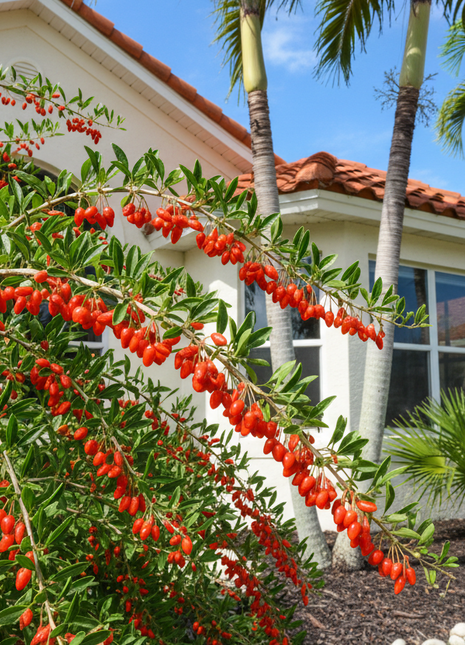
Red Berry Fruiting Shrub — Locally Grown at Flowing Well Tree Farm
Hardy Fruit Shrub • High-Yield Edible Landscape Plant • Drought-Tolerant Once Established • Florida-Grown Stock
When you buy this fruiting shrub here, you’re not getting generic, out-of-region nursery material—you’re getting locally grown plants produced in Pierson, already acclimated to Florida heat, humidity, sandy soils, and seasonal rainfall patterns.
That matters with fast-growing edible shrubs. Locally grown stock establishes faster, handles transplant stress better, and transitions more smoothly into real-world landscape conditions—especially in edible gardens and orchard systems where performance matters.
This is direct-from-grower material. You can visit the farm, see how edible shrubs are grown and selected, and get real guidance from people who work with these fruiting plants in Florida conditions year-round—not generic care sheets.
This type of productive berry shrub is especially valued for its adaptability, early fruiting potential, and long-term reliability in both home gardens and small orchards.
Why Locally Grown Matters
Starting with Florida-grown stock improves long-term performance:
Faster establishment in heat and sandy soils
Reduced transplant shock in home landscapes and containers
Better adaptation to humidity and rainfall variability
More consistent flowering and fruiting cycles
Stronger long-term root development
It’s a more reliable foundation for a productive edible shrub system.
Bright Red, Nutrient-Rich Fruit
This shrub is valued for its edible production:
Bright red, nutrient-rich berries
Suitable for fresh eating and culinary use
Attractive seasonal fruit display
Strong edible landscape appeal
It performs well in both ornamental and food-focused plantings.
USDA Growing Zones
Best suited for Zones 5–9, with strong adaptability across both warm and temperate climates once established.
Mature Growth & Habit
A fast-growing, productive shrub:
Medium shrub form depending on pruning
Dense, fruiting cane structure
Excellent for hedges, borders, and edible gardens
Can be managed for size and yield with regular pruning.
Light Requirements
Performs best in full sun (6–8+ hours daily) for:
Maximum fruit production
Strong cane development
Improved overall plant vigor
Soil & Site Requirements
Highly adaptable but prefers:
Well-draining sandy or loamy soils
Slightly acidic to neutral pH (6.5–7.0)
Organic matter added at planting for best establishment
Avoidance of heavy clay or waterlogged conditions
Planting Guidance (Grower Recommended)
We focus on real-world success in edible landscapes:
Dig a hole twice as wide as the root ball
Plant at the same depth as the container
Backfill with native soil and compost if needed
Water deeply after planting
Apply light mulch, keeping it away from the base
Maintain consistent moisture during establishment
If you visit the farm, we can help match this shrub to orchard rows, edible hedges, or container systems.
Watering & Establishment
Water regularly during the first growing season to build a strong root system. Once mature, the plant becomes moderately drought tolerant and performs well in low-water conditions.
Fertilizer
Apply balanced slow-release fertilizer in early spring
Avoid high nitrogen, which promotes foliage over fruit
Light feeding supports better fruiting performance
Fruiting Timeline
This is a fast producer:
Fruit may begin in years 1–2
Full production typically by year 3
Extended fruiting season from late spring into fall
Pruning & Maintenance
Low to moderate maintenance:
Prune in late winter
Remove weak, old, or unproductive canes
Encourage new shoots for higher future yields
Maintain airflow for better fruiting performance
Why This Is a Smarter Long-Term Investment
✔ Locally grown in Florida for stronger establishment✔ Direct grower expertise for edible shrub success✔ Fast fruiting timeline compared to many shrubs✔ Highly adaptable across multiple climate zones✔ Dual-purpose edible + landscape plant✔ Better performance than out-of-region nursery stock✔ Opportunity to visit, learn, and select in person
The Real Value
This isn’t just a berry shrub—it’s a fast-producing edible system designed for resilience and yield.
You’re not just planting a plant. You’re building a reliable, long-term source of homegrown fruit with a shrub engineered for adaptability and productivity.
Native Azalea (Rhododendron canescens) — Locally Grown in Pierson, Florida at Flowing Well Tree Farm
Native Flowering Shrub • Spring Blooming Azalea • Pollinator-Friendly Woodland Plant • Florida-Grown Native Stock
Native Azalea (Rhododendron canescens), commonly known as Piedmont Azalea or Wild Azalea, is one of the most beautiful native flowering shrubs in the southeastern United States. Known for its fragrant spring blooms in shades of pink, lavender, and white, this deciduous azalea brings early-season color and ecological value to woodland gardens, native landscapes, and restoration plantings.
When you buy Native Azalea here, you're not getting greenhouse-forced ornamental stock—you’re getting locally grown, Florida-adapted plants produced in Pierson and conditioned to handle Florida’s heat, humidity, sandy soils, and seasonal rainfall patterns.
That matters for long-term success. Locally grown azaleas establish stronger root systems, adapt more quickly to planting sites, and perform better under real Florida landscape conditions compared to heavily irrigated or out-of-region nursery stock.
This is direct-from-grower native plant material. Visit the farm, see how our native flowering shrubs are grown, and receive practical guidance on woodland planting, shade garden design, and native understory restoration.
Native Azalea is especially valued for its early-season bloom display and its importance as a pollinator and wildlife-supporting native shrub.
Why Locally Grown Matters for Native Azalea
Starting with Florida-grown stock provides important advantages:
Better adaptation to Florida heat and humidity
Stronger root system development before planting
Improved establishment in native soils
Reduced transplant shock
Faster acclimation to landscape conditions
Better long-term survival in restoration sites
It creates a stronger foundation for successful native understory plantings.
Fragrant Blooms & Seasonal Beauty
Native Azalea is one of the most showy native shrubs in bloom season:
Fragrant pink to lavender spring flowers
Large clusters of trumpet-shaped blooms
Early-season color before many other shrubs flower
Attracts attention in woodland and naturalized landscapes
Strong ornamental value in native plantings
Its blooms often signal the arrival of peak spring in natural Florida ecosystems.
Pollinator & Wildlife Value
This species plays an important ecological role:
Attracts bees, butterflies, and native pollinators
Provides early-season nectar resources
Supports biodiversity in woodland habitats
Contributes to healthy native understory systems
Adds structure and food resources for wildlife corridors
It is a key plant for restoring native ecological balance in shaded landscapes.
Woodland Garden & Understory Use
Native Azalea performs best in naturalistic settings:
Ideal for woodland gardens and shaded landscapes
Excellent understory shrub beneath pines and hardwoods
Works well in naturalized residential settings
Suitable for restoration under canopy cover
Blends naturally into native plant communities
It brings structure and seasonal interest to shaded environments.
Climate & Site Adaptability
Native Azalea thrives in Florida-compatible conditions when properly sited:
Native to woodland and upland forest edges
Prefers partial shade to filtered sunlight
Performs best in organically rich, well-drained soils
Tolerates Florida humidity when established
Requires protection from harsh full-day sun in hot sites
Benefits from natural mulch and forest floor conditions
It excels in naturalistic, shaded planting environments.
USDA Growing Zones
Best suited for Zones 6–9, performing well throughout northern and central Florida in protected and woodland settings.
Mature Size & Growth Habit
A graceful native flowering shrub:
6–12 ft mature height
6–10 ft spread
Upright, multi-stem form
Soft, open branching structure
Seasonal deciduous growth habit
It provides both structure and seasonal bloom interest.
Light Requirements
For best performance:
Partial shade preferred
Dappled sunlight or woodland edge conditions ideal
Morning sun with afternoon shade works well
Avoid prolonged harsh afternoon sun in exposed sites
Soil & Site Requirements
Adapted to native woodland soils:
Prefers acidic, well-drained soils
Performs best with organic matter and leaf litter
Benefits from natural mulch layers
Avoid heavy clay or poorly drained sites
Requires consistent moisture during establishment
Planting Guidance (Grower Recommended)
For best establishment:
Plant in partial shade or filtered light
Dig planting hole 2–3× wider than root ball
Plant at original soil depth
Water thoroughly after planting
Apply mulch (pine bark or pine straw preferred)
Keep mulch away from base of stems
Maintain consistent moisture during establishment period
We can assist with woodland garden design, native understory planning, and shaded landscape restoration.
Watering & Establishment
Water regularly during the first growing season. Once established, Native Azalea prefers consistent moisture and performs best in naturally mulched woodland conditions.
Fertilizer
Minimal fertilization required:
Light acidic fertilizer if needed
Organic soil amendments preferred
Avoid heavy fertilization
Best growth occurs in natural forest soils
Pruning & Maintenance
Low maintenance shrub:
Minimal pruning required
Prune lightly after flowering if shaping is desired
Naturally forms an attractive woodland habit
Remove only dead or damaged branches
Why This Is a Smarter Long-Term Investment
✔ Locally grown in Florida for stronger adaptation
✔ One of the most beautiful native flowering shrubs
✔ Fragrant spring bloom display
✔ Excellent pollinator and wildlife support plant
✔ Ideal for woodland and shaded landscapes
✔ Strong native understory restoration species
✔ Long-lived and low-maintenance once established
✔ Grower-direct guidance for native landscape success
The Real Value
This isn’t just a flowering shrub—it’s a restoration of woodland beauty and ecological function.
You’re not simply planting azaleas. You’re building a native understory, supporting pollinators, enhancing forest structure, and bringing seasonal beauty back into Florida’s natural landscapes for generations to come.
Yaupon Holly (Florida Yaupon) (Ilex vomitoria) — Locally Grown in Pierson, Florida at Flowing Well Tree Farm
Native Evergreen Shrub • Wildlife Berry Producer • Dense Screening Hedge Plant • Florida-Grown Restoration Stock
Yaupon Holly (Ilex vomitoria), often called Florida Yaupon, is one of the most important and adaptable native evergreen shrubs in the southeastern United States. Known for its dense branching, small glossy leaves, and bright red berries, it is widely used in native hedges, wildlife plantings, coastal landscapes, restoration projects, and low-maintenance screening systems throughout Florida.
When you buy Yaupon Holly here, you're not getting weak, over-irrigated ornamental hedge stock—you’re getting locally grown, Florida-adapted plants produced in Pierson and conditioned for real Florida growing conditions including heat, humidity, sandy soils, coastal wind exposure, and seasonal drought stress.
That matters for long-term success. Locally grown Yaupon establishes faster, develops stronger root systems, and performs more reliably in Florida’s tough landscape conditions compared to non-local nursery stock.
This is direct-from-grower native hedge material. Visit the farm, see how our evergreen screening plants are grown, and receive practical guidance on spacing, hedge design, and long-term native landscape structure.
Yaupon Holly is especially valuable because it combines dense evergreen screening with exceptional wildlife support and extreme durability.
Why Locally Grown Matters for Yaupon Holly
Starting with Florida-grown stock provides key advantages:
Faster root establishment in sandy soils
Better adaptation to heat and humidity
Improved drought and wind tolerance after establishment
Reduced transplant shock
Stronger branching and hedge density development
Better long-term survival in coastal and inland sites
It creates a stronger foundation for durable evergreen screening systems.
Hedge & Screening Value
Yaupon Holly is one of the best native hedge plants in Florida:
Extremely dense evergreen foliage
Fine-textured branching ideal for privacy screens
Can be maintained as formal hedge or natural thicket
Excellent windbreak and property border plant
Responds very well to pruning and shaping
It is widely used as a native alternative to non-native hedge species.
Wildlife & Ecological Importance
Yaupon Holly is a critical native wildlife plant:
Produces bright red berries eaten by birds
Provides year-round shelter and nesting habitat
Supports pollinators during spring bloom
Enhances biodiversity in native landscapes
Important winter food source for wildlife
It is one of the most valuable evergreen wildlife shrubs in the Southeast.
Climate & Site Adaptability
Yaupon Holly is exceptionally tough and adaptable:
Native to coastal plains, hammocks, and upland forests
Highly heat and humidity tolerant
Excellent drought tolerance once established
Tolerates coastal wind and salt exposure
Performs well in sandy, well-drained soils
Adapts to full sun or partial shade conditions
It is one of the most resilient native shrubs available.
USDA Growing Zones
Best suited for Zones 7–10, performing strongly throughout Florida and the southeastern United States.
Mature Size & Growth Habit
A versatile evergreen shrub or small tree:
10–20 ft mature height (can be maintained smaller with pruning)
8–15 ft spread depending on management
Dense, multi-stem branching structure
Long-lived evergreen form
Easily trained into hedge or tree form
It is highly flexible in landscape design.
Light Requirements
For best density and berry production:
Full sun to partial shade
Strongest growth in full sun
Highly adaptable to varying light conditions
Soil & Site Requirements
Adapted to Florida landscapes:
Prefers well-drained sandy soils
Tolerates poor fertility conditions
Performs well in coastal environments
Highly drought tolerant once established
Avoid long-term waterlogged soils
Planting Guidance (Grower Recommended)
For best hedge establishment:
Plant in full sun or partial shade rows
Space 3–6 ft apart depending on hedge density goals
Dig hole 2–3× wider than root ball
Plant at original soil depth
Water thoroughly after planting
Apply mulch while keeping away from trunk base
Maintain regular watering during establishment period
We can assist with hedge layout design, spacing strategy, and wildlife planting systems.
Watering & Establishment
Water regularly during the first growing season. Once established, Yaupon Holly becomes highly drought tolerant and thrives on minimal supplemental irrigation.
Fertilizer
Low fertilizer requirements:
Light balanced fertilizer during establishment if needed
Organic compost improves hedge density
Avoid excessive fertilization
Performs best in natural soil conditions
Pruning & Maintenance
Very low maintenance:
Responds extremely well to pruning and shaping
Can be maintained as formal hedge or natural screen
Prune 1–2 times per year for density control
Naturally regrows vigorously after trimming
Why This Is a Smarter Long-Term Investment
✔ Locally grown in Florida for superior adaptation
✔ One of the toughest native evergreen hedge plants
✔ Excellent wildlife berry production
✔ Dense, fast-forming privacy screening
✔ High wind, heat, and drought tolerance
✔ Low-maintenance long-term landscape solution
✔ Native alternative to exotic hedge plants
✔ Grower-direct guidance for hedge systems
The Real Value
This isn’t just a hedge shrub—it’s living landscape infrastructure built for Florida.
You’re not simply planting Yaupon Holly. You’re creating privacy, strengthening property edges, supporting wildlife habitat, and establishing a resilient evergreen system that performs for decades in Florida’s toughest conditions.