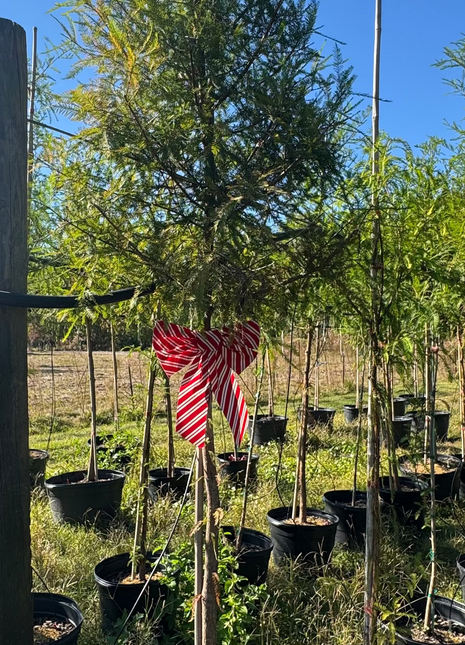
Flowing Well Tree Farm is Florida's Premium Native & Fruiting Grower. We proudly grow all of our plants in Volusia County, Florida.
"Welcome to Flowing Well Tree Farm, the leading Florida native nursery serving Florida and the surrounding areas. We specialize in high-quality native plants, wildflowers, and pollinator gardens that thrive in our local climate. Looking for specific species? We stock customer favorites including Native Milkweed (for Monarchs), Coontie, Firebush, and Beautyberry. Our expert team helps you build beautiful, drought-tolerant landscapes that save water and support local wildlife. Whether you need shade trees, privacy hedges, or Florida-friendly groundcovers, we have the right plants for your yard. Visit Flowing Well Tree Farm today to explore our inventory of sustainable, locally grown plants. We also grow suitable fruiting plants like peaches."
American Beautyberry (Callicarpa americana) — Locally Grown in Pierson, Florida at Flowing Well Tree FarmNative Wildlife Berry Shrub • Pollinator Magnet • Heat-Tolerant Understory Plant • Florida-Grown Restoration Stock
American Beautyberry (Callicarpa americana) is one of the most recognizable and ecologically important native shrubs in the southeastern United States. Known for its striking clusters of vivid purple berries that wrap tightly around arching green stems in late summer and fall, this plant delivers both ornamental impact and serious wildlife value in Florida landscapes.
Naturally found in pine flatwoods, hammocks, and woodland edges, beautyberry is a resilient understory shrub that thrives in the same challenging Florida conditions we grow in every day at Flowing Well Tree Farm in Pierson. It is a foundational species for restoration plantings, wildlife corridors, native hedgerows, and naturalized residential landscapes.
When you buy American Beautyberry here, you're not receiving stressed, greenhouse-softened ornamental stock—you’re getting locally grown, Florida-adapted native plants conditioned for real-world environments including heat, humidity, sandy soils, seasonal drought, and heavy summer rainfall cycles.
That local adaptation matters. Beautyberry establishes faster, handles stress better, and forms denser, more productive shrub structure when grown from Florida-propagated stock rather than imported nursery material.
Why Locally Grown Matters for Beautyberry
Starting with Florida-grown stock gives long-term advantages:
Faster establishment in sandy and nutrient-variable soils
Improved tolerance to heat, humidity, and drought cycles
Stronger natural branching and berry production
Better resilience in restoration and unmanaged landscapes
More reliable long-term survival in native ecosystems
Faster transition into wildlife-supporting structure
This creates a stronger, more functional native shrub from year one.
Fruit, Ecological & Ornamental Value
American Beautyberry is best known for its signature berry display, but its value goes far beyond aesthetics:
Clusters of bright purple berries surrounding stems in fall
Important seasonal food source for birds and small mammals
Traditional use in natural and folk applications
Aromatic foliage historically used as a natural insect deterrent
High-impact ornamental color in native landscapes
Excellent cut branches for natural arrangements
It is one of the most visually distinctive native shrubs in North America.
Wildlife & Pollinator Importance
Beautyberry is a powerhouse for ecosystem support:
Berries feed songbirds, quail, deer, and small mammals
Flowers attract native bees and beneficial pollinators
Dense branching provides cover and nesting habitat
Supports late-season wildlife nutrition when food sources decline
Enhances biodiversity in managed and natural systems
It plays a key role in restoring functional Florida habitat.
Growth Habit & Landscape Value
American Beautyberry is fast-growing, adaptable, and easy to integrate:
4–8 ft mature height (can spread wider in ideal conditions)
Arching multi-stem shrub with open, graceful structure
Responds well to pruning and rejuvenation cutting
Ideal for hedgerows, understory plantings, and mixed native systems
Works well in mass plantings or naturalized groupings
It provides structure without becoming aggressive or invasive.
Climate & Site Adaptability
Beautyberry is perfectly suited for Florida landscapes:
Native throughout the southeastern U.S.
Thrives in pine flatwoods and woodland edges
Performs well in sandy, loamy, or disturbed soils
Highly tolerant of heat and humidity
Handles seasonal drought once established
Prefers partial shade but adapts to full sun
It is one of the most flexible native shrubs available for Florida restoration.
USDA Growing Zones
Best suited for Zones 6–10, with strong performance throughout Florida and the Gulf Coast region.
Light Requirements
For best structure and berry display:
Partial shade preferred (natural woodland conditions)
Tolerates full sun with adequate moisture
More light increases berry production and density
Soil & Site Requirements
Adapted to a wide range of Florida conditions:
Performs in sandy, loamy, or organic soils
Tolerates low fertility environments
Handles periodic drought once established
Benefits from mulch and organic matter
Avoid constantly waterlogged root zones
Planting Guidance (Grower Recommended)
For best establishment and long-term structure:
Plant in partial shade or filtered sun
Dig hole 2–3× wider than root ball
Set plant at original soil depth
Water deeply after planting
Apply mulch to retain moisture and suppress weeds
Space 4–6 ft apart for hedgerows or groupings
Light pruning encourages fuller branching
We can assist with native hedgerow design, understory planning, and habitat restoration layouts.
Watering & Establishment
Water regularly during the first growing season. Once established, American Beautyberry becomes highly drought tolerant while still responding positively to seasonal rainfall patterns typical of Florida.
Fertilizer
Low-maintenance native shrub:
Minimal fertilizer required
Compost improves structure and berry density
Avoid heavy nitrogen inputs to maintain natural form
Performs best in low-input ecological systems
Pruning & Maintenance
Very manageable and adaptable:
Responds well to hard pruning or rejuvenation cuts
Can be cut back annually for denser berry production
Naturally regrows from base after trimming
Pruning improves airflow and fruit visibility
Low maintenance in naturalized landscapes
Why This Is a Smarter Long-Term Investment
✔ Locally grown in Florida for superior adaptation✔ High-impact native wildlife berry producer✔ Excellent understory and hedgerow species✔ Strong pollinator and bird habitat value✔ Thrives in sandy, challenging soils✔ Low maintenance and highly resilient✔ Ideal for restoration and natural landscapes✔ Grower-direct knowledge for real Florida systems
The Real Value
This isn’t just a native shrub—it’s a seasonal food source, wildlife habitat engine, and structural backbone for Florida ecosystems.
When you plant American Beautyberry, you’re adding color, function, and biodiversity to the landscape while building a resilient native system that improves year after year.
🌳 Why Add the Fringe Tree to Your Landscape?
Transform your outdoor space with the enchanting Fringe Tree, a Florida native gem that brings both striking beauty and valuable ecological benefits to your landscape. In spring, it produces soft, fragrant white blooms that create a graceful, cloud-like display, filling the garden with seasonal charm.
Its lush, glossy green foliage provides year-round appeal and gentle shade, making it a standout choice for home landscapes, natural gardens, and pollinator-friendly plantings.
🌟 Why You’ll Love the Fringe Tree
🦋 Pollinator HavenAttracts bees, butterflies, and birds, supporting a thriving and healthy ecosystem.
🌸 Seasonal ShowpieceShowy white spring blooms paired with rich green foliage for year-round visual interest.
🌿 Florida Native BeautyWell-adapted, low-maintenance, and ideal for naturalized and native landscapes.
📦 Bulk Savings AvailableSave more when purchasing multiple plants—perfect for larger landscape projects and restoration planting.
✨ Order today to reserve your Fringe Tree and bring effortless elegance and wildlife value to your landscape!
📄 Download PDF Handout Available
American Hawthorn (Crataegus spp.) — Locally Grown in Pierson, Florida at Flowing Well Tree FarmNative Fruiting Tree/Shrub • Wildlife Food & Cover Species • Spring Flowering Pollinator Plant • Florida-Grown Restoration Stock
American Hawthorn (Crataegus spp.) is one of the most valuable yet underused native fruiting trees in North America. Known for its dense branching structure, springtime white flower clusters, and persistent red berry-like fruits (haws), this species provides exceptional wildlife value, seasonal beauty, and long-term structural integrity in native Florida landscapes.
Naturally found along woodland edges, upland forests, and disturbed soils, Hawthorn is a highly adaptable native that thrives in a wide range of Florida conditions when properly established. At Flowing Well Tree Farm in Pierson, Florida, we grow select native Crataegus forms as restoration-grade material for hedgerows, wildlife corridors, and edible-native landscape systems.
When you buy American Hawthorn here, you’re not getting weak ornamental nursery filler—you’re getting locally grown, Florida-adapted native stock conditioned for real-world conditions including sandy soils, heat, humidity, seasonal drought, and high wildlife pressure.
That local adaptation is essential. Hawthorn is naturally hardy, but Florida-grown stock establishes faster, develops stronger branching structure, and transitions more reliably into flowering and fruiting maturity under southeastern conditions.
Why Locally Grown Matters for Hawthorn
Starting with Florida-grown stock provides key advantages:
Faster establishment in sandy and variable soils
Stronger branching structure for wildlife cover and hedging
Improved tolerance to heat, humidity, and drought cycles
Better flowering and fruiting consistency over time
Increased resilience in unmanaged or restoration systems
Higher survival rates in field conditions
This produces a stronger, more functional native tree from the start.
Flowering, Fruit & Seasonal Value
American Hawthorn delivers multi-season ecological and ornamental value:
Dense clusters of white spring flowers
Important early nectar source for native pollinators
Red berry-like fruits (haws) in late summer and fall
Seasonal wildlife food for birds and small mammals
Extended fruit persistence into winter in some conditions
Strong ornamental structure across all seasons
It is one of the most complete native wildlife trees in Florida ecosystems.
Wildlife & Ecological Importance
Hawthorn is a cornerstone species for habitat systems:
Fruits consumed by songbirds, game birds, and mammals
Dense thorny branching provides protective nesting cover
Excellent wildlife shelter and escape habitat
Supports pollinators during spring bloom period
Critical structural species in hedgerows and corridors
Enhances biodiversity in fragmented landscapes
It functions as both food source and protective structure.
Growth Habit & Landscape Value
American Hawthorn is naturally dense and highly functional:
10–25 ft small tree or large multi-stem shrub
Dense, often thorny branching habit
Can be trained as specimen tree or left natural
Excellent for living fences and hedgerows
Strong structural presence in native landscapes
Responds well to pruning and shaping if needed
It provides both security and ecological value in one plant.
Climate & Site Adaptability
Hawthorn is highly adaptable across Florida environments:
Native to eastern U.S. woodlands and edge habitats
Performs well in full sun to partial shade
Tolerates sandy, loamy, and clay soils
Handles seasonal drought once established
Adapted to heat and humidity
Performs best in moderately drained soils
It is a reliable, long-lived native structural species.
USDA Growing Zones
Best suited for Zones 5–9, with strong performance throughout Florida and the southeastern United States in diverse landscape systems.
Light Requirements
For best flowering and fruiting:
Full sun preferred for maximum production
Tolerates partial shade in woodland settings
More sun increases bloom and fruit density
Shade increases natural woodland form
Soil & Site Requirements
Adapted to a wide range of conditions:
Performs in sandy, loamy, or mixed soils
Prefers well-drained sites
Tolerates periodic moisture variation
Benefits from organic matter and mulch
Avoid permanently waterlogged soils
Planting Guidance (Grower Recommended)
For best establishment:
Plant in full sun or partial shade
Dig hole 2–3× wider than root ball
Set plant at original soil depth
Water deeply after planting
Apply mulch to stabilize moisture and soil temperature
Space 10–15 ft apart for tree form development
Space closer for hedgerow or screening systems
We can assist with hedgerow design, wildlife corridor planning, and native property structuring.
Watering & Establishment
Water regularly during the first 1–2 growing seasons. Once established, American Hawthorn becomes highly resilient and can tolerate both drought and seasonal wet cycles typical of Florida climates.
Fertilizer
Low-input native tree:
Minimal fertilizer required
Compost improves growth and fruiting performance
Avoid high nitrogen (reduces flowering and fruiting balance)
Performs best in natural soil systems
Pruning & Maintenance
Moderate to low maintenance:
Responds well to pruning and shaping
Can be trained into tree or hedge form
Benefits from occasional structural pruning
Naturally dense even without intervention
Thorny structure provides natural protection
Why This Is a Smarter Long-Term Investment
✔ Locally grown in Florida for superior adaptation✔ High-value wildlife food and cover tree✔ Excellent hedgerow and living fence species✔ Strong spring pollinator support✔ Dense protective structure for habitat systems✔ Long-lived, resilient native tree✔ Performs well in restoration and natural landscapes✔ Grower-direct expertise for Florida conditions
The Real Value
This isn’t just a native tree—it’s a multifunctional habitat engine that provides food, shelter, structure, and seasonal beauty in one species.
When you plant American Hawthorn, you’re building a living hedge of protection and productivity that supports wildlife year-round and strengthens native Florida ecosystems for decades.
🌿 American Holly | Native Evergreen | Wildlife Friendly | Year-Round Beauty
Classic Native Evergreen Tree
Transform your landscape with the timeless beauty of the American Holly, a native evergreen tree valued for its glossy green foliage, upright structure, and brilliant red berries that appear in fall and winter.
Slow-growing but long-lived, this iconic native reaches 15–30 feet tall, making it a perfect choice for naturalized landscapes, privacy plantings, and wildlife gardens.
🌟 Why You’ll Love American Holly
🌿 Evergreen Year-Round AppealGlossy green leaves provide structure and color in every season.
🍒 Vibrant Winter BerriesBright red berries add striking seasonal interest and natural beauty.
🦋 Wildlife Friendly TreeProvides food and shelter for birds and supports local ecosystems.
🌳 Elegant Landscape FormA beautiful native choice for hedges, specimen planting, or woodland edges.
🌱 Growing Information
USDA Zones: 5–9☀️ Light: Full sun to partial shade (best berry production in sun)
🌿 Soil Requirements
Prefers well-drained, slightly acidic soil
Adaptable to sandy or loamy soils
Avoid poorly drained or compacted areas
Benefits from organic matter at planting
🌱 Care & Maintenance
Water regularly during establishment
Once established, moderately drought tolerant
Mulch to retain moisture and regulate soil temperature
Minimal pruning required—best shaped in late winter if needed
🌿 Why Choose American Holly?
A classic native evergreen that combines year-round beauty, wildlife value, and long-term durability, making it a reliable foundation plant for Florida-friendly and southeastern landscapes.
✨ Order now to reserve your American Holly for September shipping and bring timeless native elegance to your garden!
American Hornbeam (Carpinus caroliniana) — Locally Grown in Pierson, Florida at Flowing Well Tree Farm
Native Understory Tree • Shade Tolerant • Highly Adaptable • Florida-Grown for Real Landscape Performance
When you buy American Hornbeam here, you’re not getting stressed roadside digs or out-of-region nursery stock—you’re getting trees grown directly in Pierson, raised in Florida’s heat, humidity, rainfall cycles, and native soils from the start. That matters because it produces trees that establish faster, adapt more easily, and perform more reliably in real landscapes.
This is direct-from-grower material. You can visit the farm, walk the shaded production areas, and see how these native understory trees are developed for long-term landscape success. When you have questions, you’re speaking directly with the people growing them—not a reseller—so advice is based on field experience, not guesswork.
American Hornbeam is one of the most refined native understory trees available, combining durability, beauty, and ecological value in a way few species can match.
Why Locally Grown Native Stock Performs Better
Even though this is a highly adaptable native tree, local growing conditions improve performance by ensuring:
Strong root development in Florida soils
Better heat and humidity acclimation
Reduced transplant shock
Faster establishment in home landscapes
Improved long-term resilience in mixed soil conditions
It’s a native tree with a real-world advantage.
Elegant Native Structure with Real Landscape Function
American Hornbeam is known for its naturally sculpted form and slow-to-moderate growth, making it ideal for refined landscape spaces.
It works beautifully as:
An understory shade tree
A woodland garden focal point
A naturalized landscape component
A specimen tree in smaller spaces
A pond edge or rain garden planting
Its layered branching structure provides filtered shade without overwhelming surrounding plantings.
Distinctive Bark and Seasonal Color
One of its most recognizable features is its smooth, fluted trunk—earning it the nickname “Musclewood.”
Seasonal interest includes:
Vibrant orange, red, and yellow fall foliage
Textured bark that adds winter structure
Dense green canopy during the growing season
It brings year-round visual interest in a subtle, natural way.
USDA Growing Zones
Adapted to Zones 3–9, making it one of the most versatile native understory trees across the eastern United States.
Mature Size & Growth Habit
A smaller native canopy tree:
20–35 ft tall
20–30 ft wide
Ideal for controlled landscapes where larger shade trees would be too dominant.
Light Requirements
Performs best in partial shade to full sun. In warm climates like Florida, young trees benefit from morning sun and afternoon shade during establishment.
Soil & Site Adaptability
Naturally flexible and well-adapted to a wide range of conditions:
Moist, well-drained soils preferred
Sandy, loamy, or clay soils tolerated
Slightly acidic to neutral pH ideal
Handles occasional wet or seasonal saturated conditions
It performs especially well in woodland edges, shaded gardens, and transitional wet areas.
Planting Guidance (Grower Recommended)
We focus on long-term success, not just installation:
Select a site with consistent moisture and space for mature growth
Dig a hole twice as wide as the root ball
Plant with root flare at soil level
Backfill with native soil and water in deeply
Apply 2–3 inches of mulch, keeping it away from the trunk
Maintain regular watering during establishment
If you visit the farm, we can help match placement based on shade, moisture, and landscape intent.
Watering & Establishment
Regular watering is essential for the first 1–2 years. Once established, American Hornbeam becomes moderately drought tolerant but performs best with occasional deep watering during extended dry periods.
Fertilizer
Generally low-maintenance. A light balanced fertilizer in early spring is optional. Avoid over-fertilization to preserve natural growth form and resilience.
Pruning & Maintenance
Minimal pruning required:
Remove dead or crossing branches as needed
Light shaping in early years can improve structure
Avoid heavy pruning to preserve natural form
It naturally develops a balanced, elegant structure without intervention.
Wildlife & Ecological Value
American Hornbeam supports local ecosystems by:
Providing habitat and cover for birds
Supporting pollinators
Offering seasonal food sources for wildlife
Contributing to woodland biodiversity
Why This Is a Smarter Long-Term Investment
✔ Grown locally in Florida conditions from the start✔ Faster establishment with reduced transplant stress✔ Direct access to growers for real planting guidance✔ Highly adaptable native understory tree✔ Strong ecological and wildlife value✔ Long lifespan with minimal maintenance✔ Opportunity to visit, learn, and select in person
The Real Advantage
This isn’t just a native tree purchase—it’s a long-term landscape foundation species grown with care, local expertise, and real Florida conditions in mind.
You’re not just planting a tree. You’re adding structure, resilience, and quiet beauty that lasts for generations.
Anise Florida Red (Illicium floridanum) — Locally Grown in Pierson, Florida at Flowing Well Tree FarmNative Evergreen Understory Shrub • Shade-Tolerant Privacy Hedge • Fragrant Foliage Landscape Foundation Plant • Florida-Grown Woodland, Screening & Restoration Species
Anise Florida Red (Illicium floridanum) is one of the most dependable and ecologically valuable native evergreen shrubs in the southeastern United States. Known for its dense foliage, natural shade tolerance, and distinctive deep red star-shaped flowers, this species is a cornerstone plant for woodland gardens, understory landscapes, and natural privacy screening in Florida.
At Flowing Well Tree Farm in Pierson, Florida, we grow Anise Florida Red as premium native evergreen understory stock selected for dense branching structure, strong root development, and reliable performance in Florida’s heat, humidity, sandy soils, and shaded environments. Each plant is field-grown and conditioned under real Florida landscape conditions to ensure durability and long-term performance.
When you buy Florida Red Anise here, you are not receiving weak greenhouse shrubs—you are getting Florida-adapted native evergreen plants built for structure, resilience, and long-term landscape function in shaded and transitional environments.
That local adaptation is essential. Illicium floridanum performs best when grown in-region, where it naturally develops stronger root systems, improved heat tolerance, and dense foliage structure ideal for screening and woodland stabilization.
Why Locally Grown Matters for Florida Red Anise
Starting with Florida-grown stock provides key advantages:
Stronger establishment in shaded and woodland soilsImproved heat and humidity tolerance from early developmentBetter drought resilience once established in Florida conditionsHigher survival rates in understory and landscape hedge useDenser foliage development for screening and privacyMore consistent flowering and long-term vigor
This creates a reliable evergreen foundation plant for Florida landscapes.
Foliage Structure & Landscape Value
Florida Red Anise is a dense evergreen understory shrub:
6–10 ft mature height depending on pruning and site conditionsNaturally dense, multi-stemmed branching structureGlossy dark green leaves with aromatic scent when crushedYear-round evergreen foliage provides continuous screeningFine-textured growth ideal for woodland and shaded landscapesExcellent foundation planting and natural hedge formation
It is one of the most effective native evergreen shrubs for privacy and structure.
Flowering & Seasonal Interest
Anise Florida Red provides unique ornamental blooms:
Deep red to maroon star-shaped flowers in late spring to early summerDistinctive floral form unlike most native shrubsSubtle fragrance adds sensory interest to shaded gardensBlooms appear against dense evergreen foliage for strong contrastOccasional secondary blooming in favorable conditions
It delivers understated but highly unique seasonal floral interest.
Ecological & Habitat Importance
Florida Red Anise plays an important role in native ecosystems:
Provides dense evergreen cover for birds and small wildlifeSupports shaded understory biodiversity in hardwood forestsContributes to woodland edge stabilization and habitat structureThrives in low-light environments where few shrubs succeedSupports native pollinator activity during bloom cyclesEnhances ecosystem layering in restoration plantings
It is a key structural shrub in southeastern woodland ecosystems.
Growth Habit & Structural Function
Florida Red Anise is a structural evergreen shrub:
6–10+ ft mature height depending on pruning strategyDense, rounded to upright multi-stemmed growth habitSlow to moderate growth rate with long-term stabilityExcellent response to shaping and hedge pruningLong-lived evergreen structure in shaded environmentsIdeal for mass planting or specimen use
It functions as both a privacy hedge and understory anchor plant.
Climate & Site Adaptability
Florida Red Anise is highly adapted to Florida conditions:
Native to southeastern U.S. coastal plain and woodland systemsThrives in shaded to partially shaded environmentsPerforms best in moist, well-drained organic soilsTolerates heat and humidity extremely wellModerate drought tolerance once establishedDoes not tolerate prolonged flooding or standing water
It is one of the most reliable native shrubs for shaded Florida landscapes.
USDA Growing Zones
Best suited for Zones 7–10, with strong performance throughout Florida and the southeastern United States.
Light Requirements
For best growth and density:
Partial shade to full shade is idealMorning sun with afternoon shade improves vigor in northern FloridaAvoid prolonged full sun exposure in hot inland sitesFiltered woodland light produces best foliage density
Soil & Site Requirements
Highly adaptable understory shrub species:
Prefers rich, organic, well-drained soilsTolerates sandy soils with added organic matterThrives in woodland edge and shaded garden conditionsRequires good drainage for long-term healthBenefits from mulch and soil moisture stabilization
Planting Guidance (Grower Recommended)
For best long-term performance:
Plant in partial to full shadeDig hole 2–3× wider than root ballSet at original soil depthWater deeply after planting to establish root contactApply mulch 2–4 inches deep, keeping away from stemsSpace 4–8 ft apart for hedge or mass plantingAllow room for natural spreading form
We assist with shade garden design, native hedge installation, and woodland understory restoration layouts.
Watering & Establishment
Water regularly during the first 1–2 growing seasons. Once established, Florida Red Anise becomes moderately drought tolerant in shaded environments with stable soil moisture.
Fertilizer
Low input requirements:
Light fertilization supports foliage density and growthOrganic compost improves soil structure and microbial activityAvoid excessive nitrogen to maintain natural compact formPerforms best in balanced woodland soil systems
Pruning & Maintenance
Low to moderate maintenance shrub:
Responds very well to pruning for hedges and formal screensCan be shaped or left natural for woodland appearanceRemove dead or weak stems as neededNaturally dense structure reduces maintenance needsExcellent long-term landscape stability with minimal care
Why This Is a Smarter Long-Term Investment
✔ Locally grown in Florida for true climate adaptation✔ One of the best native evergreen privacy shrubs✔ Excellent shade tolerance for difficult landscape areas✔ Dense foliage ideal for screening and hedging✔ Unique red star-shaped native flowers✔ Strong wildlife and habitat value in understory systems✔ Low-maintenance long-term landscape structure plant✔ Grower-direct field-conditioned native stock
The Real Value
This is not just a shrub—it is a foundational evergreen structure plant that builds privacy, stability, and ecological layering in shaded Florida landscapes.
When you plant Florida Red Anise, you are investing in a native understory evergreen that strengthens woodland systems, supports wildlife, and provides long-lasting natural screening in environments where many other plants fail.
Bald Cypress (Taxodium distichum) — Locally Grown in Pierson, Florida at Flowing Well Tree FarmNative Wetland Conifer • Flood-Tolerant Shade Tree • Long-Lived Structural Canopy Species • Florida-Grown Restoration & Landscape Anchor Tree
Bald Cypress (Taxodium distichum) is one of the most iconic and ecologically important native trees in the southeastern United States. Known for its strong pyramidal form, soft feathery foliage, and exceptional tolerance to flooding and wet soils, this species is a cornerstone of Florida wetlands, river systems, and lowland landscapes.
At Flowing Well Tree Farm in Pierson, Florida, we grow Bald Cypress as premium native canopy stock selected for strong central leaders, upright structural form, and long-term performance in Florida’s wet, sandy, and seasonally variable environments. Each tree is established in real field conditions to ensure resilience under heat, humidity, flooding, drought cycles, and storm exposure.
When you buy Bald Cypress here, you’re not receiving weak ornamental nursery stock—you’re getting locally grown, Florida-adapted trees conditioned for real-world ecological performance in both wetland and upland systems.
That local adaptation is critical. Bald Cypress performs best when grown in Florida conditions from the start, developing stronger root systems, improved flood tolerance, and more stable long-term canopy structure.
Why Locally Grown Matters for Bald Cypress
Starting with Florida-grown stock provides key advantages:
Faster establishment in wet or sandy soils
Stronger root systems for flood and drought cycles
Improved heat and humidity tolerance
Better wind and storm resilience in mature trees
Higher survival rates in restoration plantings
More consistent long-term canopy development
This creates a durable, permanent native shade tree.
Canopy Structure & Landscape Value
Bald Cypress is one of Florida’s most valuable large canopy trees:
50–80 ft tall mature deciduous conifer
Strong pyramidal form when young, broadening with age
Soft, fine-textured “feather-like” foliage
Deciduous in winter with warm copper fall color
Excellent long-term shade and cooling tree
Strong architectural presence in large landscapes
It is a defining species of Southern wetland ecosystems.
Ecological & Wetland Importance
Bald Cypress is a foundational Florida ecosystem species:
Dominant tree in swamps, riverbanks, and floodplains
Provides critical habitat for birds, amphibians, and wildlife
Supports aquatic and semi-aquatic ecosystems
Stabilizes soil in wet and erosion-prone areas
Creates microhabitats through “cypress knee” development in wet conditions
Enhances water filtration and watershed health
It is one of the most important ecological trees in the Southeast.
Growth Habit & Structural Function
Bald Cypress is a long-lived structural canopy tree:
50–80+ ft mature height depending on site conditions
Straight central trunk with strong vertical development
Broad canopy with age, providing deep shade
Adaptable to both wetland and upland planting
Extremely long-lived (often centuries in natural settings)
Strong wind resistance when mature
It functions as a permanent landscape anchor tree.
Climate & Site Adaptability
Bald Cypress thrives in Florida’s full range of conditions:
Native to southeastern U.S. wetlands and river systems
Tolerates standing water and seasonal flooding
Performs well in sandy upland soils as well
Highly heat and humidity tolerant
Strong drought tolerance once established
Excellent storm and wind resilience
It is one of the most adaptable large native trees available.
USDA Growing Zones
Best suited for Zones 4–10, with exceptional performance throughout Florida and the entire southeastern United States.
Light Requirements
For best growth and structure:
Full sun preferred for strongest canopy development
Tolerates partial shade in early stages
Sun exposure improves form and long-term vigor
Ideal for open landscapes, wetlands, and large properties
Soil & Site Requirements
Highly adaptable native species:
Thrives in wet, flooded, or seasonally saturated soils
Performs well in sandy uplands and loamy soils
Tolerates poor fertility conditions
Adapts to both managed and natural environments
Benefits from mulch during establishment
Planting Guidance (Grower Recommended)
For best long-term performance:
Plant in full sun for optimal growth
Dig hole 2–3× wider than root ball
Set at original soil depth
Water deeply after planting
Apply mulch to stabilize moisture and temperature
Space 20–40 ft apart for full canopy development
Allow room for mature spread in large landscapes
We can assist with wetland planting design, shade tree placement, and large-scale restoration planning.
Watering & Establishment
Water regularly during the first 1–2 growing seasons. Once established, Bald Cypress becomes extremely resilient and can thrive in both wet and dry cycles common in Florida.
Fertilizer
Low to moderate input needs:
Minimal fertilization required
Compost supports early establishment
Avoid excessive nitrogen inputs
Performs best in natural soil systems
Pruning & Maintenance
Very low maintenance:
Minimal pruning required
Naturally strong central leader development
Can be limbed up for shade tree form
Long-lived with stable structure
Low maintenance once established
Why This Is a Smarter Long-Term Investment
✔ Locally grown in Florida for maximum adaptation✔ Iconic native wetland and shade tree✔ Extremely flood and drought tolerant species✔ Long-lived structural landscape anchor✔ Excellent wildlife habitat and ecosystem value✔ Strong wind and storm resilience when mature✔ Adaptable to wet and upland sites✔ Grower-direct quality for Florida conditions
The Real Value
This isn’t just a shade tree—it’s a legacy canopy species that defines wetlands, strengthens landscapes, and provides ecological structure for generations.
When you plant Bald Cypress, you’re investing in a permanent native anchor tree that thrives through flood, drought, and storm while building long-term habitat and landscape stability in Florida’s environment.
Locally Grown in Pierson, Florida — Direct from the Grower at Flowing Well Tree Farm
Cold Hardy • Evergreen Structure • Fragrant Southern Blooms • Landscape-Ready from Day One
When you buy Bracken Brown Magnolia (Magnolia grandiflora ‘Bracken’s Brown Beauty’) here, you’re not getting boxed-up, long-distance nursery stock—you’re getting trees grown directly in Pierson, hardened in real Florida conditions and managed by the same people who will guide you on planting success.
This is a direct-from-grower experience. You can visit the farm, walk the fields, and see exactly how these magnolias are produced, spaced, and developed for long-term landscape performance. When you have questions, you’re speaking with the growers themselves—people who work with these trees every day and understand how they perform after planting, not just at sale time.
These magnolias are selected and grown for structure, resilience, and regional adaptability. That means better establishment, fewer surprises in the landscape, and a stronger long-term return on your planting investment.
Why Locally Grown Matters
Bracken Brown Magnolia performs best when it’s raised in a climate similar to where it will be planted. Because ours are grown in Florida soil and humidity from the start, they transition more smoothly into home landscapes across the Southeast.
Instead of struggling to adapt, they’re already conditioned for heat, humidity, storms, and variable soils—making them a smarter, more reliable long-term landscape choice.
Evergreen Beauty with Real Landscape Presence
This is a refined Southern magnolia known for its:
Dense, pyramidal evergreen form
Rich glossy green leaves with warm bronze undersides
Strong branching structure for wind and storm resilience
Consistent performance in residential and estate landscapes
It delivers year-round structure and presence without the overly large, unmanageable size of older magnolia selections.
Fragrant Southern Blooms
Large creamy white flowers (often 8–10 inches wide) appear from late spring through summer, filling the landscape with a soft, citrus-like fragrance. These blooms are not just ornamental—they support pollinators and add a timeless Southern character that never goes out of style.
USDA Growing Zones
Best suited for Zones 5–9, making it one of the most cold-hardy Southern magnolia selections available.
Mature Size & Growth Habit
Typically reaches 30–50 ft tall with a 15–30 ft spread, forming a dense, upright canopy that works well as a specimen tree or privacy backdrop.
Light Requirements
Performs best in full sun to partial shade. More sun means stronger structure and better flowering performance.
Soil & Site Selection
Best results come from well-drained, slightly acidic soils enriched with organic matter.Adapts well to:
Sandy soils
Loamy soils
Clay soils (if drainage is adequate)
Avoid areas that stay constantly wet or poorly drained.
Planting Guidance (Grower-Based Recommendations)
We don’t just sell the tree—we help you succeed with it:
Dig a hole twice as wide as the root ball
Plant at original container depth (critical for long-term health)
Backfill with native soil and water in deeply
Mulch 2–3 inches, keeping mulch off the trunk
Provide consistent moisture during establishment
If you visit the farm, we often help match trees to site conditions in real time—based on how they’ll actually perform in your landscape.
Watering & Establishment
Regular watering during the first growing season is essential. Once established, Bracken Brown Magnolia becomes moderately drought tolerant while still appreciating deep watering during extended dry periods.
Fertilizer
A balanced slow-release fertilizer in early spring supports strong foliage and flowering. Once established in healthy soil, minimal fertilization is needed.
Pruning & Structure
Naturally maintains a strong form. Prune only as needed in late winter or after flowering to remove damaged or crossing branches. Heavy pruning is unnecessary and discouraged.
Why This Is a Smarter Long-Term Investment
✔ Grown locally in Florida conditions—not imported stock✔ Faster establishment with less transplant shock✔ Direct access to growers for real planting guidance✔ Region-specific performance and resilience✔ Field-grown structure built for long-term landscapes✔ Opportunity to tour, select, and learn on-site✔ Proven adaptability for Southeastern landscapes
The Difference You Can See Over Time
This isn’t just a magnolia purchase—it’s a long-term landscape decision backed by experience, local production, and ongoing support.
You’re not just planting a tree. You’re planting a better starting point.
Carolina Buckthorn (Rhamnus caroliniana) — Locally Grown in Pierson, Florida at Flowing Well Tree Farm
Native Wildlife Tree • Shade-Tolerant Understory Species • Berry-Producing Habitat Plant • Florida-Grown Restoration Stock
Carolina Buckthorn (Rhamnus caroliniana) is a valuable native understory tree known for its adaptability, wildlife-supporting berries, and ability to thrive in both forest edges and shaded landscapes. Found naturally in woodlands, limestone forests, and mixed hardwood systems across the southeastern United States, it is an important species for restoration plantings, native habitat development, and low-maintenance ecological landscapes.
When you buy Carolina Buckthorn here, you're not getting weak, overprotected nursery material—you’re getting locally grown, Florida-adapted trees produced in Pierson and conditioned for real-world Florida conditions including heat, humidity, sandy soils, and seasonal rainfall variability.
That matters for long-term success. Locally grown buckthorn develops stronger root systems, transitions faster after planting, and is better prepared for the stress conditions found in naturalized landscapes and restoration environments.
This is direct-from-grower native restoration stock. Visit the farm, see how our native understory trees are grown, and receive practical guidance on shade planting, habitat restoration, and mixed-species forest design.
Carolina Buckthorn is especially valuable because it performs well in shaded conditions where many other native trees struggle, while also providing important wildlife food resources.
Why Locally Grown Matters for Carolina Buckthorn
Starting with Florida-grown stock provides key advantages:
Better adaptation to Florida heat and humidity
Stronger root system development before planting
Improved establishment in woodland soils
Faster acclimation to shaded environments
Increased drought tolerance after establishment
Better long-term survival in restoration sites
It creates a stronger foundation for successful understory tree establishment.
Wildlife & Ecological Importance
Carolina Buckthorn is an important native food and habitat species:
Produces small berries consumed by birds
Supports songbirds and native wildlife populations
Provides cover and nesting habitat in woodland systems
Contributes to seasonal food availability in forests
Enhances biodiversity in restoration plantings
Supports healthy native ecosystem structure
Its fruiting habit makes it especially valuable for wildlife corridors and conservation plantings.
Shade Tolerance & Understory Performance
Unlike many native trees, Carolina Buckthorn thrives in lower light conditions:
Excellent shade tolerance for understory planting
Performs well under pine and hardwood canopies
Adapts to forest edge environments
Suitable for naturalized shaded landscapes
Can also grow in partial sun conditions
It is one of the more reliable native small trees for woodland systems.
Seasonal Interest
Carolina Buckthorn provides subtle but valuable seasonal features:
Small white-green flowers in spring
Attractive dark berries in summer to fall
Glossy green foliage throughout the growing season
Naturally refined woodland appearance
Soft integration into native plant communities
Its understated beauty supports naturalistic landscape design.
Climate & Site Adaptability
This species is highly adaptable to Florida conditions:
Native to woodlands and mixed forest systems
Tolerates sandy and loamy soils
Performs well in partial shade to full shade
Moderately drought tolerant once established
Handles Florida heat and humidity effectively
Adapted to upland and forest edge environments
It excels in naturalized and restoration-focused plantings.
USDA Growing Zones
Best suited for Zones 5–9, performing well throughout Florida and the southeastern United States in appropriate shaded conditions.
Mature Size & Growth Habit
A small to medium native understory tree:
12–25 ft mature height
10–20 ft spread
Multi-stem or single-trunk form
Rounded, open woodland canopy
Soft branching structure
Ideal for understory layering and natural forest structure.
Light Requirements
For best performance:
Partial shade preferred
Tolerates full shade in woodland settings
Can handle filtered sunlight
Avoid prolonged harsh full sun in exposed sites
Soil & Site Requirements
Adapted to native woodland soils:
Prefers well-drained sandy or loamy soils
Performs well in organic-rich forest soils
Tolerates low fertility conditions
Benefits from natural mulch and leaf litter
Avoid consistently flooded sites
Planting Guidance (Grower Recommended)
For best establishment:
Plant in shaded or partially shaded locations
Dig planting hole 2–3× wider than root ball
Plant at original soil depth
Water thoroughly after planting
Apply mulch to mimic forest floor conditions
Keep mulch away from trunk base
Maintain consistent moisture during establishment
We can assist with woodland planting design, understory layering, and restoration planning.
Watering & Establishment
Water regularly during the first growing season. Once established, Carolina Buckthorn becomes moderately drought tolerant and performs well in natural woodland moisture conditions.
Fertilizer
Minimal fertilization required:
Light feeding only if needed during establishment
Organic amendments preferred
Avoid excessive fertilization
Performs best in natural forest soils
Pruning & Maintenance
Low maintenance species:
Minimal pruning required
Remove dead or damaged branches as needed
Naturally develops a woodland form
No intensive maintenance required
Why This Is a Smarter Long-Term Investment
✔ Locally grown in Florida for superior adaptation
✔ Excellent native understory tree for shade conditions
✔ Important wildlife berry-producing species
✔ Strong restoration and habitat value
✔ Thrives in woodland and forest edge environments
✔ Low-maintenance and long-lived native plant
✔ Supports biodiversity in native ecosystems
✔ Grower-direct expertise for planting success
The Real Value
This isn’t just a small native tree—it’s a functional piece of forest ecology.
You’re not simply planting a buckthorn. You’re restoring understory structure, feeding wildlife, strengthening woodland ecosystems, and building long-term habitat complexity that supports Florida’s native forests for generations to come.
Carolina Cypress (Hesperocyparis glabra) — Locally Grown in Pierson, Florida at Flowing Well Tree FarmFast-Growing Evergreen Conifer • Windbreak & Screening Tree • Drought & Heat Tolerant Landscape Column • Florida-Grown Structural Restoration Species
Carolina Cypress (Hesperocyparis glabra), commonly known as Arizona Cypress or Smooth Cypress, is one of the most reliable fast-growing evergreen conifers for hot, dry, and wind-exposed landscapes. Known for its dense blue-green foliage, upright pyramidal form, and exceptional tolerance to heat and drought, this species is widely used in Florida windbreaks, privacy screens, and large-scale restoration plantings.
At Flowing Well Tree Farm in Pierson, Florida, we grow Carolina Cypress as premium structural conifer stock selected for strong central leaders, tight branching density, and long-term performance in Florida’s sandy soils, high humidity, seasonal drought cycles, and storm exposure conditions.
When you buy Carolina Cypress here, you’re not receiving weak, greenhouse-softened nursery stock—you’re getting locally grown, Florida-hardened trees conditioned for real-world environments including full sun intensity, coastal wind, nutrient-poor soils, and long dry periods.
That local adaptation is essential. Carolina Cypress performs best when established in Florida conditions from the start, developing stronger root systems, denser foliage structure, and significantly improved long-term resilience.
Why Locally Grown Matters for Carolina Cypress
Starting with Florida-grown stock provides key advantages:
Faster establishment in sandy, low-nutrient soils
Stronger drought and heat tolerance from early development
Improved wind resistance in exposed landscapes
Denser foliage formation for screening and windbreak use
Better long-term survival in restoration plantings
Reduced transplant shock in Florida conditions
This creates a more reliable evergreen structural tree for harsh environments.
Evergreen Structure & Landscape Value
Carolina Cypress is valued for its strong vertical form:
30–50 ft evergreen conifer depending on site conditions
Naturally pyramidal to narrow upright shape
Dense blue-green to silvery foliage year-round
Excellent for privacy screens and windbreak rows
Strong architectural presence in landscape design
Fast canopy development in warm climates
It is one of the most effective evergreen structure trees for open landscapes.
Growth Rate & Performance
This species is known for rapid establishment:
Fast growth in full sun conditions
Quick formation of vertical screening structure
Strong response to Florida heat and long growing seasons
Excellent recovery from pruning or environmental stress
Reliable performance in low-fertility soils
Ideal for large-scale plantings needing fast coverage
It delivers functional screening in a short timeframe.
Wildlife & Ecological Importance
Carolina Cypress contributes to habitat structure:
Dense evergreen cover provides nesting and shelter habitat
Cones provide seasonal food for birds and wildlife
Enhances wind protection for surrounding plant communities
Supports biodiversity in open and exposed landscapes
Useful for habitat restoration and corridor plantings
It functions primarily as a structural ecosystem species.
Growth Habit & Landscape Function
Carolina Cypress is a strong architectural conifer:
30–50 ft tall upright evergreen tree
Narrow pyramidal to columnar form depending on pruning
Extremely dense branching ideal for screening
Can be planted in rows for windbreak systems
Low-maintenance long-term structural tree
Retains strong form without heavy intervention
It is one of the best conifers for functional landscape design.
Climate & Site Adaptability
This species thrives in Florida’s demanding environments:
Native to dry, open regions of the southwestern U.S.
Extremely heat and drought tolerant once established
Performs well in sandy, well-drained soils
Highly wind resistant in exposed sites
Adapts well to full sun Florida conditions
Tolerates low humidity stress and long dry cycles
It is built for harsh, exposed landscapes.
USDA Growing Zones
Best suited for Zones 7–10, with strong performance in Florida and other hot, dry coastal and inland regions.
Light Requirements
For best structure and density:
Full sun required for optimal growth
Shade reduces density and weakens structure
High light exposure improves screening performance
Ideal for open field and perimeter plantings
Soil & Site Requirements
Adapted to challenging soils:
Prefers well-drained sandy soils
Tolerates extremely low fertility conditions
Performs best in dry upland environments
Avoid waterlogged or poorly drained soils
Benefits from mulch during establishment
Planting Guidance (Grower Recommended)
For best long-term performance:
Plant in full sun for strongest growth
Dig hole 2–3× wider than root ball
Set at original soil depth
Water deeply after planting
Apply mulch to stabilize soil moisture
Space 8–15 ft apart for windbreak or screening rows
Stake young trees in high-wind areas if needed
We can assist with windbreak design, property screening layouts, and large-scale restoration planning.
Watering & Establishment
Water regularly during the first 1–2 growing seasons. Once established, Carolina Cypress becomes highly drought tolerant and performs well under minimal irrigation.
Fertilizer
Low-input conifer:
Minimal fertilization required
Compost can improve early establishment
Avoid high nitrogen fertilizers
Performs best in natural soil systems
Pruning & Maintenance
Very low maintenance:
Minimal pruning required for natural form
Can be shaped into tighter hedge or screen if desired
Responds slowly to heavy cuts (best left natural)
Long-lived and structurally stable
Excellent low-maintenance windbreak tree
Why This Is a Smarter Long-Term Investment
✔ Locally grown in Florida for superior adaptation✔ Fast-growing evergreen windbreak and screen tree✔ Extremely drought and heat tolerant once established✔ Excellent for large-scale restoration and buffers✔ Strong structural conifer for Florida landscapes✔ Low maintenance and highly resilient✔ Ideal for open, exposed planting sites✔ Grower-direct quality for real-world conditions
The Real Value
This isn’t just an evergreen tree—it’s a functional landscape infrastructure species that builds wind protection, privacy, and ecological structure.
When you plant Carolina Cypress, you’re investing in a fast-establishing conifer system that thrives in Florida’s harshest conditions while delivering long-term screening and environmental stability.
Carolina Willow (Salix caroliniana) — Locally Grown in Pierson, Florida at Flowing Well Tree Farm
Native Wetland Shrub-Tree • Fast Establishment Species • Erosion Control Plant • Florida-Grown Restoration Stock
Carolina Willow (Salix caroliniana) is one of Florida’s most important native wetland species, known for its extremely fast growth, outstanding ability to stabilize soils, and essential role in riparian and aquatic ecosystems. Naturally found along rivers, lakes, marshes, swales, and wet lowlands throughout the Southeast, Carolina Willow is widely used in restoration projects, shoreline stabilization, stormwater systems, and wildlife habitat plantings.
When you buy Carolina Willow here, you're not getting weak, overhandled nursery material—you’re getting locally grown, field-conditioned plants produced in Pierson and adapted to Florida’s heat, humidity, seasonal flooding, and constantly changing water conditions.
That matters for establishment success. Locally grown willow develops stronger root systems, adapts faster after planting, and is better equipped to handle the wet-dry cycles common in Florida landscapes and restoration environments.
This is direct-from-grower restoration-grade native stock. Visit the farm, see how our wetland species are grown, and receive practical guidance on shoreline stabilization, erosion control planning, and habitat restoration design.
Carolina Willow is especially valuable because it establishes quickly, holds soil in place, and immediately begins contributing to ecosystem recovery.
Why Locally Grown Matters for Carolina Willow
Starting with Florida-grown stock provides major advantages:
Rapid root establishment in wet soils
Better adaptation to Florida heat and humidity
Improved survival in flooded and saturated conditions
Faster recovery after transplanting
Stronger early-stage growth in restoration sites
Better long-term resilience in variable water conditions
It creates a stronger foundation for shoreline and wetland stabilization success.
Erosion Control & Restoration Value
Carolina Willow is one of the most effective native plants for stabilization:
Excellent for shoreline reinforcement
Stabilizes lake, pond, and river edges
Reduces soil erosion in wetland systems
Rapid colonization of disturbed areas
Commonly used in stormwater and mitigation projects
Helps rebuild degraded wetland habitats
Its aggressive root system makes it a cornerstone species for ecological restoration.
Wildlife & Ecological Importance
This species plays a vital role in Florida ecosystems:
Provides nesting and cover for birds
Supports pollinators and native insects
Offers habitat structure in wetland zones
Contributes to aquatic food webs
Enhances biodiversity in riparian corridors
Important early successional habitat species
Carolina Willow quickly transforms open wet areas into functioning habitat.
Fast Growth & Natural Screening
Few native plants grow as quickly:
Extremely fast-growing native species
Can quickly form dense thickets
Provides natural screening and buffering
Useful for wind and water protection zones
Quickly restores vegetative cover in disturbed areas
It is often one of the first species to respond in restoration plantings.
Climate & Site Adaptability
Carolina Willow thrives in Florida’s most challenging conditions:
Native to wetlands, swamps, and floodplains
Tolerates standing water and periodic flooding
Performs well in saturated soils
Thrives in full sun environments
Adapts to disturbed and restored sites
Handles Florida heat exceptionally well
It excels in areas where most landscape plants cannot survive.
USDA Growing Zones
Best suited for Zones 7–10, performing exceptionally well throughout Florida and the southeastern United States.
Mature Size & Growth Habit
A fast-growing native shrub/tree:
10–30 ft mature height
10–20 ft spread
Multi-stem or clumping growth habit
Dense branching structure
Rapid canopy formation in wet areas
Can be maintained as a shrub or allowed to develop into a small tree form.
Light Requirements
For best performance:
Full sun preferred
Tolerates partial shade
Maximum growth in open wetland conditions
Soil & Site Requirements
Highly adapted to wet environments:
Prefers saturated or moist soils
Thrives in standing water
Excellent for pond and lake edges
Performs well in flood-prone areas
Tolerates poor drainage and heavy soils
One of the best choices for wet restoration zones.
Planting Guidance (Grower Recommended)
For best establishment:
Plant in full sun for strongest growth
Select moist to wet planting locations
Dig hole 2–3× wider than root ball
Plant at original soil depth
Water thoroughly after planting
Apply mulch while keeping away from base
Maintain consistent moisture during establishment
We can assist with shoreline stabilization layouts, wetland restoration planning, and erosion control design.
Watering & Establishment
Water regularly during initial establishment. Once rooted, Carolina Willow thrives in wet conditions and often requires no supplemental irrigation in suitable sites.
Fertilizer
Minimal fertilizer requirements:
Generally not required
Light feeding only if needed during establishment
Avoid excessive fertilization
Performs best in natural wetland soils
Pruning & Maintenance
Low maintenance but vigorous:
Can be pruned to control size and shape
Responds well to cutting and regrowth
May require management in confined spaces
Naturally vigorous growth habit
Excellent for managed natural areas
Why This Is a Smarter Long-Term Investment
✔ Locally grown in Florida for superior adaptation
✔ One of the best native erosion control plants
✔ Extremely fast establishment in wet soils
✔ Critical wetland and shoreline restoration species
✔ Excellent wildlife habitat plant
✔ Thrives in flooded and saturated conditions
✔ Rapid natural screening and coverage
✔ Grower-direct expertise and restoration support
The Real Value
This isn’t just a fast-growing wetland plant—it’s a living infrastructure species for water and soil stability.
You’re not simply planting vegetation. You’re stabilizing shorelines, restoring wetland function, creating wildlife habitat, and rebuilding ecological systems that protect land and water for generations.
Catalpa (Catalpa bignonioides) — Locally Grown in Pierson, Florida at Flowing Well Tree FarmNative Flowering Shade Tree • Pollinator-Friendly Canopy Species • Fast-Growing Wildlife Tree • Florida-Grown Landscape, Homestead & Restoration Tree
Catalpa (Catalpa bignonioides), commonly known as Southern Catalpa, is one of the most distinctive native flowering trees in the southeastern United States. Known for its enormous heart-shaped leaves, spectacular white orchid-like flowers, and unique bean-like seed pods, Catalpa delivers bold seasonal interest while providing shade, wildlife benefits, and rapid canopy development.
At Flowing Well Tree Farm in Pierson, Florida, we grow Catalpa as premium native canopy stock selected for strong central leader development, vigorous growth, and long-term performance in Florida’s heat, humidity, sandy soils, and seasonal weather extremes. Each tree is field-grown under real Florida conditions to ensure durability, adaptability, and landscape success.
When you buy Catalpa here, you are not receiving weak ornamental nursery stock—you are getting Florida-adapted native trees conditioned to thrive in the demanding environments of the Southeast.
That local adaptation matters. Catalpa develops stronger root systems, improved drought tolerance, and greater storm resilience when grown under Florida conditions from the start.
Why Locally Grown Matters for Catalpa
Starting with Florida-grown stock provides key advantages:
Faster establishment in sandy Florida soilsImproved heat and humidity toleranceStronger root development for long-term stabilityBetter drought resistance once establishedHigher survival rates in landscape and restoration projectsEnhanced resilience during Florida storm seasons
This creates a dependable native shade tree capable of thriving for generations.
Flowering & Seasonal Interest
Catalpa produces one of the most dramatic floral displays of any native tree:
Large clusters of white flowers appear in late spring and early summerOrchid-like blooms feature purple and yellow markingsFlowers attract bees, butterflies, and beneficial pollinatorsLong decorative seed pods follow floweringMassive heart-shaped leaves provide bold tropical textureDistinctive winter seed pods add seasonal interest
Few native trees create such a memorable visual impact.
Canopy Structure & Landscape Value
Catalpa is a fast-growing shade tree with impressive character:
40–60 ft mature height depending on site conditionsBroad rounded canopy provides generous shade coverageLarge leaves create a lush landscape appearanceFast growth rate compared to many native hardwoodsExcellent specimen tree for large properties and parksStrong ornamental value throughout the year
It quickly develops into a commanding landscape feature.
Pollinator & Wildlife Importance
Catalpa is highly beneficial to wildlife:
Flowers provide nectar for bees and pollinatorsSupports native insect populations and biodiversityOffers shelter and nesting opportunities for birdsSeeds provide seasonal wildlife benefitsHost plant for the famous Catalpa Sphinx Moth ("Catalpa Worm")Enhances ecological diversity in naturalized landscapes
It serves as both a pollinator tree and wildlife habitat species.
Growth Habit & Structural Function
Catalpa functions as a fast-establishing canopy tree:
40–60+ ft mature height depending on growing conditionsWide-spreading canopy with strong shade productionModerate to fast growth rateStrong branching structure with ageLong-lived and adaptable in favorable sitesExcellent for large residential, agricultural, and restoration settings
It provides both beauty and practical shade value.
Climate & Site Adaptability
Catalpa performs exceptionally well across the Southeast:
Native to the southeastern United StatesThrives in Florida heat and humidityAdaptable to sandy, loamy, and clay soilsModerate drought tolerance once establishedHandles seasonal rainfall fluctuations wellSuitable for both rural and urban landscapes
It is remarkably adaptable to a wide range of growing conditions.
USDA Growing Zones
Best suited for Zones 5–9, with excellent performance throughout Florida and much of the southeastern United States.
Light Requirements
For best flowering and growth:
Full sun preferred for maximum floweringTolerates light partial shadeSun exposure improves canopy development and vigorIdeal for open landscapes and large planting areas
Soil & Site Requirements
Adaptable native canopy species:
Prefers well-drained soils but tolerates a wide range of conditionsPerforms well in sandy Florida soilsAdapts to clay and loam soilsBenefits from mulch during establishmentAvoid prolonged standing water in poorly drained sites
Planting Guidance (Grower Recommended)
For best long-term performance:
Plant in full sun whenever possibleDig hole 2–3× wider than root ballSet at original soil depthWater deeply after plantingApply mulch to stabilize moisture and suppress weedsSpace 25–40 ft apart for mature canopy developmentAllow adequate room for future spread and shade coverage
We can assist with shade tree planning, restoration projects, pollinator landscapes, and large-scale native tree installations.
Watering & Establishment
Water regularly during the first 1–2 growing seasons. Once established, Catalpa becomes highly adaptable and capable of handling Florida's seasonal drought and rainfall cycles.
Fertilizer
Low to moderate input requirements:
Light fertilization can encourage early growthOrganic compost supports root establishmentAvoid excessive nitrogen applicationsPerforms best in balanced native soil systems
Pruning & Maintenance
Low maintenance once established:
Prune young trees to encourage strong structureRemove damaged or crossing branches as neededDevelops a naturally attractive canopy with ageMinimal long-term maintenance requiredLong-lived and dependable in suitable sites
Why This Is a Smarter Long-Term Investment
✔ Locally grown in Florida for maximum adaptation✔ Beautiful orchid-like flowers with strong pollinator value✔ Fast-growing native shade tree✔ Unique foliage and decorative seed pods✔ Strong wildlife and ecological benefits✔ Excellent heat and humidity tolerance✔ Adaptable to a wide range of Florida soils✔ Grower-direct quality for Florida conditions
The Real Value
This isn’t just a shade tree—it’s a statement tree that combines rapid growth, spectacular blooms, wildlife value, and long-term canopy development.
When you plant Catalpa, you’re investing in a native flowering tree that provides cooling shade, supports pollinators, attracts wildlife, and creates a distinctive landscape presence that becomes more impressive with every passing year.