Prime-Ark® Freedom Thornless Blackberry (Rubus ×) — Locally Grown in Pierson, Florida at Flowing Well Tree Farm
Premium Edible Berry Plant • Thornless Everbearing Blackberry • High-Yield Fruit Cane • Florida-Grown Orchard Stock
Prime-Ark® Freedom Thornless Blackberry (Rubus ×) is a modern, high-performance blackberry variety valued for its thornless canes, extended fruiting season, and exceptional productivity in warm climates. As one of the most reliable primocane-fruiting blackberries available, it produces sweet, firm berries on first-year growth, making it ideal for home orchards, edible landscapes, and small-scale commercial berry production throughout Florida and the Southeast.
When you buy Prime-Ark® Freedom here, you're not getting stressed, long-shipped nursery cane material—you’re getting locally grown, Florida-adapted plants produced in Pierson and conditioned for real Florida growing conditions including heat, humidity, sandy soils, and seasonal rainfall variation.
That matters for long-term productivity. Locally grown blackberry plants establish faster, develop stronger root systems, and transition more smoothly into consistent fruit production under Florida’s climate conditions.
This is direct-from-grower edible fruit stock. Visit the farm, see how our berry plants are grown, and receive practical guidance on row spacing, trellising systems, and long-term orchard management.
Prime-Ark® Freedom is especially valued because it combines thornless growth with extended harvest potential and excellent fruit quality.
Why Locally Grown Matters for Blackberry Plants
Starting with Florida-grown stock provides key advantages:
Faster root establishment in sandy soils
Better adaptation to Florida heat and humidity
Reduced transplant shock
Stronger cane development in early growth stages
Improved long-term productivity
Better performance in real orchard conditions
It creates a stronger foundation for reliable fruit production systems.
Fruit Quality & Production Value
Prime-Ark® Freedom is known for its excellent berry performance:
Large, sweet, firm blackberries
Excellent fresh-eating quality
Good balance of sugar and acidity
Extended harvest window in warm climates
Suitable for fresh markets, jams, and baking
Reliable production on first-year canes
It is one of the most productive thornless blackberry types for southern growers.
Thornless Growth & Easy Harvest
One of its biggest advantages is handling ease:
Completely thornless canes
Easier pruning and maintenance
Safer harvesting experience
Better suitability for family gardens
Ideal for u-pick and small farms
It makes berry production more accessible and efficient.
Growth Habit & Orchard Use
A vigorous, productive berry plant:
4–6 ft upright to semi-erect canes
Can be trained on trellis systems
Produces on primocanes (first-year growth)
Forms expanding berry rows over time
Excellent for small orchard systems
It integrates well into structured edible landscapes.
Climate & Site Adaptability
Prime-Ark® Freedom performs well in warm climates when properly managed:
Thrives in full sun conditions
Performs well in Florida heat and humidity
Prefers well-drained soils
Benefits from consistent moisture during fruiting
Adaptable to raised beds and orchard rows
Requires airflow for best disease management
It is well suited for southeastern growing systems.
USDA Growing Zones
Best suited for Zones 5–9, performing strongly throughout Florida and similar warm temperate regions.
Light Requirements
For best fruit production:
Full sun required
Minimum 6–8 hours of direct sunlight daily
Reduced yield in shaded areas
Soil & Site Requirements
Adapted to orchard conditions:
Prefers well-drained sandy or loamy soils
Benefits from organic matter enrichment
Avoid poorly drained or waterlogged soils
Performs best in raised rows or berms in heavy soil areas
Mulching improves moisture stability and soil health
Planting Guidance (Grower Recommended)
For best establishment and production:
Plant in full sun orchard rows or garden beds
Space plants for airflow and access (typically 3–5 ft spacing)
Dig hole 2–3× wider than root system
Plant at original soil depth
Water thoroughly after planting
Apply mulch to retain moisture and suppress weeds
Install trellis system early for training canes
We can assist with orchard layout design, trellis setup, and berry production planning.
Watering & Establishment
Water regularly during establishment and fruiting periods. Once established, plants benefit from consistent moisture but can tolerate short dry periods with mulching support.
Fertilizer
Moderate feeding recommended:
Balanced fertilizer during active growth
Avoid excessive nitrogen (can reduce fruit quality)
Organic compost improves long-term soil performance
Split applications during growing season improve yields
Pruning & Maintenance
Moderate maintenance required for productivity:
Prune spent canes after fruiting cycle
Train new canes on trellis system
Maintain airflow for disease prevention
Remove weak or overcrowded growth
Annual pruning improves long-term yield
Why This Is a Smarter Long-Term Investment
✔ Locally grown in Florida for better adaptation
✔ Thornless canes for easy harvest and maintenance
✔ High-yield primocane fruit production
✔ Excellent edible landscape and orchard plant
✔ Extended fruiting season in warm climates
✔ Strong performance in home and small farm systems
✔ Grower-direct orchard planning support
✔ Reliable, productive berry system for Florida gardens
The Real Value
This isn’t just a blackberry plant—it’s a productive food system.
You’re not simply planting berries. You’re building a harvestable orchard, producing fresh fruit at home or on your farm, and investing in a long-term edible landscape that delivers seasonal production, sustainability, and value year after year.
Yaupon Holly (Florida Yaupon) (Ilex vomitoria) — Locally Grown in Pierson, Florida at Flowing Well Tree Farm
Native Evergreen Shrub • Wildlife Berry Producer • Dense Screening Hedge Plant • Florida-Grown Restoration Stock
Yaupon Holly (Ilex vomitoria), often called Florida Yaupon, is one of the most important and adaptable native evergreen shrubs in the southeastern United States. Known for its dense branching, small glossy leaves, and bright red berries, it is widely used in native hedges, wildlife plantings, coastal landscapes, restoration projects, and low-maintenance screening systems throughout Florida.
When you buy Yaupon Holly here, you're not getting weak, over-irrigated ornamental hedge stock—you’re getting locally grown, Florida-adapted plants produced in Pierson and conditioned for real Florida growing conditions including heat, humidity, sandy soils, coastal wind exposure, and seasonal drought stress.
That matters for long-term success. Locally grown Yaupon establishes faster, develops stronger root systems, and performs more reliably in Florida’s tough landscape conditions compared to non-local nursery stock.
This is direct-from-grower native hedge material. Visit the farm, see how our evergreen screening plants are grown, and receive practical guidance on spacing, hedge design, and long-term native landscape structure.
Yaupon Holly is especially valuable because it combines dense evergreen screening with exceptional wildlife support and extreme durability.
Why Locally Grown Matters for Yaupon Holly
Starting with Florida-grown stock provides key advantages:
Faster root establishment in sandy soils
Better adaptation to heat and humidity
Improved drought and wind tolerance after establishment
Reduced transplant shock
Stronger branching and hedge density development
Better long-term survival in coastal and inland sites
It creates a stronger foundation for durable evergreen screening systems.
Hedge & Screening Value
Yaupon Holly is one of the best native hedge plants in Florida:
Extremely dense evergreen foliage
Fine-textured branching ideal for privacy screens
Can be maintained as formal hedge or natural thicket
Excellent windbreak and property border plant
Responds very well to pruning and shaping
It is widely used as a native alternative to non-native hedge species.
Wildlife & Ecological Importance
Yaupon Holly is a critical native wildlife plant:
Produces bright red berries eaten by birds
Provides year-round shelter and nesting habitat
Supports pollinators during spring bloom
Enhances biodiversity in native landscapes
Important winter food source for wildlife
It is one of the most valuable evergreen wildlife shrubs in the Southeast.
Climate & Site Adaptability
Yaupon Holly is exceptionally tough and adaptable:
Native to coastal plains, hammocks, and upland forests
Highly heat and humidity tolerant
Excellent drought tolerance once established
Tolerates coastal wind and salt exposure
Performs well in sandy, well-drained soils
Adapts to full sun or partial shade conditions
It is one of the most resilient native shrubs available.
USDA Growing Zones
Best suited for Zones 7–10, performing strongly throughout Florida and the southeastern United States.
Mature Size & Growth Habit
A versatile evergreen shrub or small tree:
10–20 ft mature height (can be maintained smaller with pruning)
8–15 ft spread depending on management
Dense, multi-stem branching structure
Long-lived evergreen form
Easily trained into hedge or tree form
It is highly flexible in landscape design.
Light Requirements
For best density and berry production:
Full sun to partial shade
Strongest growth in full sun
Highly adaptable to varying light conditions
Soil & Site Requirements
Adapted to Florida landscapes:
Prefers well-drained sandy soils
Tolerates poor fertility conditions
Performs well in coastal environments
Highly drought tolerant once established
Avoid long-term waterlogged soils
Planting Guidance (Grower Recommended)
For best hedge establishment:
Plant in full sun or partial shade rows
Space 3–6 ft apart depending on hedge density goals
Dig hole 2–3× wider than root ball
Plant at original soil depth
Water thoroughly after planting
Apply mulch while keeping away from trunk base
Maintain regular watering during establishment period
We can assist with hedge layout design, spacing strategy, and wildlife planting systems.
Watering & Establishment
Water regularly during the first growing season. Once established, Yaupon Holly becomes highly drought tolerant and thrives on minimal supplemental irrigation.
Fertilizer
Low fertilizer requirements:
Light balanced fertilizer during establishment if needed
Organic compost improves hedge density
Avoid excessive fertilization
Performs best in natural soil conditions
Pruning & Maintenance
Very low maintenance:
Responds extremely well to pruning and shaping
Can be maintained as formal hedge or natural screen
Prune 1–2 times per year for density control
Naturally regrows vigorously after trimming
Why This Is a Smarter Long-Term Investment
✔ Locally grown in Florida for superior adaptation
✔ One of the toughest native evergreen hedge plants
✔ Excellent wildlife berry production
✔ Dense, fast-forming privacy screening
✔ High wind, heat, and drought tolerance
✔ Low-maintenance long-term landscape solution
✔ Native alternative to exotic hedge plants
✔ Grower-direct guidance for hedge systems
The Real Value
This isn’t just a hedge shrub—it’s living landscape infrastructure built for Florida.
You’re not simply planting Yaupon Holly. You’re creating privacy, strengthening property edges, supporting wildlife habitat, and establishing a resilient evergreen system that performs for decades in Florida’s toughest conditions.
Native Red Mulberry (Morus rubra) — Locally Grown in Pierson, Florida at Flowing Well Tree Farm "Self-Pollinating"Native Fruit-Producing Shade Tree • Wildlife Superfood Species • Fast-Growing Canopy Tree • Florida-Grown Homestead, Food Forest & Restoration Staple
Native Red Mulberry (Morus rubra) is one of the most valuable native fruiting trees in North America, prized for its abundant sweet berries, fast growth, and exceptional wildlife value. Naturally found in rich woodlands, floodplains, and forest edges throughout the Southeast, Red Mulberry provides both edible fruit for people and a critical food source for native wildlife.
At Flowing Well Tree Farm in Pierson, Florida, we grow Native Red Mulberry as premium fruiting canopy stock selected for vigorous growth, strong branching structure, and long-term performance in Florida’s heat, humidity, sandy soils, and seasonal rainfall cycles. Each tree is field-grown under real Florida conditions to ensure resilience, productivity, and long-term landscape success.
When you buy Native Red Mulberry here, you are not receiving weak ornamental nursery stock—you are getting Florida-adapted fruiting trees built for rapid establishment, heavy fruit production, and long-term ecological performance.
That local adaptation matters. Morus rubra develops stronger root systems, improved drought tolerance, and more reliable fruiting when grown under Florida conditions from the beginning.
Why Locally Grown Matters for Native Mulberry
Starting with Florida-grown stock provides key advantages:
Stronger establishment in sandy Florida soils
Improved heat and humidity tolerance
Better drought resistance once established
More consistent and abundant fruit production
Higher survival rates in restoration and food forest systems
Faster canopy development for shade and habitat
This creates a highly productive native fruit tree capable of thriving with minimal long-term input.
Fruit Production & Edible Value
Native Red Mulberry is a true wild superfruit:
Produces sweet, blackberry-like fruits in spring to early summer
Fruit ranges from red to dark purple-black when fully ripe
Excellent for fresh eating straight from the tree
Ideal for jams, jellies, pies, wines, and preserves
High annual fruit production under favorable conditions
Highly nutritious and antioxidant-rich native food source
It is one of the most desirable native fruits in North America.
Wildlife & Ecological Importance
Native Mulberry is a powerhouse wildlife species:
Fruit is heavily consumed by birds, deer, and small mammals
Supports over 40+ species of native birds in some regions
Provides critical early-season food resources
Attracts pollinators and beneficial insects
Dense branching offers nesting and shelter habitat
Strengthens biodiversity in natural and managed landscapes
It is one of the most important wildlife food trees in Florida ecosystems.
Growth Habit & Structural Function
Native Red Mulberry is a fast-growing canopy tree:
30–60 ft mature height depending on site conditions
Broad, spreading canopy with age
Rapid juvenile growth compared to many native hardwoods
Strong shade production within a relatively short timeframe
Can be trained as single trunk or multi-trunk form
Long-lived native fruiting hardwood
It quickly becomes both a shade tree and food-producing centerpiece.
Climate & Site Adaptability
Red Mulberry is highly adaptable across Florida environments:
Native throughout Florida and the southeastern United States
Excellent heat and humidity tolerance
Thrives in sandy, loamy, and rich forest soils
Moderate drought tolerance once established
Performs well in uplands and bottomland edges
Strong adaptation to naturalized and restoration sites
It is one of the most flexible native fruit trees available.
USDA Growing Zones
Best suited for Zones 5–9, with exceptional performance throughout Florida and much of the southeastern United States.
Light Requirements
For best fruit production:
Full sun preferred for maximum yields
Tolerates partial shade in woodland settings
Sun exposure increases fruit quantity and sweetness
Ideal for food forests, edges, and open landscapes
Soil & Site Requirements
Adaptable native fruit tree:
Prefers well-drained, fertile soils but adapts widely
Performs well in sandy Florida soils
Tolerates seasonal moisture variation
Benefits from organic matter during establishment
Avoid prolonged standing water in poorly drained sites
Planting Guidance (Grower Recommended)
For best long-term performance:
Plant in full sun whenever possible
Dig hole 2–3× wider than root ball
Set at original soil depth
Water deeply after planting
Apply mulch to conserve moisture and suppress weeds
Space 20–30 ft apart for canopy development
Allow room for natural fruit drop and wildlife activity
We can assist with food forest planning, wildlife habitat design, orchard integration, and native restoration projects.
Watering & Establishment
Water regularly during the first 1–2 growing seasons. Once established, Native Red Mulberry becomes highly resilient and can handle Florida’s seasonal drought and rainfall cycles with ease.
Fertilizer
Low to moderate input requirements:
Light fertilization supports early growth and fruiting
Organic compost improves soil health and productivity
Balanced nutrients enhance fruit production
Avoid excessive nitrogen to prevent excessive vegetative growth
Pruning & Maintenance
Moderate maintenance:
Prune to manage size and shape if needed
Remove crossing or weak branches during dormancy
Can be trained as a shade tree or multi-trunk form
Benefits from occasional thinning for airflow and fruit access
Highly productive with minimal long-term intervention
Why This Is a Smarter Long-Term Investment
✔ Locally grown in Florida for maximum adaptation
✔ Native superfruit tree with high wildlife value
✔ Fast-growing shade and canopy species
✔ Heavy annual fruit production
✔ Excellent for food forests and homesteads
✔ Strong ecological restoration value
✔ Supports birds, pollinators, and wildlife
✔ Grower-direct quality for Florida conditions
The Real Value
This isn’t just a fruit tree—it’s a living food system that feeds people, wildlife, and ecosystems simultaneously.
When you plant Native Red Mulberry, you’re investing in a fast-growing Florida native that delivers abundant fruit, rapid shade, and long-term ecological value while strengthening food forests, homesteads, and natural landscapes for generations to come.
Native Elderberry (Sambucus nigra subsp. canadensis) — Locally Grown in Pierson, Florida at Flowing Well Tree Farm
Native Fruit Shrub • Medicinal Berry Producer • Fast-Growing Wildlife Plant • Florida-Grown Edible Restoration Stock
Native Elderberry (Sambucus nigra subsp. canadensis), commonly known as American Elderberry, is one of the most valuable native fruiting shrubs in North America. Known for its clusters of dark purple berries, fragrant white flower heads, and extremely fast growth rate, it is widely used in edible landscapes, wildlife habitat plantings, wetland edges, and restoration systems throughout Florida and the southeastern United States.
When you buy Native Elderberry here, you're not getting weak, over-fertilized ornamental stock—you’re getting locally grown, Florida-adapted plants produced in Pierson and conditioned for real Florida growing conditions including heat, humidity, seasonal flooding, sandy soils, and drought cycles.
That matters for long-term success. Locally grown elderberry establishes faster, develops stronger root systems, and adapts more reliably to Florida’s variable moisture conditions compared to non-local nursery stock.
This is direct-from-grower edible native shrub material. Visit the farm, see how our fruiting and wildlife plants are grown, and receive practical guidance on spacing, pruning systems, and long-term food forest design.
Native Elderberry is especially valuable because it combines rapid growth, medicinal fruit production, and exceptional wildlife support in one highly productive native shrub.
Why Locally Grown Matters for Elderberry
Starting with Florida-grown stock provides key advantages:
Faster establishment in wet and sandy soils
Better adaptation to heat and humidity
Improved tolerance to seasonal flooding and drought
Stronger root system development
Faster canopy and fruiting development
Better long-term survival in restoration sites
It creates a stronger foundation for productive native shrub systems.
Fruit, Flower & Medicinal Value
Elderberry is one of the most useful native fruit shrubs:
Dark purple berries used for syrups, jams, and extracts
High antioxidant and immune-supporting properties
Large, fragrant white flower clusters in spring and summer
Widely used in herbal and medicinal traditions
Excellent for culinary and functional food landscapes
It is one of the most important native “superfruit” shrubs in North America.
Wildlife & Ecological Importance
Native Elderberry is a powerhouse for wildlife:
Berries consumed by birds and small mammals
Flowers attract bees and native pollinators
Provides dense cover and nesting habitat
Supports biodiversity in wetland and upland systems
Important seasonal food source in native ecosystems
It is both a food crop and a habitat-building species.
Growth Habit & Landscape Value
Elderberry is extremely fast-growing and productive:
6–12 ft mature height (can reach larger in ideal conditions)
6–10 ft spread
Multi-stem shrub with rapid seasonal growth
Ideal for hedgerows, food forests, and restoration rows
Can be cut back and rejuvenated regularly
It is one of the fastest establishing native shrubs available.
Climate & Site Adaptability
Native Elderberry thrives in Florida conditions:
Native to wetlands, stream edges, and disturbed soils
Tolerates seasonal flooding and wet soils
Performs well in sandy or organic-rich soils
Highly adaptable to heat and humidity
Prefers full sun to partial shade
Strong regrowth after pruning or stress
It is especially valuable in lowland and drainage system plantings.
USDA Growing Zones
Best suited for Zones 4–9, performing strongly throughout Florida and much of the southeastern United States.
Light Requirements
For best fruit production:
Full sun preferred
Tolerates partial shade
More sun improves flowering and berry yield
Soil & Site Requirements
Adapted to diverse Florida landscapes:
Prefers moist, well-drained soils
Tolerates seasonal flooding and wet conditions
Performs well in sandy, loamy, or organic soils
Benefits from mulch and soil improvement
Avoid prolonged extreme drought without irrigation
Planting Guidance (Grower Recommended)
For best establishment and production:
Plant in full sun or lightly shaded edible systems
Dig hole 2–3× wider than root ball
Plant at original soil depth
Water thoroughly after planting
Apply mulch while keeping away from stems
Space 5–8 ft apart for hedgerow systems
Cut back lightly to encourage branching
We can assist with food forest design, hedgerow planning, and wetland-edge planting systems.
Watering & Establishment
Water regularly during the first growing season. Once established, Native Elderberry becomes highly adaptable to both wet and dry cycles but produces best with consistent moisture.
Fertilizer
Low to moderate requirements:
Light balanced fertilizer during establishment if needed
Organic compost improves fruit yield and soil health
Avoid excessive nitrogen to maintain flowering balance
Performs well in natural soil systems
Pruning & Maintenance
Moderate maintenance with high reward:
Responds very well to pruning and cutting back
Can be coppiced for renewed growth and higher yields
Remove old stems to encourage new fruiting canes
Pruning improves airflow and berry production
Why This Is a Smarter Long-Term Investment
✔ Locally grown in Florida for superior adaptation
✔ Fast-growing native fruit and medicinal shrub
✔ High-value wildlife and pollinator plant
✔ Excellent for food forests and hedgerows
✔ Tolerates wet and variable soil conditions
✔ Strong regenerative growth after pruning
✔ Dual-purpose ecological and edible species
✔ Grower-direct guidance for productive systems
The Real Value
This isn’t just a shrub—it’s a living food and medicine system.
You’re not simply planting Elderberry. You’re building a productive edible hedge, supporting wildlife, producing medicinal berries, and investing in a fast-growing native plant that delivers ecological function and harvest value year after year.
Eagleston Holly (Ilex × attenuata ‘Eagleston’) — Locally Grown in Pierson, Florida at Flowing Well Tree FarmEvergreen Privacy Tree • Dense Screening Holly • Bright Red Berry Producer • Florida-Grown Landscape, Hedge & Specimen Tree
Eagleston Holly (Ilex × attenuata ‘Eagleston’) is one of the most popular evergreen landscape trees in the Southeast, valued for its dense canopy, attractive pyramidal form, glossy foliage, and abundant bright red berries. Combining the beauty of traditional hollies with a faster growth rate and more refined appearance, Eagleston Holly is an outstanding choice for privacy screens, property borders, specimen plantings, and year-round landscape structure.
At Flowing Well Tree Farm in Pierson, Florida, we grow Eagleston Holly as premium field-grown stock selected for strong central leaders, dense branching, uniform growth, and long-term performance in Florida's heat, humidity, sandy soils, and seasonal weather conditions. Every tree is grown under real Florida conditions to ensure superior establishment and long-term success.
When you buy Eagleston Holly here, you are not receiving soft nursery stock—you are getting Florida-adapted trees conditioned for strong growth, dense screening, and exceptional landscape performance.
That local adaptation matters. Trees grown in Florida develop stronger root systems, improved drought tolerance, and better resilience against the environmental stresses common throughout the Southeast.
Why Locally Grown Matters for Eagleston Holly
Starting with Florida-grown stock provides key advantages:
Faster establishment after plantingImproved heat and humidity toleranceStronger root development in sandy soilsBetter drought resistance once establishedGreater resilience during storm seasonsDenser foliage and stronger branch structureHigher long-term survival rates
This creates a dependable evergreen tree built for Florida landscapes.
Evergreen Structure & Landscape Value
Eagleston Holly is one of the best evergreen screening trees available:
20–30 ft mature height depending on site conditions10–15 ft mature width with dense branchingNaturally pyramidal growth habitGlossy dark green evergreen foliage year-roundExcellent privacy screen and property boundary treeStrong specimen tree for residential and commercial landscapes
It delivers beauty, privacy, and structure in every season.
Berry Production & Seasonal Interest
Eagleston Holly provides exceptional seasonal color:
Abundant bright red berries on female treesBerries persist through fall and winterCreates striking contrast against evergreen foliageProvides ornamental value during cooler monthsOne of the most colorful evergreen landscape trees availableExcellent for holiday and winter landscape appeal
Its berry display makes it a standout feature in the landscape.
Privacy Screening & Property Borders
Eagleston Holly is highly valued as a screening tree:
Dense evergreen canopy blocks unwanted viewsExcellent natural privacy barrierWorks well along fences and property linesProvides year-round visual separationCreates windbreaks and noise buffersMaintains screening value throughout every season
Few evergreen trees provide such effective privacy with such attractive appearance.
Wildlife Benefits
Eagleston Holly provides valuable habitat support:
Flowers attract pollinators and beneficial insectsBerries provide food for birds during cooler monthsDense branching offers nesting and shelter opportunitiesEnhances biodiversity in residential landscapesSupports wildlife while maintaining ornamental appeal
It combines landscape beauty with ecological benefits.
Growth Habit & Structural Function
Eagleston Holly is a dependable long-term landscape tree:
20–30+ ft mature height depending on site conditionsStrong central leader developmentDense branching from top to bottomModerate growth rate with excellent structureLong-lived evergreen canopyAdaptable to formal and naturalized landscapes
It functions as both a privacy screen and an architectural landscape element.
Climate & Site Adaptability
Eagleston Holly thrives throughout Florida and the Southeast:
Excellent heat and humidity tolerancePerforms exceptionally well in Florida climatesAdaptable to sandy, loamy, and moderately clay soilsModerate drought tolerance once establishedGood storm resilience when properly establishedSuitable for residential, commercial, and municipal landscapes
It is one of the most reliable evergreen screening trees available.
USDA Growing Zones
Best suited for Zones 6–9, with outstanding performance throughout Florida and the southeastern United States.
Light Requirements
For best growth and berry production:
Full sun to partial shadeFull sun promotes densest growth and best berry displayPartial shade tolerated with excellent performanceIdeal for open landscapes and screening applications
Soil & Site Requirements
Adaptable and easy to grow:
Performs well in sandy Florida soilsPrefers well-drained locationsTolerates a wide range of soil conditionsBenefits from mulch during establishmentAvoid prolonged standing water in poorly drained sites
Planting Guidance (Grower Recommended)
For best long-term performance:
Plant in full sun to partial shadeDig hole 2–3× wider than root ballSet at original soil depthWater deeply after plantingApply mulch to conserve moisture and suppress weedsSpace 8–15 ft apart for privacy screensAllow adequate room for mature canopy development
We can assist with hedge planning, privacy screen design, property border layouts, and large-scale landscape installations.
Watering & Establishment
Water regularly during the first growing season. Once established, Eagleston Holly becomes highly resilient and capable of handling Florida's seasonal drought and rainfall fluctuations.
Fertilizer
Low to moderate input requirements:
Light fertilization encourages early growthOrganic compost supports root establishmentAvoid excessive nitrogen applicationsPerforms best in balanced soil systems
Pruning & Maintenance
Very low maintenance:
Naturally maintains an attractive pyramidal shapeResponds well to shaping and screening applicationsMinimal structural pruning requiredExcellent long-term landscape reliabilityFew pest or disease concerns
Why This Is a Smarter Long-Term Investment
✔ Locally grown in Florida for maximum adaptation✔ Outstanding evergreen privacy and screening tree✔ Dense foliage from top to bottom✔ Beautiful bright red berries for seasonal color✔ Strong heat, humidity, and drought tolerance✔ Excellent specimen or property border tree✔ Low-maintenance long-term landscape solution✔ Grower-direct quality for Florida conditions
The Real Value
This isn’t just a privacy tree—it’s a permanent evergreen landscape structure that provides screening, seasonal beauty, and year-round curb appeal while thriving in Florida’s demanding climate.
When you plant Eagleston Holly, you’re investing in one of the most dependable and attractive evergreen trees available—a tree that delivers privacy, brilliant winter berries, and lasting landscape value while maintaining its beauty for decades to come.
Weeping Yaupon Holly (Ilex vomitoria ‘Pendula’) — Locally Grown in Pierson, Florida at Flowing Well Tree Farm
Native Evergreen Accent Tree • Weeping Ornamental Form • Wildlife Berry Producer • Florida-Grown Landscape Stock
Weeping Yaupon Holly (Ilex vomitoria ‘Pendula’) is a striking native evergreen selection known for its graceful cascading branches, fine-textured foliage, and strong adaptability to Florida’s challenging landscape conditions. As a weeping form of native Yaupon Holly, it is widely used as an accent specimen, focal point planting, and wildlife-supporting ornamental tree in native landscapes and designed gardens throughout the Southeast.
When you buy Weeping Yaupon Holly here, you're not getting weak, overgrown nursery material—you’re getting locally grown, Florida-adapted plants produced in Pierson and conditioned for real-world conditions including heat, humidity, sandy soils, drought stress, and seasonal rainfall variability.
That matters for long-term success. Locally grown plants establish faster, develop stronger root systems, and adapt more reliably once planted into Florida landscapes compared to non-local ornamental stock.
This is direct-from-grower native ornamental material. Visit the farm, see how our native accent trees are grown, and receive practical guidance on spacing, specimen placement, and long-term landscape design.
Weeping Yaupon Holly is especially valued because it combines elegant architectural form with exceptional toughness and year-round ecological value.
Why Locally Grown Matters for Yaupon Holly
Starting with Florida-grown stock provides key advantages:
Faster root establishment in sandy soils
Better adaptation to heat and humidity
Improved drought tolerance once established
Reduced transplant shock
Stronger structural branching development
Better long-term survival in native landscapes
It creates a stronger foundation for durable ornamental plantings.
Ornamental & Landscape Value
Weeping Yaupon Holly is prized for its distinctive form:
Elegant cascading, weeping branch structure
Fine-textured evergreen foliage year-round
Strong architectural focal point in landscapes
Excellent specimen or accent tree use
Works well in modern and naturalistic designs
It is one of the most graceful native evergreen accent trees available.
Wildlife & Ecological Importance
This native holly supports important ecosystem functions:
Produces bright red berries consumed by birds
Provides year-round shelter and nesting cover
Supports native pollinators during bloom
Enhances biodiversity in landscape systems
Important winter food source for wildlife
It is both ornamental and ecologically functional.
Climate & Site Adaptability
Weeping Yaupon Holly is highly adaptable to Florida conditions:
Native to coastal plains and upland forests
Excellent heat and humidity tolerance
Performs well in sandy, well-drained soils
Highly drought tolerant once established
Tolerates coastal exposure and wind
Performs well in full sun to partial shade
It is one of Florida’s most reliable native evergreen ornamentals.
USDA Growing Zones
Best suited for Zones 7–10, performing strongly throughout Florida and the southeastern United States.
Mature Size & Growth Habit
A small to medium weeping ornamental tree:
10–15 ft mature height (can vary with training)
6–12 ft spread depending on structure
Cascading, pendulous branching habit
Slow to moderate growth rate
Long-lived evergreen form
Ideal for focal points and accent planting.
Light Requirements
For best form and density:
Full sun to partial shade
Strongest branching structure in full sun
Highly adaptable to varied light conditions
Soil & Site Requirements
Adapted to Florida landscapes:
Prefers well-drained sandy soils
Tolerates poor fertility conditions
Performs well in coastal environments
Highly drought tolerant once established
Avoid consistently waterlogged sites
Planting Guidance (Grower Recommended)
For best establishment:
Plant as a focal or specimen tree
Dig hole 2–3× wider than root ball
Plant at original soil depth
Water thoroughly after planting
Apply mulch while keeping away from trunk base
Stake if needed for early structure control
Maintain regular watering during establishment
We can assist with specimen placement, landscape design, and native accent planning.
Watering & Establishment
Water regularly during the first growing season. Once established, Weeping Yaupon Holly becomes highly drought tolerant and thrives with minimal supplemental irrigation.
Fertilizer
Low to moderate requirements:
Light balanced fertilizer during establishment if needed
Organic compost supports foliage density
Avoid excessive fertilization
Performs best in natural soil conditions
Pruning & Maintenance
Low maintenance ornamental:
Minimal pruning required to maintain form
Can be shaped lightly for structure emphasis
Naturally maintains cascading habit
Very durable long-term landscape plant
Why This Is a Smarter Long-Term Investment
✔ Locally grown in Florida for superior adaptation
✔ Native evergreen ornamental accent tree
✔ Elegant weeping architectural form
✔ Excellent wildlife berry production
✔ High drought and heat tolerance
✔ Low-maintenance long-term performance
✔ Strong native alternative to exotic ornamentals
✔ Grower-direct guidance for landscape placement
The Real Value
This isn’t just an ornamental tree—it’s living landscape art.
You’re not simply planting Weeping Yaupon Holly. You’re adding structure, elegance, wildlife value, and native resilience to the landscape, creating a long-term focal point that performs in Florida conditions while improving ecological function year after year.
Chickasaw Plum (Prunus angustifolia) — Locally Grown in Pierson, Florida at Flowing Well Tree Farm
Native Fruiting Tree • Wildlife Friendly • Early Blooming • Florida-Adapted from Local Grower Stock
When you buy Chickasaw Plum here, you’re not getting a stressed, out-of-region liner or generic nursery stock—you’re getting trees grown directly in Pierson, raised in real Florida sand, heat, humidity, and seasonal rainfall from the beginning.
That matters. Locally grown native fruit trees establish faster, handle transplant stress better, and adapt more predictably to real landscape conditions because they’ve already been grown in the same environment they’re going into.
This is direct-from-grower material. You can visit the farm, see how native fruit trees are selected and produced, and get real planting guidance from people who work with these species in Florida landscapes every day—not just theory.
Chickasaw Plum is one of the most valuable native fruiting trees in the Southeast because it combines resilience, beauty, and food production in a single low-maintenance plant.
Why Locally Grown Matters for Native Fruit Trees
Even tough native species perform better when started locally:
Stronger adaptation to Florida soils and climate cycles
Faster establishment and root development
Reduced transplant shock in home landscapes
Improved long-term survival in heat and drought periods
More reliable flowering and fruiting performance
It’s a stronger foundation for a long-lived edible native planting.
Early Blooms That Signal Spring
Chickasaw Plum is one of the first native fruit trees to bloom:
Covered in white flowers in early spring
Strong nectar source for bees and pollinators
Important early-season wildlife support
Beautiful ornamental flowering display before leaf-out
It brings life to the landscape at a time when many trees are still dormant.
Sweet Native Fruit with Real Value
This tree produces small, flavorful plums that are excellent for:
Fresh eating
Jams and jellies
Syrups and preserves
Wildlife food source
The fruit is both edible and ecologically important, supporting birds and native species.
USDA Growing Zones
Best suited for Zones 7–10, with excellent performance throughout Florida and the Southeastern United States.
Mature Size & Growth Habit
A manageable native fruit tree:
10–20 ft tall (sometimes larger in ideal conditions)
Often forms thickets if allowed to naturalize
Can be grown as a small tree, edible hedge, or naturalized grove.
Light Requirements
Performs best in full sun for maximum flowering and fruit production, but tolerates partial shade.
Soil & Site Adaptability
Highly adaptable native species:
Prefers well-drained sandy soils
Thrives in low-fertility Florida conditions
Tolerates drought once established
Performs well in slightly disturbed or naturalized sites
One of the easiest native fruit trees to grow in the Southeast.
Planting Guidance (Grower Recommended)
We focus on long-term success in real landscapes:
Choose a sunny, open site with airflow
Dig a hole twice as wide as the root ball
Plant at ground level (do not bury trunk flare)
Backfill with native soil and water deeply
Apply mulch, keeping it away from the trunk
Water consistently during establishment
If you visit the farm, we can help match placement to your goals—orchard, hedge, or wildlife planting.
Watering & Establishment
Water regularly during the first 1–2 years. Once established, Chickasaw Plum becomes highly drought tolerant and performs well with minimal irrigation.
Fertilizer
Light feeding only. A balanced fertilizer in early spring is sufficient. Over-fertilizing is unnecessary for this native species.
Pruning & Maintenance
Low-maintenance native tree:
Remove dead or crossing branches in late winter if needed
Light shaping helps maintain structure
Can be allowed to naturalize into thickets for wildlife value
Why This Is a Smarter Long-Term Investment
✔ Grown locally in Florida conditions from the start✔ Faster establishment and stronger early growth✔ Direct grower guidance for planting success✔ Native fruit + wildlife value in one tree✔ Highly drought and heat tolerant once established✔ Useful for hedges, orchards, and restoration plantings✔ Opportunity to visit, learn, and select in person
The Real Value
This isn’t just a fruit tree—it’s a native ecosystem builder.
You’re not just planting Chickasaw Plum. You’re planting early-season food, wildlife habitat, and long-term resilience in one of the most adaptable native fruit trees in the Southeast.
American Beautyberry (Callicarpa americana) — Locally Grown in Pierson, Florida at Flowing Well Tree FarmNative Wildlife Berry Shrub • Pollinator Magnet • Heat-Tolerant Understory Plant • Florida-Grown Restoration Stock
American Beautyberry (Callicarpa americana) is one of the most recognizable and ecologically important native shrubs in the southeastern United States. Known for its striking clusters of vivid purple berries that wrap tightly around arching green stems in late summer and fall, this plant delivers both ornamental impact and serious wildlife value in Florida landscapes.
Naturally found in pine flatwoods, hammocks, and woodland edges, beautyberry is a resilient understory shrub that thrives in the same challenging Florida conditions we grow in every day at Flowing Well Tree Farm in Pierson. It is a foundational species for restoration plantings, wildlife corridors, native hedgerows, and naturalized residential landscapes.
When you buy American Beautyberry here, you're not receiving stressed, greenhouse-softened ornamental stock—you’re getting locally grown, Florida-adapted native plants conditioned for real-world environments including heat, humidity, sandy soils, seasonal drought, and heavy summer rainfall cycles.
That local adaptation matters. Beautyberry establishes faster, handles stress better, and forms denser, more productive shrub structure when grown from Florida-propagated stock rather than imported nursery material.
Why Locally Grown Matters for Beautyberry
Starting with Florida-grown stock gives long-term advantages:
Faster establishment in sandy and nutrient-variable soils
Improved tolerance to heat, humidity, and drought cycles
Stronger natural branching and berry production
Better resilience in restoration and unmanaged landscapes
More reliable long-term survival in native ecosystems
Faster transition into wildlife-supporting structure
This creates a stronger, more functional native shrub from year one.
Fruit, Ecological & Ornamental Value
American Beautyberry is best known for its signature berry display, but its value goes far beyond aesthetics:
Clusters of bright purple berries surrounding stems in fall
Important seasonal food source for birds and small mammals
Traditional use in natural and folk applications
Aromatic foliage historically used as a natural insect deterrent
High-impact ornamental color in native landscapes
Excellent cut branches for natural arrangements
It is one of the most visually distinctive native shrubs in North America.
Wildlife & Pollinator Importance
Beautyberry is a powerhouse for ecosystem support:
Berries feed songbirds, quail, deer, and small mammals
Flowers attract native bees and beneficial pollinators
Dense branching provides cover and nesting habitat
Supports late-season wildlife nutrition when food sources decline
Enhances biodiversity in managed and natural systems
It plays a key role in restoring functional Florida habitat.
Growth Habit & Landscape Value
American Beautyberry is fast-growing, adaptable, and easy to integrate:
4–8 ft mature height (can spread wider in ideal conditions)
Arching multi-stem shrub with open, graceful structure
Responds well to pruning and rejuvenation cutting
Ideal for hedgerows, understory plantings, and mixed native systems
Works well in mass plantings or naturalized groupings
It provides structure without becoming aggressive or invasive.
Climate & Site Adaptability
Beautyberry is perfectly suited for Florida landscapes:
Native throughout the southeastern U.S.
Thrives in pine flatwoods and woodland edges
Performs well in sandy, loamy, or disturbed soils
Highly tolerant of heat and humidity
Handles seasonal drought once established
Prefers partial shade but adapts to full sun
It is one of the most flexible native shrubs available for Florida restoration.
USDA Growing Zones
Best suited for Zones 6–10, with strong performance throughout Florida and the Gulf Coast region.
Light Requirements
For best structure and berry display:
Partial shade preferred (natural woodland conditions)
Tolerates full sun with adequate moisture
More light increases berry production and density
Soil & Site Requirements
Adapted to a wide range of Florida conditions:
Performs in sandy, loamy, or organic soils
Tolerates low fertility environments
Handles periodic drought once established
Benefits from mulch and organic matter
Avoid constantly waterlogged root zones
Planting Guidance (Grower Recommended)
For best establishment and long-term structure:
Plant in partial shade or filtered sun
Dig hole 2–3× wider than root ball
Set plant at original soil depth
Water deeply after planting
Apply mulch to retain moisture and suppress weeds
Space 4–6 ft apart for hedgerows or groupings
Light pruning encourages fuller branching
We can assist with native hedgerow design, understory planning, and habitat restoration layouts.
Watering & Establishment
Water regularly during the first growing season. Once established, American Beautyberry becomes highly drought tolerant while still responding positively to seasonal rainfall patterns typical of Florida.
Fertilizer
Low-maintenance native shrub:
Minimal fertilizer required
Compost improves structure and berry density
Avoid heavy nitrogen inputs to maintain natural form
Performs best in low-input ecological systems
Pruning & Maintenance
Very manageable and adaptable:
Responds well to hard pruning or rejuvenation cuts
Can be cut back annually for denser berry production
Naturally regrows from base after trimming
Pruning improves airflow and fruit visibility
Low maintenance in naturalized landscapes
Why This Is a Smarter Long-Term Investment
✔ Locally grown in Florida for superior adaptation✔ High-impact native wildlife berry producer✔ Excellent understory and hedgerow species✔ Strong pollinator and bird habitat value✔ Thrives in sandy, challenging soils✔ Low maintenance and highly resilient✔ Ideal for restoration and natural landscapes✔ Grower-direct knowledge for real Florida systems
The Real Value
This isn’t just a native shrub—it’s a seasonal food source, wildlife habitat engine, and structural backbone for Florida ecosystems.
When you plant American Beautyberry, you’re adding color, function, and biodiversity to the landscape while building a resilient native system that improves year after year.
Dahoon Holly (Ilex cassine) — Locally Grown in Pierson, Florida at Flowing Well Tree FarmNative Evergreen Privacy Tree • Wildlife-Friendly Berry Producer • Wetland & Pond Edge Landscape Species • Florida-Grown Screening, Restoration & Habitat Tree
Dahoon Holly (Ilex cassine) is one of Florida’s most elegant native evergreen trees, prized for its glossy foliage, bright red berries, and exceptional adaptability to wet soils. Naturally found along wetlands, marsh edges, swamps, and river systems throughout Florida, Dahoon Holly provides year-round beauty while supporting birds, pollinators, and native wildlife.
At Flowing Well Tree Farm in Pierson, Florida, we grow Dahoon Holly as premium native evergreen stock selected for strong branching structure, dense foliage, and long-term performance in Florida’s heat, humidity, sandy soils, and seasonally wet environments. Each tree is field-grown under real Florida conditions to ensure resilience, durability, and superior landscape performance.
When you buy Dahoon Holly here, you are not receiving generic nursery stock—you are getting Florida-adapted native trees developed to thrive in the same challenging conditions found throughout Florida landscapes.
That local adaptation matters. Ilex cassine develops stronger root systems, improved drought and flood tolerance, and denser evergreen canopies when grown under Florida conditions from the beginning.
Why Locally Grown Matters for Dahoon Holly
Starting with Florida-grown stock provides key advantages:
Stronger establishment in Florida's sandy soilsImproved tolerance to heat and humidityBetter adaptation to seasonal flooding and wet soilsEnhanced drought tolerance once establishedHigher survival rates in restoration and landscape projectsDenser foliage and stronger branching structure
This creates a dependable evergreen tree that performs exceptionally well throughout Florida.
Evergreen Structure & Landscape Value
Dahoon Holly is a highly versatile native evergreen tree:
20–40 ft mature height depending on site conditionsNarrow to rounded canopy ideal for screening and privacyGlossy dark green foliage remains attractive year-roundNaturally elegant growth habit with refined appearanceExcellent specimen, hedge, or property boundary treeSuitable for residential, commercial, and restoration landscapes
It provides year-round structure and beauty with minimal maintenance.
Berry Production & Seasonal Interest
Dahoon Holly provides outstanding seasonal color:
Female trees produce brilliant red berries in fall and winterBerries persist for months, creating dramatic seasonal displaysExcellent contrast against evergreen foliageProvides ornamental interest during cooler monthsOne of Florida’s most attractive native berry-producing treesPopular for wildlife gardens and natural landscapes
Its colorful berries are among the most recognizable features of Florida's native forests and wetlands.
Wildlife & Ecological Importance
Dahoon Holly is a valuable native habitat species:
Provides nectar for native pollinators during floweringBerries serve as an important food source for birds and wildlifeOffers year-round shelter and nesting opportunitiesSupports biodiversity in wetland and upland habitatsExcellent component of restoration and conservation projectsStrengthens native ecosystem health and resilience
It is one of Florida's most important wildlife-supporting evergreen trees.
Growth Habit & Structural Function
Dahoon Holly functions as both a screening tree and habitat species:
20–40+ ft mature height depending on site conditionsDense evergreen canopy provides privacy and wind protectionModerate growth rate with strong long-term stabilityCan be maintained as a multi-trunk specimen or single-trunk treeExcellent for naturalized landscapes and property bordersLong-lived and dependable once established
It serves as both a landscape feature and ecological asset.
Climate & Site Adaptability
Dahoon Holly is exceptionally well adapted to Florida conditions:
Native throughout Florida and the southeastern United StatesThrives in high heat and humidityExcellent tolerance to wet and seasonally flooded soilsPerforms well near ponds, lakes, marshes, and retention areasAdaptable to sandy and organic-rich soilsStrong resilience during Florida storm seasons
Few native evergreen trees are as adaptable to wet environments.
USDA Growing Zones
Best suited for Zones 7–11, with exceptional performance throughout Florida and much of the southeastern United States.
Light Requirements
For best growth and berry production:
Full sun to partial shadeFull sun encourages denser growth and heavier berry productionPartial shade is tolerated in woodland and wetland settingsIdeal for open landscapes, pond edges, and naturalized areas
Soil & Site Requirements
Highly adaptable native species:
Thrives in moist, wet, and seasonally flooded soilsPerforms well in sandy Florida soilsTolerates acidic and organic-rich conditionsSuitable for wetlands, retention ponds, and rain gardensBenefits from mulch during establishment
Planting Guidance (Grower Recommended)
For best long-term performance:
Plant in full sun to partial shadeDig hole 2–3× wider than root ballSet at original soil depthWater deeply after plantingApply mulch to conserve moisture and regulate soil temperatureSpace 15–25 ft apart for screening applicationsAllow room for mature canopy development
We can assist with privacy screening layouts, wetland restoration planning, wildlife habitat design, and native landscape installations.
Watering & Establishment
Water regularly during the first growing season. Once established, Dahoon Holly becomes highly resilient and capable of thriving through both seasonal flooding and drought conditions common throughout Florida.
Fertilizer
Low input requirements:
Minimal fertilization required once establishedOrganic compost supports healthy root developmentAvoid excessive nitrogen applicationsPerforms best in balanced native soil systems
Pruning & Maintenance
Very low maintenance:
Can be lightly pruned to shape or maintain screening formNaturally attractive growth habit requires minimal interventionExcellent response to selective structural pruningFew pest or disease concernsLong-lived and dependable in Florida landscapes
Why This Is a Smarter Long-Term Investment
✔ Locally grown in Florida for maximum adaptation✔ Beautiful native evergreen privacy and screening tree✔ Brilliant red berries for seasonal interest✔ Excellent wildlife habitat and food source✔ Exceptional tolerance to wet soils and flooding✔ Strong heat, humidity, and storm resilience✔ Ideal for restoration, ponds, and natural landscapes✔ Grower-direct quality for Florida conditions
The Real Value
This isn’t just an evergreen tree—it’s a year-round habitat builder that provides privacy, wildlife support, and landscape structure while thriving in some of Florida’s most challenging environments.
When you plant Dahoon Holly, you’re investing in a resilient Florida native that delivers evergreen beauty, vibrant winter berries, and long-term ecological value while supporting birds, pollinators, and native ecosystems for generations to come.
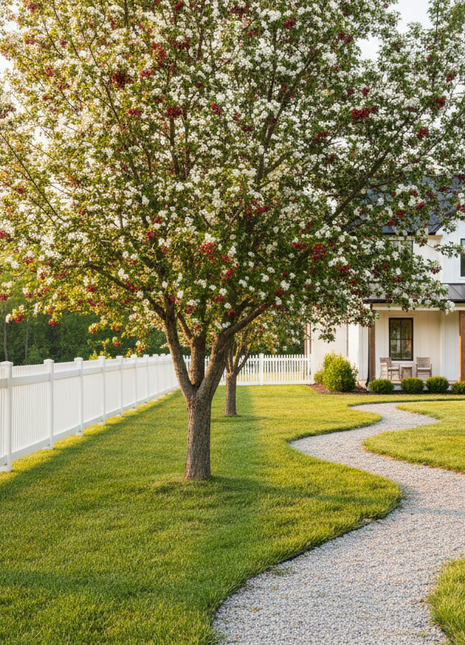
Mayhaw (Crataegus aestivalis) — Locally Grown in Pierson, Florida at Flowing Well Tree Farm
Native Fruit Tree • Wetland Adapted Hawthorn • Jelly-Producing Heritage Species • Florida-Grown Restoration Stock
Mayhaw (Crataegus aestivalis) is a highly valued native southeastern fruit tree known for its small apple-like fruit used traditionally in jellies, preserves, and specialty foods. Naturally found in swampy lowlands, floodplains, and wet woodland edges, Mayhaw is one of the most important heritage fruiting species of the southern United States and is widely used in restoration plantings, wetland-edge landscapes, and native edible systems.
When you buy Mayhaw here, you're not getting weak, overprotected nursery stock—you’re getting locally grown, Florida-adapted trees produced in Pierson and conditioned for real Florida growing conditions including heat, humidity, seasonal flooding, sandy soils, and drought cycles.
That matters for long-term success. Locally grown Mayhaw establishes faster, develops stronger root systems, and performs more reliably in Florida’s variable wet-to-dry landscape conditions compared to non-local stock.
This is direct-from-grower edible native tree stock. Visit the farm, see how our wetland-adapted fruit trees are grown, and receive practical guidance on spacing, orchard design, and long-term lowland food forest development.
Mayhaw is especially valuable because it combines native ecological function with historic fruit production in wetland and transition zone landscapes.
Why Locally Grown Matters for Mayhaw
Starting with Florida-grown stock provides key advantages:
Better adaptation to Florida heat and humidity
Stronger root system development in sandy and wet soils
Improved tolerance to seasonal flooding and drought cycles
Faster establishment in field conditions
Reduced transplant shock
Better long-term survival in restoration sites
It creates a stronger foundation for wetland-edge orchard success.
Fruit Quality & Traditional Value
Mayhaw is a classic southern heritage fruit:
Produces small, apple-like red fruit
Traditionally used for jellies and preserves
High pectin content ideal for cooking
Tart, flavorful fruit prized in southern cuisine
Strong cultural and historical food value
Excellent for specialty edible landscapes
It is one of the most iconic native fruit trees of the Southeast.
Wildlife & Ecological Importance
Mayhaw provides important ecosystem benefits:
Fruits consumed by birds and wildlife
Supports pollinators during spring bloom
Provides nesting and cover in wetland edges
Enhances biodiversity in lowland ecosystems
Important food source in native habitat systems
It is both a food-producing and habitat-supporting species.
Wetland Adaptation & Site Value
Mayhaw is uniquely adapted to challenging moisture conditions:
Native to swampy bottomlands and floodplains
Tolerates seasonal flooding
Performs well in wet soils and drainage edges
Adapted to fluctuating water tables
Can also grow in upland garden soils with proper drainage
It is one of the best native fruit trees for wet landscape zones.
USDA Growing Zones
Best suited for Zones 6–9, performing strongly throughout Florida and the southeastern United States in both wetland and managed orchard conditions.
Mature Size & Growth Habit
A small to medium native fruit tree:
15–30 ft mature height
15–25 ft spread
Rounded canopy with thorny hawthorn structure
Long-lived under natural conditions
Can be trained for orchard production
Ideal for small orchards and habitat food plantings.
Light Requirements
For best fruit production:
Full sun preferred
Tolerates partial shade
More sun improves flowering and fruit yield
Best performance in open wetland-edge sites
Soil & Site Requirements
Adapted to Florida lowland conditions:
Tolerates wet, poorly drained soils
Performs well in floodplains and drainage areas
Also adapts to sandy loam with moisture retention
Prefers slightly acidic soils
Benefits from organic mulch and natural soil structure
Planting Guidance (Grower Recommended)
For best establishment and production:
Plant in full sun wetland-edge or orchard sites
Dig hole 2–3× wider than root ball
Plant at original soil depth
Water thoroughly after planting
Apply mulch while keeping away from trunk base
Space appropriately for mature canopy development
Protect young plants from competition in early stages
We can assist with wetland orchard layout, spacing, and restoration design.
Watering & Establishment
Water regularly during the first 1–2 growing seasons. Once established, Mayhaw becomes highly adaptable to both wet and seasonally dry conditions.
Fertilizer
Low to moderate requirements:
Light balanced fertilizer during establishment if needed
Organic compost improves long-term soil health
Avoid excessive nitrogen applications
Performs best in natural soil conditions
Pruning & Maintenance
Low maintenance once established:
Prune early for structure and access
Remove crossing or weak branches as needed
Can be trained for easier fruit harvest
Naturally forms a dense canopy
Why This Is a Smarter Long-Term Investment
✔ Locally grown in Florida for superior field adaptation
✔ Native wetland-adapted fruit tree
✔ Traditional jelly and preserve fruit species
✔ Excellent wildlife and pollinator value
✔ Strong performance in floodplain and drainage areas
✔ Ideal for restoration and edible wetland systems
✔ Long-lived native fruiting tree
✔ Grower-direct planting and orchard guidance
The Real Value
This isn’t just a fruit tree—it’s a piece of southern food heritage and wetland ecology.
You’re not simply planting Mayhaw. You’re restoring native lowland systems, producing traditional edible fruit, supporting wildlife habitat, and investing in a resilient native tree that connects Florida landscapes to generations of ecological and cultural history.
American Holly (Ilex opaca) — Locally Grown in Pierson, Florida at Flowing Well Tree FarmNative Evergreen Canopy Tree • Wildlife Berry Producer • Dense Privacy & Screening Species • Florida-Grown Landscape, Restoration & Woodland Understory Tree
American Holly (Ilex opaca) is one of the most iconic native evergreen trees in the eastern United States, prized for its glossy deep green foliage, bright red winter berries, and strong structural form. Naturally found in upland forests, hammocks, and mixed woodlands, American Holly is a long-lived species that provides year-round beauty, wildlife value, and dependable evergreen structure in Florida landscapes.
At Flowing Well Tree Farm in Pierson, Florida, we grow American Holly as premium native evergreen stock selected for strong central leaders, dense branching, and long-term performance in Florida’s heat, humidity, sandy soils, and seasonal weather cycles. Each tree is field-grown under real Florida conditions to ensure resilience, adaptability, and lasting landscape success.
When you buy American Holly here, you are not receiving weak ornamental nursery stock—you are getting Florida-adapted native evergreens conditioned for strong establishment, reliable berry production, and long-term structural performance.
That local adaptation matters. Ilex opaca develops stronger root systems, improved drought tolerance, and better long-term canopy density when grown in Florida conditions from the beginning.
Why Locally Grown Matters for American Holly
Starting with Florida-grown stock provides key advantages:
Stronger establishment in sandy Florida soils
Improved heat and humidity tolerance
Better drought resistance once established
Higher survival rates in landscape and restoration plantings
Stronger branch structure and canopy density
More reliable long-term berry production
This creates a dependable evergreen canopy tree built for Florida environments.
Evergreen Structure & Landscape Value
American Holly is a classic native evergreen species:
20–50 ft mature height depending on site conditions
Dense pyramidal to rounded canopy form
Glossy evergreen foliage year-round
Excellent for privacy screens and property borders
Strong specimen tree for residential and natural landscapes
Provides long-term structural greenery in all seasons
It is one of the most recognizable evergreen trees in the Southeast.
Berry Production & Seasonal Interest
American Holly provides strong seasonal landscape value:
Bright red berries produced on female trees
Berries persist through fall and winter
Creates striking contrast against dark evergreen foliage
Important winter food source for wildlife
Excellent ornamental value during holiday season
Enhances visual interest in cold months
It is a signature winter-berry native species.
Wildlife & Ecological Importance
American Holly is a valuable wildlife-supporting tree:
Berries provide food for birds during winter months
Dense canopy offers nesting and shelter habitat
Flowers attract pollinators in spring
Supports native insect biodiversity
Contributes to healthy woodland ecosystems
Enhances habitat structure in restoration plantings
It is an important evergreen component of native Florida ecosystems.
Growth Habit & Structural Function
American Holly is a long-lived evergreen hardwood:
20–50+ ft mature height depending on site conditions
Slow to moderate growth rate
Strong central leader development when young
Dense branching structure improves with age
Long-lived native canopy species
Excellent for permanent landscape structure
It functions as both a shade tree and evergreen anchor.
Climate & Site Adaptability
American Holly performs well across Florida environments:
Native throughout the southeastern United States
Excellent heat and humidity tolerance
Performs best in upland and well-drained sites
Moderate drought tolerance once established
Adaptable to sandy, loamy, and mixed soils
Strong performance in natural and managed landscapes
It is highly reliable in Florida’s climate when properly established.
USDA Growing Zones
Best suited for Zones 7–9, with strong performance throughout Florida and the southeastern United States.
Light Requirements
For best growth and berry production:
Full sun to partial shade
Full sun promotes denser growth and better berry set
Tolerates woodland understory conditions
Ideal for hedges, screens, and specimen plantings
Soil & Site Requirements
Adaptable native evergreen:
Thrives in well-drained sandy soils
Performs well in forest-edge environments
Prefers slightly acidic soils
Benefits from organic matter during establishment
Avoid prolonged standing water in poorly drained areas
Mulch helps support root development and moisture retention
Planting Guidance (Grower Recommended)
For best long-term performance:
Plant in full sun to partial shade
Dig hole 2–3× wider than root ball
Set at original soil depth
Water deeply after planting
Apply mulch to conserve moisture and regulate soil temperature
Space 10–20 ft apart for screens or specimen planting
Allow room for mature canopy development
We can assist with evergreen screening design, native landscape planning, restoration forestry, and property border installations.
Watering & Establishment
Water regularly during the first 1–2 growing seasons. Once established, American Holly becomes moderately drought tolerant and highly resilient in Florida’s seasonal climate patterns.
Fertilizer
Low input requirements:
Minimal fertilization needed once established
Organic compost supports early growth and berry production
Balanced nutrients improve canopy density
Avoid excessive nitrogen to maintain natural form
Pruning & Maintenance
Low maintenance native evergreen:
Prune young trees to establish strong structure
Responds well to shaping for hedges or screens
Remove dead or crossing branches as needed
Naturally develops dense, attractive canopy
Long-lived with minimal maintenance requirements
Why This Is a Smarter Long-Term Investment
✔ Locally grown in Florida for maximum adaptation
✔ Classic native evergreen canopy tree
✔ Bright red winter berries for seasonal value
✔ Excellent wildlife habitat and food source
✔ Strong privacy and screening performance
✔ Long-lived structural landscape species
✔ Adaptable to a wide range of Florida conditions
✔ Grower-direct quality for Florida landscapes
The Real Value
This isn’t just an evergreen tree—it’s a living landscape foundation that provides structure, privacy, wildlife food, and year-round beauty.
When you plant American Holly, you’re investing in a Florida-adapted native evergreen that delivers lasting canopy strength, seasonal berry display, and ecological value while enhancing landscapes for generations to come.
Fuyu Persimmon (Diospyros kaki ‘Fuyu’) — Locally Grown in Pierson, Florida at Flowing Well Tree Farm
Non-Astringent Fruit • Heavy Producer • Landscape-Ready Edible Tree • Florida-Grown on Hardy Rootstock
When you buy Fuyu Persimmon here, you’re not getting a generic orchard tree shipped in from a different climate—you’re getting grafted fruit trees grown and finished in Pierson, on Florida-adapted rootstock, and conditioned for real Southern growing conditions from the beginning.
That matters. These trees are already adjusted to Florida heat, humidity, sandy soils, and seasonal rainfall patterns before they ever reach your yard. The result is stronger establishment, fewer setbacks, and a more reliable path to fruit production.
This is direct-from-grower material. You can visit the farm, see how fruit trees are trained and selected, and get real guidance from the people who actually grow them—not a reseller. That means practical advice based on field performance in Florida landscapes and home orchards.
Fuyu is one of the most dependable and rewarding persimmons for edible landscapes because it combines ease of growth with high-quality fruit you can enjoy fresh right off the tree.
Why Locally Grown, Grafted Trees Matter
Because these persimmons are grafted and grown locally, they offer clear advantages:
Faster time to fruit compared to seed-grown trees
Stronger adaptation to Florida soils and climate
Reduced transplant shock
More predictable growth and production habits
Improved long-term orchard performance
It’s a smarter starting point for a tree you’ll rely on for years of harvests.
Sweet, Crisp Fruit You Can Eat Off the Tree
Fuyu is a non-astringent persimmon, meaning the fruit can be eaten while still firm—no waiting for full soft ripeness.
Fruit characteristics:
Bright orange medium to large fruit
Sweet, honey-like flavor with crisp texture
Excellent fresh eating quality
Great for salads, baking, drying, and preserves
Ripens in fall with reliable seasonal production
It’s one of the easiest and most enjoyable fruit trees for home growers.
USDA Growing Zones
Best suited for Zones 7–10, with strong performance in Florida and the Southeast when properly sited.
Mature Size & Growth Habit
A manageable, productive fruit tree:
15–25 ft tall
10–20 ft wide
Well-suited for home orchards, edible landscapes, and backyard food production.
Light Requirements
Performs best in full sun (6–8+ hours daily). More sun improves fruit quality, yield, and overall tree structure.
Soil & Site Adaptability
Adaptable and forgiving when properly planted:
Prefers well-drained soils
Performs well in sandy Florida conditions
Tolerates slightly acidic to neutral pH
Avoids consistently wet or poorly drained sites
Once established, it becomes a strong, low-maintenance fruiting tree.
Planting Guidance (Grower Recommended)
We focus on long-term success, not just installation:
Choose a sunny site with good drainage
Dig a hole 2–3 times wider than the root ball
Plant with root flare slightly above ground level
Backfill with native soil and water in deeply
Apply 2–3 inches of mulch, keeping it away from the trunk
Water consistently during establishment
If you visit the farm, we can help match the tree to the right location based on your soil and space.
Watering & Establishment
Water deeply after planting and regularly during the first 1–2 years. Once established, Fuyu Persimmon becomes moderately drought tolerant but benefits from consistent moisture during fruit development and dry periods.
Fertilizer
Apply a balanced slow-release fruit tree fertilizer in early spring. Light supplemental feeding during the growing season may help young trees. Avoid excessive nitrogen, which can reduce fruiting.
Pruning & Structure
Prune during winter dormancy:
Remove dead, weak, or crossing branches
Encourage a strong central structure while young
Light shaping improves airflow and fruit production
Avoid heavy pruning to preserve fruiting wood
Additional Grower Notes
Grafted trees typically fruit earlier than seed-grown persimmons
Florida rootstock improves adaptability to local conditions
Trees are relatively low maintenance once established
Self-fruitful, though additional trees may improve yields
Young trees may need frost protection during establishment
Why This Is a Smarter Long-Term Investment
✔ Grown and grafted locally in Florida conditions✔ Faster and more reliable fruit production✔ Reduced transplant shock and stronger establishment✔ Direct grower support and planting guidance✔ Proven performance in Southern landscapes✔ Long-lived, productive edible tree✔ Opportunity to visit, learn, and select in person
The Real Value
This isn’t just a fruit tree purchase—it’s a long-term edible landscape investment built on local experience and real Florida-grown stock.
You’re not just planting a persimmon. You’re planting a dependable harvest system that gets better every year.
Flowing Well Tree Farm Native Plant Mystery Box Monthly SubscriptionFor USDA Zones 7–10(Shipping Included)
Bring native gardening to your doorstep with a monthly surprise plant from Flowing Well Tree Farm in Pierson, Florida. Each month you’ll receive one hand-selected Florida-grown native plant, chosen for beauty, pollinator value, and strong performance in Southern landscapes.
Every shipment features a different native species based on seasonal availability and what is thriving at the farm. No two months are the same—each plant is selected to help you build a diverse, resilient native landscape over time.
Designed for gardeners in USDA Zones 7–10, this subscription is ideal for pollinator gardens, habitat restoration, native landscapes, and plant lovers who enjoy learning one species at a time.
Possible monthly selections may include milkweed, coreopsis, beautyberry, yaupon holly, firebush, native blueberry, elderberry, buttonbush, muhly grass, salvias, coral honeysuckle, and other Florida-native species.
Why subscribe?
One curated native plant delivered monthly
Build a diverse pollinator and wildlife garden over time
Learn native plants at a steady, hands-on pace
Selected by experienced native plant growers
Great for gifting or starting a native landscape step-by-step
Flowing Well Tree Farm specializes in premium native and fruiting plants grown for durability, ecological value, and real-world Southern landscape success.
Flowing Well Tree FarmPierson, Florida
Scrub Holly (Ilex arenicola) — Locally Grown in Pierson, Florida at Flowing Well Tree Farm
Native Florida Holly • Evergreen Shrub • Florida Scrub Species • Wildlife-Supporting • Drought Tolerant • Sandy Soil Adapted • Small Leathery Leaves • Native Privacy Plant • Florida Native
Scrub Holly (Ilex arenicola) is a beautiful and distinctive Florida-native evergreen shrub known for its small leathery leaves, dense branching habit, evergreen foliage, and exceptional adaptation to Florida's sandy, dry scrub environments.
This uncommon native holly is especially valuable for gardeners who want to incorporate authentic Florida scrub character into the landscape while providing year-round greenery and habitat for native wildlife.
At Flowing Well Tree Farm in Pierson, Florida, we grow Scrub Holly under real Florida conditions, allowing our plants to become acclimated to Florida's heat, humidity, sandy soils, seasonal rainfall, and long growing season.
Scrub Holly is an excellent choice for gardeners looking for a Florida-native evergreen shrub that is drought tolerant, low-maintenance, wildlife-friendly, and naturally suited to sandy Florida landscapes.
Why Plant Scrub Holly?
Scrub Holly is an excellent native shrub for gardeners who want an evergreen plant that can handle the challenging conditions often found in Florida's sandy landscapes.
Its dense branching and evergreen foliage provide year-round structure, while its small leaves give the plant a refined native appearance.
Key Benefits
Native to Florida
Evergreen foliage
Small leathery leaves
Dense branching habit
Adapted to Florida scrub environments
Excellent sandy-soil plant
Drought tolerant once established
Tolerates Florida heat
Low-maintenance once established
Provides year-round greenery
Supports native wildlife
Produces berries on female plants
Provides wildlife food resources
Excellent native screening plant
Useful for naturalized landscapes
Excellent for native gardens
Good choice for xeric landscapes
Excellent for restoration-style plantings
Authentic Florida native character
Scrub Holly's combination of evergreen foliage, drought tolerance, wildlife value, and sandy-soil adaptabilitymakes it a particularly valuable native shrub for Florida landscapes.
Evergreen Foliage
One of the greatest advantages of Scrub Holly is its evergreen foliage.
The plant retains its leaves throughout the year, providing consistent greenery and landscape structure even during Florida's drier seasons.
Its leaves are relatively small and leathery, giving the plant a distinctive appearance compared with larger-leaved ornamental hollies.
The foliage provides:
Year-round greenery
Dense visual texture
Small leathery leaves
Evergreen screening
Native habitat
Attractive contrast with larger-leaved plants
The combination creates an attractive display of:
Small Leathery Leaves → Dense Evergreen Branches → Natural Florida Scrub Form
This makes Scrub Holly particularly useful when year-round structure is desired.
Native Scrub Character
Scrub Holly is closely associated with Florida's unique scrub ecosystem, one of the state's most distinctive native habitats.
Florida scrub is characterized by:
Deep sandy soils
Excellent drainage
High sunlight
Periodic drought
High temperatures
Specialized native plants
Scrub Holly's ability to grow under these challenging conditions makes it a valuable choice for homeowners who want to create landscapes inspired by Florida's natural plant communities.
Rather than trying to recreate a rich, heavily irrigated garden environment, Scrub Holly allows gardeners to select a plant naturally adapted to lean, sandy, well-drained Florida soils.
Wildlife & Berry Production
Like other native hollies, Scrub Holly can contribute to a wildlife-friendly landscape.
Female plants can produce small berries when pollination occurs, providing an additional seasonal food resource for wildlife.
The plant can contribute habitat and food resources for:
Birds
Small mammals
Native wildlife
Pollinating insects
Other beneficial organisms
For berry production, female plants require appropriate pollination.
Planting Scrub Holly alongside other native species can help create a more diverse and ecologically functional landscape.
A Florida Native Holly
Scrub Holly is a distinctly Florida-native holly, making it an excellent choice for landscapes designed around native Florida ecosystems.
Its specialized adaptation to sandy scrub conditions gives it an advantage in landscapes where many conventional ornamental shrubs may struggle.
It can be incorporated into:
Florida native gardens
Scrub-inspired landscapes
Xeric gardens
Sandy soil gardens
Wildlife gardens
Native hedges
Naturalized properties
Habitat restoration
Coastal-influenced landscapes
Native plant collections
Scrub Holly helps bring the character of Florida's natural scrub communities into residential and commercial landscapes.
Drought & Heat Tolerance
One of Scrub Holly's greatest advantages is its ability to tolerate Florida heat and dry conditions once established.
Its natural habitat exposes it to periods when soil moisture can become limited.
Established Scrub Holly can perform well in:
Florida heat
Sandy soils
Well-drained soils
Dry conditions
Seasonal rainfall
Full sun
Xeric landscapes
Native Florida conditions
Newly planted shrubs still require consistent watering while their root systems develop.
Once established, Scrub Holly can become a much lower-water landscape plant than many conventional ornamental shrubs.
Sandy Soil Adaptability
Scrub Holly is especially valuable for Florida homeowners because it is naturally adapted to sandy, well-drained soils.
It can perform well in:
Deep sandy soils
Native Florida sand
Well-drained soils
Low-fertility soils
Dry soils
Xeric landscape conditions
This makes it an excellent choice for gardeners who want to avoid constantly amending native sandy soil.
Rather than fighting the soil conditions, Scrub Holly allows homeowners to select a plant that is naturally suited to them.
Growth Habit & Landscape Value
Scrub Holly is an evergreen native shrub with a naturally dense and branching growth habit.
Its evergreen form makes it useful for:
Native hedges
Privacy screens
Wildlife gardens
Xeric landscapes
Native shrub borders
Naturalized landscapes
Scrub gardens
Restoration plantings
Residential landscapes
Native plant collections
For the best visual effect, allow Scrub Holly enough room to develop its natural branching structure.
It can be incorporated into layered native plantings with taller trees, smaller shrubs, grasses, and groundcovers.
A Great Native Screening Plant
Because Scrub Holly maintains evergreen foliage, it can provide year-round screening and structure.
When planted in groups, multiple Scrub Hollies can create a natural native screen.
It can be incorporated into:
Property boundaries
Privacy plantings
Native hedges
Wildlife corridors
Garden borders
Backyard screening
Naturalized borders
Instead of relying entirely on conventional hedge plants, Scrub Holly offers a Florida-native alternative with wildlife value and drought tolerance.
Native Wildlife Habitat
Scrub Holly can play an important role in a wildlife-friendly landscape.
Its dense evergreen branching provides structure and cover, while berry production on female plants can provide an additional food resource.
Combining Scrub Holly with other Florida-native plants can create a layered habitat consisting of:
Native Trees → Native Shrubs → Grasses → Groundcovers
This type of planting can provide significantly more ecological value than a landscape consisting primarily of turfgrass and isolated ornamental plants.
Scrub Holly is particularly valuable for homeowners who want to create a landscape that looks natural while also supporting native wildlife.
Climate & Site Adaptability
Scrub Holly is especially well suited to Florida's warm and dry growing conditions.
It can perform well in:
Florida heat
High humidity
Sandy soils
Well-drained soils
Dry conditions once established
Seasonal rainfall
Full sun
Native scrub conditions
Good site selection is important.
Scrub Holly generally performs best where drainage is excellent and the soil does not remain continually saturated.
USDA Growing Zones
USDA Zones 8–10
Scrub Holly is particularly well suited to Florida and other warm regions where its environmental requirements can be met.
Light Requirements
Full Sun to Part Shade
Scrub Holly performs best with plenty of sunlight.
For the strongest growth and densest form:
Full sun is preferred
Part shade can be tolerated
Open locations encourage stronger growth
Adequate sunlight helps maintain a dense canopy
More sunlight is especially beneficial in xeric and scrub-inspired landscapes.
Soil & Site Requirements
Scrub Holly is naturally adapted to well-drained sandy soils.
It can perform well in:
Sandy soils
Deep sand
Well-drained native soils
Low-fertility soils
Dry soils
Xeric landscape conditions
Good drainage is essential.
Avoid planting Scrub Holly in locations where water remains continuously saturated.
One of the major advantages of this native species is its ability to perform in conditions that are too dry or nutrient-poor for many conventional landscape shrubs.
Planting Guidance
For best long-term performance:
Select a location with full sun to part shade.
Choose an area with excellent drainage.
Allow adequate room for the mature shrub.
Prepare the planting area by removing competing weeds and grass.
Plant at approximately the same depth as the plant was growing in its container.
Backfill with native soil.
Water thoroughly after planting.
Apply a light layer of organic mulch around the root zone if desired.
Keep mulch away from the base of the plant.
Maintain consistent moisture during establishment.
Reduce irrigation gradually as the plant becomes established.
Scrub Holly can be especially effective when incorporated into a larger native planting rather than treated as a heavily manicured ornamental hedge.
Watering & Establishment
Water consistently during the establishment period.
Newly planted Scrub Holly should receive regular irrigation while its root system develops.
Once established, it can tolerate periods of dry weather and perform well under many of Florida's naturally sandy and drought-prone conditions.
During prolonged drought or extreme heat, supplemental irrigation can help maintain healthy growth.
Avoid excessive irrigation and continually saturated soil.
Proper establishment is the key to developing a strong, drought-tolerant root system.
Fertilizer
Scrub Holly generally has low fertilizer requirements when planted in appropriate native soil.
Recommended practices include:
Improve severely poor soil only when necessary
Apply fertilizer sparingly
Avoid excessive nitrogen
Use a slow-release fertilizer only when needed
Avoid unnecessary fertilization
Allow the shrub to grow naturally
Native scrub plants are often best served by proper site selection and establishment rather than heavy fertilization.
Excessive fertilizer can encourage soft growth that may be less suited to the plant's natural environment.
Pruning & Maintenance
Scrub Holly is a relatively low-maintenance native evergreen shrub.
Routine pruning is generally unnecessary unless a particular size or shape is desired.
Maintenance can include:
Removing dead branches
Removing damaged growth
Correcting crossing branches
Maintaining pathway clearance
Lightly shaping the plant if desired
Removing unwanted growth
For the most natural appearance, allow Scrub Holly to maintain its natural branching habit.
Avoid excessive shearing if the goal is to create an authentic native landscape.
Naturalized & Xeric Landscape Value
Scrub Holly is particularly effective in naturalized and low-water landscape designs.
Its natural adaptation to sandy soils allows it to fit beautifully into xeric landscapes where irrigation is minimized.
It can be combined with:
Native grasses
Saw palmetto
Native wildflowers
Other Florida-native shrubs
Native oaks
Groundcovers
Pollinator plants
This creates a layered landscape that can provide beauty, habitat, and reduced irrigation requirements.
A Great Alternative to Conventional Hollies
If you're looking for an evergreen holly that is naturally adapted to Florida's sandy conditions, Scrub Holly offers a distinctly Florida-native alternative.
Instead of relying on conventional ornamental hollies, you get:
Evergreen Foliage
Small Leathery Leaves
Native Scrub Character
Potential Berry Production
Wildlife Value
Drought Tolerance
Sandy Soil Adaptability
Florida Native Character
This makes Scrub Holly especially appealing to homeowners who want year-round greenery without sacrificing native ecological value.
Why Locally Grown Matters
At Flowing Well Tree Farm in Pierson, Florida, we grow Scrub Holly under actual Florida conditions.
Our plants experience:
Florida heat
Florida humidity
Sandy soils
Seasonal rainfall
Long growing seasons
That local growing environment helps produce plants accustomed to the conditions found throughout Florida.
You're not getting a generic ornamental shrub shipped in from a completely different climate. You're getting a Florida-grown native plant from a Florida grower.
Perfect for Florida-Friendly Landscaping
Scrub Holly is an excellent choice for:
Florida native gardens
Xeric landscapes
Sandy soil gardens
Native hedges
Privacy screens
Wildlife gardens
Naturalized properties
Scrub-inspired landscapes
Low-maintenance landscapes
Habitat restoration
Native plant collections
Residential landscapes
Coastal and upland landscapes
Its evergreen foliage, drought tolerance, wildlife value, and sandy-soil adaptability make it an excellent addition to a diverse Florida-native landscape.
Why Choose Scrub Holly From Flowing Well Tree Farm?
Native Florida species
Locally grown in Pierson, Florida
Evergreen foliage
Small leathery leaves
Dense native branching
Potential berry production on female plants
Supports native wildlife
Drought tolerant once established
Adapted to sandy soils
Excellent for xeric landscapes
Excellent for native gardens
Excellent for privacy and screening
Excellent for naturalized landscapes
Low-maintenance
Grower-direct quality from Flowing Well Tree Farm
The Real Value
Scrub Holly is one of those native shrubs that offers far more than just year-round greenery.
Its small leathery leaves and dense evergreen form provide attractive landscape structure, while its natural adaptation to sandy, dry Florida conditions makes it an excellent low-water choice.
Add in its wildlife value, potential berry production on female plants, and connection to Florida's unique scrub ecosystem, and Scrub Holly becomes an excellent choice for gardeners who want a shrub that is both beautiful and genuinely adapted to Florida.
Whether you're creating a native landscape, xeric garden, wildlife habitat, privacy screen, scrub-inspired garden, naturalized property, or Florida-friendly residential landscape, Scrub Holly brings evergreen beauty, habitat value, drought tolerance, and authentic Florida character to the planting.
For gardeners who want an evergreen native holly that can handle Florida's sandy soils and challenging growing conditions while providing year-round landscape interest, Scrub Holly (Ilex arenicola) is an outstanding Florida-native choice.
Locally grown in Pierson, Florida at Flowing Well Tree Farm — Premium Native & Fruiting Grower.
Fall is an important season for Florida wildlife. As summer flowers fade, many Florida native trees and shrubs produce berries, fruits, and seeds that provide valuable food for birds and other wildlife. Adding berry-producing native plants to your landscape can create a beautiful wildlife garden while providing food, shelter, nesting habitat, and year-round ecological value.
At Flowing Well Tree Farm, we grow Florida-native and fruiting plants that can help transform ordinary landscapes into thriving wildlife habitats.
Florida Native Plants for Fall Wildlife
American Beautyberry (Callicarpa americana) produces clusters of bright purple berries and is one of Florida’s most recognizable native wildlife shrubs.
Dahoon Holly (Ilex cassine), Yaupon Holly (Ilex vomitoria), American Holly (Ilex opaca), Eagleston Holly, and East Palatka Holly provide evergreen foliage, habitat, and seasonal berries that attract birds.
Native Persimmon (Diospyros virginiana) produces orange fall fruit enjoyed by wildlife, while Mayhaw, Flatwood Plum, Chickasaw Plum, and Native Mulberry provide additional food resources.
Native Elderberry (Sambucus nigra) and Native Viburnum (Viburnum obovatum) add flowers, berries, and dense cover, making them excellent choices for pollinator and wildlife gardens.
Create a Florida Wildlife Garden
For the best results, combine berry-producing shrubs, fruiting trees, evergreen shelter, and flowering native plants. This creates a landscape that supports birds, butterflies, bees, and other wildlife throughout the seasons.
Choose Florida native plants that provide food and shelter while adding beauty to your property.
Plant for wildlife. Plant for the future. Plant Florida natives.
Our Trusted Partners
We grow premium Florida native and fruiting trees for homeowners, landscapers and large-scale projects.
"Welcome to Flowing Well Tree Farm, the leading Florida native nursery serving Florida and the surrounding areas. We specialize in high-quality native plants, wildflowers, and pollinator gardens that thrive in our local climate. Looking for specific species? We stock customer favorites including Native Milkweed (for Monarchs), Coontie, Firebush, and Beautyberry. Our expert team helps you build beautiful, drought-tolerant landscapes that save water and support local wildlife. Whether you need shade trees, privacy hedges, or Florida-friendly groundcovers, we have the right plants for your yard. Visit Flowing Well Tree Farm today to explore our inventory of sustainable, locally grown plants. We also grow suitable fruiting plants like peaches."