


30% Sale Ends Soon "Code: Summer"
Aug 22, 2026 11:59:59
Extremely Rare Finds
-


Yerba Mate Holly (Ilex paraguariensis)
Yerba Mate Holly (Ilex paraguariensis) — Locally Grown in Pierson, Florida at Flowing Well Tree FarmCaffeinated Evergreen Tea Plant • Shade-Grown Subtropical Holly • Edible Leaf Crop Species • Florida-Grown Food Forest, Homestead & Specialty Botanical Plant Yerba Mate Holly (Ilex paraguariensis) is a unique evergreen holly species known worldwide for its naturally caffeinated leaves used to produce traditional yerba mate tea. Native to South America’s subtropical forests, this species is valued for its energizing properties, dense evergreen foliage, and long-term productivity as a specialty edible leaf crop in warm climates. At Flowing Well Tree Farm in Pierson, Florida, we grow Yerba Mate Holly as premium subtropical stock selected for vigorous establishment, strong branching structure, and adaptability to Florida’s heat, humidity, and sandy soils. Each plant is grown under real Florida conditions to ensure resilience, steady growth, and long-term performance in both shaded and partially shaded environments. When you buy Yerba Mate Holly here, you are not receiving weak indoor or greenhouse-softened plants—you are getting Florida-acclimated holly plants prepared for real outdoor growing conditions and long-term food forest integration. That local adaptation matters. Ilex paraguariensis develops stronger root systems, improved heat tolerance, and better long-term leaf production when established in stable subtropical conditions from the beginning. Why Locally Grown Matters for Yerba Mate Starting with Florida-grown stock provides key advantages: Improved adaptation to Florida heat and humidity Stronger root establishment in sandy soils Better tolerance to seasonal rainfall fluctuations Higher survival rates in food forest systems More consistent long-term leaf production Stronger overall plant vigor in subtropical environments This creates a reliable evergreen leaf crop suited for long-term cultivation. Edible Leaf Production & Use Yerba Mate is grown for its nutrient-rich, caffeinated leaves: Leaves are harvested and dried for traditional tea preparation Naturally contains caffeine and theobromine Used to make energizing beverages consumed worldwide Leaves can be dried, smoked, or steeped depending on tradition Provides long-term perennial harvest potential Valuable specialty crop for homesteads and food forests It is one of the most culturally significant edible holly species globally. Evergreen Structure & Landscape Value Yerba Mate Holly provides year-round foliage and structure: 10–20 ft mature height depending on pruning and conditions Dense evergreen canopy with glossy green leaves Can be trained as shrub or small understory tree Excellent for shaded food forest layers Ornamental evergreen value in subtropical landscapes Long-lived perennial leaf crop It functions as both a productive crop and a landscape plant. Ecological & Pollinator Benefits Yerba Mate supports subtropical ecosystem health: Small flowers attract native pollinators Provides evergreen cover for beneficial insects Contributes to understory biodiversity in food forests Enhances layered planting systems in shaded environments Supports mixed-species agroforestry systems It integrates well into sustainable landscape design. Growth Habit & Structural Function Yerba Mate is a slow to moderate-growing evergreen: 10–20+ ft mature height depending on conditions Naturally multi-stemmed shrub or small tree form Responds well to pruning and harvesting cycles Performs best in protected understory environments Long-lived perennial crop when properly managed Ideal for continuous leaf harvest systems It is well suited for managed agroforestry production. Climate & Site Adaptability Yerba Mate performs best in subtropical conditions: Native to South American subtropical forests Prefers warm, humid environments Thrives in shaded or partially shaded conditions Requires protection from extreme cold in marginal climates Performs well in Florida’s central and southern regions Best suited for food forest microclimates It adapts well to Florida when properly established in shade systems. USDA Growing Zones Best suited for Zones 9–11, with best performance in South and Central Florida and protected microclimates in warmer temperate regions. Light Requirements For best leaf production: Partial shade to filtered sunlight preferred Avoid prolonged harsh afternoon sun in young plants Shaded understory conditions improve leaf quality Ideal under canopy trees or shade structures Soil & Site Requirements Adaptable evergreen crop species: Prefers well-drained, slightly acidic soils Performs well in sandy Florida soils with organic matter Benefits from mulch and leaf litter accumulation Avoid waterlogged or poorly drained conditions Thrives in rich, forest-like soil environments Planting Guidance (Grower Recommended) For best long-term performance: Plant in partial shade or filtered sunlight Dig hole 2–3× wider than root ball Set at original soil depth Water deeply after planting Apply mulch or organic leaf litter to mimic forest floor Space 5–10 ft apart for hedge or grove systems Protect from intense afternoon sun during establishment We can assist with food forest design, shade crop systems, and specialty botanical crop planning. Watering & Establishment Water regularly during establishment. Once established, Yerba Mate prefers consistent moisture but should not be waterlogged. Shade and humidity support optimal growth. Fertilizer Low to moderate input requirements: Organic compost improves leaf production and plant vigor Light fertilization supports growth in sandy soils Avoid excessive nitrogen to maintain balanced leaf quality Performs best in organic-rich, forest-style systems Pruning & Maintenance Moderate maintenance depending on harvest goals: Prune to shape and encourage bushier growth Regular leaf harvesting encourages branching Can be maintained as shrub or small tree Responds well to repeated harvesting cycles Long-lived with proper care and management Why This Is a Smarter Long-Term Investment ✔ Locally grown in Florida for maximum adaptation ✔ Rare edible caffeinated leaf crop for food forests ✔ Evergreen perennial harvest plant ✔ Shade-tolerant understory agroforestry species ✔ Long-term specialty botanical crop potential ✔ Excellent for homesteads and permaculture systems ✔ Adaptable to Florida’s subtropical climate ✔ Grower-direct quality for specialty cultivation The Real Value This isn’t just an evergreen shrub—it’s a long-term edible leaf crop that transforms shaded areas into productive botanical systems. When you plant Yerba Mate Holly, you’re investing in a specialty subtropical species that provides renewable tea leaves, supports food forest diversity, and creates a unique perennial harvest system for homesteads and agroforestry landscapes for years to come.
$15.00 - $130.00
-

Native Pawpaw (Asimina Parviflora) from seed
Native Pawpaw (Asimina parviflora) — Locally Grown in Pierson, Florida at Flowing Well Tree FarmNative Understory Fruit Shrub • Edible Custard-Fruit Species • Wildlife Habitat Plant • Florida-Grown Food Forest, Shade Garden & Restoration Understory Layer Native Pawpaw (Asimina parviflora), also known as Smallflower Pawpaw, is a rare and valuable native understory fruiting shrub found in sandy woodlands, upland forests, and natural scrub habitats throughout the southeastern United States. Closely related to the larger pawpaw species, this Florida-native form produces uniquely tropical-flavored fruit and thrives in shaded, naturalistic environments where many other fruiting plants struggle. At Flowing Well Tree Farm in Pierson, Florida, we grow Native Pawpaw from seed sourced and selected for strong germination, vigorous early development, and adaptation to Florida’s heat, humidity, and sandy soils. Growing from seed ensures genetic diversity, improved resilience, and long-term adaptability in restoration and food forest systems. When you buy Native Pawpaw from seed here, you are not receiving cloned or greenhouse-softened material—you are getting Florida-adapted native genetics built for real-world survival, natural understory growth, and long-term ecological performance. That local adaptation matters. Asimina parviflora develops stronger root systems, improved drought tolerance, and better long-term establishment when grown from seed in Florida conditions from the beginning. Why Locally Grown Seed Matters for Native Pawpaw Starting with Florida-grown seed provides key advantages: Stronger taproot development for long-term stability Improved adaptation to Florida heat and humidity Better drought resistance once established Higher genetic diversity for resilient plant populations Improved survival rates in restoration and natural plantings More natural understory development in forest systems This creates a truly adapted native fruiting understory species capable of long-term persistence in natural landscapes. Fruit Production & Edible Value Native Pawpaw produces one of Florida’s most unique native fruits: Small banana-like fruits with creamy custard texture Flavor notes often described as tropical, mango, or banana-custard Edible fruit when fully ripe in late summer to fall Consumed fresh or used in desserts and wild food preparations Valuable traditional native food source Limited but highly prized fruit production in mature plants While smaller than northern pawpaw species, it remains an important native edible plant. Wildlife & Ecological Importance Native Pawpaw is a strong habitat-supporting species: Larval host plant for Zebra Swallowtail butterfly Provides nectar for native pollinators Fruit is consumed by wildlife including small mammals Supports understory biodiversity in forest ecosystems Contributes to healthy native plant communities Enhances food web complexity in shaded habitats It is both a fruiting species and a key ecological host plant. Growth Habit & Structural Function Native Pawpaw is a slow to moderate-growing understory shrub: 6–12 ft mature height depending on site conditions Multi-stemmed clumping growth habit Spreads naturally through root suckering over time Thrives beneath canopy shade or filtered light Ideal for understory planting in food forests Long-lived native perennial shrub It functions as a foundational understory layer in natural systems. Climate & Site Adaptability Native Pawpaw is well adapted to Florida environments: Native to the southeastern United States, including Florida Thrives in sandy, well-drained soils Prefers shaded woodland and forest edge environments Moderate drought tolerance once established Excellent adaptation to humid subtropical climates Best performance in protected understory conditions It naturally integrates into Florida’s native forest systems. USDA Growing Zones Best suited for Zones 7–10, with strong performance throughout Florida and the southeastern United States in shaded, protected environments. Light Requirements For best establishment and long-term health: Partial shade to full shade preferred Filtered sunlight under canopy trees is ideal Avoid prolonged full sun exposure in young plants Naturally adapted to understory forest conditions Soil & Site Requirements Adaptable native understory species: Prefers sandy, well-drained soils Thrives in woodland humus and organic matter Tolerates low-fertility native soils Benefits from leaf litter and mulch layers Avoid waterlogged or poorly drained soils Best performance in forest-edge ecosystems Planting Guidance (Grower Recommended) For best long-term performance: Plant in partial to full shade Dig hole 2–3× wider than root ball or seedling plug Set at original soil depth Water deeply after planting Apply mulch or leaf litter to mimic forest floor conditions Space 6–10 ft apart for natural colony development Protect young plants from full sun exposure and competition We can assist with food forest layering, native understory design, and ecological restoration planning. Watering & Establishment Water regularly during establishment, especially in dry periods. Once established, Native Pawpaw becomes moderately drought tolerant but performs best in consistently moist, shaded environments. Fertilizer Low input requirements: Minimal fertilization needed Organic compost and leaf litter strongly beneficial Avoid high nitrogen inputs Performs best in natural forest soil conditions Pruning & Maintenance Very low maintenance: Minimal pruning required Allow natural understory growth habit Remove dead or damaged stems as needed Spreads naturally through root suckering over time Thrives with minimal human intervention Why This Is a Smarter Long-Term Investment ✔ Locally grown from seed in Florida for maximum adaptation ✔ Rare native edible understory fruit species ✔ Critical host plant for Zebra Swallowtail butterfly ✔ Excellent for food forests and native restoration ✔ Shade-tolerant understory layer species ✔ Supports wildlife and pollinator ecosystems ✔ Strong genetic diversity from seed-grown stock ✔ Grower-direct native plant genetics for Florida conditions The Real Value This isn’t just an understory shrub—it’s a living ecosystem layer that connects canopy, soil, pollinators, and wildlife into a functioning native food web. When you plant Native Pawpaw (Asimina parviflora), you’re investing in a Florida-adapted understory fruiting species that supports butterflies, produces rare native fruit, and strengthens long-term forest regeneration and food forest systems for generations to come.
$25.00 - $150.00
-


American Fringe Tree (Chionanthus Virginicus)
American Fringe Tree (Chionanthus virginicus) — Locally Grown in Pierson, Florida at Flowing Well Tree FarmNative Flowering Ornamental Tree • Pollinator-Friendly Blooming Species • Wildlife Habitat Hardwood • Florida-Grown Landscape, Restoration & Understory Canopy Tree American Fringe Tree (Chionanthus virginicus) is one of the most elegant native flowering trees in the southeastern United States, known for its showy, fringe-like white blossoms that drape the canopy in spring like soft clouds. Valued for both its ornamental beauty and ecological importance, Fringe Tree is a highly desirable native species for residential landscapes, pollinator gardens, and natural restoration plantings. At Flowing Well Tree Farm in Pierson, Florida, we grow American Fringe Tree as premium native stock selected for strong branching structure, healthy root development, and long-term performance in Florida’s heat, humidity, sandy soils, and seasonal rainfall conditions. Each tree is field-grown under real Florida conditions to ensure resilience, adaptability, and lasting landscape success. When you buy American Fringe Tree here, you are not receiving fragile ornamental nursery stock—you are getting Florida-adapted native trees conditioned for strong establishment and long-term flowering performance. That local adaptation matters. Chionanthus virginicus develops stronger root systems, improved drought tolerance, and more reliable flowering when grown under Florida conditions from the beginning. Why Locally Grown Matters for Fringe Tree Starting with Florida-grown stock provides key advantages: Stronger establishment in sandy Florida soils Improved heat and humidity tolerance Better drought resistance once established More reliable flowering year after year Higher survival rates in landscape and restoration plantings Stronger long-term structural development This creates a dependable native flowering tree capable of thriving for decades. Flowering & Ornamental Value Fringe Tree is one of Florida’s most striking native bloomers: Fragrant, fringe-like white flowers cascade in spring Blooms cover branches in a soft, cloud-like display Light floral fragrance enhances garden spaces Excellent ornamental focal point in native landscapes Creates strong seasonal interest during peak bloom period Female trees may produce dark blue fruit in late summer It is widely considered one of the most beautiful native flowering trees. Wildlife & Ecological Importance American Fringe Tree supports a wide range of native wildlife: Flowers provide nectar for bees and pollinators Fruit is consumed by birds and small wildlife Supports native insect biodiversity Provides nesting and shelter opportunities Enhances ecological value in restoration plantings Contributes to healthy native understory and edge habitats It is both an ornamental and ecologically beneficial species. Growth Habit & Structural Function Fringe Tree is a small to medium native hardwood: 12–25 ft mature height depending on site conditions Rounded, airy canopy with elegant branching Slow to moderate growth rate Can be grown as a multi-stem shrub or single-trunk tree Long-lived native ornamental species Ideal for residential landscapes and naturalized gardens Its graceful structure makes it a standout specimen tree. Climate & Site Adaptability American Fringe Tree is well adapted to Florida conditions: Native to the southeastern United States, including Florida Thrives in heat and humidity Performs well in sandy, loamy, and well-drained soils Moderate drought tolerance once established Adaptable to woodland edges and understory conditions Strong performance in naturalized and residential landscapes It integrates well into both formal and natural garden settings. USDA Growing Zones Best suited for Zones 5–9, with strong performance throughout Florida and the southeastern United States. Light Requirements For best flowering performance: Full sun to partial shade Full sun encourages heavier bloom production Partial shade is well tolerated in woodland environments Ideal for mixed canopy and understory plantings Soil & Site Requirements Adaptable native flowering tree: Prefers well-drained soils Performs well in sandy Florida soils Tolerates a range of soil types Benefits from organic matter during establishment Avoid prolonged standing water in poorly drained sites Mulch helps maintain soil moisture and root health Planting Guidance (Grower Recommended) For best long-term performance: Plant in full sun to partial shade Dig hole 2–3× wider than root ball Set at original soil depth Water deeply after planting Apply mulch to stabilize moisture and soil temperature Space 10–20 ft apart depending on landscape design Allow room for natural canopy spread We can assist with native flowering tree design, pollinator garden planning, understory layering, and restoration landscaping. Watering & Establishment Water regularly during the first 1–2 growing seasons. Once established, Fringe Tree becomes moderately drought tolerant and performs well under Florida’s seasonal rainfall patterns. Fertilizer Low input requirements: Minimal fertilization needed once established Organic compost supports flowering and root development Avoid excessive nitrogen to maintain natural growth habit Performs best in balanced native soil systems Pruning & Maintenance Very low maintenance: Naturally develops elegant branching structure Minimal pruning required Can be shaped lightly for landscape form if needed Remove dead or crossing branches as necessary Long-lived and highly reliable in native landscapes Why This Is a Smarter Long-Term Investment ✔ Locally grown in Florida for maximum adaptation ✔ One of the most elegant native flowering trees ✔ Spectacular spring bloom display ✔ Excellent pollinator and wildlife value ✔ Adaptable to a wide range of landscape conditions ✔ Low-maintenance long-term ornamental tree ✔ Strong performance in heat and humidity ✔ Grower-direct quality for Florida conditions The Real Value This isn’t just a flowering tree—it’s a living ornamental feature that brings seasonal beauty, ecological function, and long-term landscape value together in one native species. When you plant American Fringe Tree, you’re investing in a graceful Florida-native that delivers breathtaking spring blooms, supports pollinators and wildlife, and enhances natural landscapes for generations to come.
$145.00
-

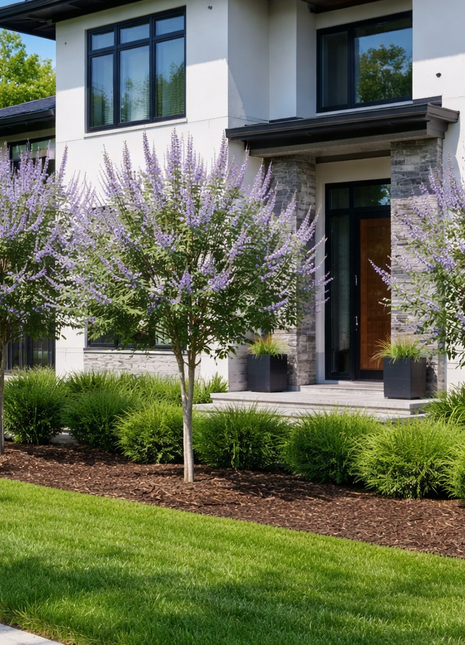
Vitex Tree (Vitex Agnus-Castus)
Vitex Tree (Vitex agnus-castus) Topiary — Locally Grown in Pierson, Florida at Flowing Well Tree FarmFlowering Ornamental Tree • Pollinator Magnet • Heat & Drought Tolerant Specimen • Florida-Grown Topiary & Landscape Accent Vitex Tree (Vitex agnus-castus), commonly known as Chaste Tree, is one of the most reliable and high-impact flowering landscape trees for Florida’s heat, humidity, and sandy soils. When trained as a topiary, it becomes a structured ornamental specimen that combines Mediterranean elegance with extreme Florida durability. Known for its long summer flower spikes in shades of lavender, violet, and blue, Vitex is a powerhouse pollinator plant that attracts bees, butterflies, and beneficial insects in massive numbers during peak bloom. At Flowing Well Tree Farm in Pierson, Florida, we grow select Vitex specimens trained as topiary forms for landscape focal points, entrance features, and structured native-adapted designs. When you buy Vitex Topiary here, you’re not getting weak, overgrown nursery material—you’re getting locally grown, Florida-hardened trees conditioned for real landscape performance including heat waves, drought cycles, sandy soils, and intense summer sun. That local adaptation matters. Vitex grown in Florida develops stronger branching structure, better bloom cycles, and far superior long-term resilience compared to greenhouse-raised imports. Why Locally Grown Matters for Vitex Topiary Starting with Florida-grown stock provides key advantages: Stronger branching structure for topiary training Faster establishment in sandy, low-fertility soils Improved heat and drought tolerance from early development More consistent flowering under Florida conditions Better structural response to pruning and shaping Higher long-term survival in unmanaged landscapes This creates a more durable and performance-driven ornamental specimen. Flowering & Ornamental Value Vitex is one of Florida’s most dramatic summer bloomers: Long spikes of lavender to violet-blue flowers Extended summer flowering period (often weeks to months) Strong visual contrast against green foliage High-impact ornamental color in landscape designs Excellent focal point for entryways and garden spaces Repeat bloom potential with pruning management It delivers a bold flowering presence during the hottest part of the year. Pollinator & Wildlife Importance Vitex is a recognized pollinator powerhouse: Attracts bees in extremely high numbers Supports butterflies and beneficial insects Provides critical nectar during summer dearth periods Enhances pollinator corridors in urban and rural landscapes Valuable for ecological planting systems despite ornamental origin It is one of the most visited flowering trees in bloom. Growth Habit & Topiary Structure When trained, Vitex becomes a refined architectural specimen: 10–20 ft small tree (variable depending on pruning) Naturally multi-stem but easily trained to single leader Responds exceptionally well to shaping and pruning Can be formed into lollipop, standard, or layered topiary styles Fast regrowth after structural cuts Maintains clean canopy with regular maintenance It is one of the best flowering trees for controlled design work. Climate & Site Adaptability Vitex performs exceptionally well in Florida environments: Thrives in full sun and high heat Extremely drought tolerant once established Handles sandy, well-drained soils with ease Adapts to urban, rural, and coastal-inland landscapes Tolerates humidity and seasonal rainfall variation Performs reliably in USDA Southern climates It is built for hot, open landscapes. USDA Growing Zones Best suited for Zones 6–9, with peak performance across Florida and the southeastern United States. Light Requirements For best flowering and structure: Full sun required for maximum bloom Reduced flowering in shaded environments High light levels produce stronger form and color Ideal for open landscape installations Soil & Site Requirements Adapted to Florida’s common soils: Prefers well-drained sandy soils Tolerates poor fertility and dry conditions Performs best with minimal soil amendment Avoid heavy, waterlogged soils Benefits from mulch during establishment Planting Guidance (Grower Recommended) For best topiary performance: Plant in full sun for strongest structure and bloom Dig hole 2–3× wider than root ball Set plant at original soil depth Water deeply after planting Apply mulch while keeping trunk base clear Stake if needed during early topiary training Prune early to establish desired shape We can assist with landscape design, specimen placement, and formal garden integration. Watering & Establishment Water regularly during the first growing season. Once established, Vitex becomes highly drought tolerant and thrives in low-maintenance Florida landscapes with minimal irrigation. Fertilizer Low-maintenance flowering tree: Minimal fertilizer required Light compost improves bloom production Avoid excessive nitrogen (reduces flowering intensity) Performs best in lean soil conditions Pruning & Maintenance Highly responsive ornamental species: Pruning encourages stronger flowering cycles Essential for maintaining topiary form Can be cut back heavily in late winter if needed Rapid regrowth after shaping cuts Low to moderate maintenance depending on design style Why This Is a Smarter Long-Term Investment ✔ Locally grown in Florida for superior adaptation✔ High-impact flowering summer ornamental tree✔ Excellent pollinator-supporting species✔ Ideal for topiary and structured landscape design✔ Extreme heat and drought tolerance✔ Fast regrowth and easy shaping response✔ Long blooming season with high visual payoff✔ Grower-direct quality for Florida landscapes The Real Value This isn’t just a flowering tree—it’s a sculpted landscape feature that delivers color, structure, and ecological function at the same time. When you plant a Vitex Topiary, you’re adding a controlled architectural focal point that thrives in Florida heat while supporting pollinators and delivering one of the most reliable summer bloom displays in the region.
$175.00 - $240.00
-


Weeping Yaupon Holly (Ilex vomitoria 'Pendula')
Weeping Yaupon Holly (Ilex vomitoria ‘Pendula’) — Locally Grown in Pierson, Florida at Flowing Well Tree Farm Native Evergreen Accent Tree • Weeping Ornamental Form • Wildlife Berry Producer • Florida-Grown Landscape Stock Weeping Yaupon Holly (Ilex vomitoria ‘Pendula’) is a striking native evergreen selection known for its graceful cascading branches, fine-textured foliage, and strong adaptability to Florida’s challenging landscape conditions. As a weeping form of native Yaupon Holly, it is widely used as an accent specimen, focal point planting, and wildlife-supporting ornamental tree in native landscapes and designed gardens throughout the Southeast. When you buy Weeping Yaupon Holly here, you're not getting weak, overgrown nursery material—you’re getting locally grown, Florida-adapted plants produced in Pierson and conditioned for real-world conditions including heat, humidity, sandy soils, drought stress, and seasonal rainfall variability. That matters for long-term success. Locally grown plants establish faster, develop stronger root systems, and adapt more reliably once planted into Florida landscapes compared to non-local ornamental stock. This is direct-from-grower native ornamental material. Visit the farm, see how our native accent trees are grown, and receive practical guidance on spacing, specimen placement, and long-term landscape design. Weeping Yaupon Holly is especially valued because it combines elegant architectural form with exceptional toughness and year-round ecological value. Why Locally Grown Matters for Yaupon Holly Starting with Florida-grown stock provides key advantages: Faster root establishment in sandy soils Better adaptation to heat and humidity Improved drought tolerance once established Reduced transplant shock Stronger structural branching development Better long-term survival in native landscapes It creates a stronger foundation for durable ornamental plantings. Ornamental & Landscape Value Weeping Yaupon Holly is prized for its distinctive form: Elegant cascading, weeping branch structure Fine-textured evergreen foliage year-round Strong architectural focal point in landscapes Excellent specimen or accent tree use Works well in modern and naturalistic designs It is one of the most graceful native evergreen accent trees available. Wildlife & Ecological Importance This native holly supports important ecosystem functions: Produces bright red berries consumed by birds Provides year-round shelter and nesting cover Supports native pollinators during bloom Enhances biodiversity in landscape systems Important winter food source for wildlife It is both ornamental and ecologically functional. Climate & Site Adaptability Weeping Yaupon Holly is highly adaptable to Florida conditions: Native to coastal plains and upland forests Excellent heat and humidity tolerance Performs well in sandy, well-drained soils Highly drought tolerant once established Tolerates coastal exposure and wind Performs well in full sun to partial shade It is one of Florida’s most reliable native evergreen ornamentals. USDA Growing Zones Best suited for Zones 7–10, performing strongly throughout Florida and the southeastern United States. Mature Size & Growth Habit A small to medium weeping ornamental tree: 10–15 ft mature height (can vary with training) 6–12 ft spread depending on structure Cascading, pendulous branching habit Slow to moderate growth rate Long-lived evergreen form Ideal for focal points and accent planting. Light Requirements For best form and density: Full sun to partial shade Strongest branching structure in full sun Highly adaptable to varied light conditions Soil & Site Requirements Adapted to Florida landscapes: Prefers well-drained sandy soils Tolerates poor fertility conditions Performs well in coastal environments Highly drought tolerant once established Avoid consistently waterlogged sites Planting Guidance (Grower Recommended) For best establishment: Plant as a focal or specimen tree Dig hole 2–3× wider than root ball Plant at original soil depth Water thoroughly after planting Apply mulch while keeping away from trunk base Stake if needed for early structure control Maintain regular watering during establishment We can assist with specimen placement, landscape design, and native accent planning. Watering & Establishment Water regularly during the first growing season. Once established, Weeping Yaupon Holly becomes highly drought tolerant and thrives with minimal supplemental irrigation. Fertilizer Low to moderate requirements: Light balanced fertilizer during establishment if needed Organic compost supports foliage density Avoid excessive fertilization Performs best in natural soil conditions Pruning & Maintenance Low maintenance ornamental: Minimal pruning required to maintain form Can be shaped lightly for structure emphasis Naturally maintains cascading habit Very durable long-term landscape plant Why This Is a Smarter Long-Term Investment ✔ Locally grown in Florida for superior adaptation ✔ Native evergreen ornamental accent tree ✔ Elegant weeping architectural form ✔ Excellent wildlife berry production ✔ High drought and heat tolerance ✔ Low-maintenance long-term performance ✔ Strong native alternative to exotic ornamentals ✔ Grower-direct guidance for landscape placement The Real Value This isn’t just an ornamental tree—it’s living landscape art. You’re not simply planting Weeping Yaupon Holly. You’re adding structure, elegance, wildlife value, and native resilience to the landscape, creating a long-term focal point that performs in Florida conditions while improving ecological function year after year.
$15.00 - $125.00
-


Native Southern Red Cedar (Juniperus Virginiana)
Native Southern Red Cedar (Juniperus virginiana var. silicicola) — Locally Grown in Pierson, Florida at Flowing Well Tree FarmNative Evergreen Conifer • Windbreak & Shelter Tree • Drought-Tolerant Coastal Species • Florida-Grown Restoration & Screening Stock Native Southern Red Cedar (Juniperus virginiana var. silicicola), commonly referred to as Southern Red Cedar or Coastal Eastern Red Cedar, is one of the most resilient evergreen conifers in the southeastern United States. Known for its dense, aromatic foliage, strong upright form, and exceptional tolerance to wind, drought, and poor soils, this species is a cornerstone for Florida windbreaks, privacy screens, and ecological restoration systems. Naturally found along coastal hammocks, upland ridges, and disturbed sandy soils, Southern Red Cedar is built for Florida’s extremes. At Flowing Well Tree Farm in Pierson, Florida, we grow this species as premium native conifer stock for habitat restoration, living screens, and long-term structural landscape plantings. When you buy Native Southern Red Cedar here, you’re not receiving weak landscape liner stock—you’re getting locally grown, Florida-adapted trees conditioned for real-world exposure including salt-laden winds, heat, humidity, drought cycles, and nutrient-poor soils. That local adaptation is critical. Southern Red Cedar performs best when it is established from Florida-grown stock, developing stronger root systems, tighter branching structure, and superior long-term resilience in coastal and inland environments. Why Locally Grown Matters for Southern Red Cedar Starting with Florida-grown stock provides key advantages: Stronger wind and storm resilience from early development Faster establishment in sandy, low-nutrient soils Improved drought and heat tolerance Better salt and coastal wind adaptability Denser branching for screening and habitat value Higher long-term survival in unmanaged landscapes This creates a structurally reliable evergreen backbone for Florida landscapes. Evergreen Structure & Landscape Value Southern Red Cedar is one of Florida’s most important native conifers: Dense, scale-like evergreen foliage year-round Naturally upright pyramidal to irregular form Excellent for privacy screens and windbreaks Strong visual structure in all seasons Aromatic foliage with natural cedar fragrance Long-lived, durable native tree It provides year-round structure in native and managed landscapes. Wildlife & Ecological Importance This species is a major ecological support tree: Blue berry-like cones consumed by birds and wildlife Provides critical winter food source for songbirds Dense foliage offers nesting and shelter habitat Excellent roosting and cover tree for wildlife Supports biodiversity in coastal and upland systems It is a foundational species in Florida’s native ecosystems. Growth Habit & Structural Function Southern Red Cedar is valued for its strong architectural form: 20–50 ft mature height depending on site conditions Narrow to broad pyramidal evergreen shape Dense branching ideal for screening Can be left natural or lightly shaped for structure Excellent for property lines and wind protection Long-lived with minimal intervention It functions as a living structural barrier. Climate & Site Adaptability One of Florida’s toughest native evergreens: Native to southeastern coastal and upland regions Thrives in full sun conditions Highly drought and heat tolerant once established Tolerates sandy, rocky, and poor soils Excellent coastal wind and salt exposure tolerance Performs well in harsh, exposed environments It is built for survival where many trees fail. USDA Growing Zones Best suited for Zones 7–10, with strong performance throughout Florida and coastal southeastern regions. Light Requirements For best structure and density: Full sun preferred for strongest growth Tolerates light shade but becomes more open Sun exposure improves form and foliage density Ideal for open landscapes and windbreak rows Soil & Site Requirements Adapted to Florida’s most challenging soils: Thrives in sandy, well-drained soils Tolerates extremely low fertility conditions Performs well in coastal and inland uplands Requires minimal soil amendment Avoid permanently saturated soils It excels in dry, difficult planting areas. Planting Guidance (Grower Recommended) For best establishment: Plant in full sun for strongest structure Dig hole 2–3× wider than root ball Set at original soil depth Water deeply after planting Apply mulch to stabilize moisture Space 8–15 ft apart for screening or windbreaks Allow natural form for restoration plantings We can assist with windbreak design, coastal screening layouts, and native property structuring. Watering & Establishment Water regularly during the first 1–2 growing seasons. Once established, Southern Red Cedar becomes highly drought tolerant and requires minimal supplemental irrigation. Fertilizer Very low-input native conifer: Minimal fertilization required Compost optional during establishment Avoid high nitrogen fertilizers Performs best in natural soil systems Pruning & Maintenance Low-maintenance evergreen: Minimal pruning required Can be shaped into hedge or screen form Responds slowly to heavy cuts (best pruned lightly) Naturally maintains strong structural form Extremely durable once established Why This Is a Smarter Long-Term Investment ✔ Locally grown in Florida for maximum adaptation✔ Excellent native evergreen windbreak and privacy tree✔ High wildlife food and shelter value✔ Extremely drought, wind, and salt tolerant✔ Long-lived structural landscape species✔ Low maintenance and highly resilient✔ Ideal for restoration and property screening✔ Grower-direct expertise for Florida conditions The Real Value This isn’t just an evergreen tree—it’s a long-term structural backbone for Florida landscapes that provides shelter, protection, and ecological stability. When you plant Native Southern Red Cedar, you’re building a living windbreak and wildlife system that strengthens your property for decades while thriving in the harshest Florida conditions.
$50.00
-

Yaupon Holly Florida (Ilex vomitoria)
Yaupon Holly (Florida Yaupon) (Ilex vomitoria) — Locally Grown in Pierson, Florida at Flowing Well Tree Farm Native Evergreen Shrub • Wildlife Berry Producer • Dense Screening Hedge Plant • Florida-Grown Restoration Stock Yaupon Holly (Ilex vomitoria), often called Florida Yaupon, is one of the most important and adaptable native evergreen shrubs in the southeastern United States. Known for its dense branching, small glossy leaves, and bright red berries, it is widely used in native hedges, wildlife plantings, coastal landscapes, restoration projects, and low-maintenance screening systems throughout Florida. When you buy Yaupon Holly here, you're not getting weak, over-irrigated ornamental hedge stock—you’re getting locally grown, Florida-adapted plants produced in Pierson and conditioned for real Florida growing conditions including heat, humidity, sandy soils, coastal wind exposure, and seasonal drought stress. That matters for long-term success. Locally grown Yaupon establishes faster, develops stronger root systems, and performs more reliably in Florida’s tough landscape conditions compared to non-local nursery stock. This is direct-from-grower native hedge material. Visit the farm, see how our evergreen screening plants are grown, and receive practical guidance on spacing, hedge design, and long-term native landscape structure. Yaupon Holly is especially valuable because it combines dense evergreen screening with exceptional wildlife support and extreme durability. Why Locally Grown Matters for Yaupon Holly Starting with Florida-grown stock provides key advantages: Faster root establishment in sandy soils Better adaptation to heat and humidity Improved drought and wind tolerance after establishment Reduced transplant shock Stronger branching and hedge density development Better long-term survival in coastal and inland sites It creates a stronger foundation for durable evergreen screening systems. Hedge & Screening Value Yaupon Holly is one of the best native hedge plants in Florida: Extremely dense evergreen foliage Fine-textured branching ideal for privacy screens Can be maintained as formal hedge or natural thicket Excellent windbreak and property border plant Responds very well to pruning and shaping It is widely used as a native alternative to non-native hedge species. Wildlife & Ecological Importance Yaupon Holly is a critical native wildlife plant: Produces bright red berries eaten by birds Provides year-round shelter and nesting habitat Supports pollinators during spring bloom Enhances biodiversity in native landscapes Important winter food source for wildlife It is one of the most valuable evergreen wildlife shrubs in the Southeast. Climate & Site Adaptability Yaupon Holly is exceptionally tough and adaptable: Native to coastal plains, hammocks, and upland forests Highly heat and humidity tolerant Excellent drought tolerance once established Tolerates coastal wind and salt exposure Performs well in sandy, well-drained soils Adapts to full sun or partial shade conditions It is one of the most resilient native shrubs available. USDA Growing Zones Best suited for Zones 7–10, performing strongly throughout Florida and the southeastern United States. Mature Size & Growth Habit A versatile evergreen shrub or small tree: 10–20 ft mature height (can be maintained smaller with pruning) 8–15 ft spread depending on management Dense, multi-stem branching structure Long-lived evergreen form Easily trained into hedge or tree form It is highly flexible in landscape design. Light Requirements For best density and berry production: Full sun to partial shade Strongest growth in full sun Highly adaptable to varying light conditions Soil & Site Requirements Adapted to Florida landscapes: Prefers well-drained sandy soils Tolerates poor fertility conditions Performs well in coastal environments Highly drought tolerant once established Avoid long-term waterlogged soils Planting Guidance (Grower Recommended) For best hedge establishment: Plant in full sun or partial shade rows Space 3–6 ft apart depending on hedge density goals Dig hole 2–3× wider than root ball Plant at original soil depth Water thoroughly after planting Apply mulch while keeping away from trunk base Maintain regular watering during establishment period We can assist with hedge layout design, spacing strategy, and wildlife planting systems. Watering & Establishment Water regularly during the first growing season. Once established, Yaupon Holly becomes highly drought tolerant and thrives on minimal supplemental irrigation. Fertilizer Low fertilizer requirements: Light balanced fertilizer during establishment if needed Organic compost improves hedge density Avoid excessive fertilization Performs best in natural soil conditions Pruning & Maintenance Very low maintenance: Responds extremely well to pruning and shaping Can be maintained as formal hedge or natural screen Prune 1–2 times per year for density control Naturally regrows vigorously after trimming Why This Is a Smarter Long-Term Investment ✔ Locally grown in Florida for superior adaptation ✔ One of the toughest native evergreen hedge plants ✔ Excellent wildlife berry production ✔ Dense, fast-forming privacy screening ✔ High wind, heat, and drought tolerance ✔ Low-maintenance long-term landscape solution ✔ Native alternative to exotic hedge plants ✔ Grower-direct guidance for hedge systems The Real Value This isn’t just a hedge shrub—it’s living landscape infrastructure built for Florida. You’re not simply planting Yaupon Holly. You’re creating privacy, strengthening property edges, supporting wildlife habitat, and establishing a resilient evergreen system that performs for decades in Florida’s toughest conditions.
$15.00 - $125.00
-


Native Mulberry (Morus Rubra)
Native Red Mulberry (Morus rubra) — Locally Grown in Pierson, Florida at Flowing Well Tree FarmNative Fruit-Producing Shade Tree • Wildlife Superfood Species • Fast-Growing Canopy Tree • Florida-Grown Homestead, Food Forest & Restoration Staple Native Red Mulberry (Morus rubra) is one of the most valuable native fruiting trees in North America, prized for its abundant sweet berries, fast growth, and exceptional wildlife value. Naturally found in rich woodlands, floodplains, and forest edges throughout the Southeast, Red Mulberry provides both edible fruit for people and a critical food source for native wildlife. At Flowing Well Tree Farm in Pierson, Florida, we grow Native Red Mulberry as premium fruiting canopy stock selected for vigorous growth, strong branching structure, and long-term performance in Florida’s heat, humidity, sandy soils, and seasonal rainfall cycles. Each tree is field-grown under real Florida conditions to ensure resilience, productivity, and long-term landscape success. When you buy Native Red Mulberry here, you are not receiving weak ornamental nursery stock—you are getting Florida-adapted fruiting trees built for rapid establishment, heavy fruit production, and long-term ecological performance. That local adaptation matters. Morus rubra develops stronger root systems, improved drought tolerance, and more reliable fruiting when grown under Florida conditions from the beginning. Why Locally Grown Matters for Native Mulberry Starting with Florida-grown stock provides key advantages: Stronger establishment in sandy Florida soils Improved heat and humidity tolerance Better drought resistance once established More consistent and abundant fruit production Higher survival rates in restoration and food forest systems Faster canopy development for shade and habitat This creates a highly productive native fruit tree capable of thriving with minimal long-term input. Fruit Production & Edible Value Native Red Mulberry is a true wild superfruit: Produces sweet, blackberry-like fruits in spring to early summer Fruit ranges from red to dark purple-black when fully ripe Excellent for fresh eating straight from the tree Ideal for jams, jellies, pies, wines, and preserves High annual fruit production under favorable conditions Highly nutritious and antioxidant-rich native food source It is one of the most desirable native fruits in North America. Wildlife & Ecological Importance Native Mulberry is a powerhouse wildlife species: Fruit is heavily consumed by birds, deer, and small mammals Supports over 40+ species of native birds in some regions Provides critical early-season food resources Attracts pollinators and beneficial insects Dense branching offers nesting and shelter habitat Strengthens biodiversity in natural and managed landscapes It is one of the most important wildlife food trees in Florida ecosystems. Growth Habit & Structural Function Native Red Mulberry is a fast-growing canopy tree: 30–60 ft mature height depending on site conditions Broad, spreading canopy with age Rapid juvenile growth compared to many native hardwoods Strong shade production within a relatively short timeframe Can be trained as single trunk or multi-trunk form Long-lived native fruiting hardwood It quickly becomes both a shade tree and food-producing centerpiece. Climate & Site Adaptability Red Mulberry is highly adaptable across Florida environments: Native throughout Florida and the southeastern United States Excellent heat and humidity tolerance Thrives in sandy, loamy, and rich forest soils Moderate drought tolerance once established Performs well in uplands and bottomland edges Strong adaptation to naturalized and restoration sites It is one of the most flexible native fruit trees available. USDA Growing Zones Best suited for Zones 5–9, with exceptional performance throughout Florida and much of the southeastern United States. Light Requirements For best fruit production: Full sun preferred for maximum yields Tolerates partial shade in woodland settings Sun exposure increases fruit quantity and sweetness Ideal for food forests, edges, and open landscapes Soil & Site Requirements Adaptable native fruit tree: Prefers well-drained, fertile soils but adapts widely Performs well in sandy Florida soils Tolerates seasonal moisture variation Benefits from organic matter during establishment Avoid prolonged standing water in poorly drained sites Planting Guidance (Grower Recommended) For best long-term performance: Plant in full sun whenever possible Dig hole 2–3× wider than root ball Set at original soil depth Water deeply after planting Apply mulch to conserve moisture and suppress weeds Space 20–30 ft apart for canopy development Allow room for natural fruit drop and wildlife activity We can assist with food forest planning, wildlife habitat design, orchard integration, and native restoration projects. Watering & Establishment Water regularly during the first 1–2 growing seasons. Once established, Native Red Mulberry becomes highly resilient and can handle Florida’s seasonal drought and rainfall cycles with ease. Fertilizer Low to moderate input requirements: Light fertilization supports early growth and fruiting Organic compost improves soil health and productivity Balanced nutrients enhance fruit production Avoid excessive nitrogen to prevent excessive vegetative growth Pruning & Maintenance Moderate maintenance: Prune to manage size and shape if needed Remove crossing or weak branches during dormancy Can be trained as a shade tree or multi-trunk form Benefits from occasional thinning for airflow and fruit access Highly productive with minimal long-term intervention Why This Is a Smarter Long-Term Investment ✔ Locally grown in Florida for maximum adaptation ✔ Native superfruit tree with high wildlife value ✔ Fast-growing shade and canopy species ✔ Heavy annual fruit production ✔ Excellent for food forests and homesteads ✔ Strong ecological restoration value ✔ Supports birds, pollinators, and wildlife ✔ Grower-direct quality for Florida conditions The Real Value This isn’t just a fruit tree—it’s a living food system that feeds people, wildlife, and ecosystems simultaneously. When you plant Native Red Mulberry, you’re investing in a fast-growing Florida native that delivers abundant fruit, rapid shade, and long-term ecological value while strengthening food forests, homesteads, and natural landscapes for generations to come.
$15.00 - $125.00
-


Weeping Bottlebrush Tree (Callistemon Viminalis weeping)
Weeping Bottlebrush Tree (Callistemon viminalis) — Locally Grown in Pierson, Florida at Flowing Well Tree FarmFlowering Evergreen Accent Tree • Weeping Ornamental Specimen • Pollinator Nectar Magnet • Florida-Grown Landscape Feature Tree Weeping Bottlebrush Tree (Callistemon viminalis), also known as Weeping Red Bottlebrush, is one of the most dramatic flowering evergreen accent trees used in warm-climate landscapes. Recognized for its cascading, weeping branch structure and intense red bottlebrush flower spikes, this tree delivers strong visual movement, color impact, and year-round evergreen presence in Florida gardens. At Flowing Well Tree Farm in Pierson, Florida, we grow Weeping Bottlebrush as premium specimen trees selected for strong structural form, consistent flowering performance, and long-term adaptability to Florida’s heat, humidity, sandy soils, and seasonal drought cycles. Each tree is developed to emphasize its natural arching habit, creating a flowing canopy form ideal for focal points and ornamental landscape design. When you buy Weeping Bottlebrush here, you’re not getting weak, overgrown container ornamentals—you’re getting locally grown, Florida-acclimated trees hardened for real landscape conditions including full sun exposure, coastal wind, summer heat stress, and irregular rainfall patterns. That local adaptation is critical. Weeping Bottlebrush performs best when grown in Florida conditions from the start, developing stronger flowering cycles, improved canopy density, and more graceful cascading structure over time. Why Locally Grown Matters for Weeping Bottlebrush Starting with Florida-grown stock provides key advantages: Faster establishment in sandy, well-drained soils Stronger weeping branch architecture development Improved heat and humidity tolerance More consistent flowering performance in Florida sun Better drought resilience once established Reduced transplant shock in open landscapes This creates a more reliable and visually refined ornamental specimen. Flowering & Ornamental Impact Weeping Bottlebrush is known for its bold seasonal display: Bright red cylindrical “bottlebrush” flower spikes Heavy blooming cycles during warm seasons High visual contrast against cascading evergreen foliage Extended flowering in Florida’s long growing season Strong focal color impact in landscape design Excellent for framing views and garden focal points It is one of the most visually dynamic flowering trees in subtropical landscapes. Pollinator & Wildlife Value Weeping Bottlebrush is a powerful nectar-producing species: Attracts bees in large numbers during bloom periods Supports butterflies and beneficial insects Provides reliable nectar during hot summer months Enhances pollinator diversity in urban and residential landscapes Valuable for ecological landscaping despite ornamental origin It functions as a consistent pollinator-supporting accent tree. Growth Habit & Weeping Structure This form is defined by its elegant cascading canopy: 15–25 ft small evergreen ornamental tree Strong weeping, arching branch structure Naturally flowing canopy with soft movement Can be trained into refined specimen form Excellent focal tree for entryways and water features Unique architectural silhouette in the landscape It is one of the most graceful flowering trees available for warm climates. Climate & Site Adaptability Weeping Bottlebrush performs well in Florida environments: Thrives in full sun and high heat Highly tolerant of humidity and summer rainfall Performs well in sandy, well-drained soils Moderate drought tolerance once established Adapts to coastal and inland landscapes Handles urban heat and reflective conditions It is a proven performer in Florida’s demanding climate zones. USDA Growing Zones Best suited for Zones 8–11, with strongest performance across Central and South Florida and coastal regions. Light Requirements For best flowering and canopy development: Full sun required for maximum bloom production Reduced flowering in shaded conditions High light levels enhance weeping form and density Ideal for open landscape focal plantings Soil & Site Requirements Adapted to Florida’s common landscape soils: Prefers well-drained sandy soils Tolerates low fertility conditions Performs best with minimal soil amendment Avoid heavy or waterlogged soils Benefits from mulch during establishment phase Planting Guidance (Grower Recommended) For best long-term performance: Plant in full sun for strongest flowering and form Dig hole 2–3× wider than root ball Set at original soil depth Water deeply after planting Apply mulch to retain moisture and reduce stress Stake if needed to support early canopy structure Space 10–15 ft apart for specimen placement We can assist with landscape focal design, water-feature framing, and ornamental tree placement layouts. Watering & Establishment Water regularly during the first growing season. Once established, Weeping Bottlebrush becomes moderately drought tolerant and performs reliably under Florida rainfall cycles. Fertilizer Low to moderate feeding requirements: Light balanced fertilizer enhances bloom production Compost improves canopy health and vigor Avoid high nitrogen (reduces flowering intensity) Performs best in balanced, low-input systems Pruning & Maintenance Moderate maintenance ornamental: Pruning enhances shape and canopy flow Can be trained for stronger weeping architecture Deadheading may encourage repeat blooms Low to moderate upkeep depending on design intent Responds well to light structural shaping Why This Is a Smarter Long-Term Investment ✔ Locally grown in Florida for superior adaptation✔ High-impact weeping flowering specimen tree✔ Excellent pollinator nectar source✔ Strong architectural landscape focal point✔ Heat and drought tolerant once established✔ Long seasonal bloom cycles in warm climates✔ Ideal for water features, entryways, and accents✔ Grower-direct quality for Florida landscapes The Real Value This isn’t just a flowering ornamental—it’s a living architectural feature that combines movement, color, and ecological function in one tree. When you plant Weeping Bottlebrush, you’re adding a sculptural focal point that thrives in Florida heat while delivering consistent pollinator support and year-round landscape elegance.
$30.00 - $300.00
-

Barbados Cherry (Malpighia Emarginata)
Barbados Cherry (Malpighia emarginata) — Locally Grown in Pierson, Florida at Flowing Well Tree Farm Tropical Fruit Shrub • High-Vitamin C Superfruit • Evergreen Edible Hedge • Florida-Grown Fruit Stock Barbados Cherry (Malpighia emarginata), also known as Acerola, is a fast-growing tropical fruit shrub prized for its exceptionally high vitamin C content, bright red cherry-like fruit, and extended fruiting potential in warm climates. Widely used in edible landscapes, backyard orchards, and tropical food systems, it is one of the most nutritionally valuable fruiting shrubs for Florida gardens. When you buy Barbados Cherry here, you're not getting weak, greenhouse-grown ornamental stock—you’re getting locally grown, Florida-adapted plants produced in Pierson and conditioned for real Florida growing conditions including heat, humidity, sandy soils, heavy rainfall periods, and seasonal drought stress. That matters for long-term productivity. Locally grown plants establish faster, develop stronger root systems, and transition more reliably into consistent fruiting under Florida’s subtropical climate. This is direct-from-grower edible fruit stock. Visit the farm, see how our fruiting shrubs are grown, and receive practical guidance on spacing, hedging systems, and long-term edible landscape design. Barbados Cherry is especially valued because it combines ornamental evergreen structure with nutrient-dense fruit production and strong pollinator value. Why Locally Grown Matters for Barbados Cherry Starting with Florida-grown stock provides key advantages: Faster root establishment in sandy soils Better adaptation to Florida heat and humidity Improved drought tolerance after establishment Reduced transplant shock Stronger early branching and canopy development More reliable fruit production cycles It creates a stronger foundation for long-term edible landscape success. Fruit Quality & Nutritional Value Barbados Cherry is one of the most nutrient-dense fruiting shrubs available: Extremely high vitamin C content Bright red, cherry-like fruit Sweet-tart tropical flavor profile Multiple fruiting cycles in warm climates Excellent for fresh eating, juices, and preserves High-value “superfruit” for home production It is widely recognized as a functional food plant with exceptional health value. Ornamental & Landscape Value Beyond fruit production, it is also a beautiful evergreen shrub: Dense, glossy evergreen foliage Small pink to lavender flowers throughout warm seasons Attractive multi-stem growth habit Excellent for hedges, screens, or specimen planting Strong visual presence in edible landscapes It blends ornamental structure with productive fruiting. Pollinator & Wildlife Value Barbados Cherry also supports beneficial wildlife: Attracts bees and native pollinators Continuous flowering supports pollinator activity Fruits eaten by birds and wildlife Enhances biodiversity in edible garden systems It is both a food crop and a habitat-supporting plant. Climate & Site Adaptability This species performs well in Florida’s subtropical conditions: Thrives in hot, humid climates Performs best in full sun to partial shade Tolerates sandy, well-drained soils Moderate drought tolerance once established Sensitive to frost but recovers in warm zones Performs well in protected landscape sites It is one of the most reliable tropical fruit shrubs for Florida gardens. USDA Growing Zones Best suited for Zones 9–11, performing strongly throughout South and Central Florida in protected or warm microclimates. Mature Size & Growth Habit A productive evergreen fruiting shrub: 6–12 ft mature height (can be maintained smaller with pruning) 6–10 ft spread Multi-stem, bushy growth habit Fast-growing under warm conditions Easily maintained as hedge or small tree form Ideal for edible hedges and compact orchards. Light Requirements For best fruit production: Full sun preferred Minimum 6 hours of direct sunlight daily Partial shade tolerated but reduces fruiting More sun = higher fruit yield Soil & Site Requirements Adapted to Florida edible landscapes: Prefers well-drained sandy or loamy soils Benefits from organic matter enrichment Performs best in slightly acidic soils Avoid waterlogged or poorly drained sites Mulch improves moisture stability and soil health Planting Guidance (Grower Recommended) For best establishment and production: Plant in full sun edible landscape areas Dig planting hole 2–3× wider than root ball Plant at original soil depth Water thoroughly after planting Apply mulch while keeping away from trunk base Space appropriately for mature shrub size Prune lightly to encourage branching and airflow We can assist with edible hedge design, orchard spacing, and tropical fruit planning. Watering & Establishment Water regularly during the first growing season. Once established, Barbados Cherry becomes moderately drought tolerant but produces best with consistent moisture. Fertilizer Moderate feeding recommended: Balanced fertilizer during active growth Organic compost improves fruiting and soil health Avoid excessive nitrogen (can reduce flowering) Regular feeding supports continuous fruit production Pruning & Maintenance Low to moderate maintenance: Prune to shape and control size Responds well to hedging and trimming Remove weak or overcrowded growth Encourages new fruiting branches Why This Is a Smarter Long-Term Investment ✔ Locally grown in Florida for superior adaptation ✔ High-vitamin C edible superfruit plant ✔ Evergreen ornamental and productive shrub ✔ Excellent for hedges and edible landscapes ✔ Continuous flowering and fruiting potential ✔ Strong pollinator and wildlife support plant ✔ Fast-growing and easy to maintain ✔ Grower-direct guidance for tropical fruit success The Real Value This isn’t just a fruit shrub—it’s a living nutritional system. You’re not simply planting Barbados Cherry. You’re growing fresh superfruit at home, supporting pollinators, building an edible evergreen hedge, and investing in a long-term landscape that delivers health, productivity, and beauty year after year.
$15.00 - $55.00
-


Coral Honey Suckle (Lonicera sempervirens)
Coral Honeysuckle (Lonicera sempervirens) — Locally Grown in Pierson, Florida at Flowing Well Tree Farm Native Flowering Vine • Hummingbird Magnet • Evergreen-to-Semi-Evergreen Climber • Florida-Grown Pollinator Stock Coral Honeysuckle (Lonicera sempervirens) is one of Florida’s most valuable native flowering vines, known for its vibrant coral-red tubular blooms, long flowering season, and exceptional importance to hummingbirds and native pollinators. Naturally found in woodlands, fence lines, and forest edges across the eastern United States, it is widely used in pollinator gardens, native landscapes, trellis systems, and wildlife habitat plantings. When you buy Coral Honeysuckle here, you're not getting weak, greenhouse-raised vine material—you’re getting locally grown, Florida-adapted plants produced in Pierson and conditioned for real Florida growing conditions including heat, humidity, sandy soils, seasonal rainfall variation, and summer stress periods. That matters for long-term success. Locally grown honeysuckle establishes faster, develops stronger root systems, and adapts more reliably once planted into Florida landscapes compared to non-local ornamental vine stock. This is direct-from-grower native vine material. Visit the farm, see how our pollinator vines are grown, and receive practical guidance on trellis training, wildlife garden design, and long-term vertical landscape planning. Coral Honeysuckle is especially valued because it combines continuous wildlife support with fast vertical coverage and long-lasting seasonal color. Why Locally Grown Matters for Coral Honeysuckle Starting with Florida-grown stock provides key advantages: Faster root establishment in sandy soils Better adaptation to Florida heat and humidity Improved drought tolerance after establishment Reduced transplant shock Stronger vine development and climbing performance Better long-term survival in native landscapes It creates a stronger foundation for successful pollinator vine systems. Pollinator & Wildlife Value Coral Honeysuckle is one of the top native hummingbird plants: Bright coral-red tubular flowers attract hummingbirds Supports bees and native pollinators Provides nectar over an extended blooming period Produces red berries eaten by birds Enhances biodiversity in native plant systems It is widely considered essential for wildlife-friendly landscapes. Ornamental & Landscape Value Beyond its ecological role, it is also highly ornamental: Showy clusters of red to coral flowers Attractive semi-evergreen foliage Twining vine habit ideal for vertical design Excellent for fences, arbors, and trellises Strong seasonal color and movement in the landscape It brings both structure and dynamic color to garden spaces. Growth Habit & Vertical Coverage Coral Honeysuckle is a reliable native climber: 10–20+ ft vine length with support Twining, non-invasive climbing habit Fast establishment under warm conditions Ideal for vertical garden systems Can be trained and controlled easily It is one of the best native alternatives to invasive ornamental vines. Climate & Site Adaptability This species is highly adapted to Florida conditions: Native to southeastern woodlands and edges Performs well in heat and humidity Tolerates sandy, well-drained soils Moderately drought tolerant once established Performs best in full sun to partial shade Highly resilient in mixed landscape environments It is a dependable native vine for warm climates. USDA Growing Zones Best suited for Zones 6–10, performing strongly throughout Florida and much of the southeastern United States. Light Requirements For best flowering performance: Full sun to partial shade More sun increases bloom production Tolerates filtered light in hotter sites Soil & Site Requirements Adapted to native soils: Prefers well-drained sandy or loamy soils Tolerates poor fertility conditions Benefits from organic mulch Avoid prolonged waterlogged conditions Performs well in naturalized garden settings Planting Guidance (Grower Recommended) For best establishment: Plant near trellis, fence, or arbor support Dig hole 2–3× wider than root ball Plant at original soil depth Water thoroughly after planting Apply mulch while keeping away from stem base Train vines early for structure and airflow Space for mature vine spread and coverage We can assist with trellis design, pollinator layout, and vertical garden planning. Watering & Establishment Water regularly during the first growing season. Once established, Coral Honeysuckle becomes moderately drought tolerant and thrives with minimal supplemental irrigation. Fertilizer Low to moderate requirements: Light balanced fertilizer during establishment if needed Organic compost improves flowering and growth Avoid excessive nitrogen to promote blooms Performs best in natural soil conditions Pruning & Maintenance Low maintenance vine: Prune lightly to control size and shape Remove tangled or overextended growth as needed Responds well to seasonal trimming Maintains flowering on new growth Why This Is a Smarter Long-Term Investment ✔ Locally grown in Florida for superior adaptation ✔ One of the best native hummingbird vines ✔ Long blooming season with high pollinator value ✔ Fast vertical coverage for fences and trellises ✔ Non-invasive native alternative to exotic vines ✔ High wildlife and ecological benefit species ✔ Low-maintenance long-term performance ✔ Grower-direct guidance for vine systems The Real Value This isn’t just a flowering vine—it’s a living pollinator corridor. You’re not simply planting Coral Honeysuckle. You’re feeding hummingbirds, supporting native pollinators, adding vertical beauty to the landscape, and building a resilient native vine system that brings continuous ecological and ornamental value year after year.
$15.00
-


Little Gem Magnolias (Magnolia Grandiflora)
Little Gem Magnolia (Magnolia grandiflora ‘Little Gem’) — Locally Grown in Pierson, Florida at Flowing Well Tree FarmCompact Evergreen Magnolia • Year-Round Privacy & Screening Tree • Fragrant Native Flowering Canopy Species • Florida-Grown Landscape, Hedge & Ornamental Structure Tree Little Gem Magnolia (Magnolia grandiflora ‘Little Gem’) is one of the most refined and versatile compact forms of the classic Southern Magnolia. Known for its dense evergreen foliage, fragrant white blooms, and naturally upright growth habit, this selection delivers the beauty of a full-size magnolia in a more manageable, space-efficient form ideal for residential landscapes, privacy screens, and structured garden design. At Flowing Well Tree Farm in Pierson, Florida, we grow Little Gem Magnolia as premium native evergreen stock selected for tight branching structure, strong central leader development, and consistent flowering performance in Florida’s heat, humidity, and sandy soil conditions. Each tree is field-grown to ensure durability, wind resistance, and long-term landscape performance in real Florida environments. When you buy Little Gem Magnolia here, you are not getting greenhouse-soft ornamental stock—you are getting Florida-acclimated evergreen magnolias built for resilience, structure, and year-round landscape impact. That local adaptation is critical. Magnolia grandiflora ‘Little Gem’ performs best when grown in-region, where it develops stronger root systems, improved drought tolerance, and a more compact, dense canopy suited for Florida’s climate conditions. Why Locally Grown Matters for Little Gem Magnolia Starting with Florida-grown stock provides key advantages: Stronger establishment in sandy and well-drained soilsImproved heat and humidity tolerance from early developmentBetter wind resistance in compact evergreen formHigher survival rates in coastal and inland landscapesMore consistent flowering and foliage densityFaster adaptation to Florida’s rainfall and drought cycles This creates a reliable evergreen magnolia ideal for long-term Florida landscapes. Evergreen Structure & Landscape Value Little Gem Magnolia is a premium compact evergreen canopy tree: 20–30 ft mature height with narrow, upright formDense, symmetrical branching ideal for screening and hedgingGlossy dark green leaves with copper-brown undersidesYear-round foliage provides continuous privacy and structureLarge, fragrant white blooms throughout warm monthsStrong architectural presence in residential landscapes It is one of the best compact magnolia selections for structured planting. Flowering & Seasonal Interest Little Gem Magnolia provides long-season floral display: Fragrant creamy-white flowers bloom from late spring through summerBlooms are smaller but more abundant than traditional magnolia formsStrong lemon-citrus fragrance attracts pollinators and beneficial insectsEvergreen foliage provides year-round visual structureCoppery leaf undersides add subtle seasonal contrast It delivers continuous ornamental value across all seasons. Ecological & Habitat Importance Little Gem Magnolia contributes to native ecosystem support: Provides nectar for bees and pollinators during bloom periodsOffers dense evergreen cover for birds and small wildlifeSupports urban biodiversity in residential and park systemsCreates sheltered microhabitats in landscaped environmentsEnhances native evergreen canopy diversity in Florida landscapesFunctions well in pollinator and wildlife-friendly gardens It is a valuable evergreen structure species in developed landscapes. Growth Habit & Structural Function Little Gem Magnolia is a compact structural evergreen tree: 20–30+ ft mature height depending on site conditionsNarrow, upright growth habit ideal for tight spacesDense branching structure suitable for hedging or screeningModerate growth rate with strong early establishmentLong-lived evergreen canopy with stable structureHighly adaptable to formal or naturalized landscape design It functions as both a specimen tree and living privacy wall. Climate & Site Adaptability Little Gem Magnolia performs reliably in Florida conditions: Native magnolia species adapted to southeastern U.S. climatesTolerates heat, humidity, and coastal air exposurePerforms best in well-drained sandy or loamy soilsModerate drought tolerance once establishedHandles occasional wet conditions but prefers drainageExcellent wind resilience in compact form It is one of the most dependable evergreen magnolias for Florida landscapes. USDA Growing Zones Best suited for Zones 7–10, with excellent performance throughout Florida and the southeastern United States. Light Requirements For best growth and flowering: Full sun for strongest structure and bloom productionTolerates partial shade, especially in hotter Florida regionsSun exposure improves density and long-term flowering performanceIdeal for hedges, screens, and specimen planting Soil & Site Requirements Adaptable evergreen magnolia species: Prefers well-drained sandy or loamy soilsTolerates slightly acidic to neutral soil conditionsBenefits from organic matter and mulch during establishmentDoes not tolerate prolonged standing waterPerforms well in urban and residential environments Planting Guidance (Grower Recommended) For best long-term performance: Plant in full sun to partial shadeDig hole 2–3× wider than root ballSet at original soil depthWater deeply after planting to establish rootsApply mulch 2–4 inches deep, avoiding trunk contactSpace 10–20 ft apart for hedges or screeningAllow room for natural upright canopy development We can assist with privacy screen design, evergreen hedge planning, and formal landscape layouts. Watering & Establishment Water regularly during the first 1–2 growing seasons. Once established, Little Gem Magnolia becomes moderately drought tolerant and highly resilient in Florida’s seasonal climate cycles. Fertilizer Low to moderate input requirements: Light fertilization supports foliage density and bloom productionOrganic compost improves soil health and root developmentAvoid excessive nitrogen to maintain compact structurePerforms best in balanced, well-drained soil systems Pruning & Maintenance Low maintenance evergreen tree: Light pruning can enhance shape and densityResponds well to shaping for hedges and formal screensNaturally compact growth reduces long-term maintenanceMinimal structural pruning required once establishedExcellent for managed landscape design systems Why This Is a Smarter Long-Term Investment ✔ Locally grown in Florida for climate adaptation✔ Compact evergreen magnolia ideal for small spaces✔ Year-round privacy and screening value✔ Fragrant native flowers with long bloom season✔ Strong wind and heat resilience when established✔ Excellent ornamental and structural landscape tree✔ Low-maintenance evergreen with long lifespan✔ Grower-direct field-grown quality stock The Real Value This is not just an ornamental tree—it is a year-round structural evergreen system that provides privacy, fragrance, and landscape stability in a compact, highly functional form. When you plant Little Gem Magnolia, you are investing in a refined native evergreen that delivers continuous beauty, ecological support, and long-term landscape structure in Florida’s demanding climate.
$105.00 - $700.00


