
Fall Sale Automatic 30% Off
Sep 20, 2026 23:59:00


Loquat (Eriobotrya japonica) — Locally Grown in Pierson, Florida at Flowing Well Tree FarmEvergreen Fruiting Tree • Edible Subtropical Crop • Early Spring Fruit Producer • Florida-Grown Landscape & Food Forest Species Loquat (Eriobotrya japonica) is one of the most dependable evergreen fruiting trees for Florida landscapes, valued for its glossy tropical foliage, fragrant fall and winter flowers, and sweet golden-orange fruit that ripens in early spring when few other fruits are available. It is widely used in edible landscapes, food forests, and mixed-use residential plantings across the southeastern United States. At Flowing Well Tree Farm in Pierson, Florida, we grow Loquat as premium edible landscape stock selected for strong branching structure, reliable fruiting potential, and long-term performance in Florida’s heat, humidity, sandy soils, and seasonal weather cycles. Each tree is conditioned from an early stage in real Florida field environments, not protected greenhouse conditions. When you buy Loquat here, you’re not getting weak ornamental nursery filler—you’re getting locally grown, Florida-adapted trees built for real-world productivity including drought cycles, heavy rainfall, coastal wind exposure, and nutrient-variable soils. That local adaptation matters. Loquat performs best when grown in Florida conditions from the start, developing stronger root systems, better fruiting consistency, and improved long-term canopy resilience. Why Locally Grown Matters for Loquat Starting with Florida-grown stock provides key advantages: Faster establishment in sandy, well-drained soils Improved heat and humidity tolerance Stronger long-term fruit production consistency Better drought resilience once established Reduced transplant shock in Florida landscapes More reliable evergreen canopy development This creates a stronger, more productive edible landscape tree. Fruit, Edible & Seasonal Value Loquat is highly valued as an early-season fruit producer: Sweet, tangy golden-orange fruit ripening in late winter to early spring One of the earliest fruiting trees in Florida landscapes Fresh eating fruit with juice, jam, and culinary uses Highly productive in warm subtropical climates Excellent for home orchards and food forests Reliable seasonal harvest when other fruits are not in season It fills an important early food gap in edible systems. Flowering & Ornamental Value Loquat is also a beautiful evergreen ornamental: Fragrant white flower clusters in fall and early winter Strong honey-like scent attracting pollinators Dense glossy evergreen foliage year-round Attractive tropical-subtropical landscape appearance Excellent accent tree in edible and ornamental designs It combines productivity with strong visual appeal. Wildlife & Ecological Importance Loquat supports multiple ecosystem functions: Flowers attract bees and native pollinators Fruit consumed by birds and small mammals Dense canopy provides nesting and shelter habitat Enhances biodiversity in urban and suburban landscapes Supports seasonal wildlife food availability It functions as both a food crop and habitat tree. Growth Habit & Landscape Function Loquat is a versatile evergreen fruit tree: 15–25 ft small to medium evergreen tree Rounded canopy with dense branching structure Can be trained as single trunk or multi-stem form Responds well to pruning and shaping Excellent for edible hedgerows or specimen planting Long-lived with consistent productivity It fits well into both formal and naturalized landscapes. Climate & Site Adaptability Loquat performs strongly in Florida conditions: Thrives in full sun to partial shade Highly heat and humidity tolerant Performs well in sandy and loamy soils Moderate drought tolerance once established Handles coastal and inland environments Adaptable to residential and orchard systems It is one of the most reliable subtropical fruit trees for Florida. USDA Growing Zones Best suited for Zones 8–11, with excellent performance throughout Florida and the Gulf Coast region. Light Requirements For best fruit production: Full sun produces strongest flowering and fruiting Partial shade acceptable but reduces yield Sun exposure improves canopy density and productivity Ideal for open orchard or landscape planting Soil & Site Requirements Adapted to Florida soils: Prefers well-drained sandy or loamy soils Tolerates low to moderate fertility conditions Performs best with organic matter and mulch Avoid waterlogged or poorly drained sites Benefits from consistent moisture during fruiting season Planting Guidance (Grower Recommended) For best long-term performance: Plant in full sun for maximum fruit production Dig hole 2–3× wider than root ball Set at original soil depth Water deeply after planting Apply mulch to conserve moisture and stabilize soil Space 12–20 ft apart for orchard or specimen use Light pruning improves structure and fruit access We can assist with food forest design, edible landscape planning, and orchard layout systems. Watering & Establishment Water regularly during the first 1–2 growing seasons. Once established, Loquat becomes moderately drought tolerant and performs well in Florida’s natural rainfall cycles. Fertilizer Moderate feeding requirements: Light balanced fertilizer supports flowering and fruiting Compost improves soil health and yield consistency Avoid excessive nitrogen (can reduce fruit production) Performs best in steady, low-input systems Pruning & Maintenance Low to moderate maintenance: Responds well to pruning and shaping Can be maintained as compact or open canopy tree Pruning improves fruit access and airflow Minimal upkeep once established Long-lived with consistent production cycles Why This Is a Smarter Long-Term Investment ✔ Locally grown in Florida for superior adaptation✔ Reliable early-season edible fruit tree✔ Excellent evergreen ornamental landscape value✔ Strong pollinator-supporting flowering species✔ Highly adaptable to Florida soils and climate✔ Low maintenance and long-lived productivity✔ Ideal for food forests and edible hedgerows✔ Grower-direct quality for real Florida conditions The Real Value This isn’t just a fruit tree—it’s a dual-purpose evergreen system that provides food, habitat, and year-round landscape structure. When you plant Loquat, you’re investing in an early-harvest edible tree that strengthens food security while enhancing the beauty and ecological function of Florida landscapes.
$65.00 - $210.00

Yerba Mate Holly (Ilex paraguariensis) — Locally Grown in Pierson, Florida at Flowing Well Tree FarmCaffeinated Evergreen Tea Plant • Shade-Grown Subtropical Holly • Edible Leaf Crop Species • Florida-Grown Food Forest, Homestead & Specialty Botanical Plant Yerba Mate Holly (Ilex paraguariensis) is a unique evergreen holly species known worldwide for its naturally caffeinated leaves used to produce traditional yerba mate tea. Native to South America’s subtropical forests, this species is valued for its energizing properties, dense evergreen foliage, and long-term productivity as a specialty edible leaf crop in warm climates. At Flowing Well Tree Farm in Pierson, Florida, we grow Yerba Mate Holly as premium subtropical stock selected for vigorous establishment, strong branching structure, and adaptability to Florida’s heat, humidity, and sandy soils. Each plant is grown under real Florida conditions to ensure resilience, steady growth, and long-term performance in both shaded and partially shaded environments. When you buy Yerba Mate Holly here, you are not receiving weak indoor or greenhouse-softened plants—you are getting Florida-acclimated holly plants prepared for real outdoor growing conditions and long-term food forest integration. That local adaptation matters. Ilex paraguariensis develops stronger root systems, improved heat tolerance, and better long-term leaf production when established in stable subtropical conditions from the beginning. Why Locally Grown Matters for Yerba Mate Starting with Florida-grown stock provides key advantages: Improved adaptation to Florida heat and humidity Stronger root establishment in sandy soils Better tolerance to seasonal rainfall fluctuations Higher survival rates in food forest systems More consistent long-term leaf production Stronger overall plant vigor in subtropical environments This creates a reliable evergreen leaf crop suited for long-term cultivation. Edible Leaf Production & Use Yerba Mate is grown for its nutrient-rich, caffeinated leaves: Leaves are harvested and dried for traditional tea preparation Naturally contains caffeine and theobromine Used to make energizing beverages consumed worldwide Leaves can be dried, smoked, or steeped depending on tradition Provides long-term perennial harvest potential Valuable specialty crop for homesteads and food forests It is one of the most culturally significant edible holly species globally. Evergreen Structure & Landscape Value Yerba Mate Holly provides year-round foliage and structure: 10–20 ft mature height depending on pruning and conditions Dense evergreen canopy with glossy green leaves Can be trained as shrub or small understory tree Excellent for shaded food forest layers Ornamental evergreen value in subtropical landscapes Long-lived perennial leaf crop It functions as both a productive crop and a landscape plant. Ecological & Pollinator Benefits Yerba Mate supports subtropical ecosystem health: Small flowers attract native pollinators Provides evergreen cover for beneficial insects Contributes to understory biodiversity in food forests Enhances layered planting systems in shaded environments Supports mixed-species agroforestry systems It integrates well into sustainable landscape design. Growth Habit & Structural Function Yerba Mate is a slow to moderate-growing evergreen: 10–20+ ft mature height depending on conditions Naturally multi-stemmed shrub or small tree form Responds well to pruning and harvesting cycles Performs best in protected understory environments Long-lived perennial crop when properly managed Ideal for continuous leaf harvest systems It is well suited for managed agroforestry production. Climate & Site Adaptability Yerba Mate performs best in subtropical conditions: Native to South American subtropical forests Prefers warm, humid environments Thrives in shaded or partially shaded conditions Requires protection from extreme cold in marginal climates Performs well in Florida’s central and southern regions Best suited for food forest microclimates It adapts well to Florida when properly established in shade systems. USDA Growing Zones Best suited for Zones 9–11, with best performance in South and Central Florida and protected microclimates in warmer temperate regions. Light Requirements For best leaf production: Partial shade to filtered sunlight preferred Avoid prolonged harsh afternoon sun in young plants Shaded understory conditions improve leaf quality Ideal under canopy trees or shade structures Soil & Site Requirements Adaptable evergreen crop species: Prefers well-drained, slightly acidic soils Performs well in sandy Florida soils with organic matter Benefits from mulch and leaf litter accumulation Avoid waterlogged or poorly drained conditions Thrives in rich, forest-like soil environments Planting Guidance (Grower Recommended) For best long-term performance: Plant in partial shade or filtered sunlight Dig hole 2–3× wider than root ball Set at original soil depth Water deeply after planting Apply mulch or organic leaf litter to mimic forest floor Space 5–10 ft apart for hedge or grove systems Protect from intense afternoon sun during establishment We can assist with food forest design, shade crop systems, and specialty botanical crop planning. Watering & Establishment Water regularly during establishment. Once established, Yerba Mate prefers consistent moisture but should not be waterlogged. Shade and humidity support optimal growth. Fertilizer Low to moderate input requirements: Organic compost improves leaf production and plant vigor Light fertilization supports growth in sandy soils Avoid excessive nitrogen to maintain balanced leaf quality Performs best in organic-rich, forest-style systems Pruning & Maintenance Moderate maintenance depending on harvest goals: Prune to shape and encourage bushier growth Regular leaf harvesting encourages branching Can be maintained as shrub or small tree Responds well to repeated harvesting cycles Long-lived with proper care and management Why This Is a Smarter Long-Term Investment ✔ Locally grown in Florida for maximum adaptation ✔ Rare edible caffeinated leaf crop for food forests ✔ Evergreen perennial harvest plant ✔ Shade-tolerant understory agroforestry species ✔ Long-term specialty botanical crop potential ✔ Excellent for homesteads and permaculture systems ✔ Adaptable to Florida’s subtropical climate ✔ Grower-direct quality for specialty cultivation The Real Value This isn’t just an evergreen shrub—it’s a long-term edible leaf crop that transforms shaded areas into productive botanical systems. When you plant Yerba Mate Holly, you’re investing in a specialty subtropical species that provides renewable tea leaves, supports food forest diversity, and creates a unique perennial harvest system for homesteads and agroforestry landscapes for years to come.
$15.00 - $130.00

Barbados Cherry (Malpighia emarginata) — Locally Grown in Pierson, Florida at Flowing Well Tree Farm Tropical Fruit Shrub • High-Vitamin C Superfruit • Evergreen Edible Hedge • Florida-Grown Fruit Stock Barbados Cherry (Malpighia emarginata), also known as Acerola, is a fast-growing tropical fruit shrub prized for its exceptionally high vitamin C content, bright red cherry-like fruit, and extended fruiting potential in warm climates. Widely used in edible landscapes, backyard orchards, and tropical food systems, it is one of the most nutritionally valuable fruiting shrubs for Florida gardens. When you buy Barbados Cherry here, you're not getting weak, greenhouse-grown ornamental stock—you’re getting locally grown, Florida-adapted plants produced in Pierson and conditioned for real Florida growing conditions including heat, humidity, sandy soils, heavy rainfall periods, and seasonal drought stress. That matters for long-term productivity. Locally grown plants establish faster, develop stronger root systems, and transition more reliably into consistent fruiting under Florida’s subtropical climate. This is direct-from-grower edible fruit stock. Visit the farm, see how our fruiting shrubs are grown, and receive practical guidance on spacing, hedging systems, and long-term edible landscape design. Barbados Cherry is especially valued because it combines ornamental evergreen structure with nutrient-dense fruit production and strong pollinator value. Why Locally Grown Matters for Barbados Cherry Starting with Florida-grown stock provides key advantages: Faster root establishment in sandy soils Better adaptation to Florida heat and humidity Improved drought tolerance after establishment Reduced transplant shock Stronger early branching and canopy development More reliable fruit production cycles It creates a stronger foundation for long-term edible landscape success. Fruit Quality & Nutritional Value Barbados Cherry is one of the most nutrient-dense fruiting shrubs available: Extremely high vitamin C content Bright red, cherry-like fruit Sweet-tart tropical flavor profile Multiple fruiting cycles in warm climates Excellent for fresh eating, juices, and preserves High-value “superfruit” for home production It is widely recognized as a functional food plant with exceptional health value. Ornamental & Landscape Value Beyond fruit production, it is also a beautiful evergreen shrub: Dense, glossy evergreen foliage Small pink to lavender flowers throughout warm seasons Attractive multi-stem growth habit Excellent for hedges, screens, or specimen planting Strong visual presence in edible landscapes It blends ornamental structure with productive fruiting. Pollinator & Wildlife Value Barbados Cherry also supports beneficial wildlife: Attracts bees and native pollinators Continuous flowering supports pollinator activity Fruits eaten by birds and wildlife Enhances biodiversity in edible garden systems It is both a food crop and a habitat-supporting plant. Climate & Site Adaptability This species performs well in Florida’s subtropical conditions: Thrives in hot, humid climates Performs best in full sun to partial shade Tolerates sandy, well-drained soils Moderate drought tolerance once established Sensitive to frost but recovers in warm zones Performs well in protected landscape sites It is one of the most reliable tropical fruit shrubs for Florida gardens. USDA Growing Zones Best suited for Zones 9–11, performing strongly throughout South and Central Florida in protected or warm microclimates. Mature Size & Growth Habit A productive evergreen fruiting shrub: 6–12 ft mature height (can be maintained smaller with pruning) 6–10 ft spread Multi-stem, bushy growth habit Fast-growing under warm conditions Easily maintained as hedge or small tree form Ideal for edible hedges and compact orchards. Light Requirements For best fruit production: Full sun preferred Minimum 6 hours of direct sunlight daily Partial shade tolerated but reduces fruiting More sun = higher fruit yield Soil & Site Requirements Adapted to Florida edible landscapes: Prefers well-drained sandy or loamy soils Benefits from organic matter enrichment Performs best in slightly acidic soils Avoid waterlogged or poorly drained sites Mulch improves moisture stability and soil health Planting Guidance (Grower Recommended) For best establishment and production: Plant in full sun edible landscape areas Dig planting hole 2–3× wider than root ball Plant at original soil depth Water thoroughly after planting Apply mulch while keeping away from trunk base Space appropriately for mature shrub size Prune lightly to encourage branching and airflow We can assist with edible hedge design, orchard spacing, and tropical fruit planning. Watering & Establishment Water regularly during the first growing season. Once established, Barbados Cherry becomes moderately drought tolerant but produces best with consistent moisture. Fertilizer Moderate feeding recommended: Balanced fertilizer during active growth Organic compost improves fruiting and soil health Avoid excessive nitrogen (can reduce flowering) Regular feeding supports continuous fruit production Pruning & Maintenance Low to moderate maintenance: Prune to shape and control size Responds well to hedging and trimming Remove weak or overcrowded growth Encourages new fruiting branches Why This Is a Smarter Long-Term Investment ✔ Locally grown in Florida for superior adaptation ✔ High-vitamin C edible superfruit plant ✔ Evergreen ornamental and productive shrub ✔ Excellent for hedges and edible landscapes ✔ Continuous flowering and fruiting potential ✔ Strong pollinator and wildlife support plant ✔ Fast-growing and easy to maintain ✔ Grower-direct guidance for tropical fruit success The Real Value This isn’t just a fruit shrub—it’s a living nutritional system. You’re not simply planting Barbados Cherry. You’re growing fresh superfruit at home, supporting pollinators, building an edible evergreen hedge, and investing in a long-term landscape that delivers health, productivity, and beauty year after year.
$15.00 - $55.00

Pomegranate ‘Saveh’ (Punica granatum ‘Shirin Saveh’) — Locally Grown in Pierson, Florida at Flowing Well Tree Farm Premium Edible Fruit Tree • Sweet Iranian Pomegranate Variety • Heat-Tolerant Orchard Species • Florida-Grown Fruit Stock Pomegranate ‘Saveh’ (Punica granatum ‘Shirin Saveh’) is a highly prized sweet pomegranate selection originally from Iran, known for its exceptionally rich flavor, soft seeds, and high juice content. Often referred to as one of the best-eating sweet pomegranates, ‘Saveh’ is valued in edible landscapes, home orchards, and specialty fruit plantings where quality and flavor are the priority. When you buy Pomegranate ‘Saveh’ here, you're not getting weak, greenhouse-softened nursery stock—you’re getting locally grown, Florida-adapted plants produced in Pierson and conditioned for real Florida growing conditions including heat, humidity, sandy soils, and seasonal rainfall fluctuations. That matters for long-term production. Locally grown pomegranates establish faster, develop stronger root systems, and adapt more reliably to Florida’s climate, leading to better flowering, fruit set, and long-term orchard performance. This is direct-from-grower edible fruit stock. Visit the farm, see how our fruit trees are grown, and receive practical guidance on orchard spacing, pruning systems, and productive landscape design. Pomegranate ‘Saveh’ is especially valued because it combines outstanding sweetness with strong heat tolerance and dependable fruiting in warm climates. Why Locally Grown Matters for Pomegranate Trees Starting with Florida-grown stock provides key advantages: Faster establishment in sandy soils Better adaptation to Florida heat and humidity Reduced transplant shock Stronger early branching and structure Improved flowering and fruit production Better long-term orchard resilience It creates a stronger foundation for productive fruit systems. Fruit Quality & Production Value Pomegranate ‘Saveh’ is known for premium eating quality: Extremely sweet, low-acid fruit Soft, edible seed arils High juice content and rich flavor Excellent fresh-eating variety Good for juicing, desserts, and preserves One of the highest-quality sweet pomegranates available It is especially valued in specialty fruit markets and home orchards focused on flavor. Growth Habit & Landscape Use A manageable, productive fruiting shrub-tree: 10–20 ft mature height (can be maintained smaller with pruning) 8–15 ft spread Multi-stem shrub or small tree form Easily trained for orchard production Excellent for edible landscapes and backyard orchards Its size makes it highly adaptable to residential food production systems. Climate & Site Adaptability Pomegranate ‘Saveh’ performs exceptionally well in warm climates: Thrives in hot, dry environments Highly tolerant of Florida heat once established Performs best in full sun Adapted to sandy and well-drained soils More drought tolerant than many fruit trees Handles coastal warmth and humidity with proper airflow It is one of the most reliable fruiting species for Florida-style climates. USDA Growing Zones Best suited for Zones 7–10, performing strongly throughout Florida and the southeastern United States. Light Requirements For best fruit production: Full sun required Minimum 6–8 hours of direct sunlight daily Reduced flowering and fruiting in shade Soil & Site Requirements Adapted to orchard and landscape conditions: Prefers well-drained sandy or loamy soils Tolerates low fertility soils Performs best in slightly elevated planting sites Avoid poorly drained or constantly wet soils Benefits from organic mulch and soil improvement Planting Guidance (Grower Recommended) For best establishment and production: Plant in full sun orchard locations Dig planting hole 2–3× wider than root ball Plant at original soil depth Water thoroughly after planting Apply mulch while keeping away from trunk base Space appropriately for multi-stem growth habit Prune lightly to establish structure and airflow We can assist with orchard layout planning, pruning systems, and edible landscape design. Watering & Establishment Water regularly during the first growing season. Once established, Pomegranate ‘Saveh’ becomes highly drought tolerant and performs well with minimal supplemental irrigation. Fertilizer Moderate feeding recommended: Light balanced fertilizer during active growth Avoid excessive nitrogen to encourage fruiting Organic compost improves long-term soil health Consistent nutrition supports better yields Pruning & Maintenance Low to moderate maintenance: Prune during dormant season to shape structure Remove suckers or crowded stems Maintain open canopy for sunlight and airflow Can be trained as shrub or small tree form Why This Is a Smarter Long-Term Investment ✔ Locally grown in Florida for better adaptation ✔ Premium sweet Iranian pomegranate variety ✔ Excellent heat and drought tolerance ✔ High-quality edible fruit production ✔ Ideal for home orchards and edible landscapes ✔ Strong performance in sandy soils ✔ Long-lived, productive fruiting plant ✔ Grower-direct orchard support and guidance The Real Value This isn’t just a fruit tree—it’s a high-value edible system built for flavor and resilience. You’re not simply planting a pomegranate. You’re building a productive orchard, producing premium sweet fruit, and investing in a long-term landscape that delivers harvests, sustainability, and value year after year.
$125.00


Standard Bottlebrush (Callistemon viminalis) — Locally Grown in Pierson, Florida at Flowing Well Tree FarmFlowering Evergreen Tree • Pollinator Nectar Powerhouse • Heat & Coastal Tolerant Specimen • Florida-Grown Landscape Standard & Accent Tree Standard Bottlebrush (Callistemon viminalis), commonly known as Weeping Bottlebrush, is one of the most reliable and visually striking flowering evergreen trees used in warm-climate landscapes. Recognized for its bright red, brush-like flower spikes and naturally arching canopy, this species delivers strong ornamental impact while thriving in Florida’s heat, humidity, and sandy soils. At Flowing Well Tree Farm in Pierson, Florida, we grow Standard Bottlebrush trees trained into single-trunk forms for use as specimen accents, driveway markers, pollinator trees, and structured landscape focal points. Each tree is selected and trained for strong central leaders, balanced canopy structure, and long-term performance in Florida conditions. When you buy Standard Bottlebrush here, you’re not receiving weak greenhouse-grown ornamentals—you’re getting locally grown, Florida-acclimated trees hardened for real-world exposure including full sun intensity, seasonal drought cycles, heavy summer rainfall, and coastal wind conditions. That local adaptation is essential. Bottlebrush performs at its highest level when grown in Florida conditions from the start, developing stronger flowering cycles, better canopy density, and improved long-term resilience. Why Locally Grown Matters for Bottlebrush Starting with Florida-grown stock provides key advantages: Faster establishment in sandy, well-drained soils Improved heat and humidity tolerance Stronger flowering response under Florida sun Better drought resilience once established More consistent canopy structure in open landscapes Reduced transplant shock in warm-climate environments This produces a more reliable and long-lived flowering landscape tree. Flowering & Ornamental Value Bottlebrush is known for its dramatic and continuous floral display: Bright red cylindrical “bottlebrush” flower spikes Heavy blooming in warm seasons, often recurring cycles Strong visual contrast against evergreen foliage High-impact ornamental accent in residential landscapes Excellent focal point for entryways, patios, and streetscapes Long flowering period in warm climates like Florida It is one of the most recognizable flowering trees in subtropical landscapes. Pollinator & Wildlife Importance Bottlebrush is a powerful nectar source: Attracts bees in high numbers during bloom cycles Supports butterflies and beneficial insects Provides reliable nectar in hot summer periods Enhances pollinator activity in urban landscapes Valuable for biodiversity in managed environments It functions as a consistent pollinator-supporting ornamental tree. Growth Habit & Standard Tree Form When trained as a standard, Bottlebrush becomes a structured ornamental: 15–25 ft small evergreen tree depending on pruning Single trunk with rounded or slightly weeping canopy Dense branching that responds well to shaping Can be maintained as formal standard or relaxed specimen Excellent for repeating landscape rhythm plantings Strong structural presence with high visual clarity It is ideal for designed landscapes requiring flowering structure. Climate & Site Adaptability Bottlebrush performs extremely well in Florida environments: Thrives in full sun and high heat Highly tolerant of humidity and summer rainfall Performs well in sandy, well-drained soils Moderate drought tolerance once established Adapts to coastal and inland landscapes Handles urban stress and reflected heat conditions It is a proven performer in Florida’s toughest landscape zones. USDA Growing Zones Best suited for Zones 8–11, with strongest performance across Central and South Florida and coastal regions. Light Requirements For best flowering and structure: Full sun required for maximum bloom production Reduced flowering in shaded conditions High light exposure improves canopy density Ideal for open landscape installations Soil & Site Requirements Adapted to Florida’s common landscape soils: Prefers well-drained sandy soils Tolerates low fertility conditions Performs best with minimal soil amendment Avoid poorly drained or waterlogged sites Benefits from mulch during establishment phase Planting Guidance (Grower Recommended) For best long-term performance: Plant in full sun for strongest flowering Dig hole 2–3× wider than root ball Set at original soil depth Water deeply after planting Apply mulch to conserve moisture and reduce stress Stake if needed during early standard training Space 10–15 ft apart for specimen rhythm plantings We can assist with landscape design, specimen placement, and formal flowering tree layouts. Watering & Establishment Water regularly during the first growing season. Once established, Standard Bottlebrush becomes moderately drought tolerant and performs reliably with natural rainfall patterns. Fertilizer Low to moderate feeding needs: Light balanced fertilizer supports bloom production Compost improves canopy health and flowering cycles Avoid excessive nitrogen (reduces flowering intensity) Performs best in balanced, low-input systems Pruning & Maintenance Moderate maintenance ornamental: Responds very well to pruning and shaping Can be maintained as formal standard or natural form Pruning encourages denser flowering cycles Deadheading may enhance bloom repetition Low to moderate upkeep depending on design intent Why This Is a Smarter Long-Term Investment ✔ Locally grown in Florida for superior adaptation✔ High-impact red flowering ornamental tree✔ Excellent pollinator nectar source✔ Ideal for structured landscape design and accents✔ Strong heat and drought tolerance once established✔ Responds well to pruning and shaping✔ Long blooming cycles in warm climates✔ Grower-direct quality for Florida landscapes The Real Value This isn’t just a flowering ornamental—it’s a structured landscape feature that delivers color, pollinator value, and architectural form in one tree. When you plant Standard Bottlebrush, you’re adding a high-performance flowering accent that thrives in Florida heat while strengthening both the beauty and ecological function of the landscape year after year.
$40.00

Arbequina Olive Tree (Olea europaea ‘Arbequina’) — Locally Grown in Pierson, Florida at Flowing Well Tree Farm Fast-Growing Edible Olive • Mediterranean Landscape Tree • Ornamental & Fruiting Value • Florida-Grown Premium Stock When you buy Arbequina Olive Trees here, you’re not getting fragile, greenhouse-raised ornamental stock—you’re getting locally grown, field-conditioned trees produced in Pierson, already adapted to Florida heat, humidity, sandy soils, seasonal rainfall, and real-world landscape conditions. That matters for edible landscape systems and commercial plantings. Locally grown Arbequina establishes faster, builds stronger root systems, and transitions more smoothly into Florida landscapes because it’s already been raised under the same environmental stress it will face after planting. This is direct-from-grower material. You can visit the farm, see how our olive trees are grown, and get real guidance on spacing, orchard layout, and landscape design from people producing them at scale for both ornamental and edible applications. Arbequina Olive is especially valuable because it delivers edible production, ornamental structure, and drought-tolerant performance in one of the most versatile Mediterranean trees available for warm climates. Why Locally Grown Matters for Olive Trees Starting with Florida-grown stock makes a noticeable difference: Faster establishment in sandy soilsStronger root development under heat and humidityImproved long-term drought toleranceMore reliable transition from container to landscapeBetter survival rates with lower maintenance inputs It’s a stronger foundation for edible landscapes and long-term plantings. Edible + Ornamental Value in One Tree Arbequina Olive is widely used because it does more than one job: Produces high-quality olives for oil and culinary useProvides a refined Mediterranean landscape lookWorks as a specimen or orchard-style plantingFits both residential and commercial design systemsPerforms well in modern low-water landscapes It’s both a production tree and a design feature. Mediterranean Look, Florida Performance One of its biggest advantages is its aesthetic: Silvery-green evergreen foliageClean, compact branching structureNaturally elegant, sculptural formFits resort, courtyard, and high-end landscape designMaintains year-round visual appeal It brings a Mediterranean character without high maintenance requirements. Edible Production Value Arbequina is one of the most widely planted olive varieties for a reason: Reliable fruit production in warm climatesHigh-quality olives for oil productionEarly bearing compared to many olive varietiesSuitable for small orchards or mixed landscapesStrong long-term productivity potential It is commonly used in both boutique agriculture and landscape food systems. Climate & Site Adaptability This is a tough, adaptable tree once established: Performs well in Florida heat and humidityTolerates sandy, well-drained soilsHandles seasonal drought once establishedBest in full sun conditionsNot suited for heavy, waterlogged soils It thrives in open, sunny landscapes where many ornamentals struggle. USDA Growing Zones Best suited for Zones 8–10, performing strongly across Florida and similar warm climates. Mature Size & Growth Habit Compact, manageable structure: 15–20 ft typical mature heightBroad, rounded Mediterranean canopyCan be maintained smaller with pruningSuitable for orchards, courtyards, and specimen planting Light Requirements Full sun is essential for best growth and fruiting: Full sun for best production and formReduced performance in heavy shade Soil & Site Requirements Highly adaptable within proper drainage: Prefers well-drained sandy or loamy soilsTolerates low fertility conditionsRequires good drainage for long-term healthPerforms well in landscape and orchard settings Planting Guidance (Grower Recommended) We focus on establishment success and long-term production: Plant in full sun locationsEnsure well-drained soil conditionsDig hole 2–3× wider than root ballPlant at original container depthWater deeply after plantingMulch to conserve moisture (keep away from trunk)Maintain consistent watering during establishment We can assist with orchard spacing, hedging layouts, or specimen placement depending on project goals. Watering & Establishment Water regularly during the first growing season to establish strong roots. Once established, Arbequina Olive becomes highly drought tolerant and requires only occasional irrigation during extended dry periods. Fertilizer Light, balanced fertilization in spring if neededAvoid excessive fertilization to maintain natural hardinessPerforms well in low-input landscape systems Pruning & Maintenance Low-maintenance and easy to manage: Prune to maintain shape or orchard structureResponds well to training and canopy shapingCan be maintained as specimen or production treeMinimal long-term maintenance once established Why This Is a Smarter Long-Term Investment ✔ Locally grown in Florida conditions for faster establishment✔ Dual-purpose: edible production + ornamental landscape value✔ Strong performance in heat, humidity, and sandy soils✔ Ideal for both residential and commercial projects✔ Long-lived Mediterranean tree for permanent landscapes✔ Low maintenance once established✔ Grower-direct expertise for orchard and landscape planning The Real Value This isn’t just a landscape tree—it’s a productive, design-forward edible system built for Florida conditions. You’re not just planting an ornamental. You’re establishing a long-term, drought-tolerant Mediterranean tree that delivers both landscape beauty and food production potential for years to come.
$9.00 - $230.00

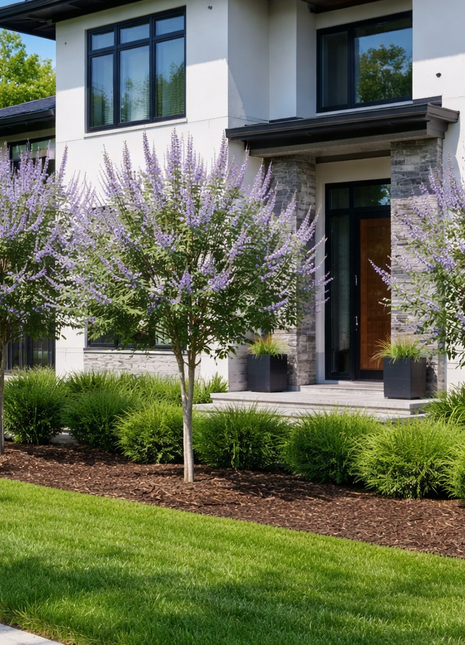
Vitex Tree (Vitex agnus-castus) Topiary — Locally Grown in Pierson, Florida at Flowing Well Tree FarmFlowering Ornamental Tree • Pollinator Magnet • Heat & Drought Tolerant Specimen • Florida-Grown Topiary & Landscape Accent Vitex Tree (Vitex agnus-castus), commonly known as Chaste Tree, is one of the most reliable and high-impact flowering landscape trees for Florida’s heat, humidity, and sandy soils. When trained as a topiary, it becomes a structured ornamental specimen that combines Mediterranean elegance with extreme Florida durability. Known for its long summer flower spikes in shades of lavender, violet, and blue, Vitex is a powerhouse pollinator plant that attracts bees, butterflies, and beneficial insects in massive numbers during peak bloom. At Flowing Well Tree Farm in Pierson, Florida, we grow select Vitex specimens trained as topiary forms for landscape focal points, entrance features, and structured native-adapted designs. When you buy Vitex Topiary here, you’re not getting weak, overgrown nursery material—you’re getting locally grown, Florida-hardened trees conditioned for real landscape performance including heat waves, drought cycles, sandy soils, and intense summer sun. That local adaptation matters. Vitex grown in Florida develops stronger branching structure, better bloom cycles, and far superior long-term resilience compared to greenhouse-raised imports. Why Locally Grown Matters for Vitex Topiary Starting with Florida-grown stock provides key advantages: Stronger branching structure for topiary training Faster establishment in sandy, low-fertility soils Improved heat and drought tolerance from early development More consistent flowering under Florida conditions Better structural response to pruning and shaping Higher long-term survival in unmanaged landscapes This creates a more durable and performance-driven ornamental specimen. Flowering & Ornamental Value Vitex is one of Florida’s most dramatic summer bloomers: Long spikes of lavender to violet-blue flowers Extended summer flowering period (often weeks to months) Strong visual contrast against green foliage High-impact ornamental color in landscape designs Excellent focal point for entryways and garden spaces Repeat bloom potential with pruning management It delivers a bold flowering presence during the hottest part of the year. Pollinator & Wildlife Importance Vitex is a recognized pollinator powerhouse: Attracts bees in extremely high numbers Supports butterflies and beneficial insects Provides critical nectar during summer dearth periods Enhances pollinator corridors in urban and rural landscapes Valuable for ecological planting systems despite ornamental origin It is one of the most visited flowering trees in bloom. Growth Habit & Topiary Structure When trained, Vitex becomes a refined architectural specimen: 10–20 ft small tree (variable depending on pruning) Naturally multi-stem but easily trained to single leader Responds exceptionally well to shaping and pruning Can be formed into lollipop, standard, or layered topiary styles Fast regrowth after structural cuts Maintains clean canopy with regular maintenance It is one of the best flowering trees for controlled design work. Climate & Site Adaptability Vitex performs exceptionally well in Florida environments: Thrives in full sun and high heat Extremely drought tolerant once established Handles sandy, well-drained soils with ease Adapts to urban, rural, and coastal-inland landscapes Tolerates humidity and seasonal rainfall variation Performs reliably in USDA Southern climates It is built for hot, open landscapes. USDA Growing Zones Best suited for Zones 6–9, with peak performance across Florida and the southeastern United States. Light Requirements For best flowering and structure: Full sun required for maximum bloom Reduced flowering in shaded environments High light levels produce stronger form and color Ideal for open landscape installations Soil & Site Requirements Adapted to Florida’s common soils: Prefers well-drained sandy soils Tolerates poor fertility and dry conditions Performs best with minimal soil amendment Avoid heavy, waterlogged soils Benefits from mulch during establishment Planting Guidance (Grower Recommended) For best topiary performance: Plant in full sun for strongest structure and bloom Dig hole 2–3× wider than root ball Set plant at original soil depth Water deeply after planting Apply mulch while keeping trunk base clear Stake if needed during early topiary training Prune early to establish desired shape We can assist with landscape design, specimen placement, and formal garden integration. Watering & Establishment Water regularly during the first growing season. Once established, Vitex becomes highly drought tolerant and thrives in low-maintenance Florida landscapes with minimal irrigation. Fertilizer Low-maintenance flowering tree: Minimal fertilizer required Light compost improves bloom production Avoid excessive nitrogen (reduces flowering intensity) Performs best in lean soil conditions Pruning & Maintenance Highly responsive ornamental species: Pruning encourages stronger flowering cycles Essential for maintaining topiary form Can be cut back heavily in late winter if needed Rapid regrowth after shaping cuts Low to moderate maintenance depending on design style Why This Is a Smarter Long-Term Investment ✔ Locally grown in Florida for superior adaptation✔ High-impact flowering summer ornamental tree✔ Excellent pollinator-supporting species✔ Ideal for topiary and structured landscape design✔ Extreme heat and drought tolerance✔ Fast regrowth and easy shaping response✔ Long blooming season with high visual payoff✔ Grower-direct quality for Florida landscapes The Real Value This isn’t just a flowering tree—it’s a sculpted landscape feature that delivers color, structure, and ecological function at the same time. When you plant a Vitex Topiary, you’re adding a controlled architectural focal point that thrives in Florida heat while supporting pollinators and delivering one of the most reliable summer bloom displays in the region.
$175.00 - $240.00


Weeping Bottlebrush Tree (Callistemon viminalis) — Locally Grown in Pierson, Florida at Flowing Well Tree FarmFlowering Evergreen Accent Tree • Weeping Ornamental Specimen • Pollinator Nectar Magnet • Florida-Grown Landscape Feature Tree Weeping Bottlebrush Tree (Callistemon viminalis), also known as Weeping Red Bottlebrush, is one of the most dramatic flowering evergreen accent trees used in warm-climate landscapes. Recognized for its cascading, weeping branch structure and intense red bottlebrush flower spikes, this tree delivers strong visual movement, color impact, and year-round evergreen presence in Florida gardens. At Flowing Well Tree Farm in Pierson, Florida, we grow Weeping Bottlebrush as premium specimen trees selected for strong structural form, consistent flowering performance, and long-term adaptability to Florida’s heat, humidity, sandy soils, and seasonal drought cycles. Each tree is developed to emphasize its natural arching habit, creating a flowing canopy form ideal for focal points and ornamental landscape design. When you buy Weeping Bottlebrush here, you’re not getting weak, overgrown container ornamentals—you’re getting locally grown, Florida-acclimated trees hardened for real landscape conditions including full sun exposure, coastal wind, summer heat stress, and irregular rainfall patterns. That local adaptation is critical. Weeping Bottlebrush performs best when grown in Florida conditions from the start, developing stronger flowering cycles, improved canopy density, and more graceful cascading structure over time. Why Locally Grown Matters for Weeping Bottlebrush Starting with Florida-grown stock provides key advantages: Faster establishment in sandy, well-drained soils Stronger weeping branch architecture development Improved heat and humidity tolerance More consistent flowering performance in Florida sun Better drought resilience once established Reduced transplant shock in open landscapes This creates a more reliable and visually refined ornamental specimen. Flowering & Ornamental Impact Weeping Bottlebrush is known for its bold seasonal display: Bright red cylindrical “bottlebrush” flower spikes Heavy blooming cycles during warm seasons High visual contrast against cascading evergreen foliage Extended flowering in Florida’s long growing season Strong focal color impact in landscape design Excellent for framing views and garden focal points It is one of the most visually dynamic flowering trees in subtropical landscapes. Pollinator & Wildlife Value Weeping Bottlebrush is a powerful nectar-producing species: Attracts bees in large numbers during bloom periods Supports butterflies and beneficial insects Provides reliable nectar during hot summer months Enhances pollinator diversity in urban and residential landscapes Valuable for ecological landscaping despite ornamental origin It functions as a consistent pollinator-supporting accent tree. Growth Habit & Weeping Structure This form is defined by its elegant cascading canopy: 15–25 ft small evergreen ornamental tree Strong weeping, arching branch structure Naturally flowing canopy with soft movement Can be trained into refined specimen form Excellent focal tree for entryways and water features Unique architectural silhouette in the landscape It is one of the most graceful flowering trees available for warm climates. Climate & Site Adaptability Weeping Bottlebrush performs well in Florida environments: Thrives in full sun and high heat Highly tolerant of humidity and summer rainfall Performs well in sandy, well-drained soils Moderate drought tolerance once established Adapts to coastal and inland landscapes Handles urban heat and reflective conditions It is a proven performer in Florida’s demanding climate zones. USDA Growing Zones Best suited for Zones 8–11, with strongest performance across Central and South Florida and coastal regions. Light Requirements For best flowering and canopy development: Full sun required for maximum bloom production Reduced flowering in shaded conditions High light levels enhance weeping form and density Ideal for open landscape focal plantings Soil & Site Requirements Adapted to Florida’s common landscape soils: Prefers well-drained sandy soils Tolerates low fertility conditions Performs best with minimal soil amendment Avoid heavy or waterlogged soils Benefits from mulch during establishment phase Planting Guidance (Grower Recommended) For best long-term performance: Plant in full sun for strongest flowering and form Dig hole 2–3× wider than root ball Set at original soil depth Water deeply after planting Apply mulch to retain moisture and reduce stress Stake if needed to support early canopy structure Space 10–15 ft apart for specimen placement We can assist with landscape focal design, water-feature framing, and ornamental tree placement layouts. Watering & Establishment Water regularly during the first growing season. Once established, Weeping Bottlebrush becomes moderately drought tolerant and performs reliably under Florida rainfall cycles. Fertilizer Low to moderate feeding requirements: Light balanced fertilizer enhances bloom production Compost improves canopy health and vigor Avoid high nitrogen (reduces flowering intensity) Performs best in balanced, low-input systems Pruning & Maintenance Moderate maintenance ornamental: Pruning enhances shape and canopy flow Can be trained for stronger weeping architecture Deadheading may encourage repeat blooms Low to moderate upkeep depending on design intent Responds well to light structural shaping Why This Is a Smarter Long-Term Investment ✔ Locally grown in Florida for superior adaptation✔ High-impact weeping flowering specimen tree✔ Excellent pollinator nectar source✔ Strong architectural landscape focal point✔ Heat and drought tolerant once established✔ Long seasonal bloom cycles in warm climates✔ Ideal for water features, entryways, and accents✔ Grower-direct quality for Florida landscapes The Real Value This isn’t just a flowering ornamental—it’s a living architectural feature that combines movement, color, and ecological function in one tree. When you plant Weeping Bottlebrush, you’re adding a sculptural focal point that thrives in Florida heat while delivering consistent pollinator support and year-round landscape elegance.
$30.00 - $300.00


Dwarf Pomegranate (Punica granatum var. nana) — Locally Grown in Pierson, Florida at Flowing Well Tree Farm Compact Fruiting Shrub • Ornamental Blooming Plant • Heat-Loving Landscape Accent • Florida-Grown Nursery Stock When you buy Dwarf Pomegranate here, you’re not getting mass-produced retail shrubs grown in different climates—you’re getting locally grown, Florida-acclimated plants produced in Pierson, already adapted to heat, humidity, sandy soils, and intense sun conditions from the start. That matters with compact fruiting ornamentals. Locally grown stock establishes faster, handles transplant stress better, and transitions more smoothly into Florida landscapes, containers, and small-space gardens. This is direct-from-grower material. You can visit the farm, see how flowering fruit shrubs are grown and selected, and get real guidance from people who work with these plants in Florida conditions year-round—not generic care instructions. Dwarf Pomegranate is especially valuable because it delivers high visual impact in a small footprint—combining ornamental flowers, edible-style fruiting, and extreme heat tolerance. Why Locally Grown Matters Starting with Florida-grown shrubs improves long-term success: Faster establishment in heat and sandy soils Reduced transplant shock in containers and landscapes Better flowering response in warm climates Stronger long-term structure and branching habit More reliable fruiting and bloom cycles It’s a more dependable foundation for a long-lived ornamental edible shrub. Brilliant Flowers & Seasonal Color Dwarf Pomegranate is grown primarily for its ornamental impact: Bright orange-red blooms from late spring through summer Long flowering season with continuous color Strong attraction for pollinators like bees and hummingbirds High visual impact even at a young age It functions as a flowering accent plant in nearly any warm-climate landscape. Ornamental Fruit Display In addition to blooms, it produces: Small decorative pomegranates in late summer to fall Bright seasonal fruit color for landscape interest Long-lasting ornamental value even after flowering ends Unique texture and visual appeal in edible landscapes While fruit is smaller than standard varieties, the ornamental value is exceptional. USDA Growing Zones Best suited for Zones 7–11, performing especially well in Florida and other hot, sunny climates. Mature Size & Growth Habit A compact, highly manageable shrub: 2–4 ft tall (dwarf form) 2–3 ft wide Ideal for containers, borders, patios, and small-space edible landscapes. Light Requirements Requires full sun (6–8+ hours daily) for: Maximum flowering Best fruit color development Dense, compact growth habit Soil & Site Requirements Adaptable but prefers: Well-draining sandy or loamy soils Slightly acidic to neutral pH (5.5–7.0) Added organic matter for best performance Avoidance of heavy, compacted, or waterlogged soils Planting Guidance (Grower Recommended) We emphasize long-term performance in Florida landscapes: Choose a full sun location with good airflow Plant at the same depth as the container Backfill with native soil and water deeply Apply light mulch, keeping it away from the stem Space properly for airflow and shape development Maintain consistent watering during establishment If you visit the farm, we can help match placement for containers, hedges, or ornamental edible borders. Watering & Establishment Water regularly during the first growing season to build a strong root system. Once established, Dwarf Pomegranate is highly drought tolerant and thrives in hot, dry conditions. Fertilizer Apply balanced slow-release fertilizer in early spring Avoid excess nitrogen, which reduces flowering and fruiting Light feeding is preferred for compact growth and bloom production Pruning & Maintenance Low-maintenance ornamental shrub: Light pruning in late winter to shape Remove suckers regularly to maintain structure Thin dense growth to improve airflow and flowering Minimal intervention needed once established Why This Is a Smarter Long-Term Investment ✔ Locally grown in Florida conditions for stronger establishment✔ Direct grower expertise for heat-loving ornamentals✔ Long flowering season with high visual impact✔ Compact size ideal for modern landscapes and containers✔ Pollinator-friendly flowering shrub✔ Better adaptation than out-of-region nursery stock✔ Opportunity to visit, learn, and select in person The Real Value This isn’t just a small shrub—it’s a high-impact ornamental fruiting plant built for Florida heat and small-space landscapes. You’re not just planting a plant. You’re adding long-lasting color, structure, and low-maintenance performance to your landscape with a proven warm-climate performer.
$11.00 - $55.00
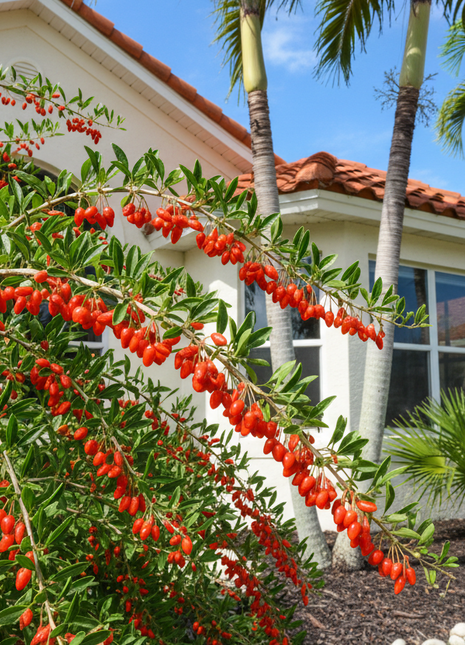
Red Berry Fruiting Shrub — Locally Grown at Flowing Well Tree Farm Hardy Fruit Shrub • High-Yield Edible Landscape Plant • Drought-Tolerant Once Established • Florida-Grown Stock When you buy this fruiting shrub here, you’re not getting generic, out-of-region nursery material—you’re getting locally grown plants produced in Pierson, already acclimated to Florida heat, humidity, sandy soils, and seasonal rainfall patterns. That matters with fast-growing edible shrubs. Locally grown stock establishes faster, handles transplant stress better, and transitions more smoothly into real-world landscape conditions—especially in edible gardens and orchard systems where performance matters. This is direct-from-grower material. You can visit the farm, see how edible shrubs are grown and selected, and get real guidance from people who work with these fruiting plants in Florida conditions year-round—not generic care sheets. This type of productive berry shrub is especially valued for its adaptability, early fruiting potential, and long-term reliability in both home gardens and small orchards. Why Locally Grown Matters Starting with Florida-grown stock improves long-term performance: Faster establishment in heat and sandy soils Reduced transplant shock in home landscapes and containers Better adaptation to humidity and rainfall variability More consistent flowering and fruiting cycles Stronger long-term root development It’s a more reliable foundation for a productive edible shrub system. Bright Red, Nutrient-Rich Fruit This shrub is valued for its edible production: Bright red, nutrient-rich berries Suitable for fresh eating and culinary use Attractive seasonal fruit display Strong edible landscape appeal It performs well in both ornamental and food-focused plantings. USDA Growing Zones Best suited for Zones 5–9, with strong adaptability across both warm and temperate climates once established. Mature Growth & Habit A fast-growing, productive shrub: Medium shrub form depending on pruning Dense, fruiting cane structure Excellent for hedges, borders, and edible gardens Can be managed for size and yield with regular pruning. Light Requirements Performs best in full sun (6–8+ hours daily) for: Maximum fruit production Strong cane development Improved overall plant vigor Soil & Site Requirements Highly adaptable but prefers: Well-draining sandy or loamy soils Slightly acidic to neutral pH (6.5–7.0) Organic matter added at planting for best establishment Avoidance of heavy clay or waterlogged conditions Planting Guidance (Grower Recommended) We focus on real-world success in edible landscapes: Dig a hole twice as wide as the root ball Plant at the same depth as the container Backfill with native soil and compost if needed Water deeply after planting Apply light mulch, keeping it away from the base Maintain consistent moisture during establishment If you visit the farm, we can help match this shrub to orchard rows, edible hedges, or container systems. Watering & Establishment Water regularly during the first growing season to build a strong root system. Once mature, the plant becomes moderately drought tolerant and performs well in low-water conditions. Fertilizer Apply balanced slow-release fertilizer in early spring Avoid high nitrogen, which promotes foliage over fruit Light feeding supports better fruiting performance Fruiting Timeline This is a fast producer: Fruit may begin in years 1–2 Full production typically by year 3 Extended fruiting season from late spring into fall Pruning & Maintenance Low to moderate maintenance: Prune in late winter Remove weak, old, or unproductive canes Encourage new shoots for higher future yields Maintain airflow for better fruiting performance Why This Is a Smarter Long-Term Investment ✔ Locally grown in Florida for stronger establishment✔ Direct grower expertise for edible shrub success✔ Fast fruiting timeline compared to many shrubs✔ Highly adaptable across multiple climate zones✔ Dual-purpose edible + landscape plant✔ Better performance than out-of-region nursery stock✔ Opportunity to visit, learn, and select in person The Real Value This isn’t just a berry shrub—it’s a fast-producing edible system designed for resilience and yield. You’re not just planting a plant. You’re building a reliable, long-term source of homegrown fruit with a shrub engineered for adaptability and productivity.
$9.00 - $55.00

Give the gift of growing with a Flowing Well Tree Farm Gift Card—the perfect gift for gardeners, homeowners, and plant lovers of all kinds. With access to hundreds of native, fruiting, and ornamental trees and shrubs, your recipient can choose exactly what they want for their landscape or garden. Gift cards are easy to purchase online, can be used anytime, and are a thoughtful way to share something living, lasting, and uniquely personal. A Flowing Well Tree Farm Gift Card lets your loved ones plant memories that grow for years to come. 🌲🎁
$10.00 - $500.00
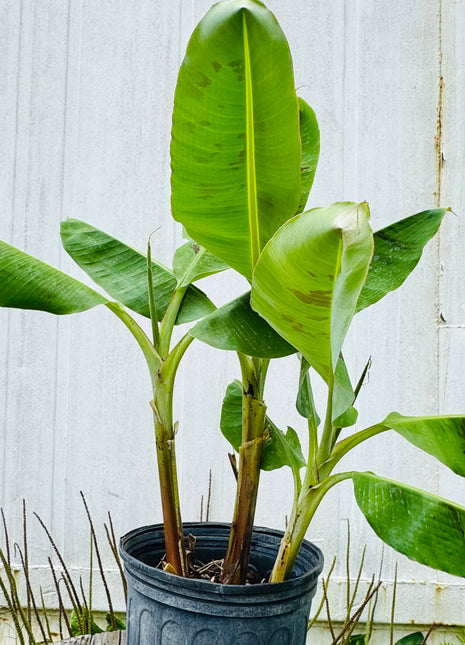
Dwarf Cavendish Banana (Musa acuminata ‘Dwarf Cavendish’) — Locally Grown in Pierson, Florida at Flowing Well Tree FarmTropical Fruiting Plant • Fast-Producing Edible Perennial • High-Yield Homestead Crop • Florida-Grown Food Forest, Backyard Orchard & Subtropical Landscape Plant Dwarf Cavendish Banana (Musa acuminata ‘Dwarf Cavendish’) is one of the most widely grown banana varieties in the world, prized for its reliable fruit production, compact growth habit, and fast turnaround from planting to harvest. Known for its sweet dessert bananas and vigorous tropical growth, it is a cornerstone species for homesteads, food forests, and edible landscapes in warm climates like Florida. At Flowing Well Tree Farm in Pierson, Florida, we grow Dwarf Cavendish Banana as premium subtropical stock selected for strong rhizome development, vigorous shoot production, and reliable performance in Florida’s heat, humidity, rainfall cycles, and sandy soils. Each plant is field-established under real Florida conditions to ensure rapid growth, strong establishment, and consistent fruiting potential. When you buy Dwarf Cavendish Banana here, you are not receiving weak indoor-started plants—you are getting Florida-adapted banana stock conditioned for outdoor production, fast growth, and long-term fruiting success. That local adaptation matters. Musa acuminata performs best when established directly in warm, humid, Florida-grown conditions where root systems can develop rapidly and support heavy fruit production cycles. Why Locally Grown Matters for Banana Plants Starting with Florida-grown stock provides key advantages: Faster establishment and growth in subtropical conditions Stronger root and rhizome development in sandy soils Improved heat and humidity tolerance Better storm recovery after wind damage Higher survival rates in outdoor planting systems More consistent fruiting potential in Florida climates This creates a highly productive tropical fruit system capable of rapid output. Fruit Production & Edible Value Dwarf Cavendish is a high-value edible fruit plant: Produces sweet dessert bananas with smooth texture Fruit develops in large hanging bunches Excellent for fresh eating, smoothies, baking, and cooking Reliable production in warm climates Fast fruiting cycle compared to many tree crops Highly productive once established and mature It is one of the most dependable banana varieties for home production. Growth Habit & Structural Function Dwarf Cavendish is a fast-growing tropical perennial: 6–10 ft mature height depending on conditions Clumping growth habit with multiple pseudostems Rapid vegetative growth in warm weather Each stalk fruits once, then is replaced by new shoots Creates dense tropical foliage structure Excellent for edible landscaping and food forest layers It functions as both a food crop and tropical landscape feature. Ecological & Landscape Benefits Banana plants contribute to tropical ecosystem structure: Large leaves provide shade and microclimate cooling Dense clumps create habitat for beneficial insects Improves organic matter as leaves decompose Enhances food forest humidity and soil health Supports layered tropical planting systems Ideal companion plant in subtropical gardens It plays an important role in productive tropical systems. Climate & Site Adaptability Dwarf Cavendish thrives in Florida conditions: Excellent performance in hot, humid climates Grows rapidly during warm seasons Sensitive to frost but recovers from root systems Thrives in rich, well-drained soils Performs best in sheltered, wind-protected locations Highly productive in South and Central Florida It is one of the most reliable bananas for Florida growers. USDA Growing Zones Best suited for Zones 9–11, with peak performance in South and Central Florida and other frost-free or protected subtropical regions. Light Requirements For best growth and fruit production: Full sun preferred for maximum yield Tolerates partial shade in food forest systems Sun exposure increases growth speed and fruiting potential Ideal for open tropical and subtropical landscapes Soil & Site Requirements Highly adaptable but productive in rich soils: Prefers fertile, well-drained soil Thrives in sandy Florida soils with organic amendments Benefits from compost and mulch-heavy environments Requires good drainage to prevent root stress Performs best in nutrient-rich food forest systems Planting Guidance (Grower Recommended) For best long-term performance: Plant in full sun to partial shade Dig wide planting area to encourage root expansion Set at original soil level Water deeply after planting Apply thick mulch layer to retain moisture and build soil health Space 6–10 ft apart for clumping expansion Protect from strong winds when young if possible We can assist with tropical food forest design, edible landscape planning, and banana grove installation. Watering & Establishment Water frequently during establishment and dry periods. Bananas require consistent moisture for best growth. Once established, clumps become highly productive with regular rainfall and irrigation support. Fertilizer Moderate to high nutrient needs: Responds strongly to organic compost and regular feeding Potassium-rich fertilizers support fruit development Frequent light feeding improves growth and yield Avoid nutrient deficiency for optimal bunch size Pruning & Maintenance Moderate maintenance: Remove spent fruiting stalks after harvest Thin clumps to maintain airflow and vigor Encourage new sucker growth for continuous production Remove damaged leaves as needed Highly productive with active management Why This Is a Smarter Long-Term Investment ✔ Locally grown in Florida for maximum adaptation ✔ Fast-producing tropical fruit crop ✔ High-yield edible landscape staple ✔ Excellent for food forests and homesteads ✔ Rapid growth and quick harvest cycles ✔ Strong recovery from seasonal stress ✔ Improves tropical microclimate systems ✔ Grower-direct quality for Florida conditions The Real Value This isn’t just a banana plant—it’s a fast-producing tropical food system that delivers rapid harvests, dense edible landscape structure, and long-term food security. When you plant Dwarf Cavendish Banana, you’re investing in a Florida-adapted tropical fruiting system that produces abundant bananas, builds food forest productivity, and transforms landscapes into high-yield edible ecosystems within a single growing season.
$18.00 - $55.00


