
Eastern tiger swallowtail - Papilio glaucus
-


Little Gem Magnolias (Magnolia Grandiflora)
Little Gem Magnolia (Magnolia grandiflora ‘Little Gem’) — Locally Grown in Pierson, Florida at Flowing Well Tree FarmCompact Evergreen Magnolia • Year-Round Privacy & Screening Tree • Fragrant Native Flowering Canopy Species • Florida-Grown Landscape, Hedge & Ornamental Structure Tree Little Gem Magnolia (Magnolia grandiflora ‘Little Gem’) is one of the most refined and versatile compact forms of the classic Southern Magnolia. Known for its dense evergreen foliage, fragrant white blooms, and naturally upright growth habit, this selection delivers the beauty of a full-size magnolia in a more manageable, space-efficient form ideal for residential landscapes, privacy screens, and structured garden design. At Flowing Well Tree Farm in Pierson, Florida, we grow Little Gem Magnolia as premium native evergreen stock selected for tight branching structure, strong central leader development, and consistent flowering performance in Florida’s heat, humidity, and sandy soil conditions. Each tree is field-grown to ensure durability, wind resistance, and long-term landscape performance in real Florida environments. When you buy Little Gem Magnolia here, you are not getting greenhouse-soft ornamental stock—you are getting Florida-acclimated evergreen magnolias built for resilience, structure, and year-round landscape impact. That local adaptation is critical. Magnolia grandiflora ‘Little Gem’ performs best when grown in-region, where it develops stronger root systems, improved drought tolerance, and a more compact, dense canopy suited for Florida’s climate conditions. Why Locally Grown Matters for Little Gem Magnolia Starting with Florida-grown stock provides key advantages: Stronger establishment in sandy and well-drained soilsImproved heat and humidity tolerance from early developmentBetter wind resistance in compact evergreen formHigher survival rates in coastal and inland landscapesMore consistent flowering and foliage densityFaster adaptation to Florida’s rainfall and drought cycles This creates a reliable evergreen magnolia ideal for long-term Florida landscapes. Evergreen Structure & Landscape Value Little Gem Magnolia is a premium compact evergreen canopy tree: 20–30 ft mature height with narrow, upright formDense, symmetrical branching ideal for screening and hedgingGlossy dark green leaves with copper-brown undersidesYear-round foliage provides continuous privacy and structureLarge, fragrant white blooms throughout warm monthsStrong architectural presence in residential landscapes It is one of the best compact magnolia selections for structured planting. Flowering & Seasonal Interest Little Gem Magnolia provides long-season floral display: Fragrant creamy-white flowers bloom from late spring through summerBlooms are smaller but more abundant than traditional magnolia formsStrong lemon-citrus fragrance attracts pollinators and beneficial insectsEvergreen foliage provides year-round visual structureCoppery leaf undersides add subtle seasonal contrast It delivers continuous ornamental value across all seasons. Ecological & Habitat Importance Little Gem Magnolia contributes to native ecosystem support: Provides nectar for bees and pollinators during bloom periodsOffers dense evergreen cover for birds and small wildlifeSupports urban biodiversity in residential and park systemsCreates sheltered microhabitats in landscaped environmentsEnhances native evergreen canopy diversity in Florida landscapesFunctions well in pollinator and wildlife-friendly gardens It is a valuable evergreen structure species in developed landscapes. Growth Habit & Structural Function Little Gem Magnolia is a compact structural evergreen tree: 20–30+ ft mature height depending on site conditionsNarrow, upright growth habit ideal for tight spacesDense branching structure suitable for hedging or screeningModerate growth rate with strong early establishmentLong-lived evergreen canopy with stable structureHighly adaptable to formal or naturalized landscape design It functions as both a specimen tree and living privacy wall. Climate & Site Adaptability Little Gem Magnolia performs reliably in Florida conditions: Native magnolia species adapted to southeastern U.S. climatesTolerates heat, humidity, and coastal air exposurePerforms best in well-drained sandy or loamy soilsModerate drought tolerance once establishedHandles occasional wet conditions but prefers drainageExcellent wind resilience in compact form It is one of the most dependable evergreen magnolias for Florida landscapes. USDA Growing Zones Best suited for Zones 7–10, with excellent performance throughout Florida and the southeastern United States. Light Requirements For best growth and flowering: Full sun for strongest structure and bloom productionTolerates partial shade, especially in hotter Florida regionsSun exposure improves density and long-term flowering performanceIdeal for hedges, screens, and specimen planting Soil & Site Requirements Adaptable evergreen magnolia species: Prefers well-drained sandy or loamy soilsTolerates slightly acidic to neutral soil conditionsBenefits from organic matter and mulch during establishmentDoes not tolerate prolonged standing waterPerforms well in urban and residential environments Planting Guidance (Grower Recommended) For best long-term performance: Plant in full sun to partial shadeDig hole 2–3× wider than root ballSet at original soil depthWater deeply after planting to establish rootsApply mulch 2–4 inches deep, avoiding trunk contactSpace 10–20 ft apart for hedges or screeningAllow room for natural upright canopy development We can assist with privacy screen design, evergreen hedge planning, and formal landscape layouts. Watering & Establishment Water regularly during the first 1–2 growing seasons. Once established, Little Gem Magnolia becomes moderately drought tolerant and highly resilient in Florida’s seasonal climate cycles. Fertilizer Low to moderate input requirements: Light fertilization supports foliage density and bloom productionOrganic compost improves soil health and root developmentAvoid excessive nitrogen to maintain compact structurePerforms best in balanced, well-drained soil systems Pruning & Maintenance Low maintenance evergreen tree: Light pruning can enhance shape and densityResponds well to shaping for hedges and formal screensNaturally compact growth reduces long-term maintenanceMinimal structural pruning required once establishedExcellent for managed landscape design systems Why This Is a Smarter Long-Term Investment ✔ Locally grown in Florida for climate adaptation✔ Compact evergreen magnolia ideal for small spaces✔ Year-round privacy and screening value✔ Fragrant native flowers with long bloom season✔ Strong wind and heat resilience when established✔ Excellent ornamental and structural landscape tree✔ Low-maintenance evergreen with long lifespan✔ Grower-direct field-grown quality stock The Real Value This is not just an ornamental tree—it is a year-round structural evergreen system that provides privacy, fragrance, and landscape stability in a compact, highly functional form. When you plant Little Gem Magnolia, you are investing in a refined native evergreen that delivers continuous beauty, ecological support, and long-term landscape structure in Florida’s demanding climate.
$80.00 - $310.00
-


Sweet Bay Magnolia (Magnolia virginiana)
Sweetbay Magnolia (Magnolia virginiana) — Locally Grown in Pierson, Florida at Flowing Well Tree Farm Fragrant Native Tree • Pollinator Favorite • Moisture-Tolerant Magnolia • Florida-Grown Landscape Stock When you buy Sweetbay Magnolia here, you’re not getting generic retail nursery material—you’re getting locally grown trees produced in Pierson, already acclimated to Florida heat, humidity, rainfall patterns, and sandy-to-organic soil transitions from the start. That matters with magnolias. Locally grown stock develops stronger root systems in-region, establishes faster after planting, and adapts more reliably to wet sites, rain gardens, and Florida landscapes where moisture and heat fluctuate seasonally. This is direct-from-grower material. You can visit the farm, see how native magnolias are grown and selected, and get real planting guidance from people who work with these trees in Florida conditions every season—not generic landscape advice. Sweetbay Magnolia stands out because it combines fragrance, adaptability to wet soils, and refined native beauty in one highly useful landscape tree. Why Locally Grown Matters Starting with Florida-grown stock improves long-term success: Faster establishment in Florida soils and climate Reduced transplant shock in heat and humidity Stronger adaptation to wet/dry seasonal cycles More reliable flowering and growth performance Better long-term resilience in landscape settings It’s a stronger foundation for a long-lived native flowering tree. Fragrant Blooms & Seasonal Beauty Sweetbay Magnolia is prized for its elegant floral display: Creamy white, lemon-scented flowers Blooming from late spring through summer Strong pollinator attraction (bees, butterflies) Light, refreshing fragrance in the landscape It adds sensory value—especially near patios, walkways, and garden edges. Elegant Native Foliage This tree offers year-round visual appeal: Glossy green leaves Silvery-white undersides that shimmer in wind Semi-evergreen to evergreen habit in warmer climates Refined structure suited for both natural and formal landscapes It is one of the more graceful native magnolias. Perfect for Moist Landscapes Sweetbay Magnolia excels where many ornamentals struggle: Rain gardens and stormwater areas Pond edges and low-lying sites Consistently moist soils Naturalized and restoration plantings It is especially valuable in Florida’s wetter landscape zones. Pollinator & Wildlife Value A strong ecological contributor: Supports bees and butterflies Provides seasonal nectar resources Adds habitat structure in native plantings Enhances biodiversity in managed landscapes USDA Growing Zones Best suited for Zones 5–10, performing strongly across the Southeast and adapting well into a wide range of climates. Mature Size & Growth Habit A versatile native tree: 10–35 ft tall 10–20 ft wide Can be used as a small specimen tree or multi-trunk naturalized form. Light Requirements Performs best in: Full sun for best flowering and density Partial shade in hotter climates or young plantings Soil & Site Requirements Highly adaptable when moisture is consistent: Prefers moist, acidic soils Performs in sandy, loamy, or clay soils Thrives in organic-rich wet areas Tolerates seasonal saturation better than most ornamentals Avoid prolonged dry, compacted conditions. Planting Guidance (Grower Recommended) We focus on real-world establishment success: Select a site with consistent moisture or irrigation access Dig a hole twice as wide as the root ball Plant at original soil level (do not bury trunk flare) Backfill with native soil and water deeply Apply mulch, keeping it away from the trunk Maintain steady moisture during establishment If you visit the farm, we can help match Sweetbay Magnolia to rain gardens, pond edges, or landscape focal points. Watering & Establishment Water regularly during the first growing season to establish strong roots. Once established, it becomes more adaptable but performs best with consistent moisture, especially during dry periods. Fertilizer Apply light slow-release fertilizer for acid-loving plants in early spring Avoid over-fertilizing, which can reduce flowering and natural vigor Pruning & Maintenance Low-maintenance native tree: Minimal pruning required Light shaping after flowering if needed Remove dead or damaged branches in late winter or early spring Avoid heavy structural pruning Why This Is a Smarter Long-Term Investment ✔ Locally grown in Florida conditions for better establishment✔ Direct grower expertise for wet-site and landscape success✔ Strong pollinator and wildlife value✔ Fragrant, ornamental native flowering tree✔ Excellent for rain gardens and moisture-rich landscapes✔ Adaptable across a wide range of climates✔ Opportunity to visit, learn, and select in person The Real Value This isn’t just a flowering tree—it’s a landscape anchor for wet, biodiverse, and pollinator-rich environments. You’re not just planting a tree. You’re adding fragrance, ecological function, and long-term native beauty to your landscape with a species built for Florida conditions.
$30.00
-


Original Southern Magnolia – From Seed (Magnolia grandiflora)
Southern Magnolia (Magnolia grandiflora) — Locally Grown in Pierson, Florida at Flowing Well Tree Farm Iconic Evergreen • Fragrant Native Blooms • Legacy Shade Tree • Florida-Grown from Seed for Strong Landscape Performance When you buy Southern Magnolia here, you’re not getting weak, greenhouse-forced liners or long-distance shipped trees—you’re getting seed-grown specimens raised directly in Pierson, grown under real Florida sun, humidity, wind, and sandy soil conditions from the start. That matters with a long-lived species like Magnolia grandiflora. Locally grown trees develop stronger root systems, adapt more quickly after planting, and transition into the landscape with far less stress. Seed-grown material also brings natural genetic variation, producing unique, resilient trees with strong long-term structure. This is direct-from-grower material. You can visit the farm, see how seed-grown native trees are produced, and get real guidance from people who work with these trees in Florida landscapes—not generic retail advice. Southern Magnolia is a true legacy tree, designed to define landscapes for generations. Why Locally Grown, Seed-Grown Magnolia Matters Growing this species from seed in Florida conditions provides real advantages: Stronger adaptation to local climate stress (heat, humidity, storms) Deeper, more resilient root development Improved long-term transplant success Greater genetic diversity and natural form variation Better performance in real Southern landscapes over decades It’s a more natural, durable foundation for a permanent shade tree. A True Southern Icon Southern Magnolia is one of the most recognizable trees in America: Glossy evergreen leaves year-round Rich copper-brown leaf undersides Large, creamy white, highly fragrant flowers Strong architectural presence in the landscape It delivers both structure and elegance in every season. Fragrant Blooms with Seasonal Impact The flowers are one of the defining features: Large, showy white blossoms Rich, sweet citrus-like fragrance Blooming through warm months Attracts pollinators and adds sensory impact It is both visually and aromatically iconic. USDA Growing Zones Best suited for Zones 7–10, thriving throughout Florida and the Southeastern United States. Mature Size & Growth Habit A large, long-lived evergreen shade tree: 60–80 ft tall 30–40 ft wide Develops a broad, pyramidal canopy that becomes more majestic with age. Light Requirements Performs best in full sun to partial shade. Full sun encourages stronger flowering, denser structure, and faster growth. Soil & Site Adaptability Adaptable once established, but prefers: Well-drained, slightly acidic soils Loamy or sandy soils with organic matter Avoidance of compacted or poorly drained sites Once established, it becomes highly resilient in Southern conditions. Planting Guidance (Grower Recommended) We emphasize long-term establishment success: Choose a spacious, open site away from structures Dig a hole twice as wide as the root ball Plant at original soil level (do not bury trunk flare) Backfill with native soil and water deeply Apply mulch 2–3 inches deep, keeping it off the trunk Maintain consistent watering during establishment If you visit the farm, we can help you select the right placement for long-term canopy development. Watering & Establishment Water regularly during the first year to develop a strong root system. Once established, Southern Magnolia becomes moderately drought tolerant but benefits from deep watering during extended dry periods. Fertilizer Minimal fertilization required: Apply a balanced slow-release fertilizer in early spring if needed Mature trees typically thrive without supplemental feeding Pruning & Maintenance Low-maintenance once established: Prune in late winter or early spring if needed Remove dead, damaged, or crossing branches Avoid heavy pruning to preserve natural form Why This Is a Smarter Long-Term Investment ✔ Grown locally in Florida conditions from seed✔ Stronger root systems and better transplant success✔ Direct grower expertise for planting and placement✔ Genetic diversity for long-term landscape resilience✔ Evergreen structure with seasonal blooms and fragrance✔ True legacy shade tree for property value and permanence✔ Opportunity to visit, learn, and select in person The Real Value This isn’t just a magnolia purchase—it’s a generational landscape decision. You’re not just planting a tree. You’re planting a permanent Southern landmark that defines the character of your property for decades.
$30.00 - $115.00
-


DD Blanchard Magnolia (Magnolia Grandiflora)
DD Blanchard Magnolia (Magnolia grandiflora ‘DD Blanchard’) — Locally Grown in Pierson, Florida at Flowing Well Tree Farm Evergreen Magnolia Specimen Tree • Large Landscape Shade Tree • Fragrant Flowering Icon • Florida-Grown Structural Canopy Tree DD Blanchard Magnolia (Magnolia grandiflora ‘DD Blanchard’) is one of the most widely respected Southern Magnolia cultivars for large-scale landscape use in Florida and the southeastern United States. Known for its strong upright form, deep glossy green foliage with rich copper-bronze undersides, and large fragrant white blooms, this tree delivers unmatched presence, shade value, and year-round evergreen structure. At Flowing Well Tree Farm in Pierson, Florida, we grow DD Blanchard Magnolia as premium landscape-grade specimen trees selected for strong central leaders, balanced branching structure, and long-term performance in Florida’s heat, humidity, sandy soils, and seasonal storm cycles. Each tree is conditioned from an early stage to thrive in real Florida field conditions—not greenhouse environments. When you buy DD Blanchard Magnolia here, you’re not receiving soft, container-stressed ornamental stock—you’re getting locally grown, Florida-hardened trees built for real-world landscapes including full sun exposure, drought cycles, heavy rainfall periods, and wind events. That local adaptation matters. DD Blanchard Magnolia performs best when grown in Florida conditions from the start, developing stronger trunk structure, deeper root systems, and more consistent flowering performance over time. Why Locally Grown Matters for DD Blanchard Magnolia Starting with Florida-grown stock provides key advantages: Stronger trunk and branch development for long-term structure Faster establishment in sandy, well-drained soils Improved heat and humidity tolerance Better drought resilience once established Greater wind resistance in mature landscape settings Reduced transplant shock in Florida conditions This creates a more durable and permanent shade tree investment. Evergreen Structure & Landscape Value DD Blanchard is valued for its bold, architectural presence: Tall, upright evergreen canopy with strong central leader Dense glossy green leaves with copper-bronze undersides Year-round shade and visual screening value Classic Southern Magnolia form with improved structure Excellent specimen tree for large properties Strong landscape anchor tree for long-term design It is one of the most dependable large evergreen shade trees in Florida. Flowering & Ornamental Value DD Blanchard delivers iconic Magnolia blooms: Large creamy white fragrant flowers in late spring through summer Strong citrus-like floral fragrance Repeated blooming cycles in warm climates High ornamental impact against dark evergreen foliage Excellent focal point tree during bloom season It remains one of the most recognizable flowering trees in the Southeast. Wildlife & Ecological Importance This Magnolia cultivar supports multiple ecological functions: Flowers attract bees and native pollinators Seeds provide seasonal food for birds and small wildlife Dense canopy offers nesting and shelter habitat Provides year-round shade and microclimate cooling Supports biodiversity in residential and natural landscapes It functions as both an ornamental and habitat-supporting canopy tree. Growth Habit & Landscape Function DD Blanchard is a large, long-lived structural tree: 40–70 ft mature height depending on site conditions Broad upright pyramidal canopy form Strong central trunk with heavy branching structure Ideal for shade, screening, and property anchoring Long-lived permanent landscape tree Can be limbed up for formal shade tree use It is designed for long-term landscape infrastructure. Climate & Site Adaptability DD Blanchard performs exceptionally well in Florida: Thrives in full sun to partial shade Highly heat and humidity tolerant Performs well in sandy and loamy soils Moderate drought tolerance once established Handles coastal and inland environments Strong resilience in urban and rural landscapes It is a proven performer in demanding Southern climates. USDA Growing Zones Best suited for Zones 7–9, with excellent performance throughout Florida and the southeastern United States. Light Requirements For best structure and flowering: Full sun produces strongest canopy density and bloom production Partial shade acceptable in hotter inland sites Sun exposure improves growth rate and structural strength Balanced light supports optimal long-term form Soil & Site Requirements Adapted to Florida’s landscape soils: Prefers well-drained sandy or loamy soils Performs best with moderate organic matter Tolerates seasonal moisture variation Avoid permanently waterlogged conditions Benefits from mulch during establishment Planting Guidance (Grower Recommended) For best long-term performance: Plant in full sun for maximum growth and structure Dig hole 2–3× wider than root ball Set at original soil depth Water deeply after planting Apply mulch to conserve moisture and reduce stress Space 20–30 ft apart for mature canopy development Stake young trees if needed for early stability We can assist with shade tree planning, estate landscape design, and long-term canopy placement. Watering & Establishment Water regularly during the first 1–2 growing seasons. Once established, DD Blanchard Magnolia becomes moderately drought tolerant and highly resilient in Florida’s rainfall cycles. Fertilizer Moderate feeding requirements: Light balanced fertilizer supports canopy and bloom production Compost improves soil health and long-term vigor Avoid excessive nitrogen (can reduce flowering quality) Performs best in steady, low-input systems Pruning & Maintenance Low to moderate maintenance: Minimal pruning required for natural form Can be limbed up for shade tree structure Responds well to structural shaping if needed Naturally strong form reduces maintenance needs Long-lived with stable canopy development Why This Is a Smarter Long-Term Investment ✔ Locally grown in Florida for superior adaptation✔ Large evergreen shade tree with long lifespan✔ High-impact fragrant flowering canopy✔ Excellent for estates, driveways, and anchors✔ Strong wind and heat tolerance once established✔ Valuable wildlife and habitat support tree✔ Proven Southern landscape performance✔ Grower-direct quality for Florida conditions The Real Value This isn’t just a shade tree—it’s a long-term landscape anchor that defines space, provides cooling canopy structure, and delivers iconic Southern Magnolia beauty. When you plant DD Blanchard Magnolia, you’re investing in a permanent evergreen canopy system that strengthens property value, supports wildlife, and thrives for generations in Florida’s climate.
$200.00
-


Green Ash (Fraxinus pennsylvanica)
Green Ash (Fraxinus pennsylvanica) — Locally Grown in Pierson, Florida at Flowing Well Tree Farm Native Shade Tree • Fast-Growing Hardwood • Wildlife Value Species • Florida-Grown Restoration Stock Green Ash (Fraxinus pennsylvanica) is a versatile and highly adaptable native hardwood tree valued for its rapid growth, strong shade canopy, and ability to thrive across a wide range of soil conditions. Naturally found along rivers, floodplains, wetlands, and upland sites throughout the eastern United States, Green Ash remains an important species for restoration projects, conservation plantings, wildlife habitat, and large-scale landscape development. When you buy Green Ash here, you're not getting soft nursery stock raised under idealized conditions—you’re getting locally grown, field-conditioned trees produced in Pierson and adapted to Florida’s heat, humidity, seasonal rainfall, and diverse soil types. That matters for successful establishment. Locally grown Green Ash develops stronger root systems, adapts more quickly after transplanting, and is better prepared for the environmental conditions found throughout Florida landscapes and restoration sites. This is direct-from-grower native tree stock. Visit the farm, inspect our growing practices, and receive practical guidance on site selection, spacing, shade canopy planning, and restoration design. Green Ash is especially valued for its combination of fast growth, adaptability, wildlife benefits, and long-term shade production. Why Locally Grown Matters for Green Ash Starting with Florida-grown stock provides important advantages: Better adaptation to Florida heat and humidity Stronger root development prior to planting Improved transplant success Faster establishment in field conditions Greater resilience to environmental stress Better long-term performance in native landscapes It creates a stronger foundation for successful tree establishment. Fast Growth & Shade Value Green Ash is widely planted for its ability to quickly develop a useful shade canopy: Rapid growth compared to many native hardwoods Produces broad, attractive shade Excellent for parks, large properties, and restoration sites Helps reduce heat buildup in developed landscapes Creates long-term canopy structure It provides meaningful shade benefits much sooner than many slower-growing hardwood species. Wildlife & Ecological Importance Green Ash contributes significantly to native ecosystems: Seeds provide food for birds and wildlife Supports numerous native insects and pollinators Adds diversity to restoration plantings Contributes to riparian and floodplain ecosystems Provides nesting and shelter opportunities for wildlife It helps strengthen habitat value while supporting overall ecosystem health. Climate & Site Adaptability One of Green Ash’s greatest strengths is its flexibility: Tolerates both wet and moderately dry conditions Adaptable to sandy, loamy, and clay soils Handles periodic flooding Performs well in restoration and developed landscapes Tolerates urban growing conditions better than many native hardwoods Its adaptability makes it useful across a wide range of planting environments. USDA Growing Zones Best suited for Zones 3–9, performing exceptionally well throughout Florida and much of the eastern United States. Mature Size & Growth Habit A substantial native shade tree: 50–80 ft mature height 35–60 ft mature spread Upright growth when young Broad, rounded canopy at maturity Strong central trunk and branching structure Provides significant shade and long-term landscape presence. Light Requirements For best growth and canopy development: Full sun preferred Minimum 6 hours of direct sunlight daily Best growth occurs in open planting locations Soil & Site Requirements Highly adaptable to varying soil conditions: Performs well in sandy soils Tolerates loam and clay soils Adaptable to moist environments Handles occasional flooding Prefers reasonably well-drained sites for optimal growth One of the most flexible native hardwoods available for restoration and landscape use. Planting Guidance (Grower Recommended) For successful establishment: Plant in full sun Dig planting hole 2–3× wider than root ball Plant at original soil depth Water thoroughly after planting Apply mulch around the root zone Keep mulch away from direct trunk contact Maintain consistent watering during establishment We can assist with spacing recommendations, canopy planning, and restoration layouts. Watering & Establishment Water regularly during the first 1–2 growing seasons while roots establish. Once established, Green Ash becomes relatively adaptable to both seasonal drought and periodic wet conditions. Fertilizer Minimal fertilizer requirements: Light balanced fertilizer during establishment if needed Avoid excessive fertilization Often performs well with natural soil fertility alone Pruning & Maintenance Low-maintenance once established: Prune for structure during early years Remove damaged or crossing branches as needed Develops a strong natural form with minimal intervention Long-term maintenance requirements are relatively low Why This Is a Smarter Long-Term Investment ✔ Locally grown in Florida for superior adaptation ✔ Fast-growing native shade tree ✔ Excellent restoration and conservation species ✔ Adaptable to diverse soil conditions ✔ Valuable wildlife habitat tree ✔ Strong long-term canopy development ✔ Suitable for both wet and upland sites ✔ Grower-direct expertise and planting support The Real Value This isn’t just a fast-growing shade tree—it’s a long-term investment in canopy, habitat, and landscape resilience. You’re not simply planting a tree. You’re creating shade, supporting wildlife, improving ecosystem function, and establishing a durable native hardwood that can provide benefits for generations.
$130.00
-


Teddy Bear Magnolia (Magnolia Grandiflora 'Southern Charm)
Teddy Bear Magnolia (Magnolia grandiflora ‘Southern Charm’) — Locally Grown in Pierson, Florida at Flowing Well Tree FarmCompact Evergreen Magnolia • Dense Screening & Accent Tree • Fragrant Summer Bloomer • Florida-Grown Landscape Specimen Teddy Bear Magnolia (Magnolia grandiflora ‘Southern Charm’), commonly referred to as “Teddy Bear,” is a compact, highly refined selection of Southern Magnolia known for its exceptionally dense branching, smaller stature, and thick, glossy evergreen foliage with rich brown undersides. It delivers the classic Magnolia elegance in a more manageable, landscape-friendly form designed for modern Florida properties. At Flowing Well Tree Farm in Pierson, Florida, we grow Teddy Bear Magnolia as premium specimen trees selected for strong central structure, tight canopy density, and long-term adaptability to Florida’s heat, humidity, sandy soils, and seasonal rainfall cycles. Each tree is trained to develop a balanced, compact form ideal for screening, accent planting, and architectural landscape design. When you buy Teddy Bear Magnolia here, you’re not receiving weak, greenhouse-softened ornamentals—you’re getting locally grown, Florida-acclimated trees conditioned for real-world landscape conditions including full sun exposure, summer heat stress, coastal wind, and variable soil moisture. That local adaptation is critical. Teddy Bear Magnolia performs best when grown in Florida conditions from the start, developing stronger canopy density, improved drought resilience, and more consistent flowering over time. Why Locally Grown Matters for Teddy Bear Magnolia Starting with Florida-grown stock provides key advantages: Faster establishment in sandy, well-drained soils Stronger branching structure for dense screening Improved heat and humidity tolerance Better drought resilience once established Reduced transplant shock in Florida landscapes More consistent evergreen canopy development This creates a more reliable, high-performance landscape specimen. Evergreen Structure & Landscape Value Teddy Bear Magnolia is prized for its compact architectural form: Dense, upright evergreen canopy Smaller mature size than traditional Southern Magnolia Thick, leathery glossy green leaves with brown undersides Excellent for privacy screens and property borders Strong structural presence in residential landscapes Year-round visual density and form It delivers Magnolia elegance without overwhelming space. Flowering & Seasonal Interest Despite its compact size, it retains classic Magnolia beauty: Large, creamy white, fragrant summer flowers Long flowering period in warm climates Strong citrus-like fragrance attracting pollinators High ornamental value during bloom season Attractive contrast against dense evergreen foliage It is one of the most iconic flowering evergreens in the Southeast. Wildlife & Ecological Importance Teddy Bear Magnolia supports multiple ecological functions: Flowers attract bees and native pollinators Seeds provide seasonal food for birds Dense canopy offers nesting and shelter habitat Provides year-round shade and cover Enhances biodiversity in urban and suburban landscapes It functions as both ornamental and habitat-supporting tree. Growth Habit & Landscape Function This selection is designed for controlled landscape use: 10–20 ft compact evergreen tree (smaller than standard magnolias) Dense, upright to rounded canopy form Naturally tight branching structure Excellent for hedging, screening, or specimen use Responds well to light shaping if needed Ideal for smaller residential properties It provides Magnolia presence in a space-efficient form. Climate & Site Adaptability Teddy Bear Magnolia performs strongly in Florida conditions: Thrives in full sun to partial shade Highly heat and humidity tolerant Performs well in sandy and loamy soils Moderate drought tolerance once established Adapts to coastal and inland landscapes Handles urban heat and reflected light conditions It is one of the most reliable evergreen magnolias for Florida landscapes. USDA Growing Zones Best suited for Zones 7–9, with excellent performance throughout Florida and the southeastern United States. Light Requirements For best structure and flowering: Full sun produces strongest canopy density Partial shade acceptable in hotter inland sites Sun exposure improves bloom production Balanced light produces best overall form Soil & Site Requirements Adapted to common Florida soils: Prefers well-drained sandy or loamy soils Performs best with moderate organic matter Tolerates seasonal moisture variation Avoid permanently saturated conditions Benefits from mulch during establishment phase Planting Guidance (Grower Recommended) For best long-term performance: Plant in full sun or partial shade Dig hole 2–3× wider than root ball Set at original soil depth Water deeply after planting Apply mulch to retain moisture and reduce stress Space 10–15 ft apart for screening or specimen planting Stake if needed during early establishment We can assist with formal landscape design, privacy screening layouts, and specimen tree placement. Watering & Establishment Water regularly during the first 1–2 growing seasons. Once established, Teddy Bear Magnolia becomes moderately drought tolerant and performs well under Florida rainfall patterns. Fertilizer Moderate feeding needs: Light balanced fertilizer supports growth and bloom production Compost improves soil structure and vigor Avoid excessive nitrogen (reduces flowering quality) Performs best in steady, low-input systems Pruning & Maintenance Low to moderate maintenance: Minimal pruning required to maintain natural form Can be shaped into formal or informal structure Responds well to light pruning for density Naturally compact growth habit reduces maintenance needs Long-lived with stable structure Why This Is a Smarter Long-Term Investment ✔ Locally grown in Florida for superior adaptation✔ Compact Southern Magnolia ideal for modern landscapes✔ High-impact evergreen screening and structure✔ Fragrant, iconic summer flowering tree✔ Excellent heat and humidity tolerance✔ Strong year-round visual density✔ Low-maintenance landscape performance✔ Grower-direct quality for Florida conditions The Real Value This isn’t just a Magnolia—it’s a compact evergreen statement tree that brings classic Southern beauty into a space-efficient form. When you plant Teddy Bear Magnolia, you’re investing in a long-lived structural evergreen that delivers fragrance, privacy, and year-round elegance while thriving in Florida’s demanding climate.
$150.00
-


Pop Ash (Fraxinus Caroliniana)
Pop Ash (Carolina Ash / Water Ash) — Locally Grown in Pierson, Florida at Flowing Well Tree Farm Fast-Growing Native Shade Tree • Wetland Adapted • Florida-Grown from the Ground Up • Built for Real Site Conditions When you buy Pop Ash (Fraxinus caroliniana) here, you’re not getting a field-dug roadside transplant or stressed container stock from out of state—you’re getting native trees grown directly in Pierson, raised in Florida wetlands, high humidity, and real soil conditions from the beginning. That difference matters. These trees are already conditioned for water, heat, storm cycles, and fluctuating soil moisture before they ever reach your landscape. That means stronger establishment, fewer failures, and a tree that actually behaves like a native should in the site you’re planting. This is direct-from-grower material. You can visit the farm, see how native wetland trees are produced, and talk directly with the people who grow and manage them. You’re not guessing—you’re getting real-world guidance based on how these trees perform in Florida landscapes, restoration projects, and wetland environments. Why Locally Grown Native Trees Perform Better Pop Ash is a true Florida native, but local production takes its performance further by ensuring: Adaptation to regional rainfall patterns Strong root development in Florida soils Reduced transplant shock Better long-term survival in wet sites Faster establishment in restoration or landscape use It’s not just native—it’s locally conditioned native stock. Fast-Growing Native Shade with Real Function Pop Ash is valued for its ability to quickly establish and create light, filtered shade in challenging environments where many trees fail. It develops into a graceful native canopy tree that works well in: Wetland restoration sites Rain gardens and bioswales Pond edges and retention areas Naturalized residential landscapes Flood-prone properties It’s a working landscape tree, not just an ornamental. Wetland Adapted and Flood Tolerant Naturally found in river bottoms, swamps, and floodplains, Pop Ash thrives in conditions that limit most landscape trees. It performs well in: Saturated soils Seasonal flooding Poorly drained areas Low-lying landscapes Moist retention zones Once established, it can also adapt to average soils if moisture is consistent. USDA Growing Zones Best suited for Zones 6–9, especially strong in the Southeast and Gulf Coast regions. Mature Size & Growth Habit A medium to large native shade tree: 30–50 ft tall 20–35 ft wide Forms a rounded, airy canopy with soft compound foliage that allows filtered light beneath. Light Requirements Performs best in full sun (6+ hours daily). Tolerates partial shade but grows faster and stronger in open sun conditions. Planting Guidance (Grower Recommended) We don’t just provide trees—we help ensure they succeed in the ground: Select a site with consistent moisture or natural water flow Dig a hole twice as wide as the root ball Plant at ground level (never deeper) Backfill with native soil and water in thoroughly Apply 2–3 inches of mulch, keeping it off the trunk Allow space for mature canopy spread If you visit the farm, we can help match Pop Ash to the right wet or transitional site on your property. Soil & Site Adaptability Best performance comes from: Moist to wet soils Sandy, loamy, or organic-rich substrates Flood-prone or low-lying landscapes It is especially valuable in areas where drainage is poor or inconsistent. Watering & Establishment Water regularly during establishment to build a strong root system. Once established, Pop Ash thrives in naturally wet environments and requires little supplemental irrigation in suitable sites. Fertilizer Minimal fertilization required. If desired, apply a light, balanced slow-release fertilizer in early spring. Avoid over-fertilizing native trees, which can reduce natural resilience. Pruning & Structure (Low Maintenance by Design) Pop Ash requires very little pruning: Remove dead or damaged branches as needed Light structural pruning in early years can improve form Avoid heavy pruning to preserve natural structure It is naturally adapted to grow with minimal intervention. Why This Is a Smarter Long-Term Investment ✔ Grown locally in Florida wetland conditions✔ Naturally adapted to flood-prone and low-lying sites✔ Stronger establishment than non-local nursery stock✔ Direct grower support and real site guidance✔ High ecological value for wildlife and restoration✔ Fast-growing native shade for problem areas✔ Opportunity to visit and select in person The Real Advantage This isn’t just a native tree purchase—it’s a site-solution tree grown in the same kind of environment it’s designed to thrive in. You’re not just planting a shade tree. You’re planting a long-term, self-sustaining part of your landscape that’s already proven in Florida conditions.
$24.00
-
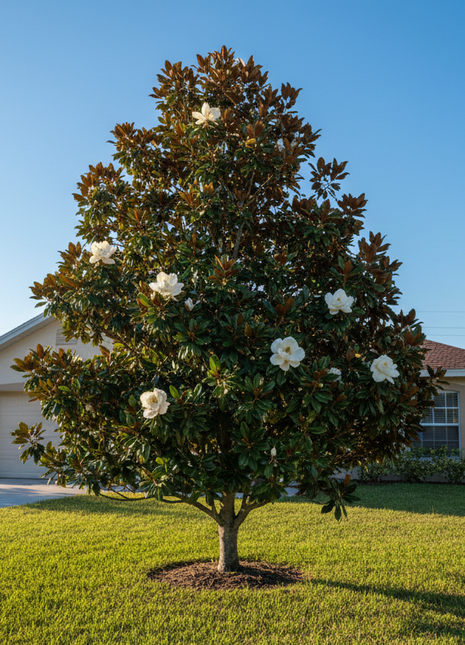
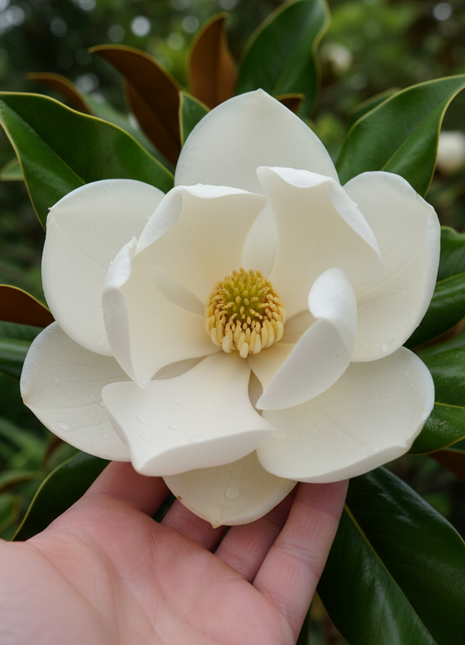
Bracken Brown Magnolia (Magnolia grandiflora ‘Bracken’s Brown Beauty’)
Locally Grown in Pierson, Florida — Direct from the Grower at Flowing Well Tree Farm Cold Hardy • Evergreen Structure • Fragrant Southern Blooms • Landscape-Ready from Day One When you buy Bracken Brown Magnolia (Magnolia grandiflora ‘Bracken’s Brown Beauty’) here, you’re not getting boxed-up, long-distance nursery stock—you’re getting trees grown directly in Pierson, hardened in real Florida conditions and managed by the same people who will guide you on planting success. This is a direct-from-grower experience. You can visit the farm, walk the fields, and see exactly how these magnolias are produced, spaced, and developed for long-term landscape performance. When you have questions, you’re speaking with the growers themselves—people who work with these trees every day and understand how they perform after planting, not just at sale time. These magnolias are selected and grown for structure, resilience, and regional adaptability. That means better establishment, fewer surprises in the landscape, and a stronger long-term return on your planting investment. Why Locally Grown Matters Bracken Brown Magnolia performs best when it’s raised in a climate similar to where it will be planted. Because ours are grown in Florida soil and humidity from the start, they transition more smoothly into home landscapes across the Southeast. Instead of struggling to adapt, they’re already conditioned for heat, humidity, storms, and variable soils—making them a smarter, more reliable long-term landscape choice. Evergreen Beauty with Real Landscape Presence This is a refined Southern magnolia known for its: Dense, pyramidal evergreen form Rich glossy green leaves with warm bronze undersides Strong branching structure for wind and storm resilience Consistent performance in residential and estate landscapes It delivers year-round structure and presence without the overly large, unmanageable size of older magnolia selections. Fragrant Southern Blooms Large creamy white flowers (often 8–10 inches wide) appear from late spring through summer, filling the landscape with a soft, citrus-like fragrance. These blooms are not just ornamental—they support pollinators and add a timeless Southern character that never goes out of style. USDA Growing Zones Best suited for Zones 5–9, making it one of the most cold-hardy Southern magnolia selections available. Mature Size & Growth Habit Typically reaches 30–50 ft tall with a 15–30 ft spread, forming a dense, upright canopy that works well as a specimen tree or privacy backdrop. Light Requirements Performs best in full sun to partial shade. More sun means stronger structure and better flowering performance. Soil & Site Selection Best results come from well-drained, slightly acidic soils enriched with organic matter.Adapts well to: Sandy soils Loamy soils Clay soils (if drainage is adequate) Avoid areas that stay constantly wet or poorly drained. Planting Guidance (Grower-Based Recommendations) We don’t just sell the tree—we help you succeed with it: Dig a hole twice as wide as the root ball Plant at original container depth (critical for long-term health) Backfill with native soil and water in deeply Mulch 2–3 inches, keeping mulch off the trunk Provide consistent moisture during establishment If you visit the farm, we often help match trees to site conditions in real time—based on how they’ll actually perform in your landscape. Watering & Establishment Regular watering during the first growing season is essential. Once established, Bracken Brown Magnolia becomes moderately drought tolerant while still appreciating deep watering during extended dry periods. Fertilizer A balanced slow-release fertilizer in early spring supports strong foliage and flowering. Once established in healthy soil, minimal fertilization is needed. Pruning & Structure Naturally maintains a strong form. Prune only as needed in late winter or after flowering to remove damaged or crossing branches. Heavy pruning is unnecessary and discouraged. Why This Is a Smarter Long-Term Investment ✔ Grown locally in Florida conditions—not imported stock✔ Faster establishment with less transplant shock✔ Direct access to growers for real planting guidance✔ Region-specific performance and resilience✔ Field-grown structure built for long-term landscapes✔ Opportunity to tour, select, and learn on-site✔ Proven adaptability for Southeastern landscapes The Difference You Can See Over Time This isn’t just a magnolia purchase—it’s a long-term landscape decision backed by experience, local production, and ongoing support. You’re not just planting a tree. You’re planting a better starting point.
$190.00
-

White Ash (Fraxinus Americana)
White Ash (Fraxinus americana) — Locally Grown in Pierson, Florida at Flowing Well Tree Farm Native Hardwood Shade Tree • Brilliant Fall Color • Wildlife Support Species • Florida-Grown Restoration, Reforestation & Landscape Tree White Ash (Fraxinus americana) is one of North America's most prized native hardwood trees, valued for its strong wood, graceful canopy, vibrant fall color, and exceptional adaptability. Naturally found throughout eastern forests, White Ash serves as an important ecological species while providing outstanding shade and landscape beauty. Its upright form, rapid establishment, and long lifespan make it a favorite for restoration projects, large properties, parks, and native landscapes. At Flowing Well Tree Farm in Pierson, Florida, we grow White Ash as premium Florida-adapted native stock selected for strong root development, healthy structure, and superior transplant success. Our trees are grown under real Florida conditions—heat, humidity, seasonal drought, heavy rainfall, and sandy soils—creating hardy trees capable of thriving long after planting. When you purchase White Ash from Flowing Well Tree Farm, you are receiving Florida-grown native hardwood stock designed for long-term performance, ecological value, and landscape durability. That local adaptation matters. Trees grown in Florida develop stronger resilience to regional climate conditions, establish more quickly, and experience significantly less transplant stress than trees grown outside the Southeast. Why Locally Grown Matters for White Ash Starting with Florida-grown White Ash offers important advantages: ✔ Faster establishment in Florida landscapes✔ Improved adaptation to heat and humidity✔ Stronger root systems for drought resilience✔ Reduced transplant shock✔ Better performance in sandy and loamy soils✔ Enhanced storm resistance through proper root development✔ Greater long-term survival and canopy stability This creates a stronger, healthier tree capable of providing beauty and ecological value for generations. Shade & Seasonal Beauty White Ash is widely admired for its ornamental characteristics: ✔ Dense, attractive shade canopy✔ Upright, symmetrical growth habit✔ Outstanding fall color ranging from yellow and orange to deep burgundy and purple✔ Attractive bark texture as trees mature✔ Elegant branching structure suitable for large landscapes✔ Excellent specimen tree for parks, estates, and naturalized settings Few native hardwoods offer the combination of shade, beauty, and seasonal color found in White Ash. Wildlife & Ecological Value Fraxinus americana supports a wide variety of wildlife: ✔ Seeds provide food for birds and small mammals✔ Supports numerous native insect species✔ Provides nesting habitat and shelter for wildlife✔ Contributes to healthy forest biodiversity✔ Enhances ecological connectivity in restoration projects✔ Helps support native pollinator populations through associated ecosystem relationships As a native hardwood, White Ash plays an important role in maintaining healthy ecosystems. Growth Habit & Structural Characteristics White Ash develops into a large, long-lived canopy tree: ✔ Mature height typically 50–80 ft✔ Mature spread 40–60 ft✔ Upright oval canopy when young, broadening with age✔ Moderate to fast growth rate✔ Strong central leader and sturdy branch structure✔ Deep-rooted and highly durable once established Its combination of strength and elegance makes it an excellent long-term investment for larger properties. Ecological & Landscape Benefits White Ash provides numerous environmental advantages: ✔ Creates substantial cooling shade✔ Helps reduce heat island effects✔ Stabilizes soil through extensive root systems✔ Supports long-term carbon sequestration✔ Improves wildlife habitat diversity✔ Enhances native forest restoration efforts✔ Adds structure to mixed hardwood plantings It serves as both a functional landscape tree and a valuable ecological asset. Climate & Site Adaptability White Ash performs well across a broad range of conditions: ✔ Adaptable to Florida's changing weather patterns✔ Tolerates seasonal drought once established✔ Handles periodic wet conditions✔ Performs well in sandy, loamy, and moderately fertile soils✔ Good wind resistance when properly rooted✔ Suitable for naturalized and managed landscapes Its versatility makes it useful in both restoration and ornamental settings. USDA Growing Zones Best suited for Zones 3–9. Performs particularly well throughout North and Central Florida where winter chilling supports optimal growth and seasonal color development. Light Requirements For best performance: ✔ Full sun preferred✔ Minimum of six hours of direct sunlight daily✔ Partial shade tolerated when young✔ Greater sun exposure promotes stronger branching and better fall color Soil & Site Requirements White Ash is adaptable to many soil conditions: ✔ Prefers well-drained soils✔ Tolerates sandy Florida soils with organic matter additions✔ Performs well in loam and clay-loam soils✔ Benefits from moderate soil moisture during establishment✔ Prefers slightly acidic to neutral pH conditions Planting Guidance (Grower Recommended) For best establishment: ✔ Plant in full sun whenever possible✔ Dig a wide planting hole to encourage root expansion✔ Position at original soil grade✔ Water deeply during establishment period✔ Apply mulch around the root zone while keeping mulch away from the trunk✔ Allow adequate space for mature canopy development We can assist with native restoration plantings, reforestation projects, large-scale landscapes, and mixed hardwood forest design. Watering & Establishment Requires consistent watering during the first growing season. Once established, White Ash becomes relatively drought tolerant and generally requires supplemental irrigation only during extended dry periods. Fertilizer Low to moderate nutrient requirements: ✔ Benefits from compost and organic matter incorporation✔ Slow-release fertilizers may be applied during active growth periods✔ Avoid excessive nitrogen applications✔ Healthy soil development typically provides excellent long-term growth Pruning & Maintenance Low maintenance once established: ✔ Structural pruning recommended during early years✔ Remove damaged or crossing branches as needed✔ Develop a strong central leader when young✔ Minimal maintenance required at maturity White Ash naturally develops a strong, attractive canopy with limited intervention. Why This Is a Smarter Long-Term Investment ✔ Locally grown in Florida for regional adaptation✔ Large native shade tree with excellent longevity✔ Spectacular fall color display✔ Valuable wildlife and habitat species✔ Strong structural hardwood canopy tree✔ Suitable for restoration and reforestation projects✔ Excellent drought and storm resilience once established✔ Grower-direct native stock from Florida conditions The Real Value This isn’t simply a shade tree—it’s a long-term native canopy investment that provides wildlife habitat, environmental benefits, seasonal beauty, and landscape value for decades. When you plant a White Ash, you’re establishing a resilient native hardwood that supports biodiversity, strengthens ecological health, and develops into a magnificent shade tree capable of serving future generations.
$130.00


The Eastern Tiger Swallowtail is a large, striking butterfly found throughout much of Florida. Males have bright-yellow wings with bold black stripes, while females may be yellow or mostly black with blue markings. These beautiful butterflies visit flowering plants for nectar and can often be spotted in gardens, woodlands, and sunny landscapes.


