


BOGO
-


Native Milkweed White (Asclepias Perennis)
Native White Milkweed (Asclepias perennis) — Locally Grown in Pierson, Florida at Flowing Well Tree FarmNative Monarch Host Plant • Wetland Pollinator Perennial • Long-Blooming Wildlife Flower • Florida-Grown Restoration, Rain Garden & Butterfly Habitat Species Native White Milkweed (Asclepias perennis), also known as Aquatic Milkweed, is one of the most important native plants for monarch butterflies and pollinator conservation throughout the southeastern United States. Unlike many milkweed species that prefer dry soils, this unique native perennial naturally thrives in moist environments, making it an outstanding choice for rain gardens, pond edges, wetlands, and pollinator-focused landscapes. At Flowing Well Tree Farm in Pierson, Florida, we grow Native White Milkweed as premium Florida-grown pollinator stock selected for vigorous growth, abundant flowering, and reliable monarch support. Each plant is grown under real Florida conditions to ensure adaptation to heat, humidity, seasonal rainfall, and fluctuating moisture levels. When you buy Native White Milkweed here, you are not receiving greenhouse-grown ornamentals—you are getting Florida-adapted native plants built to support pollinators, strengthen ecosystems, and thrive in challenging wetland environments. That local adaptation matters. Asclepias perennis develops stronger root systems, improved resilience, and more consistent flowering when grown in Florida conditions from the start. Why Locally Grown Matters for Native White Milkweed Starting with Florida-grown stock provides key advantages: Stronger establishment in Florida’s sandy and moisture-rich soilsImproved heat and humidity toleranceBetter adaptation to seasonal rainfall and flooding cyclesMore vigorous flowering and pollinator activityHigher survival rates in restoration and habitat projectsEnhanced monarch butterfly support throughout the growing season This creates a dependable native perennial that performs exceptionally well in Florida landscapes. Monarch Butterfly Importance Native White Milkweed is a critical host plant for monarch butterflies: Provides essential food source for monarch caterpillarsSupports the complete monarch life cycleOffers nectar for adult monarch butterfliesEncourages egg-laying and breeding activityHelps strengthen declining pollinator populationsImportant component of monarch migration corridors Few native plants are more valuable for butterfly conservation. Flowering & Seasonal Interest Native White Milkweed provides months of bloom: Clusters of delicate white flowers appear throughout the growing seasonLong bloom period supports pollinators over extended periodsAttracts butterflies, bees, wasps, and beneficial insectsFresh green foliage creates attractive garden textureDecorative seed pods develop following floweringSilky seeds provide seasonal visual interest and natural dispersal Its elegant flowers stand out beautifully in native gardens and wetlands. Pollinator & Wildlife Benefits Native White Milkweed is a pollinator powerhouse: Supports monarch butterflies and numerous native butterfly speciesProvides nectar for bees, moths, and beneficial insectsEnhances biodiversity in gardens and restoration sitesContributes to healthy native pollinator populationsCreates valuable food resources throughout the growing seasonStrengthens ecological function in wetland landscapes It is one of the most beneficial native perennials available. Growth Habit & Landscape Value Native White Milkweed is a versatile native perennial: 2–4 ft mature height depending on site conditionsUpright growth habit with attractive green foliageForms natural colonies over time in suitable environmentsExcellent for rain gardens and pond-edge plantingsCombines well with native wildflowers and wetland speciesIdeal for habitat restoration and naturalized landscapes It functions as both a beautiful ornamental and a critical ecological species. Climate & Site Adaptability Native White Milkweed thrives in Florida conditions: Native to wetlands, streambanks, and moist meadows throughout the SoutheastExceptional tolerance to wet soils and seasonal floodingPerforms well in rain gardens and retention areasHandles Florida heat and humidity with easeAdaptable to both managed landscapes and natural restoration projectsExcellent long-term performance in moisture-rich environments It is one of the few milkweed species specifically adapted to wetland habitats. USDA Growing Zones Best suited for Zones 6–10, with exceptional performance throughout Florida and the southeastern United States. Light Requirements For best flowering and monarch activity: Full sun preferred for maximum bloomsTolerates light partial shade in wetter environmentsIncreased sunlight improves flower production and plant vigorIdeal for open pollinator gardens and wetland plantings Soil & Site Requirements Highly adaptable native wetland perennial: Thrives in moist, wet, and seasonally flooded soilsPerforms exceptionally well near ponds, streams, and wetlandsTolerates sandy soils when moisture is availableBenefits from organic-rich soils but adapts readilyExcellent choice for rain gardens and bioswales Planting Guidance (Grower Recommended) For best long-term performance: Plant in full sun whenever possibleDig hole slightly wider than root ballSet at original soil depthWater thoroughly after plantingApply light mulch around plants while avoiding stem contactSpace 18–24 inches apart for natural colony developmentCombine with other native pollinator species for maximum habitat value We can assist with monarch gardens, pollinator habitats, wetland restoration projects, and native plant landscape design. Watering & Establishment Water regularly during establishment, especially during dry periods. Once rooted, Native White Milkweed thrives in naturally moist soils and can tolerate seasonal flooding and fluctuating water levels. Fertilizer Very low input requirements: Minimal fertilization neededOrganic compost can support early establishmentAvoid excessive nitrogen applicationsPerforms best in natural soil ecosystems Pruning & Maintenance Extremely low maintenance: Deadhead spent flowers if desired to encourage additional bloomsLeave seed pods for wildlife and natural reseedingCut back dormant stems at the end of the season if neededNaturally resistant to most landscape challengesThrives with minimal intervention once established Why This Is a Smarter Long-Term Investment ✔ Locally grown in Florida for maximum adaptation✔ Essential host plant for monarch butterflies✔ Outstanding pollinator and wildlife value✔ Thrives in wet soils and rain gardens✔ Long flowering season with elegant white blooms✔ Excellent restoration and conservation species✔ Low-maintenance native perennial✔ Grower-direct quality for Florida conditions The Real Value This isn’t just a flowering perennial—it’s a critical piece of Florida’s pollinator ecosystem. When you plant Native White Milkweed, you’re investing in monarch butterfly conservation, pollinator health, and long-term ecological resilience. Every plant helps create habitat, support biodiversity, and strengthen the natural systems that make Florida’s landscapes thrive for generations to come.
$18.00
-


Prime-Ark® Freedom Blackberry Thornless (Rubus x)
Prime-Ark® Freedom Thornless Blackberry (Rubus ×) — Locally Grown in Pierson, Florida at Flowing Well Tree Farm Premium Edible Berry Plant • Thornless Everbearing Blackberry • High-Yield Fruit Cane • Florida-Grown Orchard Stock Prime-Ark® Freedom Thornless Blackberry (Rubus ×) is a modern, high-performance blackberry variety valued for its thornless canes, extended fruiting season, and exceptional productivity in warm climates. As one of the most reliable primocane-fruiting blackberries available, it produces sweet, firm berries on first-year growth, making it ideal for home orchards, edible landscapes, and small-scale commercial berry production throughout Florida and the Southeast. When you buy Prime-Ark® Freedom here, you're not getting stressed, long-shipped nursery cane material—you’re getting locally grown, Florida-adapted plants produced in Pierson and conditioned for real Florida growing conditions including heat, humidity, sandy soils, and seasonal rainfall variation. That matters for long-term productivity. Locally grown blackberry plants establish faster, develop stronger root systems, and transition more smoothly into consistent fruit production under Florida’s climate conditions. This is direct-from-grower edible fruit stock. Visit the farm, see how our berry plants are grown, and receive practical guidance on row spacing, trellising systems, and long-term orchard management. Prime-Ark® Freedom is especially valued because it combines thornless growth with extended harvest potential and excellent fruit quality. Why Locally Grown Matters for Blackberry Plants Starting with Florida-grown stock provides key advantages: Faster root establishment in sandy soils Better adaptation to Florida heat and humidity Reduced transplant shock Stronger cane development in early growth stages Improved long-term productivity Better performance in real orchard conditions It creates a stronger foundation for reliable fruit production systems. Fruit Quality & Production Value Prime-Ark® Freedom is known for its excellent berry performance: Large, sweet, firm blackberries Excellent fresh-eating quality Good balance of sugar and acidity Extended harvest window in warm climates Suitable for fresh markets, jams, and baking Reliable production on first-year canes It is one of the most productive thornless blackberry types for southern growers. Thornless Growth & Easy Harvest One of its biggest advantages is handling ease: Completely thornless canes Easier pruning and maintenance Safer harvesting experience Better suitability for family gardens Ideal for u-pick and small farms It makes berry production more accessible and efficient. Growth Habit & Orchard Use A vigorous, productive berry plant: 4–6 ft upright to semi-erect canes Can be trained on trellis systems Produces on primocanes (first-year growth) Forms expanding berry rows over time Excellent for small orchard systems It integrates well into structured edible landscapes. Climate & Site Adaptability Prime-Ark® Freedom performs well in warm climates when properly managed: Thrives in full sun conditions Performs well in Florida heat and humidity Prefers well-drained soils Benefits from consistent moisture during fruiting Adaptable to raised beds and orchard rows Requires airflow for best disease management It is well suited for southeastern growing systems. USDA Growing Zones Best suited for Zones 5–9, performing strongly throughout Florida and similar warm temperate regions. Light Requirements For best fruit production: Full sun required Minimum 6–8 hours of direct sunlight daily Reduced yield in shaded areas Soil & Site Requirements Adapted to orchard conditions: Prefers well-drained sandy or loamy soils Benefits from organic matter enrichment Avoid poorly drained or waterlogged soils Performs best in raised rows or berms in heavy soil areas Mulching improves moisture stability and soil health Planting Guidance (Grower Recommended) For best establishment and production: Plant in full sun orchard rows or garden beds Space plants for airflow and access (typically 3–5 ft spacing) Dig hole 2–3× wider than root system Plant at original soil depth Water thoroughly after planting Apply mulch to retain moisture and suppress weeds Install trellis system early for training canes We can assist with orchard layout design, trellis setup, and berry production planning. Watering & Establishment Water regularly during establishment and fruiting periods. Once established, plants benefit from consistent moisture but can tolerate short dry periods with mulching support. Fertilizer Moderate feeding recommended: Balanced fertilizer during active growth Avoid excessive nitrogen (can reduce fruit quality) Organic compost improves long-term soil performance Split applications during growing season improve yields Pruning & Maintenance Moderate maintenance required for productivity: Prune spent canes after fruiting cycle Train new canes on trellis system Maintain airflow for disease prevention Remove weak or overcrowded growth Annual pruning improves long-term yield Why This Is a Smarter Long-Term Investment ✔ Locally grown in Florida for better adaptation ✔ Thornless canes for easy harvest and maintenance ✔ High-yield primocane fruit production ✔ Excellent edible landscape and orchard plant ✔ Extended fruiting season in warm climates ✔ Strong performance in home and small farm systems ✔ Grower-direct orchard planning support ✔ Reliable, productive berry system for Florida gardens The Real Value This isn’t just a blackberry plant—it’s a productive food system. You’re not simply planting berries. You’re building a harvestable orchard, producing fresh fruit at home or on your farm, and investing in a long-term edible landscape that delivers seasonal production, sustainability, and value year after year.
$16.00
-


Native Elderberry (Sambucus Nigra)
Native Elderberry (Sambucus nigra subsp. canadensis) — Locally Grown in Pierson, Florida at Flowing Well Tree Farm Native Fruit Shrub • Medicinal Berry Producer • Fast-Growing Wildlife Plant • Florida-Grown Edible Restoration Stock Native Elderberry (Sambucus nigra subsp. canadensis), commonly known as American Elderberry, is one of the most valuable native fruiting shrubs in North America. Known for its clusters of dark purple berries, fragrant white flower heads, and extremely fast growth rate, it is widely used in edible landscapes, wildlife habitat plantings, wetland edges, and restoration systems throughout Florida and the southeastern United States. When you buy Native Elderberry here, you're not getting weak, over-fertilized ornamental stock—you’re getting locally grown, Florida-adapted plants produced in Pierson and conditioned for real Florida growing conditions including heat, humidity, seasonal flooding, sandy soils, and drought cycles. That matters for long-term success. Locally grown elderberry establishes faster, develops stronger root systems, and adapts more reliably to Florida’s variable moisture conditions compared to non-local nursery stock. This is direct-from-grower edible native shrub material. Visit the farm, see how our fruiting and wildlife plants are grown, and receive practical guidance on spacing, pruning systems, and long-term food forest design. Native Elderberry is especially valuable because it combines rapid growth, medicinal fruit production, and exceptional wildlife support in one highly productive native shrub. Why Locally Grown Matters for Elderberry Starting with Florida-grown stock provides key advantages: Faster establishment in wet and sandy soils Better adaptation to heat and humidity Improved tolerance to seasonal flooding and drought Stronger root system development Faster canopy and fruiting development Better long-term survival in restoration sites It creates a stronger foundation for productive native shrub systems. Fruit, Flower & Medicinal Value Elderberry is one of the most useful native fruit shrubs: Dark purple berries used for syrups, jams, and extracts High antioxidant and immune-supporting properties Large, fragrant white flower clusters in spring and summer Widely used in herbal and medicinal traditions Excellent for culinary and functional food landscapes It is one of the most important native “superfruit” shrubs in North America. Wildlife & Ecological Importance Native Elderberry is a powerhouse for wildlife: Berries consumed by birds and small mammals Flowers attract bees and native pollinators Provides dense cover and nesting habitat Supports biodiversity in wetland and upland systems Important seasonal food source in native ecosystems It is both a food crop and a habitat-building species. Growth Habit & Landscape Value Elderberry is extremely fast-growing and productive: 6–12 ft mature height (can reach larger in ideal conditions) 6–10 ft spread Multi-stem shrub with rapid seasonal growth Ideal for hedgerows, food forests, and restoration rows Can be cut back and rejuvenated regularly It is one of the fastest establishing native shrubs available. Climate & Site Adaptability Native Elderberry thrives in Florida conditions: Native to wetlands, stream edges, and disturbed soils Tolerates seasonal flooding and wet soils Performs well in sandy or organic-rich soils Highly adaptable to heat and humidity Prefers full sun to partial shade Strong regrowth after pruning or stress It is especially valuable in lowland and drainage system plantings. USDA Growing Zones Best suited for Zones 4–9, performing strongly throughout Florida and much of the southeastern United States. Light Requirements For best fruit production: Full sun preferred Tolerates partial shade More sun improves flowering and berry yield Soil & Site Requirements Adapted to diverse Florida landscapes: Prefers moist, well-drained soils Tolerates seasonal flooding and wet conditions Performs well in sandy, loamy, or organic soils Benefits from mulch and soil improvement Avoid prolonged extreme drought without irrigation Planting Guidance (Grower Recommended) For best establishment and production: Plant in full sun or lightly shaded edible systems Dig hole 2–3× wider than root ball Plant at original soil depth Water thoroughly after planting Apply mulch while keeping away from stems Space 5–8 ft apart for hedgerow systems Cut back lightly to encourage branching We can assist with food forest design, hedgerow planning, and wetland-edge planting systems. Watering & Establishment Water regularly during the first growing season. Once established, Native Elderberry becomes highly adaptable to both wet and dry cycles but produces best with consistent moisture. Fertilizer Low to moderate requirements: Light balanced fertilizer during establishment if needed Organic compost improves fruit yield and soil health Avoid excessive nitrogen to maintain flowering balance Performs well in natural soil systems Pruning & Maintenance Moderate maintenance with high reward: Responds very well to pruning and cutting back Can be coppiced for renewed growth and higher yields Remove old stems to encourage new fruiting canes Pruning improves airflow and berry production Why This Is a Smarter Long-Term Investment ✔ Locally grown in Florida for superior adaptation ✔ Fast-growing native fruit and medicinal shrub ✔ High-value wildlife and pollinator plant ✔ Excellent for food forests and hedgerows ✔ Tolerates wet and variable soil conditions ✔ Strong regenerative growth after pruning ✔ Dual-purpose ecological and edible species ✔ Grower-direct guidance for productive systems The Real Value This isn’t just a shrub—it’s a living food and medicine system. You’re not simply planting Elderberry. You’re building a productive edible hedge, supporting wildlife, producing medicinal berries, and investing in a fast-growing native plant that delivers ecological function and harvest value year after year.
$16.00 - $25.00
-


Passion Fruit "Bounty" (Passiflora edulis 'Bounty')
Passion Fruit ‘Bounty’ (Passiflora edulis ‘Bounty’) — Locally Grown in Pierson, Florida at Flowing Well Tree Farm Fast-Growing Tropical Vine • Large Sweet Fruit • Ornamental Blooms • Florida-Adapted from Day One When you buy Passion Fruit ‘Bounty’ here, you’re not getting a delicate, long-distance shipped vine—you’re getting plants grown directly in Pierson, raised under real Florida sun, humidity, rainfall, and storm-season conditions from the start. That matters. Locally grown vines are already conditioned to the environment they’re being planted into, which means faster establishment, stronger early growth, and more reliable flowering and fruiting once in the landscape. This is direct-from-grower material. You can visit the farm, see how tropical fruit vines are produced and trained, and get real guidance from the people who grow them every day—not generic instructions pulled from a label. ‘Bounty’ is a high-performance passion fruit variety chosen for its combination of vigorous growth, large fruit size, and dependable productivity in warm climates. Why Locally Grown Makes the Difference Because these vines are grown outdoors in Florida conditions, they are already adapted to: Heat, humidity, and heavy rainfall cycles Rapid summer growth and flowering patterns High disease and pest pressure environments Strong seasonal fruiting response That translates into: Faster establishment in the home landscape Reduced transplant shock Stronger vine structure early on More consistent flowering and fruit production It’s a better starting point for long-term success. Large, Sweet-Tart Tropical Fruit ‘Bounty’ produces big, aromatic passion fruit with a rich sweet-tart tropical flavor. Perfect for: Fresh eating Juices and smoothies Desserts and sorbets Syrups and sauces Culinary use and cocktails It’s a productive edible vine designed for both flavor and yield. Exotic Flowers with Real Ornamental Value Before fruiting, this vine produces intricate, tropical flowers that: Attract bees, butterflies, and hummingbirds Add bold ornamental appeal to structures Bloom throughout warm growing seasons Elevate edible landscapes into visual focal points It’s as much a landscape feature as it is a fruit crop. USDA Growing Zones Best suited for Zones 9–11. In cooler regions, it can be grown in containers and protected from frost. Growth Habit & Landscape Use A vigorous climbing vine that rapidly covers structures when supported: Trellises Fences Pergolas Arbors Edible privacy screens and green walls With proper training, it becomes a dense, productive canopy. Sun Requirements Full sun is essential for best flowering and maximum fruit production (6–8+ hours daily). Soil & Site Adaptability Performs best in: Well-drained sandy or loamy soils Fertile, organic-rich garden beds Slightly acidic to neutral conditions Avoid waterlogged or poorly drained sites, which reduce plant vigor. Planting Guidance (Grower Recommended) We focus on setting vines up for long-term productivity: Choose a warm, sunny site with strong structural support Dig a hole twice as wide as the root ball Plant at original container depth Water deeply after planting Apply mulch while keeping it off the stem Install trellis or arbor immediately for training If you visit the farm, we can help plan spacing and structure based on your property conditions. Watering & Establishment Keep soil evenly moist during establishment. Once rooted in, vines benefit from deep watering during dry periods and fruiting cycles to support yield and fruit quality. Fertilizer Feed in early spring and mid-summer using a balanced or fruiting fertilizer. Avoid excess nitrogen, which promotes vine growth at the expense of flowers and fruit. Support & Pruning (Key to Productivity) This is a vigorous vine that requires structure and management: Provide a strong trellis, fence, or arbor Prune lightly to maintain airflow and control growth Remove tangled or weak growth to encourage fruiting wood Maintain open structure for sunlight penetration Proper training directly improves harvest quality and consistency. Why This Is a Smarter Long-Term Investment ✔ Grown locally in Florida tropical conditions from the start✔ Faster establishment with stronger root development✔ Direct grower expertise for planting and training success✔ Proven performance in heat, humidity, and rainfall cycles✔ High ornamental + edible value in one plant✔ Reliable production in home orchard systems✔ Opportunity to visit, learn, and select in person The Real Advantage This isn’t just a passion fruit vine—it’s a high-performance edible landscape system built from locally grown, climate-adapted stock. You’re not just planting a vine. You’re planting a long-term tropical harvest system that gets better every season.
$16.00
-


Passion Fruit "Panama Red" (Passiflora edulis 'Panama Red)
Panama Red Passion Fruit — Locally Grown in Pierson, Florida at Flowing Well Tree Farm Premium Tropical Vine • High-Yield Fruit • Ornamental Blooming Climber • Florida-Adapted from the Start When you buy Passion Fruit ‘Panama Red’ here, you’re not getting a fragile, long-haul shipped vine—you’re getting plants grown directly in Pierson, raised in real Florida heat, humidity, rainfall patterns, and storm-season conditions from day one. That matters. Locally grown vines establish faster, root deeper, and adapt more predictably to backyard trellises, fences, and orchard systems because they’ve already been conditioned in the same climate they’re going into. This is direct-from-grower material. You can visit the farm, see how tropical fruit vines are produced, and get real guidance from the people who grow them—not a reseller reading from a label. That means better planting decisions, better training advice, and better long-term fruit production. ‘Panama Red’ is one of the most rewarding passion fruit varieties because it delivers both ornamental beauty and consistent, high-quality fruit in warm climates. Why Locally Grown Makes the Difference Because these vines are grown outdoors in Florida conditions, they’re already adapted to: Heat, humidity, and heavy rainfall cycles Fast summer growth patterns High disease and pest pressure environments Strong seasonal flowering and fruiting cycles That translates into: Faster establishment Reduced transplant shock Stronger early vine development More reliable flowering and fruit set It’s a head start on productivity and landscape success. Sweet, Aromatic Tropical Fruit Panama Red produces vibrant red-purple passion fruit with rich aroma and bold tropical flavor. Perfect for: Fresh eating Juices and smoothies Desserts and sorbets Sauces, syrups, and cocktails Culinary garnishes The fruit combines sweetness and acidity in a way that makes it one of the most desirable tropical flavors you can grow at home. Exotic Flowers with Real Landscape Impact Before fruiting, this vine produces large, intricate tropical flowers that: Attract bees, butterflies, and hummingbirds Add strong visual interest to structures Bloom throughout the warm growing season Elevate edible landscapes into ornamental displays It’s a plant that performs in both beauty and production. USDA Growing Zones Best suited for Zones 9–11. In cooler climates, it can be grown in containers and protected from frost. Growth Habit & Landscape Use A fast-growing climbing vine reaching significant coverage quickly when supported: Trellises Fences Arbors Pergolas Privacy screens and edible green walls With proper structure, it becomes a dense, productive canopy. Sun Requirements Full sun is essential for maximum flowering and fruit production. At least 6–8 hours daily is ideal. Soil & Site Adaptability Performs best in: Well-drained sandy or loamy soils Fertile, organic-rich planting areas Slightly acidic to neutral conditions Avoid poorly drained or constantly wet soils, which reduce vine health and productivity. Planting Guidance (Grower Recommended) We focus on real-world success, not just installation: Choose a warm, sunny site with strong support Dig a hole twice as wide as the root ball Plant at original container depth Water deeply after planting Apply mulch, keeping it away from the stem Install trellis or support immediately for training If you visit the farm, we can help design placement for airflow, sun exposure, and long-term vine structure. Watering & Establishment Keep soil evenly moist during establishment. Once rooted in, vines benefit from deep watering during dry periods and fruit development to maximize yield and fruit quality. Fertilizer Feed in early spring and mid-summer with a balanced or fruiting fertilizer. Avoid excess nitrogen, which encourages vine growth at the expense of flowers and fruit. Support & Pruning (Key to Productivity) This is a vigorous climbing vine that requires structure: Provide strong trellis, fence, or arbor support Prune lightly to control growth and improve airflow Remove tangled or weak growth to encourage fruiting wood Maintain open structure for sunlight penetration Good training equals better harvests. Why This Is a Smarter Long-Term Investment ✔ Grown locally in Florida tropical conditions from the start✔ Faster establishment and stronger root systems✔ Direct grower expertise for planting and training success✔ Reliable flowering and fruiting performance in warm climates✔ High ornamental + edible value in one vine✔ Better adaptation than out-of-region nursery stock✔ Opportunity to visit, learn, and select in person The Real Advantage This isn’t just a passion fruit purchase—it’s a long-term edible landscape system built on local experience and real Florida-grown stock. You’re not just planting a vine. You’re planting a fast-growing tropical harvest system that improves every season.
$16.00
-


American Beautyberry (Callicarpa Americana)
American Beautyberry (Callicarpa americana) — Locally Grown in Pierson, Florida at Flowing Well Tree FarmNative Wildlife Berry Shrub • Pollinator Magnet • Heat-Tolerant Understory Plant • Florida-Grown Restoration Stock American Beautyberry (Callicarpa americana) is one of the most recognizable and ecologically important native shrubs in the southeastern United States. Known for its striking clusters of vivid purple berries that wrap tightly around arching green stems in late summer and fall, this plant delivers both ornamental impact and serious wildlife value in Florida landscapes. Naturally found in pine flatwoods, hammocks, and woodland edges, beautyberry is a resilient understory shrub that thrives in the same challenging Florida conditions we grow in every day at Flowing Well Tree Farm in Pierson. It is a foundational species for restoration plantings, wildlife corridors, native hedgerows, and naturalized residential landscapes. When you buy American Beautyberry here, you're not receiving stressed, greenhouse-softened ornamental stock—you’re getting locally grown, Florida-adapted native plants conditioned for real-world environments including heat, humidity, sandy soils, seasonal drought, and heavy summer rainfall cycles. That local adaptation matters. Beautyberry establishes faster, handles stress better, and forms denser, more productive shrub structure when grown from Florida-propagated stock rather than imported nursery material. Why Locally Grown Matters for Beautyberry Starting with Florida-grown stock gives long-term advantages: Faster establishment in sandy and nutrient-variable soils Improved tolerance to heat, humidity, and drought cycles Stronger natural branching and berry production Better resilience in restoration and unmanaged landscapes More reliable long-term survival in native ecosystems Faster transition into wildlife-supporting structure This creates a stronger, more functional native shrub from year one. Fruit, Ecological & Ornamental Value American Beautyberry is best known for its signature berry display, but its value goes far beyond aesthetics: Clusters of bright purple berries surrounding stems in fall Important seasonal food source for birds and small mammals Traditional use in natural and folk applications Aromatic foliage historically used as a natural insect deterrent High-impact ornamental color in native landscapes Excellent cut branches for natural arrangements It is one of the most visually distinctive native shrubs in North America. Wildlife & Pollinator Importance Beautyberry is a powerhouse for ecosystem support: Berries feed songbirds, quail, deer, and small mammals Flowers attract native bees and beneficial pollinators Dense branching provides cover and nesting habitat Supports late-season wildlife nutrition when food sources decline Enhances biodiversity in managed and natural systems It plays a key role in restoring functional Florida habitat. Growth Habit & Landscape Value American Beautyberry is fast-growing, adaptable, and easy to integrate: 4–8 ft mature height (can spread wider in ideal conditions) Arching multi-stem shrub with open, graceful structure Responds well to pruning and rejuvenation cutting Ideal for hedgerows, understory plantings, and mixed native systems Works well in mass plantings or naturalized groupings It provides structure without becoming aggressive or invasive. Climate & Site Adaptability Beautyberry is perfectly suited for Florida landscapes: Native throughout the southeastern U.S. Thrives in pine flatwoods and woodland edges Performs well in sandy, loamy, or disturbed soils Highly tolerant of heat and humidity Handles seasonal drought once established Prefers partial shade but adapts to full sun It is one of the most flexible native shrubs available for Florida restoration. USDA Growing Zones Best suited for Zones 6–10, with strong performance throughout Florida and the Gulf Coast region. Light Requirements For best structure and berry display: Partial shade preferred (natural woodland conditions) Tolerates full sun with adequate moisture More light increases berry production and density Soil & Site Requirements Adapted to a wide range of Florida conditions: Performs in sandy, loamy, or organic soils Tolerates low fertility environments Handles periodic drought once established Benefits from mulch and organic matter Avoid constantly waterlogged root zones Planting Guidance (Grower Recommended) For best establishment and long-term structure: Plant in partial shade or filtered sun Dig hole 2–3× wider than root ball Set plant at original soil depth Water deeply after planting Apply mulch to retain moisture and suppress weeds Space 4–6 ft apart for hedgerows or groupings Light pruning encourages fuller branching We can assist with native hedgerow design, understory planning, and habitat restoration layouts. Watering & Establishment Water regularly during the first growing season. Once established, American Beautyberry becomes highly drought tolerant while still responding positively to seasonal rainfall patterns typical of Florida. Fertilizer Low-maintenance native shrub: Minimal fertilizer required Compost improves structure and berry density Avoid heavy nitrogen inputs to maintain natural form Performs best in low-input ecological systems Pruning & Maintenance Very manageable and adaptable: Responds well to hard pruning or rejuvenation cuts Can be cut back annually for denser berry production Naturally regrows from base after trimming Pruning improves airflow and fruit visibility Low maintenance in naturalized landscapes Why This Is a Smarter Long-Term Investment ✔ Locally grown in Florida for superior adaptation✔ High-impact native wildlife berry producer✔ Excellent understory and hedgerow species✔ Strong pollinator and bird habitat value✔ Thrives in sandy, challenging soils✔ Low maintenance and highly resilient✔ Ideal for restoration and natural landscapes✔ Grower-direct knowledge for real Florida systems The Real Value This isn’t just a native shrub—it’s a seasonal food source, wildlife habitat engine, and structural backbone for Florida ecosystems. When you plant American Beautyberry, you’re adding color, function, and biodiversity to the landscape while building a resilient native system that improves year after year.
$16.00 - $30.00
-
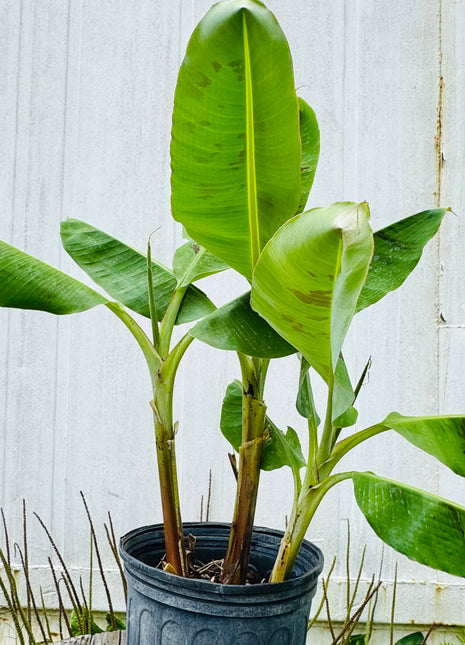

Dwarf Cavendish Banana (Musa Acuminata)
Dwarf Cavendish Banana (Musa acuminata ‘Dwarf Cavendish’) — Locally Grown in Pierson, Florida at Flowing Well Tree FarmTropical Fruiting Plant • Fast-Producing Edible Perennial • High-Yield Homestead Crop • Florida-Grown Food Forest, Backyard Orchard & Subtropical Landscape Plant Dwarf Cavendish Banana (Musa acuminata ‘Dwarf Cavendish’) is one of the most widely grown banana varieties in the world, prized for its reliable fruit production, compact growth habit, and fast turnaround from planting to harvest. Known for its sweet dessert bananas and vigorous tropical growth, it is a cornerstone species for homesteads, food forests, and edible landscapes in warm climates like Florida. At Flowing Well Tree Farm in Pierson, Florida, we grow Dwarf Cavendish Banana as premium subtropical stock selected for strong rhizome development, vigorous shoot production, and reliable performance in Florida’s heat, humidity, rainfall cycles, and sandy soils. Each plant is field-established under real Florida conditions to ensure rapid growth, strong establishment, and consistent fruiting potential. When you buy Dwarf Cavendish Banana here, you are not receiving weak indoor-started plants—you are getting Florida-adapted banana stock conditioned for outdoor production, fast growth, and long-term fruiting success. That local adaptation matters. Musa acuminata performs best when established directly in warm, humid, Florida-grown conditions where root systems can develop rapidly and support heavy fruit production cycles. Why Locally Grown Matters for Banana Plants Starting with Florida-grown stock provides key advantages: Faster establishment and growth in subtropical conditions Stronger root and rhizome development in sandy soils Improved heat and humidity tolerance Better storm recovery after wind damage Higher survival rates in outdoor planting systems More consistent fruiting potential in Florida climates This creates a highly productive tropical fruit system capable of rapid output. Fruit Production & Edible Value Dwarf Cavendish is a high-value edible fruit plant: Produces sweet dessert bananas with smooth texture Fruit develops in large hanging bunches Excellent for fresh eating, smoothies, baking, and cooking Reliable production in warm climates Fast fruiting cycle compared to many tree crops Highly productive once established and mature It is one of the most dependable banana varieties for home production. Growth Habit & Structural Function Dwarf Cavendish is a fast-growing tropical perennial: 6–10 ft mature height depending on conditions Clumping growth habit with multiple pseudostems Rapid vegetative growth in warm weather Each stalk fruits once, then is replaced by new shoots Creates dense tropical foliage structure Excellent for edible landscaping and food forest layers It functions as both a food crop and tropical landscape feature. Ecological & Landscape Benefits Banana plants contribute to tropical ecosystem structure: Large leaves provide shade and microclimate cooling Dense clumps create habitat for beneficial insects Improves organic matter as leaves decompose Enhances food forest humidity and soil health Supports layered tropical planting systems Ideal companion plant in subtropical gardens It plays an important role in productive tropical systems. Climate & Site Adaptability Dwarf Cavendish thrives in Florida conditions: Excellent performance in hot, humid climates Grows rapidly during warm seasons Sensitive to frost but recovers from root systems Thrives in rich, well-drained soils Performs best in sheltered, wind-protected locations Highly productive in South and Central Florida It is one of the most reliable bananas for Florida growers. USDA Growing Zones Best suited for Zones 9–11, with peak performance in South and Central Florida and other frost-free or protected subtropical regions. Light Requirements For best growth and fruit production: Full sun preferred for maximum yield Tolerates partial shade in food forest systems Sun exposure increases growth speed and fruiting potential Ideal for open tropical and subtropical landscapes Soil & Site Requirements Highly adaptable but productive in rich soils: Prefers fertile, well-drained soil Thrives in sandy Florida soils with organic amendments Benefits from compost and mulch-heavy environments Requires good drainage to prevent root stress Performs best in nutrient-rich food forest systems Planting Guidance (Grower Recommended) For best long-term performance: Plant in full sun to partial shade Dig wide planting area to encourage root expansion Set at original soil level Water deeply after planting Apply thick mulch layer to retain moisture and build soil health Space 6–10 ft apart for clumping expansion Protect from strong winds when young if possible We can assist with tropical food forest design, edible landscape planning, and banana grove installation. Watering & Establishment Water frequently during establishment and dry periods. Bananas require consistent moisture for best growth. Once established, clumps become highly productive with regular rainfall and irrigation support. Fertilizer Moderate to high nutrient needs: Responds strongly to organic compost and regular feeding Potassium-rich fertilizers support fruit development Frequent light feeding improves growth and yield Avoid nutrient deficiency for optimal bunch size Pruning & Maintenance Moderate maintenance: Remove spent fruiting stalks after harvest Thin clumps to maintain airflow and vigor Encourage new sucker growth for continuous production Remove damaged leaves as needed Highly productive with active management Why This Is a Smarter Long-Term Investment ✔ Locally grown in Florida for maximum adaptation ✔ Fast-producing tropical fruit crop ✔ High-yield edible landscape staple ✔ Excellent for food forests and homesteads ✔ Rapid growth and quick harvest cycles ✔ Strong recovery from seasonal stress ✔ Improves tropical microclimate systems ✔ Grower-direct quality for Florida conditions The Real Value This isn’t just a banana plant—it’s a fast-producing tropical food system that delivers rapid harvests, dense edible landscape structure, and long-term food security. When you plant Dwarf Cavendish Banana, you’re investing in a Florida-adapted tropical fruiting system that produces abundant bananas, builds food forest productivity, and transforms landscapes into high-yield edible ecosystems within a single growing season.
$26.00 - $55.00
-


Fig Celeste (Ficus carica ‘Celeste’)
Fig ‘Celeste’ (Ficus carica ‘Celeste’) — Locally Grown in Pierson, Florida at Flowing Well Tree Farm Edible Fruit Tree • Fast-Establishing Fig Variety • Heat-Tolerant Backyard Orchard Tree • Florida-Grown Fruit Stock Fig ‘Celeste’ (Ficus carica ‘Celeste’) is one of the most reliable and widely grown fig varieties for the southeastern United States, valued for its exceptional sweetness, compact growth habit, and strong performance in warm climates. Known for producing small to medium-sized brown-purple fruit with rich, honey-like flavor, ‘Celeste’ is a staple in home orchards, edible landscapes, and small-scale food production systems throughout Florida. When you buy Fig ‘Celeste’ here, you're not getting stressed, long-shipped nursery stock—you’re getting locally grown, Florida-adapted plants produced in Pierson and conditioned to thrive in Florida’s heat, humidity, sandy soils, and seasonal rainfall patterns. That matters for long-term productivity. Locally grown figs establish faster, develop stronger root systems, and adapt more quickly to real-world Florida growing conditions, leading to better fruiting performance and improved long-term survival. This is direct-from-grower edible fruit stock. Visit the farm, see how our fruit trees are grown, and receive practical guidance on orchard spacing, pruning systems, and productive backyard food landscapes. Fig ‘Celeste’ is especially valued because it combines high fruit quality with dependable production and strong adaptability in Florida gardens. Why Locally Grown Matters for Fig Trees Starting with Florida-grown stock provides important advantages: Faster root establishment in sandy soils Better adaptation to Florida heat and humidity Improved drought tolerance after establishment Stronger early growth and structure Reduced transplant shock Better long-term fruiting consistency It creates a stronger foundation for productive fruit production. Fruit Quality & Production Value Fig ‘Celeste’ is prized for its outstanding edible quality: Sweet, rich, honey-flavored fruit Light strawberry-colored interior Reliable annual production in warm climates Excellent for fresh eating Good for preserves, drying, and baking One of the most dependable figs for Florida gardens It is often considered a “starter fig” due to its ease of production and reliability. Compact Growth & Landscape Use ‘Celeste’ fits well into smaller spaces: 8–12 ft mature height (can be maintained smaller with pruning) 8–12 ft spread Naturally compact, multi-stem habit Easily managed as a shrub or small tree Excellent for backyard orchards and edible landscapes Its manageable size makes it ideal for residential planting. Climate & Site Adaptability Fig ‘Celeste’ performs well in Florida conditions when properly established: Thrives in warm, humid climates Tolerates drought once established Performs well in sandy and loamy soils Prefers well-drained planting sites Handles heat exceptionally well Requires protection from prolonged cold in northern zones It is one of the most reliable fig varieties for Florida growers. USDA Growing Zones Best suited for Zones 7–10, performing strongly throughout Florida and the southeastern United States. Light Requirements For best fruit production: Full sun preferred Minimum 6–8 hours of direct sunlight daily Reduced fruiting in shaded conditions Soil & Site Requirements Adapted to typical Florida orchard conditions: Prefers well-drained sandy or loamy soils Tolerates low fertility conditions Performs best in slightly elevated sites Avoid poorly drained or constantly wet soils Benefits from organic mulch and soil improvement Planting Guidance (Grower Recommended) For best establishment and production: Plant in full sun locations Dig planting hole 2–3× wider than root ball Plant at original soil depth Water thoroughly after planting Apply mulch while keeping away from trunk base Space adequately for mature canopy development Prune lightly to encourage structure and airflow We can assist with orchard layout planning, pruning systems, and edible landscape design. Watering & Establishment Water regularly during the first growing season to establish strong roots. Once established, Fig ‘Celeste’ becomes moderately drought tolerant and performs well with minimal irrigation. Fertilizer Moderate fertilization is recommended: Light balanced fertilizer during growing season Avoid excessive nitrogen (can reduce fruiting) Organic compost improves long-term soil health Best production occurs with balanced nutrition Pruning & Maintenance Low to moderate maintenance: Prune during dormant season to shape and manage size Remove dead or crossing branches Maintain open canopy for sunlight penetration Can be trained as shrub or small tree form Why This Is a Smarter Long-Term Investment ✔ Locally grown in Florida for superior adaptation ✔ One of the most reliable fig varieties for the Southeast ✔ High-quality sweet fruit production ✔ Compact size for small spaces and home orchards ✔ Strong performance in heat and humidity ✔ Excellent edible landscape species ✔ Low-maintenance fruit tree once established ✔ Grower-direct guidance for orchard success The Real Value This isn’t just a fruit tree—it’s a productive food source for your landscape. You’re not simply planting a fig. You’re building an edible system, producing fresh fruit at home, improving landscape resilience, and investing in a long-term source of food, shade, and sustainability for years to come.
$16.00 - $50.00
-


Cedar Elm (Ulmus Crassifolia)
Cedar Elm (Ulmus crassifolia) — Locally Grown in Pierson, Florida at Flowing Well Tree Farm Native Shade Tree • Tough Urban Hardwood • Drought-Resilient Elm • Florida-Grown Restoration Stock Cedar Elm (Ulmus crassifolia) is one of the toughest native hardwood trees in the southern United States, valued for its durability, adaptability, and dependable shade production. Naturally found in upland woods, limestone soils, and mixed hardwood forests across the Southeast and Texas region, Cedar Elm is widely used in restoration projects, urban landscapes, windbreak plantings, and large-scale native canopy systems. When you buy Cedar Elm here, you're not getting weak, over-irrigated nursery stock—you’re getting locally grown, field-conditioned trees produced in Pierson and adapted to Florida’s heat, humidity, sandy soils, and seasonal weather stress. That matters for long-term success. Locally grown Cedar Elm develops stronger root systems, adjusts faster after planting, and is better equipped to handle Florida’s variable rainfall, drought periods, and high-heat conditions. This is direct-from-grower native hardwood stock. Visit the farm, see how our shade trees are grown, and receive practical guidance on canopy planning, spacing, and long-term landscape development. Cedar Elm is especially valuable because it combines toughness, shade production, and adaptability in a way few native hardwoods can match. Why Locally Grown Matters for Cedar Elm Starting with Florida-grown stock provides important advantages: Better adaptation to Florida heat and humidity Stronger root system development before planting Improved drought and stress tolerance Faster establishment in field conditions Greater resilience in urban and rural landscapes Better long-term survival in restoration sites It creates a stronger foundation for durable canopy establishment. Shade & Canopy Value Cedar Elm is a reliable native shade tree: Moderate to fast growth rate Develops a broad, rounded canopy over time Excellent for residential shade and large properties Reduces heat in open landscapes Provides long-term canopy structure It is widely used where dependable shade and toughness are both required. Wildlife & Ecological Importance Cedar Elm supports native ecosystems in multiple ways: Produces small seeds consumed by birds Supports native insects and pollinators Provides nesting and shelter habitat Contributes to biodiversity in mixed hardwood forests Strengthens ecological function in restoration plantings It is a steady, functional component of native woodland systems. Climate & Site Adaptability One of Cedar Elm’s strongest traits is its adaptability: Native to upland woods and limestone soils Tolerates drought once established Performs well in sandy and loamy soils Handles heat and humidity effectively Adapts to urban and disturbed sites More tolerant of stress than many elm species It is a dependable choice for challenging planting environments. USDA Growing Zones Best suited for Zones 6–9, performing well throughout Florida and much of the southeastern United States. Mature Size & Growth Habit A strong native shade tree: 40–70 ft mature height 30–50 ft mature spread Rounded, spreading canopy Strong central trunk with age Long-lived under proper conditions Provides reliable mid-to-large scale shade. Light Requirements For best growth: Full sun preferred Minimum 6 hours of direct sunlight daily Best canopy development in open areas Soil & Site Requirements Highly adaptable native hardwood: Prefers well-drained soils Tolerates sandy, loamy, and rocky soils Performs well in low fertility conditions Handles occasional drought stress Avoid consistently flooded soils Planting Guidance (Grower Recommended) For best establishment: Plant in full sun locations Dig hole 2–3× wider than root ball Plant at original soil depth Water thoroughly after planting Apply mulch around root zone Keep mulch away from trunk base Maintain regular watering during establishment We can assist with shade planning, spacing, and long-term canopy design. Watering & Establishment Water regularly during the first 1–2 growing seasons. Once established, Cedar Elm becomes highly resilient and moderately drought tolerant. Fertilizer Low to moderate requirements: Light balanced fertilizer during establishment if needed Avoid excessive nitrogen applications Performs well in natural soils Minimal fertilization once established Pruning & Maintenance Low maintenance once established: Prune early to develop structure Remove crossing or damaged branches as needed Naturally develops a strong canopy form Long-term maintenance is minimal Why This Is a Smarter Long-Term Investment ✔ Locally grown in Florida for stronger field performance ✔ Extremely tough native hardwood tree ✔ Reliable shade and canopy development ✔ Highly adaptable to stress conditions ✔ Excellent urban and rural landscape tree ✔ Strong drought tolerance once established ✔ Valuable wildlife and ecosystem support species ✔ Grower-direct planting guidance and support The Real Value This isn’t just a shade tree—it’s a long-term structural backbone for the landscape. You’re not simply planting an elm. You’re building durable canopy cover, supporting wildlife habitat, improving landscape resilience, and investing in a native hardwood that will continue to strengthen and mature for generations.
$50.00
-


Mayhaw (Crataegus Aestivalis)
Mayhaw (Crataegus aestivalis) — Locally Grown in Pierson, Florida at Flowing Well Tree Farm Native Fruit Tree • Wetland Adapted Hawthorn • Jelly-Producing Heritage Species • Florida-Grown Restoration Stock Mayhaw (Crataegus aestivalis) is a highly valued native southeastern fruit tree known for its small apple-like fruit used traditionally in jellies, preserves, and specialty foods. Naturally found in swampy lowlands, floodplains, and wet woodland edges, Mayhaw is one of the most important heritage fruiting species of the southern United States and is widely used in restoration plantings, wetland-edge landscapes, and native edible systems. When you buy Mayhaw here, you're not getting weak, overprotected nursery stock—you’re getting locally grown, Florida-adapted trees produced in Pierson and conditioned for real Florida growing conditions including heat, humidity, seasonal flooding, sandy soils, and drought cycles. That matters for long-term success. Locally grown Mayhaw establishes faster, develops stronger root systems, and performs more reliably in Florida’s variable wet-to-dry landscape conditions compared to non-local stock. This is direct-from-grower edible native tree stock. Visit the farm, see how our wetland-adapted fruit trees are grown, and receive practical guidance on spacing, orchard design, and long-term lowland food forest development. Mayhaw is especially valuable because it combines native ecological function with historic fruit production in wetland and transition zone landscapes. Why Locally Grown Matters for Mayhaw Starting with Florida-grown stock provides key advantages: Better adaptation to Florida heat and humidity Stronger root system development in sandy and wet soils Improved tolerance to seasonal flooding and drought cycles Faster establishment in field conditions Reduced transplant shock Better long-term survival in restoration sites It creates a stronger foundation for wetland-edge orchard success. Fruit Quality & Traditional Value Mayhaw is a classic southern heritage fruit: Produces small, apple-like red fruit Traditionally used for jellies and preserves High pectin content ideal for cooking Tart, flavorful fruit prized in southern cuisine Strong cultural and historical food value Excellent for specialty edible landscapes It is one of the most iconic native fruit trees of the Southeast. Wildlife & Ecological Importance Mayhaw provides important ecosystem benefits: Fruits consumed by birds and wildlife Supports pollinators during spring bloom Provides nesting and cover in wetland edges Enhances biodiversity in lowland ecosystems Important food source in native habitat systems It is both a food-producing and habitat-supporting species. Wetland Adaptation & Site Value Mayhaw is uniquely adapted to challenging moisture conditions: Native to swampy bottomlands and floodplains Tolerates seasonal flooding Performs well in wet soils and drainage edges Adapted to fluctuating water tables Can also grow in upland garden soils with proper drainage It is one of the best native fruit trees for wet landscape zones. USDA Growing Zones Best suited for Zones 6–9, performing strongly throughout Florida and the southeastern United States in both wetland and managed orchard conditions. Mature Size & Growth Habit A small to medium native fruit tree: 15–30 ft mature height 15–25 ft spread Rounded canopy with thorny hawthorn structure Long-lived under natural conditions Can be trained for orchard production Ideal for small orchards and habitat food plantings. Light Requirements For best fruit production: Full sun preferred Tolerates partial shade More sun improves flowering and fruit yield Best performance in open wetland-edge sites Soil & Site Requirements Adapted to Florida lowland conditions: Tolerates wet, poorly drained soils Performs well in floodplains and drainage areas Also adapts to sandy loam with moisture retention Prefers slightly acidic soils Benefits from organic mulch and natural soil structure Planting Guidance (Grower Recommended) For best establishment and production: Plant in full sun wetland-edge or orchard sites Dig hole 2–3× wider than root ball Plant at original soil depth Water thoroughly after planting Apply mulch while keeping away from trunk base Space appropriately for mature canopy development Protect young plants from competition in early stages We can assist with wetland orchard layout, spacing, and restoration design. Watering & Establishment Water regularly during the first 1–2 growing seasons. Once established, Mayhaw becomes highly adaptable to both wet and seasonally dry conditions. Fertilizer Low to moderate requirements: Light balanced fertilizer during establishment if needed Organic compost improves long-term soil health Avoid excessive nitrogen applications Performs best in natural soil conditions Pruning & Maintenance Low maintenance once established: Prune early for structure and access Remove crossing or weak branches as needed Can be trained for easier fruit harvest Naturally forms a dense canopy Why This Is a Smarter Long-Term Investment ✔ Locally grown in Florida for superior field adaptation ✔ Native wetland-adapted fruit tree ✔ Traditional jelly and preserve fruit species ✔ Excellent wildlife and pollinator value ✔ Strong performance in floodplain and drainage areas ✔ Ideal for restoration and edible wetland systems ✔ Long-lived native fruiting tree ✔ Grower-direct planting and orchard guidance The Real Value This isn’t just a fruit tree—it’s a piece of southern food heritage and wetland ecology. You’re not simply planting Mayhaw. You’re restoring native lowland systems, producing traditional edible fruit, supporting wildlife habitat, and investing in a resilient native tree that connects Florida landscapes to generations of ecological and cultural history.
$16.00
-


Native Muscadine Grape "Delicious" (Vitis rotundifolia ‘Delicious’ )
Locally Grown in Pierson, Florida — Direct from the Grower at Flowing Well Tree Farm Sweet Southern Flavor • Heavy Producer • Florida-Adapted Edible Vine • Built for Long-Term Harvest Success When you buy Muscadine Grape ‘Delicious’ (Vitis rotundifolia ‘Delicious’) here, you’re not getting anonymous nursery stock shipped in from another region—you’re getting vines grown directly in Pierson, raised in real Florida heat, humidity, and soil conditions from the beginning. That matters when it comes to survival, establishment, and long-term fruit production. This is true direct-from-grower material. You can visit the farm, walk the rows, see the vines in production, and get real guidance from the people who actually grow them. When questions come up about planting, spacing, or training, you’re not guessing—you’re getting answers based on how these vines perform in real landscapes, not just in theory. ‘Delicious’ is selected for one thing growers and homeowners both care about: reliable, sweet fruit that actually performs year after year in Southern conditions. Why Locally Grown Makes the Difference Muscadines are naturally tough, but locally grown stock takes performance a step further. These vines are already conditioned to Florida’s climate before they ever leave the farm. That means: Easier establishment in home landscapes Less transplant stress Stronger early growth More consistent fruiting behavior Better long-term vine resilience It’s a smarter starting point for a plant you expect to produce for years. Sweet Southern Fruit with Real Garden Value ‘Delicious’ lives up to its name with large, sweet bronze-to-bronze-purple grapes that are especially prized for fresh eating right off the vine. Perfect for: Fresh eating and snacking Juices and smoothies Jams and jellies Desserts and baking Homemade wine This is a true edible landscape vine—productive, flavorful, and dependable. USDA Growing Zones Best suited for Zones 7–10, thriving across Florida and much of the Southeastern United States. Growth Habit & Landscape Use A vigorous deciduous climbing vine that can easily reach 15–25+ feet with proper support. Ideal for: Trellises Pergolas Fences Arbors Edible garden structures When properly trained, it becomes both a food-producing vine and a functional landscape feature. Sun Requirements Full sun (6–8+ hours daily) is essential for maximum fruit production, sugar development, and strong vine structure. Planting Guidance (Grower Recommended) We don’t just sell vines—we help you set them up for long-term success: Choose a sunny site with strong structural support Dig a hole twice as wide as the root ball Plant at original container depth Water deeply after planting Apply mulch carefully, keeping it away from the trunk Install trellis or arbor at planting time for proper training If you visit the farm, we can help match the vine to your specific growing conditions and layout. Soil & Site Adaptability Performs best in: Well-drained sandy or loamy soils Slightly acidic pH Moderate organic content Once established, it handles Florida heat, humidity, and summer rainfall patterns with ease. Watering & Establishment Regular watering is important during the first growing season. After establishment, muscadines become drought tolerant but produce best with deep watering during flowering and fruit development. Fertilizer Apply a balanced slow-release fertilizer in early spring and again midseason if needed. Avoid excess nitrogen, which encourages leafy growth at the expense of fruit production. Pruning & Productivity (Critical Step) Good pruning is what separates average vines from heavy producers: Prune in late winter while dormant Remove excess growth to focus energy on fruiting wood Maintain open airflow and structure Encourage strong, productive vine framework We guide pruning based on real field performance so your vine stays productive, not overgrown. Why This Is a Smarter Long-Term Investment ✔ Grown locally in Florida conditions from day one✔ Faster establishment and reduced transplant shock✔ Direct access to experienced growers✔ Proven performance in heat and humidity✔ Reliable, repeatable fruit production✔ Better adaptation than out-of-region nursery stock✔ Opportunity to visit, learn, and select in person The Bottom Line This isn’t just a grape vine purchase—it’s an edible landscape investment built on local experience, regional adaptation, and long-term performance. You’re not just planting a vine. You’re planting years of sweet harvests with a plant that already understands where it’s growing.
$16.00
-


Native Muscadine Grape "Carlos" (Vitis 'Welder')
Locally Grown in Pierson, Florida — Direct from the Grower at Flowing Well Tree Farm Heavy Producer • Florida-Adapted • Landscape-Ready Edible Vine • Built for Long-Term Harvest Success When you purchase Muscadine Grape ‘Carlos’ (Vitis ‘Carlos’) here, you’re not buying a generic mail-order vine—you’re getting fruiting stock grown directly in Pierson, hardened in real Florida heat, humidity, and soil conditions from the start. That difference shows up later in your landscape: stronger establishment, fewer losses, and far more reliable production. This is direct-from-grower material. You can visit the farm, walk the trellis areas, and see how these vines are trained, managed, and selected for performance. When you ask questions, you’re talking to the people who actually grow them—not a call center or reseller. That means better guidance, more accurate planting advice, and a vine set up for long-term success instead of short-term sale. ‘Carlos’ is one of the most dependable muscadine varieties for Southern growers because it was chosen for exactly what matters in Florida landscapes: productivity, disease resistance, and climate adaptability. Why Buying Locally Grown Matters Muscadines are tough, but they perform best when they’re raised in the same kind of environment where they’ll be planted. These vines are grown outdoors in Florida conditions, meaning they are already adapted to heat, humidity, rainfall swings, and native soils. That translates into: Faster establishment Less transplant shock More consistent fruit production Stronger long-term vine structure It’s not just a vine—it’s a regionally conditioned planting investment. Heavy Producer with Real Edible Value ‘Carlos’ is known for one thing above all: yield. It produces abundant clusters of bronze muscadine grapes with a sweet-tart flavor that works extremely well for: Fresh eating Juices and ciders Jams and jellies Desserts Homemade wine This is a true Southern production grape—reliable, productive, and built for repeat harvests year after year. USDA Growing Zones Best suited for Zones 7–10, with excellent performance throughout Florida and the Southeast. Growth Habit & Landscape Use A vigorous deciduous climbing vine that can easily reach 15–25+ feet when supported properly. Ideal for: Trellises Fences Arbors Pergolas Edible landscape designs When trained correctly, it becomes both a food source and a functional shade/structure vine. Sun Requirements Full sun (6–8+ hours daily) is essential for strong fruiting, sugar development, and overall vine health. Planting Guidance (Grower Recommended) We don’t just sell vines—we help set them up for production: Choose a sunny site with strong support structure Dig a hole twice as wide as the root ball Plant at original container depth Water deeply after planting Mulch lightly, keeping mulch away from the stem Install trellis or arbor immediately for proper training If you visit the farm, we can help you plan spacing and structure based on your specific property and goals. Soil & Adaptability Performs extremely well in Florida soils and prefers: Well-drained sandy or loamy soils Slightly acidic pH Moderate organic matter Once established, it handles heat and drought well, making it a strong low-maintenance edible landscape choice. Watering & Establishment Regular watering is important during the first establishment period. After rooting in, muscadines become highly drought tolerant but still benefit from deep watering during flowering and fruit development for maximum yield. Fertilizer Apply a balanced slow-release fertilizer in early spring, with a light midsummer application if needed. Avoid over-fertilizing with nitrogen, which can reduce fruiting and increase excessive leafy growth. Pruning & Structure (Key to Productivity) Proper pruning is what turns a vine into a high producer: Prune in late winter while dormant Remove excess growth to encourage fruiting wood Maintain open airflow and structure Focus energy on productive vines, not excess foliage We provide real-world pruning guidance based on how these vines actually perform in Florida landscapes—not textbook theory. Why This Is a Smarter Long-Term Investment ✔ Grown locally in Florida climate from day one✔ Proven adaptation to heat, humidity, and soil conditions✔ Direct grower support for planting and training✔ Higher survival and stronger establishment rates✔ Reliable, repeatable fruit production✔ Better disease resilience from regionally grown stock✔ Opportunity to visit, learn, and select in person The Real Difference This isn’t just a grape vine purchase—it’s a long-term edible landscape decision backed by local production, hands-on expertise, and real Florida field conditions. You’re not just planting a vine. You’re setting up years of harvests with a plant that already knows how to grow where you live.
$16.00


Flowing Well Tree Farm BOGO Sale
Buy One, Get One FREE! Must add 2 quantity at "Check-Out" to receive BOGO.
It's the perfect time to grow your landscape with the Flowing Well Tree Farm BOGO Sale! For a limited time, purchase one qualifying plant and receive another of equal or lesser value FREE.
Whether you're creating a pollinator garden, planting a privacy hedge, adding shade trees, or expanding your edible landscape, our BOGO Sale makes it easy to bring home more for less.
Choose From Our Premium Selection
- Florida Native Trees & Shrubs
- Pollinator-Friendly Plants
- Fruit Trees & Edible Plants
- Fast-Growing Plants
Why Shop Flowing Well Tree Farm?
- Locally grown in Pierson, Florida
- Premium-quality plants grown for Southern landscapes
- Large selection of native and fruiting plants
- Knowledgeable growers ready to help you choose the right plants
- Great prices on healthy, vigorous plants
Whether you're planting one tree or transforming an entire property, our BOGO Sale is one of the best values of the season.
Visit the Farm
Flowing Well Tree Farm
Pierson, Florida
📞 386-343-0312
Hours
- Monday–Friday (By Appointment): 8:00 AM – 5:00 PM
- Saturday (Walk-Ins Welcome): 9:00 AM – 4:00 PM
Shop online at FlowingWellTreeFarm.com or visit the farm to browse our ever-changing inventory of premium native and fruiting plants.
Grow More. Save More. Plant More—with the Flowing Well Tree Farm BOGO Sale!