


Animal Friendly
-


Florida Crest Nectarine (Prunus persica ‘Florida Crest’)
Florida Crest Nectarine (Prunus persica ‘Florida Crest’) — Grafted & Locally Grown in Pierson, Florida at Flowing Well Tree Farm Low-Chill Fruit Tree • Early Season Nectarine • Edible Landscape Favorite • Florida-Adapted Grafted Stock When you buy Florida Crest Nectarine here, you’re not getting generic nursery fruit trees shipped from cooler climates—you’re getting grafted trees grown and finished at Pierson, selected specifically for Florida heat, humidity, and low-chill fruiting performance. That matters. Grafted, locally grown trees establish faster, respond better to Florida soils, and begin their productive life with a head start in both structure and fruiting potential. You’re not correcting climate mismatch—you’re starting with a tree already built for it. This is direct-from-grower material. You can visit the farm, see how fruit trees are grafted and trained, and get real guidance from people who work with these varieties in Florida conditions every season—not generic orchard instructions. Florida Crest is one of the most reliable nectarines for warm climates because it was developed specifically for low-chill production and consistent fruit set in Southern regions. Why Locally Grown, Grafted Trees Perform Better Starting with grafted, Florida-grown stock provides clear advantages: Faster time to fruit compared to seed-grown trees Stronger adaptation to heat and humidity Reduced transplant shock in Florida soils More predictable flowering and fruiting cycles Better long-term orchard performance in warm climates It’s a smarter foundation for a productive home orchard. Early Season, Smooth-Skinned Fruit Florida Crest produces attractive nectarines with: Red-blushed, smooth skin (no fuzz) Firm, flavorful yellow flesh Early-season ripening for extended harvest windows Excellent fresh eating and culinary use It’s one of the better choices for dependable fruit production in warm regions. Spring Bloom & Landscape Value Before fruiting, the tree produces: Beautiful spring blossoms Strong pollinator attraction Ornamental value in edible landscapes Seasonal color that enhances home orchards It functions as both a productive fruit tree and a flowering landscape feature. USDA Growing Zones Best suited for Zones 8–10, with strong performance in Florida and similar warm-climate regions. Mature Size & Growth Habit A manageable home orchard tree: 10–15 ft tall Similar spread Can be kept smaller and more productive with consistent pruning. Light Requirements Requires full sun (6–8+ hours daily) for optimal fruiting, sugar development, and overall tree health. Soil & Site Requirements Performs best in: Well-drained sandy or loamy soils Slightly acidic to neutral pH Elevated or well-aerated planting sites Avoid low-lying areas or soils that retain water, as nectarines are sensitive to “wet feet.” Planting Guidance (Grower Recommended) We focus on long-term fruiting success: Select a sunny site with good airflow Dig a hole twice as wide as the root ball Plant at original container depth Backfill with native soil and water deeply Apply mulch, keeping it away from the trunk Maintain consistent watering during establishment If you visit the farm, we can help match placement to your soil and microclimate for better fruit production. Watering & Establishment Water regularly during the first growing season to establish strong roots. Once established, provide deep watering during dry periods, especially during flowering and fruit development for best fruit quality. Fertilizer Apply balanced slow-release fruit tree fertilizer in early spring Light feeding after harvest may support growth if needed Avoid excessive nitrogen, which reduces fruit quality and increases weak growth Pruning & Maintenance Annual pruning is essential: Prune in late winter during dormancy Maintain an open-center structure for airflow Remove dead, damaged, or crossing branches Thin canopy for better sunlight penetration and fruit sizing Proper pruning directly improves fruit quality and tree health. Why This Is a Smarter Long-Term Investment ✔ Grafted and grown locally in Florida conditions✔ Faster, more reliable fruit production✔ Direct grower expertise for orchard success✔ Low-chill variety bred for warm climates✔ Better adaptation than out-of-region nursery stock✔ Strong edible + ornamental landscape value✔ Opportunity to visit, learn, and select in person The Real Value This isn’t just a nectarine tree—it’s a climate-matched fruiting system built for Florida success. You’re not just planting a tree. You’re planting an early-season harvest engine that gets better with every year of care.
$65.00
-


Sunmist Nectarine (Prunus persica var. nucipersica)
Sunmist Nectarine (Prunus persica var. nucipersica) — Locally Grafted in Pierson, Florida at Flowing Well Tree Farm Low-Chill Fruit Tree • Early Season Nectarine • Edible Landscape Favorite • Florida-Grown Grafted Stock When you buy Sunmist Nectarine here, you’re not getting generic orchard stock shipped from cooler production regions—you’re getting grafted trees grown and finished in Pierson, already conditioned for Florida heat, humidity, and low-chill fruiting performance. That matters. Locally grafted fruit trees establish faster, handle transplant stress better, and begin their productive life already adapted to the climate they’re being planted into. You’re not forcing adaptation—you’re starting with it built in. This is direct-from-grower material. You can visit the farm, see how nectarines are grafted and trained, and get real-world guidance from people who work with these varieties in Florida conditions every season—not generalized nursery advice. Sunmist is valued for its reliable fruiting in warm climates and its combination of ornamental bloom and edible harvest potential. Why Locally Grafted Trees Perform Better Starting with Florida-grown grafted stock provides real advantages: Faster transition into fruit production Improved adaptation to heat and humidity Reduced transplant shock in sandy soils More consistent flowering and fruit set Stronger long-term orchard performance It’s a more reliable foundation for a productive home orchard. Smooth, Sweet Early-Season Fruit Sunmist Nectarine produces attractive fruit with: Smooth, fuzz-free skin Sweet, flavorful flesh Early-season ripening window Excellent fresh eating quality It’s a dependable option for gardeners who want consistent nectarine production in warm climates. Ornamental Spring Bloom Value Before fruiting, Sunmist provides: Attractive spring blossoms Strong pollinator support Seasonal ornamental interest in edible landscapes A visually appealing early-season display It functions as both a fruit tree and a flowering landscape feature. USDA Growing Zones Best suited for Zones 8–10, performing well in Florida and other warm Southern climates with mild winters. Mature Size & Growth Habit A manageable fruit tree: 10–15 ft tall Similar spread when unpruned Can be maintained smaller and more productive with regular pruning. Light Requirements Requires full sun (6–8+ hours daily) for best flowering, fruit development, and sugar content. Soil & Site Requirements Performs best in: Well-drained sandy or loamy soils Slightly acidic to neutral pH Open, well-ventilated planting sites Avoid poorly drained or waterlogged soils, which can lead to root stress and disease issues. Planting Guidance (Grower Recommended) We prioritize long-term orchard success: Select a full sun location with good airflow Dig a hole twice as wide as the root ball Plant at original container soil level Backfill with native soil and water deeply Apply mulch, keeping it away from the trunk Maintain consistent watering during establishment If you visit the farm, we can help match varieties to your property conditions and goals. Watering & Establishment Water regularly during the first growing season to build a strong root system. Once established, provide deep watering during dry periods, especially during flowering and fruit development. Fertilizer Apply balanced slow-release fruit tree fertilizer in early spring Optional light feeding after harvest if growth slows Avoid excessive nitrogen, which reduces fruit quality and encourages weak growth Pruning & Maintenance Annual dormant pruning is essential: Prune in late winter Maintain an open-center structure for airflow and sunlight Remove dead, weak, or crossing branches Thin canopy to improve fruit size and quality Proper pruning directly impacts yield and tree health. Why This Is a Smarter Long-Term Investment ✔ Grafted and locally grown in Florida conditions✔ Faster establishment and earlier fruit production✔ Direct grower expertise for orchard success✔ Low-chill variety suited for warm climates✔ Strong edible + ornamental landscape value✔ Better adaptation than out-of-region nursery stock✔ Opportunity to visit, learn, and select in person The Real Value This isn’t just a nectarine tree—it’s a climate-adapted fruiting system designed for reliable production in Florida landscapes. You’re not just planting a tree. You’re planting a long-term harvest that improves with every season.
$65.00
-


Florida Gold Plum (Prunus umbellata) Coming Soon
Florida Gold Plum (Prunus umbellata) — Locally Grafted in Pierson, Florida at Flowing Well Tree Farm Native Fruiting Tree • Early Spring Blooms • Wildlife Value • Florida-Grown Grafted Stock When you buy Florida Gold Plum here, you’re not getting generic nursery seedlings or out-of-region stock—you’re getting locally grafted trees grown in Pierson, already conditioned for Florida heat, humidity, sandy soils, and seasonal rainfall patterns from the start. That matters. Locally grown, grafted native fruit trees establish faster, handle transplant stress better, and begin productive growth with a stronger, more stable root system. You’re not asking the tree to adapt after planting—it already has. This is direct-from-grower material. You can visit the farm, see how native fruit trees are grafted and selected, and get real guidance from people who grow and field-test these varieties in Florida landscapes every year. Florida Gold Plum is especially valuable because it blends native resilience with ornamental bloom, edible fruit potential, and strong wildlife support. Why Locally Grafted Stock Matters Starting with Florida-grown grafted trees gives clear advantages: Faster establishment in home landscapes Stronger adaptation to Florida soil and climate conditions Reduced transplant shock More reliable flowering and fruiting behavior Improved long-term survivability in heat and drought cycles It’s a stronger foundation for a long-lived native fruit tree. Early Spring Bloom & Wildlife Value Florida Gold Plum is one of the earliest blooming native fruit trees: Fragrant white spring flowers Heavy pollinator attraction (bees and native insects) Early seasonal food source for wildlife Strong ornamental bloom display before full leaf-out It brings life to the landscape when many trees are still dormant. Golden Native Fruit The tree produces small golden-yellow plums that are: Naturally attractive to birds and wildlife Suitable for fresh eating when fully ripe Excellent for jellies, preserves, and wildlife planting systems A valuable seasonal food source in native ecosystems It’s as much a wildlife tree as it is a human food source. USDA Growing Zones Best suited for Zones 7–10, performing well across Florida and the Southeastern United States. Mature Size & Growth Habit A naturally graceful native tree: 15–25 ft tall Similar spread at maturity Forms an open, spreading canopy that fits well into naturalized landscapes and edible forest systems. Light Requirements Performs best in full sun, which improves flowering, fruiting, and overall structural development. Tolerates partial shade but produces less fruit. Soil & Site Adaptability Highly adaptable native species: Prefers well-drained sandy or loamy soils Tolerates moderately poor soils once established Does not perform well in standing water or poorly drained sites Well-suited for naturalized and restoration plantings It is a resilient choice for challenging landscape conditions. Planting Guidance (Grower Recommended) We focus on long-term success in real Florida landscapes: Select a full sun site with airflow and space to mature Dig a hole twice as wide as the root ball Plant at original soil level (do not bury trunk flare) Backfill with native soil and water deeply Apply mulch, keeping it away from the trunk Maintain consistent watering during establishment If you visit the farm, we can help you choose placement based on orchard, wildlife, or restoration goals. Watering & Establishment Water regularly during the first growing season to build a strong root system. Once established, Florida Gold Plum becomes moderately drought tolerant and only needs occasional deep watering during extended dry periods. Fertilizer Minimal fertilization required: Apply balanced slow-release fertilizer in early spring if needed Avoid over-fertilizing, which can reduce flowering and fruiting Pruning & Maintenance Low-maintenance native tree: Light pruning in late winter or after fruiting if needed Remove dead, damaged, or crossing branches Maintain natural structure rather than heavy shaping Why This Is a Smarter Long-Term Investment ✔ Locally grafted in Florida growing conditions✔ Faster establishment and stronger early growth✔ Direct grower expertise for planting success✔ Native fruit tree with wildlife and ecological value✔ Early spring bloom for pollinator support✔ Adapted to Southeastern heat and soil conditions✔ Opportunity to visit, learn, and select in person The Real Value This isn’t just a plum tree—it’s a native ecosystem asset with edible and wildlife benefits. You’re not just planting a tree. You’re planting early-season food, pollinator support, and long-term resilience in a Florida-adapted native species.
$50.00
-


Rice Hull 15 Gallon Bucket
Rice Hulls – Natural Weed Control & Soil Protection Rice hulls are an all-natural, eco-friendly way to control weeds while improving soil health at the same time. When applied as a mulch around plants, rice hulls create a light but effective barrier that blocks sunlight from reaching weed seeds, helping prevent unwanted growth without the use of chemicals. They also help retain soil moisture, reduce soil temperature swings, and improve air flow around plant roots. Over time, rice hulls slowly break down and add organic matter to the soil, improving structure and drainage. How to Use Spread a 1–2 inch layer around the base of plants Keep mulch a few inches away from plant stems Reapply as needed as material breaks down Ideal for garden beds, fruit trees, shrubs, and potted plants Benefits Suppresses weed growth naturally Improves soil moisture retention Adds organic matter as it decomposes Lightweight and easy to apply Safe for pets, people, and plants Helps prevent soil compaction Rice hulls are an excellent choice for gardeners who want a clean, natural solution for weed control while improving long-term soil health.
$7.00 - $20.00
-


Native Milkweed Orange (Asclepias Tuberosa)
Butterfly Milkweed (Asclepias tuberosa) — Locally Grown in Pierson, Florida at Flowing Well Tree Farm Native Pollinator Plant • Monarch Host Plant • Drought-Tolerant Wildflower • Florida-Grown Restoration Stock Butterfly Milkweed (Asclepias tuberosa) is one of the most valuable native wildflowers for pollinator habitat, restoration projects, and wildlife-friendly landscapes throughout Florida and the Southeast. Known for its brilliant orange blooms, exceptional drought tolerance, and critical role in supporting Monarch butterflies, this long-lived native perennial brings both ecological function and natural beauty to any planting. When you buy Butterfly Milkweed here, you're not getting greenhouse-grown plants shipped from another region—you’re getting locally grown, Florida-adapted plants produced in Pierson and conditioned to thrive in Florida's heat, humidity, sandy soils, and seasonal rainfall patterns. That matters for establishment and long-term performance. Locally grown milkweed develops stronger root systems, adapts more quickly after planting, and often performs better under real Florida growing conditions than plants produced outside the region. This is direct-from-grower native plant material. Visit the farm, see how our native plants are grown, and receive practical guidance on pollinator habitat creation, restoration projects, and native landscape design. Butterfly Milkweed is especially important because it serves as a host plant for Monarch butterfly caterpillars while providing abundant nectar for a wide range of pollinators. Why Locally Grown Matters for Native Milkweed Starting with Florida-grown stock offers important advantages: Better adaptation to Florida heat and humidity Stronger root system development Improved drought tolerance after establishment Faster acclimation to landscape conditions Increased long-term survival and vigor Better performance in restoration and pollinator projects It creates a stronger foundation for successful native plant establishment. Pollinator & Wildlife Value Butterfly Milkweed is one of the most beneficial native plants you can add to a landscape: Essential host plant for Monarch butterflies Supports Queen and Soldier butterflies Provides nectar for bees, butterflies, and beneficial insects Increases pollinator diversity Helps restore declining butterfly habitat Contributes to healthy native ecosystems A single planting can become a valuable food source for pollinators throughout the growing season. Bright Seasonal Color Butterfly Milkweed is prized for its vibrant blooms: Clusters of brilliant orange flowers Long flowering season from spring through summer Excellent addition to native gardens and pollinator beds Provides continuous visual interest Combines well with native grasses and wildflowers Its vivid flowers create a striking display while serving an important ecological purpose. Climate & Site Adaptability Butterfly Milkweed thrives in challenging Florida conditions: Native to dry prairies, pinelands, and open habitats Highly drought tolerant once established Performs well in sandy and well-drained soils Handles Florida heat exceptionally well Tolerates low fertility conditions Unsuitable for poorly drained or constantly wet sites This species excels in naturalized landscapes, restoration sites, and low-maintenance gardens. USDA Growing Zones Best suited for Zones 4–9, performing exceptionally well throughout Florida and much of the southeastern United States. Mature Size & Growth Habit A compact native perennial: 1–3 ft mature height 1–2 ft spread Upright, clump-forming habit Returns annually from deep roots Long-lived once established Light Requirements For best flowering performance: Full sun preferred Minimum 6 hours of direct sunlight daily Reduced flowering in heavy shade Soil & Site Requirements Adapted to Florida's native soils: Prefers well-drained sandy soils Tolerates poor, low-fertility sites Performs well in native landscapes Avoid heavy clay and poorly drained locations Does not tolerate standing water Planting Guidance (Grower Recommended) For best establishment: Plant in full sun Choose well-drained soil Dig planting hole 2–3× wider than root ball Plant at original soil depth Water thoroughly after planting Apply mulch while keeping away from the crown Avoid disturbing established roots We can help with pollinator garden layouts, restoration plantings, and Monarch habitat planning. Watering & Establishment Water regularly during the first growing season while roots become established. Once established, Butterfly Milkweed becomes highly drought tolerant and requires minimal supplemental irrigation. Fertilizer Minimal fertilization needed: Performs well in native soils Light balanced fertilizer only if necessary Avoid excessive nitrogen applications Overfertilization may reduce flowering Pruning & Maintenance Extremely low maintenance: Remove spent flower stalks if desired Leave seed pods for wildlife and natural reseeding Cut back dormant growth in late winter No routine pruning required Why This Is a Smarter Long-Term Investment ✔ Locally grown in Florida for superior adaptation ✔ Essential host plant for Monarch butterflies ✔ Supports bees, butterflies, and native pollinators ✔ Brilliant orange flowers throughout the season ✔ Highly drought tolerant once established ✔ Excellent for restoration and pollinator habitats ✔ Low-maintenance native perennial ✔ Grower-direct expertise and planting guidance The Real Value This isn't just a flowering perennial—it's a critical piece of native habitat. You're not simply planting color in the landscape. You're creating food sources for pollinators, supporting Monarch butterfly populations, and helping restore the ecological connections that make Florida's native environments thrive.
$12.00
-


Swamp Tupelo (Nyssa biflora)
Swamp Tupelo (Nyssa biflora) — Locally Grown in Pierson, Florida at Flowing Well Tree Farm Native Wetland Tree • Flood-Tolerant Hardwood • Wildlife Value Species • Florida-Grown Restoration Stock Swamp Tupelo (Nyssa biflora) is one of the most important native wetland trees in the southeastern United States. Known for its exceptional flood tolerance, strong wildlife value, beautiful fall color, and ability to thrive where many trees cannot, Swamp Tupelo is widely used in wetland restoration projects, stormwater systems, pond edges, conservation lands, and naturalized Florida landscapes. When you buy Swamp Tupelo here, you're not getting nursery-grown stock raised under protected conditions—you’re getting locally grown, field-conditioned trees produced in Pierson and adapted to Florida’s heat, humidity, seasonal flooding, and challenging soil conditions. That matters for successful establishment. Locally grown Swamp Tupelo develops stronger root systems, adapts more quickly to field conditions, and is better prepared to handle the environmental stresses common throughout Florida’s wetland and lowland habitats. This is direct-from-grower restoration-grade material. Visit the farm, see how our native trees are grown, and receive practical guidance on wetland restoration, pond-edge plantings, stormwater projects, and long-term canopy development. Swamp Tupelo is especially valuable because it provides exceptional ecological benefits while thriving in areas where many landscape trees struggle to survive. Why Locally Grown Matters for Swamp Tupelo Starting with Florida-grown stock offers important advantages: Better adaptation to Florida heat and humidity Stronger root development before planting Improved establishment in wetland environments Faster acclimation to local growing conditions Greater resilience during seasonal flooding Better long-term survival in restoration projects It creates a stronger foundation for long-term success. Wetland & Restoration Value Swamp Tupelo is one of the most dependable trees for wetland restoration: Thrives in flood-prone environments Excellent for pond and lake edges Commonly used in stormwater management systems Stabilizes soils in wet conditions Supports long-term wetland ecosystem development Ideal for conservation and mitigation projects Its ability to tolerate standing water makes it an essential species for many Florida restoration efforts. Wildlife & Ecological Importance This species plays a critical role in native ecosystems: Produces fruit consumed by birds and wildlife Supports migratory and resident bird populations Provides shelter and nesting habitat Enhances biodiversity in wetland environments Contributes to healthy aquatic and terrestrial food chains Important component of native floodplain forests It transforms planting sites into functioning wildlife habitat. Outstanding Seasonal Interest Swamp Tupelo delivers year-round beauty: Glossy green foliage throughout the growing season Spectacular red, orange, and yellow fall color Attractive bark and branching structure Wildlife-attracting fruit production Strong natural form and landscape presence Few native wetland trees offer this combination of ecological and ornamental value. Climate & Site Adaptability Swamp Tupelo is highly adaptable to Florida conditions: Native to swamps, floodplains, and wet forests Tolerates prolonged flooding Thrives in moist and saturated soils Performs well in acidic conditions Handles Florida heat exceptionally well Adaptable to both natural and constructed wetlands It excels in locations where water is regularly present. USDA Growing Zones Best suited for Zones 5–9, performing exceptionally well throughout Florida and much of the southeastern United States. Mature Size & Growth Habit A long-lived native canopy tree: 40–80 ft mature height 25–40 ft mature spread Upright pyramidal form when young Broad, rounded canopy with age Strong central trunk and durable structure Provides substantial shade and long-term canopy benefits. Light Requirements For best growth and canopy development: Full sun preferred Tolerates partial shade Maximum growth occurs in open locations Soil & Site Requirements Adapted to wetland environments: Prefers moist to wet soils Tolerates prolonged seasonal flooding Performs well in acidic soils Suitable for pond margins and low-lying areas Thrives in locations with poor drainage One of the best native trees available for wet sites. Planting Guidance (Grower Recommended) For successful establishment: Plant in full sun to partial shade Select moist or wet planting locations Dig planting hole 2–3× wider than root ball Plant at original soil depth Water thoroughly after planting Apply mulch around root zone Keep mulch away from direct trunk contact Maintain adequate moisture during establishment We can assist with restoration planning, pond-edge layouts, wetland projects, and native canopy design. Watering & Establishment Water regularly during the first growing season. Once established, Swamp Tupelo thrives in moist conditions and readily tolerates periodic flooding and saturated soils. Fertilizer Minimal fertilizer requirements: Typically performs well without supplemental feeding Light balanced fertilizer only if necessary Avoid excessive fertilization Best growth often occurs under natural soil conditions Pruning & Maintenance Very low maintenance: Minimal pruning required after establishment Remove damaged branches as needed Naturally develops strong structural form Long-term maintenance requirements are low An excellent choice for naturalized landscapes and restoration projects. Why This Is a Smarter Long-Term Investment ✔ Locally grown in Florida for superior field performance ✔ One of the best native trees for wetland environments ✔ Exceptional flood tolerance ✔ Valuable wildlife food and habitat source ✔ Outstanding fall color and ornamental appeal ✔ Ideal for ponds, lakes, stormwater systems, and restoration sites ✔ Long-lived native canopy tree ✔ Grower-direct expertise and planting support The Real Value This isn’t just a wetland tree—it’s a cornerstone species for healthy Florida ecosystems. You’re not simply planting a tree. You’re creating wildlife habitat, stabilizing wetland environments, improving ecological function, and establishing a long-lived native canopy that will continue benefiting the landscape for generations.
$40.00
-


Silver Saw Palmettos (Serenoa repens 'Silver')
Silver Saw Palmetto (Serenoa repens ‘Silver’) — Locally Grown in Pierson, Florida at Flowing Well Tree Farm Native Palm Shrub • Drought-Tolerant Florida Groundcover • Coastal Landscape Plant • Florida-Grown Native Stock Silver Saw Palmetto (Serenoa repens ‘Silver’) is a striking native palm selection known for its silvery-blue fronds, extreme toughness, and ability to thrive in some of Florida’s harshest growing conditions. A natural variation of the classic Saw Palmetto, this silver form is especially valued for its ornamental color, wildlife value, and unmatched performance in sandy, dry, and coastal environments. When you buy Silver Saw Palmetto here, you're not getting mass-produced, over-irrigated landscape material—you’re getting locally grown, Florida-adapted plants produced in Pierson and conditioned for real-world Florida stress conditions including heat, drought, wind, salt exposure, and nutrient-poor soils. That matters for long-term establishment. Locally grown palmettos develop stronger rhizome systems, adapt faster after planting, and outperform imported or heavily container-grown stock when placed into true Florida landscapes. This is direct-from-grower native material. Visit the farm, see how our native palms are grown, and receive practical guidance on spacing, mass plantings, coastal landscaping, and long-term habitat design. Silver Saw Palmetto is especially valuable because it delivers both rugged ecological function and high-end ornamental color in the landscape. Why Locally Grown Matters for Saw Palmetto Starting with Florida-grown stock provides key advantages: Better adaptation to Florida heat and humidity Stronger root and rhizome development Improved drought and salt tolerance after planting Faster establishment in sandy soils Greater resilience in exposed coastal sites Better long-term survival in native landscapes It creates a stronger foundation for long-term landscape stability. Ornamental Value & Silver Foliage Silver Saw Palmetto is prized for its unique appearance: Distinct silvery-blue fan fronds Strong architectural landscape texture Year-round evergreen presence Excellent contrast plant in modern landscapes Adds color variation to native plantings Works well in both naturalized and designed gardens Its silver coloration makes it one of the most visually striking native palmettos available. Wildlife & Ecological Importance This species plays a major role in Florida ecosystems: Produces fruit consumed by birds and mammals Provides shelter for wildlife and ground-nesting species Supports pollinators and native insects Creates protective cover in understory systems Enhances biodiversity in coastal and upland habitats Important habitat plant for native species It is both a structural and food resource in native landscapes. Climate & Site Adaptability Silver Saw Palmetto is one of Florida’s toughest native plants: Native to sandy coastal plains and uplands Extremely drought tolerant once established Handles salt spray and coastal exposure Thrives in full sun conditions Performs well in poor, well-drained soils Highly wind and storm resistant It excels in low-maintenance, high-stress environments. USDA Growing Zones Best suited for Zones 8–11, performing exceptionally well throughout Florida and coastal regions of the southeastern United States. Mature Size & Growth Habit A low-growing native palm shrub: 3–8 ft mature height (fronds may extend wider) Spreading clumping habit via underground stems Dense, ground-level structure Extremely long-lived once established Slowly expanding colonies over time Ideal for mass plantings and natural groundcover systems. Light Requirements For best performance: Full sun preferred Tolerates partial shade Strongest color and density in open sites Soil & Site Requirements Highly adapted to Florida soils: Prefers sandy, well-drained soils Tolerates extremely poor fertility Performs well in coastal environments Handles dry, xeric conditions Avoid prolonged standing water Planting Guidance (Grower Recommended) For best establishment: Plant in full sun for best growth and color Space appropriately for mature spread Dig hole 2–3× wider than root mass Plant at original soil depth Water thoroughly after planting Apply light mulch, keeping crown exposed Avoid overwatering after establishment begins We can assist with large-scale mass planting layouts, coastal buffering, and native groundcover design. Watering & Establishment Water regularly during the first growing season. Once established, Silver Saw Palmetto becomes extremely drought tolerant and often thrives with little to no supplemental irrigation. Fertilizer Minimal fertilizer requirements: Generally not required Light feeding only during establishment if needed Performs best in natural soils Avoid excessive fertilization Pruning & Maintenance Very low maintenance: No regular pruning required Remove only dead or damaged fronds if desired Naturally maintains its structure Extremely long-lived and self-sustaining Why This Is a Smarter Long-Term Investment ✔ Locally grown in Florida for superior field performance ✔ Extremely drought and salt tolerant native plant ✔ Unique silver-blue ornamental foliage ✔ Excellent coastal and xeriscape species ✔ Critical wildlife food and habitat plant ✔ Long-lived, self-expanding native groundcover ✔ Ideal for restoration and low-maintenance landscapes ✔ Grower-direct expertise for native plant success The Real Value This isn’t just a landscape palm—it’s a living groundcover system built for Florida conditions. You’re not simply planting palmettos. You’re stabilizing soil, supporting wildlife, building drought-proof landscapes, and investing in a native plant that defines the structure and resilience of Florida’s natural ecosystems for generations.
$20.00
-


Florida Privet (Forestiera Segregata)
Florida Privet (Forestiera segregata) — Locally Grown in Pierson, Florida at Flowing Well Tree Farm Native Evergreen Hedge • Coastal Windbreak Shrub • Wildlife Screen Plant • Florida-Grown Restoration Stock Florida Privet (Forestiera segregata), also known as Florida swamp privet or stretchberry, is one of the most versatile native shrubs in the state. Naturally found in coastal hammocks, pine rocklands, and upland thickets, it is widely used in native hedges, privacy screens, wildlife corridors, and restoration plantings throughout Florida. When you buy Florida Privet here, you're not getting weak, over-irrigated ornamental hedge stock—you’re getting locally grown, Florida-adapted plants produced in Pierson and conditioned for real Florida growing conditions including heat, humidity, sandy soils, coastal wind exposure, and seasonal drought cycles. That matters for long-term success. Locally grown Florida Privet establishes faster, develops stronger root systems, and performs more reliably in harsh Florida landscapes compared to non-local nursery material. This is direct-from-grower native hedge stock. Visit the farm, see how our screening shrubs are grown, and receive practical guidance on hedge spacing, windbreak design, and long-term native landscape structure. Florida Privet is especially valuable because it delivers dense evergreen screening while supporting native wildlife in a tough, low-maintenance system. Why Locally Grown Matters for Florida Privet Starting with Florida-grown stock provides key advantages: Better adaptation to Florida heat and humidity Stronger root system development before planting Improved drought and wind tolerance after establishment Faster hedge formation in real landscape conditions Greater resilience in coastal and inland sites Better long-term survival in restoration plantings It creates a stronger foundation for durable native screening systems. Hedge & Screening Value Florida Privet is one of the best native hedge plants in the state: Dense, fine-textured evergreen foliage Naturally compact and multi-branched growth habit Excellent for privacy screens and property borders Easily shaped into formal or natural hedges Strong windbreak performance in exposed sites It is widely used as a native alternative to non-native hedge species. Wildlife & Ecological Importance This species plays a strong role in native ecosystems: Produces berries consumed by birds Provides nesting and cover habitat Supports pollinators with seasonal flowering Enhances biodiversity in coastal and upland systems Forms protective structure in wildlife corridors It is both a functional hedge and a wildlife-supporting plant. Climate & Site Adaptability Florida Privet is extremely well adapted to local conditions: Native to coastal hammocks and upland thickets Highly heat and humidity tolerant Performs well in sandy and limestone soils Tolerates coastal wind and salt exposure Moderately drought tolerant once established Performs well in full sun to partial shade It is one of Florida’s most reliable native screening shrubs. USDA Growing Zones Best suited for Zones 8–11, performing strongly throughout Florida and coastal southeastern regions. Mature Size & Growth Habit A dense native shrub or small hedge tree: 6–12 ft mature height 4–8 ft spread Multi-stem, highly branched structure Naturally compact growth habit Long-lived evergreen form in warm climates Ideal for long-term hedge systems. Light Requirements For best density and structure: Full sun preferred Tolerates partial shade Denser growth in higher light conditions Soil & Site Requirements Highly adaptable native shrub: Prefers well-drained sandy soils Tolerates limestone and coastal soils Performs well in low fertility conditions Handles drought once established Avoid prolonged flooding or waterlogged sites Planting Guidance (Grower Recommended) For best hedge establishment: Plant in full sun or partial shade hedge rows Space plants 3–6 ft apart depending on hedge density goal Dig hole 2–3× wider than root ball Plant at original soil depth Water thoroughly after planting Apply mulch while keeping away from stems Maintain consistent watering during establishment period We can assist with hedge layout design, spacing strategies, and windbreak planning. Watering & Establishment Water regularly during the first growing season. Once established, Florida Privet becomes highly drought tolerant and thrives on minimal irrigation. Fertilizer Low fertilizer requirements: Light balanced fertilizer during establishment if needed Organic compost supports long-term hedge health Avoid excessive fertilization Performs best in natural soil conditions Pruning & Maintenance Low to moderate maintenance: Responds very well to pruning and shaping Can be maintained as formal hedge or natural screen Prune 1–2 times per year for density control Naturally fills in over time Why This Is a Smarter Long-Term Investment ✔ Locally grown in Florida for superior adaptation ✔ Native evergreen hedge and screening plant ✔ Excellent coastal wind and salt tolerance ✔ Strong wildlife and pollinator support species ✔ Dense, fast-forming privacy screen ✔ Low-maintenance long-term landscape solution ✔ Ideal native alternative to non-native hedges ✔ Grower-direct guidance for hedge establishment The Real Value This isn’t just a hedge plant—it’s living landscape infrastructure. You’re not simply planting Florida Privet. You’re building privacy, stabilizing property edges, supporting wildlife habitat, and creating a resilient native screening system that performs year after year in Florida’s toughest conditions.
$125.00
-


Coral Honey Suckle (Lonicera sempervirens)
Coral Honeysuckle (Lonicera sempervirens) — Locally Grown in Pierson, Florida at Flowing Well Tree Farm Native Flowering Vine • Hummingbird Magnet • Evergreen-to-Semi-Evergreen Climber • Florida-Grown Pollinator Stock Coral Honeysuckle (Lonicera sempervirens) is one of Florida’s most valuable native flowering vines, known for its vibrant coral-red tubular blooms, long flowering season, and exceptional importance to hummingbirds and native pollinators. Naturally found in woodlands, fence lines, and forest edges across the eastern United States, it is widely used in pollinator gardens, native landscapes, trellis systems, and wildlife habitat plantings. When you buy Coral Honeysuckle here, you're not getting weak, greenhouse-raised vine material—you’re getting locally grown, Florida-adapted plants produced in Pierson and conditioned for real Florida growing conditions including heat, humidity, sandy soils, seasonal rainfall variation, and summer stress periods. That matters for long-term success. Locally grown honeysuckle establishes faster, develops stronger root systems, and adapts more reliably once planted into Florida landscapes compared to non-local ornamental vine stock. This is direct-from-grower native vine material. Visit the farm, see how our pollinator vines are grown, and receive practical guidance on trellis training, wildlife garden design, and long-term vertical landscape planning. Coral Honeysuckle is especially valued because it combines continuous wildlife support with fast vertical coverage and long-lasting seasonal color. Why Locally Grown Matters for Coral Honeysuckle Starting with Florida-grown stock provides key advantages: Faster root establishment in sandy soils Better adaptation to Florida heat and humidity Improved drought tolerance after establishment Reduced transplant shock Stronger vine development and climbing performance Better long-term survival in native landscapes It creates a stronger foundation for successful pollinator vine systems. Pollinator & Wildlife Value Coral Honeysuckle is one of the top native hummingbird plants: Bright coral-red tubular flowers attract hummingbirds Supports bees and native pollinators Provides nectar over an extended blooming period Produces red berries eaten by birds Enhances biodiversity in native plant systems It is widely considered essential for wildlife-friendly landscapes. Ornamental & Landscape Value Beyond its ecological role, it is also highly ornamental: Showy clusters of red to coral flowers Attractive semi-evergreen foliage Twining vine habit ideal for vertical design Excellent for fences, arbors, and trellises Strong seasonal color and movement in the landscape It brings both structure and dynamic color to garden spaces. Growth Habit & Vertical Coverage Coral Honeysuckle is a reliable native climber: 10–20+ ft vine length with support Twining, non-invasive climbing habit Fast establishment under warm conditions Ideal for vertical garden systems Can be trained and controlled easily It is one of the best native alternatives to invasive ornamental vines. Climate & Site Adaptability This species is highly adapted to Florida conditions: Native to southeastern woodlands and edges Performs well in heat and humidity Tolerates sandy, well-drained soils Moderately drought tolerant once established Performs best in full sun to partial shade Highly resilient in mixed landscape environments It is a dependable native vine for warm climates. USDA Growing Zones Best suited for Zones 6–10, performing strongly throughout Florida and much of the southeastern United States. Light Requirements For best flowering performance: Full sun to partial shade More sun increases bloom production Tolerates filtered light in hotter sites Soil & Site Requirements Adapted to native soils: Prefers well-drained sandy or loamy soils Tolerates poor fertility conditions Benefits from organic mulch Avoid prolonged waterlogged conditions Performs well in naturalized garden settings Planting Guidance (Grower Recommended) For best establishment: Plant near trellis, fence, or arbor support Dig hole 2–3× wider than root ball Plant at original soil depth Water thoroughly after planting Apply mulch while keeping away from stem base Train vines early for structure and airflow Space for mature vine spread and coverage We can assist with trellis design, pollinator layout, and vertical garden planning. Watering & Establishment Water regularly during the first growing season. Once established, Coral Honeysuckle becomes moderately drought tolerant and thrives with minimal supplemental irrigation. Fertilizer Low to moderate requirements: Light balanced fertilizer during establishment if needed Organic compost improves flowering and growth Avoid excessive nitrogen to promote blooms Performs best in natural soil conditions Pruning & Maintenance Low maintenance vine: Prune lightly to control size and shape Remove tangled or overextended growth as needed Responds well to seasonal trimming Maintains flowering on new growth Why This Is a Smarter Long-Term Investment ✔ Locally grown in Florida for superior adaptation ✔ One of the best native hummingbird vines ✔ Long blooming season with high pollinator value ✔ Fast vertical coverage for fences and trellises ✔ Non-invasive native alternative to exotic vines ✔ High wildlife and ecological benefit species ✔ Low-maintenance long-term performance ✔ Grower-direct guidance for vine systems The Real Value This isn’t just a flowering vine—it’s a living pollinator corridor. You’re not simply planting Coral Honeysuckle. You’re feeding hummingbirds, supporting native pollinators, adding vertical beauty to the landscape, and building a resilient native vine system that brings continuous ecological and ornamental value year after year.
$15.00
-


Native Elderberry (Sambucus Nigra)
Native Elderberry (Sambucus nigra subsp. canadensis) — Locally Grown in Pierson, Florida at Flowing Well Tree Farm Native Fruit Shrub • Medicinal Berry Producer • Fast-Growing Wildlife Plant • Florida-Grown Edible Restoration Stock Native Elderberry (Sambucus nigra subsp. canadensis), commonly known as American Elderberry, is one of the most valuable native fruiting shrubs in North America. Known for its clusters of dark purple berries, fragrant white flower heads, and extremely fast growth rate, it is widely used in edible landscapes, wildlife habitat plantings, wetland edges, and restoration systems throughout Florida and the southeastern United States. When you buy Native Elderberry here, you're not getting weak, over-fertilized ornamental stock—you’re getting locally grown, Florida-adapted plants produced in Pierson and conditioned for real Florida growing conditions including heat, humidity, seasonal flooding, sandy soils, and drought cycles. That matters for long-term success. Locally grown elderberry establishes faster, develops stronger root systems, and adapts more reliably to Florida’s variable moisture conditions compared to non-local nursery stock. This is direct-from-grower edible native shrub material. Visit the farm, see how our fruiting and wildlife plants are grown, and receive practical guidance on spacing, pruning systems, and long-term food forest design. Native Elderberry is especially valuable because it combines rapid growth, medicinal fruit production, and exceptional wildlife support in one highly productive native shrub. Why Locally Grown Matters for Elderberry Starting with Florida-grown stock provides key advantages: Faster establishment in wet and sandy soils Better adaptation to heat and humidity Improved tolerance to seasonal flooding and drought Stronger root system development Faster canopy and fruiting development Better long-term survival in restoration sites It creates a stronger foundation for productive native shrub systems. Fruit, Flower & Medicinal Value Elderberry is one of the most useful native fruit shrubs: Dark purple berries used for syrups, jams, and extracts High antioxidant and immune-supporting properties Large, fragrant white flower clusters in spring and summer Widely used in herbal and medicinal traditions Excellent for culinary and functional food landscapes It is one of the most important native “superfruit” shrubs in North America. Wildlife & Ecological Importance Native Elderberry is a powerhouse for wildlife: Berries consumed by birds and small mammals Flowers attract bees and native pollinators Provides dense cover and nesting habitat Supports biodiversity in wetland and upland systems Important seasonal food source in native ecosystems It is both a food crop and a habitat-building species. Growth Habit & Landscape Value Elderberry is extremely fast-growing and productive: 6–12 ft mature height (can reach larger in ideal conditions) 6–10 ft spread Multi-stem shrub with rapid seasonal growth Ideal for hedgerows, food forests, and restoration rows Can be cut back and rejuvenated regularly It is one of the fastest establishing native shrubs available. Climate & Site Adaptability Native Elderberry thrives in Florida conditions: Native to wetlands, stream edges, and disturbed soils Tolerates seasonal flooding and wet soils Performs well in sandy or organic-rich soils Highly adaptable to heat and humidity Prefers full sun to partial shade Strong regrowth after pruning or stress It is especially valuable in lowland and drainage system plantings. USDA Growing Zones Best suited for Zones 4–9, performing strongly throughout Florida and much of the southeastern United States. Light Requirements For best fruit production: Full sun preferred Tolerates partial shade More sun improves flowering and berry yield Soil & Site Requirements Adapted to diverse Florida landscapes: Prefers moist, well-drained soils Tolerates seasonal flooding and wet conditions Performs well in sandy, loamy, or organic soils Benefits from mulch and soil improvement Avoid prolonged extreme drought without irrigation Planting Guidance (Grower Recommended) For best establishment and production: Plant in full sun or lightly shaded edible systems Dig hole 2–3× wider than root ball Plant at original soil depth Water thoroughly after planting Apply mulch while keeping away from stems Space 5–8 ft apart for hedgerow systems Cut back lightly to encourage branching We can assist with food forest design, hedgerow planning, and wetland-edge planting systems. Watering & Establishment Water regularly during the first growing season. Once established, Native Elderberry becomes highly adaptable to both wet and dry cycles but produces best with consistent moisture. Fertilizer Low to moderate requirements: Light balanced fertilizer during establishment if needed Organic compost improves fruit yield and soil health Avoid excessive nitrogen to maintain flowering balance Performs well in natural soil systems Pruning & Maintenance Moderate maintenance with high reward: Responds very well to pruning and cutting back Can be coppiced for renewed growth and higher yields Remove old stems to encourage new fruiting canes Pruning improves airflow and berry production Why This Is a Smarter Long-Term Investment ✔ Locally grown in Florida for superior adaptation ✔ Fast-growing native fruit and medicinal shrub ✔ High-value wildlife and pollinator plant ✔ Excellent for food forests and hedgerows ✔ Tolerates wet and variable soil conditions ✔ Strong regenerative growth after pruning ✔ Dual-purpose ecological and edible species ✔ Grower-direct guidance for productive systems The Real Value This isn’t just a shrub—it’s a living food and medicine system. You’re not simply planting Elderberry. You’re building a productive edible hedge, supporting wildlife, producing medicinal berries, and investing in a fast-growing native plant that delivers ecological function and harvest value year after year.
$12.00 - $21.00
-


Native Viburnum (Viburnum Obovatum)
Native Viburnum (Viburnum obovatum) — Locally Grown in Pierson, Florida at Flowing Well Tree FarmNative Evergreen Shrub/Small Tree • Dense Screening Plant • Pollinator Flowering Species • Florida-Grown Restoration & Hedgerow Stock Native Viburnum (Viburnum obovatum), commonly known as Walter’s Viburnum, is one of the most versatile and structurally important native shrubs in Florida ecosystems. Known for its dense evergreen foliage, fine branching habit, and seasonal clusters of small white flowers followed by dark fruit, this species is widely used in hedgerows, natural privacy screens, wildlife corridors, and habitat restoration plantings. Naturally found in hammocks, floodplains, and forest edges across the southeastern United States, Viburnum obovatum thrives in Florida’s heat, humidity, and variable soil conditions. At Flowing Well Tree Farm in Pierson, Florida, we grow this species as premium native stock specifically selected for strong branching, fast establishment, and long-term landscape performance. When you buy Native Viburnum here, you’re not receiving weak ornamental filler stock—you’re getting locally grown, Florida-adapted plants conditioned for real-world conditions including sandy soils, seasonal flooding, drought cycles, and intense summer heat. That local adaptation is critical. Viburnum obovatum is one of the best native plants for fast hedging and ecological structure, but only performs at its highest level when grown and hardened in similar conditions from the start. Why Locally Grown Matters for Native Viburnum Starting with Florida-grown stock provides major advantages: Faster establishment in sandy and variable soils Stronger branching structure for hedges and screens Improved heat and humidity tolerance Better long-term drought and flood cycle resilience Denser growth habit for privacy and habitat value Higher survival rates in restoration plantings This creates a more reliable and functional native hedge system from year one. Flowering, Fruit & Seasonal Value Native Viburnum provides year-round ecological and seasonal interest: Clusters of small white flowers in spring Nectar source for native bees and pollinators Dark berry-like drupes in late summer to fall Important seasonal food source for birds and wildlife Subtle but consistent ornamental appeal Naturalistic texture in native landscapes It delivers function without losing its refined native aesthetic. Wildlife & Habitat Importance Viburnum obovatum is a foundational wildlife shrub: Berries consumed by songbirds and small mammals Dense evergreen structure provides year-round cover Excellent nesting and shelter habitat in hedgerows Supports pollinators during spring bloom period Enhances corridor connectivity in fragmented landscapes It is one of the most dependable native species for habitat structure. Growth Habit & Landscape Value This is one of Florida’s best native screening plants: 8–15 ft shrub or small tree form (can be kept lower with pruning) Extremely dense, fine-textured branching habit Naturally forms thick hedges and living fences Responds exceptionally well to trimming and shaping Ideal for formal or naturalized native hedgerows Excellent substitute for non-native privacy shrubs It is widely considered one of the best native alternatives for evergreen screening. Climate & Site Adaptability Native Viburnum is highly adaptable across Florida: Native to southeastern U.S. wetlands and uplands Performs well in full sun to partial shade Tolerates seasonal flooding and drought once established Thrives in sandy, loamy, and organic soils Highly heat and humidity tolerant Performs well in both managed and natural systems It is one of the most flexible native shrubs available. USDA Growing Zones Best suited for Zones 7–10, performing strongly throughout Florida and the Gulf and coastal southeastern regions. Light Requirements For best density and flowering: Full sun to partial shade More sun increases density and flowering Partial shade helps in hotter inland sites Highly adaptable across light conditions Soil & Site Requirements Adapted to a wide range of Florida soils: Prefers moist, well-drained soils Tolerates sandy, clay, and organic soils Handles periodic wet conditions Benefits from mulch and organic matter Avoid permanently saturated stagnant sites Planting Guidance (Grower Recommended) For best hedge or specimen performance: Plant in full sun or partial shade Dig hole 2–3× wider than root ball Set at original soil depth Water deeply after planting Apply mulch to retain moisture and suppress weeds Space 4–6 ft apart for hedges or screening rows Prune lightly early to encourage branching density We can assist with hedge design, property screening layouts, and native landscape structuring. Watering & Establishment Water regularly during the first 1–2 growing seasons. Once established, Native Viburnum becomes highly resilient and can tolerate both drought and wet cycles common in Florida climates. Fertilizer Low-input native shrub: Minimal fertilizer required Compost improves density and flowering performance Avoid high nitrogen fertilizers (prevents overly loose growth) Performs best in natural soil systems Pruning & Maintenance Highly manageable and responsive: Responds extremely well to pruning and shaping Can be maintained as formal hedge or natural screen Benefits from periodic trimming for density Rebounds quickly after cutting Low maintenance in naturalized landscapes Why This Is a Smarter Long-Term Investment ✔ Locally grown in Florida for superior adaptation✔ One of the best native evergreen screening shrubs✔ Excellent hedge, buffer, and privacy plant✔ High wildlife and pollinator value✔ Strong tolerance to Florida’s climate extremes✔ Fast-forming dense structure for landscapes✔ Ideal for restoration and native hedgerows✔ Grower-direct expertise for real Florida systems The Real Value This isn’t just a landscape shrub—it’s a living structural system that creates privacy, supports wildlife, and restores native habitat function. When you plant Native Viburnum, you’re building a dense evergreen hedge that replaces non-native ornamentals with a resilient, ecologically valuable native alternative that improves every year it grows.
$22.00 - $115.00
-

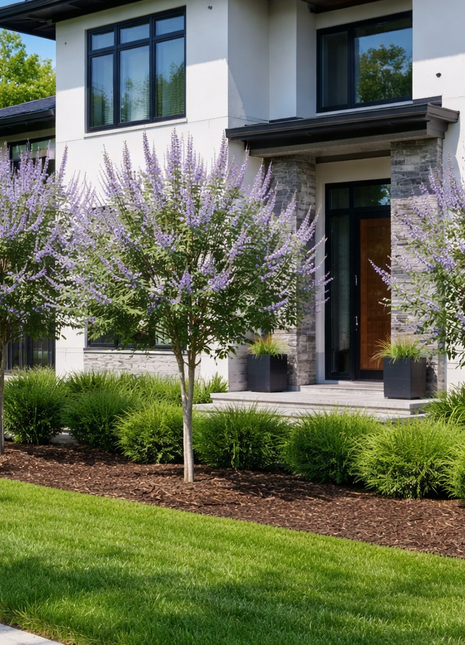
Vitex Tree (Vitex Agnus-Castus)
Vitex Tree (Vitex agnus-castus) Topiary — Locally Grown in Pierson, Florida at Flowing Well Tree FarmFlowering Ornamental Tree • Pollinator Magnet • Heat & Drought Tolerant Specimen • Florida-Grown Topiary & Landscape Accent Vitex Tree (Vitex agnus-castus), commonly known as Chaste Tree, is one of the most reliable and high-impact flowering landscape trees for Florida’s heat, humidity, and sandy soils. When trained as a topiary, it becomes a structured ornamental specimen that combines Mediterranean elegance with extreme Florida durability. Known for its long summer flower spikes in shades of lavender, violet, and blue, Vitex is a powerhouse pollinator plant that attracts bees, butterflies, and beneficial insects in massive numbers during peak bloom. At Flowing Well Tree Farm in Pierson, Florida, we grow select Vitex specimens trained as topiary forms for landscape focal points, entrance features, and structured native-adapted designs. When you buy Vitex Topiary here, you’re not getting weak, overgrown nursery material—you’re getting locally grown, Florida-hardened trees conditioned for real landscape performance including heat waves, drought cycles, sandy soils, and intense summer sun. That local adaptation matters. Vitex grown in Florida develops stronger branching structure, better bloom cycles, and far superior long-term resilience compared to greenhouse-raised imports. Why Locally Grown Matters for Vitex Topiary Starting with Florida-grown stock provides key advantages: Stronger branching structure for topiary training Faster establishment in sandy, low-fertility soils Improved heat and drought tolerance from early development More consistent flowering under Florida conditions Better structural response to pruning and shaping Higher long-term survival in unmanaged landscapes This creates a more durable and performance-driven ornamental specimen. Flowering & Ornamental Value Vitex is one of Florida’s most dramatic summer bloomers: Long spikes of lavender to violet-blue flowers Extended summer flowering period (often weeks to months) Strong visual contrast against green foliage High-impact ornamental color in landscape designs Excellent focal point for entryways and garden spaces Repeat bloom potential with pruning management It delivers a bold flowering presence during the hottest part of the year. Pollinator & Wildlife Importance Vitex is a recognized pollinator powerhouse: Attracts bees in extremely high numbers Supports butterflies and beneficial insects Provides critical nectar during summer dearth periods Enhances pollinator corridors in urban and rural landscapes Valuable for ecological planting systems despite ornamental origin It is one of the most visited flowering trees in bloom. Growth Habit & Topiary Structure When trained, Vitex becomes a refined architectural specimen: 10–20 ft small tree (variable depending on pruning) Naturally multi-stem but easily trained to single leader Responds exceptionally well to shaping and pruning Can be formed into lollipop, standard, or layered topiary styles Fast regrowth after structural cuts Maintains clean canopy with regular maintenance It is one of the best flowering trees for controlled design work. Climate & Site Adaptability Vitex performs exceptionally well in Florida environments: Thrives in full sun and high heat Extremely drought tolerant once established Handles sandy, well-drained soils with ease Adapts to urban, rural, and coastal-inland landscapes Tolerates humidity and seasonal rainfall variation Performs reliably in USDA Southern climates It is built for hot, open landscapes. USDA Growing Zones Best suited for Zones 6–9, with peak performance across Florida and the southeastern United States. Light Requirements For best flowering and structure: Full sun required for maximum bloom Reduced flowering in shaded environments High light levels produce stronger form and color Ideal for open landscape installations Soil & Site Requirements Adapted to Florida’s common soils: Prefers well-drained sandy soils Tolerates poor fertility and dry conditions Performs best with minimal soil amendment Avoid heavy, waterlogged soils Benefits from mulch during establishment Planting Guidance (Grower Recommended) For best topiary performance: Plant in full sun for strongest structure and bloom Dig hole 2–3× wider than root ball Set plant at original soil depth Water deeply after planting Apply mulch while keeping trunk base clear Stake if needed during early topiary training Prune early to establish desired shape We can assist with landscape design, specimen placement, and formal garden integration. Watering & Establishment Water regularly during the first growing season. Once established, Vitex becomes highly drought tolerant and thrives in low-maintenance Florida landscapes with minimal irrigation. Fertilizer Low-maintenance flowering tree: Minimal fertilizer required Light compost improves bloom production Avoid excessive nitrogen (reduces flowering intensity) Performs best in lean soil conditions Pruning & Maintenance Highly responsive ornamental species: Pruning encourages stronger flowering cycles Essential for maintaining topiary form Can be cut back heavily in late winter if needed Rapid regrowth after shaping cuts Low to moderate maintenance depending on design style Why This Is a Smarter Long-Term Investment ✔ Locally grown in Florida for superior adaptation✔ High-impact flowering summer ornamental tree✔ Excellent pollinator-supporting species✔ Ideal for topiary and structured landscape design✔ Extreme heat and drought tolerance✔ Fast regrowth and easy shaping response✔ Long blooming season with high visual payoff✔ Grower-direct quality for Florida landscapes The Real Value This isn’t just a flowering tree—it’s a sculpted landscape feature that delivers color, structure, and ecological function at the same time. When you plant a Vitex Topiary, you’re adding a controlled architectural focal point that thrives in Florida heat while supporting pollinators and delivering one of the most reliable summer bloom displays in the region.
$175.00 - $240.00


