
Products
-


African Rose Hibiscus (Hibiscus Acetosella)
African Rose Hibiscus (Hibiscus acetosella) — Locally Grown in Pierson, Florida at Flowing Well Tree Farm Bold Tropical Foliage • Edible Landscape Plant • Fast-Growing • Florida-Adapted from the Start When you buy African Rose Hibiscus here, you’re not getting greenhouse-raised filler stock or something trucked in from out of state—you’re getting plants grown directly in Pierson, hardened in real Florida heat, humidity, and rainfall conditions. That difference shows up quickly in the landscape: stronger establishment, richer color, and far better long-term performance. This is direct-from-grower material. You can visit the farm, see how it’s grown in full sun conditions, and talk directly with the people who cultivate it every day. That means real guidance on spacing, pruning, and placement—not generic instructions. You’re getting plants selected for how they actually perform in Florida landscapes, not just how they look in a pot. African Rose Hibiscus is one of those rare plants that delivers both ornamental impact and edible value, making it a standout for modern edible landscapes and food-focused gardens. Why Locally Grown Matters Because these plants are grown outdoors in Florida conditions from the beginning, they’re already adapted to: Heat and humidity Heavy summer rainfall Sandy, fast-draining soils Rapid seasonal growth cycles That means less transplant shock, faster establishment, and stronger performance once planted in your landscape. It’s not just a plant—it’s a head start. Bold Color with Real Landscape Presence African Rose Hibiscus is known for its dramatic burgundy to deep purple foliage that looks almost like a Japanese maple—but grows fast in tropical conditions where maples struggle. It creates instant visual impact in: Tropical landscapes Edible gardens Privacy plantings Pollinator gardens Container designs and accent beds The color intensifies in full sun, making it a natural focal point in warm-climate gardens. Edible, Functional, and Beautiful This plant isn’t just ornamental—it’s useful. Tender leaves have a tart, cranberry-like flavor and can be used for: Fresh salads Herbal teas Smoothies Stir-fries Garnishes and edible décor The flowers are also edible and attract pollinators throughout the growing season, adding ecological value along with beauty. USDA Growing Zones Best suited for Zones 8–11. In cooler regions, it can be grown as a seasonal annual or overwintered in containers. Mature Size & Growth Habit Fast-growing and highly responsive to pruning: 4–8 ft tall 3–5 ft wide It can be shaped into a fuller shrub or kept more compact depending on how it’s maintained. Light Requirements Performs best in full sun to partial shade. Full sun produces the deepest burgundy foliage and strongest growth. Planting Guidance (Grower-Based Recommendations) We don’t just sell plants—we help you set them up correctly: Choose a warm, sunny site with good airflow Dig a hole twice as wide as the root ball Plant at original container depth Water deeply after planting Apply mulch, keeping it away from the stem Space properly for airflow and mature size If you visit the farm, we can help you decide exactly where and how to use it based on your design goals. Soil & Site Flexibility Prefers fertile, well-drained soil enriched with organic matter, but adapts well to typical Florida sandy soils when properly maintained. Best performance comes from: Slightly acidic to neutral soil Consistent moisture with good drainage Organic matter or compost amendments Watering & Establishment Regular watering is important during establishment to encourage strong root development. Once established, it becomes moderately drought tolerant but performs best with consistent moisture during hot summer periods. Fertilizer Responds well to feeding: Balanced slow-release fertilizer in spring and midsummer Organic compost or soil amendments for long-term health Proper nutrition enhances both foliage color and growth density. Pruning & Maintenance (Key to Full Growth) This plant responds extremely well to pruning: Light trimming encourages bushier growth Cutting back leggy stems improves fullness Regular shaping maintains landscape design intent In cooler areas, it may die back and regrow seasonally Pruning is what turns it from a loose grower into a dense, high-impact landscape feature. Why This Is a Smarter Long-Term Choice ✔ Grown locally in Florida climate from the start✔ Faster establishment with less transplant stress✔ Direct access to growers for real guidance✔ Proven performance in heat, humidity, and rain✔ Dual-purpose: ornamental + edible use✔ Strong response to pruning and landscape shaping✔ Better adaptability than out-of-region nursery stock The Difference Is Noticeable Over Time This isn’t just an ornamental purchase—it’s a functional, edible, and landscape-driven plant grown with real Florida conditions in mind. You’re not just adding color to your garden. You’re adding a plant that already knows how to thrive where you live—and rewards you with both beauty and harvest potential.
$9.00
-


American Beautyberry (Callicarpa Americana)
American Beautyberry (Callicarpa americana) — Locally Grown in Pierson, Florida at Flowing Well Tree FarmNative Wildlife Berry Shrub • Pollinator Magnet • Heat-Tolerant Understory Plant • Florida-Grown Restoration Stock American Beautyberry (Callicarpa americana) is one of the most recognizable and ecologically important native shrubs in the southeastern United States. Known for its striking clusters of vivid purple berries that wrap tightly around arching green stems in late summer and fall, this plant delivers both ornamental impact and serious wildlife value in Florida landscapes. Naturally found in pine flatwoods, hammocks, and woodland edges, beautyberry is a resilient understory shrub that thrives in the same challenging Florida conditions we grow in every day at Flowing Well Tree Farm in Pierson. It is a foundational species for restoration plantings, wildlife corridors, native hedgerows, and naturalized residential landscapes. When you buy American Beautyberry here, you're not receiving stressed, greenhouse-softened ornamental stock—you’re getting locally grown, Florida-adapted native plants conditioned for real-world environments including heat, humidity, sandy soils, seasonal drought, and heavy summer rainfall cycles. That local adaptation matters. Beautyberry establishes faster, handles stress better, and forms denser, more productive shrub structure when grown from Florida-propagated stock rather than imported nursery material. Why Locally Grown Matters for Beautyberry Starting with Florida-grown stock gives long-term advantages: Faster establishment in sandy and nutrient-variable soils Improved tolerance to heat, humidity, and drought cycles Stronger natural branching and berry production Better resilience in restoration and unmanaged landscapes More reliable long-term survival in native ecosystems Faster transition into wildlife-supporting structure This creates a stronger, more functional native shrub from year one. Fruit, Ecological & Ornamental Value American Beautyberry is best known for its signature berry display, but its value goes far beyond aesthetics: Clusters of bright purple berries surrounding stems in fall Important seasonal food source for birds and small mammals Traditional use in natural and folk applications Aromatic foliage historically used as a natural insect deterrent High-impact ornamental color in native landscapes Excellent cut branches for natural arrangements It is one of the most visually distinctive native shrubs in North America. Wildlife & Pollinator Importance Beautyberry is a powerhouse for ecosystem support: Berries feed songbirds, quail, deer, and small mammals Flowers attract native bees and beneficial pollinators Dense branching provides cover and nesting habitat Supports late-season wildlife nutrition when food sources decline Enhances biodiversity in managed and natural systems It plays a key role in restoring functional Florida habitat. Growth Habit & Landscape Value American Beautyberry is fast-growing, adaptable, and easy to integrate: 4–8 ft mature height (can spread wider in ideal conditions) Arching multi-stem shrub with open, graceful structure Responds well to pruning and rejuvenation cutting Ideal for hedgerows, understory plantings, and mixed native systems Works well in mass plantings or naturalized groupings It provides structure without becoming aggressive or invasive. Climate & Site Adaptability Beautyberry is perfectly suited for Florida landscapes: Native throughout the southeastern U.S. Thrives in pine flatwoods and woodland edges Performs well in sandy, loamy, or disturbed soils Highly tolerant of heat and humidity Handles seasonal drought once established Prefers partial shade but adapts to full sun It is one of the most flexible native shrubs available for Florida restoration. USDA Growing Zones Best suited for Zones 6–10, with strong performance throughout Florida and the Gulf Coast region. Light Requirements For best structure and berry display: Partial shade preferred (natural woodland conditions) Tolerates full sun with adequate moisture More light increases berry production and density Soil & Site Requirements Adapted to a wide range of Florida conditions: Performs in sandy, loamy, or organic soils Tolerates low fertility environments Handles periodic drought once established Benefits from mulch and organic matter Avoid constantly waterlogged root zones Planting Guidance (Grower Recommended) For best establishment and long-term structure: Plant in partial shade or filtered sun Dig hole 2–3× wider than root ball Set plant at original soil depth Water deeply after planting Apply mulch to retain moisture and suppress weeds Space 4–6 ft apart for hedgerows or groupings Light pruning encourages fuller branching We can assist with native hedgerow design, understory planning, and habitat restoration layouts. Watering & Establishment Water regularly during the first growing season. Once established, American Beautyberry becomes highly drought tolerant while still responding positively to seasonal rainfall patterns typical of Florida. Fertilizer Low-maintenance native shrub: Minimal fertilizer required Compost improves structure and berry density Avoid heavy nitrogen inputs to maintain natural form Performs best in low-input ecological systems Pruning & Maintenance Very manageable and adaptable: Responds well to hard pruning or rejuvenation cuts Can be cut back annually for denser berry production Naturally regrows from base after trimming Pruning improves airflow and fruit visibility Low maintenance in naturalized landscapes Why This Is a Smarter Long-Term Investment ✔ Locally grown in Florida for superior adaptation✔ High-impact native wildlife berry producer✔ Excellent understory and hedgerow species✔ Strong pollinator and bird habitat value✔ Thrives in sandy, challenging soils✔ Low maintenance and highly resilient✔ Ideal for restoration and natural landscapes✔ Grower-direct knowledge for real Florida systems The Real Value This isn’t just a native shrub—it’s a seasonal food source, wildlife habitat engine, and structural backbone for Florida ecosystems. When you plant American Beautyberry, you’re adding color, function, and biodiversity to the landscape while building a resilient native system that improves year after year.
$9.00 - $21.00
-


American Elm (Ulmus americana)
Locally Grown in Pierson, Florida – Buy Directly From the Grower at Flowing Well Tree Farm | Shipping Available Skip stressed, overhandled big-box trees and invest in a higher-quality, locally adapted shade tree built for long-term success. At Flowing Well Tree Farm, our American Elm (Ulmus americana) trees are grown right here in Pierson, Florida, acclimated to real Southern heat, humidity, rainfall, and soil conditions for stronger establishment and better landscape performance. The American Elm is one of America’s most iconic shade trees, admired for its graceful vase-shaped canopy, fast growth, and massive cooling shade. With its elegant arching limbs and cathedral-like form, this timeless tree makes a dramatic statement in large landscapes while adding beauty, value, and comfort for generations. When properly planted and cared for, the American Elm becomes a true legacy tree—providing decades of shade, structure, and curb appeal. 🌱 Why Customers Love American Elm ✔ Fast-growing shade tree✔ Stunning vase-shaped, arching canopy✔ Massive cooling shade for homes and properties✔ Beautiful ornamental structure year-round✔ Excellent for large landscapes and estate plantings✔ Strong wildlife value for birds and pollinators✔ Long-lived investment tree for future generations 🌎 USDA Hardiness Zone USDA Zones: 3–9Best Florida Performance: Zones 7b–9a Performs best in Florida with good airflow, proper spacing, and well-drained soils. 🌳 About the Tree The American Elm is famous for its elegant branching habit that forms a broad, umbrella-like canopy. Historically planted along streets, estates, and parks throughout America, it remains one of the most beloved and recognizable shade trees ever grown. Its graceful form creates an unmatched landscape presence and works beautifully in: • Large residential landscapes• Farms and country properties• Estate entrances and long driveways• Parks and open spaces• Property borders with room to grow• Naturalized and legacy landscape designs ⚠️ This is a large canopy tree and should be planted where it has room to mature. ☀️ Sun Requirements Full sun preferred (6–8+ hours daily) • Best canopy development in full sun• Tolerates light partial shade when young• Sun exposure encourages stronger branching and fuller growth 🌱 Soil Requirements Highly adaptable to many Southern soil conditions. • Prefers well-drained sandy or loamy soils• Handles a wide range of soil types• Performs best with consistent moisture during establishment• Avoid prolonged saturated soils 💧 Watering Needs Water regularly during the first 1–2 years while establishing roots. Once established, American Elm becomes moderately drought tolerant, though deep watering during dry periods supports stronger growth and canopy development. 📏 Mature Size Height: 60–90+ feetSpread: 60–120 feet in ideal conditions Fast-growing with a broad, elegant canopy that creates substantial shade and a dramatic landscape centerpiece. ✂️ Pruning & Long-Term Care Proper structural pruning early in life helps develop a strong, healthy framework for decades of success. Best pruned in late winter while dormant: • Develop strong central structure• Remove weak or crossing branches• Improve long-term canopy strength• Maintain clearance near structures and driveways 🌿 Fertilizer Minimal feeding required once established. • Light spring fertilization during establishment if desired• Balanced slow-release fertilizer works best• Mulch improves soil moisture retention and root health 🌟 Why Buy From Flowing Well Tree Farm? When you buy directly from the grower, you are investing in stronger, healthier, landscape-ready trees grown specifically for Southern conditions. At Flowing Well Tree Farm, our American Elms are locally grown in Pierson, Florida, meaning they are acclimated to Florida heat, humidity, and rainfall before ever reaching your property. That translates into better establishment, stronger roots, and greater long-term success compared to trees shipped through multiple distribution centers. You are not just purchasing a tree—you are gaining direct access to knowledgeable growers who care about your long-term success. ✔ Tour the farm in person and hand-select your tree✔ Work directly with the owners for honest guidance✔ Personalized recommendations for your landscape goals✔ Expert planting and care advice for long-term success✔ Region-specific, locally adapted material✔ Higher-quality trees grown for Southern performance✔ A more personal experience that consistently goes above and beyond Whether you visit us in person or have trees shipped directly to your door, our goal is simple: help you plant smarter and grow something that lasts for generations. 📦 Shipping Available on Select Sizes🌳 Landscape-Ready, Farm-Grown Trees🚜 Buy Directly From the Grower📍 Pierson, Florida – Flowing Well Tree Farm
$125.00
-


American Fringe Tree (Chionanthus Virginicus)
American Fringe Tree (Chionanthus virginicus) — Locally Grown in Pierson, Florida at Flowing Well Tree FarmNative Flowering Ornamental Tree • Pollinator-Friendly Blooming Species • Wildlife Habitat Hardwood • Florida-Grown Landscape, Restoration & Understory Canopy Tree American Fringe Tree (Chionanthus virginicus) is one of the most elegant native flowering trees in the southeastern United States, known for its showy, fringe-like white blossoms that drape the canopy in spring like soft clouds. Valued for both its ornamental beauty and ecological importance, Fringe Tree is a highly desirable native species for residential landscapes, pollinator gardens, and natural restoration plantings. At Flowing Well Tree Farm in Pierson, Florida, we grow American Fringe Tree as premium native stock selected for strong branching structure, healthy root development, and long-term performance in Florida’s heat, humidity, sandy soils, and seasonal rainfall conditions. Each tree is field-grown under real Florida conditions to ensure resilience, adaptability, and lasting landscape success. When you buy American Fringe Tree here, you are not receiving fragile ornamental nursery stock—you are getting Florida-adapted native trees conditioned for strong establishment and long-term flowering performance. That local adaptation matters. Chionanthus virginicus develops stronger root systems, improved drought tolerance, and more reliable flowering when grown under Florida conditions from the beginning. Why Locally Grown Matters for Fringe Tree Starting with Florida-grown stock provides key advantages: Stronger establishment in sandy Florida soils Improved heat and humidity tolerance Better drought resistance once established More reliable flowering year after year Higher survival rates in landscape and restoration plantings Stronger long-term structural development This creates a dependable native flowering tree capable of thriving for decades. Flowering & Ornamental Value Fringe Tree is one of Florida’s most striking native bloomers: Fragrant, fringe-like white flowers cascade in spring Blooms cover branches in a soft, cloud-like display Light floral fragrance enhances garden spaces Excellent ornamental focal point in native landscapes Creates strong seasonal interest during peak bloom period Female trees may produce dark blue fruit in late summer It is widely considered one of the most beautiful native flowering trees. Wildlife & Ecological Importance American Fringe Tree supports a wide range of native wildlife: Flowers provide nectar for bees and pollinators Fruit is consumed by birds and small wildlife Supports native insect biodiversity Provides nesting and shelter opportunities Enhances ecological value in restoration plantings Contributes to healthy native understory and edge habitats It is both an ornamental and ecologically beneficial species. Growth Habit & Structural Function Fringe Tree is a small to medium native hardwood: 12–25 ft mature height depending on site conditions Rounded, airy canopy with elegant branching Slow to moderate growth rate Can be grown as a multi-stem shrub or single-trunk tree Long-lived native ornamental species Ideal for residential landscapes and naturalized gardens Its graceful structure makes it a standout specimen tree. Climate & Site Adaptability American Fringe Tree is well adapted to Florida conditions: Native to the southeastern United States, including Florida Thrives in heat and humidity Performs well in sandy, loamy, and well-drained soils Moderate drought tolerance once established Adaptable to woodland edges and understory conditions Strong performance in naturalized and residential landscapes It integrates well into both formal and natural garden settings. USDA Growing Zones Best suited for Zones 5–9, with strong performance throughout Florida and the southeastern United States. Light Requirements For best flowering performance: Full sun to partial shade Full sun encourages heavier bloom production Partial shade is well tolerated in woodland environments Ideal for mixed canopy and understory plantings Soil & Site Requirements Adaptable native flowering tree: Prefers well-drained soils Performs well in sandy Florida soils Tolerates a range of soil types Benefits from organic matter during establishment Avoid prolonged standing water in poorly drained sites Mulch helps maintain soil moisture and root health Planting Guidance (Grower Recommended) For best long-term performance: Plant in full sun to partial shade Dig hole 2–3× wider than root ball Set at original soil depth Water deeply after planting Apply mulch to stabilize moisture and soil temperature Space 10–20 ft apart depending on landscape design Allow room for natural canopy spread We can assist with native flowering tree design, pollinator garden planning, understory layering, and restoration landscaping. Watering & Establishment Water regularly during the first 1–2 growing seasons. Once established, Fringe Tree becomes moderately drought tolerant and performs well under Florida’s seasonal rainfall patterns. Fertilizer Low input requirements: Minimal fertilization needed once established Organic compost supports flowering and root development Avoid excessive nitrogen to maintain natural growth habit Performs best in balanced native soil systems Pruning & Maintenance Very low maintenance: Naturally develops elegant branching structure Minimal pruning required Can be shaped lightly for landscape form if needed Remove dead or crossing branches as necessary Long-lived and highly reliable in native landscapes Why This Is a Smarter Long-Term Investment ✔ Locally grown in Florida for maximum adaptation ✔ One of the most elegant native flowering trees ✔ Spectacular spring bloom display ✔ Excellent pollinator and wildlife value ✔ Adaptable to a wide range of landscape conditions ✔ Low-maintenance long-term ornamental tree ✔ Strong performance in heat and humidity ✔ Grower-direct quality for Florida conditions The Real Value This isn’t just a flowering tree—it’s a living ornamental feature that brings seasonal beauty, ecological function, and long-term landscape value together in one native species. When you plant American Fringe Tree, you’re investing in a graceful Florida-native that delivers breathtaking spring blooms, supports pollinators and wildlife, and enhances natural landscapes for generations to come.
$145.00
-

American Hawthorn (Crataegus)
American Hawthorn (Crataegus spp.) — Locally Grown in Pierson, Florida at Flowing Well Tree FarmNative Fruiting Tree/Shrub • Wildlife Food & Cover Species • Spring Flowering Pollinator Plant • Florida-Grown Restoration Stock American Hawthorn (Crataegus spp.) is one of the most valuable yet underused native fruiting trees in North America. Known for its dense branching structure, springtime white flower clusters, and persistent red berry-like fruits (haws), this species provides exceptional wildlife value, seasonal beauty, and long-term structural integrity in native Florida landscapes. Naturally found along woodland edges, upland forests, and disturbed soils, Hawthorn is a highly adaptable native that thrives in a wide range of Florida conditions when properly established. At Flowing Well Tree Farm in Pierson, Florida, we grow select native Crataegus forms as restoration-grade material for hedgerows, wildlife corridors, and edible-native landscape systems. When you buy American Hawthorn here, you’re not getting weak ornamental nursery filler—you’re getting locally grown, Florida-adapted native stock conditioned for real-world conditions including sandy soils, heat, humidity, seasonal drought, and high wildlife pressure. That local adaptation is essential. Hawthorn is naturally hardy, but Florida-grown stock establishes faster, develops stronger branching structure, and transitions more reliably into flowering and fruiting maturity under southeastern conditions. Why Locally Grown Matters for Hawthorn Starting with Florida-grown stock provides key advantages: Faster establishment in sandy and variable soils Stronger branching structure for wildlife cover and hedging Improved tolerance to heat, humidity, and drought cycles Better flowering and fruiting consistency over time Increased resilience in unmanaged or restoration systems Higher survival rates in field conditions This produces a stronger, more functional native tree from the start. Flowering, Fruit & Seasonal Value American Hawthorn delivers multi-season ecological and ornamental value: Dense clusters of white spring flowers Important early nectar source for native pollinators Red berry-like fruits (haws) in late summer and fall Seasonal wildlife food for birds and small mammals Extended fruit persistence into winter in some conditions Strong ornamental structure across all seasons It is one of the most complete native wildlife trees in Florida ecosystems. Wildlife & Ecological Importance Hawthorn is a cornerstone species for habitat systems: Fruits consumed by songbirds, game birds, and mammals Dense thorny branching provides protective nesting cover Excellent wildlife shelter and escape habitat Supports pollinators during spring bloom period Critical structural species in hedgerows and corridors Enhances biodiversity in fragmented landscapes It functions as both food source and protective structure. Growth Habit & Landscape Value American Hawthorn is naturally dense and highly functional: 10–25 ft small tree or large multi-stem shrub Dense, often thorny branching habit Can be trained as specimen tree or left natural Excellent for living fences and hedgerows Strong structural presence in native landscapes Responds well to pruning and shaping if needed It provides both security and ecological value in one plant. Climate & Site Adaptability Hawthorn is highly adaptable across Florida environments: Native to eastern U.S. woodlands and edge habitats Performs well in full sun to partial shade Tolerates sandy, loamy, and clay soils Handles seasonal drought once established Adapted to heat and humidity Performs best in moderately drained soils It is a reliable, long-lived native structural species. USDA Growing Zones Best suited for Zones 5–9, with strong performance throughout Florida and the southeastern United States in diverse landscape systems. Light Requirements For best flowering and fruiting: Full sun preferred for maximum production Tolerates partial shade in woodland settings More sun increases bloom and fruit density Shade increases natural woodland form Soil & Site Requirements Adapted to a wide range of conditions: Performs in sandy, loamy, or mixed soils Prefers well-drained sites Tolerates periodic moisture variation Benefits from organic matter and mulch Avoid permanently waterlogged soils Planting Guidance (Grower Recommended) For best establishment: Plant in full sun or partial shade Dig hole 2–3× wider than root ball Set plant at original soil depth Water deeply after planting Apply mulch to stabilize moisture and soil temperature Space 10–15 ft apart for tree form development Space closer for hedgerow or screening systems We can assist with hedgerow design, wildlife corridor planning, and native property structuring. Watering & Establishment Water regularly during the first 1–2 growing seasons. Once established, American Hawthorn becomes highly resilient and can tolerate both drought and seasonal wet cycles typical of Florida climates. Fertilizer Low-input native tree: Minimal fertilizer required Compost improves growth and fruiting performance Avoid high nitrogen (reduces flowering and fruiting balance) Performs best in natural soil systems Pruning & Maintenance Moderate to low maintenance: Responds well to pruning and shaping Can be trained into tree or hedge form Benefits from occasional structural pruning Naturally dense even without intervention Thorny structure provides natural protection Why This Is a Smarter Long-Term Investment ✔ Locally grown in Florida for superior adaptation✔ High-value wildlife food and cover tree✔ Excellent hedgerow and living fence species✔ Strong spring pollinator support✔ Dense protective structure for habitat systems✔ Long-lived, resilient native tree✔ Performs well in restoration and natural landscapes✔ Grower-direct expertise for Florida conditions The Real Value This isn’t just a native tree—it’s a multifunctional habitat engine that provides food, shelter, structure, and seasonal beauty in one species. When you plant American Hawthorn, you’re building a living hedge of protection and productivity that supports wildlife year-round and strengthens native Florida ecosystems for decades.
$55.00
-


American Holly (Ilex Opaca)
American Holly (Ilex opaca) — Locally Grown in Pierson, Florida at Flowing Well Tree FarmNative Evergreen Canopy Tree • Wildlife Berry Producer • Dense Privacy & Screening Species • Florida-Grown Landscape, Restoration & Woodland Understory Tree American Holly (Ilex opaca) is one of the most iconic native evergreen trees in the eastern United States, prized for its glossy deep green foliage, bright red winter berries, and strong structural form. Naturally found in upland forests, hammocks, and mixed woodlands, American Holly is a long-lived species that provides year-round beauty, wildlife value, and dependable evergreen structure in Florida landscapes. At Flowing Well Tree Farm in Pierson, Florida, we grow American Holly as premium native evergreen stock selected for strong central leaders, dense branching, and long-term performance in Florida’s heat, humidity, sandy soils, and seasonal weather cycles. Each tree is field-grown under real Florida conditions to ensure resilience, adaptability, and lasting landscape success. When you buy American Holly here, you are not receiving weak ornamental nursery stock—you are getting Florida-adapted native evergreens conditioned for strong establishment, reliable berry production, and long-term structural performance. That local adaptation matters. Ilex opaca develops stronger root systems, improved drought tolerance, and better long-term canopy density when grown in Florida conditions from the beginning. Why Locally Grown Matters for American Holly Starting with Florida-grown stock provides key advantages: Stronger establishment in sandy Florida soils Improved heat and humidity tolerance Better drought resistance once established Higher survival rates in landscape and restoration plantings Stronger branch structure and canopy density More reliable long-term berry production This creates a dependable evergreen canopy tree built for Florida environments. Evergreen Structure & Landscape Value American Holly is a classic native evergreen species: 20–50 ft mature height depending on site conditions Dense pyramidal to rounded canopy form Glossy evergreen foliage year-round Excellent for privacy screens and property borders Strong specimen tree for residential and natural landscapes Provides long-term structural greenery in all seasons It is one of the most recognizable evergreen trees in the Southeast. Berry Production & Seasonal Interest American Holly provides strong seasonal landscape value: Bright red berries produced on female trees Berries persist through fall and winter Creates striking contrast against dark evergreen foliage Important winter food source for wildlife Excellent ornamental value during holiday season Enhances visual interest in cold months It is a signature winter-berry native species. Wildlife & Ecological Importance American Holly is a valuable wildlife-supporting tree: Berries provide food for birds during winter months Dense canopy offers nesting and shelter habitat Flowers attract pollinators in spring Supports native insect biodiversity Contributes to healthy woodland ecosystems Enhances habitat structure in restoration plantings It is an important evergreen component of native Florida ecosystems. Growth Habit & Structural Function American Holly is a long-lived evergreen hardwood: 20–50+ ft mature height depending on site conditions Slow to moderate growth rate Strong central leader development when young Dense branching structure improves with age Long-lived native canopy species Excellent for permanent landscape structure It functions as both a shade tree and evergreen anchor. Climate & Site Adaptability American Holly performs well across Florida environments: Native throughout the southeastern United States Excellent heat and humidity tolerance Performs best in upland and well-drained sites Moderate drought tolerance once established Adaptable to sandy, loamy, and mixed soils Strong performance in natural and managed landscapes It is highly reliable in Florida’s climate when properly established. USDA Growing Zones Best suited for Zones 7–9, with strong performance throughout Florida and the southeastern United States. Light Requirements For best growth and berry production: Full sun to partial shade Full sun promotes denser growth and better berry set Tolerates woodland understory conditions Ideal for hedges, screens, and specimen plantings Soil & Site Requirements Adaptable native evergreen: Thrives in well-drained sandy soils Performs well in forest-edge environments Prefers slightly acidic soils Benefits from organic matter during establishment Avoid prolonged standing water in poorly drained areas Mulch helps support root development and moisture retention Planting Guidance (Grower Recommended) For best long-term performance: Plant in full sun to partial shade Dig hole 2–3× wider than root ball Set at original soil depth Water deeply after planting Apply mulch to conserve moisture and regulate soil temperature Space 10–20 ft apart for screens or specimen planting Allow room for mature canopy development We can assist with evergreen screening design, native landscape planning, restoration forestry, and property border installations. Watering & Establishment Water regularly during the first 1–2 growing seasons. Once established, American Holly becomes moderately drought tolerant and highly resilient in Florida’s seasonal climate patterns. Fertilizer Low input requirements: Minimal fertilization needed once established Organic compost supports early growth and berry production Balanced nutrients improve canopy density Avoid excessive nitrogen to maintain natural form Pruning & Maintenance Low maintenance native evergreen: Prune young trees to establish strong structure Responds well to shaping for hedges or screens Remove dead or crossing branches as needed Naturally develops dense, attractive canopy Long-lived with minimal maintenance requirements Why This Is a Smarter Long-Term Investment ✔ Locally grown in Florida for maximum adaptation ✔ Classic native evergreen canopy tree ✔ Bright red winter berries for seasonal value ✔ Excellent wildlife habitat and food source ✔ Strong privacy and screening performance ✔ Long-lived structural landscape species ✔ Adaptable to a wide range of Florida conditions ✔ Grower-direct quality for Florida landscapes The Real Value This isn’t just an evergreen tree—it’s a living landscape foundation that provides structure, privacy, wildlife food, and year-round beauty. When you plant American Holly, you’re investing in a Florida-adapted native evergreen that delivers lasting canopy strength, seasonal berry display, and ecological value while enhancing landscapes for generations to come.
$21.00 - $140.00
-


American Hornbeam (Carpinus caroliniana)
American Hornbeam (Carpinus caroliniana) — Locally Grown in Pierson, Florida at Flowing Well Tree Farm Native Understory Tree • Shade Tolerant • Highly Adaptable • Florida-Grown for Real Landscape Performance When you buy American Hornbeam here, you’re not getting stressed roadside digs or out-of-region nursery stock—you’re getting trees grown directly in Pierson, raised in Florida’s heat, humidity, rainfall cycles, and native soils from the start. That matters because it produces trees that establish faster, adapt more easily, and perform more reliably in real landscapes. This is direct-from-grower material. You can visit the farm, walk the shaded production areas, and see how these native understory trees are developed for long-term landscape success. When you have questions, you’re speaking directly with the people growing them—not a reseller—so advice is based on field experience, not guesswork. American Hornbeam is one of the most refined native understory trees available, combining durability, beauty, and ecological value in a way few species can match. Why Locally Grown Native Stock Performs Better Even though this is a highly adaptable native tree, local growing conditions improve performance by ensuring: Strong root development in Florida soils Better heat and humidity acclimation Reduced transplant shock Faster establishment in home landscapes Improved long-term resilience in mixed soil conditions It’s a native tree with a real-world advantage. Elegant Native Structure with Real Landscape Function American Hornbeam is known for its naturally sculpted form and slow-to-moderate growth, making it ideal for refined landscape spaces. It works beautifully as: An understory shade tree A woodland garden focal point A naturalized landscape component A specimen tree in smaller spaces A pond edge or rain garden planting Its layered branching structure provides filtered shade without overwhelming surrounding plantings. Distinctive Bark and Seasonal Color One of its most recognizable features is its smooth, fluted trunk—earning it the nickname “Musclewood.” Seasonal interest includes: Vibrant orange, red, and yellow fall foliage Textured bark that adds winter structure Dense green canopy during the growing season It brings year-round visual interest in a subtle, natural way. USDA Growing Zones Adapted to Zones 3–9, making it one of the most versatile native understory trees across the eastern United States. Mature Size & Growth Habit A smaller native canopy tree: 20–35 ft tall 20–30 ft wide Ideal for controlled landscapes where larger shade trees would be too dominant. Light Requirements Performs best in partial shade to full sun. In warm climates like Florida, young trees benefit from morning sun and afternoon shade during establishment. Soil & Site Adaptability Naturally flexible and well-adapted to a wide range of conditions: Moist, well-drained soils preferred Sandy, loamy, or clay soils tolerated Slightly acidic to neutral pH ideal Handles occasional wet or seasonal saturated conditions It performs especially well in woodland edges, shaded gardens, and transitional wet areas. Planting Guidance (Grower Recommended) We focus on long-term success, not just installation: Select a site with consistent moisture and space for mature growth Dig a hole twice as wide as the root ball Plant with root flare at soil level Backfill with native soil and water in deeply Apply 2–3 inches of mulch, keeping it away from the trunk Maintain regular watering during establishment If you visit the farm, we can help match placement based on shade, moisture, and landscape intent. Watering & Establishment Regular watering is essential for the first 1–2 years. Once established, American Hornbeam becomes moderately drought tolerant but performs best with occasional deep watering during extended dry periods. Fertilizer Generally low-maintenance. A light balanced fertilizer in early spring is optional. Avoid over-fertilization to preserve natural growth form and resilience. Pruning & Maintenance Minimal pruning required: Remove dead or crossing branches as needed Light shaping in early years can improve structure Avoid heavy pruning to preserve natural form It naturally develops a balanced, elegant structure without intervention. Wildlife & Ecological Value American Hornbeam supports local ecosystems by: Providing habitat and cover for birds Supporting pollinators Offering seasonal food sources for wildlife Contributing to woodland biodiversity Why This Is a Smarter Long-Term Investment ✔ Grown locally in Florida conditions from the start✔ Faster establishment with reduced transplant stress✔ Direct access to growers for real planting guidance✔ Highly adaptable native understory tree✔ Strong ecological and wildlife value✔ Long lifespan with minimal maintenance✔ Opportunity to visit, learn, and select in person The Real Advantage This isn’t just a native tree purchase—it’s a long-term landscape foundation species grown with care, local expertise, and real Florida conditions in mind. You’re not just planting a tree. You’re adding structure, resilience, and quiet beauty that lasts for generations.
$90.00
-

Anise Florida Red (Illicium floridanum) Coming Back Soon
Anise Florida Red (Illicium floridanum) — Locally Grown in Pierson, Florida at Flowing Well Tree FarmNative Evergreen Understory Shrub • Shade-Tolerant Privacy Hedge • Fragrant Foliage Landscape Foundation Plant • Florida-Grown Woodland, Screening & Restoration Species Anise Florida Red (Illicium floridanum) is one of the most dependable and ecologically valuable native evergreen shrubs in the southeastern United States. Known for its dense foliage, natural shade tolerance, and distinctive deep red star-shaped flowers, this species is a cornerstone plant for woodland gardens, understory landscapes, and natural privacy screening in Florida. At Flowing Well Tree Farm in Pierson, Florida, we grow Anise Florida Red as premium native evergreen understory stock selected for dense branching structure, strong root development, and reliable performance in Florida’s heat, humidity, sandy soils, and shaded environments. Each plant is field-grown and conditioned under real Florida landscape conditions to ensure durability and long-term performance. When you buy Florida Red Anise here, you are not receiving weak greenhouse shrubs—you are getting Florida-adapted native evergreen plants built for structure, resilience, and long-term landscape function in shaded and transitional environments. That local adaptation is essential. Illicium floridanum performs best when grown in-region, where it naturally develops stronger root systems, improved heat tolerance, and dense foliage structure ideal for screening and woodland stabilization. Why Locally Grown Matters for Florida Red Anise Starting with Florida-grown stock provides key advantages: Stronger establishment in shaded and woodland soilsImproved heat and humidity tolerance from early developmentBetter drought resilience once established in Florida conditionsHigher survival rates in understory and landscape hedge useDenser foliage development for screening and privacyMore consistent flowering and long-term vigor This creates a reliable evergreen foundation plant for Florida landscapes. Foliage Structure & Landscape Value Florida Red Anise is a dense evergreen understory shrub: 6–10 ft mature height depending on pruning and site conditionsNaturally dense, multi-stemmed branching structureGlossy dark green leaves with aromatic scent when crushedYear-round evergreen foliage provides continuous screeningFine-textured growth ideal for woodland and shaded landscapesExcellent foundation planting and natural hedge formation It is one of the most effective native evergreen shrubs for privacy and structure. Flowering & Seasonal Interest Anise Florida Red provides unique ornamental blooms: Deep red to maroon star-shaped flowers in late spring to early summerDistinctive floral form unlike most native shrubsSubtle fragrance adds sensory interest to shaded gardensBlooms appear against dense evergreen foliage for strong contrastOccasional secondary blooming in favorable conditions It delivers understated but highly unique seasonal floral interest. Ecological & Habitat Importance Florida Red Anise plays an important role in native ecosystems: Provides dense evergreen cover for birds and small wildlifeSupports shaded understory biodiversity in hardwood forestsContributes to woodland edge stabilization and habitat structureThrives in low-light environments where few shrubs succeedSupports native pollinator activity during bloom cyclesEnhances ecosystem layering in restoration plantings It is a key structural shrub in southeastern woodland ecosystems. Growth Habit & Structural Function Florida Red Anise is a structural evergreen shrub: 6–10+ ft mature height depending on pruning strategyDense, rounded to upright multi-stemmed growth habitSlow to moderate growth rate with long-term stabilityExcellent response to shaping and hedge pruningLong-lived evergreen structure in shaded environmentsIdeal for mass planting or specimen use It functions as both a privacy hedge and understory anchor plant. Climate & Site Adaptability Florida Red Anise is highly adapted to Florida conditions: Native to southeastern U.S. coastal plain and woodland systemsThrives in shaded to partially shaded environmentsPerforms best in moist, well-drained organic soilsTolerates heat and humidity extremely wellModerate drought tolerance once establishedDoes not tolerate prolonged flooding or standing water It is one of the most reliable native shrubs for shaded Florida landscapes. USDA Growing Zones Best suited for Zones 7–10, with strong performance throughout Florida and the southeastern United States. Light Requirements For best growth and density: Partial shade to full shade is idealMorning sun with afternoon shade improves vigor in northern FloridaAvoid prolonged full sun exposure in hot inland sitesFiltered woodland light produces best foliage density Soil & Site Requirements Highly adaptable understory shrub species: Prefers rich, organic, well-drained soilsTolerates sandy soils with added organic matterThrives in woodland edge and shaded garden conditionsRequires good drainage for long-term healthBenefits from mulch and soil moisture stabilization Planting Guidance (Grower Recommended) For best long-term performance: Plant in partial to full shadeDig hole 2–3× wider than root ballSet at original soil depthWater deeply after planting to establish root contactApply mulch 2–4 inches deep, keeping away from stemsSpace 4–8 ft apart for hedge or mass plantingAllow room for natural spreading form We assist with shade garden design, native hedge installation, and woodland understory restoration layouts. Watering & Establishment Water regularly during the first 1–2 growing seasons. Once established, Florida Red Anise becomes moderately drought tolerant in shaded environments with stable soil moisture. Fertilizer Low input requirements: Light fertilization supports foliage density and growthOrganic compost improves soil structure and microbial activityAvoid excessive nitrogen to maintain natural compact formPerforms best in balanced woodland soil systems Pruning & Maintenance Low to moderate maintenance shrub: Responds very well to pruning for hedges and formal screensCan be shaped or left natural for woodland appearanceRemove dead or weak stems as neededNaturally dense structure reduces maintenance needsExcellent long-term landscape stability with minimal care Why This Is a Smarter Long-Term Investment ✔ Locally grown in Florida for true climate adaptation✔ One of the best native evergreen privacy shrubs✔ Excellent shade tolerance for difficult landscape areas✔ Dense foliage ideal for screening and hedging✔ Unique red star-shaped native flowers✔ Strong wildlife and habitat value in understory systems✔ Low-maintenance long-term landscape structure plant✔ Grower-direct field-conditioned native stock The Real Value This is not just a shrub—it is a foundational evergreen structure plant that builds privacy, stability, and ecological layering in shaded Florida landscapes. When you plant Florida Red Anise, you are investing in a native understory evergreen that strengthens woodland systems, supports wildlife, and provides long-lasting natural screening in environments where many other plants fail.
$21.00
-


Arbequina Olive Gift (Olea europaea 'Arbequina')
Arbequina Olive Tree Gift Locally Grown by Flowing Well Tree FarmSIZE: APPROX. 18"–24" TALL "Shipping Included": No shipping to CA., AZ., HI., & U.S. Territories Give a gift that grows for years to come. Our Arbequina Olive Tree is a timeless symbol of peace, prosperity, friendship, and abundance, making it the perfect gift for holidays, birthdays, housewarmings, weddings, anniversaries, client appreciation, or any special occasion. Lovingly grown at Flowing Well Tree Farm in Pierson, Florida, each tree features beautiful silvery-green evergreen foliage that brings classic Mediterranean charm to any home, patio, or landscape. Compact and naturally attractive, Arbequina Olive Trees make elegant living centerpieces during the holidays and transition beautifully to outdoor patios, porches, balconies, or edible landscapes. One of the most popular olive varieties in the world, Arbequina is prized for its heavy production of small, flavorful olives that are perfect for fresh eating, curing, and producing premium extra virgin olive oil. Mature trees can reach 15–25 feet tall in the landscape but are easily maintained in decorative containers for years, making them an excellent choice for gardeners with limited space. Hardy in USDA Zones 8–10, Arbequina Olive Trees thrive in full sun and well-drained soil. Gardeners in colder climates can enjoy them as attractive container plants, bringing them indoors or into a protected location whenever temperatures fall below 15°F. Easy to grow and exceptionally rewarding, every tree includes detailed care instructions to help ensure years of healthy growth and abundant harvests. Interesting Facts About Arbequina Olive Trees One of the oldest cultivated trees in the world. Olive trees have been grown for over 6,000 years and are among humanity's oldest cultivated fruit trees. A symbol of peace and prosperity. Throughout history, olive branches have represented peace, wisdom, friendship, victory, and new beginnings. Produces fruit at a young age. Arbequina trees often begin producing olives within 2–4 years, much earlier than many other olive varieties. Self-fertile. Unlike many fruit trees, Arbequina olives do not require another olive variety for pollination, although planting multiple trees can increase yields. Excellent container tree. Naturally compact and slow-growing, Arbequina is one of the best olive varieties for patios, balconies, and decorative containers. Heavy producer. Mature Arbequina trees are known for producing abundant crops of small, flavorful olives year after year. Cold hardy. Once established, Arbequina trees can tolerate temperatures down to approximately 15°F, making them one of the most cold-hardy olive varieties. Beautiful year-round. Their soft silvery-green foliage remains evergreen, providing elegant color and texture throughout every season. Perfect for edible landscaping. Arbequina combines ornamental beauty with practical food production, making it ideal for food forests, kitchen gardens, and sustainable landscapes. Long-lived investment. With proper care, olive trees can live for decades—and in some parts of the world, even centuries—making them a living gift that can be enjoyed by generations. Perfect Gift For Christmas & Holiday Gifts Housewarming Gifts Weddings & Anniversaries Mother's Day & Father's Day Birthdays Corporate & Client Appreciation Gifts Garden Lovers Foodies & Home Chefs New Homeowners Retirement Gifts Host & Hostess Gifts Anyone Who Loves Unique Living Gifts A beautiful gift today becomes a lasting memory tomorrow. With proper care, your Flowing Well Tree Farm Arbequina Olive Tree will provide beauty, shade, and delicious olives for decades to come—a living reminder of your thoughtful gift that continues to grow year after year.
$65.00
-

Arbequina Olive Tree (Olea europaea 'Arbequina')
Arbequina Olive Tree (Olea europaea ‘Arbequina’) — Locally Grown in Pierson, Florida at Flowing Well Tree Farm Fast-Growing Edible Olive • Mediterranean Landscape Tree • Ornamental & Fruiting Value • Florida-Grown Premium Stock When you buy Arbequina Olive Trees here, you’re not getting fragile, greenhouse-raised ornamental stock—you’re getting locally grown, field-conditioned trees produced in Pierson, already adapted to Florida heat, humidity, sandy soils, seasonal rainfall, and real-world landscape conditions. That matters for edible landscape systems and commercial plantings. Locally grown Arbequina establishes faster, builds stronger root systems, and transitions more smoothly into Florida landscapes because it’s already been raised under the same environmental stress it will face after planting. This is direct-from-grower material. You can visit the farm, see how our olive trees are grown, and get real guidance on spacing, orchard layout, and landscape design from people producing them at scale for both ornamental and edible applications. Arbequina Olive is especially valuable because it delivers edible production, ornamental structure, and drought-tolerant performance in one of the most versatile Mediterranean trees available for warm climates. Why Locally Grown Matters for Olive Trees Starting with Florida-grown stock makes a noticeable difference: Faster establishment in sandy soilsStronger root development under heat and humidityImproved long-term drought toleranceMore reliable transition from container to landscapeBetter survival rates with lower maintenance inputs It’s a stronger foundation for edible landscapes and long-term plantings. Edible + Ornamental Value in One Tree Arbequina Olive is widely used because it does more than one job: Produces high-quality olives for oil and culinary useProvides a refined Mediterranean landscape lookWorks as a specimen or orchard-style plantingFits both residential and commercial design systemsPerforms well in modern low-water landscapes It’s both a production tree and a design feature. Mediterranean Look, Florida Performance One of its biggest advantages is its aesthetic: Silvery-green evergreen foliageClean, compact branching structureNaturally elegant, sculptural formFits resort, courtyard, and high-end landscape designMaintains year-round visual appeal It brings a Mediterranean character without high maintenance requirements. Edible Production Value Arbequina is one of the most widely planted olive varieties for a reason: Reliable fruit production in warm climatesHigh-quality olives for oil productionEarly bearing compared to many olive varietiesSuitable for small orchards or mixed landscapesStrong long-term productivity potential It is commonly used in both boutique agriculture and landscape food systems. Climate & Site Adaptability This is a tough, adaptable tree once established: Performs well in Florida heat and humidityTolerates sandy, well-drained soilsHandles seasonal drought once establishedBest in full sun conditionsNot suited for heavy, waterlogged soils It thrives in open, sunny landscapes where many ornamentals struggle. USDA Growing Zones Best suited for Zones 8–10, performing strongly across Florida and similar warm climates. Mature Size & Growth Habit Compact, manageable structure: 15–20 ft typical mature heightBroad, rounded Mediterranean canopyCan be maintained smaller with pruningSuitable for orchards, courtyards, and specimen planting Light Requirements Full sun is essential for best growth and fruiting: Full sun for best production and formReduced performance in heavy shade Soil & Site Requirements Highly adaptable within proper drainage: Prefers well-drained sandy or loamy soilsTolerates low fertility conditionsRequires good drainage for long-term healthPerforms well in landscape and orchard settings Planting Guidance (Grower Recommended) We focus on establishment success and long-term production: Plant in full sun locationsEnsure well-drained soil conditionsDig hole 2–3× wider than root ballPlant at original container depthWater deeply after plantingMulch to conserve moisture (keep away from trunk)Maintain consistent watering during establishment We can assist with orchard spacing, hedging layouts, or specimen placement depending on project goals. Watering & Establishment Water regularly during the first growing season to establish strong roots. Once established, Arbequina Olive becomes highly drought tolerant and requires only occasional irrigation during extended dry periods. Fertilizer Light, balanced fertilization in spring if neededAvoid excessive fertilization to maintain natural hardinessPerforms well in low-input landscape systems Pruning & Maintenance Low-maintenance and easy to manage: Prune to maintain shape or orchard structureResponds well to training and canopy shapingCan be maintained as specimen or production treeMinimal long-term maintenance once established Why This Is a Smarter Long-Term Investment ✔ Locally grown in Florida conditions for faster establishment✔ Dual-purpose: edible production + ornamental landscape value✔ Strong performance in heat, humidity, and sandy soils✔ Ideal for both residential and commercial projects✔ Long-lived Mediterranean tree for permanent landscapes✔ Low maintenance once established✔ Grower-direct expertise for orchard and landscape planning The Real Value This isn’t just a landscape tree—it’s a productive, design-forward edible system built for Florida conditions. You’re not just planting an ornamental. You’re establishing a long-term, drought-tolerant Mediterranean tree that delivers both landscape beauty and food production potential for years to come.
$9.00 - $230.00
-

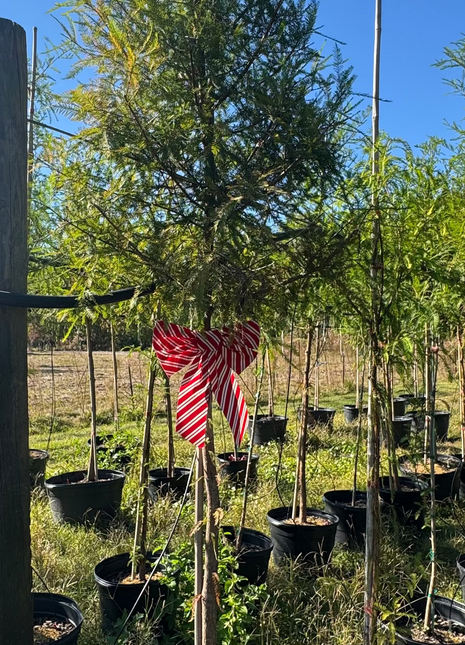
Bald Cypress (Taxodium Distichum)
Bald Cypress (Taxodium distichum) — Locally Grown in Pierson, Florida at Flowing Well Tree FarmNative Wetland Conifer • Flood-Tolerant Shade Tree • Long-Lived Structural Canopy Species • Florida-Grown Restoration & Landscape Anchor Tree Bald Cypress (Taxodium distichum) is one of the most iconic and ecologically important native trees in the southeastern United States. Known for its strong pyramidal form, soft feathery foliage, and exceptional tolerance to flooding and wet soils, this species is a cornerstone of Florida wetlands, river systems, and lowland landscapes. At Flowing Well Tree Farm in Pierson, Florida, we grow Bald Cypress as premium native canopy stock selected for strong central leaders, upright structural form, and long-term performance in Florida’s wet, sandy, and seasonally variable environments. Each tree is established in real field conditions to ensure resilience under heat, humidity, flooding, drought cycles, and storm exposure. When you buy Bald Cypress here, you’re not receiving weak ornamental nursery stock—you’re getting locally grown, Florida-adapted trees conditioned for real-world ecological performance in both wetland and upland systems. That local adaptation is critical. Bald Cypress performs best when grown in Florida conditions from the start, developing stronger root systems, improved flood tolerance, and more stable long-term canopy structure. Why Locally Grown Matters for Bald Cypress Starting with Florida-grown stock provides key advantages: Faster establishment in wet or sandy soils Stronger root systems for flood and drought cycles Improved heat and humidity tolerance Better wind and storm resilience in mature trees Higher survival rates in restoration plantings More consistent long-term canopy development This creates a durable, permanent native shade tree. Canopy Structure & Landscape Value Bald Cypress is one of Florida’s most valuable large canopy trees: 50–80 ft tall mature deciduous conifer Strong pyramidal form when young, broadening with age Soft, fine-textured “feather-like” foliage Deciduous in winter with warm copper fall color Excellent long-term shade and cooling tree Strong architectural presence in large landscapes It is a defining species of Southern wetland ecosystems. Ecological & Wetland Importance Bald Cypress is a foundational Florida ecosystem species: Dominant tree in swamps, riverbanks, and floodplains Provides critical habitat for birds, amphibians, and wildlife Supports aquatic and semi-aquatic ecosystems Stabilizes soil in wet and erosion-prone areas Creates microhabitats through “cypress knee” development in wet conditions Enhances water filtration and watershed health It is one of the most important ecological trees in the Southeast. Growth Habit & Structural Function Bald Cypress is a long-lived structural canopy tree: 50–80+ ft mature height depending on site conditions Straight central trunk with strong vertical development Broad canopy with age, providing deep shade Adaptable to both wetland and upland planting Extremely long-lived (often centuries in natural settings) Strong wind resistance when mature It functions as a permanent landscape anchor tree. Climate & Site Adaptability Bald Cypress thrives in Florida’s full range of conditions: Native to southeastern U.S. wetlands and river systems Tolerates standing water and seasonal flooding Performs well in sandy upland soils as well Highly heat and humidity tolerant Strong drought tolerance once established Excellent storm and wind resilience It is one of the most adaptable large native trees available. USDA Growing Zones Best suited for Zones 4–10, with exceptional performance throughout Florida and the entire southeastern United States. Light Requirements For best growth and structure: Full sun preferred for strongest canopy development Tolerates partial shade in early stages Sun exposure improves form and long-term vigor Ideal for open landscapes, wetlands, and large properties Soil & Site Requirements Highly adaptable native species: Thrives in wet, flooded, or seasonally saturated soils Performs well in sandy uplands and loamy soils Tolerates poor fertility conditions Adapts to both managed and natural environments Benefits from mulch during establishment Planting Guidance (Grower Recommended) For best long-term performance: Plant in full sun for optimal growth Dig hole 2–3× wider than root ball Set at original soil depth Water deeply after planting Apply mulch to stabilize moisture and temperature Space 20–40 ft apart for full canopy development Allow room for mature spread in large landscapes We can assist with wetland planting design, shade tree placement, and large-scale restoration planning. Watering & Establishment Water regularly during the first 1–2 growing seasons. Once established, Bald Cypress becomes extremely resilient and can thrive in both wet and dry cycles common in Florida. Fertilizer Low to moderate input needs: Minimal fertilization required Compost supports early establishment Avoid excessive nitrogen inputs Performs best in natural soil systems Pruning & Maintenance Very low maintenance: Minimal pruning required Naturally strong central leader development Can be limbed up for shade tree form Long-lived with stable structure Low maintenance once established Why This Is a Smarter Long-Term Investment ✔ Locally grown in Florida for maximum adaptation✔ Iconic native wetland and shade tree✔ Extremely flood and drought tolerant species✔ Long-lived structural landscape anchor✔ Excellent wildlife habitat and ecosystem value✔ Strong wind and storm resilience when mature✔ Adaptable to wet and upland sites✔ Grower-direct quality for Florida conditions The Real Value This isn’t just a shade tree—it’s a legacy canopy species that defines wetlands, strengthens landscapes, and provides ecological structure for generations. When you plant Bald Cypress, you’re investing in a permanent native anchor tree that thrives through flood, drought, and storm while building long-term habitat and landscape stability in Florida’s environment.
$9.00 - $170.00
-

Barbados Cherry (Malpighia Emarginata)
Barbados Cherry (Malpighia emarginata) — Locally Grown in Pierson, Florida at Flowing Well Tree Farm Tropical Fruit Shrub • High-Vitamin C Superfruit • Evergreen Edible Hedge • Florida-Grown Fruit Stock Barbados Cherry (Malpighia emarginata), also known as Acerola, is a fast-growing tropical fruit shrub prized for its exceptionally high vitamin C content, bright red cherry-like fruit, and extended fruiting potential in warm climates. Widely used in edible landscapes, backyard orchards, and tropical food systems, it is one of the most nutritionally valuable fruiting shrubs for Florida gardens. When you buy Barbados Cherry here, you're not getting weak, greenhouse-grown ornamental stock—you’re getting locally grown, Florida-adapted plants produced in Pierson and conditioned for real Florida growing conditions including heat, humidity, sandy soils, heavy rainfall periods, and seasonal drought stress. That matters for long-term productivity. Locally grown plants establish faster, develop stronger root systems, and transition more reliably into consistent fruiting under Florida’s subtropical climate. This is direct-from-grower edible fruit stock. Visit the farm, see how our fruiting shrubs are grown, and receive practical guidance on spacing, hedging systems, and long-term edible landscape design. Barbados Cherry is especially valued because it combines ornamental evergreen structure with nutrient-dense fruit production and strong pollinator value. Why Locally Grown Matters for Barbados Cherry Starting with Florida-grown stock provides key advantages: Faster root establishment in sandy soils Better adaptation to Florida heat and humidity Improved drought tolerance after establishment Reduced transplant shock Stronger early branching and canopy development More reliable fruit production cycles It creates a stronger foundation for long-term edible landscape success. Fruit Quality & Nutritional Value Barbados Cherry is one of the most nutrient-dense fruiting shrubs available: Extremely high vitamin C content Bright red, cherry-like fruit Sweet-tart tropical flavor profile Multiple fruiting cycles in warm climates Excellent for fresh eating, juices, and preserves High-value “superfruit” for home production It is widely recognized as a functional food plant with exceptional health value. Ornamental & Landscape Value Beyond fruit production, it is also a beautiful evergreen shrub: Dense, glossy evergreen foliage Small pink to lavender flowers throughout warm seasons Attractive multi-stem growth habit Excellent for hedges, screens, or specimen planting Strong visual presence in edible landscapes It blends ornamental structure with productive fruiting. Pollinator & Wildlife Value Barbados Cherry also supports beneficial wildlife: Attracts bees and native pollinators Continuous flowering supports pollinator activity Fruits eaten by birds and wildlife Enhances biodiversity in edible garden systems It is both a food crop and a habitat-supporting plant. Climate & Site Adaptability This species performs well in Florida’s subtropical conditions: Thrives in hot, humid climates Performs best in full sun to partial shade Tolerates sandy, well-drained soils Moderate drought tolerance once established Sensitive to frost but recovers in warm zones Performs well in protected landscape sites It is one of the most reliable tropical fruit shrubs for Florida gardens. USDA Growing Zones Best suited for Zones 9–11, performing strongly throughout South and Central Florida in protected or warm microclimates. Mature Size & Growth Habit A productive evergreen fruiting shrub: 6–12 ft mature height (can be maintained smaller with pruning) 6–10 ft spread Multi-stem, bushy growth habit Fast-growing under warm conditions Easily maintained as hedge or small tree form Ideal for edible hedges and compact orchards. Light Requirements For best fruit production: Full sun preferred Minimum 6 hours of direct sunlight daily Partial shade tolerated but reduces fruiting More sun = higher fruit yield Soil & Site Requirements Adapted to Florida edible landscapes: Prefers well-drained sandy or loamy soils Benefits from organic matter enrichment Performs best in slightly acidic soils Avoid waterlogged or poorly drained sites Mulch improves moisture stability and soil health Planting Guidance (Grower Recommended) For best establishment and production: Plant in full sun edible landscape areas Dig planting hole 2–3× wider than root ball Plant at original soil depth Water thoroughly after planting Apply mulch while keeping away from trunk base Space appropriately for mature shrub size Prune lightly to encourage branching and airflow We can assist with edible hedge design, orchard spacing, and tropical fruit planning. Watering & Establishment Water regularly during the first growing season. Once established, Barbados Cherry becomes moderately drought tolerant but produces best with consistent moisture. Fertilizer Moderate feeding recommended: Balanced fertilizer during active growth Organic compost improves fruiting and soil health Avoid excessive nitrogen (can reduce flowering) Regular feeding supports continuous fruit production Pruning & Maintenance Low to moderate maintenance: Prune to shape and control size Responds well to hedging and trimming Remove weak or overcrowded growth Encourages new fruiting branches Why This Is a Smarter Long-Term Investment ✔ Locally grown in Florida for superior adaptation ✔ High-vitamin C edible superfruit plant ✔ Evergreen ornamental and productive shrub ✔ Excellent for hedges and edible landscapes ✔ Continuous flowering and fruiting potential ✔ Strong pollinator and wildlife support plant ✔ Fast-growing and easy to maintain ✔ Grower-direct guidance for tropical fruit success The Real Value This isn’t just a fruit shrub—it’s a living nutritional system. You’re not simply planting Barbados Cherry. You’re growing fresh superfruit at home, supporting pollinators, building an edible evergreen hedge, and investing in a long-term landscape that delivers health, productivity, and beauty year after year.
$15.00 - $55.00


