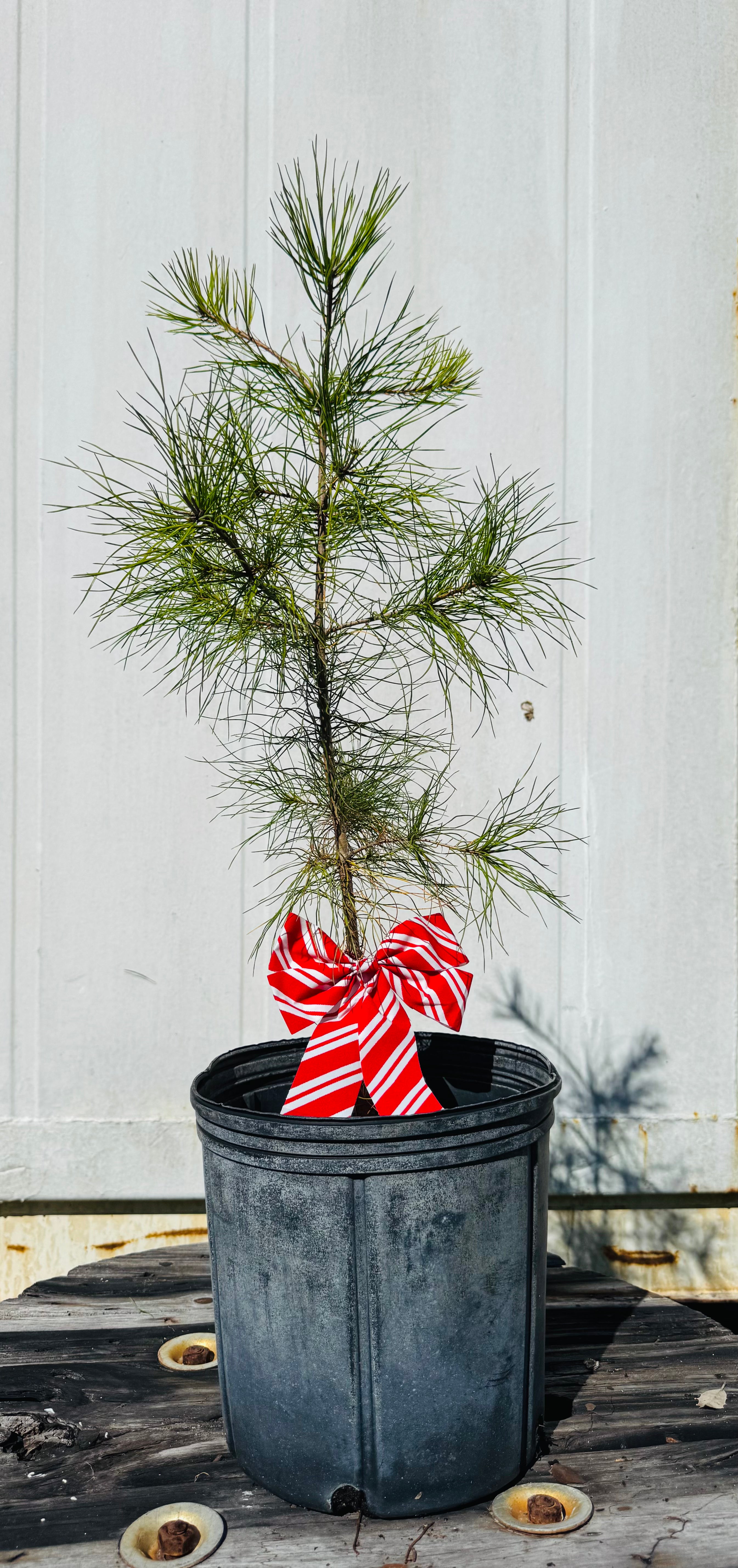
2-4FT Tall
Spruce Pine (Pinus glabra)
Spruce Pine is a graceful native evergreen known for its straight trunk, soft dark-green needles, and adaptability to a range of landscapes. Slower growing than many southern pines, it is valued for its refined appearance, tolerance of partial shade, and suitability for naturalized settings, large properties, and restoration projects. It also provides excellent cover and habitat for wildlife.
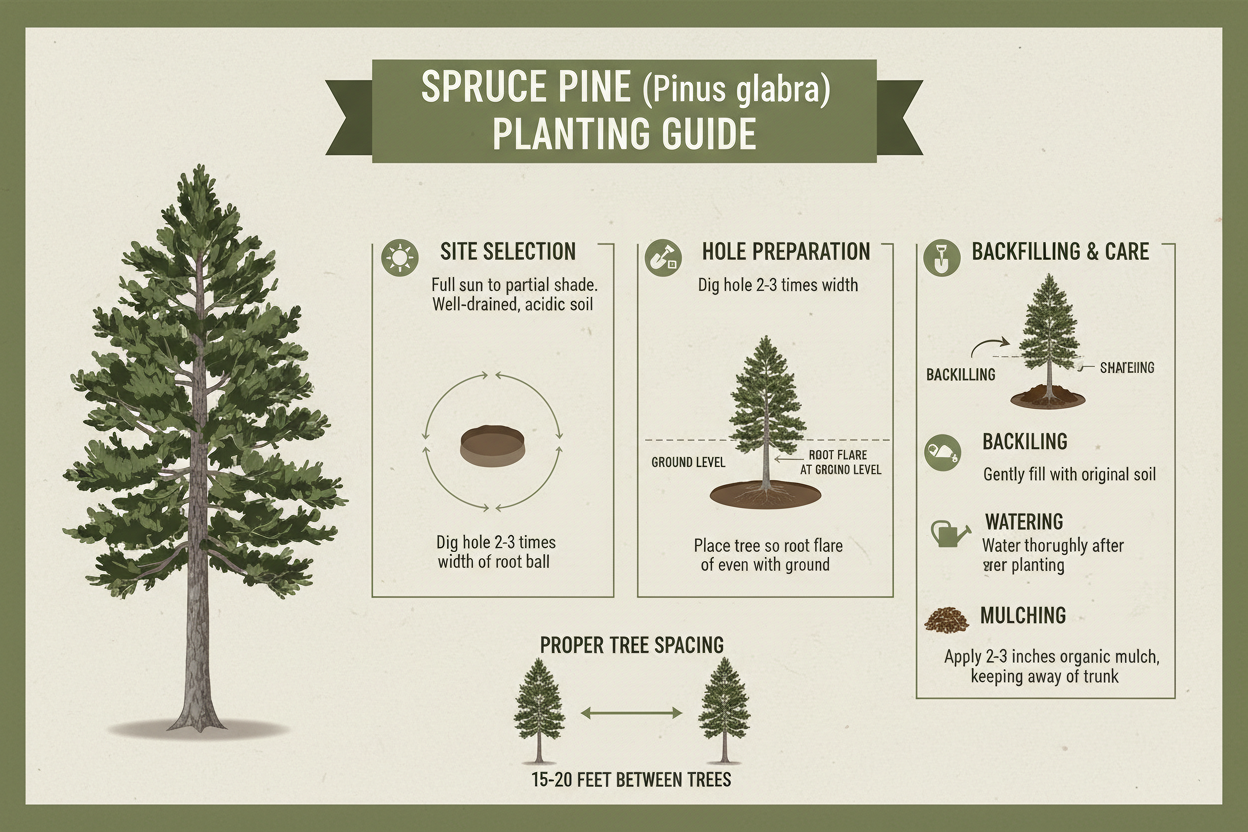
Planting Instructions & Growing Guide
Growing Zones
Thrives in USDA Zones 7–10 and is well suited to the warm, humid climates of the Southeast.
Sunlight Needs
Grows best in full sun to partial shade
Tolerates more shade than most pines, making it ideal for mixed forests and understory plantings
Soil Requirements
Prefers moist, well-drained soils
Adapts to sandy, loamy, or lightly clay soils
Tolerates occasional moisture but should not be planted in standing water
Planting Tips
Dig a hole twice as wide as the root ball and just as deep
Plant at the same soil level as it was grown in the container
Water thoroughly after planting and apply light mulch, keeping it away from the trunk
Watering
Water regularly during the first growing season to establish roots
Once established, Spruce Pine is moderately drought tolerant
Deep, occasional watering encourages strong root development
Fertilizing
Apply a balanced slow-release fertilizer in early spring if needed
Avoid excessive fertilization, as Spruce Pine thrives with minimal feeding
Growth & Appearance
Upright evergreen with soft, dark-green needles and a straight trunk
Develops a tall, open canopy over time
Provides year-round greenery, shade, and wildlife habitat
Pruning
Minimal pruning required
Remove dead or damaged branches as needed
Best pruned in late winter or early spring